
This post may contain affiliate links. If you buy through links on this page, we may earn a commission at no extra cost to you.
As an Amazon Associate I earn from qualifying purchases.
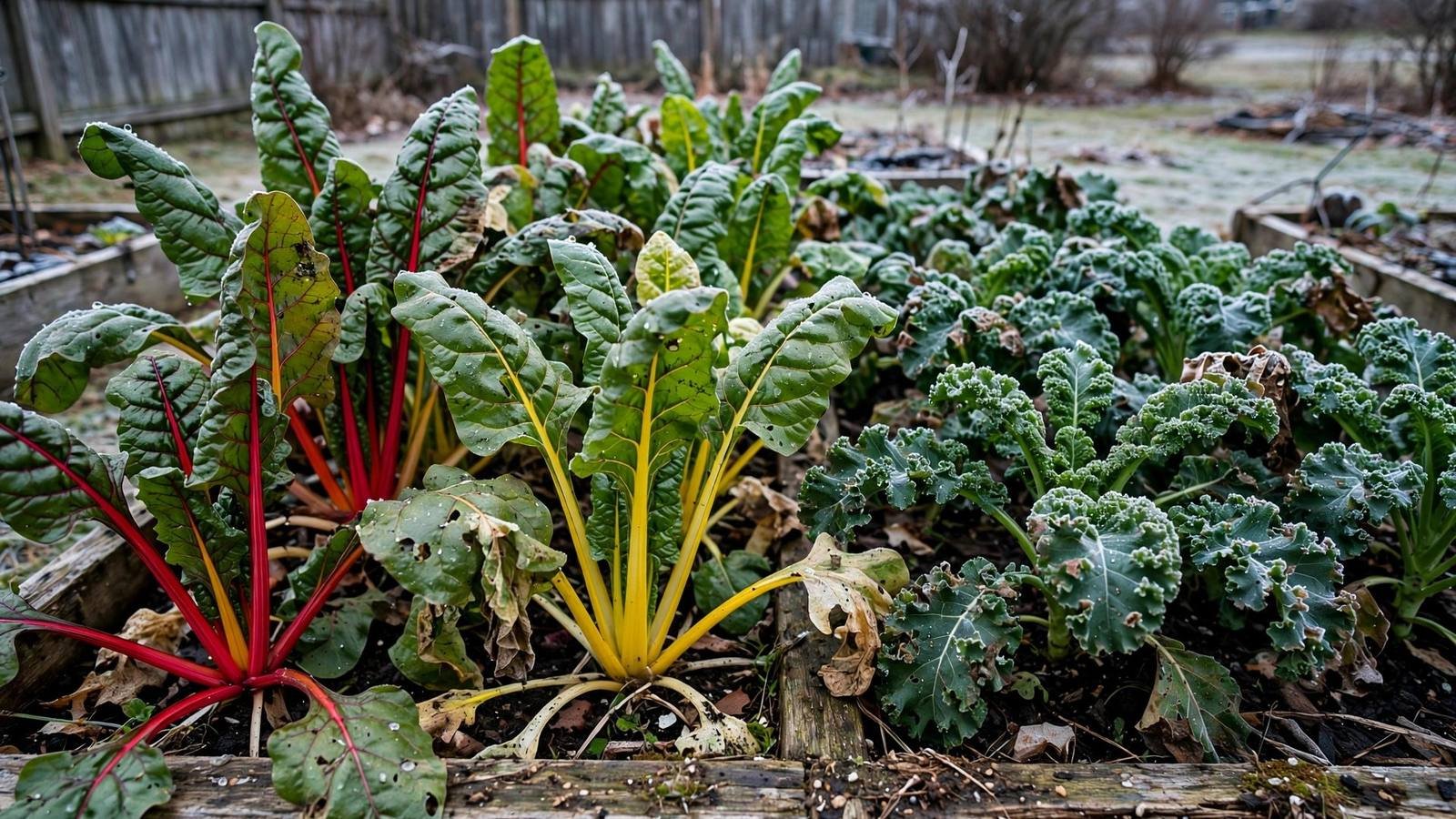
Swiss chard and kale are the two leafy greens that keep a winter garden fed after most other crops have given up. Both grow through cool weather, both give cut-and-come-again harvests, and both stand in the same kind of bed. They still behave very differently once frost arrives. Kale gets sweeter and tougher as the temperature drops, while chard keeps producing colorful stems until a hard freeze stops it. The choice between them comes down to how cold your winters get, how much room you have, and how you cook.
This guide compares the two crops side by side, works out the yield each one gives from a single 4-by-8 bed, and looks at the harvest window each one offers. For the planting steps for each crop, see our guides on how to grow kale in fall and winter and how to grow Swiss chard in fall.
Swiss chard vs kale for winter harvest at a glance
The table below gives the short version. The sections after it fill in the growing steps, the yield math, and the timing.
| Trait | Swiss chard | Kale |
|---|---|---|
| Plant family | Beet family, grown for leaves and stems | Cabbage family, grown for leaves |
| Cold tolerance | Handles light frost, damaged in the mid-20s F | Stands through frosts into the teens F |
| Harvest window | Spring through late fall, ends at a hard freeze | Spring through winter, often into early spring |
| Spacing | About 12 inches apart | About 18 inches apart |
| Plants in a 4-by-8 bed | About 32 | About 18 |
| Season yield per bed | About 48 pounds in our worked example | About 22 pounds in our worked example |
| Flavor after frost | Changes little, stems stay mild and earthy | Sweetens after frost, bitterness fades |
| What you eat | Leaves and thick colored stems | Leaves, stems are usually trimmed out |
| Space needs | Compact, fits tight rows | Wide, needs room to spread |
| Main risk | A hard freeze ends the crop | Slow growth in deep cold, pest pressure in fall |
Swiss chard: what it is and how it handles winter
Swiss chard is a beet grown for its leaves instead of its root, with thick stems in white, red, yellow, or orange. A single plant sends up new leaves from the center all season, so a gardener picks the outer leaves and the plant keeps growing. Chard grows fast in cool weather, needs about 60 days from seed to first picking, and keeps producing until a hard freeze takes it. University of Minnesota Extension notes that chard tolerates light frosts and can stand temperatures down to about 25 degrees F, which makes it a fall crop in most regions and a winter crop only where freezes stay light.
Sow chard seed about half an inch deep, thin plants to about 12 inches apart, and keep the soil evenly moist, about an inch of water a week. Chard does best in full sun with rich, well-drained soil, and it tolerates a little shade better than kale does. Pick outer leaves when they reach 6 to 10 inches long, cutting at the base of the stem, and leave the center of the plant alone so new leaves keep coming. The stems cook like a separate vegetable: slice them, cook them a few minutes before the leaves, and use them in soups, stir-fries, and gratins.
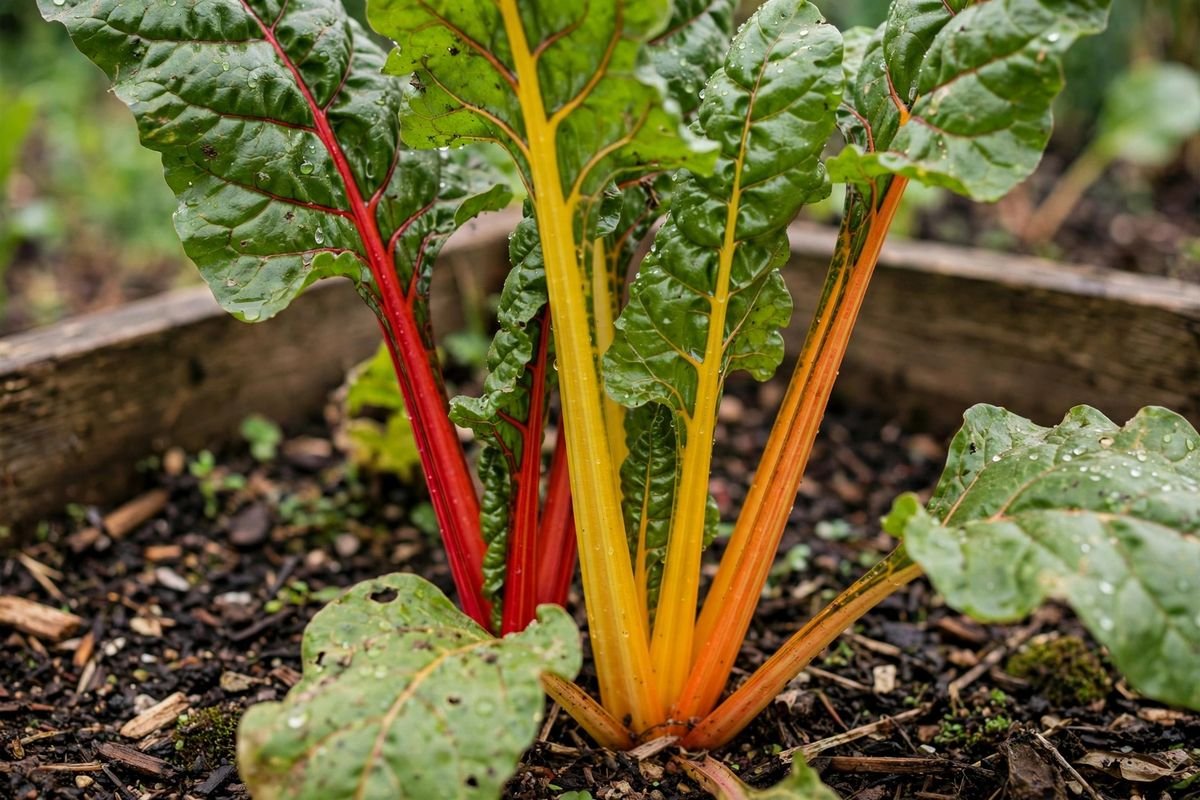
Chard seed is cheap and widely sold, and a packet lasts more than one season if kept dry. If you need seed, you can browse rainbow Swiss chard seeds on Amazon. We have not tested the products linked here, and we give no current store prices. Check each listing for current details before you buy.
Pros of Swiss chard
- Packs tight at 12-inch spacing, so a small bed holds many plants.
- Gives both leaves and stems, so little of the plant goes to waste.
- Grows fast and keeps producing new leaves for months.
- Tolerates heat better than kale, so one spring planting can run into fall.
- Colored stems make a bed easy to spot and harvest from.
Cons of Swiss chard
- A hard freeze in the mid-20s F ends the crop, so the winter harvest is short in cold regions.
- Leaves turn soft and collapse after a hard frost, with no recovery.
- Needs steady water, or the leaves turn tough.
- Shares pests and diseases with beets and spinach, so rotation matters.
- Stems need longer cooking than the leaves, which takes planning at the stove.
Kale: what it is and how it handles winter
Kale is a leafy form of the same species as cabbage and broccoli, grown for its curled or flat leaves. It is the tougher of the two crops by a wide margin. University of Minnesota Extension notes that kale and collards keep growing and producing new leaves well beyond the first fall frosts, and in many gardens kale stands through frosts into the teens, with only the outer leaves showing damage. That cold tolerance makes kale the default winter green in cold regions.
Sow kale seed a quarter to half an inch deep, and thin full-size plants to about 12 to 18 inches apart, in rows 18 to 30 inches apart. For a winter crop, start seed in midsummer so plants are well grown before the first frost. Kale needs about 55 to 75 days to mature, and it grows best when temperatures stay below about 75 degrees F. Pick outer leaves first and leave the central growing point intact, so the plant keeps producing. After a frost, the leaves taste sweeter, since cold turns some of the starch in the leaves to sugar, and many gardeners wait for the first frost before picking in earnest.
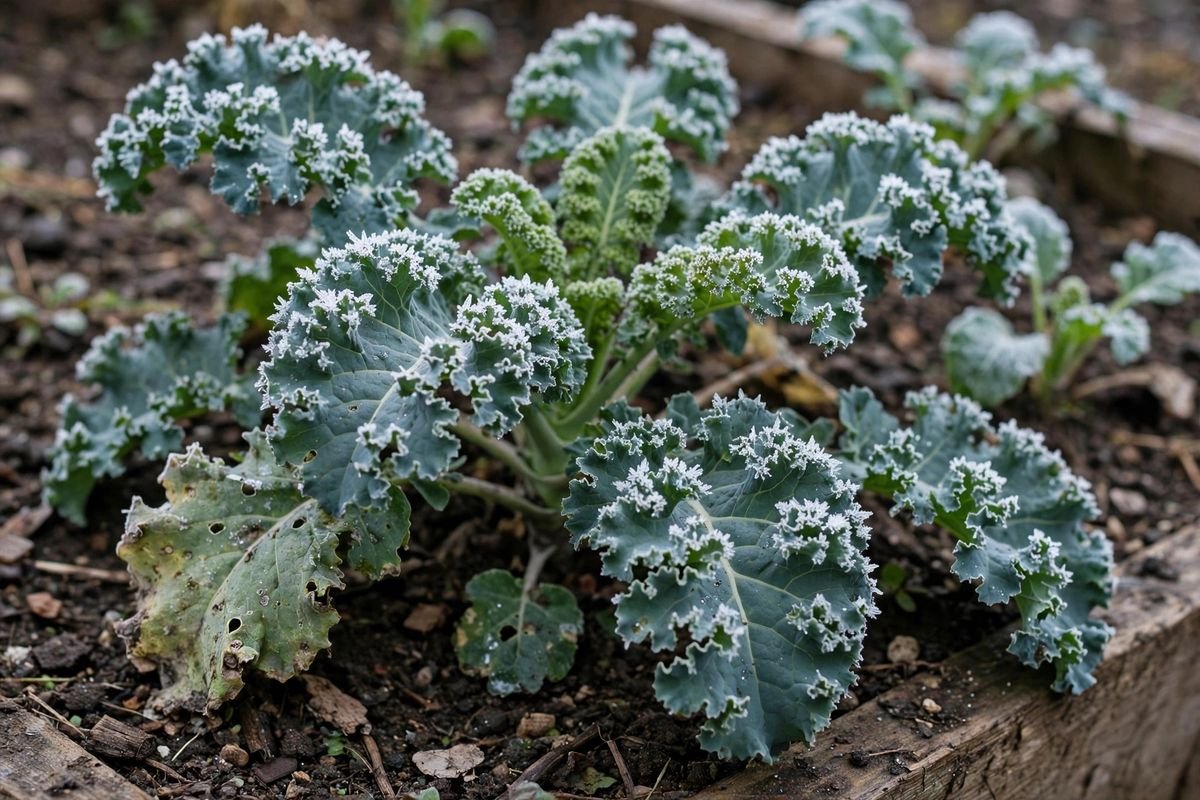
Curly kale is the most common type for winter beds, and it is also the most cold-hardy. If you need seed, you can browse curly kale seeds on Amazon. We have not tested the products linked here, and we give no current store prices. Check each listing for current details before you buy. For a closer look at the cabbage-family greens, see our comparison of kale vs collard greens and our guide on how to grow collard greens.
Pros of kale
- Stands through hard frosts that end chard, so the harvest runs longer.
- Tastes sweeter after frost, with less bitterness than summer leaves.
- Keeps producing from the same plants for months with outer-leaf picking.
- Tolerates poor soil better than chard, as long as drainage is good.
- Few serious winter pests, since most insects slow down in the cold.
Cons of kale
- Needs about 18 inches of room per plant, so a bed holds fewer plants.
- Grows slowly in deep cold, so the harvest pauses in the darkest weeks.
- Leaves turn tough and bitter in hot weather, so timing matters.
- Attracts cabbage white caterpillars and flea beetles in fall before the cold sets in.
- Thick stems are usually trimmed out, so part of each leaf is waste.
Our worked example: yield from one 4-by-8 bed
The two crops look close until you put numbers on them. Here is the yield math for one 4-by-8 raised bed, 32 square feet, with the assumptions stated in the table. These are our own computed numbers, built from spacing and per-plant yield estimates from extension guidance, not a trial, so treat them as planning figures for comparing the two crops, not as a harvest promise.
| Item | Swiss chard | Kale |
|---|---|---|
| Bed size | 4 by 8 feet, 32 square feet | 4 by 8 feet, 32 square feet |
| Spacing | 12 inches in rows 12 inches apart | 18 inches in rows 18 inches apart |
| Plants in the bed | 4 across times 8 along, 32 plants | 3 across times 6 along, 18 plants |
| Harvest method | Outer leaves and stems, cut and come again | Outer leaves only, center left to grow |
| Yield per plant over the season | About 1.5 pounds | About 1.25 pounds |
| Season yield per bed | 32 times 1.5, about 48 pounds | 18 times 1.25, about 22.5 pounds |
| Yield per square foot | About 1.5 pounds | About 0.7 pounds |
| Harvest window | About 10 to 12 weeks before a hard freeze | About 16 to 20 weeks, through frosts into winter |
Two things stand out from the table. First, chard gives about twice the weight per bed, because it packs nearly twice as many plants into the same space and each plant gives leaves plus stems. A gardener cooking for a family gets more meals out of a chard bed, week by week, while the weather holds. Second, kale gives its yield over a much longer window. Chard stops at the first hard freeze, so its 48 pounds arrive in about 10 to 12 weeks and then the bed is done. Kale gives about 22 pounds spread over 16 to 20 weeks, with picking continuing through frosts that end the chard.
The weekly rate tells the same story in a different way. Chard gives about 4 to 5 pounds a week during its window, while kale gives about 1 to 1.5 pounds a week over a longer stretch. A gardener who wants a big weekly harvest for cooking, and who lives where freezes stay light, gets more from chard. A gardener who wants a small, steady picking all winter, in a region where the temperature drops into the teens, gets more from kale.
Planting and harvest timing
Both crops are cool-season plants, and both do best when sown in late summer for a fall and winter harvest. Sow kale about three months before the average first fall frost, and sow chard six to eight weeks before the first frost, so both crops are well grown when the cold arrives. Young plants handle frost far worse than grown plants, so a late sowing that is still small at the first frost will suffer, while a well-grown plant of the same type will stand through it.
Use your local frost dates and regional planting guidance — not your USDA hardiness zone alone — to choose planting dates. A zone number tells you how cold the winter gets, not when your first frost arrives, and two gardens in the same zone can sit weeks apart on frost dates. Your local extension planting calendar is the better guide for the exact dates in your town. For a fuller December planting list, see our guide on what to plant in December.
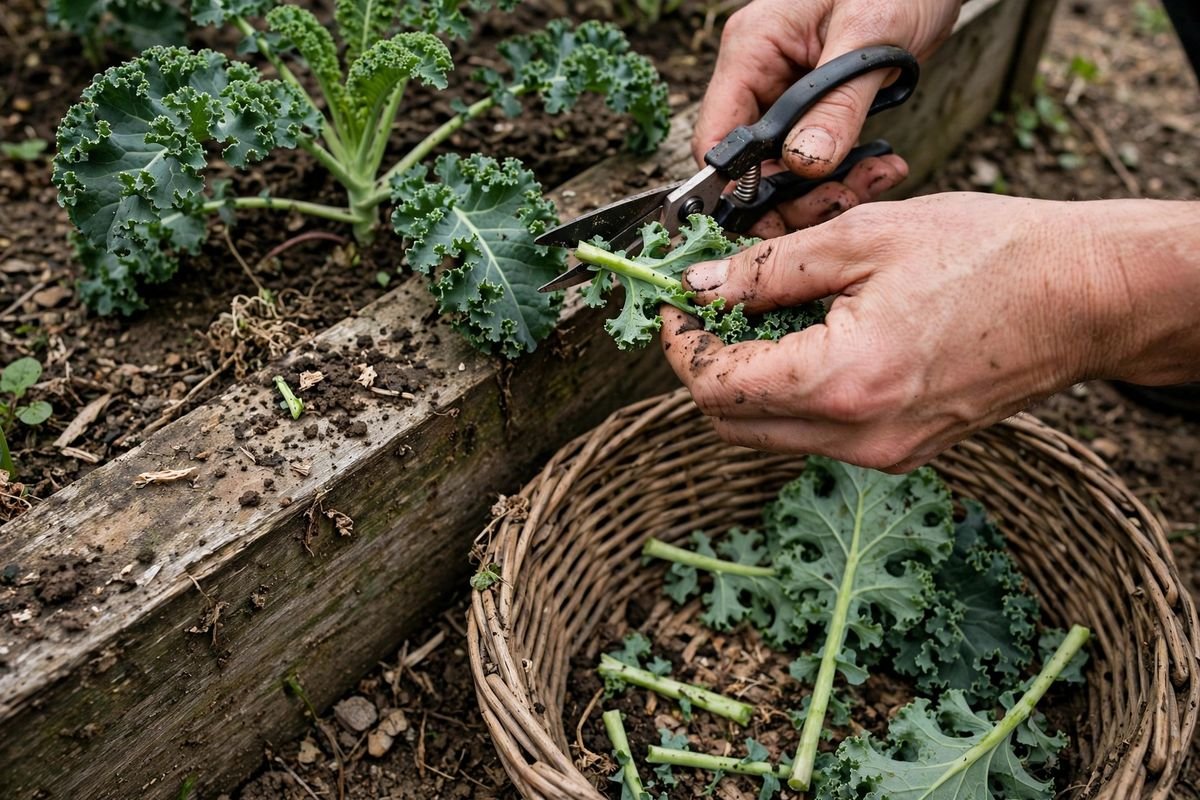
Harvest through winter by picking outer leaves and leaving the center of each plant alone. Pick in the morning, after the frost has melted off the leaves, and do not pick frozen leaves, since they turn to mush when they thaw. A simple row cover or cold frame stretches the chard season by a few weeks in a mild winter, and it keeps kale picking through the coldest nights. For frost protection on the beds, see our guide on how to protect raised beds from frost.
Which crop should you grow?
Choose Swiss chard if you want the biggest harvest from a small bed, if your winters stay mild with only light frosts, or if you cook with both leaves and stems. Chard fits a gardener with a small plot, a mild climate, and a kitchen that uses greens several times a week through fall. It also fits a gardener who wants color in the winter bed, since the red, yellow, and orange stems stand out against bare soil.
Choose kale if you want a harvest that runs all winter, if your winters drop into the teens, or if you want the sweetest leaves after frost. Kale fits a gardener in a cold region, a gardener with room to give each plant 18 inches, and a gardener who picks a little at a time over months rather than a lot at once. It also fits a gardener who cooks kale simply, since frost-sweetened leaves need little more than oil, garlic, and salt.
Many gardeners grow both. Chard fills the bed in fall with a heavy harvest, and kale carries the garden through winter after the chard is gone. A bed split half and half gives about 24 pounds of chard and about 11 pounds of kale by the math above, with picking that runs from early fall into deep winter. For more cool-season options, see our guides on how to grow spinach in fall and how to grow leeks in fall.
Troubleshooting
The chard collapsed after one cold night
Chard leaves turn soft and collapse after a hard freeze in the mid-20s F, and they do not recover. Pick what is usable the morning after, cook it the same day, and pull the plants. Next year, sow chard earlier so the harvest finishes before the hard freezes, or cover the bed on the coldest nights.
The kale leaves have holes in fall
Cabbage white caterpillars and flea beetles feed on kale in fall before the cold sets in. Pick caterpillars off by hand, check the undersides of leaves, and cover new plantings with insect netting until the first hard frosts slow the insects down. Damaged outer leaves can be picked off and composted.
Growth stopped in the coldest weeks
Both crops slow down when days are short and nights are cold, and kale nearly stops in the darkest weeks of winter. That is normal. The plants hold their leaves and start growing again as days lengthen, so keep picking the outer leaves lightly and do not pull the plants for being slow.
Frequently asked questions
Can I grow chard and kale in the same bed?
Yes. Give kale 18 inches of room and chard 12 inches, and plant the kale on the north side so it does not shade the chard. The chard will finish first at the hard freeze, and the kale will keep going, so the bed stays in use all winter.
Does kale really taste better after frost?
Yes, for most people. Cold turns some of the starch in kale leaves to sugar, which softens the bitter edge. The change is easy to taste in a side-by-side picking before and after the first frost. Chard changes less, since its flavor is mild to start with.
How do I keep picking through winter?
Pick outer leaves only, leave the center growing point alone, and pick in the morning after frost has melted. A row cover or cold frame keeps leaves pickable on the coldest nights, and a mulch layer around the plants steadies soil temperature.
Sources and further reading
- University of Minnesota Extension, Growing collards and kale in home gardens
- University of Minnesota Extension, Growing spinach and Swiss chard
- University of Minnesota Extension, Planting the vegetable garden
- University of Wisconsin-Madison Extension, Swiss chard
Related reading: How to Grow Kale in Fall and Winter, How to Grow Swiss Chard in Fall, Kale vs Collard Greens, What to Plant in December
By the Pot and Plot Team