
This post may contain affiliate links. If you buy through links on this page, we may earn a commission at no extra cost to you.
As an Amazon Associate I earn from qualifying purchases.
A clear fall night drops fast after sunset, and raised beds feel it first: the soil sits above ground, exposed on all sides, so it gives up heat quickly. A few simple layers and good timing can still carry greens, root crops, and young transplants through light and moderate frosts.
Row cover on low hoops traps soil warmth, keeps frost off leaves, and blocks drying wind. A cold frame does the same job even better on a small area. Below we cover fabric weights, hoop math, and cover timing. New to raised beds? Start with raised bed gardening for beginners, then return here for the cold-weather layer.
| Threat | What Helps Most |
|---|---|
| Light frost, 29-32°F | Single layer of light row cover, 0.5-0.9 oz per sq yd, draped or on hoops |
| Hard frost, 24-28°F | Heavier cover, 1.2-2.0 oz per sq yd, or double layer on hoops |
| Freeze below 24°F | Cold frame or cover plus an inner layer; harvest tender crops first |
| Wind plus cold | Secure edges tightly; wind lifts cover and strips trapped heat |
| Warm sunny day after frost | Vent or remove cover by mid-morning to prevent overheating |
| Soil losing heat fast | Water in the afternoon; moist soil stores and releases more heat |
Why Raised Beds Get Colder, and Why Cover Works
Soil is our heat battery: it absorbs warmth by day and releases it slowly at night. A cover holds that warmth around the plants instead of letting it drift away. Leaves under cover often stay 2 to 6 degrees warmer than open air, which is often enough to keep frost crystals from forming on leaf surfaces, where the real damage happens.
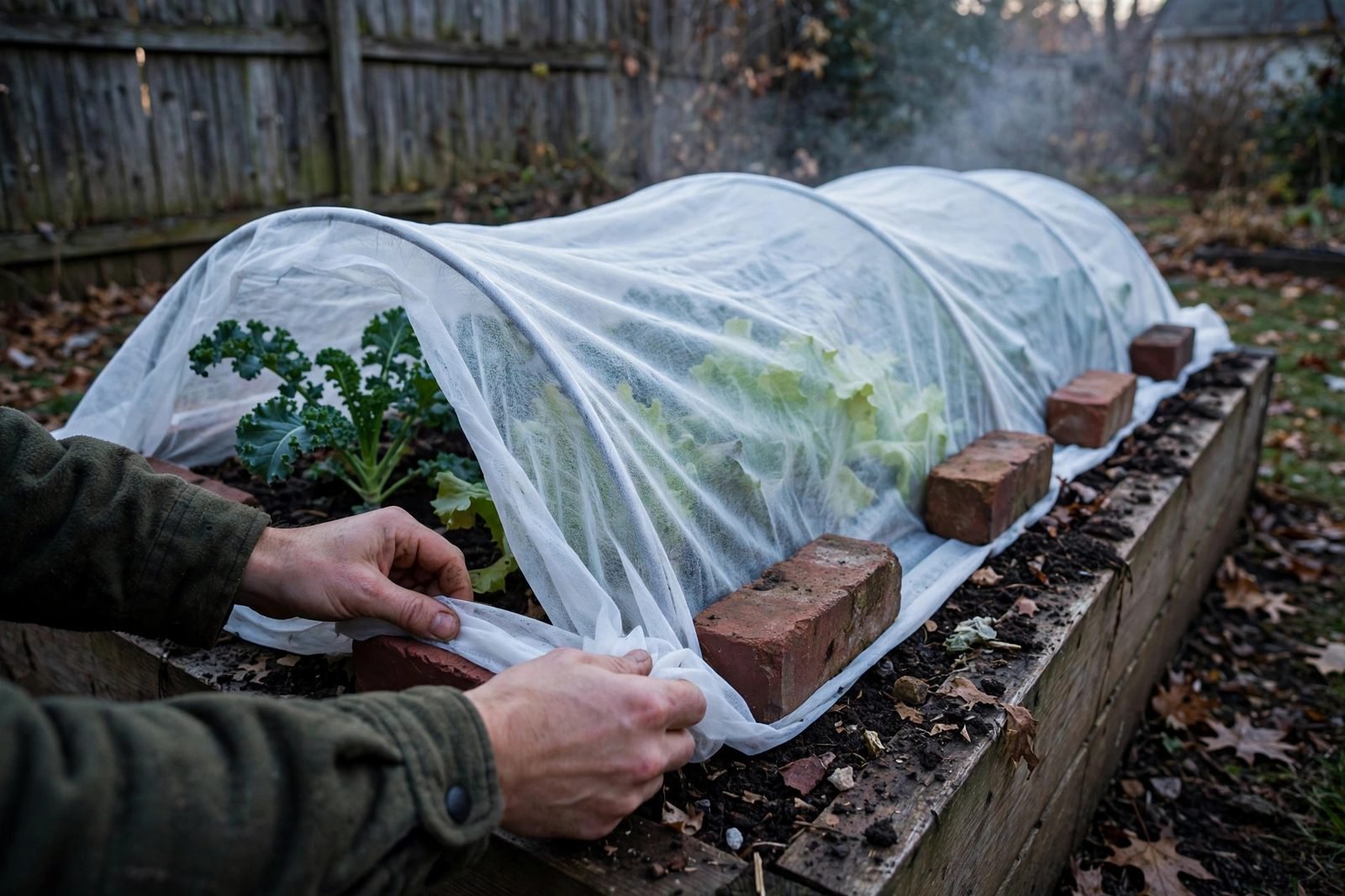
Raised beds also lose heat from the sides. On the coldest nights, drape the cover down to the ground and pin the edges. The goal is a sealed pocket of still air held off the leaves by hoops, since frost can transfer where fabric touches foliage.
Choosing a Cover: Weight, Material, and Light
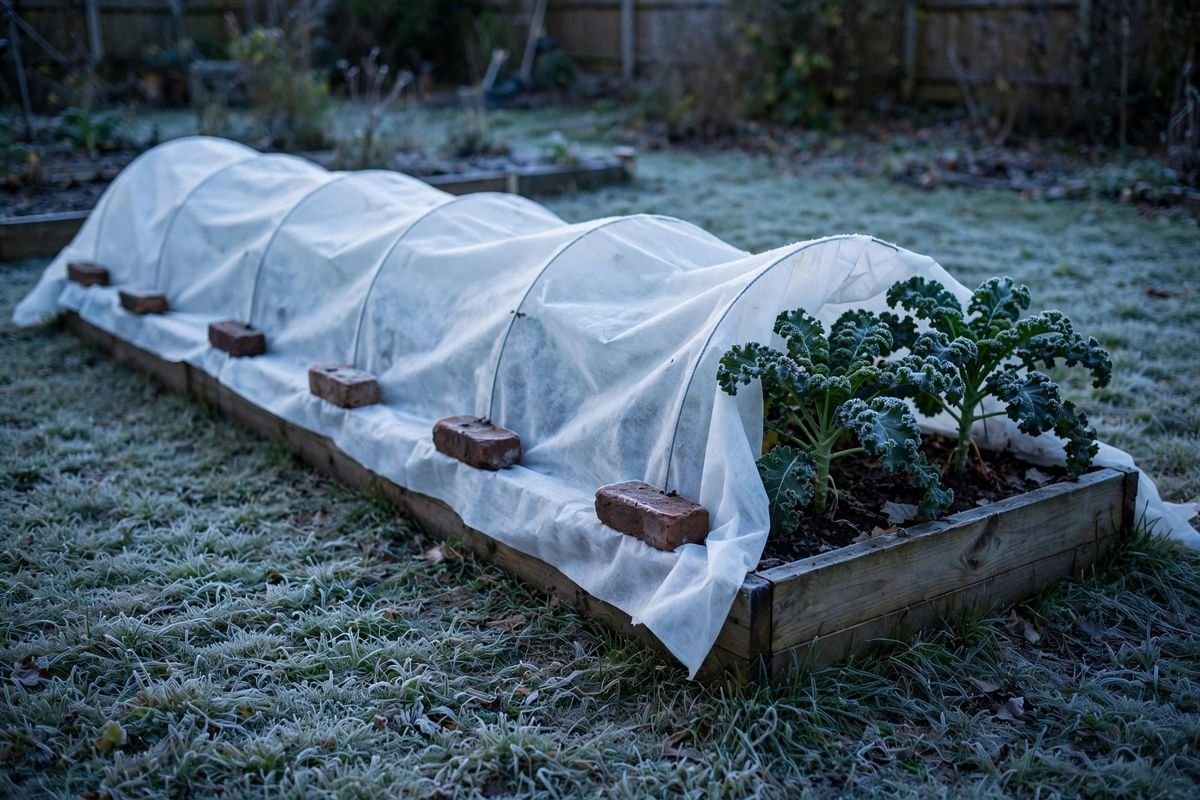
Frost fabric (row cover) lets rain and most sunlight through while trapping heat. Light fabric at 0.5 to 0.9 ounces per square yard adds about 2 to 4 degrees and can stay on for days. Heavier fabric at 1.2 to 2.0 ounces adds roughly 4 to 8 degrees but blocks more light, so we reserve it for cold snaps.
Plastic traps more heat but also moisture, overheats fast, and must sit on hoops with venting — see frost cloth vs plastic cover. Fabric is the forgiving first choice for most beds. Compare frost blankets for raised beds on Amazon by weight, not brand name.
Worked Example: Covering a 4 by 8 Foot Bed
Here is our math for a standard bed, with inputs stated so the numbers adjust to other sizes. Assume a bed 4 feet wide by 8 feet long, crops about 12 inches tall, and hoops peaking about 18 inches above the soil.
Fabric size. Crosswise, the cover needs about 5 feet over the hoop arc, 1.5 feet down each side, and 1 foot of anchor flap per side — roughly 10 feet. Lengthwise, 8 feet plus end drape and flaps comes to about 11 feet. A 10 by 11 foot piece stays pinned in wind instead of pulling loose.
Hoop spacing. Hoops placed every 2 feet along the bed keep light fabric from sagging onto leaves when it is wet. For an 8 foot bed, hoops at 0, 2, 4, 6, and 8 feet means 5 hoops. Flexible tubing or thick wire cut to about 6.5 feet each gives an arch that spans the 4 foot width with both ends pushed 6 inches into the soil and a peak near 18 inches.
Fabric weight choice. For nights expected around 30°F, light 0.55 ounce fabric is usually enough over hardy greens, adding about 3 degrees, which keeps the leaf layer near 33°F. For a forecast of 26°F, we step up to a 1.5 ounce fabric or double the light layer, aiming for 5 to 6 degrees of lift. The rule we follow: match the fabric to the forecast gap. If the low is more than 8 degrees below freezing, fabric alone is a gamble for tender crops, and harvest or a cold frame is the safer call.
Soil heat logic. Moist soil holds more heat than dry soil. Watering the bed in the afternoon, several hours before sunset, charges that battery. Extension guidance notes that a well-watered bed under cover can stay several degrees warmer overnight than a dry bed under the same cover. We water the soil, not the foliage, and finish early enough for leaf surfaces to dry before covering.
How to Protect a Raised Bed Step by Step
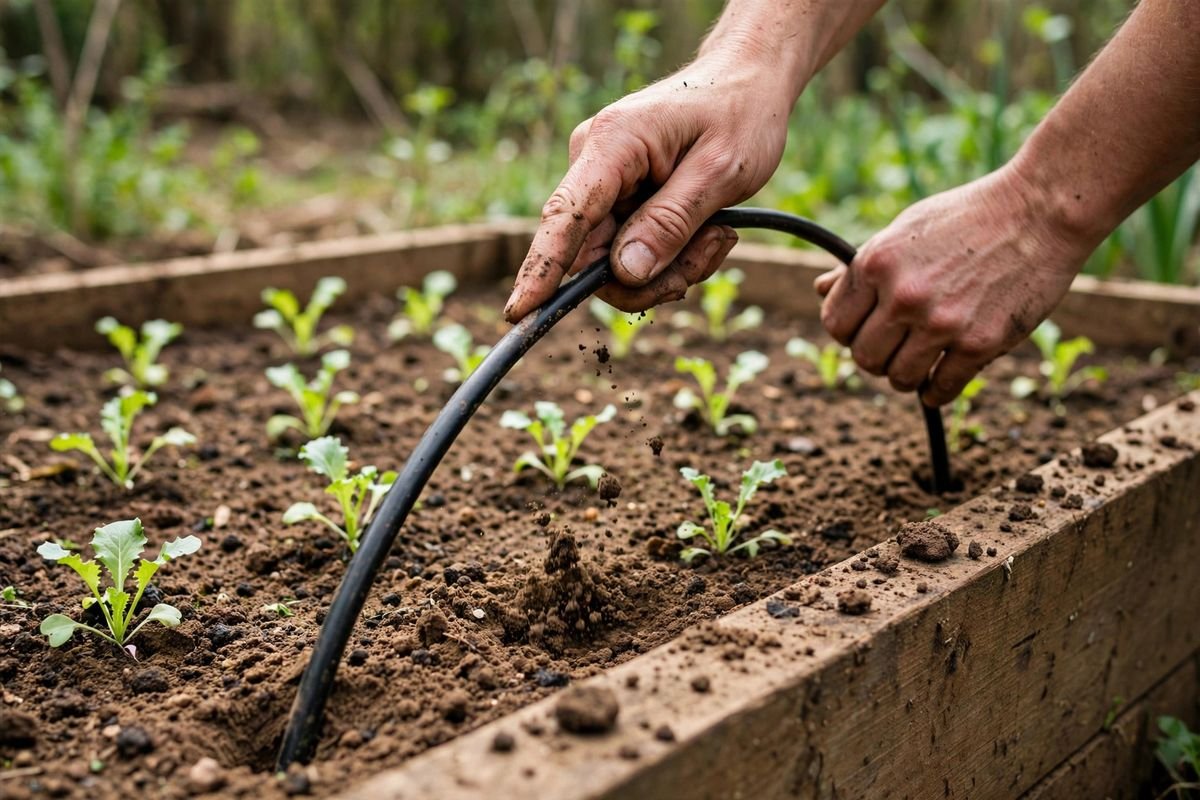
- Check the forecast early. Look for the overnight low and the wind speed. Calm, clear nights produce the hardest frosts even when the low looks mild, because heat radiates straight up into a clear sky.
- Water the soil in the afternoon. Give the bed a thorough soak if the top few inches are dry, finishing at least 2 to 3 hours before dark so leaves dry and the soil can absorb the last sun.
- Harvest what will not handle cold. Pick ripe tomatoes, peppers, and basil before covering. These crops suffer below about 40°F even without frost.
- Set the hoops. Push each hoop 6 inches into the soil on both sides, keeping the peak even. For the 4 by 8 example above, five hoops at 2 foot intervals give steady support.
- Drape the fabric before sunset. Lay the cover over the hoops while the soil still holds daytime warmth, ideally an hour before dark. Let it fall to the ground on all sides.
- Seal the edges. Use bricks, boards, sandbags, or soil pins every couple of feet. A single gap on the windward side can empty the warm pocket within an hour.
- Add a second layer on hard nights. A second sheet of light fabric, or an old sheet over the frost fabric, adds meaningful warmth. Keep plastic, if used at all, as the outer layer on hoops only.
- Vent in the morning. On sunny days, lift one side or remove the cover once temperatures climb, even if nights will be cold again. Plants under heavy fabric in full sun can overheat by midday.
- Remove and store dry. When the cold snap passes, shake the fabric dry, fold it loosely, and store it out of sun. Direct sun weakens row cover over a season or two.
For a smaller footprint or crops that need weeks of protection, a rigid lid holds heat better than fabric. Our guide to how to use a cold frame for winter vegetables covers venting and placement for those boxes.
Timing the Season: First Frost and Last Frost
Cover works with the calendar rather than replacing it. Use your local frost dates and regional planting guidance — not your USDA hardiness zone alone — to choose planting dates. Sow hardy greens several weeks before the average first frost so they are well rooted when cold arrives; in spring, cover allows transplants a couple of weeks early if we vent on warm days.
A single 30°F night needs a light cover for one evening; a week in the twenties calls for heavier fabric and harvesting tender crops. Clearing spent summer plants first makes covering easier — see our fall garden cleanup checklist.
Which Crops Handle Frost, and Which Do Not
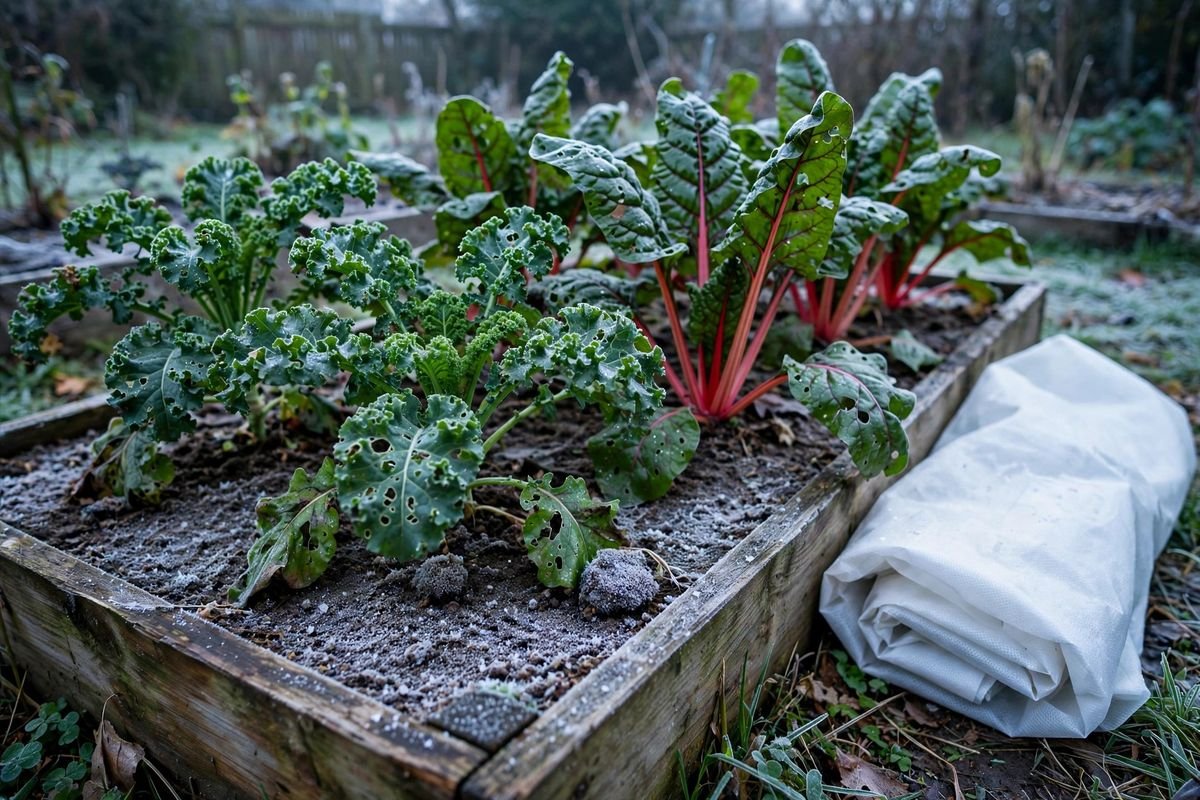
Hardy crops often taste sweeter after light frost. Kale, spinach, chard, carrots, parsnips, leeks, and Brussels sprouts handle the mid-twenties under cover. Lettuce, broccoli, cabbage, and peas tolerate light frost but need a heavier layer in a hard freeze. Tomatoes, peppers, cucumbers, squash, beans, and basil are damaged below about 40°F and killed by frost beyond a night or two.
Our notes compare weights and sizes in best frost covers for raised beds and containers for gardeners choosing between rolls, precut blankets, and hoop kits. For hoops, clamps, and pins, browsing garden hoop and row cover kits on Amazon shows the common sizes; the spacing math in the worked example applies whatever the source.
Common Mistakes That Waste a Cold Night
Covering After Dark
Fabric traps heat; it does not create it. Covering after the soil has radiated its warmth seals in cold air. Late afternoon placement is the habit that matters most.
Letting Fabric Rest on Leaves
Where cover touches a leaf, frost can form right through the material. Hoops, upturned pots, or a simple frame keep the layer off the foliage. After rain or wet snow, sagging fabric needs lifting for the same reason.
Forgetting to Vent
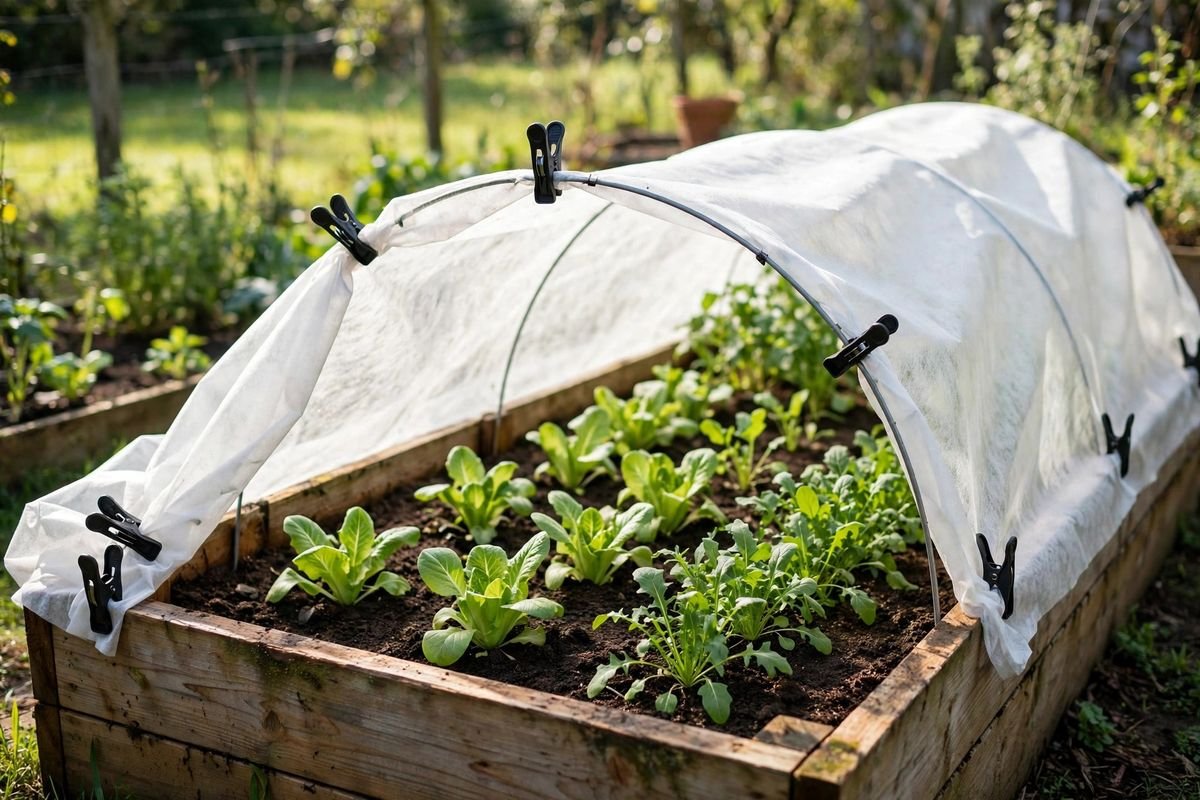
A sealed bed on a sunny fall day can climb past 90°F by noon, which stresses greens and invites aphids. Venting one side or removing the cover on mild days prevents the swing from cold damage to heat damage in a single day.
Loose Edges in Wind
A flapping cover pumps warm air out fast. Weight the windward side first and recheck the bed if gusts pick up.
FAQ
How many degrees of protection does frost fabric add?
Light fabric adds about 2 to 4 degrees at leaf level; heavier fabric adds roughly 4 to 8, depending on wind, soil moisture, and edge sealing. Step up a layer when the forecast sits near the edge.
Can row cover stay on all winter?
Light fabric can stay on hardy greens for long stretches if lifted on mild, sunny days for light and air. Heavy fabric is better reserved for cold snaps.
Is it better to water before a frost or keep the bed dry?
Moist soil stores more daytime heat and releases it overnight, so an afternoon watering before a frosty night helps. Keep water on the soil, not the leaves, and finish early enough for foliage to dry.
When is a cold frame better than fabric?
A cold frame holds thicker still air and sheds wind, so it protects better through repeated hard frosts. Fabric covers a whole bed cheaply and stores flat. Many of us use fabric on big beds and one frame for the best greens.
Sources & Further Reading
- University of Minnesota Extension — using row covers and season extension for home gardens (extension.umn.edu).
- Colorado State University Extension — frost protection methods and fabric weight guidance for vegetables (extension.colostate.edu).
- University of Maryland Extension — floating row cover selection and fall season extension notes (extension.umd.edu).
- Utah State University Extension — cold frames, hoop houses, and frost-date based planting guidance (extension.usu.edu).
- USDA Agricultural Research Service — soil moisture and overnight heat release basics for garden soils (usda.gov).