
This post may contain affiliate links. If you buy through links on this page, we may earn a commission at no extra cost to you.
As an Amazon Associate I earn from qualifying purchases.
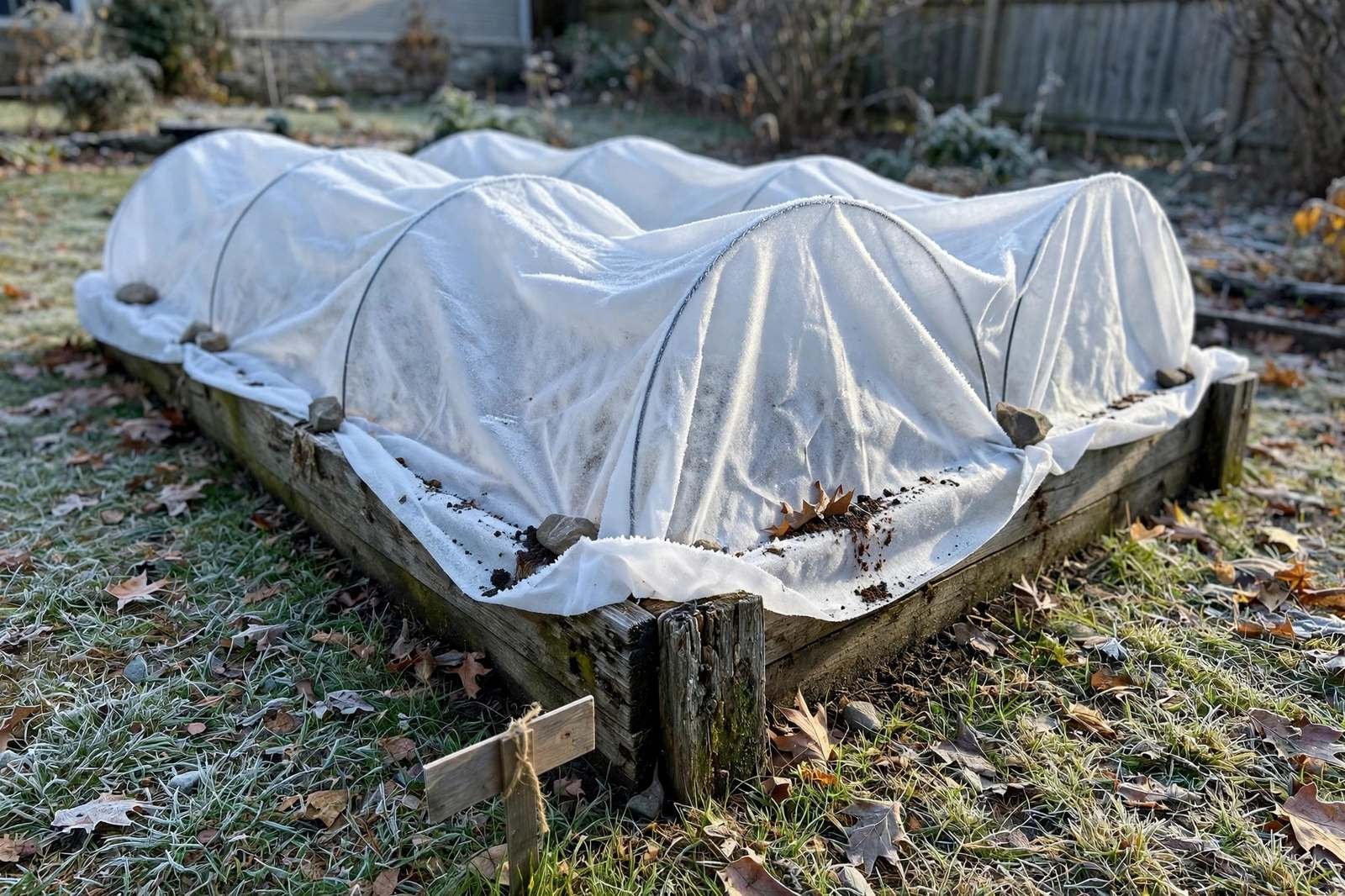
A hard frost can end peppers, basil, and late lettuce overnight. Frost covers give us a simple buffer. One layer of the right fabric, draped before sunset and pinned to the ground, holds warmer air around plants and can buy several extra weeks of harvest.
This roundup is research-based. We compare the main fabric weights using what extension sources and manufacturers generally report, then cover sizing and care so we buy once and size it right. We have not run side-by-side freeze trials on these products, and this guide does not claim that kind of testing.
| Fabric Weight | Typical Use | General Protection Guidance* | Light and Water |
|---|---|---|---|
| Lightweight, about 0.55 oz/sq yd | Insect barrier in spring, light frost buffer | Often listed around 2 to 4°F below ambient | High light transmission, rain passes through easily |
| Medium, about 1.0 oz/sq yd | Main-season frost cover for beds | Often listed around 4 to 6°F below ambient | Good light transmission, rain passes through |
| Heavyweight, about 1.5 oz/sq yd | Colder nights, windier sites, longer cover periods | Often listed around 6 to 8°F below ambient | Lower light transmission, still breathable |
*These ranges are general guidance only. Actual protection depends on wind, humidity, how tightly the cover seals to the ground, and whether the fabric touches leaves. We treat the numbers as a starting point, not a guarantee.
How Frost Covers Work
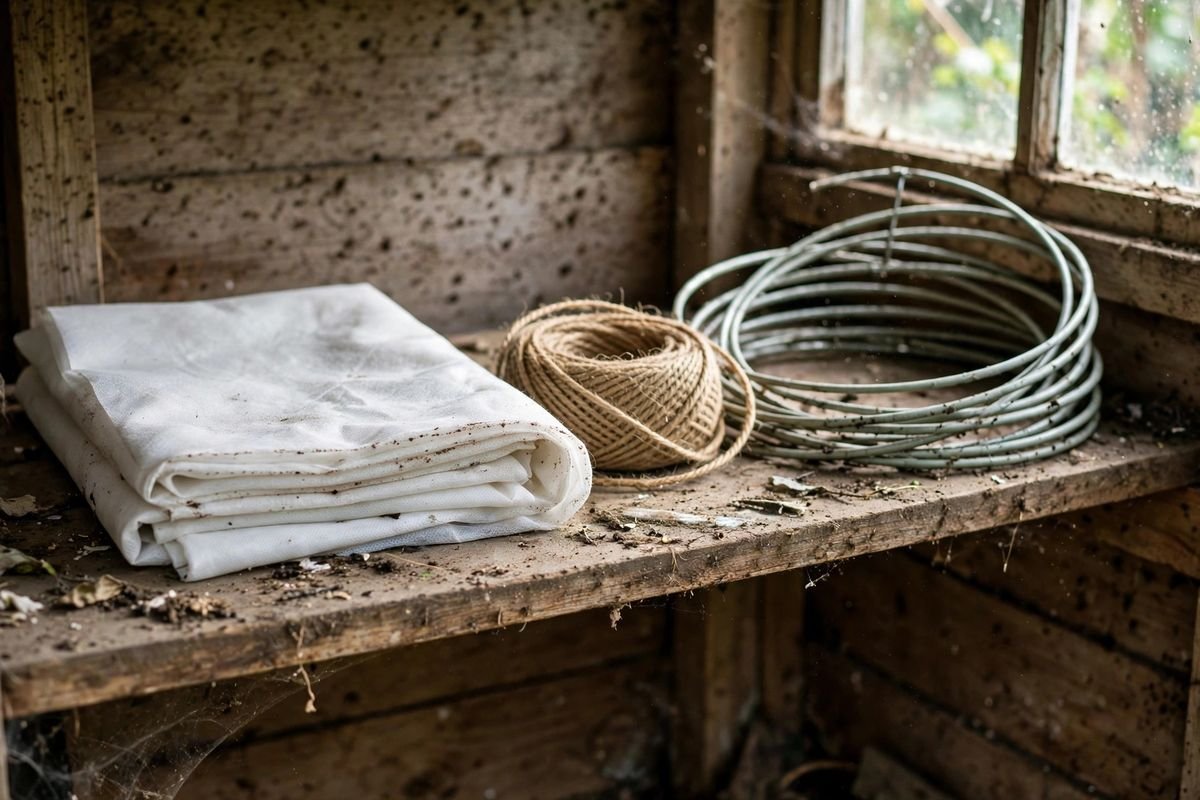
Frost cloth is a spun-bond polypropylene fabric. It lets light, air, and rain through while trapping a pocket of warmer air around the canopy. That pocket matters most at dawn, when cooling pulls the most heat from leaves, and the fabric also blocks frost from settling directly on foliage.
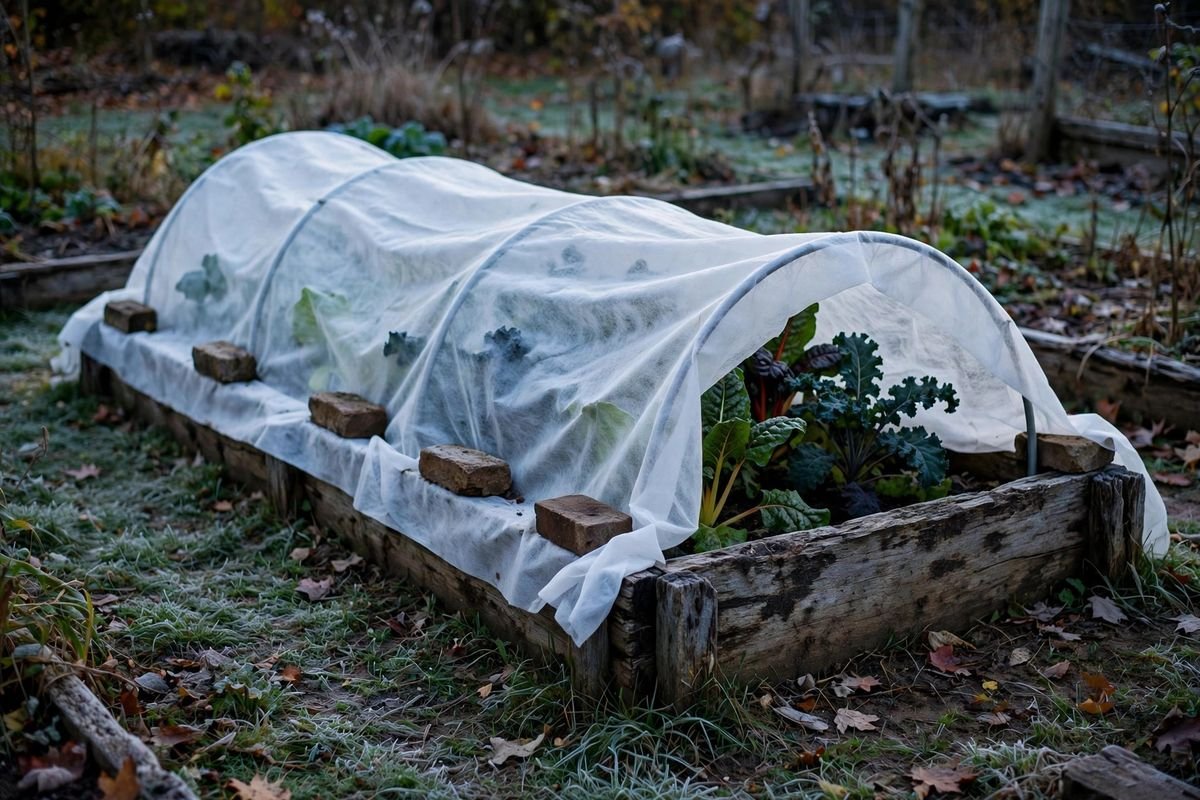
Two details decide whether a cover helps. First, the edges must reach the ground and stay there, since warm air escapes through gaps. Second, the fabric should not press hard against leaves on the coldest nights, because cold can transfer where wet fabric touches a leaf. Low hoops that hold the cloth a few inches above the canopy help on both counts. Our guide to how to use a cold frame for winter vegetables covers the rigid-cover option, which pairs well with cloth on the coldest nights.
Our Sizing Math: How Much Fabric Do We Actually Need?
Most sizing mistakes happen because we order the bed size and forget the drape. A cover has to go up over the plants, down the sides, and out onto the ground far enough to pin. Here is our worked example, with assumptions stated.
Worked Example: One 4 by 8 Foot Raised Bed
Assumptions. The bed is 4 feet wide and 8 feet long. Plants plus hoops rise 18 inches (1.5 feet) above the soil at the center. We want 12 inches (1 foot) of extra fabric on each side, flat on the ground for pinning. The path over the hoop is a gentle curve, so we round up.
Width across the bed. Start with the bed width, 4 feet. Add the rise on both sides: about 1.5 feet up and 1.5 feet down the curve, counted as 3 feet to be safe. Add the ground drape on both sides, 2 feet total. Width needed: 4 + 3 + 2 = 9 feet. A 10-foot-wide roll gives a comfortable margin; a 6-foot piece would barely reach the soil once hoops are in place.
Length along the bed. Start with 8 feet, add 1 foot of drape at each end, plus about 1 foot for the end curves. Total: about 11 feet. We would cut or order 12 feet.
Result. For one hooped 4 by 8 foot bed, we plan on roughly a 10 by 12 foot piece, about 120 square feet. The bed itself is only 32 square feet, so the cover needs close to four times the bed footprint once height and drape are included. That explains why covers that looked large in the package come up short in the garden.
Containers. For a single 14-inch pot with a plant about 12 inches tall, we plan a 4 by 4 foot square per large pot, or one long strip shared across grouped pots, which cuts fabric use. If we are setting up beds for the first time, our walkthrough of raised bed gardening for beginners covers bed sizes that pair well with hoops and cloth.
Best Frost Covers by Use Case
We organize picks by job rather than by brand, since weights and sizes matter more than logos here. Each category links to a search for comparing current options.
Best Lightweight Cover for Spring and Insect Protection
Light fabric around 0.55 ounce per square yard blocks many flying insects when sealed at the ground, lets in the most light, and still takes the edge off a light frost. We reach for it in spring over carrots, greens, and brassicas. It tears more easily than heavier grades, so we pad sharp hoop ends. Browse lightweight frost cloth and row cover on Amazon and check the stated weight on each listing, since sellers use the word lightweight loosely.
Best Medium Cover for Most Raised Beds
Medium fabric around 1.0 ounce per square yard is the workhorse for raised beds. It balances protection, light, and handling, and holds up to repeated use better than the thin grade. For fall lettuce, spinach, kale, and root crops, this is usually the weight we recommend starting with. Compare sizes at medium-weight frost blankets for plants on Amazon, and favor rolls wide enough for the 10-foot width our math calls for.
Best Heavyweight Cover for Colder Nights
Heavy fabric around 1.5 ounces per square yard trades some light for more insulation. We use it when forecasts drop into the mid-20s, when wind is part of the problem, or when a cover will stay on for several days. Because it blocks more light, we vent or remove it on milder days. Look at heavy-duty frost covers for freeze protection on Amazon and confirm the stated weight; weight tells us more than marketing names.
Best Pre-Cut Covers and Hoop Kits for Containers
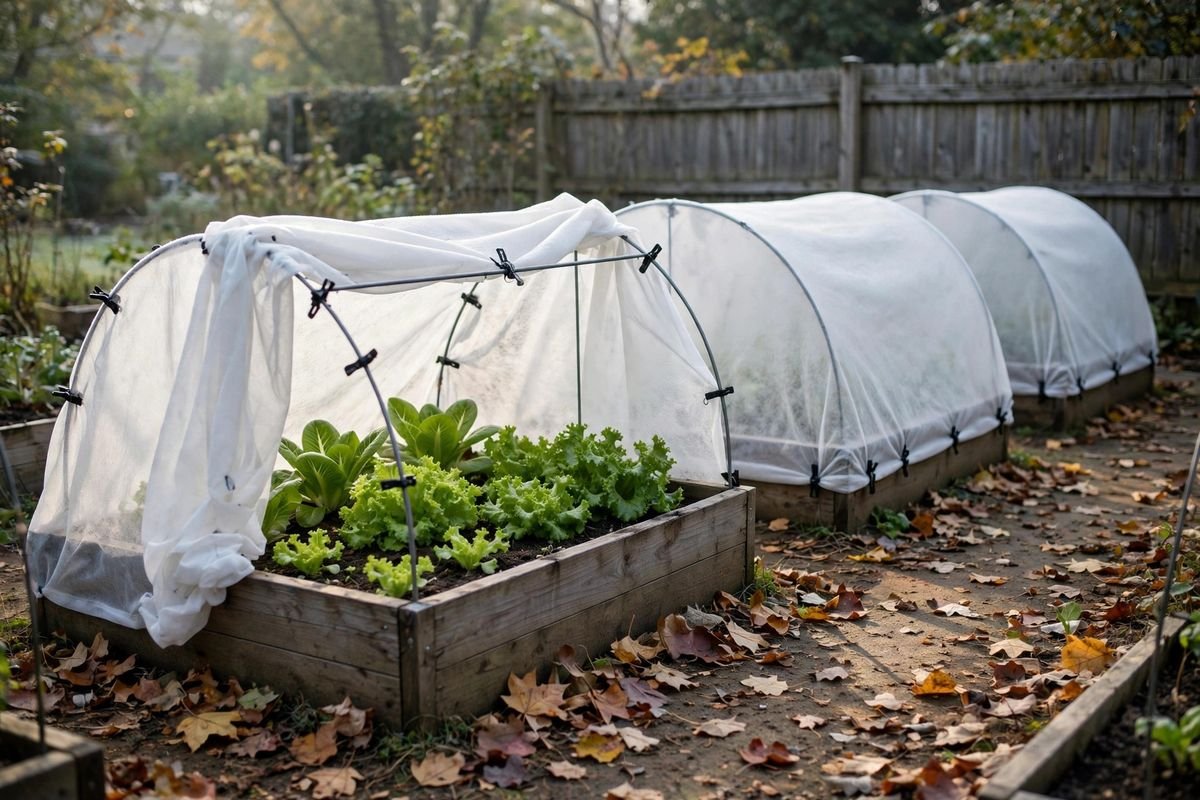
For containers and small beds, pre-cut rectangles and drawstring covers save cutting time. Hoop kits with clips hold fabric off foliage and speed up nightly covering. See garden hoop and frost cloth kits for raised beds on Amazon, and measure hoop height against our tallest fall crops before ordering.
Raised Beds Versus Containers
Raised beds give us a flat, wide target. One large piece, hoops every 3 to 4 feet, and pins or bricks along the edge make a tidy system we can leave in place all season.
Containers cool faster than beds because air surrounds the pot on all sides. On the coldest nights, we group pots together, cover the group rather than each pot alone, and set pots on soil or mulch instead of bare concrete when we can. Small pots dry out under cover, so we check moisture every few days.
How to Install a Frost Cover Step by Step
- Water first. Moist soil holds heat better than dry soil, so we water that morning.
- Set hoops or supports so fabric will sit a few inches above leaves, and pad any sharp ends.
- Drape before sunset while some daytime warmth remains, leaving equal drape on all sides.
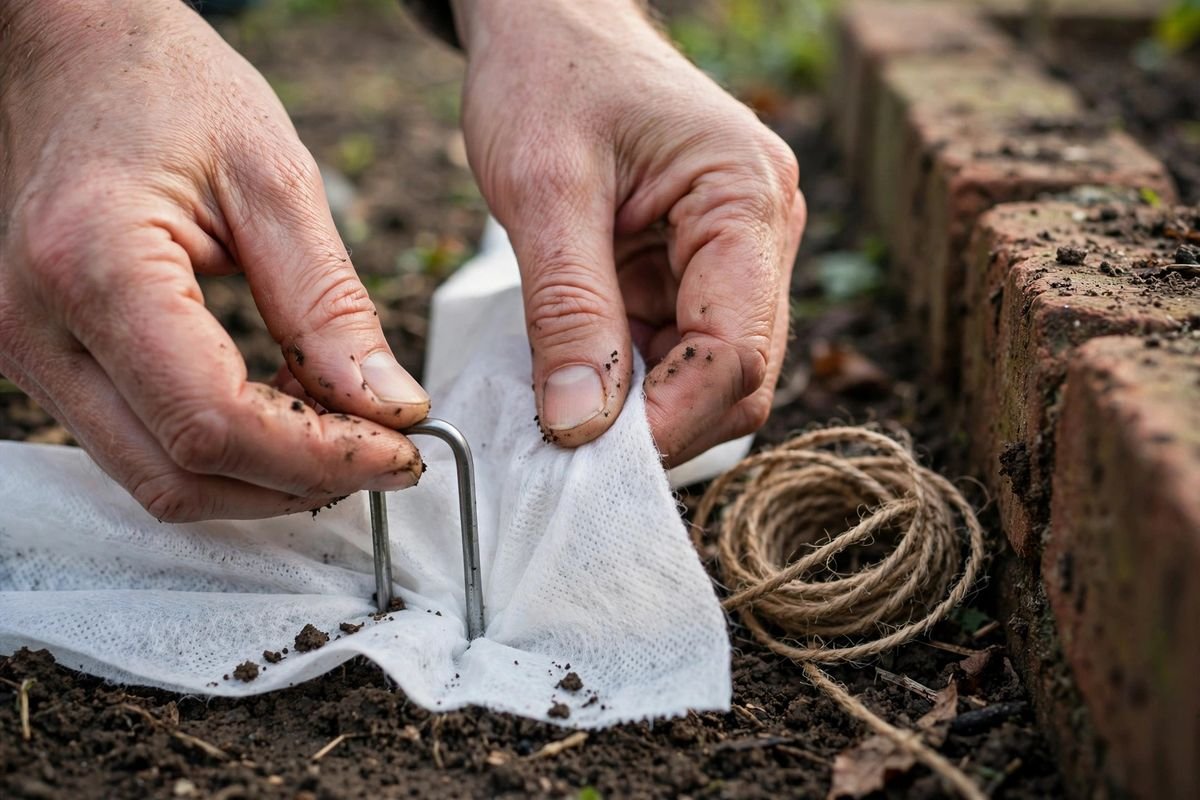
- Seal the edges with pins, bricks, or boards. Corners leak the most warm air, so we double-pin them.
- Vent or remove in the morning once temperatures climb.
- Check after wind and re-pin any lifted edges.
When to Cover and When to Uncover
We watch the forecast low, wind, and sky cover together. Clear, calm nights cool fastest, so a forecast of 34°F with clear skies can frost low spots. Tender crops like peppers and basil need cover earlier than hardy greens. Use your local frost dates and regional planting guidance — not your USDA hardiness zone alone — to choose planting dates. That same local guidance helps us decide when fall covers become a nightly habit and when spring covers can retire. Our fall garden cleanup checklist clears debris and worn mulch before beds go under cloth, which makes nightly covering faster.
During the day, covers come off or open up whenever sun is strong. A good rhythm is cover at dusk, vent by mid-morning, and full removal on mild days. In late fall, our notes on what to plant in November point to the hardy crops most likely to still be under cloth then.
Care, Storage, and Common Mistakes
We shake soil off fabric before storing it, let it dry fully, and fold it loosely out of direct sun, since sunlight weakens polypropylene over time. The mistakes we see most often are simple: covers cut to bed size with no drape, loose edges on the windy side, fabric resting on tender leaves during the coldest hour, and covers left sealed for days without a moisture check. Aphids can thrive under a sealed spring cover, so we peek underneath twice a week.
FAQ
Can frost cloth stay on for several days?
Light and medium weights can stay on for a few cloudy days if we vent on sunny breaks. Heavyweight fabric should come off sooner because it blocks more light.
Does frost cloth need hoops, or can it lay on plants?
It can lay directly on sturdy greens for a mild night. Hoops help on colder nights by keeping wet fabric off leaves. For tender crops, we use supports.
What size should we buy for a 4 by 8 foot bed?
Using our worked example, we plan on about 10 by 12 feet. When a roll size falls between, we size up; extra fabric can fold at the ground, while a short cover cannot stretch.
Is heavier always better?
No. Heavier fabric protects more on cold nights but blocks more light. Many beds do best with a medium cover most nights and a heavy layer only during cold snaps.
Sources & Further Reading
- University of Minnesota Extension — frost protection methods for home vegetables and row cover use.
- Utah State University Extension — floating row covers, fabric weights, and season extension for raised beds.
- University of Vermont Extension — cold protection for fall crops and hoop-supported covers.
- Clemson Cooperative Extension — protecting plants from cold and container care.
- Kansas State University Research and Extension — row cover sizing, anchoring, and storage notes.
Keep Growing With These Guides
Which bed gets the first hoops at our place this fall — the salad greens we pick daily, or the root crops we harvest after the first frost sweetens them?