
This post may contain affiliate links. If you buy through links on this page, we may earn a commission at no extra cost to you.
As an Amazon Associate I earn from qualifying purchases.
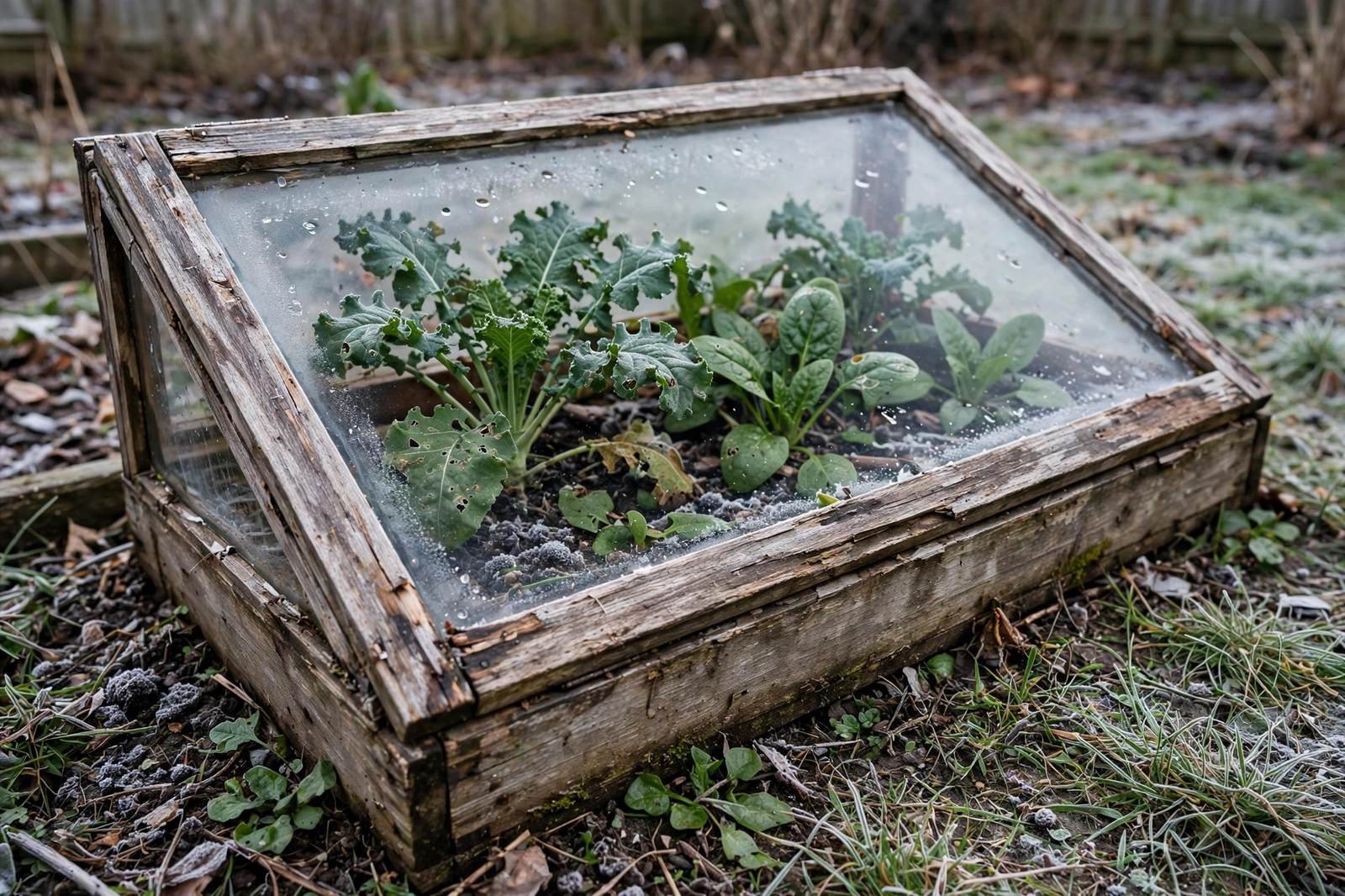
A cold frame is the quiet workhorse of the winter garden. This low, bottomless box with a clear top traps daytime heat, sheds hard wind, and holds calmer air around hardy vegetables when open beds go still. Greens keep growing slowly through short days, and roots sit in soil that freezes less often and thaws more gently.
We reach for a cold frame when the goal is steady harvests rather than fast summer growth. Kale holds its leaves, spinach stays sweet, carrots size up under cover, and loose lettuce gives cut after cut on mild weeks. This guide walks through siting, timing, soil, and daily care from first cold nights through the late winter thaw.
| Best site | Full sun facing south, sheltered from north wind, close to a path we use daily |
|---|---|
| Inside temperature goal | A few degrees warmer than open air at night; vent once inside air passes about 60 degrees |
| Soil | Loose, well drained bed soil enriched with finished compost before planting |
| Best crops | Kale, spinach, Swiss chard, carrots, scallions, hardy lettuce, Asian greens |
| Water needs | Light and steady; soil stays slightly moist, never soggy during cold spells |
| Main risks | Overheating on sunny days, damp stagnant air, slugs, and hard freezes on clear nights |
What a Cold Frame Does and Why It Works
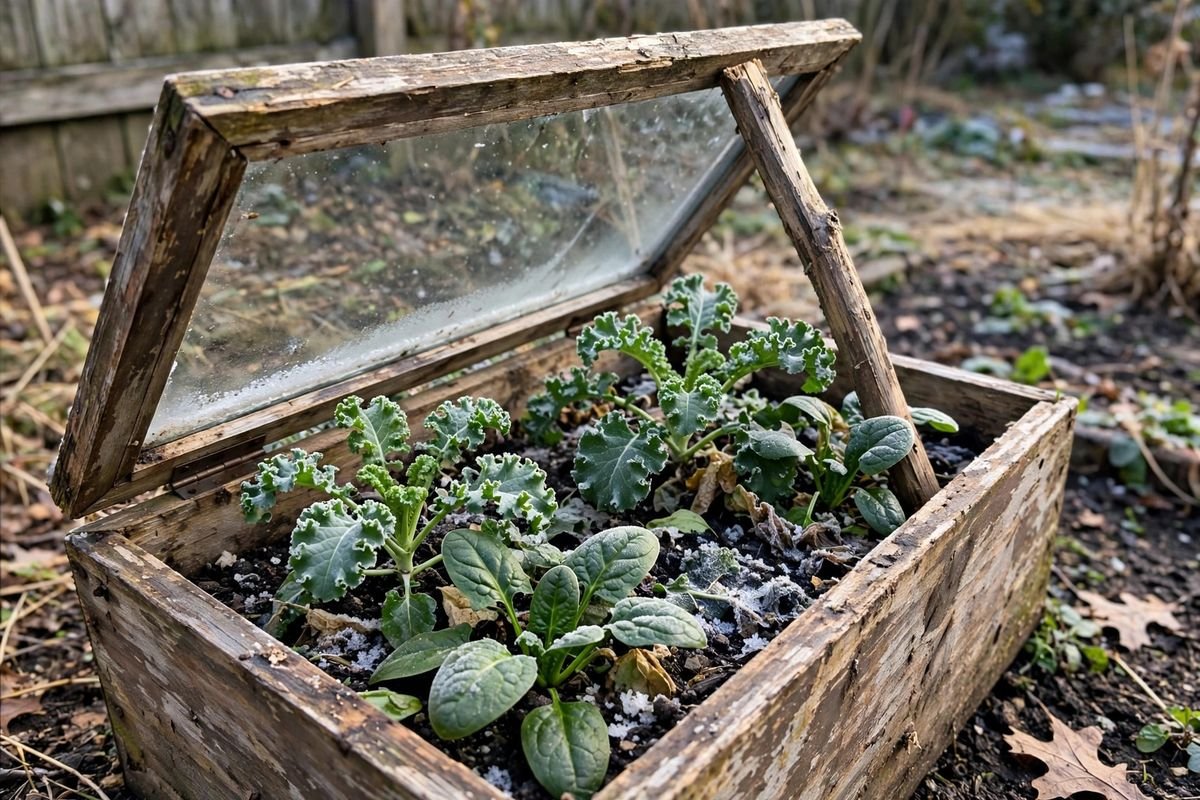
A cold frame works like a miniature greenhouse that sits directly over the soil. Sunlight passes through the top, warms the soil and leaves, and the enclosed air slows heat loss after sunset. That simple effect matters more in winter than most gardeners expect. Hardy vegetables do not need summer warmth to stay alive; they need protection from the sharp swings that tear leaf tissue and heave roots out of frozen ground. Inside a frame, nighttime lows run a few degrees higher, wind chill drops away, and heavy rain beats on the lid instead of pounding the plants.
Soil inside warms earlier and holds warmth into the evening, giving roots a longer window of gentle activity. Growth stays slow in midwinter, yet flavor improves: spinach sweetens after light frost, kale stays tender, and carrots store sugars while tops rest.
A cold frame cannot turn winter into spring. Tender crops still fail. What the frame does well is protect plants that already tolerate cold, so harvest runs weeks longer in fall and restarts earlier in spring. Pair it with hardy varieties, as in our guides to kale in fall and winter and spinach in fall, for the best run.
When to Set Up and Plant in a Cold Frame
Timing decides whether winter crops enter the cold season strong or struggle from the start. Plants need enough warm weeks to size up before growth slows. A small seedling placed in the frame in late fall has too little leaf and root to handle repeated freezes. A sturdy plant with a full root system cruises through the same weather with minor damage. We aim to have crops near harvest size, or at least well established, before the darkest stretch of winter arrives.
For fall setup, sow or transplant main crops six to ten weeks before the first hard freeze, adjusting for crop speed. Fast greens such as spinach and Asian greens can go in closer to frost. Slower crops such as kale and carrots need the earlier start. Use your local frost dates and regional planting guidance — not your USDA hardiness zone alone — to choose planting dates. County extension calendars and nearby university trial notes give the most useful windows because they reflect real first and last frost patterns, soil cooling, and typical cloud cover rather than a broad climate band.
Late winter brings a second chance. As days lengthen, we sow fresh spinach, lettuce, and radish inside the frame while outdoor beds stay muddy. Frames also harden early transplants in March and April. The soil and drainage basics in container gardening for beginners translate directly to filling and tending a frame.
How to Set Up a Cold Frame Step by Step
Step 1: Pick the warmest, driest site
Place the frame where winter sun reaches it for most of the day. A south facing wall or fence behind the frame reflects extra light and blocks cold north wind, and a gentle southern slope helps cold air drain away on still nights. Avoid low pockets where frost settles and water pools after rain. Keep the frame close to the house or along a daily path. Winter care is brief but frequent, and a frame we pass every day gets vented, watered, and harvested on time.
Step 2: Build or buy a sturdy box
A simple frame can be four boards joined into a rectangle, taller at the back than at the front so the lid sheds rain and catches low sun. Twelve inches at the front and eighteen inches at the back suits most leafy crops. Old storm windows, clear polycarbonate panels, and rigid greenhouse plastic all work as tops when they are sealed to a hinged frame. A ready made unit saves time in a busy fall. A cold frame greenhouse sized for a raised bed is one route for gardeners who want hinges and vents in place from day one. Whatever the source, check that the lid opens wide, closes flush, and can be propped safely at several heights.
Step 3: Prepare soil that drains and feeds slowly
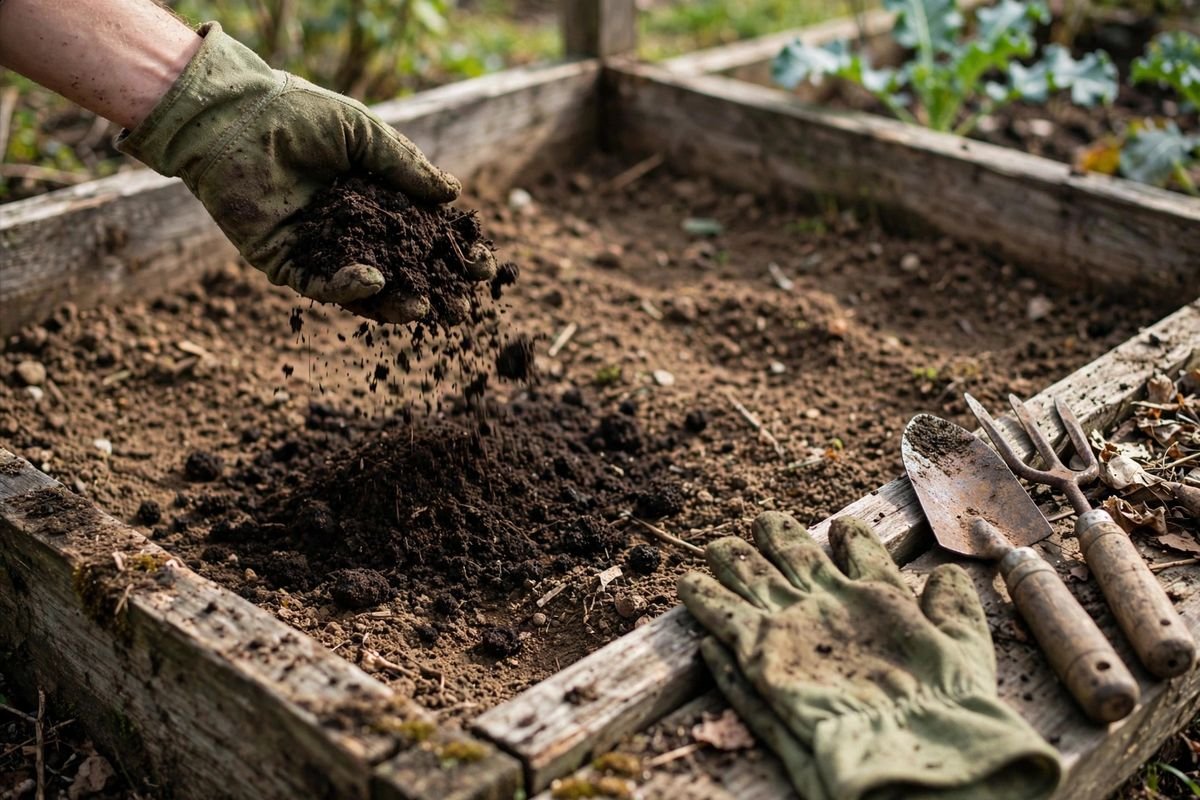
Soil inside the frame carries the crops for months with little disturbance, so prepare it well at the start. Loosen the bed twelve inches deep, remove roots and stones, and blend in two to three inches of finished compost. Heavy clay needs extra compost and a portion of coarse material to keep air in the root zone during wet weeks. Sandy soil benefits from even more compost to hold moisture between waterings. A level surface matters more than in open beds because water that runs to one corner leaves high spots dry under the lid.
Step 4: Plant with winter spacing
Crowding invites mildew and slug damage when air sits still under glass. Give kale and chard generous room, thin spinach and lettuce early, and sow carrots in rows we can thin without tearing neighbor roots. Leave a few inches between plants and the frame walls so cold does not strike leaves pressed against the sides on the coldest nights. After planting, water the bed thoroughly to settle soil around roots and seeds.
Step 5: Mulch and settle the frame
A light mulch of shredded leaves or clean straw around plants steadies soil temperature and keeps mud from splashing onto leaves during watering. Mulch also discourages the freeze and thaw heaving that can lift shallow rooted greens out of the ground. Set the frame squarely on the bed, bank a little soil along the outside base to seal gaps, and test the lid through a full open and close cycle before the first cold night arrives.
Best Vegetables for a Winter Cold Frame
The strongest winter performers share a few traits: frost hardy leaves, a tolerance for low light, and flavor that improves in cool weather. Kale leads the list. Curly and flat leaf types both hold well, and plants keep producing outer leaves whenever temperatures rise above freezing for a few hours. Spinach is nearly as tough and often tastes best from the frame, with thick leaves and a clean sweetness that summer heat ruins.
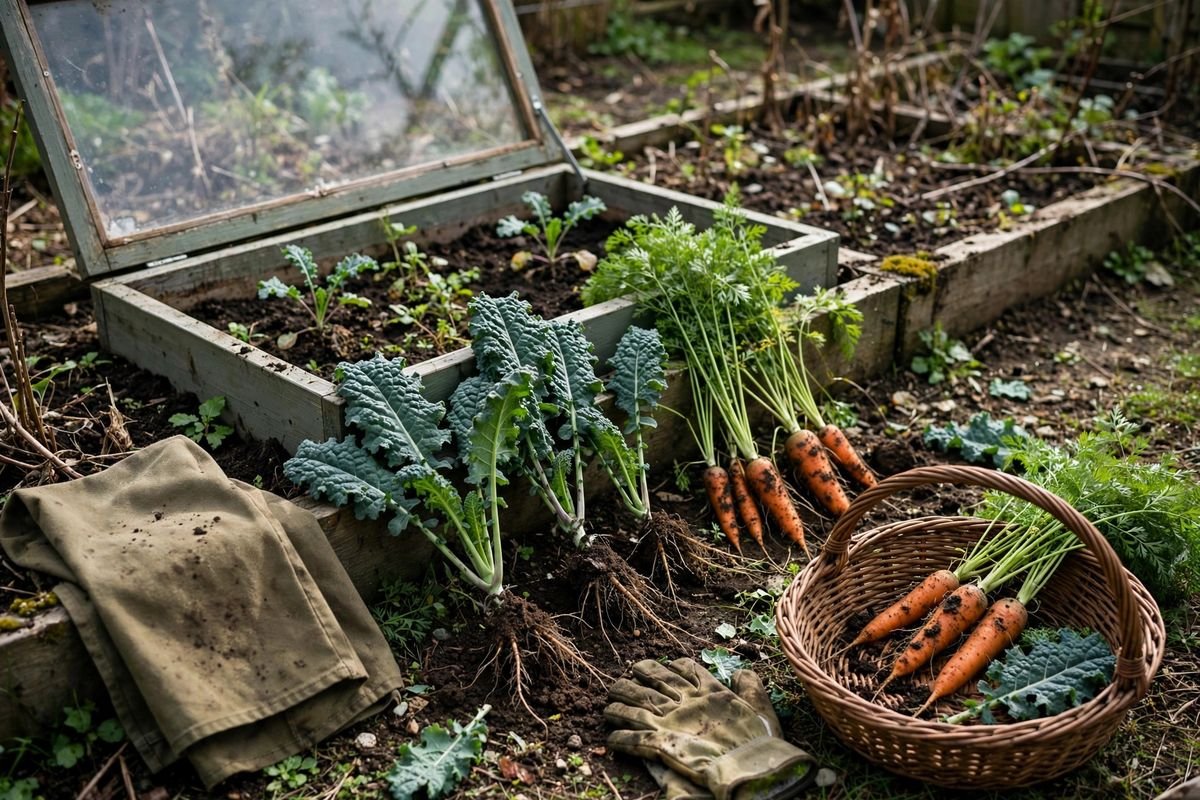
Swiss chard survives lighter freezes and rebounds fast in late winter, giving a bridge crop when kale thins out. Carrots sown in late summer size up under cover and can stay in the ground for harvest as needed; the cold frame keeps the bed workable when open soil locks solid. Scallions, hardy lettuce, mache, claytonia, tatsoi, and mizuna all earn space. Root crops such as turnips and beets grown for greens also do well. For deeper planning around leafy harvests, the variety notes inside our guides to fall spinach and winter kale help match crop speed to the weeks available before hard cold.
Daily Care: Venting, Watering, and Cold Nights
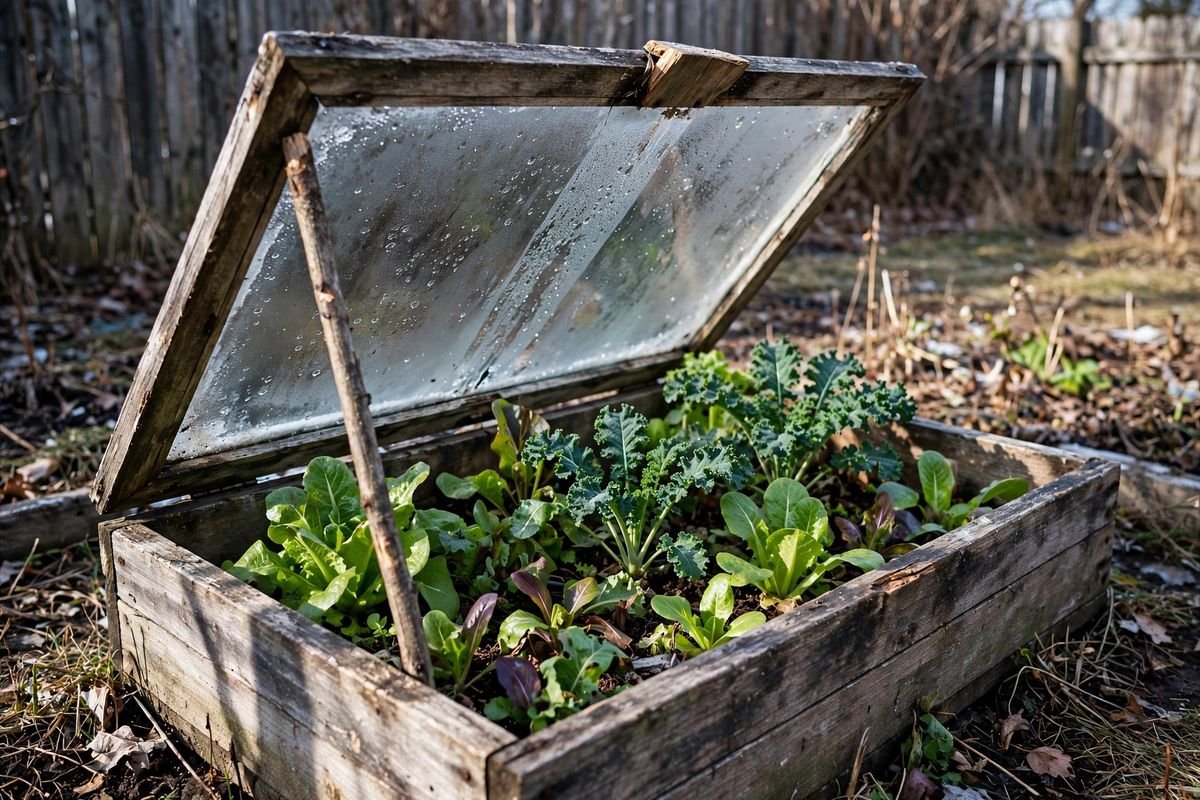
Venting is the skill that makes or breaks a cold frame. On a bright winter day, inside air can climb past 70 degrees while the yard still feels raw. Heat that high stresses cold loving crops and invites aphids. We prop the lid a few inches once inside temperatures approach 60 degrees, open wider on calm sunny afternoons, and close the frame before sunset so stored warmth carries into the night. An automatic cold frame vent opener handles this rhythm on workdays when no one is home, lifting the lid as wax inside the piston warms and lowering it as the frame cools.
Water needs drop in winter, yet they never vanish. Soil under cover receives no rain, and roots still drink on mild days. Check moisture with a finger pushed two inches deep. When the soil feels dry at that depth, water in the morning so leaves dry before night. Light, steady moisture beats rare soakings because soggy cold soil suffocates roots and feeds rot. Snow on the lid is useful insulation during a cold snap, but brush off heavy loads so light reaches the plants and the frame carries less weight.
On the harshest nights, lay floating row cover over the plants inside the frame, or drape a blanket over the closed lid. Remove covers the next morning. During gray spells, open the frame briefly on mild days to refresh air and cut gray mold.
Harvesting Through Winter
Winter harvest moves slower. Growth may add only a leaf or two per week in the darkest stretch, so we take outer leaves and leave the center intact. Kale gives the longest run with this method. Spinach cuts leaf by leaf or shears an inch above the crown for regrowth.
Roots harvest on demand. Carrots hold in cold soil like produce in a root cellar, and the frame keeps the bed diggable on days when open ground is frozen. Pull what the kitchen needs, brush off soil, and close the frame again. Lettuce and Asian greens give the best texture when picked young and often. As light returns in late winter, harvest speeds up and succession sowings can fill gaps where earlier plants have finished.
Clean habits protect the frame. Remove yellowing leaves during picking and keep debris off the soil. A few minutes of tidying each week holds off most disease pressure.
Troubleshooting Common Cold Frame Problems
Why did plants wilt on a sunny winter day?
Heat builds fast under glass. A closed frame on a bright day can scorch leaves and wilt a whole bed by afternoon. Vent earlier in the morning, prop the lid higher on calm days, and close later once the air inside matches the goal range.
Why is mold growing on leaves and soil?
Still, damp air is the usual cause. Thin crowded plants, water in the morning, and open the frame whenever temperatures allow. Remove moldy leaves right away and avoid wetting foliage during watering.
Why did hardy crops still freeze?
Very clear nights radiate heat quickly, young plants freeze sooner than established ones, and leaves touching the cold lid take extra damage. Add row cover inside the frame on bitter nights, keep plants off the walls, and enter winter with sturdy, well rooted crops.
Why are slugs eating the greens?
Slugs love the sheltered, damp space under a lid. Hand pick during evening checks, set simple traps at the corners, and keep mulch and debris from piling against the stems. Dry, tidy soil surfaces make the frame less inviting.
Why is growth so slow in midwinter?
Short days limit plants more than cold does. Growth that stalls in December and January often resumes on its own as daylight lengthens. Keep plants healthy rather than pushing feed, and plan fresh sowings for late winter.
FAQ
How cold can vegetables handle inside a cold frame?
Established kale and spinach tolerate lows in the teens and single digits for short stretches inside a frame, especially under row cover. Lettuce and chard prefer a milder range and may need extra cover sooner. Plant health and soil moisture shape survival as much as the number on the thermometer.
Does the lid need to be glass?
No. Glass is clear and durable, yet twin wall polycarbonate and rigid clear panels insulate better and weigh less. The best top is the one that seals well, opens safely, and lets in plenty of light.
Can a cold frame sit on a patio or deck?
Yes, with a deep base of soil or large trough planters set inside the frame outline. Soil volume buffers temperature swings, so deeper is better. Drainage must stay open so the planting never sits in standing water.
When should the frame come off in spring?
Open the lid more each mild week and remove the frame once nights stay reliably above the range that damages the crops inside. Many gardeners lift the frame to a new spot for hardening transplants while winter greens finish in open air.
Sources & Further Reading
- University of Minnesota Extension — season extension with cold frames, site choice, venting, and hardy crop selection (extension.umn.edu)
- Colorado State University Extension — cold frame construction, temperature control, and winter vegetable care (extension.colostate.edu)
- University of Maryland Extension — season extension techniques for home gardens, crop hardiness and timing (extension.umd.edu)
- Iowa State University Extension and Outreach — fall planting schedules for greens and root crops ahead of frost (extension.iastate.edu)
Keep growing through the cold season:
A cold frame rewards gardeners who check in often and adjust in small ways: a prop here, a drink there, a handful of leaves for supper. Set one over the hardiest bed in the yard this week and watch how the season changes under that lid. Which winter crop will earn the first row inside the frame?