
This post may contain affiliate links. If you buy through links on this page, we may earn a commission at no extra cost to you.
As an Amazon Associate I earn from qualifying purchases.
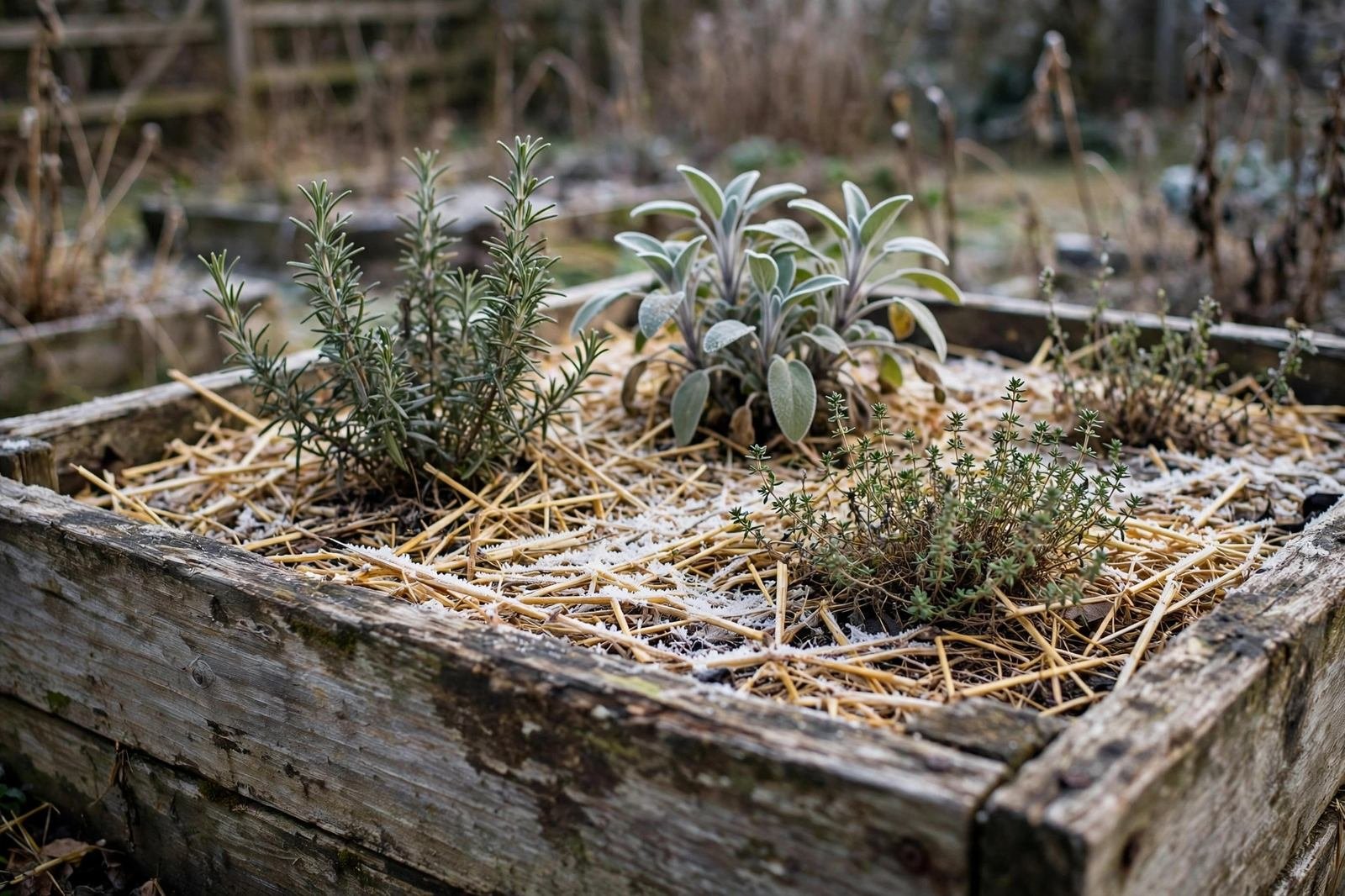
Many favorite herbs laugh at a light frost and keep giving us handfuls for soups and roasts well into the cold months. Others, like rosemary on an exposed corner, need a bit of shelter to see spring again. Knowing which herbs can stay outdoors, which ones need mulch or a cold frame, and which ones we should simply harvest hard and replant saves both plants and money. It also means fresh flavor in February instead of a row of empty pots.
This guide sorts common kitchen herbs by winter toughness, then walks through the outdoor methods we rely on: mulch, wind protection, cold frames and cloches, and watering habits that prevent winter rot. With the right prep, most hardy herbs ask for very little once cold settles in — a check after storms, a cover reset, and patience until spring growth shows which stems made it through the coldest nights.
| Toughest outdoors | Thyme, oregano, sage, chives, and mint in the ground with mulch |
|---|---|
| Needs shelter | Rosemary, parsley, cilantro, and French tarragon in colder areas or in pots |
| Mulch depth | 2 to 4 inches of straw or shredded leaves once soil cools; keep mulch off crowns |
| Water | Water deeply before a hard freeze; let pots drain fully and avoid soggy soil |
| Wind guard | Burlap screen, fence line, or cold frame on the windy side; pots grouped together |
| Common problems | Crown rot in wet soil, heaving from freeze-thaw cycles, dieback on exposed tips |
Which Herbs Can Stay Outdoors
Herbs fall into three rough groups, and sorting them first prevents wasted effort. The toughest group shrugs off real cold in the ground: thyme, oregano, sage, chives, garlic chives, and sweet cicely return year after year when soil drains well. Mint belongs here too, though we keep it in its own pot or corner because it spreads with enthusiasm.
The middle group survives many winters with help: rosemary, parsley, cilantro, French tarragon, winter savory, and lemon balm. Rosemary is the famous borderline case — in mild areas it sails through, while in colder gardens it needs the warmest wall, sharp drainage, and a cover on the coldest nights. Parsley and cilantro are biennials or cool-season plants that often carry through a mild winter and then bolt the following spring, which still gives us useful early leaves. The tender group — basil, stevia, and most scented geraniums — cannot take frost outdoors at all. For those, we harvest generously in fall, root cuttings indoors, or treat them as annuals and start fresh, much as we plan tender crops such as tomatoes, where timing around frost shapes the whole season.
Timing Outdoor Winter Prep
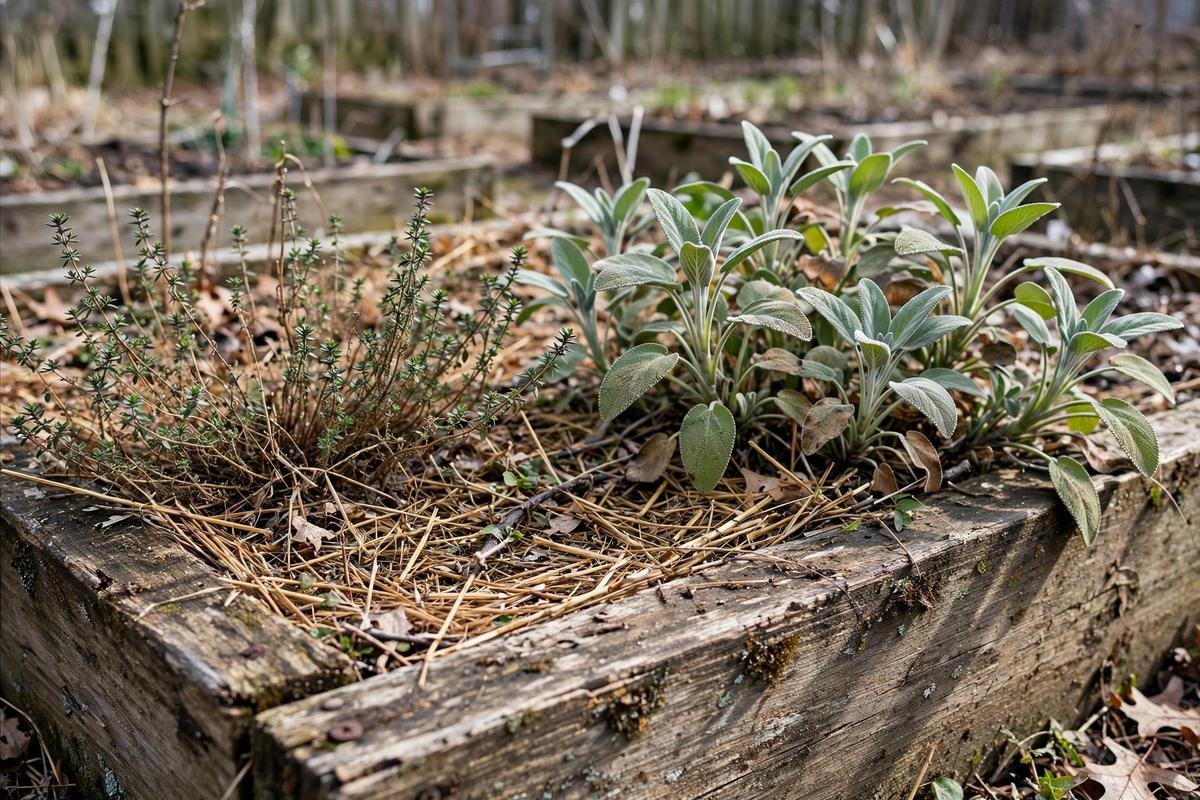
Good timing protects roots without smothering plants. We tidy the herb bed in stages rather than in one big fall weekend. First, while growth is still active, we stop heavy harvesting about six weeks before the average first frost so woody herbs can harden their stems. Late pruning and late feeding both push soft growth that cold easily burns, so scissors and fertilizer stay in the shed after that point. Use your local frost dates and regional planting guidance — not your USDA hardiness zone alone — to choose planting dates. The same frost-date habit guides winter prep, because a mulch laid down too early on warm soil keeps crowns wet and invites rot, while mulch after the soil has cooled locks in a steady chill that roots prefer.
Gardeners who divide time between beds and pots will find the drainage and grouping habits in our guide to container gardening for beginners carry straight into winter pot care. In-ground herbs get their mulch once nights regularly drop into the 30s. Potted herbs get moved to shelter as soon as hard freezes enter the forecast, since roots in a pot feel far more cold than roots in the ground.
How to Overwinter Herbs Outdoors Step by Step
Step 1: Clean up without cutting everything flat
We start by removing dead leaves and spent annual herbs from the bed so air can move and fungal spores have fewer places to rest. Woody herbs such as sage, thyme, and rosemary keep their structure; we trim only broken or crossing stems and leave the main framework standing, because those stems shield the crown and mark the plant’s place for spring pruning. Soft herbs like parsley keep a tidy rosette — we pick off yellowed outer leaves and leave the center intact. Fallen leaves that belong to the bed get cleared off crowns, while the broader cleanup habits in our garden routine — removing diseased material, emptying saucers, and refreshing paths — keep the herb corner healthy without stripping it bare. Clean prunings and spent foliage go to the pile described in our guide to how to make compost at home, as long as the material shows no disease.
Step 2: Mulch for steady cold, not warmth
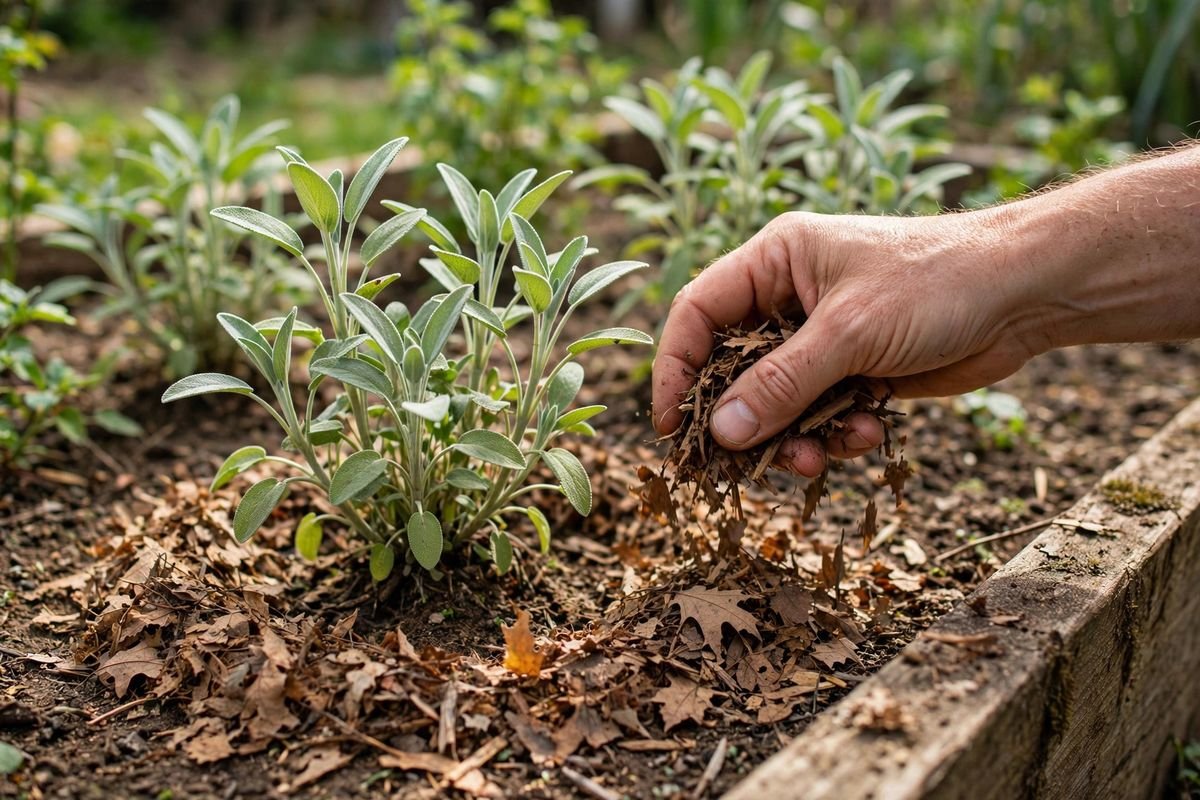
Mulch outdoors works by keeping soil temperature steady, not by keeping soil warm. Freeze-thaw cycles that lift and drop the soil surface heave shallow roots out of the ground and crack crowns. A 2- to 4-inch layer of straw, shredded leaves, or pine needles spread after the soil cools evens out those swings. We pull mulch a couple of inches back from each crown so air reaches the base of the stems and winter wet drains away from the most rot-prone spot on the plant. Evergreen boughs laid loosely over low herbs add extra insurance in windy sites, and they come off in minutes on a mild spring day. A bale of garden straw mulch covers a whole herb bed and stores flat in a dry corner for the next season.
Step 3: Block wind and borrow wall warmth
Cold wind does as much damage as cold air, especially to rosemary and sage on exposed corners. We plant and protect accordingly: herbs on the south or west side of a wall or fence gain stored daytime heat and shelter from the sharpest gusts. A simple burlap screen stapled to stakes on the windy side of a bed cuts desiccation without blocking light. Grouping pots and adding a windward barrier saves foliage in every season. For a prized rosemary, a tomato cage wrapped in burlap and loosely filled with dry leaves builds a breathable winter coat that comes off fast during warm spells.
Step 4: Add a cold frame or cloche for borderline herbs
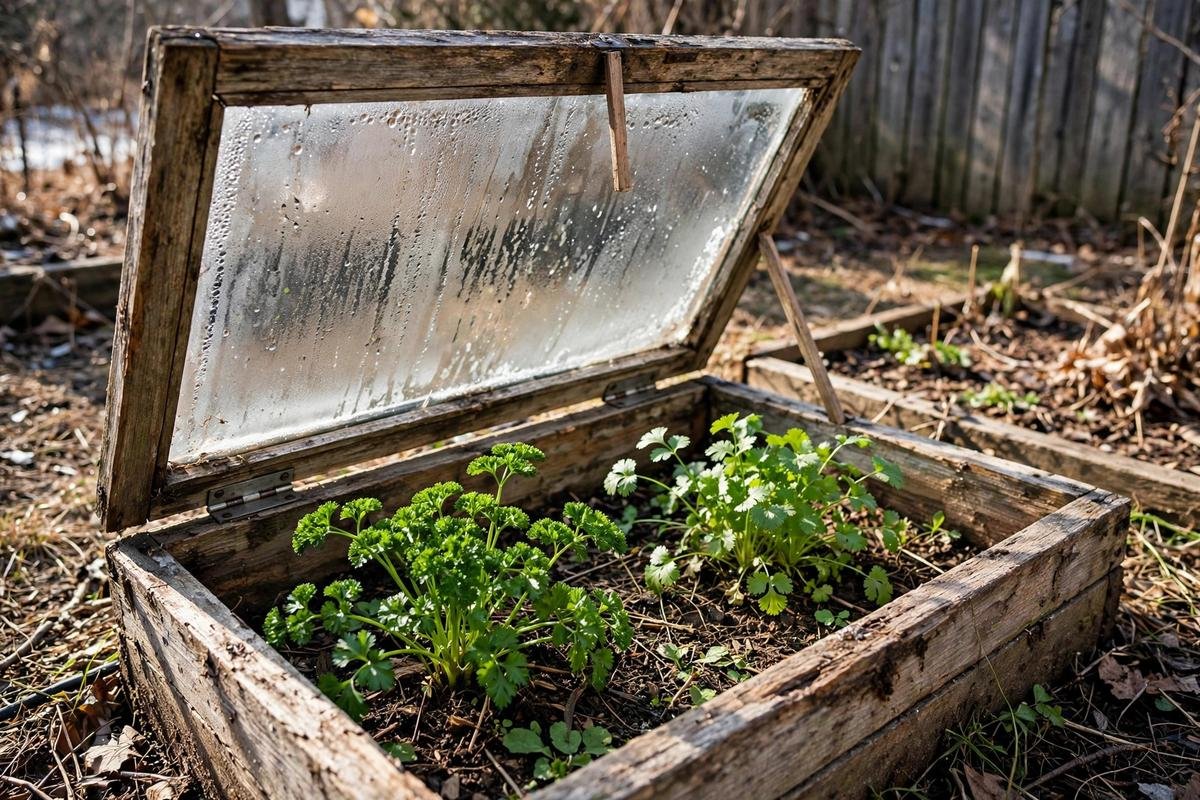
A cold frame turns a borderline winter into a comfortable one. Parsley, cilantro, tarragon, and young rosemary all gain several degrees of protection and, just as important, shelter from winter rain that rots crowns in heavy soil. We set the frame over the plants before hard freezes settle in, prop the lid open on sunny days above 40°F so heat never builds, and close it at night. Glass or plastic cloches over single plants serve the same purpose for a prized specimen. Venting is the habit that makes frames succeed — a closed frame on a bright winter day can cook tender leaves by noon. Keep a simple cold frame or cloche set stored near the herb bed so protection goes on in minutes when the forecast turns.
Winter Care for Herbs Outdoors
Once beds are mulched and frames are set, winter care turns quiet. Herbs outdoors need observation more than intervention: a short walk past the bed after storms to reset covers, clear pooled water, and shake snow off frame lids before weight builds up.
Watering deeply before freezes, sparingly after
Moist soil holds heat better than dry soil, so we water the bed deeply a day ahead when a hard freeze is forecast and the soil is dry. After that, in-ground herbs need little winter watering, while potted herbs outdoors dry out even in cold weather, especially inside a frame where rain never reaches. We check pots every week or two and water on a mild morning, always letting excess drain fully. A breathable frost cover blanket over grouped pots on the coldest nights protects without trapping damp.
Potted herbs need extra root protection
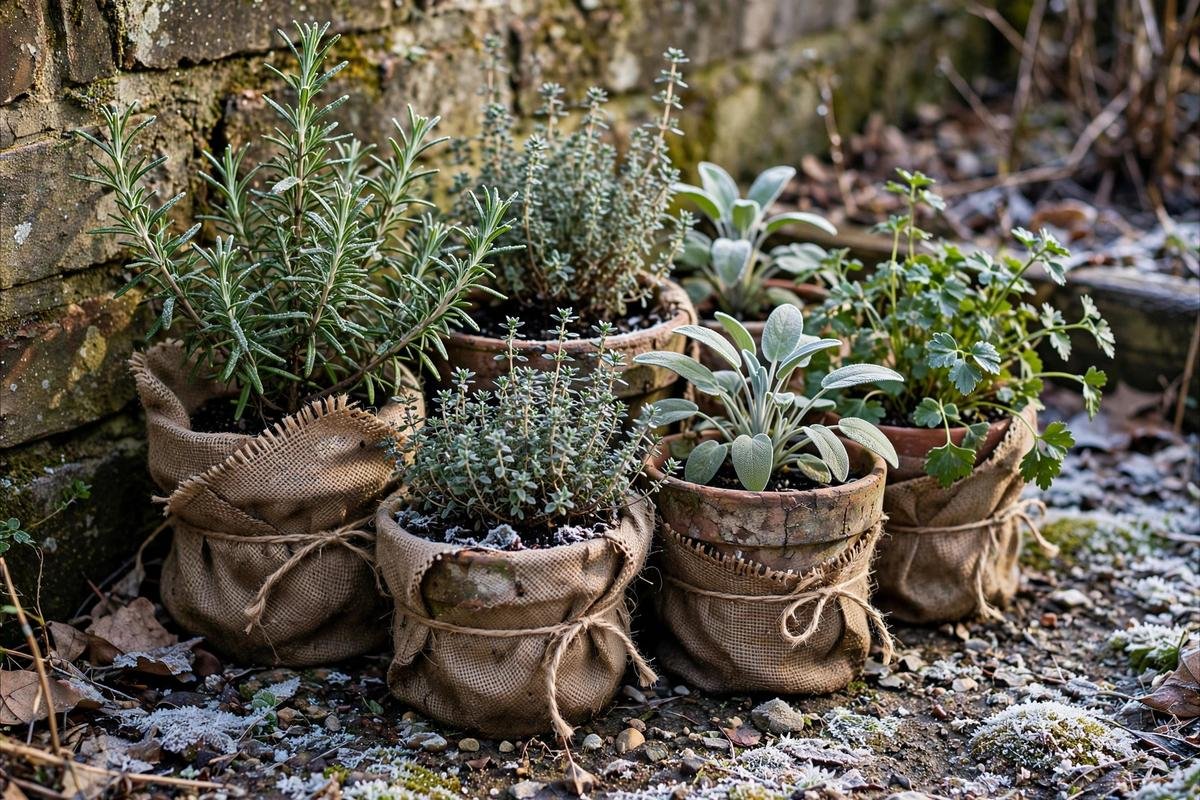
Roots in pots experience the air temperature on all sides, so a potted thyme faces a colder winter than the same plant in the ground. We group outdoor pots together in the most sheltered corner available, sink pots into empty bed soil or surround them with straw bales, and wrap exposed pots in burlap. Unglazed terracotta can crack with repeated freezing of wet mix, so treasured clay pots move to a garage while the herbs themselves stay outdoors in nursery pots. Saucers come off for winter so pots never sit in ice.
Harvesting lightly all winter
Hardy herbs reward small, regular harvests. We snip thyme, sage, and oregano as recipes call for them, always taking outer stems and leaving the crown and inner growth untouched. Parsley under a frame gives full leaves through most of winter when we pick the outer stalks one at a time. Heavy harvesting that strips a plant in January removes the leaf cover that shades the crown and slows regrowth, so winter picking stays modest and spring growth stays strong.
Spring Wake-Up for Outdoor Herbs
Spring care starts with patience. Mulch comes off in stages as days warm, first pulled back from crowns on mild afternoons, then removed fully once hard freezes pass. Pulling everything off during the first warm week exposes crowns to the late freezes that follow in most regions. Woody herbs get their real pruning only after new growth shows which stems lived: we cut back to green growth, remove winter-killed tips, and shape sage and thyme once buds break along the stems. Plants that heaved during winter get firmed back into the soil with a gentle press of the boot and a fresh handful of mulch once the soil settles.
Feeding stays light. A top-dressing of finished compost as growth resumes covers the needs of most herbs, which resent rich soil and reward lean conditions with stronger flavor. Rosemary that survived in a frame or against a wall gets uncovered gradually over a week so tender growth hardens before facing full wind and sun again.
Troubleshooting Herbs Outdoors in Winter
Why did the crown turn mushy and dark?
A mushy, dark crown almost always means winter wet sat against the base of the plant. Mulch piled over the crown, heavy soil that drains slowly, or a frame that drips onto one spot all create the same rot. We clear mulch away from crowns, improve drainage with compost worked into the surrounding soil, and site new plantings on a slight mound in wet gardens.
Why are the plants sitting on top of the soil?
Plants perched above the soil line suffered heaving from repeated freeze-thaw cycles. We press them gently back into contact with the soil on a mild day, water lightly to settle the roots, and reapply mulch once the soil has cooled again. A steadier mulch layer applied after the ground chills prevents a repeat the following winter.
Why did rosemary lose its outer branches?
Tip and outer-branch dieback on rosemary usually traces to wind exposure, sudden deep cold after a warm spell, or roots that stayed wet. We wait until growth resumes in spring before pruning, then cut back only to live green wood. Plants in the warmest microclimate, with sharp drainage and a wind screen, lose the fewest branches year to year.
Why is there no new growth by mid-spring?
Slow herbs test our patience. Thyme, sage, and tarragon can wait until soil truly warms before showing green. We scratch a stem to check for green tissue beneath the bark. A green stem means a living plant that needs more time; a brown, dry stem throughout means winter won, and we replant once the soil warms and note the spot for extra protection next year.
Frequently Asked Questions
Can rosemary survive winter outdoors in a pot?
Rosemary in a pot survives outdoors only in mild areas or with serious protection elsewhere. Grouping the pot with others against a warm wall, wrapping it, and adding a cover on the coldest nights gives the best odds. In cold regions, most gardeners will have better luck keeping potted rosemary in a bright, cool room for winter instead.
Should herbs be cut back in fall?
Woody herbs do best with light cleanup in fall and their main pruning in spring, after we can see which wood survived. Soft herbs such as parsley keep their rosette through winter. Cutting woody herbs hard in fall removes stems that protect the crown and can push tender regrowth right before cold weather.
When does the mulch come off?
Mulch comes off gradually as spring warms, pulled back from crowns first and removed fully after the last hard freezes. Rushing removal during the first warm spell exposes plants to the late cold snaps that do the most damage.
Sources & Further Reading
- Overwintering herbs and winter mulch practices for perennial herbs (extension.umn.edu)
- Preparing the herb garden for winter — pruning, drainage, and cold protection notes (extension.psu.edu)
- Growing herbs in containers and protecting roots in cold weather (extension.colostate.edu)
- Using local frost dates for fall and spring garden timing (extension.org)
Related reads for this season:
- How to Grow Tomatoes — frost timing and tender-crop planning
- How to Protect Balcony Plants From Strong Wind — shelter and grouping ideas for pots
Herbs that overwinter outdoors pay us back with early flavor, established roots, and one less flat of seedlings to tend in spring. A tidy fall cleanup, mulch at the right moment, and shelter for the borderline favorites carry most kitchen herbs through winter with very little weekly effort. Start with the toughest plants, add protection where the garden runs cold or windy, and let each winter teach us which corner of the bed our herbs like best.
Which herb are you determined to bring through this winter — a woody rosemary by the wall, parsley under a frame, or a pot of thyme tucked into its warmest corner?