
This post may contain affiliate links. If you buy through links on this page, we may earn a commission at no extra cost to you.
Looking for more crops? Browse all of our Vegetable Growing Guides.
As an Amazon Associate I earn from qualifying purchases.
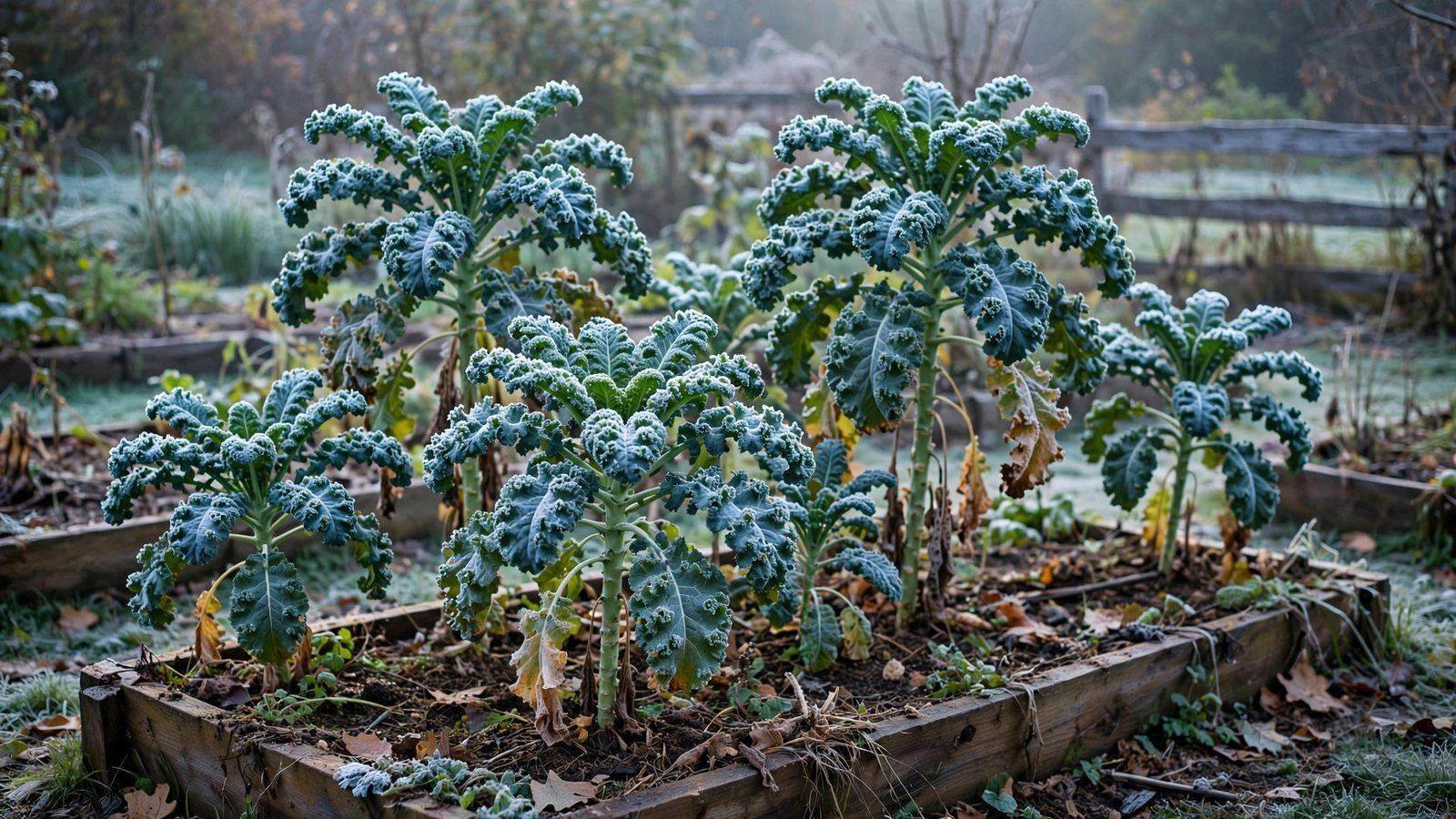
A lot of gardeners write kale off as a spring crop and yank the plants in July. That’s understandable — by midsummer, heat-stressed kale is tough, bitter, and crawling with cabbage worms. But here’s what those gardeners miss: kale is one of the most cold-hardy vegetables you can grow, and it actually gets better after frost. The same plant that tasted like cardboard in August turns sweet and tender in November.
Kale’s cold tolerance is in a different league from most fall greens. While lettuce gives up at the first hard freeze, established kale keeps standing through snow in many zones — and the starch-to-sugar conversion triggered by cold weather gives winter-harvested leaves a flavor that surprises everyone who tries them.
This is standard, well-documented gardening practice — extension services across cold-winter states list kale among their top recommendations for fall and winter harvests. In this guide you’ll learn the timing that matters (it’s earlier than you think), how to start plants in summer heat for a fall payoff, spacing and feeding for sturdy plants, the hardiest varieties for winter harvest, and exactly when to pick for the sweetest leaves.
Quick Care Reference
| Care point | What to do |
|---|---|
| Plant family | Brassica (cabbage family) |
| Start window | 6 to 8 weeks before first expected fall frost |
| Days to germination | 7 to 10 in warm soil |
| Days to maturity | 55 to 75 from seed; 30 to 40 from transplants |
| Seed depth | 1/4 to 1/2 inch |
| Spacing | 12 to 18 inches apart; rows 18 to 24 inches apart |
| Germination soil temperature | 60 to 80°F optimal |
| Light | Full sun (tolerates light shade) |
| Soil | Fertile, well-drained, pH 6.0 to 7.5 |
| Water | 1 to 1.5 inches per week |
| Cold tolerance | Down to 10–20°F depending on variety; overwinters in zones 7+ with mulch |
Why Kale Belongs in the Fall Garden
Summer is kale’s worst season and fall is its best. Cabbage worms, flea beetles, and aphids — the pests that make summer kale miserable — fade as temperatures drop. The plant itself grows more vigorously in cool air, producing tender new leaves right up until hard freezes.
Then there’s the frost-sweetening effect. When temperatures dip near freezing, kale converts stored starches into sugars, which act as a natural antifreeze in the leaf tissue. The result is measurably sweeter, less bitter greens. Many gardeners deliberately wait for the first frost or two before starting their main kale harvest.
Kale is also simply dependable. It asks for less babysitting than most fall crops: no succession sowing needed, no bolting risk in cool weather, and a single planting can produce from October into the following spring in mild climates. If you want a faster, milder green for the same season, our guide to growing spinach in fall makes a perfect companion planting.
When to Plant Kale for Fall and Winter
The Timing Most Beginners Miss
Here’s the counterintuitive part: fall kale starts in summer. To have full-size plants ready for October harvests, you need to start seeds 6 to 8 weeks before your first expected frost — which means July or August in much of the country. Transplants shorten the wait by about three weeks: set them out 4 to 6 weeks before first frost.
That summer start is the trickiest part of fall kale. Seeds germinate happily in warm soil (60 to 80°F is ideal), but young seedlings wilt in heat. Start seeds indoors or in a shady nursery spot, keep them consistently moist, and transplant out as the worst heat
breaks. A shade cloth over new transplants for their first week makes the transition far less stressful.
Start seeds 6–8 weeks before your average first fall frost (transplanting 3+ weeks earlier than direct sowing buys). For example: early-July starts in zones 3–4, mid-to-late-July starts in zones 5–6, August starts in zones 7–8, September starts in zones 9–10.
For the full seasonal picture, check what to plant in October to see what else fits alongside your kale.
How to Plant Fall Kale: 5 Steps
Step 1: Start Seeds in Summer (or Buy Transplants)
Sow seeds 1/4 to 1/2 inch deep in cell trays or a nursery bed, keeping the soil evenly moist. They’ll emerge in about a week in warm soil. If starting seeds in July heat feels like too much, nursery transplants are a completely legitimate shortcut — just choose stocky, deep-green plants, not leggy ones.
Step 2: Prep a Fertile Bed
Kale is a heavier feeder than most greens. Work 3 to 4 inches of compost into the planting bed, and if your soil is lean, add a balanced organic fertilizer at planting time. Because kale follows summer crops in many rotations, replenishing the bed matters — don’t plant into exhausted soil and expect winter performance.
Step 3: Transplant on a Cloudy Evening
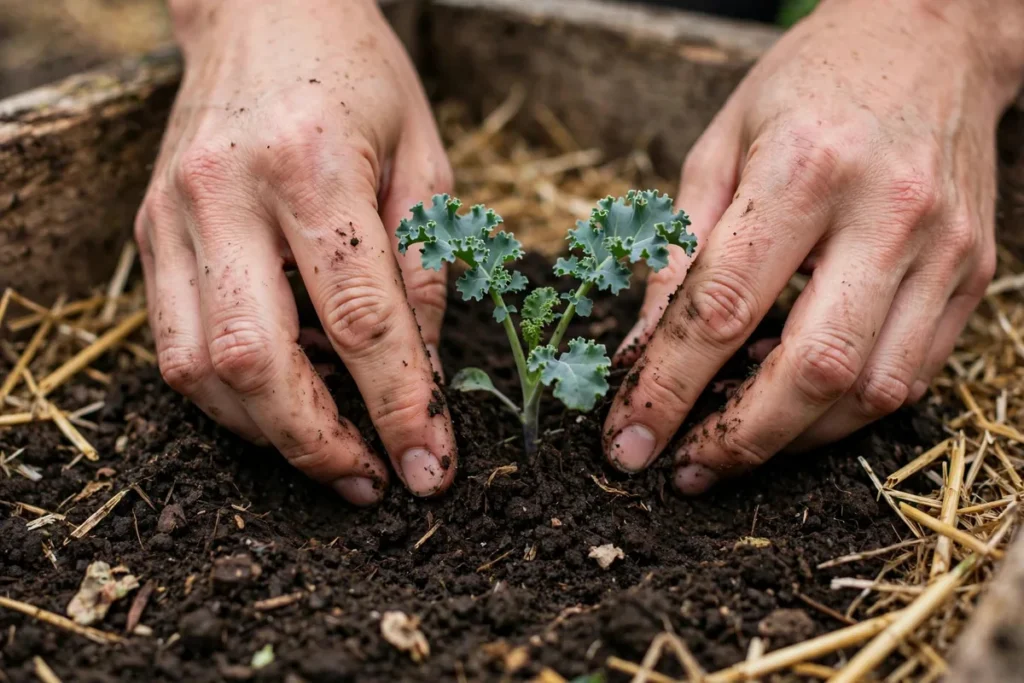
Set transplants out in the late afternoon or on an overcast day to reduce transplant shock. Plant at the same depth they grew in their pots, firm the soil gently, and water deeply. Space plants 12 to 18 inches apart in rows 18 to 24 inches apart — kale gets big, and crowded plants stay small and leggy.
Step 4: Water Deeply, Then Mulch
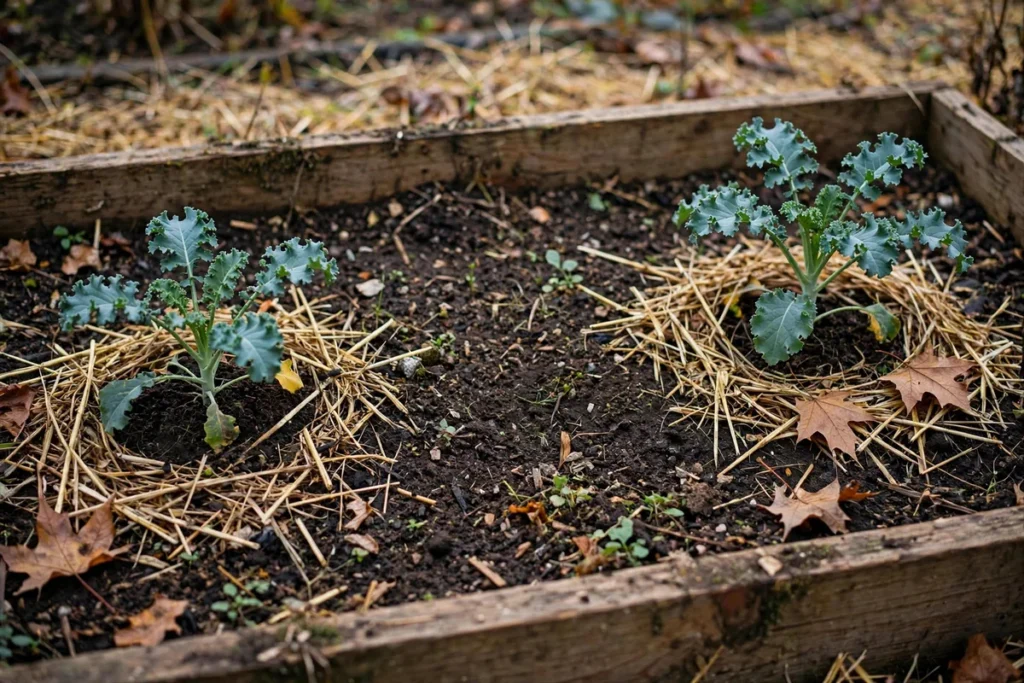
Give new transplants consistent moisture for their first two weeks. Once established, kale wants about 1 to 1.5 inches of water a week. Then mulch 3 to 4 inches deep with straw or shredded leaves — mulch is non-negotiable for winter kale, insulating roots through freeze-thaw cycles.
Step 5: Cover Before the Hard Freezes
When nights start dropping into the low 20s, throw a floating row cover over the bed. In zones 7 and up, a covered bed plus deep mulch will carry kale straight through winter, giving you fresh greens in months when nothing else is growing.
Spacing: Give Kale Room
The number-one beginner mistake with kale is planting it like lettuce. A mature kale plant is a small shrub — 2 feet tall and 18 inches wide is normal for full-size varieties. At 12 to 18 inches apart, plants fill in to form a lush, self-shading canopy that suppresses weeds on its own.
Growing baby kale for tender salad greens? That’s a different crop, agronomically speaking: sow thickly, space 4 to 6 inches apart, and cut the whole plant young at 3 to 4 inches tall. Don’t try to grow full-size plants at baby spacing — you’ll get neither.
Caring for Fall and Winter Kale
Water
Fall kale still needs steady water — inconsistent moisture produces tough, bitter leaves even in cool weather. An inch to an inch and a half per week, delivered at the base of the plants, is the target. As winter approaches and growth slows, you can back off; dormant plants in cold soil need far less.
Mulch Heavily for Winter
For kale you intend to overwinter, mulch is your most important tool. After the ground cools in late fall, pile 4 to 6 inches of straw or shredded leaves around the plants — this moderates soil temperature swings, which is what actually kills plants in winter (freeze-thaw heaving, not cold alone). Keep mulch pulled slightly back from the stems to discourage rot.
Feeding
Kale planted into compost-rich soil rarely needs more food in fall. If lower leaves yellow prematurely or growth stalls while weather is still mild, side-dress with compost or a nitrogen-leaning organic fertilizer. Avoid heavy late-season feeding — soft, lush growth is the first thing to freeze.
Frost and Snow Protection
A floating row cover is the simplest season extender: draped over hoops or laid directly on the plants, it adds several degrees of protection and keeps drying winds off the leaves.
Snow itself is fine — it’s an excellent insulator. The danger is ice storms and brutal wind, which desiccate exposed leaves. A cover handles both.
Best Kale Varieties for Fall and Winter
Variety choice matters more for winter kale than for almost any other crop. These are widely grown, standard varieties grouped by type — pick based on your winter severity and how you like to eat kale.
Curly-Leaf Classics
‘Winterbor’ — the benchmark winter kale: a vigorous curly hybrid with blue-green leaves, bred for cold tolerance and uniform growth; stands well into winter in most zones. ‘Dwarf Blue Curled Scotch’ — a compact heirloom with finely curled, sweet leaves; smaller plants suit tight spaces and containers. ‘Starbor’ — another strong curly hybrid, fine-textured and productive, with good holding ability in cold weather.
Lacinato (Dinosaur) Types
‘Lacinato’ — the Tuscan heirloom with long, bumpy, blue-green leaves; famously sweet after frost and a striking plant in the winter garden. ‘Black Magic’ — a hybrid lacinato type with darker, more uniform leaves and improved vigor; a good pick if you want the dinosaur look with hybrid reliability.
Tender Russian and Siberian Types
‘Red Russian’ — flat, fringed gray-green leaves with purple veins and stems; widely described as the sweetest-tasting and most cold-hardy of the common kales, often surviving into the teens. ‘White Russian’ — similar in habit with white-veined leaves; tender texture makes it excellent for raw eating after frost.
Color for the Winter Garden
‘Redbor’ — deep purple-red curly leaves that intensify in cold weather; as ornamental as it is edible, and a genuine winter survivor. Plant a few among the greens and the bed looks like a flower border in January.
How to Harvest Kale in Fall and Winter
Wait for frost before your main harvest if you can — one or two light frosts noticeably sweeten the leaves. Harvest from the bottom up: snap or cut the lowest, largest outer leaves first, leaving at least a hand’s worth of leaves at the top so the plant keeps growing. The central bud at the top is the growing point — never take it.
The sensory cues for peak picking: leaves 8 to 12 inches long, firm at the rib, with deep color. In winter, harvest in the afternoon when leaves have thawed — frozen leaves are brittle and bruise easily. A plant harvested this way produces steadily for months; in mild climates, the same plants you set out in September can still be giving in March.
Troubleshooting Common Problems
Cabbage Worms
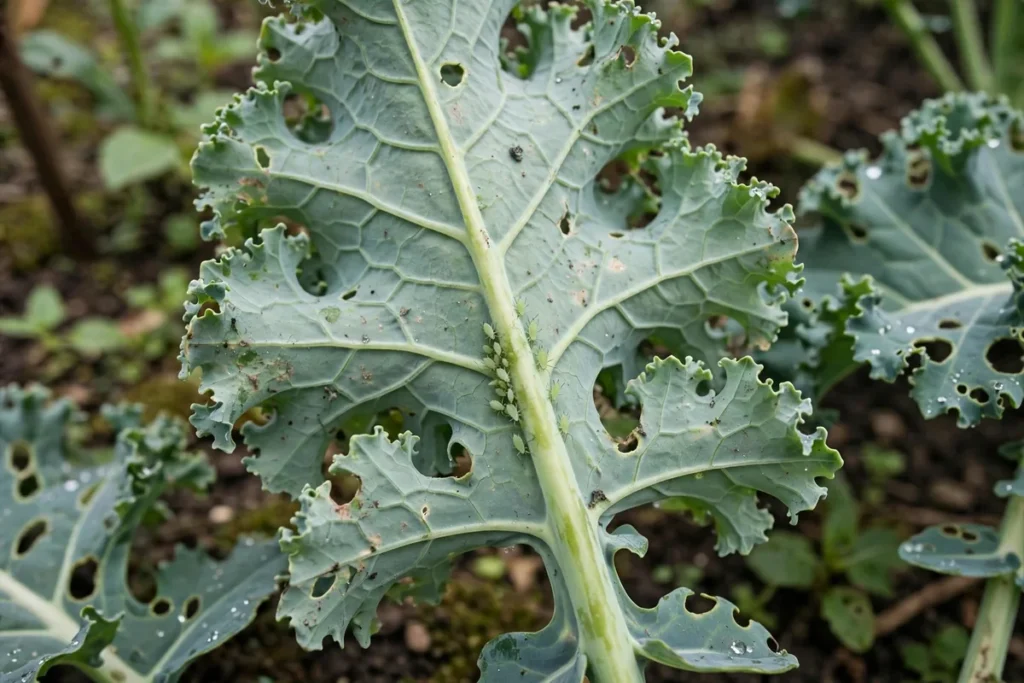
Velvety green caterpillars that chew ragged holes — the number-one kale pest. They’re much less active in cool fall weather, which is one more reason to grow kale in autumn. Handpick what you see, and cover young plants with row cover or insect netting to block the white butterflies from laying eggs in the first place.
Aphids Clustering on Stems
Aphids love the tender new growth at the plant’s center. A strong blast of water knocks most of them off; repeat every few days. In fall, ladybugs and other predators are still active and often handle light infestations without intervention.
Flea Beetles
Tiny jumping beetles that pepper leaves with small holes — mostly a problem on young seedlings in warm weather. Row cover from transplant day onward is the cleanest prevention. Established fall plants usually outgrow the damage.
Lower Leaves Turning Yellow
Some yellowing of the lowest leaves is normal aging, especially going into winter — just remove them. Widespread yellowing while weather is still mild usually means the plant is hungry (side-dress with compost) or sitting in soggy soil (ease off watering, improve drainage).
Plants Died Over Winter
In zones 6 and colder, an unusually brutal winter can kill even hardy varieties. Deep mulch and row cover stack the odds heavily in your favor, and choosing proven cold-hardy types like ‘Winterbor’ or ‘Red Russian’ matters. If winter kill happens, the plants still gave you a full fall harvest — that’s a win, not a failure.
Frequently Asked Questions
Will kale survive snow?
Yes — established kale handles snow well; the snow insulates the plants. Many gardeners in zones 5 and 6 harvest kale from under snow cover all winter. The combination that causes damage is extreme cold plus drying wind, which is why a row cover helps.
Does frost really make kale sweeter?
Yes. Cold triggers kale to convert starches to sugars as a natural antifreeze, and the flavor difference is noticeable — less bitter, more sweet. This is well-documented plant physiology, not garden folklore. Taste a leaf before the first frost and another after, and you’ll be convinced.
Can I harvest kale all winter?
In zones 7 and warmer, usually yes, especially with mulch and row cover. In colder zones, you can harvest through hard freezes but growth pauses — pick what you need and let the plant rest. Either way, the plants typically resume vigorous growth in early spring for a bonus harvest.
Should I direct sow or use transplants?
Transplants are the safer bet for fall kale because they buy you three-plus weeks and sidestep the worst summer heat. Direct sowing works fine if you can keep the seedbed moist and shaded through germination — it’s cheaper and the plants develop stronger root systems.
Is kale a perennial?
Technically it’s a biennial — it grows leaves the first year and flowers the second. Overwintered plants will bolt and flower in spring. You can let a few flower for the pollinators (and to save seed), but the leaves turn bitter once bolting starts, so plan a fresh planting.
More fall vegetable growing posts to explore:
- How to Grow Spinach in Fall — faster and milder, ready weeks before kale
- What to Plant in October — 15 vegetables for a fall garden
- How to Plant Garlic in Fall — plant it while your kale gets established
- Fall Garden Cleanup — 12 things to do before winter
Kale is the crop that proves winter gardening isn’t just possible — it’s delicious. Start early, space generously, mulch deeply, and let the frost do the flavor work for you. While the rest of the garden sleeps, you’ll be cutting sweet greens in January.
Which type are you planting this fall — a curly workhorse like ‘Winterbor’, or a frost-sweetened Russian type?
Sources & Further Reading
- University of Maryland Extension — Fall Vegetable Gardening: fall planting windows timed to the first frost.
- Texas A&M AgriLife Extension — Fall Vegetable Gardening Guide for Texas: fall varieties and planting timing.
- Clemson Cooperative Extension (HGIC) — Fall and Winter Vegetables: guidance on cold-hardy fall crops.