
This post may contain affiliate links. If you buy through links on this page, we may earn a commission at no extra cost to you.
As an Amazon Associate I earn from qualifying purchases.
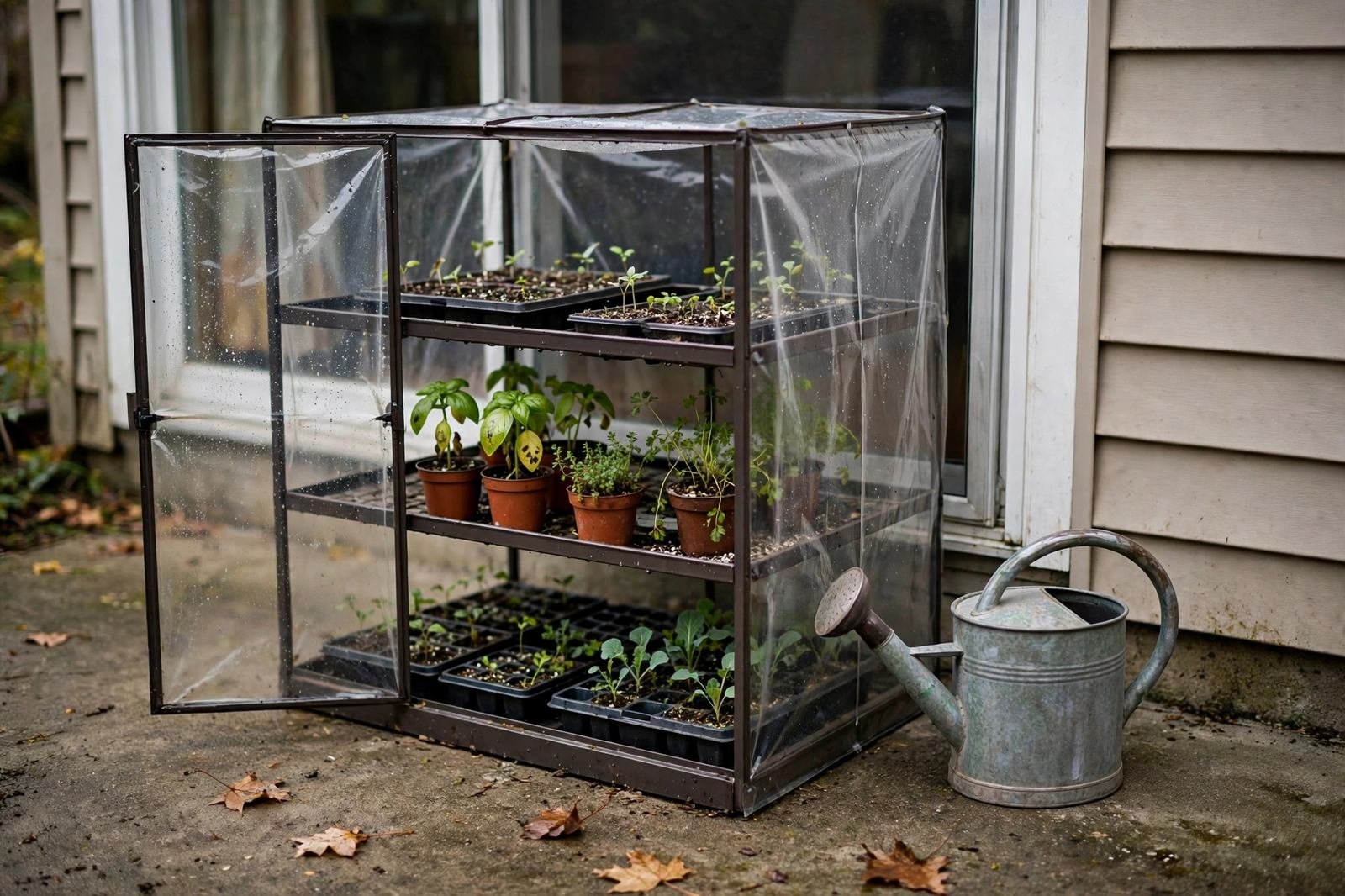
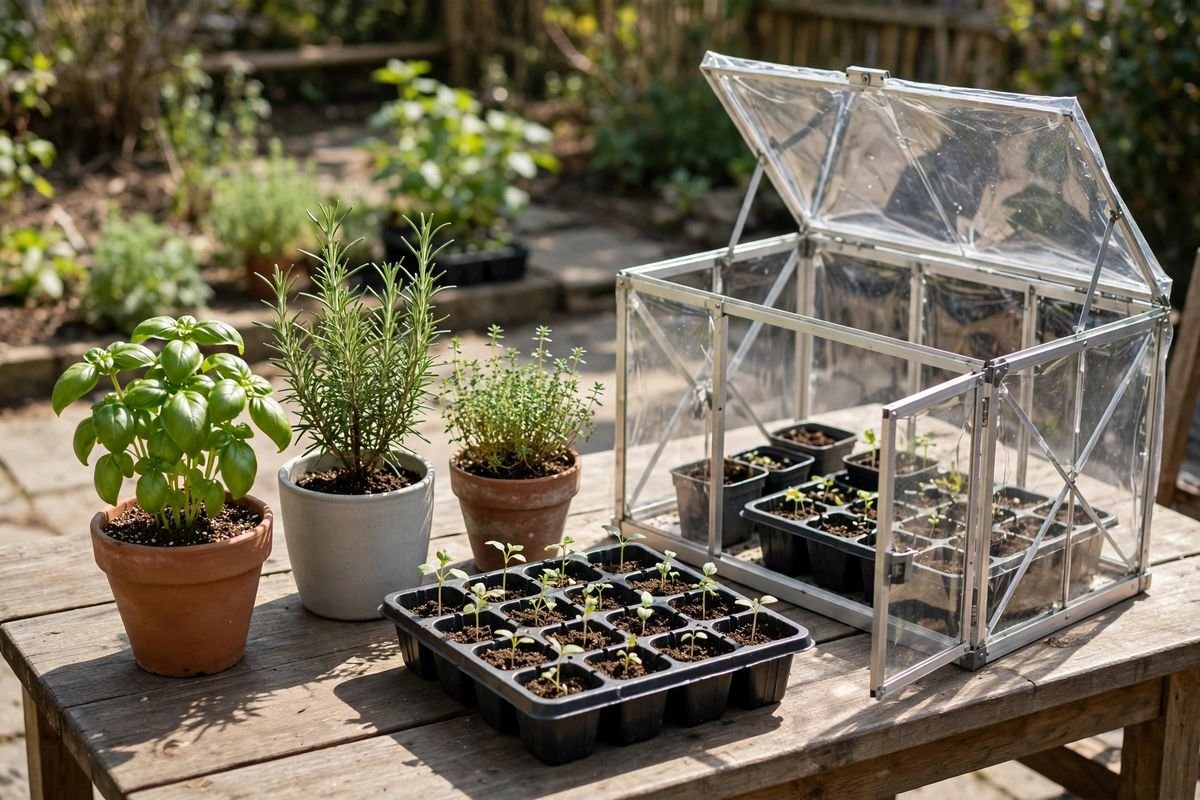
A mini greenhouse turns a few square feet of patio into a protected spot for seedlings, herbs, and tender pots. It will not fool a hard freeze, but it softens wind, sheds rain, and holds a few degrees of warmth on clear cold nights — often the difference between starting spring in March or May.
This roundup compares the three patio design families — pop-up covers, lean-to units, and tiered shelf greenhouses — using spec-style measurements rather than brand promises. We have not tested these products on our own patio, and no brand paid for placement. We work through footprint math, shelf area, light, and anchoring instead. Beginners will also find the basics in container gardening for beginners.
| Type | Typical Footprint | Growing Space | Best For | Watch Out For |
|---|---|---|---|---|
| Pop-up greenhouse | About 2.5 x 2.5 to 4 x 4 ft | Floor space plus one low shelf; headroom to stand pots 2-3 ft tall | Covering a few large pots, spring hardening off, quick seasonal use | Tall shape catches wind; cover life often 1-3 seasons |
| Lean-to greenhouse | About 2 x 4 to 2.5 x 6 ft | Wall-side shelves, depth 18-30 in, height often 5-6 ft at wall | South or west wall space, taller plants, sturdier frames | Needs a suitable wall; back row gets less light |
| Tiered shelf unit | About 2 x 1.5 to 2.5 x 2 ft | 3-4 shelves stacked vertically, each roughly 2 ft wide | Seed trays, herbs, and many small pots on a tiny footprint | Top-heavy when loaded; shelves shade the levels below |
Ranges above come from manufacturer listings and extension buying guides. Measure the patio spot and door swing before ordering.
Our Shelf-Area Math: What Actually Fits on a Small Patio
Listings advertise shelf count, but gardeners grow on area. Here is our own worked example with every assumption stated, using a small patio corner that measures 5 feet by 4 feet, or 20 square feet total. We keep a 2 foot walking strip clear, so no structure may occupy more than about 10 square feet of floor.
Tiered shelf unit. Assume a unit 27 inches wide, 19 inches deep, with 4 shelves. Each shelf offers about 27 by 18 inches of usable area after frame posts, or roughly 3.3 square feet. Four shelves give about 13.2 square feet of growing area on a floor footprint of only 3.6 square feet. That is a space multiplier of about 3.7 to 1. In pot terms, a standard 1020 seed tray occupies about 1.6 square feet, so each shelf holds one tray with room for a small pot beside it, or about six 4-inch pots per shelf, roughly 24 small pots across the unit.
Lean-to unit. Assume a lean-to 6 feet wide, 2.5 feet deep, with 2 shelf levels along the wall plus the floor. Usable area runs about 6 by 2 feet per level, or 12 square feet per level, giving roughly 36 square feet of growing area on a 15 square foot footprint — but our patio corner only fits the 4 foot width version, which scales to about 24 square feet of growing area on 10 square feet of floor. The multiplier is lower, about 2.4 to 1, yet the deeper shelves accept gallon pots and tomato starts that a tiered unit cannot.
Pop-up unit. Assume a 4 by 4 foot pop-up with floor growing only. That is 16 square feet of floor area and no true shelving, a multiplier of 1 to 1, and it exceeds our 10 square foot allowance. The smaller 3 by 3 foot pop-up fits at 9 square feet and suits three or four large pots. The lesson from the math: on the smallest patios, vertical shelf units return the most growing area per square foot of floor, while lean-to designs win when pot size matters more than pot count. These are geometry calculations based on the stated dimensions, not performance tests.
The Three Types, Honestly Compared
Pop-Up Greenhouses
Pop-ups arrive as a flexible frame with a fitted plastic cover and set up in minutes. They suit a few weeks of spring protection, then store away for summer. Air volume is generous for tall pots and small citrus. The weak points are wind and cover life: an unanchored pop-up is a small tent in a storm, and thin covers grow brittle after a season or two of sun. For seasonal flexibility, browse pop-up mini greenhouses for patios on Amazon and weigh cover thickness and anchor points over shelf extras.
Lean-To Greenhouses
Lean-to units sit against a house wall, gaining wind shelter and a little radiant warmth at night. Sturdier frames in steel, plastic panels, or wood and glass last for years. Depth runs only 18 to 30 inches, so shelves hold one row of larger pots or two rows of small ones, and the wall side always runs dimmer. With a sunny wall and narrow strip, compare lean-to mini greenhouses on Amazon.
Tiered Shelf Greenhouses
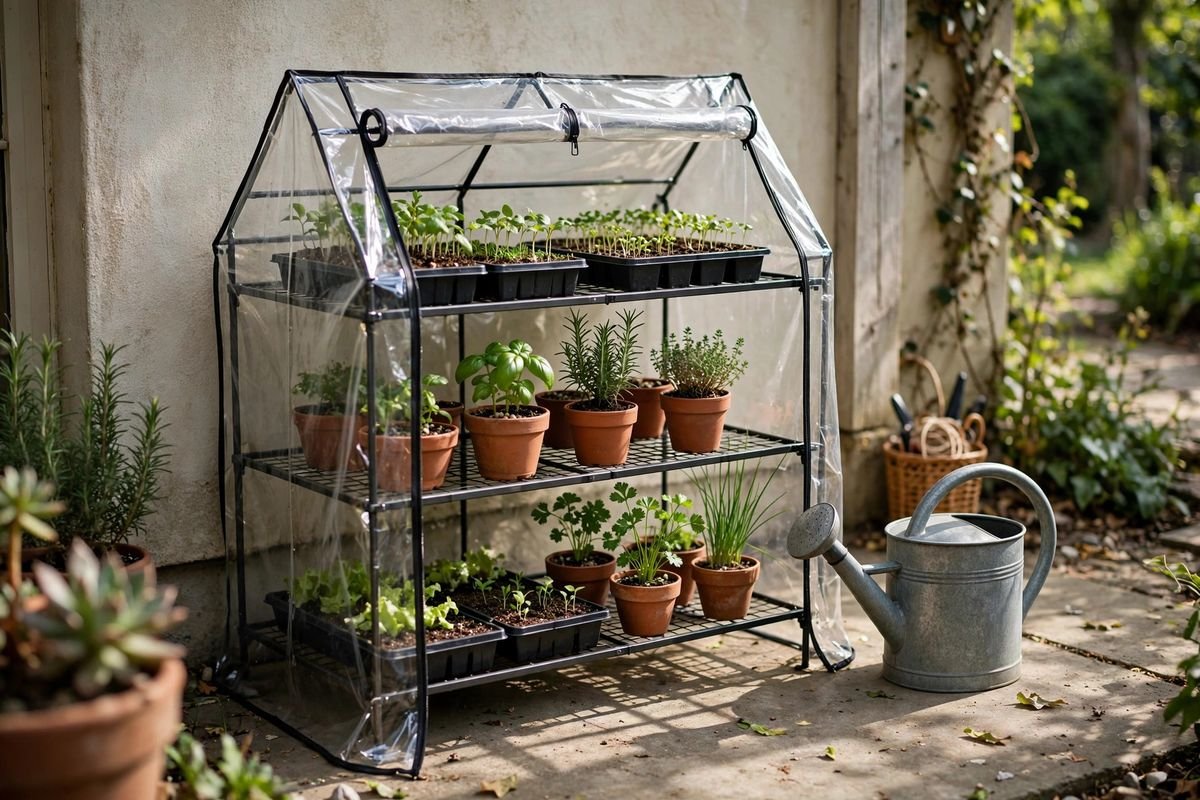
The tiered shelf unit is the seed-starting workhorse: a narrow rack of three or four shelves under a zippered clear cover. It fits beside a door where nothing else will, and it holds a surprising number of trays, as the math above shows. Two limits deserve respect. First, each shelf shades the one below, so rotate trays or reserve lower shelves for shade-tolerant greens and supplies. Second, a loaded unit is top-heavy and narrow, so it must be tied to a railing or wall. For tray capacity per dollar and per square foot, compare tiered shelf mini greenhouses on Amazon by shelf spacing, since taller seedlings need 14 inches or more between levels.
Wind, Light, and Heat: The Three Patio Realities
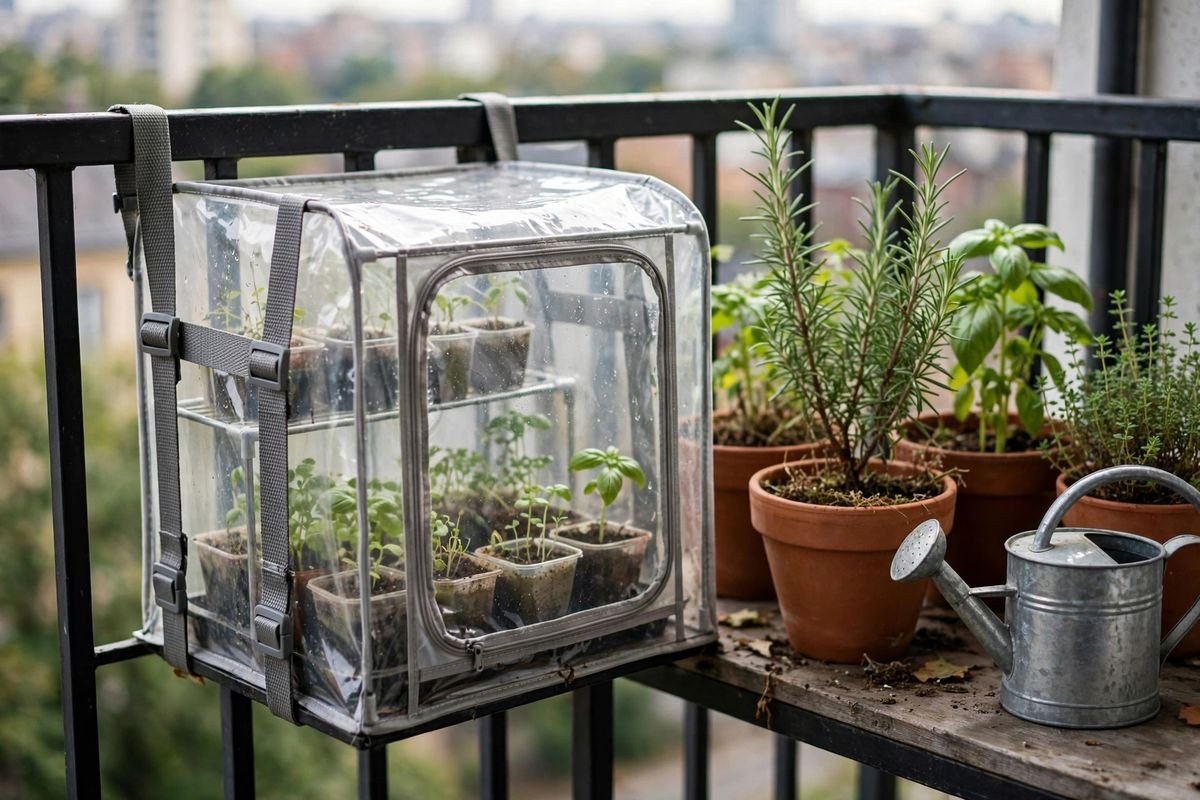
Wind. Every mini greenhouse is a sail until it is anchored. Strap frames to a wall or railing, weight the base, and close zippers before a storm. Our notes on how to protect balcony plants from strong wind apply directly. Above the second floor, missing anchor points matter more than any shelf feature.
Light. Clear covers transmit most sunlight when new, then lose clarity with age and dust. Placement matters more: a unit in a shaded corner protects plants from light they never receive. Give seedlings the brightest spot, ideally with morning sun — see how to start a balcony garden for layout help.
Heat. A small unheated unit can spike 20 degrees above outside air within an hour of sun, so open vents by mid-morning. At night it holds only a few degrees, so frost protection stays modest — see mini greenhouse vs cold frame.
What to Grow in a Mini Greenhouse, and When
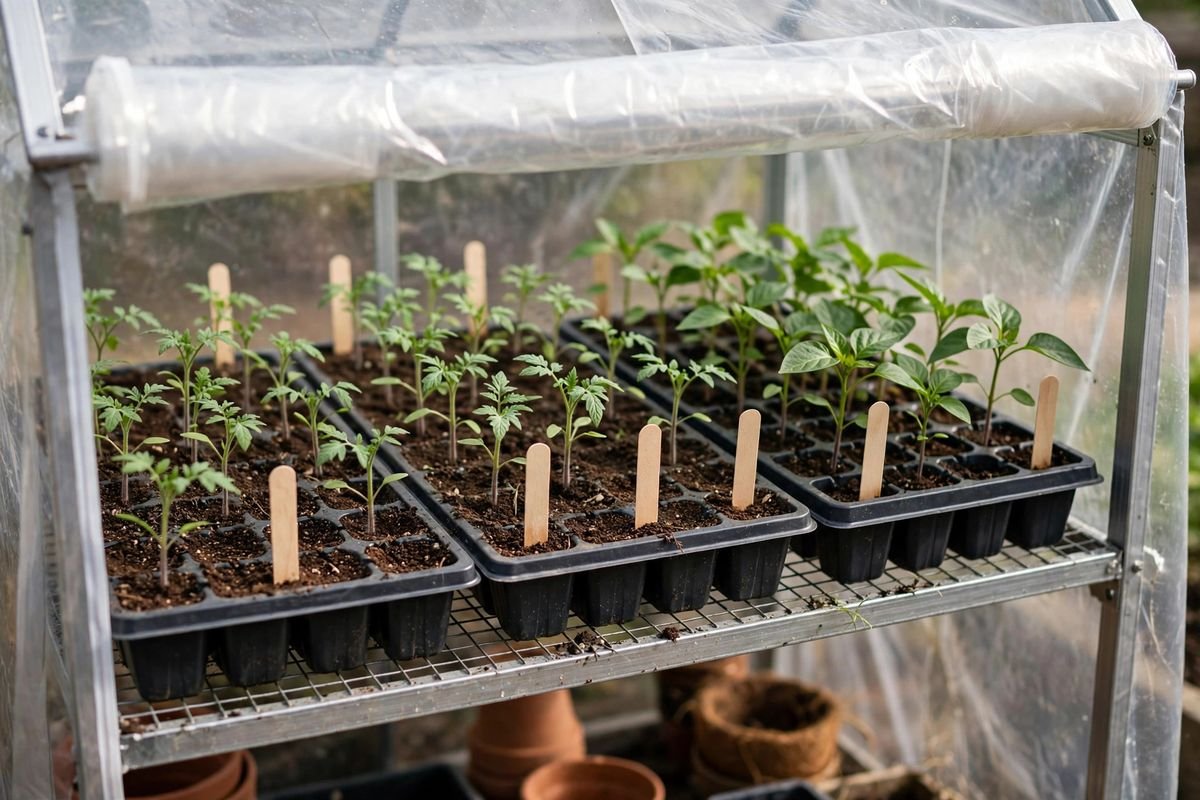
The highest-value use is starting and hardening off. Trays occupy the shelves in early spring, then move in and out over 7 to 10 days as plants adjust. Later the shelves hold lettuce sowings, potted herbs, and rooting cuttings.
Timing still follows the frost calendar, not the cover. Use your local frost dates and regional planting guidance — not your USDA hardiness zone alone — to choose planting dates. A mini greenhouse may let us start hardening off a week or two ahead of the last frost and keep peppers and basil sheltered on cold nights after planting, but tender plants still move out permanently only when nights stay reliably mild. In fall, the unit extends greens and herbs several weeks past the first light frost, especially on a wall-facing patio.
When a mini greenhouse is more than the job needs, a low rigid box does the cold work at ground level. We compare sizes and placements in best cold frames for small gardens for gardeners deciding between the two footprints.
Pros and Cons by Type
Pop-Up: Pros and Cons
Pros: fastest setup and removal, generous headroom for large pots, usually the lowest cost per cubic foot. Cons: weakest wind resistance, shortest cover life, no built-in shelving in most models.
Lean-To: Pros and Cons
Pros: sturdiest frames, wall warmth and wind shelter, accepts larger pots, looks permanent. Cons: needs a suitable sunlit wall, back shelves run dim, largest floor commitment of the three.
Tiered Shelf: Pros and Cons
Pros: most growing area per square foot of floor (about 3.7 to 1 in our example), smallest footprint, ideal for seed trays. Cons: lower shelves get shaded, top-heavy without anchoring, shallow shelves limit pot size.
Choose This Type If… Verdict
Choose a pop-up if… the need is seasonal and temporary — hardening off spring starts or sheltering a few big pots — and the patio offers a corner out of the main wind path.
Choose a lean-to if… a sunny house wall is free, larger pots and taller plants matter, and the unit will stay up year after year as a semi-permanent fixture.
Choose a tiered shelf unit if… floor space is the true limit, seed starting is the main job, and the frame can be tied to a railing or wall. On the 5 by 4 foot patio in our example, this is the only type that fits the floor allowance while holding a full round of spring trays.
FAQ
Will a mini greenhouse protect plants from a hard freeze?
Only slightly. An unheated unit holds a few degrees above outside air on a calm night — enough for light frost, not a hard freeze below the mid-twenties. Tender plants still need indoor shelter then.
How do we keep a mini greenhouse from overheating?
Vent early and generously. Open doors and vents whenever sun strikes the cover and the inside feels warm at plant level. In late spring, leave units open all day and close only at night.
Can a mini greenhouse sit on a balcony?
Yes — tiered shelf units fit most balconies best. Anchor the frame to the railing, watch total soil weight, and check building rules before attaching anything.
Mini greenhouse or cold frame — which comes first?
For seed starting and shelf space, the mini greenhouse earns its floor space first. For low crops growing in place through cold weather, a cold frame protects better per dollar. Many small gardens end up with one of each, used in different seasons.
Sources & Further Reading
- University of Minnesota Extension — small greenhouse and season extension basics for home gardeners (extension.umn.edu).
- University of Maryland Extension — cold frames, hotbeds, and low-cost protected growing structures (extension.umd.edu).
- Utah State University Extension — season extension with covers and small structures, tied to local frost dates (extension.usu.edu).
- Colorado State University Extension — greenhouse ventilation and temperature management fundamentals (extension.colostate.edu).
- Clemson Cooperative Extension — container and patio gardening guidance for small spaces (clemson.edu/extension).