
This post may contain affiliate links. If you buy through links on this page, we may earn a commission at no extra cost to you.
As an Amazon Associate I earn from qualifying purchases.
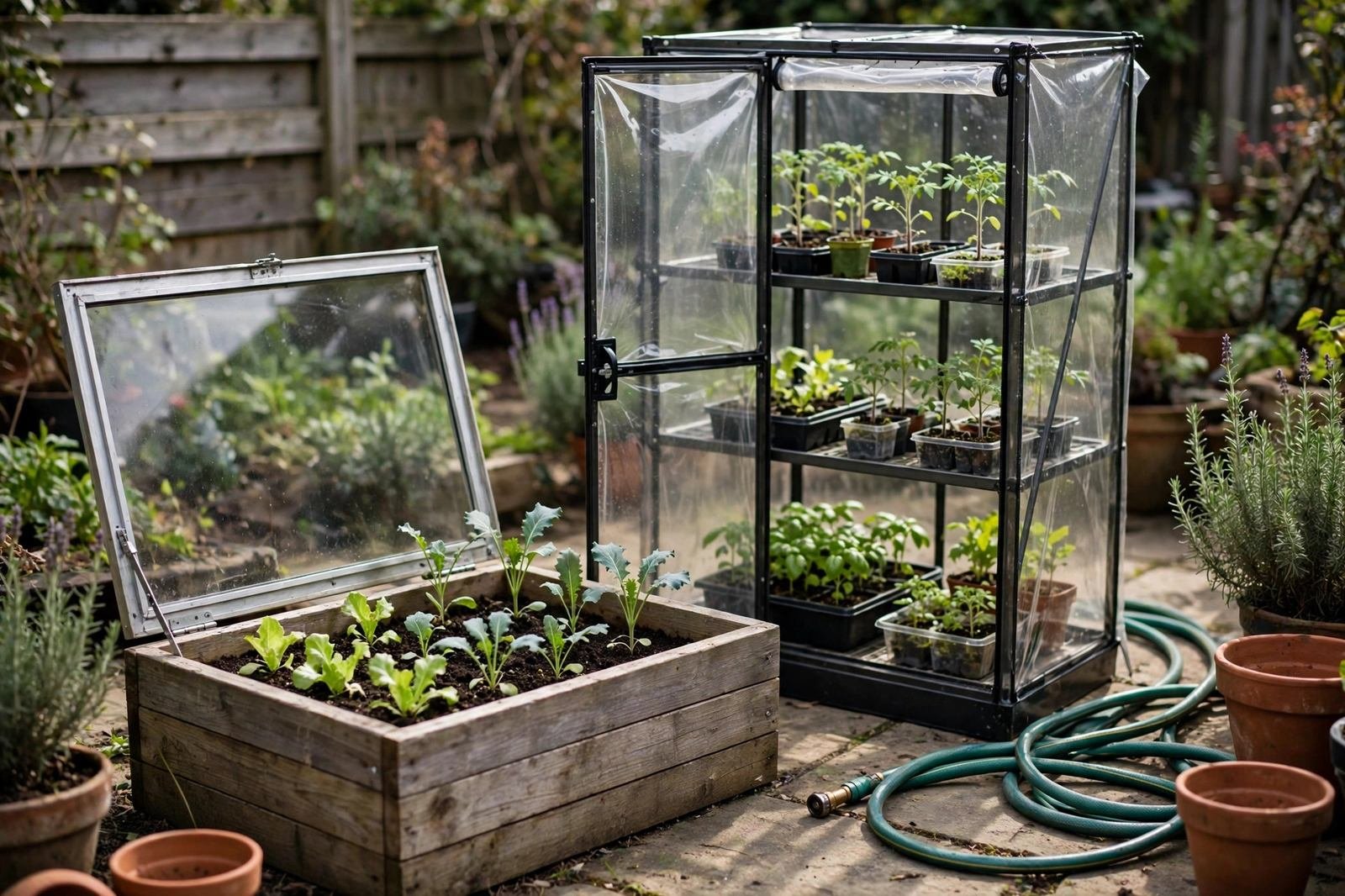
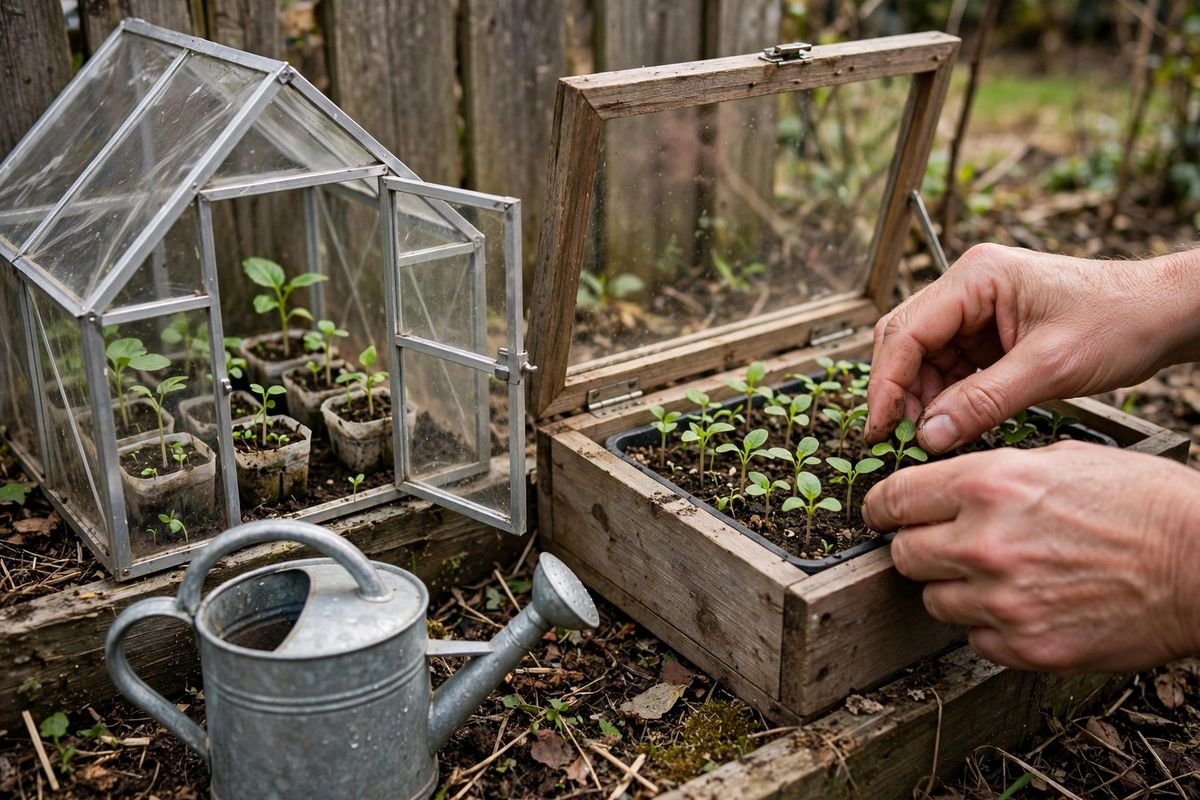
A mini greenhouse and a cold frame both extend the season, yet they solve different problems. One stands tall with shelves for flats and pots. The other sits low over soil and shields crops where they grow. Gardeners with a small patio or a single bed often need only one, and the better choice depends on what we grow.
We compared the two covers by footprint, headroom, vent control, and daily effort. This guide places the table up front, covers pros and cons, and runs a patio scenario with stated assumptions. Our notes on how to use a cold frame for winter vegetables show the low cover in winter service, while pot basics in container gardening for beginners apply to both.
| Factor | Mini Greenhouse | Cold Frame |
|---|---|---|
| Footprint | 2 to 3 ft wide by 1.5 to 2 ft deep, 4 to 6 ft tall | 3 to 4 ft wide by 2 to 3 ft deep, 1 to 1.5 ft tall |
| Best use | Starting flats, holding pots on shelves | Growing greens in soil, hardening off transplants |
| Headroom | Shelves hold 6 to 12 inch plants | 9 to 14 inches; suits low crops |
| Venting | Roll-up door; tall air warms fast | Hinged lid propped across full width |
| Wind | Tall profile catches wind; needs anchoring | Low profile sheds wind; steady on soil |
| Storage | Breaks down to poles and cover | Leans flat against a wall |
What Each Cover Does Best
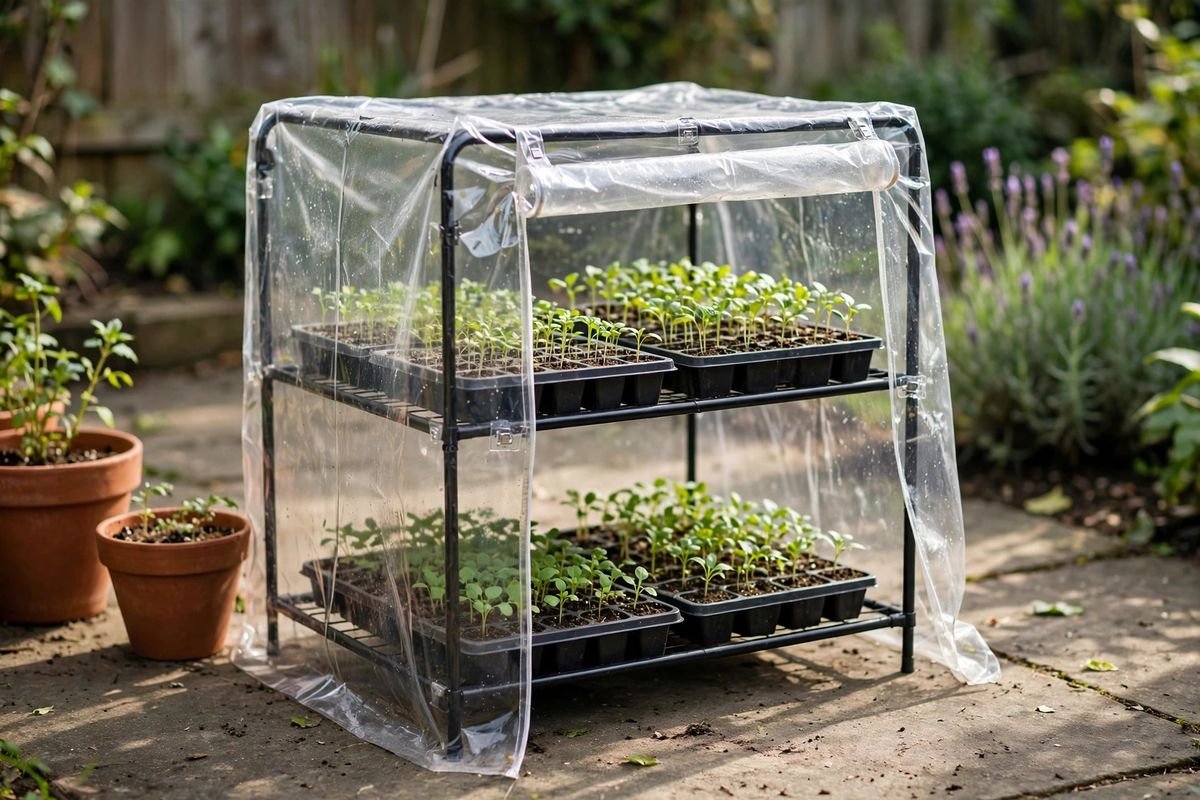
A mini greenhouse works like a small clear closet. Shelves lift flats toward light and stack seedlings in a tiny footprint. The tall shape fits a balcony corner where floor space is scarce but vertical space is free. Gardeners who start seeds in late winter value the shelves most, and a heat mat can sit under the bottom tier.
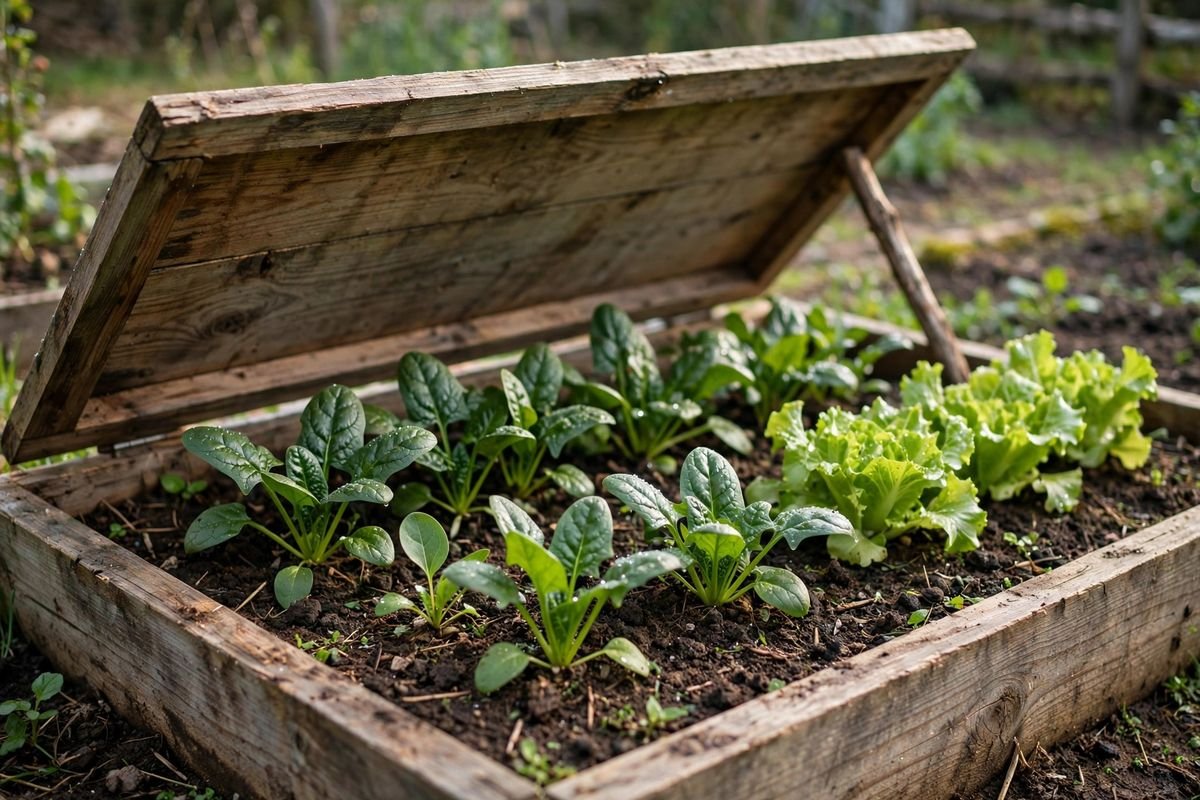
A cold frame works like a lid over the garden itself. Crops grow in soil or in low pots on soil, and the sloped top sheds rain while low sun reaches leaves. The low shape suits beds and hardening off: plants move from indoor lights into the frame for a week of real sun and cool nights before transplanting. Soil contact buffers night temperatures more than a tall unit on concrete.
Mini Greenhouse: Pros and Cons
Pros
- Uses vertical space, so a 2 by 2 ft corner holds several flats
- Shelves suit seed starting and pots that stay off cold ground
- Clear cover gives light from top and sides
- Breaks down for storage after seed season
Cons
- Tall frame catches wind and needs straps or weights
- Shelf air heats fast at midday and cools fast at night
- Thin covers tear at zippers after a season or two
- Shelves limit height; tall tomatoes outgrow tiers
We check cover thickness, zipper quality, and replacement cover options. A search for mini greenhouses for patios on Amazon shows common shelf sizes; measuring the corner first prevents buying a unit that blocks the door. Our roundup of best mini greenhouses for patios sorts models by size and cover type.
Cold Frame: Pros and Cons
Pros
- Low profile stays steady in wind and blends with beds
- Soil contact buffers night cold and morning heat
- Hinged lid props at several angles for fine vent control
- Stores flat and lasts many seasons
Cons
- Limited headroom rules out tall pots and large crops
- Area equals the bed footprint; no shelf stacking
- Daily lid checks mean more bending
- Glass lids add weight and break risk
We reach for a cold frame when crops can finish low or seedlings need a hardening-off bridge. For sizing and materials, our guide to best cold frames for small gardens works through interior area and vent math.
A Worked Example: Small Patio, Seed-Starting Goal
Here is a scenario with every assumption stated. A patio corner measures 4 ft by 4 ft, or 16 square feet. The goal is to start 2 flats in late winter, harden them off, then grow salad greens. We assume a flat is 10 by 20 inches, about 1.4 square feet. We assume a shelf greenhouse footprint of 2.5 by 1.7 ft, about 4.25 square feet, with 3 shelves. We assume a cold frame footprint of 4 by 2 ft, 8 square feet, with about 7 square feet inside after walls.
The shelf unit uses 4.25 square feet of floor and offers about 10 to 11 usable square feet across shelves. Two flats need 2.8 square feet, so they fit on one shelf with room for pots. The cold frame uses 8 square feet and offers about 7 square feet at soil level only. Two flats fit, but there is no second tier. On holding surface per floor foot, the shelf unit wins while seedlings stay small.
For cost, we use round assumptions rather than live prices. Assume a shelf greenhouse costs about $55, a cold frame costs about $110 in wood or about $85 in aluminum, and a salvaged-window build costs about $35 in boards and hinges when the window is free. Assume lives of 3 years for the shelf cover, 8 years for polycarbonate, and 5 years for the salvaged build. Cost per year is about $18 for the shelf unit, about $11 to $14 for the cold frame, and about $7 for the salvaged build. Per usable square foot per year, that is about $1.70 for the shelf unit and about $1.60 to $2.00 for the cold frame. The numbers land close, so crop height and habit decide more than cost.
The shelf unit on concrete swings widely. On a sunny 45-degree day, a closed shelf can pass 85 degrees by noon, so the door must open early. The cold frame on soil swings less but still needs a morning prop. A wax vent opener or a door left ajar covers the midday gap for gardeners away at work. A max-min thermometer in either cover teaches vent timing faster than any schedule.
Heat, Light, and Venting Compared
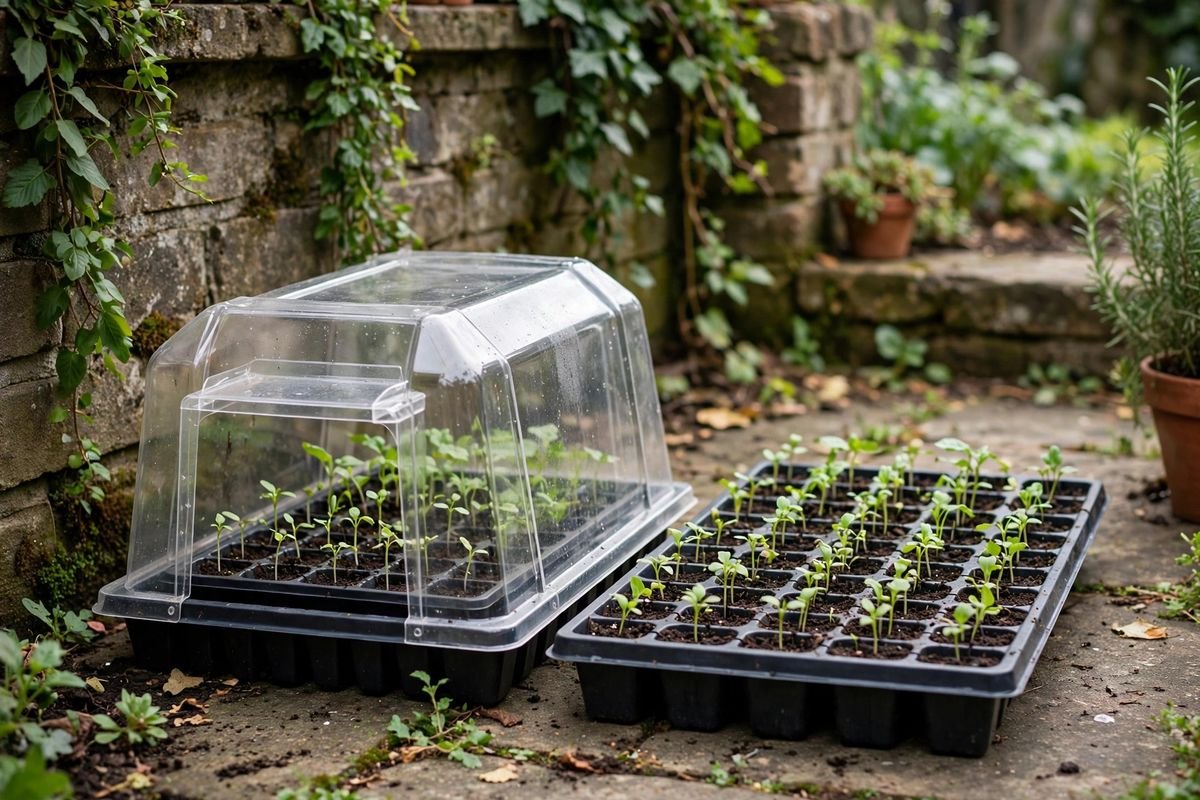
A cold frame gives top light through a sloped lid, and low winter sun enters well when the tall side faces north. Seedlings stay compact near the light source. A shelf greenhouse gives light from top and sides, but lower shelves get less as upper flats shade them. We rotate flats between tiers every few days so lower shelves do not stretch.
Warm air pools at the top of the shelf unit, so top flats dry first. Opening the door from the top vents that layer fastest. In the cold frame, warm air pools under the lid, and a 3-inch prop releases it evenly. Both covers need venting on bright days even when outdoor air feels cold, and both need closing before sunset. Crowded flats mildew in either setup, so spacing and a morning air exchange matter most.
Which Crops Fit Which Cover
Seedlings in flats fit both, and the choice turns on quantity. Two to four flats stack in the shelf unit and free the cold frame for soil crops. Lettuce, spinach, radish, and peas grow to harvest in the cold frame, while the same crops in pots on shelves need more frequent watering.
Broccoli and cabbage transplants start well in the cold frame and move to the bed without a pot step. Pepper and tomato seedlings in 4-inch pots fit the cold frame in late spring. Herbs in pots often live on the shelf near the kitchen door for easy snipping. Use your local frost dates and regional planting guidance — not your USDA hardiness zone alone — to choose planting dates. We start hardy seedlings a few weeks before the last frost when inside air warms, and we sow fall greens into the cold frame several weeks before the first hard freeze. County extension calendars anchor those windows best.
Verdict: Which Do You Need?
Most small gardens do well with one cover chosen for the main job. Seed starting in quantity points one way. Soil crops and hardening off point the other.
- Choose a mini greenhouse if floor space is scarce and vertical space is free, and the main goal is starting multiple flats near a door or outlet.
- Choose a mini greenhouse if the garden lives on a balcony with no soil bed, and crops will stay in pots from start to harvest.
- Choose a cold frame if there is a raised bed or soil row to cover, and the main goal is growing greens in place or hardening off transplants.
- Choose a cold frame if wind exposure is high and a low, steady profile matters more than shelf capacity.
Gardeners who start seeds and grow soil greens in equal measure often buy the cold frame first for its longer life and steadier temperatures, then add a shelf unit in the second season. We compare interior size, vent design, and anchors before brand names. A search for cold frames for garden beds on Amazon shows common sizes to measure against our space.
FAQ
Can we start tomato seedlings in a cold frame?
Yes, once nights inside hold above about 50 degrees and we vent on sunny days. We often germinate indoors, then move young plants to the frame for light and hardening off before transplanting.
Does a mini greenhouse need anchoring?
Yes in exposed spots. The tall shape catches wind. Straps to a railing, weights on the base, or a sheltered corner keeps it upright through spring storms.
Which cover keeps plants warmer at night?
A cold frame on soil usually holds steadier warmth because soil releases stored heat and the low volume cools slowly. A shelf unit on concrete cools faster. Both benefit from closing before sunset.
Can we use both covers together?
Yes. Many gardeners start flats in the shelf unit, harden them in the cold frame, and finish greens in the frame after transplants move out.
Sources & Further Reading
- University of Minnesota Extension — cold frames and season extension basics (extension.umn.edu)
- Colorado State University Extension — cold frame siting, venting, and seed starting (extension.colostate.edu)
- University of New Hampshire Extension — season extension structures for home gardens (extension.unh.edu)
- Utah State University Extension — small greenhouse and cold frame management (extension.usu.edu)
- Penn State Extension — starting seeds and hardening off transplants (extension.psu.edu)
Keep exploring:
- Best Cold Frames for Small Gardens for sizing and vent math by frame type.
- Best Mini Greenhouses for Patios for shelf models sorted by footprint.
A clear corner, an honest measure of the space, and a daily minute with the lid or door will tell us within a week whether we chose well. Which job will the first cover handle this season?