

This post may contain affiliate links. If you buy through links on this page, we may earn a commission at no extra cost to you.
As an Amazon Associate I earn from qualifying purchases.
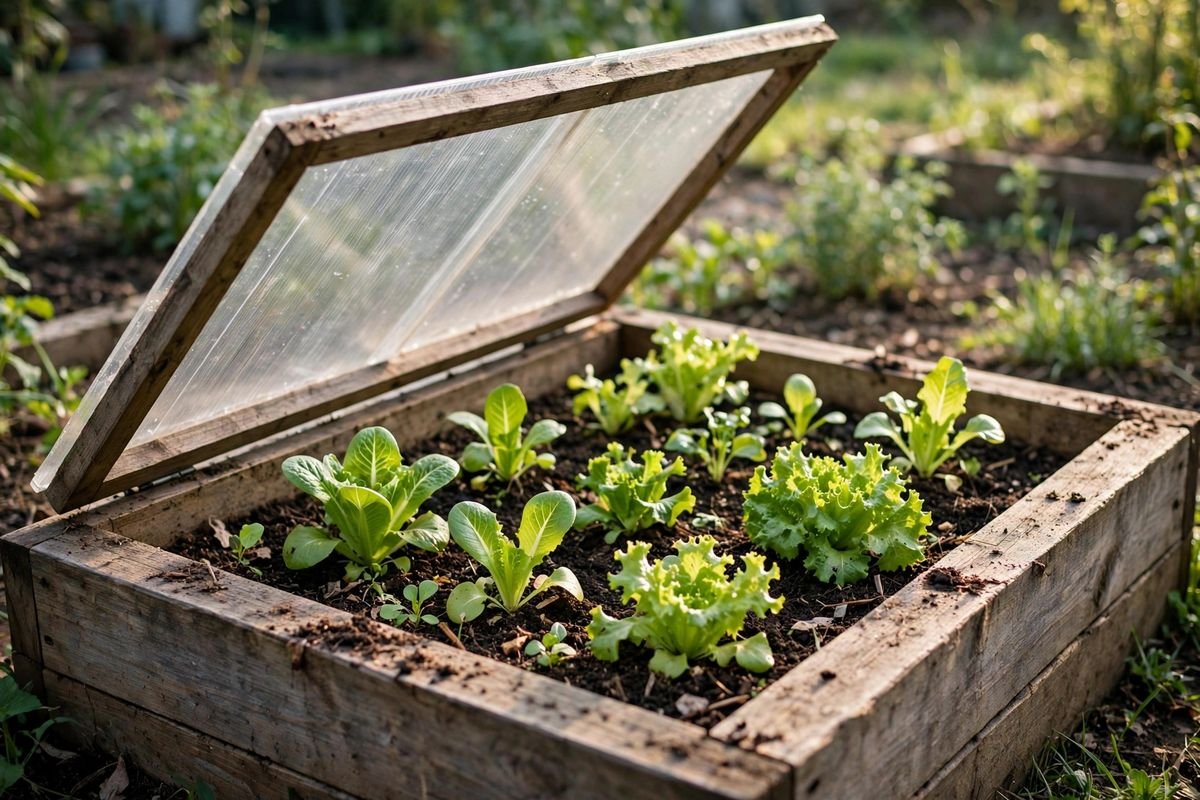
A cold frame gives a small garden a quiet extra season. It shields seedlings and leafy greens from wind and sharp frost without taking over a patio or narrow bed. The right frame turns a few square feet into a protected nursery and a winter salad bed.
We compared frame types by fit, durability, and daily ease rather than brand claims. A small garden needs a frame that earns its footprint and vents before midday heat builds. This guide covers the three common builds, sizing and venting math, and how to choose for a bed or patio. Our walkthrough of how to use a cold frame for winter vegetables covers crop timing once the frame is in place.
| Type | Best For | Common Size | Durability | Venting |
|---|---|---|---|---|
| Wooden with hinged lid | Raised beds where a sturdy look fits | 4 x 2 ft or 4 x 3 ft | Good in rot-resistant wood; reseal yearly | Strong lid, easy prop |
| Aluminum with polycarbonate | Patios and renters needing light weight | 3 x 2 ft to 4 x 2 ft | Lasts many seasons; panels resist shattering | Light lid; look for stays |
| Repurposed window | Budget builds with salvaged materials | Varies, often 3 x 2 ft | Depends on sash; check old paint | Heavy lid; needs hinges |
Each type grows the same crops when sited well. The difference is weight, upkeep, and how smoothly the lid opens on a cold morning.
How We Compared These Frames
We do not claim hands-on trials we have not done. We compared listed materials, common sizes, glazing types, and lid designs, then matched them to small beds and patios. Four factors guided the work: usable area inside the walls, lid weight and vent control, weather resistance, and flat storage in summer.
A frame against a south-facing wall gains reflected warmth, while one in a frost pocket loses that edge. Our notes on container gardening for beginners help when the frame sits beside pots, since watering rhythm shifts there.
What Size Actually Fits a Small Garden
Listings show outside size. Plants live inside. Take a common 4 x 2 ft frame. We assume 1-inch walls, a 12-inch back, a 9-inch front, and soil 1 inch below the front edge — typical numbers for small frames we reviewed.
Interior width is 48 minus 2 inches, so 46 inches. Interior depth is 24 minus 2, so 22 inches. Usable area is 46 by 22 inches, or about 7.0 square feet. The footprint is 8.0 square feet, so walls cost roughly 1 square foot, about 12 percent. We plan rows on the 7, not the 8.
With an average height of 10.5 inches, interior volume is about 6.15 cubic feet. That small air mass warms fast in morning sun and cools fast after sunset. Soil slows both swings, so a frame on a bed holds steadier temperatures than one on concrete. For pots, we tuck a gallon jug of water along the north wall as thermal mass. A 9-inch front and 12-inch back suits lettuce, spinach, radishes, and 4-inch pots. Taller kale presses the lid sooner; a 14- to 16-inch back or a low raised bed adds clearance. Our notes on how to grow lettuce indoors in winter show the same headroom rule indoors.
Venting Math We Use Every Sunny Day
Cold frames fail more from overheating than from cold. On a bright 40-degree day, inside air can pass 75 degrees with the lid shut. We vent by 9 a.m. and use lid angle rather than guesswork.
For that 4 x 2 ft lid hinged on the back wall, propping the front 3 inches open makes a gap 46 inches wide by 3 inches tall — about 138 square inches, or 0.96 square feet, roughly 14 percent of the interior footprint. With a 22-inch lid, that lift is near 8 degrees. It looks small, yet warm air exits across the full width.
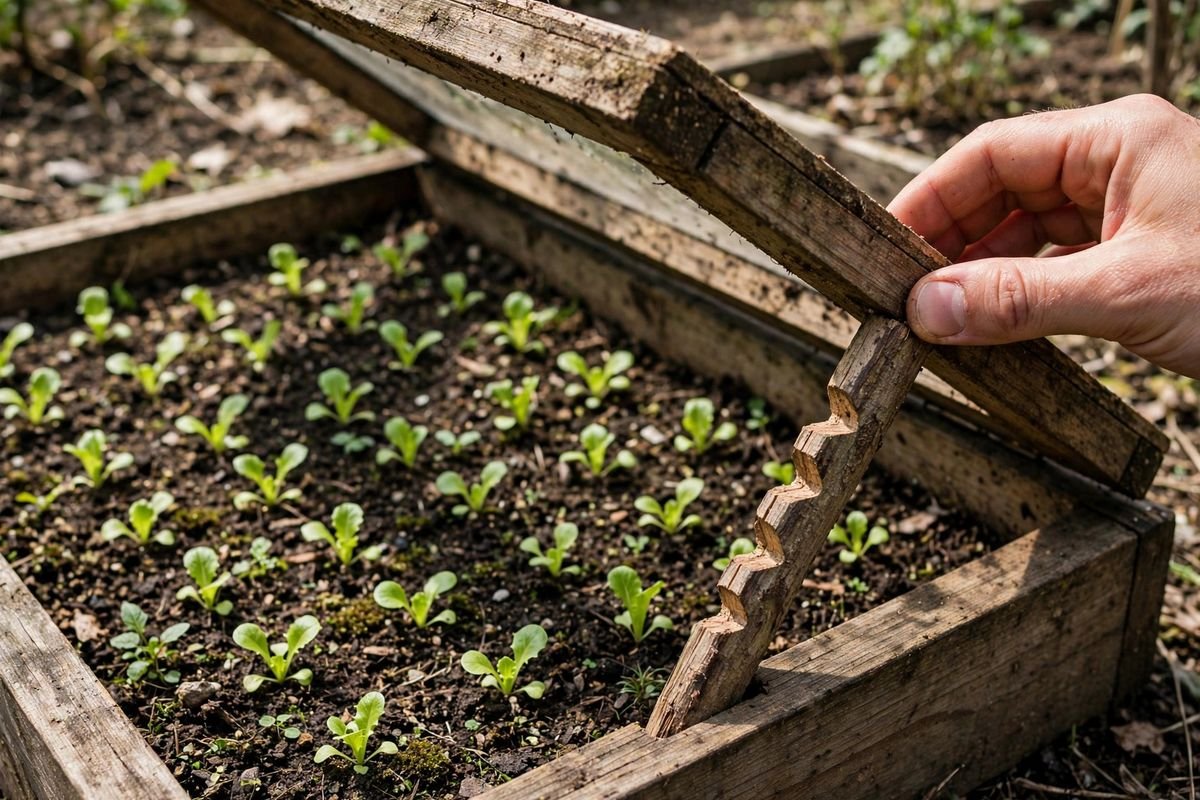
A 6-inch prop doubles the gap to about 1.9 square feet and raises the angle to roughly 16 degrees for still, sunny middays. A notched stick marked at 3 and 6 inches makes the choice repeatable. Wax openers work on some aluminum frames once calibrated, but we still check by hand on the first warm days.
Wooden Cold Frames
Wood brings weight and a classic look. Cedar and other rot-resistant woods handle ground contact better than pine. A sloped polycarbonate lid keeps weight down versus old glass, and back hinges let the lid open wide and close snug.
Pros
- Sturdy in wind and unlikely to shift on a bed
- Easy to repair with basic tools
- Blends with raised beds and fences
Cons
- Heavier to move for storage or rotation
- Needs resealing and rot checks at the soil line
- Glass lids add weight and break risk
For soil beds, wood often feels like part of the garden. Browse wooden cold frames for small gardens on Amazon by interior size first, then check lid material and hinges.
Aluminum and Polycarbonate Cold Frames
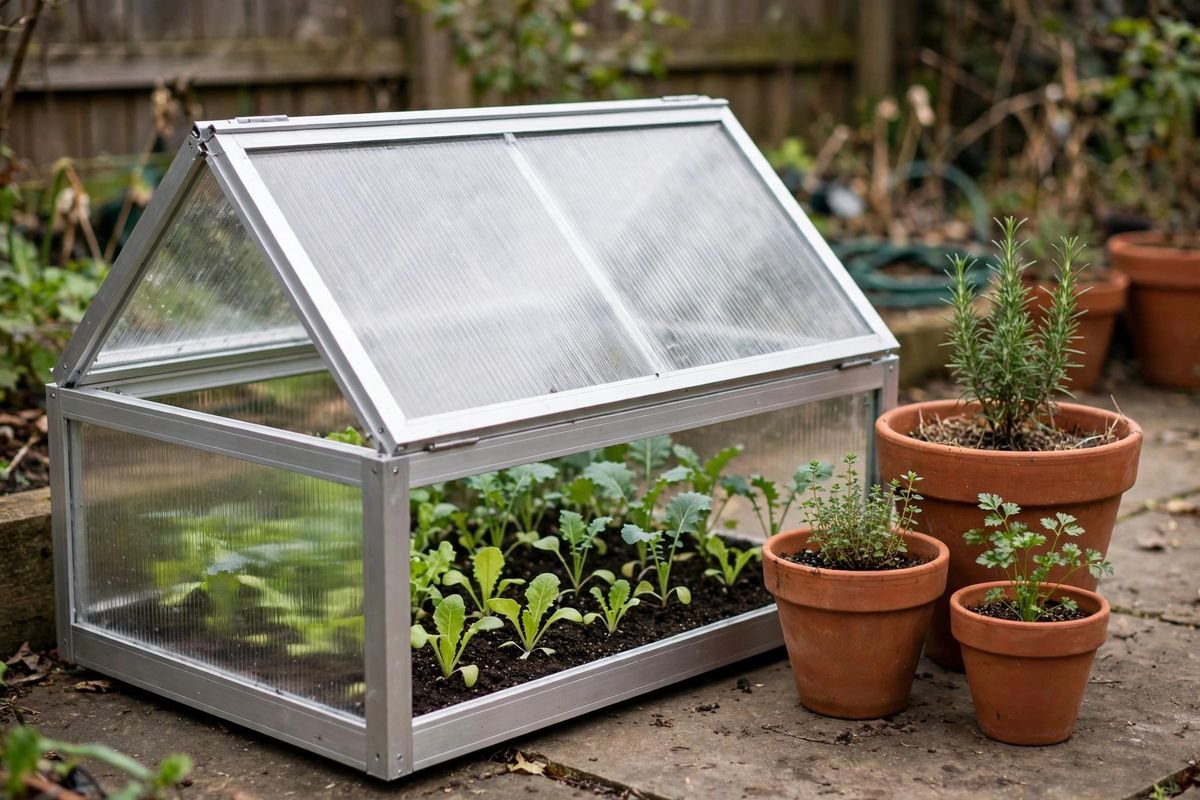
Aluminum frames pair a light metal skeleton with twin-wall polycarbonate. Panels diffuse light, resist hail, and weigh far less than glass. Many small models ship flat and assemble with clips or bolts, which helps renters who store gear in a closet.
Pros
- Light enough to move for cleaning and bed prep
- Panels resist shattering and insulate better than single glass
- Metal frame does not rot and rinses clean
Cons
- Light frames can lift in wind without anchors
- Thin panels can flex if the frame racks
- Loose clips leak heat
We anchor light frames with bricks on the base or straps to a railing. We check for a stay that holds partial angles, not only open or shut, since partial venting is the daily setting. Listings for aluminum polycarbonate cold frames on Amazon usually show that stay in photos.
Repurposed Window Cold Frames
A salvaged window on a simple box makes a serviceable frame when the sash is sound and glazing stays intact. This route suits builders who can size the box to the window at hand.
Pros
- Low cost when a sound window is on hand
- Custom size matched to a specific bed
- Clear glass gives strong light
Cons
- Old paint may contain lead; test first
- Single glass loses heat faster at night
- Heavy lid needs strong hinges and a prop
We pass on cracked panes and soft rot at the corners. When a window checks out, we set it on rot-resistant boards, add hinges, and fit a prop so wind cannot slam the lid. Gardeners weighing this build against a taller cover will find our guide on mini greenhouse versus cold frame useful, since height and vent habits drive that choice.
Features That Matter More Than Brand Names
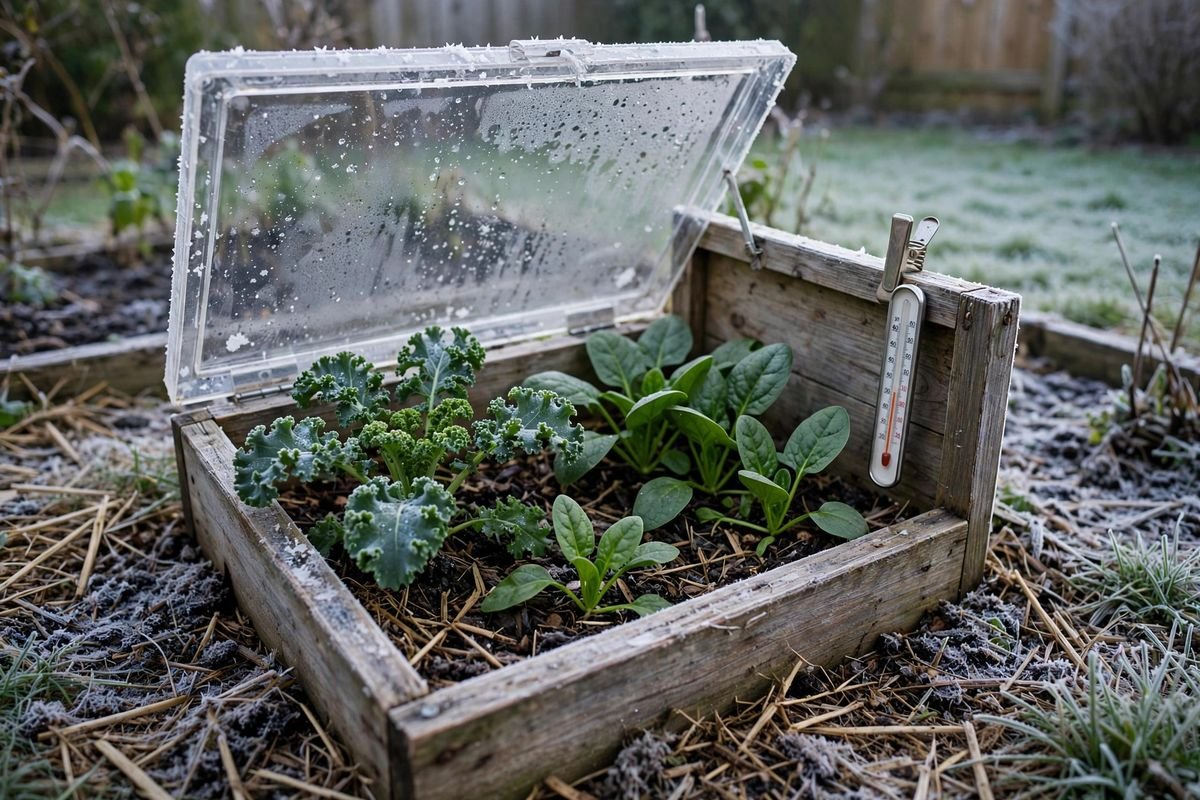
A lid that seals on a flat edge keeps heat in on windy nights. A slope with the tall side to the north in most U.S. gardens sheds rain and catches low sun. A max-min thermometer inside tells us whether vent timing worked; eyes alone misjudge bright, cold days. On a bed, the frame shares soil warmth. Over pots on concrete, it needs saucers or gravel so water exits cleanly. Partial-open stays and replaceable panels matter through a season of daily checks. For standing height beside the frame, see our roundup of best mini greenhouses for patios.
Siting, Planting, and Daily Care
We site the frame in winter sun on level ground, low edge facing south in most gardens so the slope catches light and sheds rain. A spot near a door encourages daily checks. In a windy site, a fence or straw bale on the windward side cuts heat loss without shade.
Planting dates hinge on local weather, not a map color. Use your local frost dates and regional planting guidance — not your USDA hardiness zone alone — to choose planting dates. We sow hardy greens several weeks before the first hard freeze for fall harvests, and we start spring seedlings in the frame a few weeks before the last frost when soil inside has warmed. A soil thermometer and county extension calendar remove the guesswork.
Water stays light but steady. Frame soil dries slower than open beds in winter, yet a sunny week can dry the top inch. We water in the morning at the base and vent so leaves dry. On very cold nights, we close the lid before sunset and add row cover inside for tender seedlings.
Common Problems and Simple Fixes
Seedlings scorch on a sunny day
Vent earlier and use the 3-inch prop on bright mornings. A thermometer inside teaches the pattern within a week.
Slugs gather under the lid
Clear fallen leaves, water in the morning, and set traps outside the frame. Copper tape along the interior base helps in small frames.
Condensation drips on leaves
Vent briefly even on cold days, water at the base, and space rows for airflow. Those habits reduce mildew.
FAQ
What size suits a beginner with a small bed?
A 4 x 2 ft frame fits most small beds and gives about 7 square feet inside with our assumptions — a few rows of greens or two flats of seedlings. A 3 x 2 ft model works on a patio edge.
Is glass or polycarbonate better for the lid?
Glass gives clear light and wind-resistant weight. Polycarbonate weighs less, resists shattering, and twin-wall panels insulate better at night. For most small gardens, polycarbonate is safer near paths and pets.
Can a cold frame replace a greenhouse?
It covers low crops and seedlings well but lacks height and shelves. Gardeners who start many flats often pair it with a small shelf greenhouse.
How cold can a cold frame handle?
A well-sited frame often keeps nights several degrees warmer than outside air. Hardy greens tolerate light freezes inside. Tender seedlings need extra cover when temperatures drop into the teens.
Sources & Further Reading
- University of Minnesota Extension — cold frames and season extension for home gardens (extension.umn.edu)
- Colorado State University Extension — cold frame construction, siting, and venting (extension.colostate.edu)
- University of New Hampshire Extension — cold frames and row cover in spring and fall (extension.unh.edu)
- Utah State University Extension — season extension with cold frames (extension.usu.edu)
Keep exploring:
- How to Use a Cold Frame for Winter Vegetables for crop choices and timing.
- Container Gardening for Beginners for pot and soil basics.
A good cold frame asks for a minute in the morning and a minute before sunset. Which corner could hold 7 square feet of sheltered spring — a bed edge, a patio wall, or a sunny fence line?