
This post may contain affiliate links. If you buy through links on this page, we may earn a commission at no extra cost to you.
As an Amazon Associate I earn from qualifying purchases.
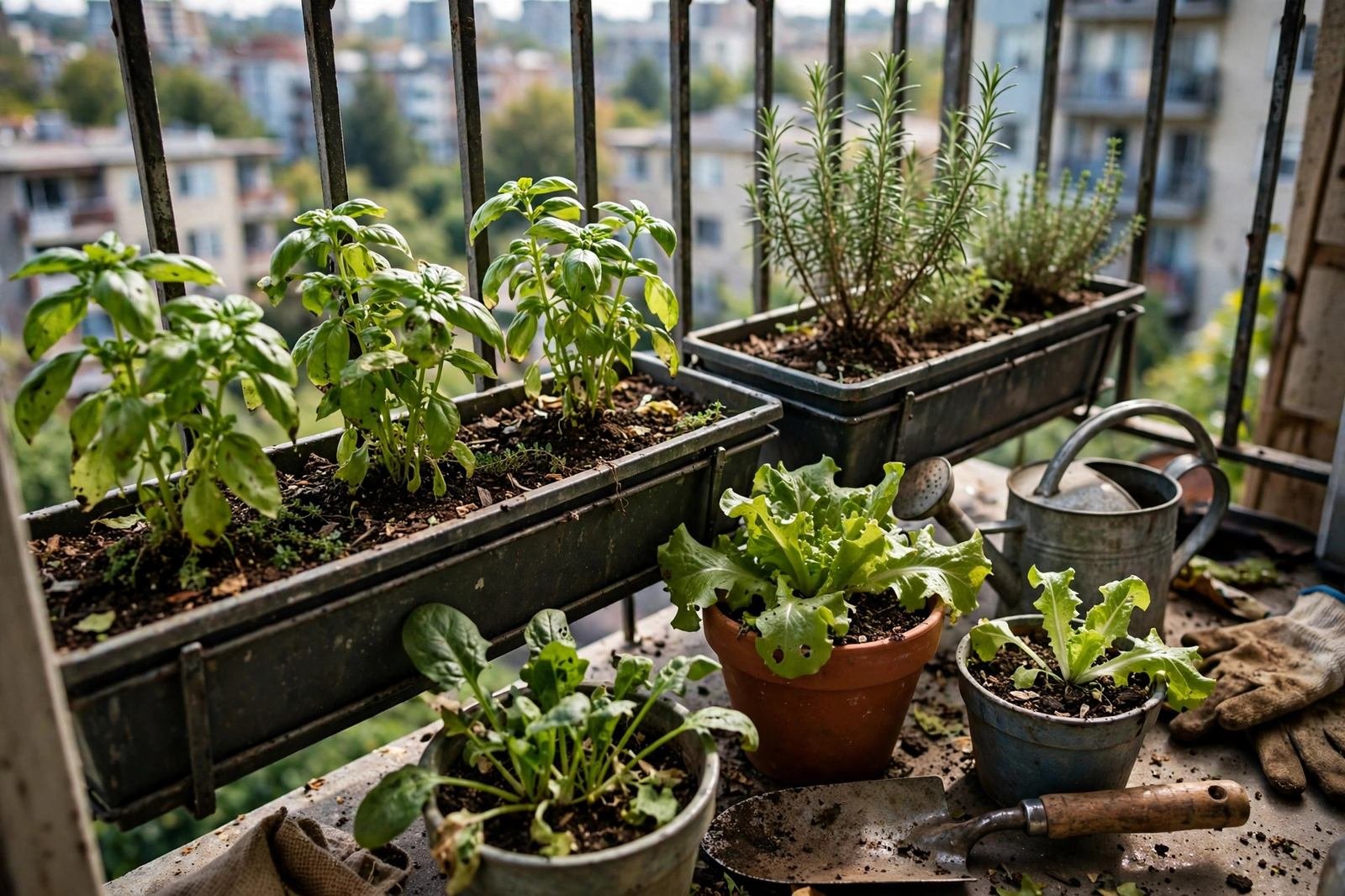
A balcony can grow a surprising amount of food. Herbs by the kitchen door, a pot of cherry tomatoes catching the afternoon sun, lettuce in a railing box through the cool months — none of it needs a yard. What it needs is a plan that respects the balcony’s limits: weight, wind, sunlight hours, and your building’s rules. Get those right and a 4-by-8-foot slab of concrete becomes one of the most productive square footages in gardening.
This guide walks through starting a balcony garden from zero: assessing your space, choosing containers that won’t overload the structure, picking crops that actually suit balconies, and a seasonal planting rhythm that keeps something growing nearly year-round.
| First step | Track sunlight for 2–3 days (most veg need 6+ hours) |
|---|---|
| Weight rule | Keep total load modest; water is the heavy part |
| Easiest crops | Herbs, lettuce, radishes, peppers, cherry tomatoes |
| Best containers | Lightweight plastic, fabric pots, railing planters |
| Fall option | Cool-season greens sown 6–8 weeks before first frost |
Step 1: Know Your Balcony
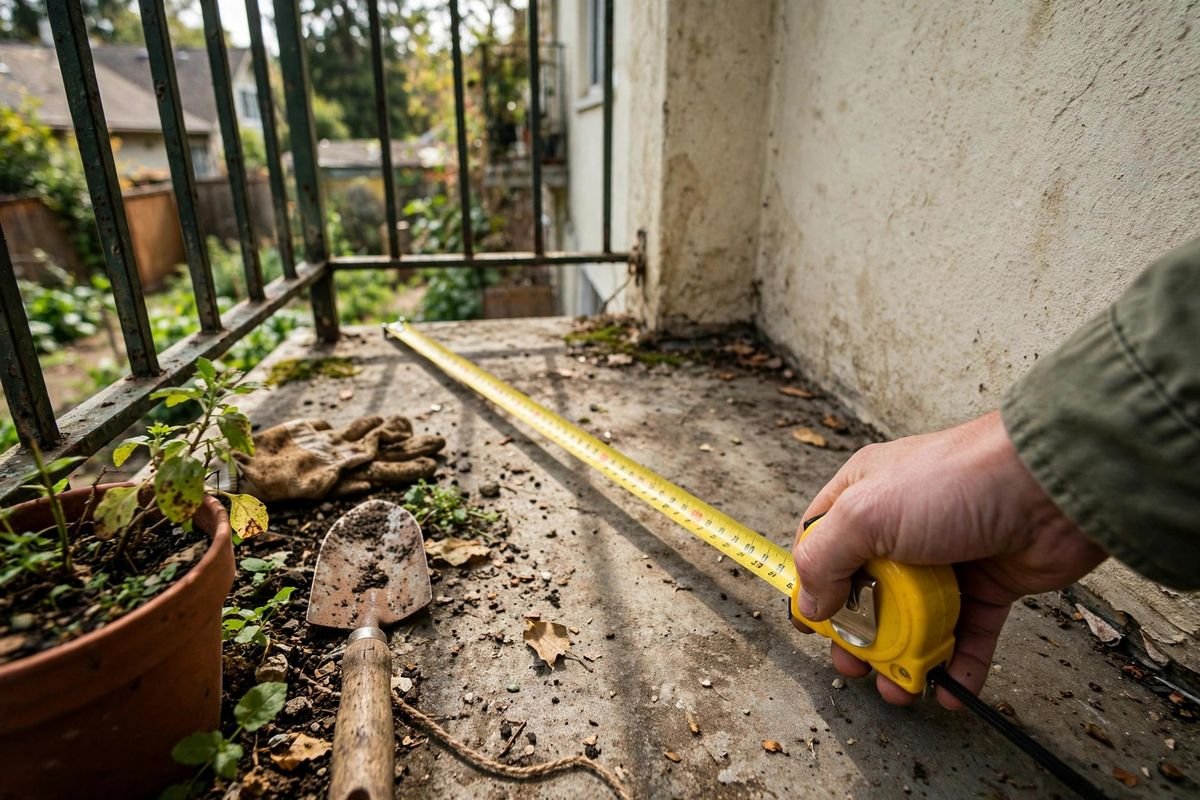
Before buying a single pot, spend a few days observing. Note when direct sun first hits the balcony and when it leaves — most fruiting vegetables want at least six hours, while leafy greens and herbs manage with four to five. A south- or west-facing balcony in the northern hemisphere is prime real estate; a north-facing one is a shade garden, and that’s fine — it just changes the crop list.
Check three practical things:
- Building rules. Many apartments restrict railing hangers, dripping water onto neighbors below, or total weight. A quick check now beats a violation notice later.
- Wind exposure. Upper-floor balconies can be surprisingly windy. Note which corner is most sheltered — that’s where seedlings and tall plants go. (See how to protect balcony plants from strong wind.)
- Water access. Hauling watering cans from the kitchen gets old fast. If there’s an outdoor spigot, great; if not, plan for self-watering pots or a small drip setup from the start.
Step 2: Choose Weight-Smart Containers
Water weighs about 8 pounds per gallon, and a freshly watered 10-gallon pot can top 80 pounds. Balconies have load limits, so build light:
- Fabric grow bags — featherweight, cheap, excellent drainage. The workhorse of balcony gardening.
- Lightweight plastic and resin pots — a fraction of ceramic’s weight at the same size.
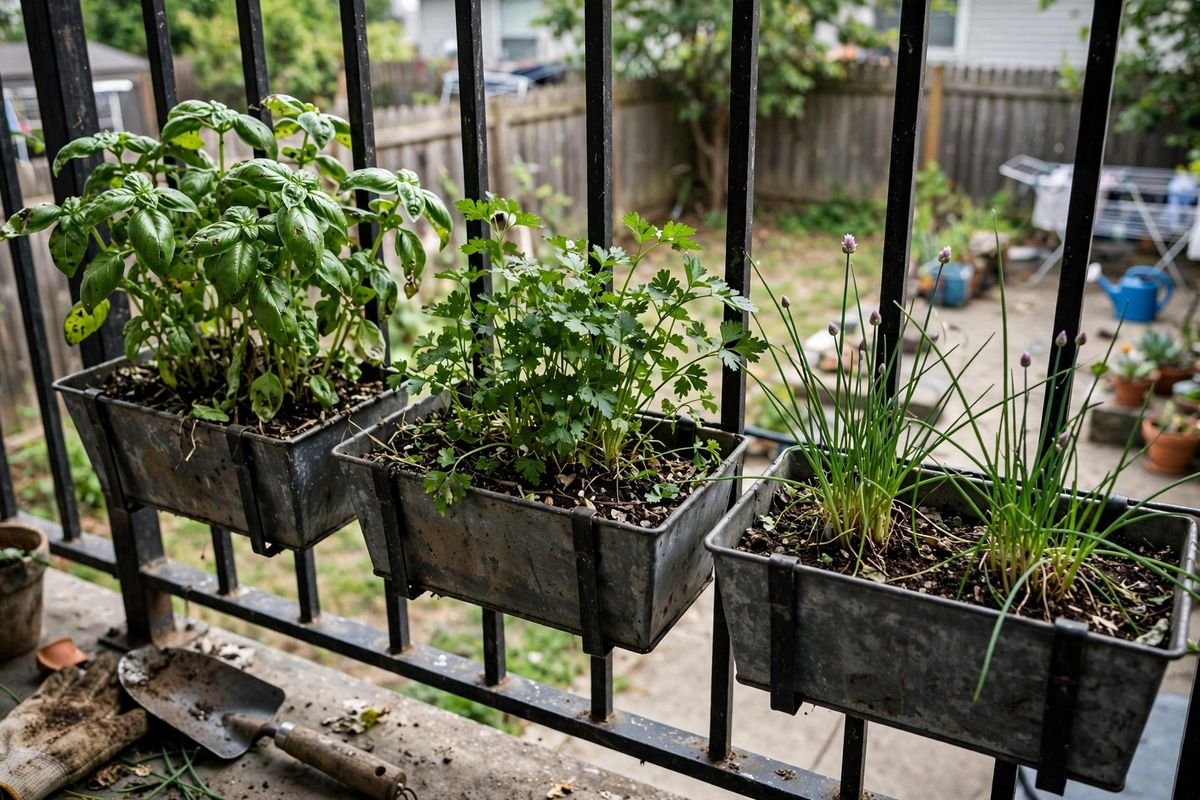
- Railing planters — boxes that straddle or hang on the railing turn dead space into growing space for herbs and greens. A railing planter box is the single highest-impact purchase for a narrow balcony.
- Vertical planters and stacked pots — grow up when you can’t grow out. Strawberries, herbs, and lettuce love vertical setups.
Skip heavy terracotta and concrete for large sizes, cluster weight near load-bearing walls rather than the railing edge, and always use saucers — your downstairs neighbor will appreciate it.
Step 3: Use the Right Potting Mix
Balcony containers need a proper soilless potting mix, not garden soil — garden soil compacts in pots, drains poorly, and is heavy. A quality bagged mix based on peat or coir plus perlite is lighter and performs better. Because you’ll likely reuse it across seasons, plan to refresh it (our guide to reusing potting soil covers exactly how). A bag of lightweight potting mix designed for containers is worth the small premium.
Step 4: Pick Crops That Suit Balconies
Compact, productive, and tolerant of container life — that’s the balcony shortlist:
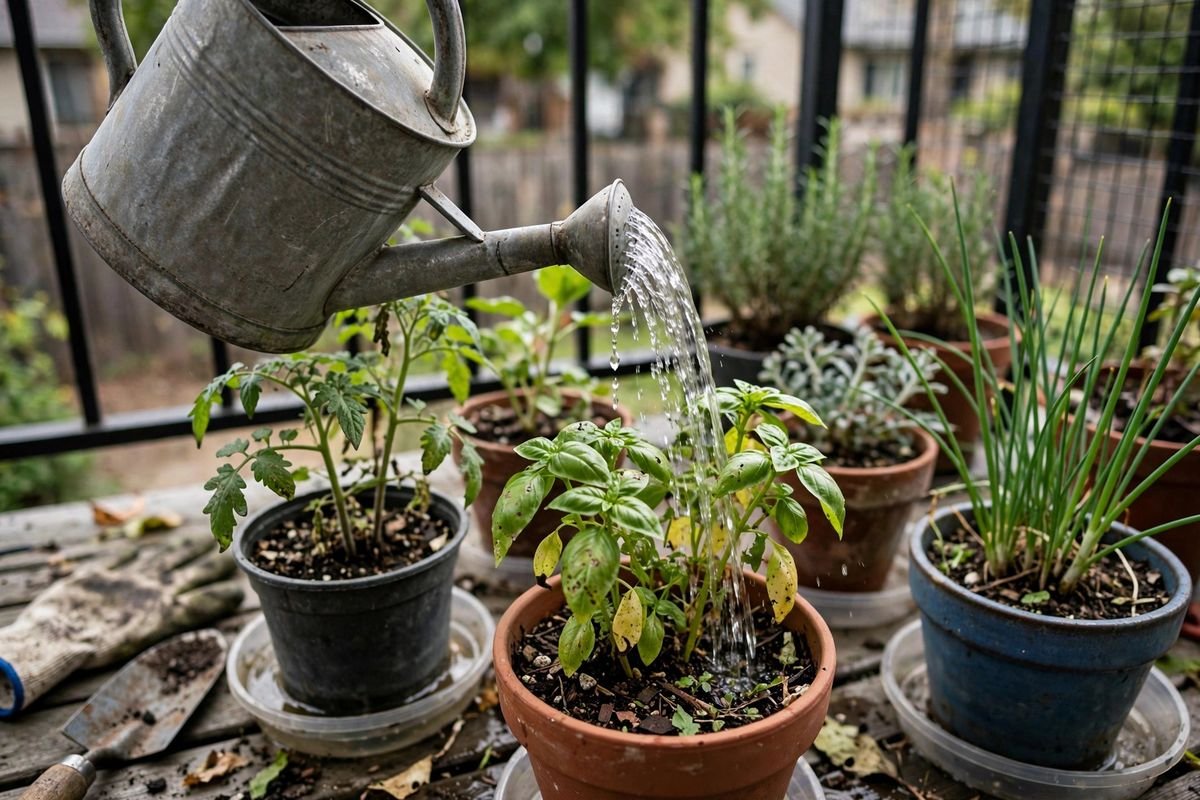
- Herbs: basil, parsley, cilantro, chives, mint (always its own pot — mint is a thug), thyme. The highest value per square inch you can grow.
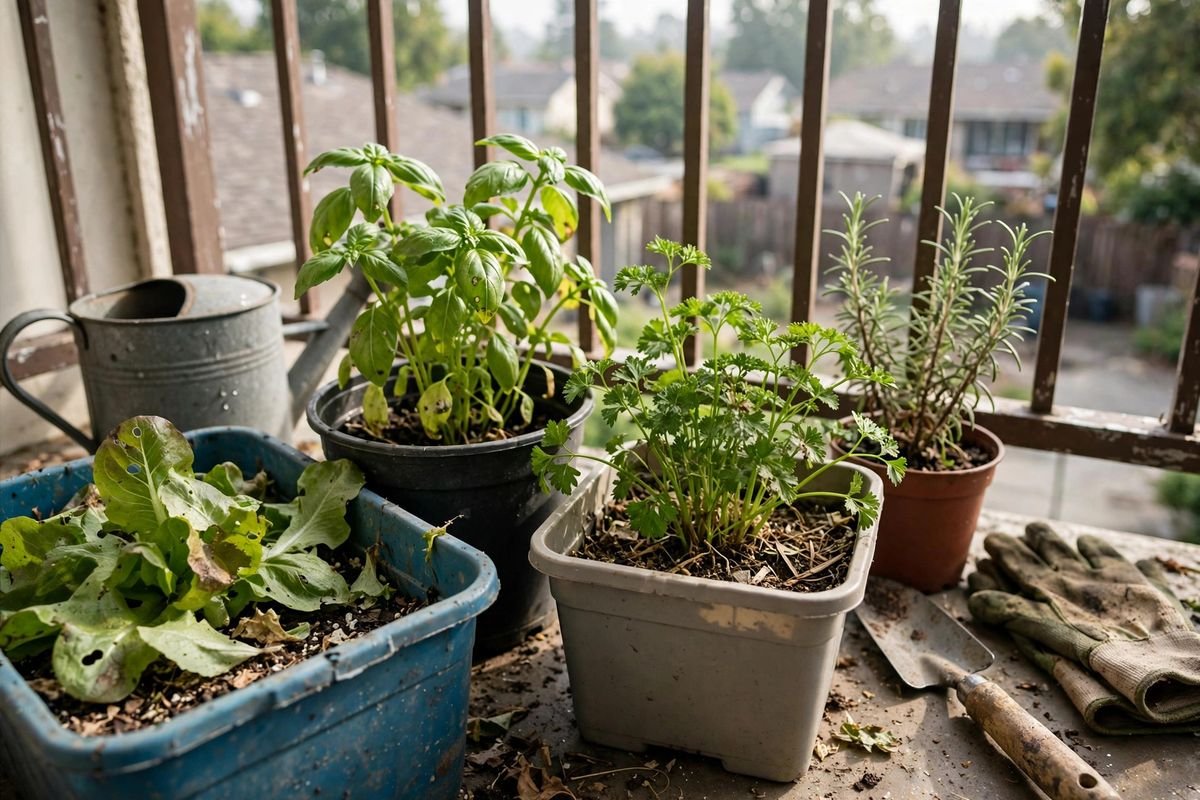
- Salad greens: lettuce, arugula, spinach, Asian greens. Shallow-rooted, fast, and happy in 6-inch-deep boxes. Perfect for fall — sow 6–8 weeks before your average first frost.
- Radishes and green onions: nearly foolproof, ready in weeks.
- Peppers: compact varieties thrive in 3–5 gallon pots and love the heat that radiates off buildings.
- Cherry tomatoes: one plant per 5-gallon pot minimum, with a sturdy cage. Determinate or dwarf varieties behave better in tight quarters.
- Dwarf cucumbers and bush beans: bred for containers; give them a small trellis.
Save full-size indeterminate tomatoes, corn, and sprawling squash for community garden plots — they can work on balconies, but they demand huge pots and constant attention.
Step 5: Set a Seasonal Rhythm
A balcony garden doesn’t have to be a summer-only project:
- Fall (now): sow cool-season greens — lettuce, spinach, arugula, radishes — 6–8 weeks before your average first frost date. Use your local frost dates and regional planting guidance — not your USDA hardiness zone alone — to choose planting dates. Row cover or a cold frame extends the season by weeks.
- Winter: in mild climates, hardy greens keep going under cover. In cold climates, rest the pots, refresh the soil, and plan spring.
- Spring: start warm-season crops after your last frost date — peppers, tomatoes, basil.
- Summer: succession-sow greens in the shade of taller plants; keep up with watering.
What to plant right now depends on your frost dates — what to plant in October breaks it down for fall.
Step 6: Water and Feed on a Schedule
Balcony pots dry fast — wind and reflected heat see to that. Check moisture daily in summer with the finger test (dry 1–2 inches down means water). Mulch the surface, group pots to shade each other, and consider a simple drip kit on a timer if you’re away during the day. Our full playbook is in keeping container soil from drying out.
Potting mix has limited nutrients, so feed regularly: a balanced liquid fertilizer every 1–2 weeks for heavy feeders like tomatoes and peppers, less for herbs (too much nitrogen makes herbs lush but bland). A wheeled plant caddy under big pots lets you chase the sun — or roll everything to shelter before a storm.
Troubleshooting Common Balcony Problems
- Leggy, pale plants: not enough light. Move to the sunniest spot or switch to shade-tolerant crops.
- Plants topple in wind: heavier pots at the base, staking, and windbreak placement — details in our wind-protection guide.
- Water dripping on the neighbor below: saucers under every pot, and water slowly so saucers don’t overflow.
- Pests: aphids love balcony plants. A strong spray of water knocks most off; check leaf undersides weekly.
FAQ
How much can I actually grow on a small balcony?
More than you’d think. A well-planned 4×8-foot balcony can supply a household’s fresh herbs all season plus regular salads and a steady trickle of cherry tomatoes and peppers. It won’t replace grocery shopping, but it changes how you cook.
Is a north-facing balcony worth it?
Yes, for the right crops: lettuce, spinach, arugula, cilantro, parsley, and mint all tolerate part shade. Skip fruiting crops like tomatoes and peppers, which truly need full sun.
Do I need special insurance or permission?
Rules vary by building and city. Always check your lease and HOA guidelines about railing attachments, weight, and water runoff before investing heavily.
Sources & Further Reading
- Cornell Cooperative Extension — small-space and container gardening guidance
- University of California Agriculture and Natural Resources — container vegetable growing
- Iowa State University Extension — “Container Vegetable Gardening” publication
- Clemson Cooperative Extension — “Container Gardening” fact sheet (HGIC 1251)
More container growing posts to explore:
- Container Gardening for Beginners: What Grows Best in Pots
- How to Protect Balcony Plants From Strong Wind
- What to Plant in October: 15 Vegetables for a Fall Garden
Start with three pots and one railing box this weekend — herbs and a fall sowing of lettuce. Small, successful, and expandable: that’s the whole balcony philosophy. What will your first pot hold?