
This post may contain affiliate links. If you buy through links on this page, we may earn a commission at no extra cost to you.
As an Amazon Associate I earn from qualifying purchases.
Small-space gardening is wonderfully forgiving in one way — a mistake in a single pot costs almost nothing to fix — and brutally unforgiving in another: every square inch has to earn its keep. There is no spare corner to absorb a bad decision. The good news is that nearly everyone makes the same handful of mistakes, which means you can skip straight past them.
Here are the nine mistakes we see most often in balconies, patios, and tiny yards — and what to do instead.
Mistake 1: Pots That Are Too Small
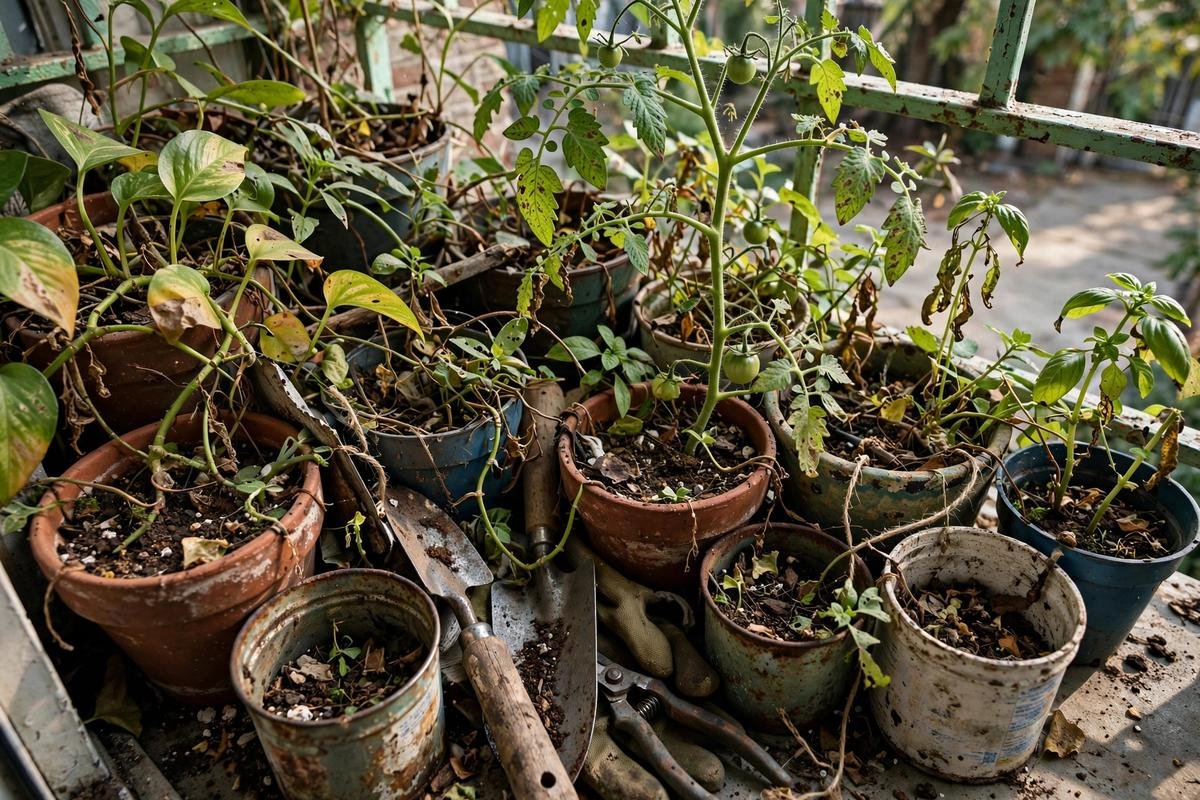
The number one small-space error is trying to grow a big plant in a tiny pot. A tomato in a 2-gallon pot will survive, technically — but it will need water twice a day, run out of nutrients by midsummer, and produce a fraction of what the same plant gives in a 5-gallon pot. Small pots also swing wildly between soaked and dry, stressing roots.
Instead: fewer, bigger pots beat many tiny ones. One 10-gallon pot with a thriving pepper plant out-produces three struggling 2-gallon pots — and takes less daily care. Check pot size minimums per crop before you plant.
Mistake 2: Overcrowding Every Container
It’s tempting to cram six seedlings into a pot “to save space.” What actually happens: they compete for light, water, and nutrients, airflow drops, disease moves in, and you harvest less than if you’d planted three. Crowding doesn’t multiply your harvest — it divides it.
Instead: respect spacing even in pots. One tomato per 5-gallon pot. Three to four lettuce heads per square foot. Thin seedlings ruthlessly when they’re small — it’s the highest-leverage 30 seconds in gardening. Our vegetable garden starter guide covers spacing logic that applies in containers too.
Mistake 3: Guessing at Sunlight Instead of Measuring It
“My patio gets plenty of sun” is the sentence behind half of all leggy, flowerless balcony plants. Human eyes are terrible light meters — a spot that feels bright can deliver only three hours of direct sun, which starves tomatoes and peppers while lettuce does fine.
Instead: track actual direct-sun hours across 2–3 days before choosing crops. Six-plus hours: full-sun crops. Four to five: greens and herbs. Under four: it’s a shade garden — own it and grow accordingly.
Mistake 4: Using Garden Soil in Pots
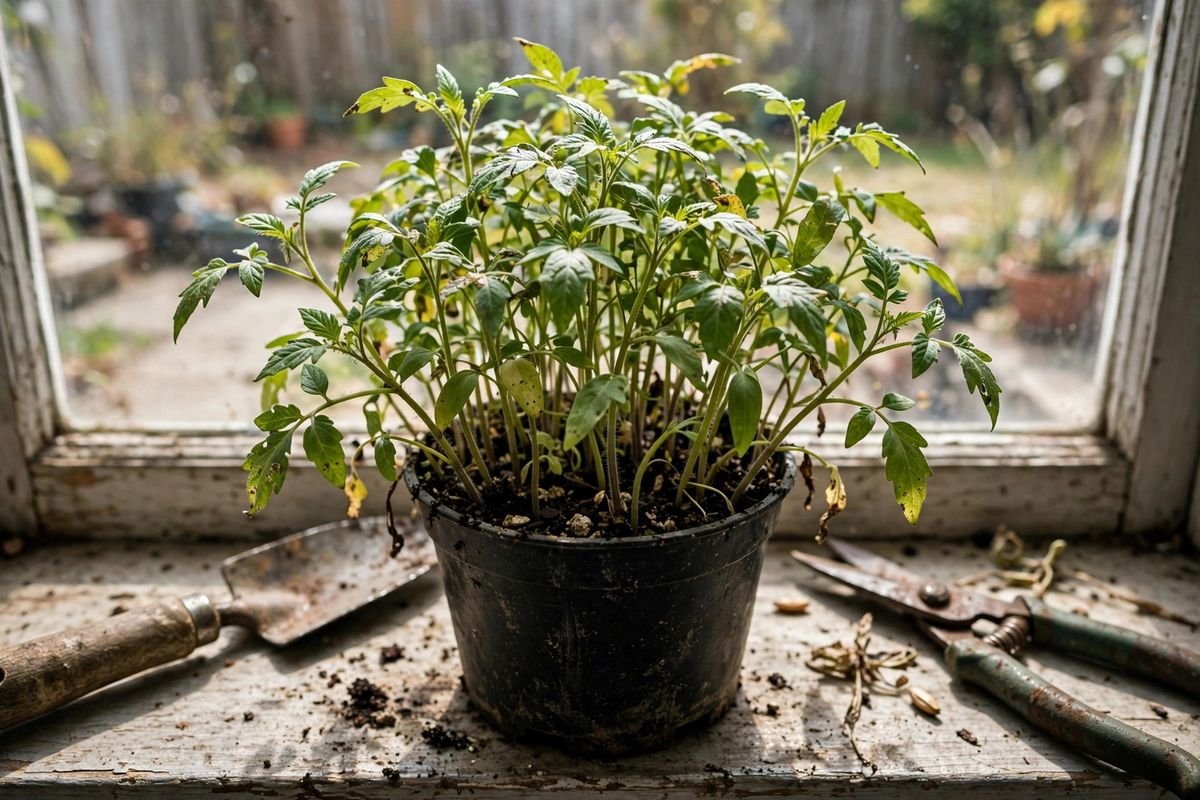
Digging soil from the yard into containers seems thrifty, but garden soil compacts into a brick in pots, drains poorly, and can carry weed seeds and soil diseases. Container plants in garden soil grow slowly and often develop root problems.
Instead: use a bagged soilless potting mix. It’s lighter, drains properly, and is formulated for container life. And when the season ends, don’t throw it away — you can reuse potting soil with a simple refresh.
Mistake 5: Forgetting That Wind Is Stronger Up High
Ground-floor gardeners rarely think about wind. Balcony gardeners on the fifth floor think about it constantly — gusts snap stems, shred leaves, topple pots, and dry soil shockingly fast. Tall, top-heavy plants become sails.
Instead: choose compact varieties, stake early, use heavy-based pots for tall plants, and create windbreaks with the sturdiest plants shielding the delicate ones. Full tactics in protecting balcony plants from strong wind.
Mistake 6: Watering on a Schedule Instead of by Feel
“Water every day” drowns plants in cool, cloudy weeks and underwater them in heat waves. Small pots are especially schedule-sensitive because they hold so little buffer.
Instead: check with the finger test — water when the top 1–2 inches are dry. Mulch the surface to slow evaporation, and learn the full routine in keeping container soil moist. A self-watering planter is the best insurance for anyone with an irregular schedule.
Mistake 7: Skipping Fertilizer (or Overdoing It)
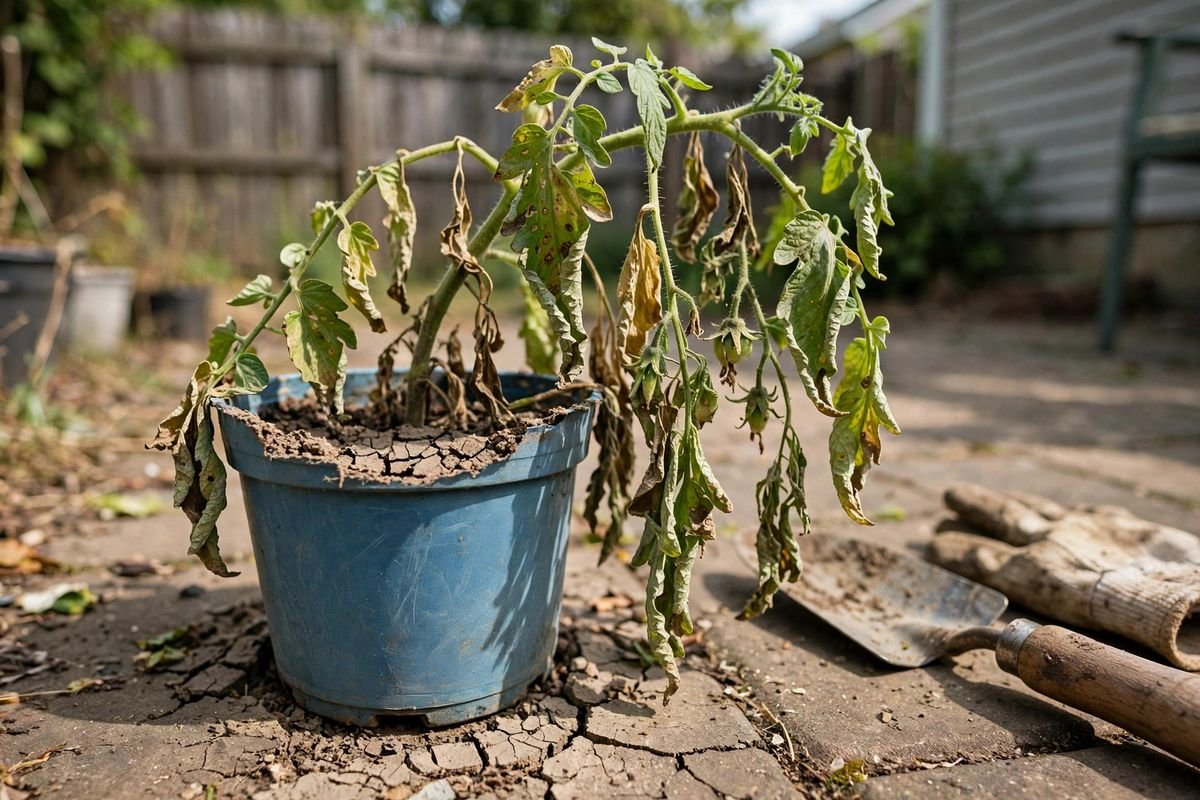
Potting mix isn’t soil — its nutrients wash out with every watering, and a hungry plant in a small pot shows it fast: pale leaves, slow growth, poor fruiting. The opposite error is just as common: dumping extra fertilizer “to help,” which burns roots in the confined space.
Instead: feed lightly and regularly — a half-strength balanced liquid fertilizer every 1–2 weeks during active growth. Herbs need less; heavy feeders like tomatoes need more. When in doubt, less is safer than more.
Mistake 8: Growing Only in Summer
Many small-space gardeners plant in May, harvest through August, then let everything sit empty until next spring. That’s leaving half the year’s potential on the table — fall is prime season for greens, and a cold frame or row cover stretches it further.
Instead: plan successions. When summer crops finish, sow fall greens 6–8 weeks before your average first frost (use local frost dates and regional guidance, not the USDA zone alone, to time it). What to plant in October has the full fall list.
Mistake 9: Buying Every Gadget Before Mastering Basics
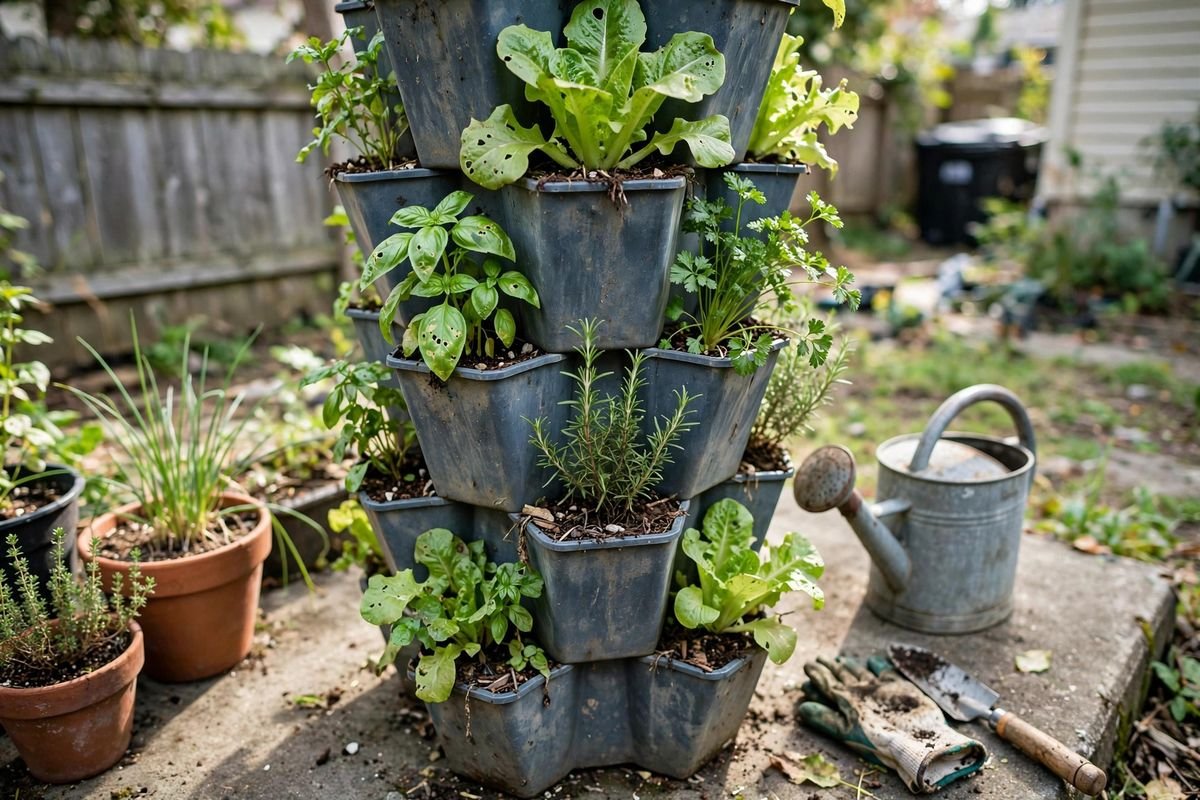
Fancy tiered planters, automated everything, exotic varieties — beginners often invest in equipment before they’ve learned to keep basil alive. Gadgets don’t compensate for too-small pots and guessed sunlight.
Instead: master the fundamentals with a few simple pots first: right size, right mix, right sun, consistent water. Then upgrade deliberately. A set of fabric grow bags and a bag of good mix will teach you more than any gadget.
Three Quick Wins for This Weekend
If the full list feels like a lot, these three fixes take under an hour and pay off immediately. First, mulch every pot you own — two inches of straw or shredded bark on the surface slows evaporation starting today. Second, lift your pots onto pot feet or bricks so drainage holes can actually drain; pots sitting flat on a patio often seal their own holes shut. Third, move one struggling plant to a bigger pot with fresh mix and watch what happens over the next two weeks. That single before-and-after comparison will teach you more about container growing than any article, and it usually converts even the most committed tiny-pot gardener for good.
FAQ
What’s the single biggest small-space mistake?
Pots too small for the plant. It causes the most watering work, the most stress, and the smallest harvests. When choosing, always size up.
Can I really grow vegetables with only 4 hours of sun?
Yes — leafy greens, herbs, radishes, and green onions all produce in part shade. You just can’t grow sun-hungry fruiting crops like tomatoes and peppers there.
How do I stop making these mistakes permanently?
Keep a one-line garden journal: what you planted, where, and what happened. Next season’s decisions get dramatically better. Even a notes app works.
Sources & Further Reading
- Cornell Cooperative Extension — small-space and container gardening guidance
- Iowa State University Extension — “Container Vegetable Gardening” publication
- Clemson Cooperative Extension — “Container Gardening” fact sheet (HGIC 1251)
More container growing posts to explore:
- Container Gardening for Beginners: What Grows Best in Pots
- How to Start a Balcony Garden: A Beginner’s Guide
- What Size Pot Does a Tomato Plant Need?
Pick the one mistake on this list you’re most guilty of and fix it this week — small spaces reward fast corrections. Which one hit home for you?