This post may contain affiliate links. If you buy through links on this page, we may earn a commission at no extra cost to you.
As an Amazon Associate I earn from qualifying purchases.
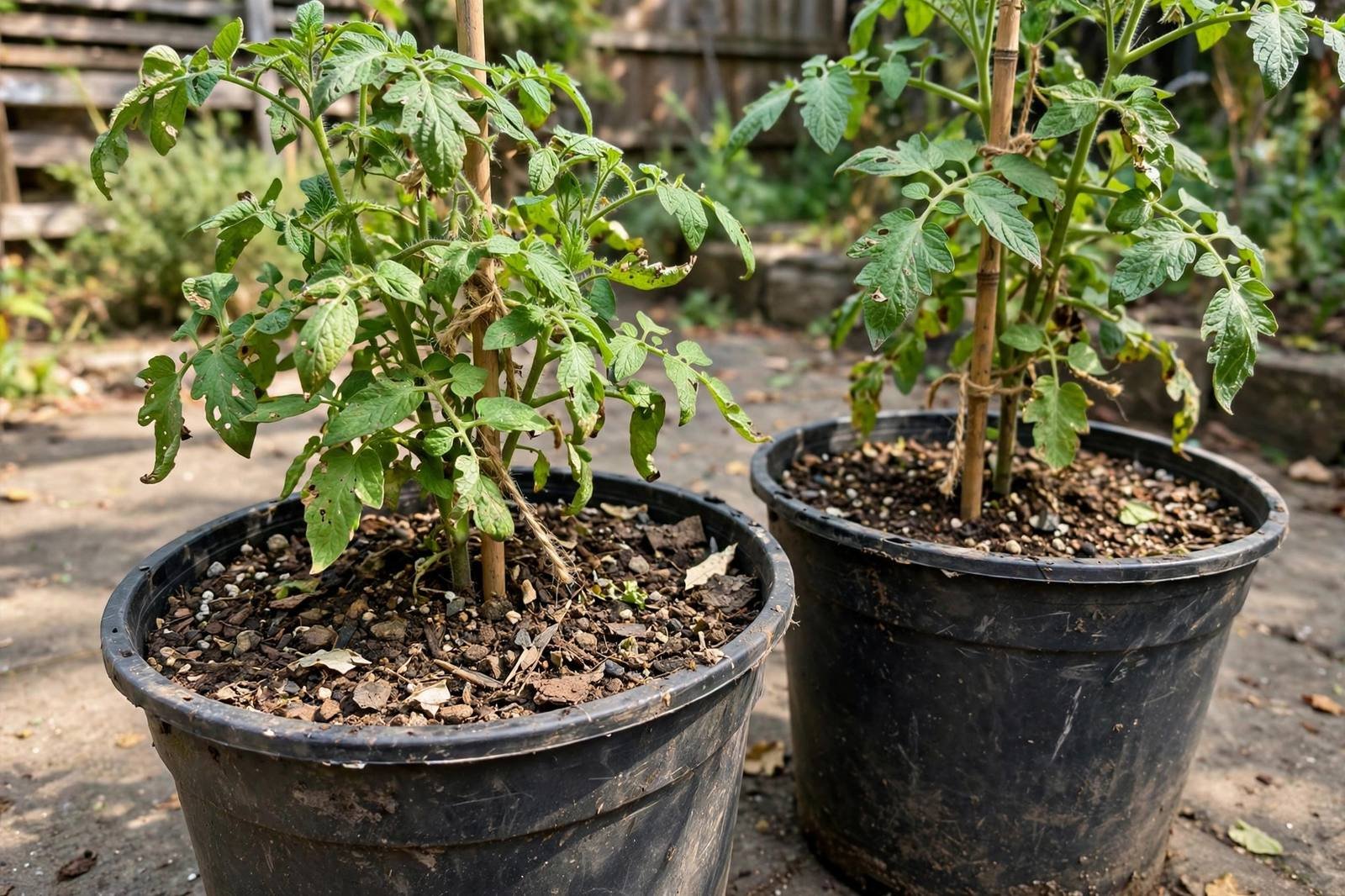
Tomatoes are one of the most rewarding things you can grow in a pot — and one of the easiest to under-pot. A tomato is a big, hungry, thirsty plant with a root system to match, and when it runs out of room, it tells you quickly: wilting by noon, blossom end rot on the first fruits, a plant that stalls out in July while your neighbor’s keeps climbing. Nine times out of ten, the difference between those two plants is simply the size of the container.
Here’s the good news: once you give a tomato enough root space, container growing is straightforward. Big-pot tomatoes can be every bit as productive as in-ground plants — many gardeners actually prefer pots for cherry tomatoes, since they can move the plant to chase the sun. The rules are simple, the minimums are clear, and bigger really is better.
In this guide, we’ll cover the short answer first, then the details that matter: how determinate and indeterminate types differ, why pot size affects everything from watering to disease, what to look for in drainage and materials, the right soil and feeding routine, and how to water a potted tomato through the heat of summer. If you want the full season playbook after this, our complete tomato growing guide walks through sowing, transplanting, and harvest.
Tomato Container Size at a Glance
| Tomato Type | Minimum Pot Size | What We Recommend |
|---|---|---|
| Dwarf / micro cherry | 3 gallons | 5 gallons for easy watering |
| Standard cherry (Sweet Million, Sungold) | 5 gallons | 7–10 gallons |
| Determinate / bush (Roma, Celebrity) | 5 gallons | 7–10 gallons |
| Indeterminate / vining (Beefsteak, Brandywine) | 7 gallons | 10–20 gallons |
The Short Answer: 5 Gallons Minimum, 10+ Gallons Better
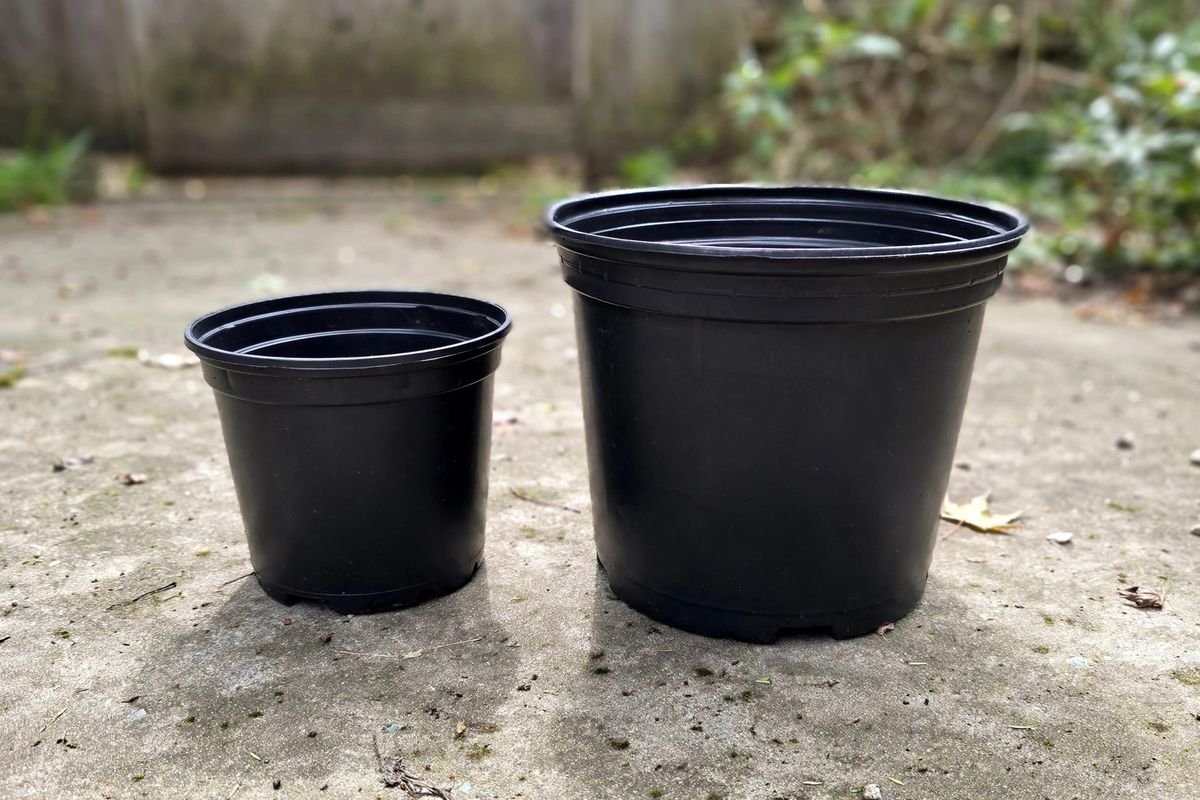
If you remember one number from this article, make it five. A 5-gallon container — the size of a standard bucket — is the widely accepted minimum pot size for a tomato plant, per standard extension guidance. Anything smaller forces the plant to spend its energy surviving instead of fruiting, and you’ll spend the summer chained to the watering can.
But minimum isn’t ideal. A 10-gallon (or larger) pot grows a noticeably better tomato: steadier moisture, more nutrients in reserve, and a root system with room to spread. If you have the space and the soil budget, go big — the plant will use every inch. Gardeners growing indeterminate varieties in half-barrels or 15–20 gallon grow bags routinely report the best container harvests of all.
One hard rule: one tomato plant per pot. Two plants in a 10-gallon pot will compete for water and nutrients all season, and both will underperform compared to a single plant in its own 5-gallon home. Tomatoes are heavy feeders — they don’t share gracefully.
Starting tomatoes from seed this year? Use your local frost dates and regional planting guidance — not your USDA hardiness zone alone — to choose planting dates, since transplant timing decides how long your container season runs.
Determinate vs Indeterminate: It Changes the Pot
Tomato varieties fall into two growth habits, and the habit decides how much pot the plant needs. Determinate (bush) tomatoes grow to a set height — usually 2 to 4 feet — set most of their fruit in a concentrated window, and then they’re done. Indeterminate (vining) tomatoes keep growing, flowering, and fruiting until frost kills them, often reaching 6 feet or more on a stake.
Determinate types are the natural container choice. Compact varieties like Roma, Celebrity, and most bush cherries top out at a manageable size, and a 5- to 7-gallon pot holds them comfortably. They’re also the easiest to support — a single sturdy stake or a small cage is usually enough.
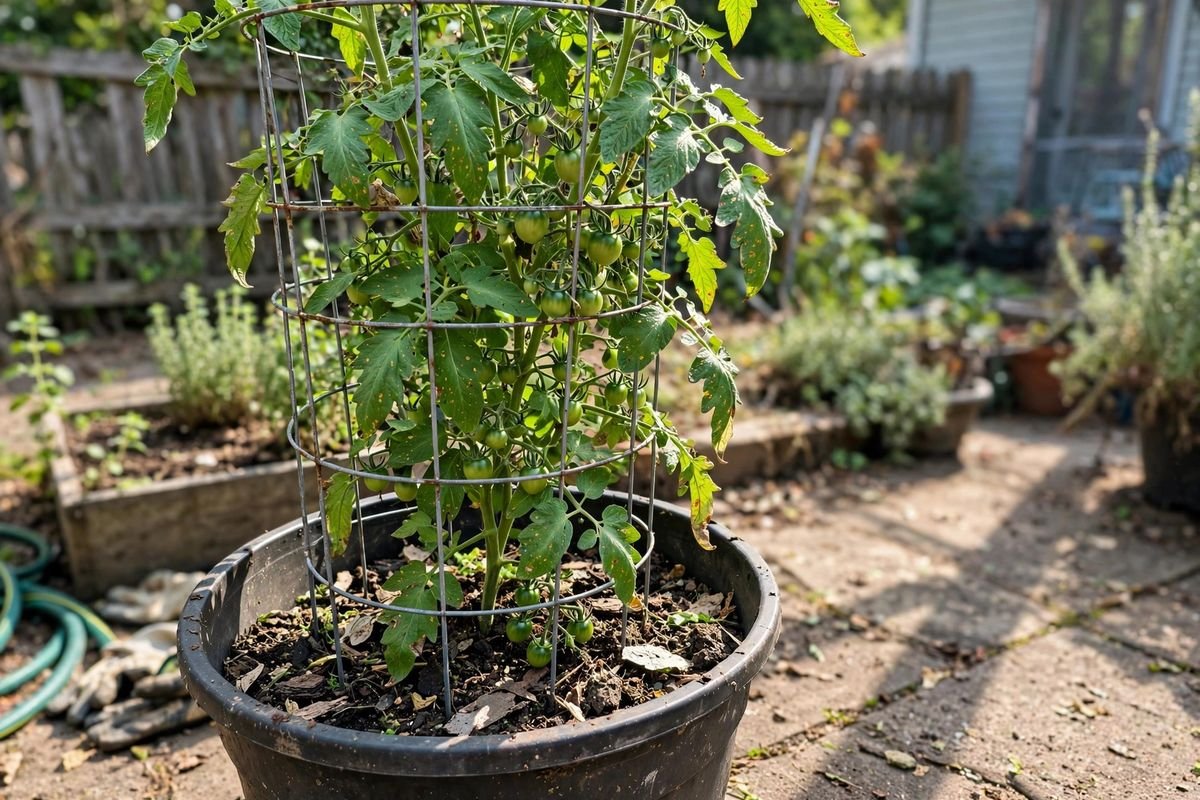
Indeterminate varieties need more of everything: more soil, more water, and much stronger support. Give them at least 10 gallons — 15 to 20 is better — and plan for a tall, firmly anchored stake or a heavy-duty cage. A 6-foot vine in a small pot is a recipe for daily wilting and a plant that tips over in the first gust. If you’re growing on a balcony, a determinate variety in a 7-gallon pot is almost always the happier combination.
Dwarf and micro varieties are the exception to the 5-gallon rule. Bred specifically for containers, types like Tiny Tim or Micro Tom fruit happily in 2- to 3-gallon pots. They’re a great pick for a sunny windowsill or a tiny balcony — but standard-size varieties still need standard-size pots.
Related Post: Variety choice is only half the container equation — see Container Gardening for Beginners for the soil, drainage, and feeding fundamentals that apply to every potted vegetable.
Why Pot Size Matters So Much
It helps to understand what a small pot actually does to a tomato. The plant’s needs don’t shrink to fit the container — a full-size tomato still wants a big root system, still drinks heavily on hot afternoons, and still needs a steady supply of calcium and other nutrients. A small pot just means a smaller buffer for all of those needs.
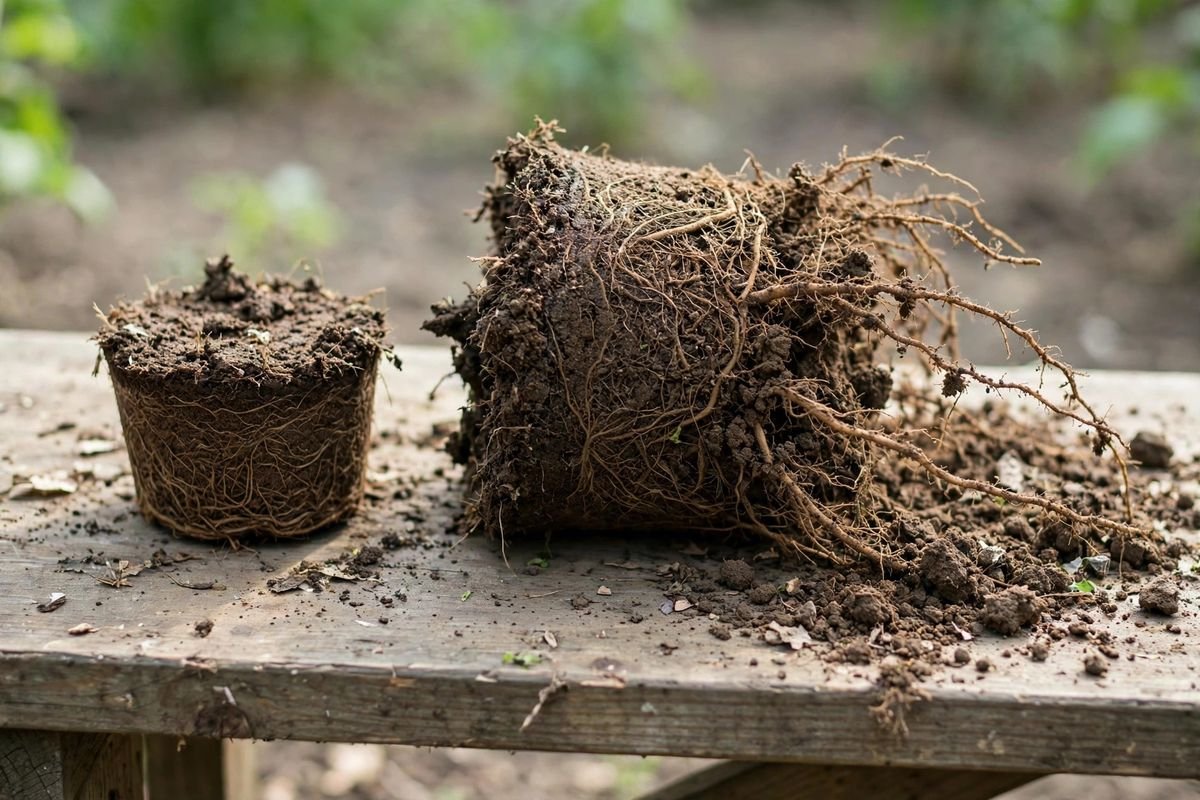
Roots run out of room. Tomato roots are aggressive growers. In a cramped pot they circle the container walls, mat together, and eventually form a dense, root-bound mass that can’t take up water efficiently. Slide a struggling plant out of its pot mid-season and you’ll often see more root than soil — at that point, no amount of watering fixes the underlying problem.
Water swings get violent. A 3-gallon pot in full July sun can go from soaked to bone-dry in a single afternoon. Tomatoes hate that cycle: it causes blossom end rot (the dark sunken spot on the bottom of fruits), fruit cracking when a dry spell is followed by a flood, and general stress that invites disease. A 10-gallon pot holds roughly twice the water reserve, which flattens those swings dramatically.
Nutrients run out faster. Tomatoes are heavy feeders, and a small volume of potting mix has a small bank of nutrients to draw on. Plants in undersized pots yellow early and stall mid-season — not from disease, but from simple hunger. Bigger pots mean a bigger pantry.
Drainage Is Non-Negotiable
Size means nothing without drainage. Tomatoes despise sitting in waterlogged soil — soggy roots suffocate, rot sets in, and the plant collapses just as surely as if it had dried out. Every tomato pot needs multiple open drainage holes in the bottom, no exceptions. Decorative pots without holes can work as outer cache pots, but the plant itself must live in something that drains freely.
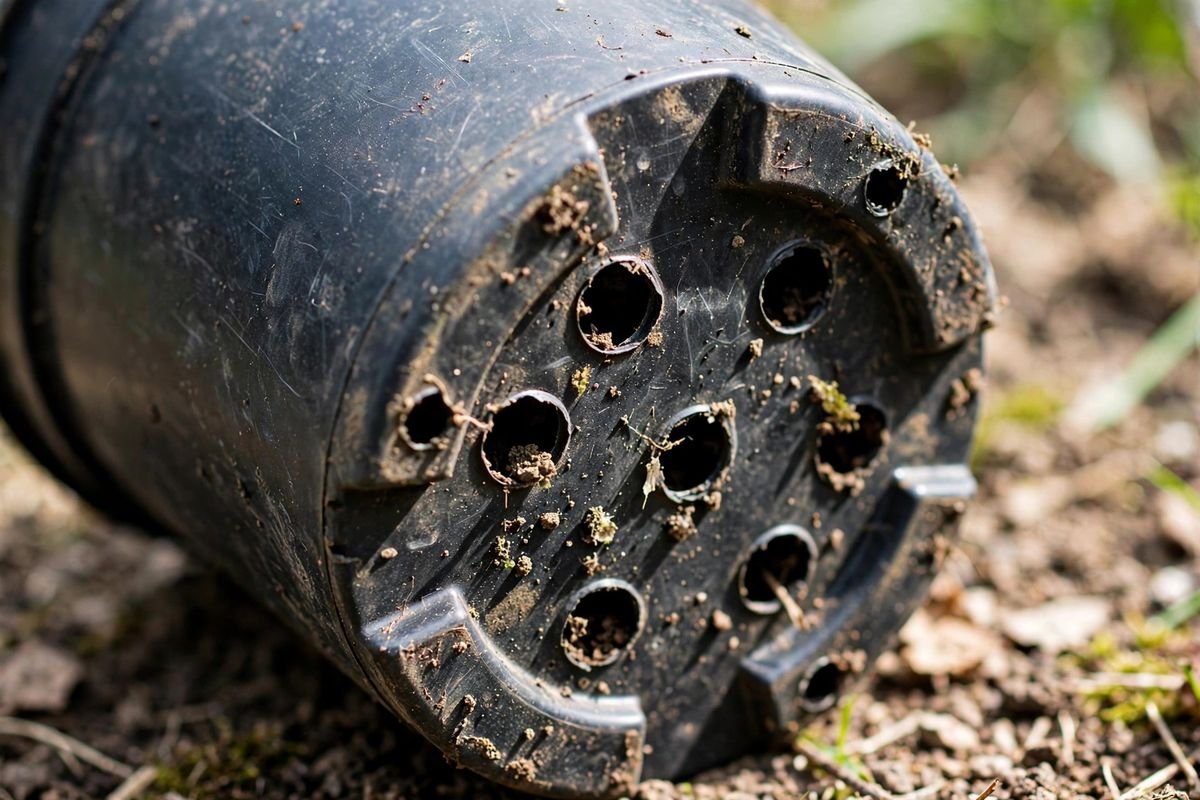
Set pots on pot feet, bricks, or a slatted surface — never flat on a solid deck where the holes can seal against the surface. A saucer underneath is fine as long as you empty it after watering; a pot sitting in a full saucer all day is effectively a pot without drainage. Fabric grow bags are popular for tomatoes precisely because their entire surface breathes and drains, which makes overwatering almost impossible. A 10-gallon fabric grow bag is one of the most forgiving tomato containers you can buy.
Material matters beyond drainage. Dark plastic pots absorb heat and can cook roots in hot climates — light-colored pots, fabric bags, or a light mulch layer on the soil surface all help. Terracotta breathes beautifully but dries out fast and gets heavy at 10-gallon scale; it’s workable, but you’ll water more. Whatever the material, the holes are what count.
Soil and Feeding for Potted Tomatoes
Fill tomato pots with a quality potting mix, not garden soil. Garden soil compacts in containers, drains poorly, and can carry soilborne diseases. A peat- or coir-based potting mix with perlite gives roots the airy, well-drained structure they need. Many gardeners blend in a scoop or two of finished compost for biology and slow-release nutrients — our guide to making compost at home covers what to look for in a finished batch.
Start with a slow-release granular fertilizer mixed into the potting mix at planting time, following the package rate. Then feed regularly through the season: tomatoes in containers need consistent nutrition, and every watering leaches a little away. A balanced liquid fertilizer at half strength every one to two weeks is a common routine; switch to a bloom- or tomato-specific formula once flowers appear. If you’d rather shop than mix, search for a liquid tomato fertilizer and follow the label — tomatoes respond well to steady, moderate feeding.
Don’t reuse last year’s potting mix for tomatoes without refreshing it. Old mix is depleted, compacted, and may harbor disease. You can rejuvenate it by mixing in fresh compost and new potting mix (about half and half), but for a plant as disease-prone as tomato, many gardeners start fresh each season for their tomato pots and recycle the old mix into flower containers.
Watering a Potted Tomato
Container tomatoes drink more than almost anything else in the garden. In the heat of summer, a 10-gallon pot with a full-size plant can need water every single day — sometimes twice on scorching, windy days. The goal is deep, consistent moisture: water slowly until it runs freely from the drainage holes, then don’t water again until the top inch or two of mix feels dry.
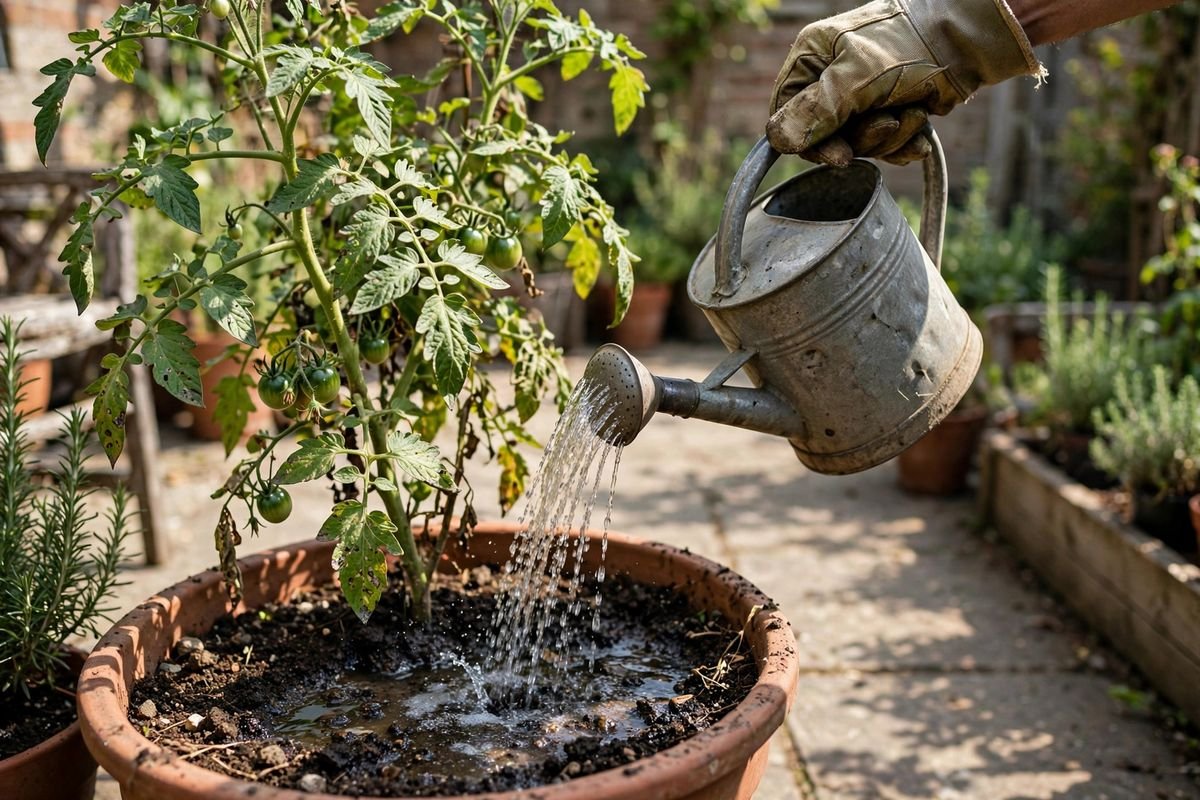
Water the soil, not the leaves. Wet foliage invites the fungal diseases tomatoes are famous for — early blight, septoria, and their friends all spread in splashing water. A soaker hose or drip ring on a timer is the gold standard for container tomatoes; it delivers steady moisture to the root zone without wetting the leaves, and it saves you from the daily watering grind.
Mulch the pot surface with two inches of straw, shredded leaves, or bark. Mulch cuts evaporation, keeps the mix from splashing onto lower leaves during rain, and moderates soil temperature. In a big pot, it’s one of the highest-value five minutes you can spend. Signs you’re underwatering: wilting that appears by midday and recovers slowly at night, blossom end rot on new fruits, and leaf edges curling upward. Signs you’re overwatering: yellowing lower leaves, a sour smell from the mix, and wilting in soil that feels wet.
Troubleshooting Container Tomato Problems
Blossom end rot on the fruits
Those dark, sunken spots on the bottom of otherwise fine tomatoes are caused by inconsistent water uptake, not (usually) a true calcium deficiency in the mix. Even out your watering — deep, regular, never letting the pot swing from dry to soaked — and keep a steady feeding schedule. Fruits already affected won’t heal, but new fruits will come in clean once watering stabilizes.
Wilting every afternoon despite watering
Classic undersized-pot syndrome. The root system can’t pull water fast enough to keep up with a full canopy in afternoon heat. If the plant is still young, transplant it into a bigger pot promptly. If it’s mid-season and full of fruit, move it to afternoon shade, mulch heavily, and water morning and evening — then go bigger next year.
Fruit cracking after rain
Cracks radiating from the stem end happen when a dry spell is followed by a sudden flood of water — the inside of the fruit swells faster than the skin can stretch. Consistent watering and mulch are the prevention. Cherry varieties and thin-skinned heirlooms crack most; harvest them just before they’re fully ripe and let them finish on the counter.
Lower leaves yellowing and dropping
Some lower-leaf yellowing on a heavily fruiting plant is normal — the plant is redirecting energy to fruit. But rapid yellowing climbing the plant usually means hunger (feed it) or overwatering (let it dry out). Remove badly yellowed leaves for airflow, but don’t strip the plant bare; those leaves are still photosynthesizing.
Plant is all leaves, no flowers
Too much nitrogen and not enough sun is the usual cause. Make sure the pot gets at least 6 to 8 hours of direct sun, ease off high-nitrogen fertilizer, and give it time — stressed or recently transplanted tomatoes often pause before they bloom.
FAQs About Tomato Pot Size
Can I grow a tomato in a 3-gallon pot?
Only dwarf or micro varieties. A standard cherry or full-size tomato in 3 gallons will be root-bound by midsummer, need watering twice a day, and produce a fraction of its potential. If 3 gallons is all you have, choose a variety bred for it.
Do tomatoes need deep pots or wide pots?
Both help, but depth matters slightly more — tomato roots grow deep, and a deeper pot holds a bigger water reserve. That said, a wide, squat 10-gallon pot outperforms a tall, narrow 5-gallon one. Aim for at least 14 inches of depth either way.
How many tomato plants per pot?
One. Always one tomato per pot, no matter how big the pot is. Two plants compete for the same water and nutrients all season, and the combined harvest is smaller than what a single plant would produce alone.
Can I grow tomatoes in the same pot two years in a row?
You can, but refresh the mix and watch for disease. Tomato pathogens can persist in old potting mix, so replace at least half the mix with fresh material and compost, or rotate that pot to a non-tomato crop for a season.
Are grow bags better than hard pots for tomatoes?
For beginners, often yes. Fabric bags drain and breathe so well that overwatering is nearly impossible, and roots air-prune instead of circling. They dry out faster than plastic, so you’ll water more — but in exchange you get a very forgiving container. Hard pots hold moisture longer and last for years; pick based on your watering habits.
More Tomato & Container Posts to Explore
- How to Grow Tomatoes: From Seed to Harvest — the full-season playbook, from sowing to the last fall harvest.
- Container Gardening for Beginners — pot sizes, soil, and drainage for every potted vegetable.
- How to Make Compost at Home — finished compost gives potted tomatoes a slow-release nutrient boost.
Sources & Further Reading
- Cornell University Extension — Tomatoes (variety types and growing guidance)
- University of Maryland Extension — Container Gardening (container size and watering guidance)
- North Carolina State Extension — Growing Tomatoes in the Home Garden (container and in-ground tomato culture)
What size pot are your tomatoes in this year — and is it enough? Tell us in the comments, and we’ll help you size up for next season.