
This post may contain affiliate links. If you buy through links on this page, we may earn a commission at no extra cost to you.
As an Amazon Associate I earn from qualifying purchases.
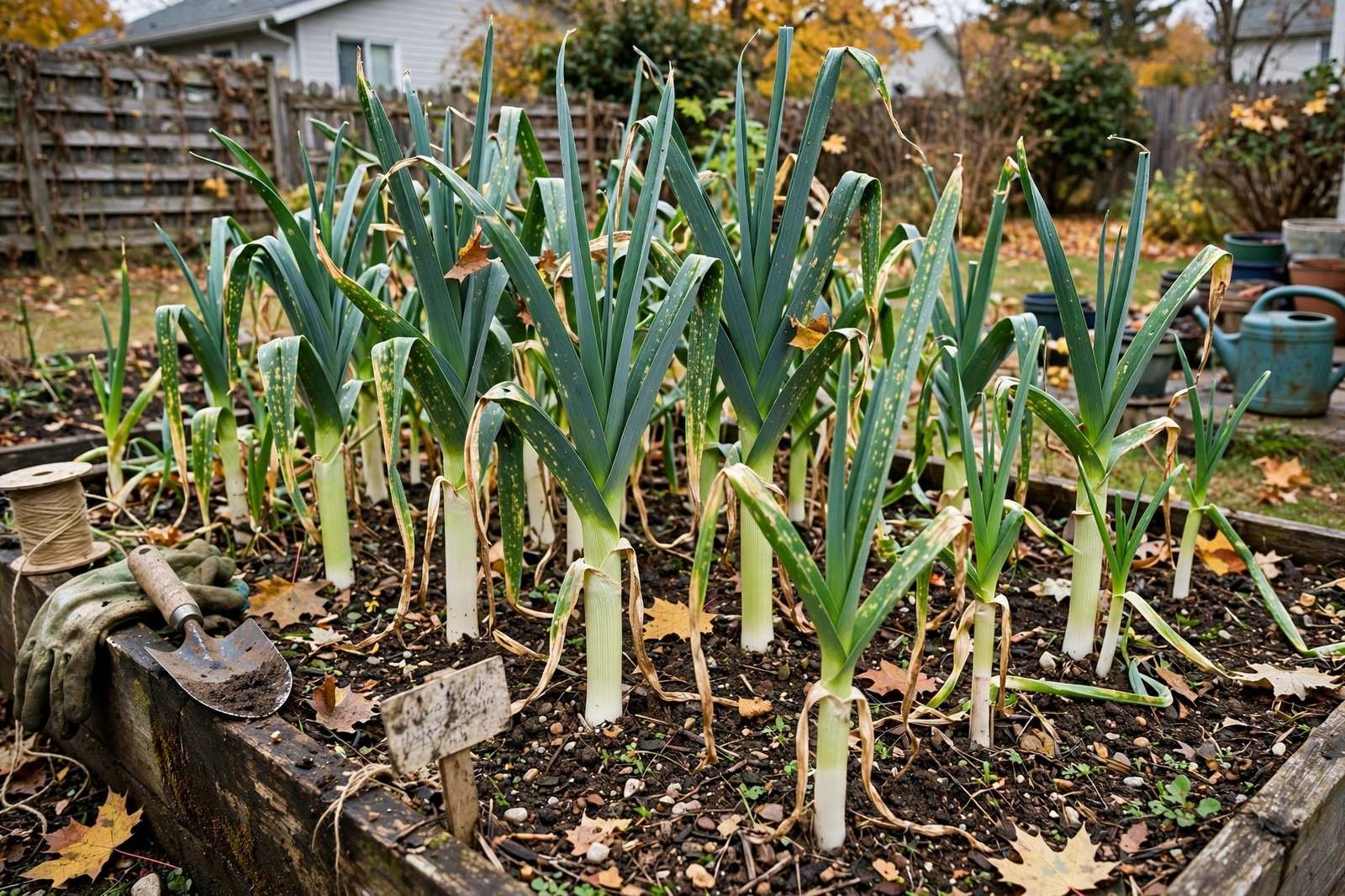
Leeks earn a place in the fall garden for good reason. They grow steadily as the weather cools, they handle frost with grace, and they give us a mild, sweet onion flavor that works in soups, braises, and gratins all season. Unlike bulb onions that need to size up before cold weather, leeks can be planted in late summer, trenched and hilled through fall, and harvested well into winter in many gardens.
This guide covers timing for fall planting, variety choices, soil preparation, the trench and hill method for long blanched stems, watering and feeding, pest watch, and harvest and storage. We keep the steps practical for raised beds, in-ground rows, and wide containers, with notes on what to do as nights turn cold.
| Sun | Full sun, 6 or more hours; tolerates light shade |
|---|---|
| Soil | Deep, loose, well-drained, pH 6.0 to 7.0, compost enriched |
| Planting depth | Transplants set 3 to 4 inches deep in trench, holes gradually filled |
| Spacing | 4 to 6 inches apart in rows 12 to 18 inches apart |
| Water | About 1 inch per week, keep soil evenly moist |
| Days to harvest | 100 to 120 days from seed; usable size sooner from transplants |
| Frost tolerance | Hardy to about 15 degrees F with mulch; sweeter after light frost |
When to Plant Leeks for Fall Harvest
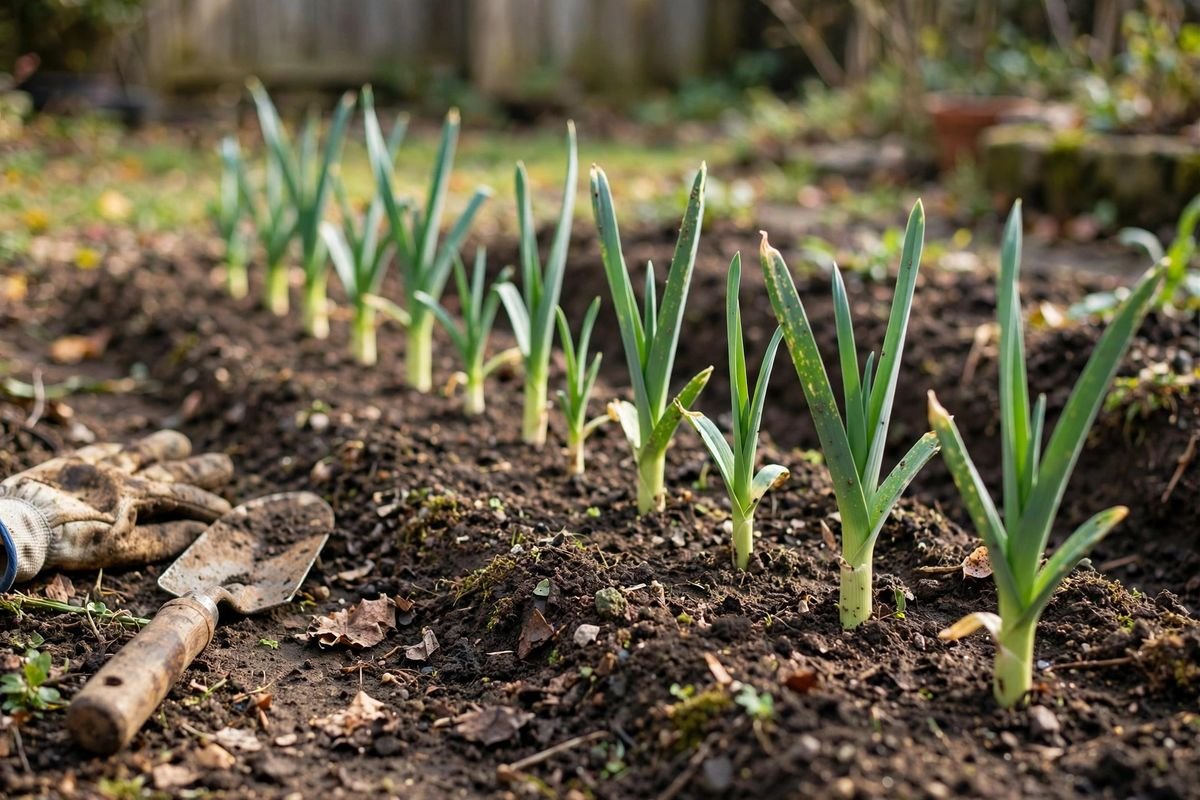
Leeks are a cool-season crop that grows best between 55 and 75 degrees F. They tolerate heat better than spinach early in the season, but steady fall growth starts once nights cool down. For a fall harvest, we sow seed indoors or in a nursery bed in late spring to early summer, then set transplants into the garden in mid to late summer. Transplants about pencil-thick and 6 to 8 inches tall handle the move well and give us a head start before short days slow growth.
Use your local frost dates and regional planting guidance — not your USDA hardiness zone alone — to choose planting dates. We count back from the first hard freeze, aiming to have plants well rooted and growing before serious cold sets in. In colder areas, setting transplants 10 to 12 weeks before the ground freezes gives leeks time to form a solid shank. In mild-winter areas, a second set-out in early fall can overwinter and size up for late winter and spring harvests.
Leeks grow slowly at first, then steadily through fall. That slow start is normal and not a sign of failure. As long as plants have good light, moisture, and soil contact, they will thicken through September and October. Our fall planting alongside how to plant garlic in fall works well because both crops share similar bed prep, mulch, and winter care, and both reward patience.
Choosing Leek Varieties for Fall and Winter Use
Leek varieties differ in shank length, width, and cold tolerance. Summer types such as King Richard grow fast and produce a long, tender shank, but they are less winter-hardy. Fall and winter types such as Musselburgh, Bandit, and Tadorna grow more slowly, form a thicker base, and stand up to cold with mulch protection. For fall planting with winter harvest in mind, we lean toward the hardier fall types and save the fast summer types for spring set-outs.
Seed catalogs list days to maturity from transplant, usually 70 to 100 days depending on type. That number helps with timing, but leeks are flexible at harvest. We can pull slender young leeks early for fresh use or leave plants to bulk up for weeks. If space is tight, growing a mix of one early and one hardy variety spreads the harvest window and reduces risk from a sudden deep freeze.
A single packet holds plenty of seed, and leeks germinate best in soil between 60 and 80 degrees F. We start seed in flats or a protected bed edge, keep the surface moist, and transplant when stems reach pencil thickness. A quality packet of leek seeds for fall planting from a regional supplier gives us varieties matched to our day length and winter lows, which matters more than chasing the largest shank on paper.
Preparing the Soil
Leeks want deep, loose soil that drains well but holds moisture. We loosen the bed 10 to 12 inches deep, break up clods, and work in 2 to 3 inches of finished compost. That compost improves structure, feeds soil life, and helps the trench walls hold shape without collapsing after the first rain. Our notes on how to make compost at home cover how we keep a steady supply for fall beds without buying bagged amendments every season.
Soil pH between 6.0 and 7.0 suits leeks. If a soil test shows strongly acidic ground, we apply garden lime at the rate the test recommends and work it in before planting. Leeks are moderate to heavy feeders, so we blend a balanced organic fertilizer into the bed at planting if compost alone has carried the previous crop. Avoid fresh manure close to planting because it can encourage soft growth and attract onion flies.
Good drainage matters most in fall and winter. Leeks in soggy soil are prone to basal rot and slow growth. Raised beds and slightly mounded rows shed excess water while still holding moisture at root depth. We rake the surface level after amending so trenches can be marked cleanly and water spreads evenly rather than pooling in low spots.
Planting Leeks: The Trench and Hill Method
The classic way to grow long, white, tender shanks is to plant in a trench and gradually fill soil around the stems as they grow. Light excluded from the lower stem blanches it white and mild. We also use deep planting holes made with a dibber as an alternative in loose soil, but the trench method gives us the most control in raised beds and heavier ground, and it makes hilling easy to manage week by week.
Step-by-Step Trench Planting
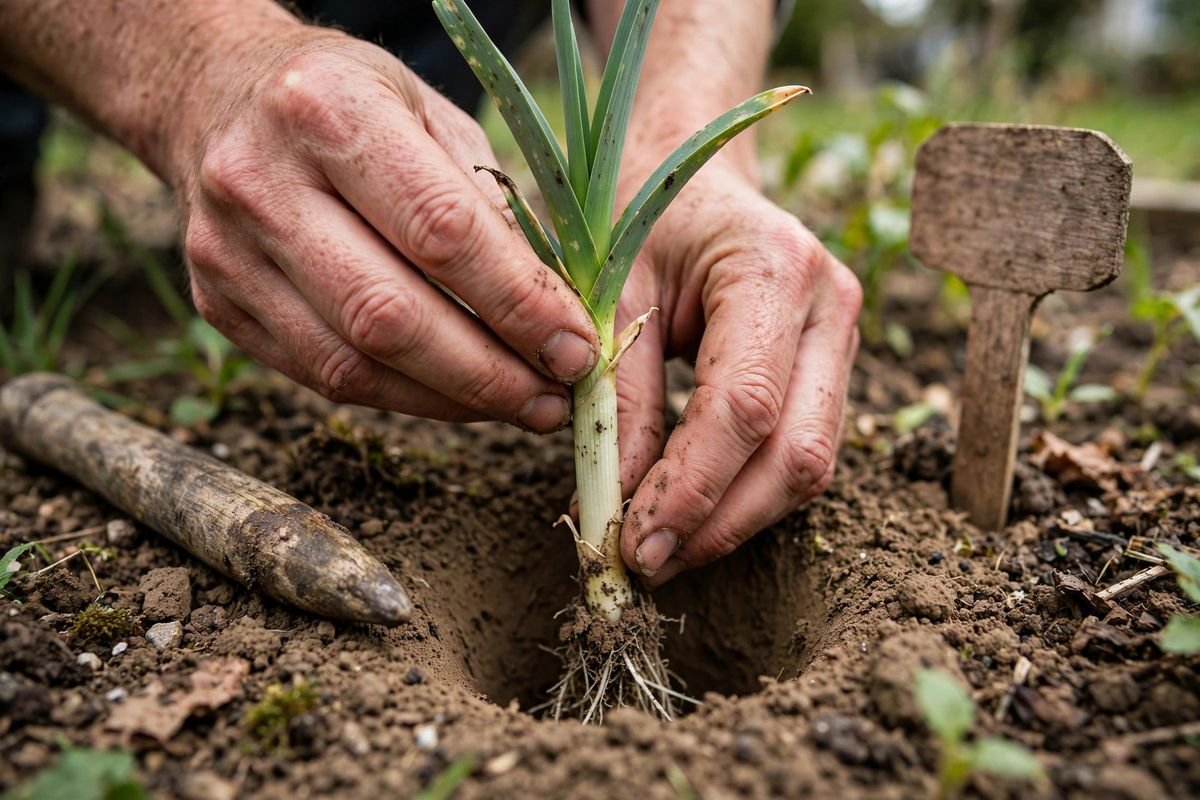
We dig a trench 4 to 6 inches deep and about 6 inches wide, spacing trenches 12 to 18 inches apart. We set transplants 4 to 6 inches apart along the trench bottom, spread the roots gently, and water each plant in so soil settles around the base. At this stage only the roots and the lowest part of the stem sit below the original soil line. The green tops stand well above the trench, where they catch light and grow upward.
We trim overly long roots lightly if they fold badly in the hole, and we avoid burying the growing point where leaves emerge. A gentle watering right after setting is more helpful than firming soil hard with hands, because leeks establish best with good soil-to-root contact and no air pockets. A garden dibber planting tool makes even holes for the hole-planting method and keeps spacing consistent across a long row.
Hilling for Longer White Stems
As plants grow, we gradually fill the trench with soil pulled from the sides, a little at a time, until the bed is level. After that, we hill soil 2 to 3 inches up around the stems every few weeks, taking care not to push soil down into the leaf joints where grit collects and is hard to wash out. Each hilling extends the blanched portion of the shank. We stop hilling a few weeks before planned harvest if heavy rain is expected, because wet soil against the shank for long stretches invites rot.
Blanching collars made from cardboard or short sections of pipe can also exclude light in small plantings, but soil hilling is simpler at bed scale and adds stability in wind. Whatever method we use, the goal is the same a clean, tender, white lower stem with strong green tops above doing the work of feeding the plant.
Watering and Feeding Through Fall
Leeks have shallow roots compared with their size above ground, so even moisture matters. We aim for about an inch of water per week from rain or irrigation, more in sandy soil or during a warm, dry September. Water at the base in the morning so foliage dries during the day. Mulch between rows once plants are established helps hold moisture, keeps soil off the shanks during rain splash, and reduces weed pressure while the slow-growing crop fills in.
Feeding follows growth. Compost at planting carries young plants well. Once leeks are growing steadily in early fall, we side-dress with a nitrogen-leaning organic fertilizer or apply a diluted liquid feed every 2 to 3 weeks, following label rates. Leeks respond to steady, moderate nutrition more than to a single heavy dose. Excess nitrogen late in fall pushes soft leaf growth that handles cold poorly, so we ease off feeding as days shorten and growth slows naturally.
In containers, leeks need closer attention. A wide, deep pot gives roots room and holds moisture more evenly than a small container. We check container soil daily during warm spells and water before the mix dries below the surface. Basic container gardening guidance covers pot size, drainage, and watering rhythm that apply to fall alliums as well.
Mulch and Cold Protection
Once the soil cools in mid to late fall, we apply a loose mulch of shredded leaves or clean straw around plants, keeping it a few inches away from the immediate stem base early on, then tucking it closer as hard cold approaches. Mulch reduces freeze-thaw heaving, keeps soil moisture steady, and makes winter harvest easier because the ground stays workable longer under cover.
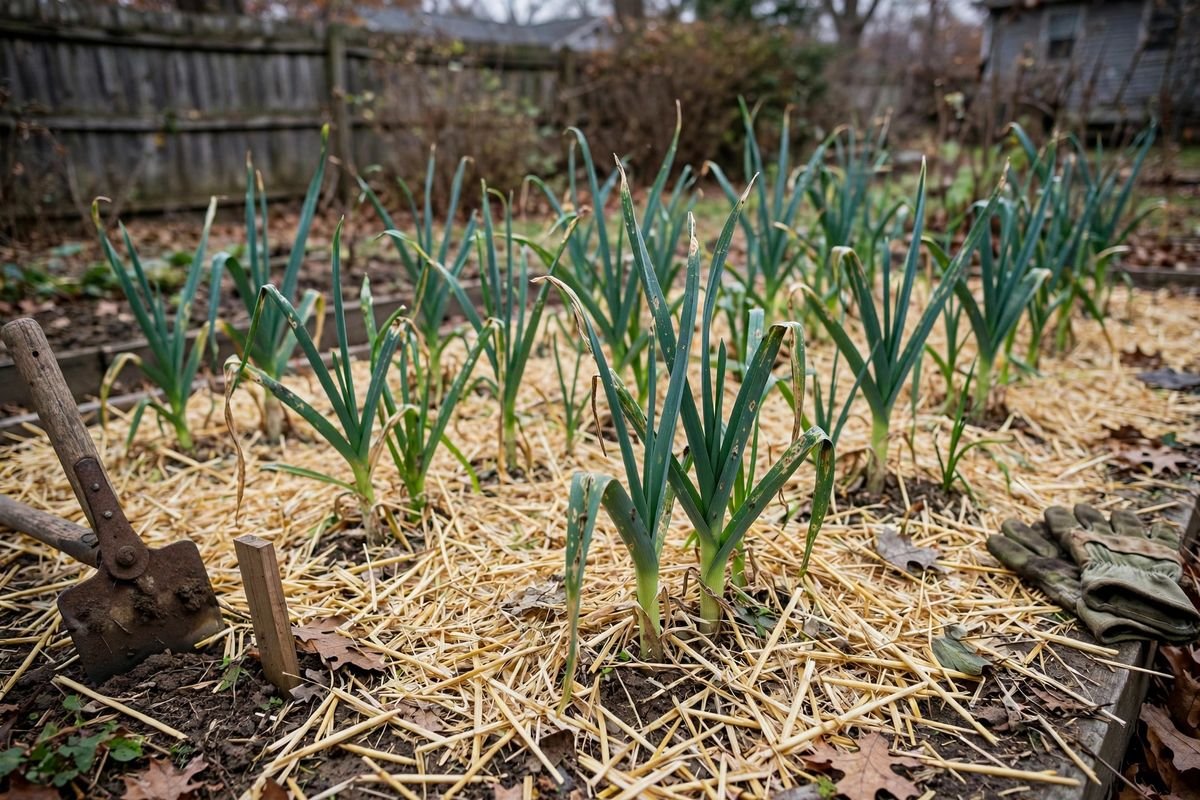
In mild-winter gardens, mulch alone often carries leeks through to spring harvest. In colder gardens, a layer of row cover over mulch adds a few degrees of protection during sharp cold snaps. We vent covers on mild, sunny days to prevent excess moisture buildup, which can encourage fungal issues on the outer leaves. Outer leaf blemishes in winter are common and usually cosmetic; the shank inside stays sound for the kitchen.
Fall cleanup around the bed helps too. Removing spent summer crops and debris reduces hiding places for slugs and disease carryover. A fall garden cleanup checklist pairs well with leek bed prep because both tasks happen in the same weeks and share tools, compost, and mulch supplies.
Pests and Problems to Watch
Leeks face fewer pest troubles in fall than spring onions do, but a few issues are worth watching. Onion thrips can stipple leaves in warm, dry spells, leaving silvery patches. A strong water spray and keeping plants well watered reduces damage, and heavily affected outer leaves can be trimmed at harvest. Allium leafminer has spread in some regions and leaves winding trails in leaves; row cover during adult flight periods is the main prevention where it is known to occur.
Diseases include purple blotch, which shows as purple-brown lesions on leaves in wet weather, and basal rot in poorly drained soil. Spacing for airflow, watering at the base, rotating alliums away from the same bed for several years, and removing badly affected plants keep these issues in check. Rust can appear as orange pustules on leaves in humid fall weather; it rarely ruins the shank, and we harvest usable plants promptly and compost no diseased material in home piles that stay cool.
Weeds are the quiet problem with leeks because the crop grows slowly and casts little shade. We weed by hand close to the stems and use a shallow hoe between rows, taking care not to cut shallow roots. Mulch applied after the first thorough weeding keeps new weeds down for weeks. A garden row cover for frost protection also blocks some pests while plants are young, though we lift it periodically to weed and check growth.
Harvesting, Curing, and Storing Leeks
Leeks are ready when the shank reaches about 1 inch in diameter, though we harvest smaller plants for fresh use and larger ones for cooking. To harvest, we loosen the soil with a fork well below the roots and lift the plant rather than pulling straight up, which can snap the shank in heavy soil. We shake off loose soil, trim roots to about half an inch, and cut tops to a manageable length if storing, leaving the green flags intact for fresh use within a few days.
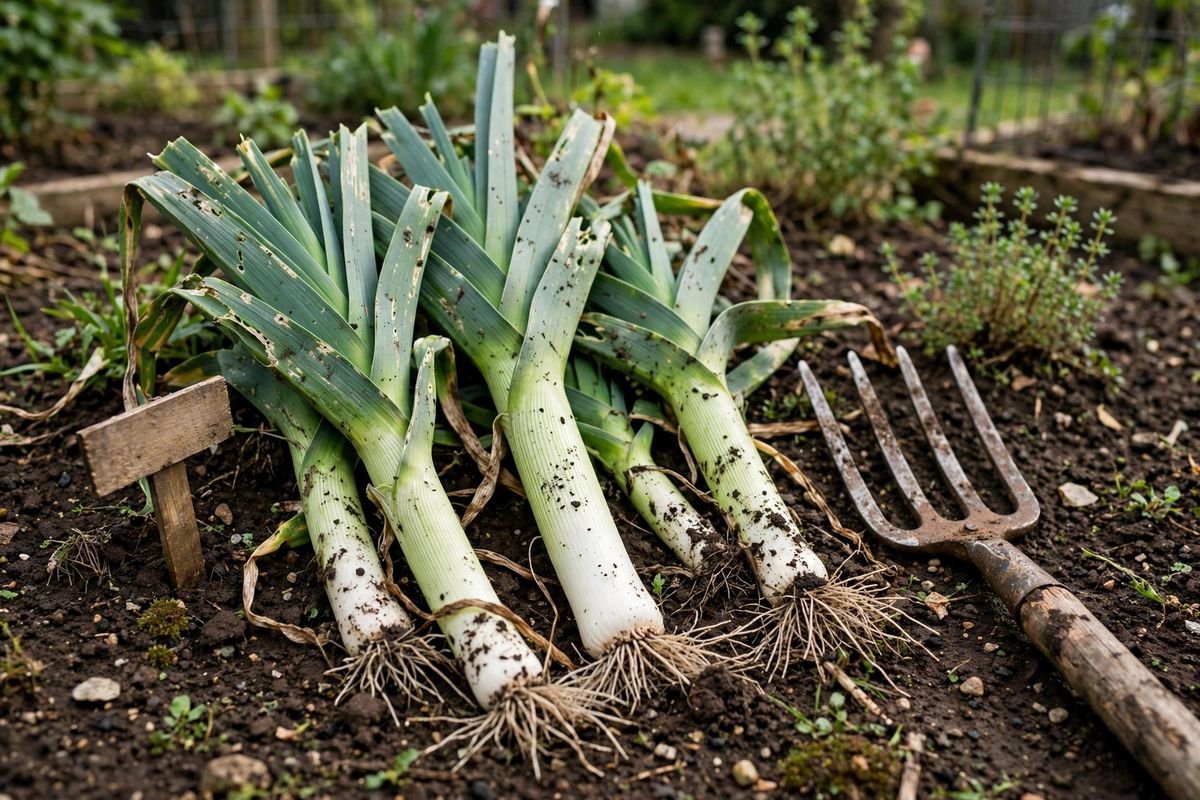
Leeks do not need curing like bulb onions. For short storage, we keep unwashed leeks in the refrigerator in a loose bag for 1 to 2 weeks. For longer holding, leeks can stay in the ground under mulch and be lifted as needed through winter where soil does not freeze solid. In cold climates, lifted leeks store for several weeks in a cool, humid spot such as a root cellar or a box of damp sand in an unheated garage, kept near 32 to 40 degrees F.
Washing is best done right before use. Soil works its way between leaf layers during hilling, so we split the shank lengthwise and rinse under running water to flush grit. The white and light green parts are the main cooking portion, while darker green tops add flavor to stocks. Fall-harvested leeks sweeten after light frost, which makes late-season harvests some of the best eating of the year.
Troubleshooting Leeks
Why are my leeks thin and not bulking up?
Thin leeks usually mean crowding, low fertility, or inconsistent water during the main growth window. We thin to final spacing early, side-dress once growth is steady, and keep soil evenly moist. Late-planted leeks also bulk slowly as day length drops, so we harvest them smaller or overwinter them for spring growth.
Why is there soil deep inside the leek leaves?
Hilling too fast or pushing soil into the leaf joints traps grit between layers. We hill in small increments, keep soil against the outer stem only, and rinse split shanks thoroughly before cooking. Collars reduce this issue in small plantings.
Why are the leaf tips yellowing?
Yellowing tips can come from dry soil, hungry soil, or natural aging of outer leaves in cold weather. We check moisture first, feed lightly if plants are pale overall, and trim damaged outer leaves at harvest. Widespread yellowing with soft bases points to waterlogged soil and possible rot.
Why did my leeks bolt?
Leeks bolt after exposure to prolonged cold followed by lengthening days, more often in overwintered plants in their second spring. A bolted leek develops a tough central stalk and loses eating quality. We harvest bolted plants promptly and plan fall plantings for harvest before the second spring growth push.
Why are white shanks short?
Short white portions mean light reached too much of the stem. Deeper initial planting and gradual hilling lengthen the blanched section. Varieties also differ, so a short-shanked summer type will not match a long-shanked fall type even with good hilling.
FAQ
Can leeks stay in the ground over winter?
Yes, in many gardens leeks overwinter well with mulch. Hardy fall varieties tolerate temperatures down to about 15 degrees F and often lower under cover. We harvest as needed and finish the bed before plants bolt in spring.
How far apart should fall leeks be spaced?
We space plants 4 to 6 inches apart in rows 12 to 18 inches apart. Closer spacing yields slimmer shanks for fresh use, while wider spacing gives thicker stems for cooking and storage.
Do leeks need full sun in fall?
Full sun produces the sturdiest growth, but leeks tolerate light shade, especially early in fall while days are still warm. In deep shade, growth slows and shanks stay thin, so we choose the sunniest bed available for the main planting.
When should we stop feeding fall leeks?
We ease off nitrogen feeding as growth slows in late fall and days shorten. Steady moderate feeding during active growth is more useful than late heavy doses that push soft leaves before hard cold.
Sources & Further Reading
- University of Maryland Extension — Leeks production guidance, spacing, trench culture, and harvest and storage recommendations (extension.umd.edu)
- University of Massachusetts Amherst, Center for Agriculture, Food, and the Environment — Leeks vegetable fact sheet, planting depth, spacing, and blanching by trenching and hilling (umass.edu)
- Utah State University Extension — How to Grow Leeks in Your Garden, variety maturity, spacing, hilling and overwintering guidance (extension.usu.edu)
- Washington State University Extension — Leeks and shallots culture, planting, spacing, and storage notes for home gardens (wsu.edu)
More fall crops to explore:
Leeks ask for patience in fall, and they repay it with steady harvests when many beds are winding down. Which variety are you planning to set out this season, a fast summer type for early use or a hardy fall type to carry through winter?