
This post may contain affiliate links. If you buy through links on this page, we may earn a commission at no extra cost to you.
Looking for more crops? Browse all of our Vegetable Growing Guides.
As an Amazon Associate I earn from qualifying purchases.
Carrots look like the easiest vegetable in the world to grow. You poke seeds in the ground, wait, and pull up crisp orange roots. The reality hits around week three, when the seed row still looks like bare dirt and the neighbor’s tomatoes are already setting fruit.
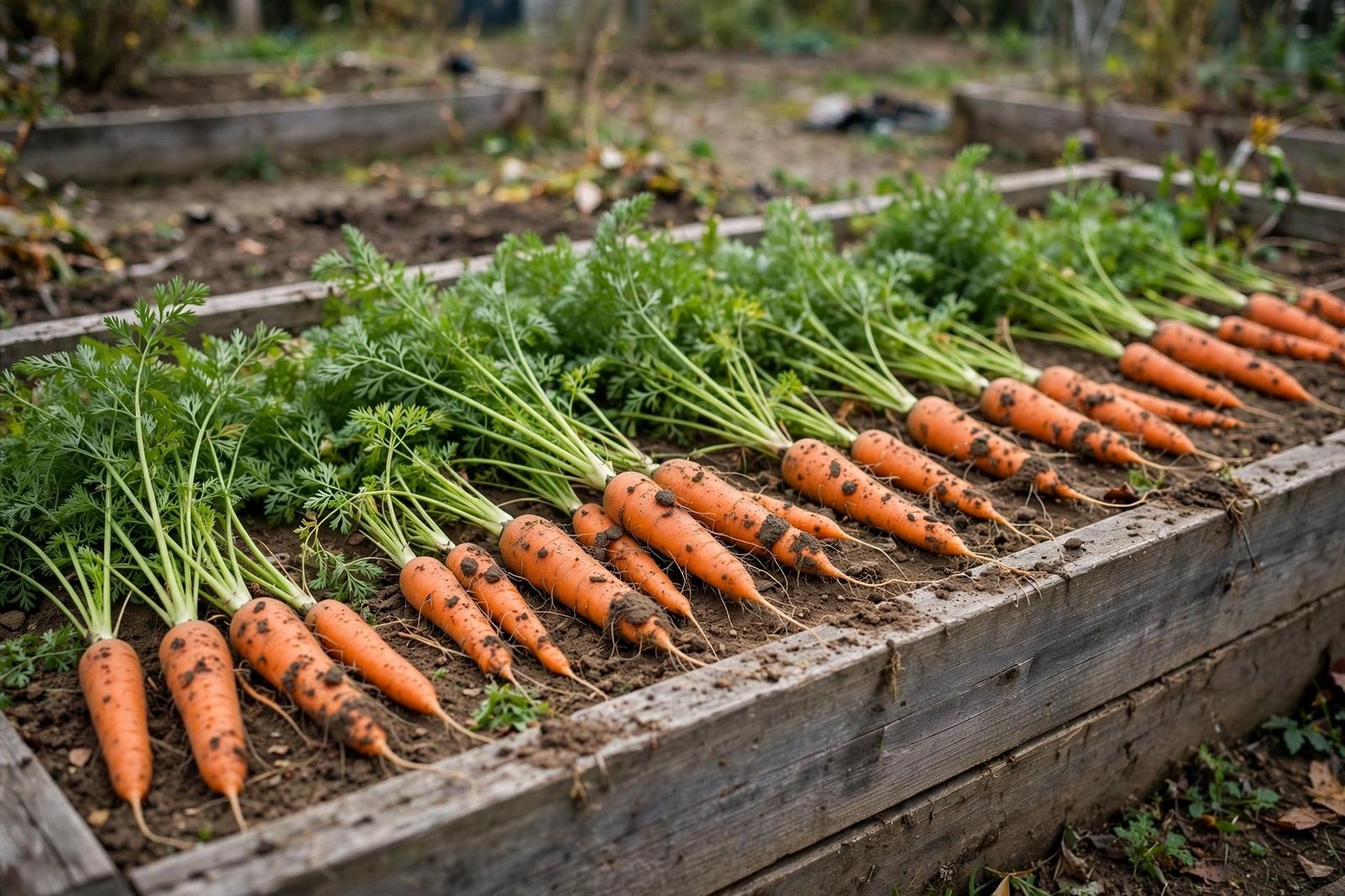
Here is the good news: fall is the season that makes carrots easy. Cool air, warm soil, fewer pests, and — the best part — roots that taste noticeably sweeter than anything pulled in July. Most of the disappointment people associate with carrots comes from planting them in spring and fighting heat, crusty soil, and impatience. Flip the calendar, and the same seeds become one of the most forgiving crops in the garden.
Everything below follows the timing math and techniques recommended by university extension services and standard seed-packet guidance — no tricks, no special equipment. You’ll get a clear frost-date formula for when to sow, a soil-depth rule that prevents the dreaded forked roots, and the one skill — thinning — that decides whether your harvest looks like the seed packet or a bowl of orange shoelaces.
In this guide you’ll learn why fall beats spring for carrots, exactly when to sow by zone, how to sow step by step, how to thin without flinching, fall care, the best varieties for the season, and how to harvest at peak sweetness.
Quick Care Reference Table
| Need | What carrots want |
|---|---|
| Sow depth | 1/4 to 1/2 inch — shallow seeds, keep the surface moist |
| Spacing | Thin to 2–3 inches apart; rows 12–18 inches apart |
| Germination temperature | 55–75°F is the sweet spot; slow below 55°F |
| Days to germinate | 14–21 days — plan for the wait |
| Days to maturity | 65–80 days, depending on variety |
| Light | Full sun (6+ hours) |
| Soil | Loose, stone-free, pH 6.0–6.8 |
| Soil depth | 10–12 inches for full-size types; 6–8 inches works for short types |
| Fall frost tolerance | Tops handle light frost; roots take light freezes, especially under mulch |
Why Fall Is Carrot Season
Carrots are a cool-season crop that behaves like two different plants depending on the weather. Sow them in cool soil and they germinate slowly but steadily. Give them warm air and they sulk — germination stalls, roots turn bitter, and pests show up in force. Fall lines up both halves of the deal: soil that’s still warm from summer for germination, and cooling air for sweet root development.
The sweetness thing is real, and there’s a straightforward explanation. Cool temperatures slow the plant’s respiration while photosynthesis keeps ticking along on sunny fall days, so sugars accumulate in the root instead of being burned off. Gardeners and extension sources alike describe noticeably sweeter roots after a few light frosts. You can’t buy that flavor upgrade — you have to time it.
Fall also takes pressure off in three practical ways. First, the carrot rust fly — the pest that tunnels through roots — is far less active in cool weather. Second, weed pressure drops as temperatures fall, so your slow-to-emerge seedlings face less competition. Third, soil stays more evenly moist in fall, which matters enormously for a seed that takes three weeks to wake up.
If you’re building a full fall lineup, carrots pair naturally with the other cool-season staples — our October planting list lays out fifteen vegetables that share their season.
When to Plant: Count Back From Your First Frost
The timing question trips up more fall carrot growers than anything else. Sow too late and the roots are pencil-thin when hard freezes arrive. The fix is simple arithmetic, and it works for any zone.
Take your variety’s days to maturity (printed on the seed packet — usually 65–80 for fall types), add 14 “fall factor” days because growth slows as daylight shrinks, and count back that many days from your average first fall frost. A 70-day carrot sown for an October 20 frost goes in around July 25. That feels absurdly early for a “fall” crop, and that’s exactly why most people sow too late.
As a rough guide, count back about 10–12 weeks from your first hard freeze: sow in late June to mid-July where first frosts arrive in early October, and progressively later where frosts arrive later in fall. Mild-winter areas can sow into September or even October for a winter harvest.
One measurement is worth taking: soil temperature at sowing depth. Carrot seed germinates best between 55 and 75°F. A cheap soil thermometer pushed two inches into the bed tells you in ten seconds whether the bed is ready or still baking. And note the contrast with fall’s other famous crop — garlic goes in after the first frosts, while carrots need a two-month head start.
How to Sow Carrots: Step by Step
Carrots only ever get direct-sown — they hate transplanting, and their taproot resents any disturbance. Follow these steps and the hardest part is simply keeping the bed moist for three weeks.
Step 1: Loosen deep and pick out the rocks. Fork or dig the bed 10–12 inches deep and pull out stones, sticks, and clumps. Anything the taproot bumps into can fork the root into two or three stubby prongs. This is the single highest-value prep step in the whole guide.
Step 2: Smooth the bed and water it first. Rake the surface level, then soak the bed thoroughly before sowing. Watering first means you won’t blast tiny seeds out of place with the hose afterward.
Step 3: Make shallow furrows. Draw furrows 1/4 to 1/2 inch deep, 12–18 inches apart, with a finger or the handle of a trowel. Depth matters more with carrots than almost any other seed.
Step 4: Sow thinly. Scatter seeds as evenly as you can — aim for roughly one seed every inch. A classic trick is mixing the seed with dry sand in a shaker jar so the tiny seeds spread out. Then cover with a fine layer of soil or fine compost and press gently with the back of a rake.
Step 5: Keep the surface damp for 14–21 days. This is where fall carrot crops are won or lost. The seeds sit in the top half-inch of soil and die if that layer dries out. Water gently once or twice a day in hot spells, or lay a board, burlap, or light straw over the rows to hold moisture — just check underneath daily and remove the cover the moment seedlings appear.
Pick up a packet or two of fresh carrot seeds — carrot seed loses vigor faster than most vegetable seeds, so buy new each year rather than trusting a three-year-old packet.
Thinning: The Skill That Decides Your Harvest
If carrots have a number-one beginner mistake, it’s skipping the thinning. Carrot seedlings come up in a fuzzy green carpet, and leaving them there feels thrifty. It’s not. Crowded carrots compete for water and nutrients, and the result is a mat of roots no thicker than a pencil, tangled together and impossible to pull cleanly.
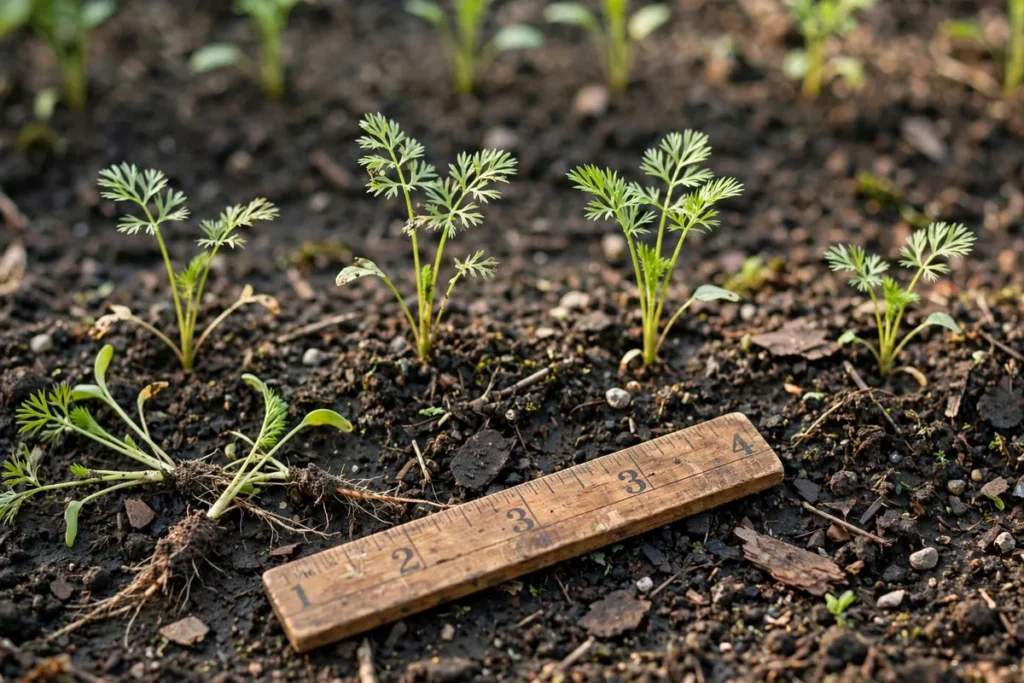
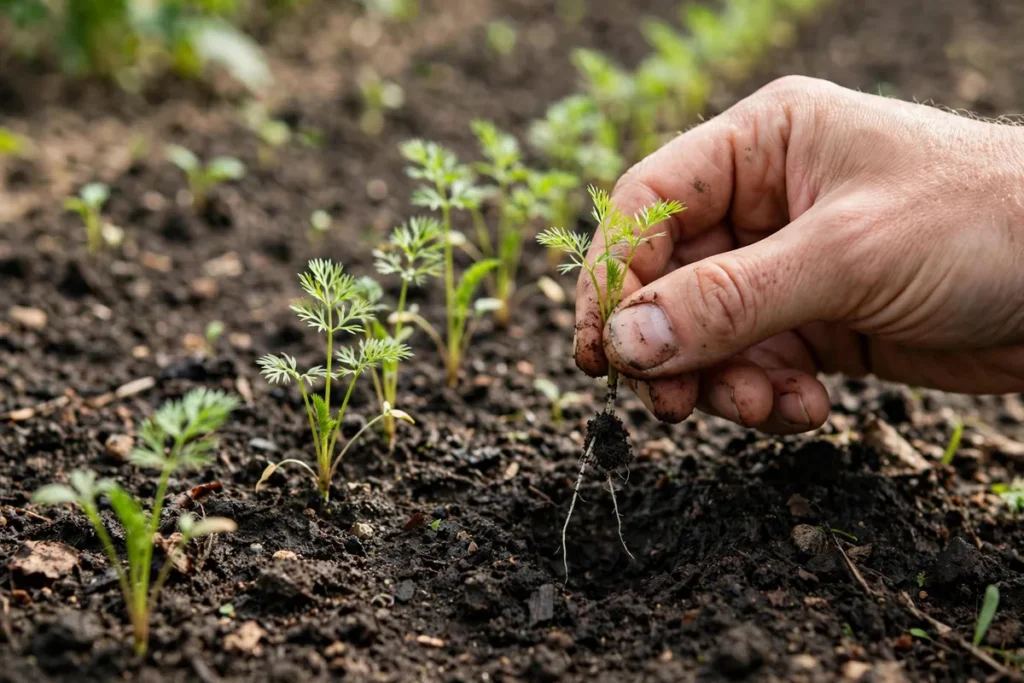
Thin when seedlings are about 2 inches tall, working down to a final spacing of 2–3 inches between plants. Do it in the evening or on a cloudy day — the bruised foliage releases a scent that attracts carrot rust fly, and thinning when the flies are least active is standard guidance. Water the row afterward so the remaining seedlings settle back in.
Thin in two passes if the row is dense: first to about an inch apart, then to the final spacing a week later. The thinnings from the second pass are edible — toss them into a salad and consider them a preview. Yes, pulling up healthy seedlings stings the first time. Do it anyway; every serious carrot grower thins, and nobody who thins wishes they’d left the row crowded.
Caring for Carrots Through Fall
Once seedlings are up and thinned, carrots are pleasantly low-maintenance. Three jobs carry you to harvest.
Water: even and steady
Carrots want about an inch of water a week, delivered evenly. Feast-or-famine watering is what splits roots. A 2–3 inch layer of straw mulch between the rows evens out moisture swings and suppresses the late-season weeds that do still pop up.
Feeding: less is more
Fresh manure and heavy nitrogen are the two fastest ways to grow forked, hairy, all-top carrots. If you worked compost into the bed before sowing, that’s generally all a fall crop needs. Skip the fertilizer unless the tops look pale and stunted, in which case a light side-dress of balanced organic fertilizer is plenty.
Frost protection and in-ground storage
Carrot tops shrug off light frosts, and the roots handle light freezes — especially under mulch. When hard freezes are forecast, a floating row cover draped over the bed buys you several degrees of protection and extends the harvest window by weeks. In mild-winter zones you can leave carrots right in the ground under a thick straw blanket and pull them as needed all winter — nature’s root cellar. Just mark the rows well before the mulch goes on.
When the rest of the garden winds down, fold carrot-bed cleanup into your routine — our fall garden cleanup checklist covers what to do with the bed once the last roots are pulled.
The Best Carrot Varieties for Fall
Fall carrots reward varieties chosen for sweetness, cold tolerance, and your actual soil depth. These eight are widely recommended by seed companies and extension lists for fall and winter harvests.
Sweet, reliable classics
‘Scarlet Nantes’ (Nantes type): The classic sweet carrot — blunt-ended, nearly coreless, and famously crisp. Nantes types are often described as the sweetest shape for fresh eating, and they size up well in fall’s cool weather. 65–75 days.
‘Bolero’: A fall and storage specialist with excellent cold tolerance and strong tops that pull cleanly. Widely listed as a top pick for late-season sowing and winter storage. 75–80 days.
Bred for cold
‘Napoli’: Bred specifically for fall harvests — fast, sweet, and tolerant of cold soil. If you can only sow one variety for fall, this is the one seed catalogs point to. 55–60 days.
‘Mokum’: An early, extra-sweet Nantes type that matures quickly, useful when you’re sowing on the late side of the window. 55–60 days.
For heavy or shallow soil
‘Danvers 126 Half Long’: A stocky, tapered heirloom that powers through heavier soil where long thin types would fork. A practical pick for clay-leaning beds. 65–75 days.
‘Little Finger’: A true baby carrot, 3–4 inches long, that matures fast and thrives in shallow beds and deep containers. Great insurance if your soil depth is limited. 55–65 days.
For color and fun
‘Cosmic Purple’: Purple skin, orange interior, sweet flavor — the variety that gets kids excited about pulling carrots. Same growing needs as orange types. 65–70 days.
‘Rainbow’ blend: A mix of orange, yellow, white, and purple types in one packet. Handy when you want variety without buying four packets, and a hit for market-style harvest baskets. 65–75 days.
Harvest: How to Tell They’re Ready
Carrots don’t announce themselves, but the clues are easy to read. Check the shoulders — the tops of the roots pushing out of the soil. Most varieties are ready when shoulders reach 3/4 to 1 inch across. Pull one test carrot first; if it’s sweet and crisp, the row is ready.
Loosen the soil along the row with a garden fork before pulling, and twist the tops gently rather than yanking straight up. Yanking snaps long roots in heavy soil; a little loosening brings them out whole.
For peak flavor, harvest after a few light frosts but before the ground freezes hard. Those cold nights are doing the sweetening work described above — fall carrots pulled in late October or November routinely out-taste summer ones. If a hard freeze is coming and you’re not done harvesting, pile on extra straw mulch or pull the remaining roots and store them.
To store, twist off the tops (they draw moisture out of the roots), don’t wash, and refrigerate in a perforated bag or pack in damp sand in a cool spot. Properly stored fall carrots keep for months — the payoff for that July sowing math.
Troubleshooting: Common Fall Carrot Problems
Seeds never sprouted
The usual suspect is a dry seedbed. Carrot seed needs consistently moist soil for up to three weeks — a few hot, windy days can kill a sowing outright. Next time, water the bed before sowing, cover the rows with a board or burlap to hold moisture, and check daily.
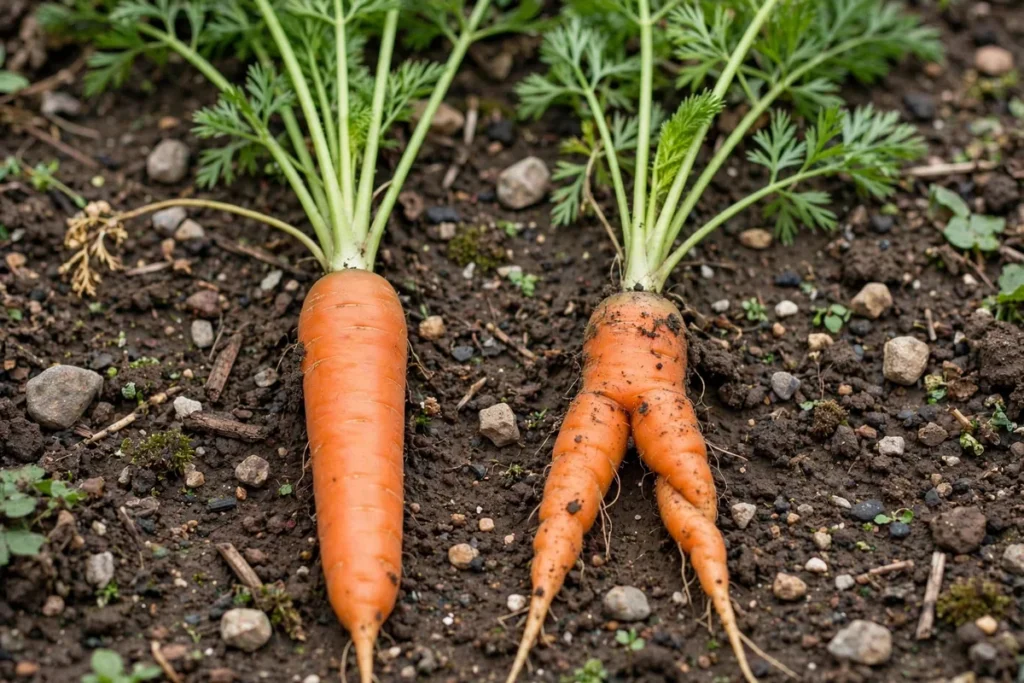
Forked, stubby, or twisted roots
Something stopped the taproot: stones, compacted soil, or fresh manure in the bed. Next sowing, loosen deeper, pick out debris, and use finished compost only.
All tops, no roots
Almost always crowding or excess nitrogen. If the row was never thinned, the roots had no room to swell. Thin on schedule and go easy on fertilizer.
Green shoulders
Sunlight hitting the top of the root turns it green and bitter. Hill a little soil or mulch up around the shoulders as they push out of the ground.
Bitter or soapy taste
Heat stress during early growth is the common cause — another reason fall beats summer for flavor. Harvesting after cool weather helps; so does keeping the bed evenly watered.
Tiny tunnels in the roots
That’s carrot rust fly damage, less common in fall but still possible. Thin in the evening, remove thinnings from the bed, and cover new sowings with row cover to block the flies.
Frequently Asked Questions
Can you really sow carrots in fall?
Yes — carrots are a cool-season crop, and fall gives them their preferred conditions: warm soil for germination, cool air for root growth. The key is sowing early enough: count back days-to-maturity plus two weeks from your first frost.
How late is too late to plant carrots?
Once soil temperatures drop consistently below about 50°F, germination slows to a crawl and the math stops working. In most zones that means your last practical sowing is 10–12 weeks before the first hard freeze. Areas with mild winters are the exception — they can sow into fall for winter harvest.
Do carrots survive frost?
The feathery tops handle light frosts without complaint, and roots tolerate light freezes, especially under mulch. A heavy, sustained freeze will damage roots left in unprotected ground, which is why a thick straw blanket or a row cover extends the season.
Why are my carrots hairy and tiny?
Hairy side roots usually mean the soil dried out during growth; tiny roots usually mean crowding or sowing too late. Even watering, on-time thinning, and the frost-date math above fix all three.
Can I leave carrots in the ground over winter?
In zones 7 and warmer, yes — mulch heavily with straw and harvest as needed. In colder zones the ground freezes too hard to dig, so pull and store them before that happens.
More Fall Vegetable Growing Posts to Explore
- What to Plant in October: 15 Vegetables for a Fall Garden
- How to Plant Garlic in the Fall: A Step-by-Step Guide
- How to Grow Radishes in Fall: The 30-Day Fall Crop
- Fall Garden Cleanup: 12 Things to Do Before Winter
Your Sweetest Carrots Are a Fall Sowing Away
Fall carrots ask for three things: sowing on time, soil loosened deep, and the discipline to thin. In return you get roots that are sweeter, cleaner, and less pest-chewed than anything summer produces — plus the quiet satisfaction of pulling fresh vegetables out of the ground in November.
Have you ever left carrots in the ground until after the first frost? Did you notice a difference in the flavor? Tell us in the comments — your zone and variety help other readers time their own sowing.
Sources & Further Reading
- University of Maryland Extension — Fall Vegetable Gardening: fall planting windows timed to the first frost.
- Texas A&M AgriLife Extension — Fall Vegetable Gardening Guide for Texas: fall varieties and planting timing.
- Clemson Cooperative Extension (HGIC) — Fall and Winter Vegetables: guidance on cold-hardy fall crops.