
This post may contain affiliate links. If you buy through links on this page, we may earn a commission at no extra cost to you.
As an Amazon Associate I earn from qualifying purchases.
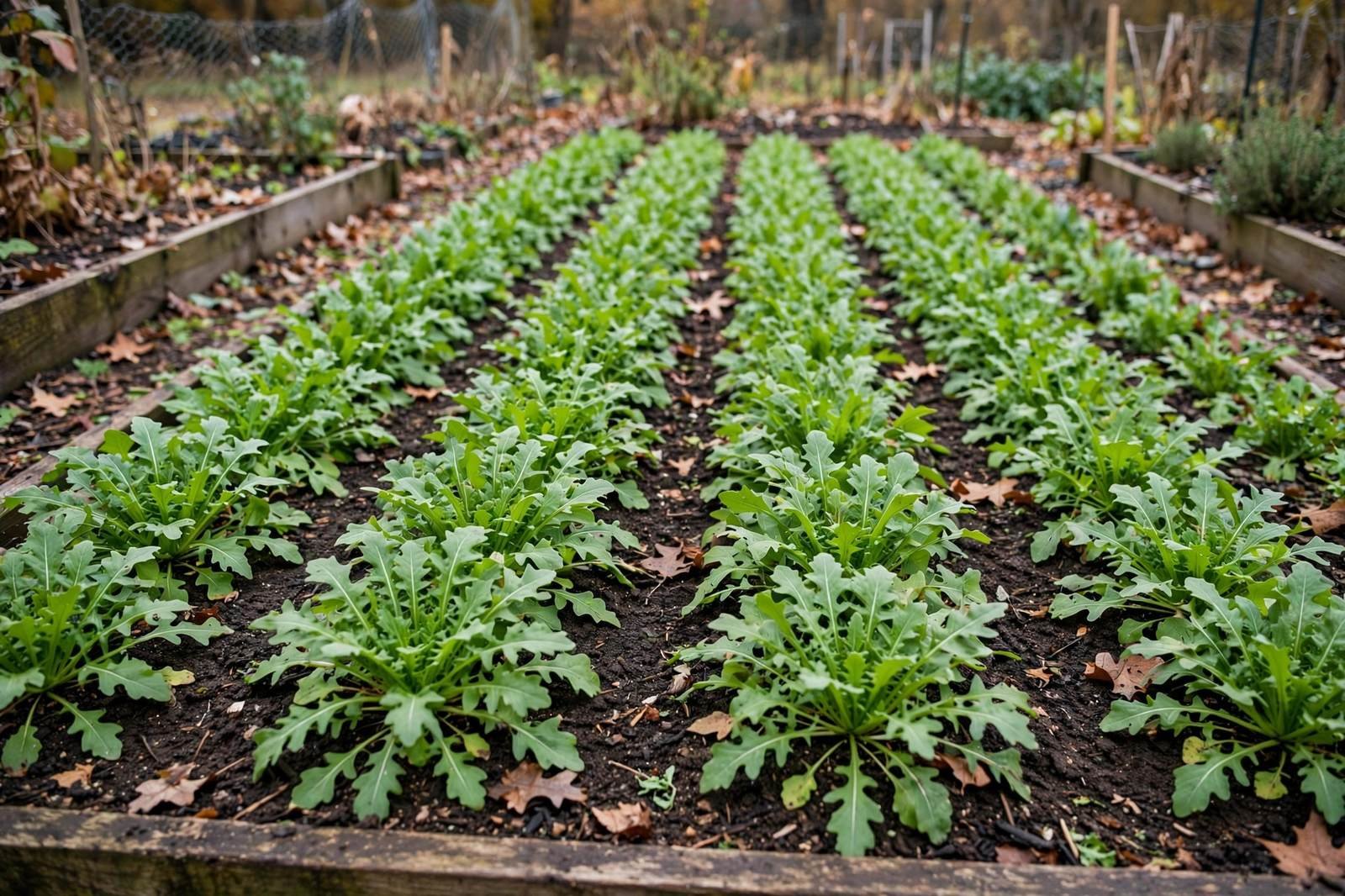
Arugula is the seed packet most gardeners buy in April and abandon by July. It sprouts fast, tastes exciting for about two weeks, then the summer heat turns it into a bitter, bolted mess of flowers. If that’s your whole experience with arugula, you’re missing its best season by about five months.
In fall, arugula becomes a different vegetable: milder, crunchier, and almost absurdly fast. Cool weather tames its peppery bite into something bright and nutty, and a light frost mellows it further — the same frost that makes kale sweet works its magic on arugula too. From seed to first salad in as little as three weeks, it’s the fastest payoff in the fall garden.
University extension services routinely list arugula among the quickest cool-season crops, and it asks almost nothing in return: a patch of decent soil, steady water, and a pair of scissors. No trellis, no staking, no waiting two months to find out if it worked.
In this guide, you’ll learn exactly when to sow arugula for a fall harvest, how to sow it thickly for the biggest yield, the cut-and-come-again technique that turns one sowing into weeks of harvests, which varieties suit fall best, and how to stretch the season past the first frost.
Quick Care Overview: Fall Arugula at a Glance
The whole crop on one cheat sheet. Details below.
| Care factor | What fall arugula wants |
|---|---|
| Light | Full sun to partial shade; afternoon shade is a plus for early sowings |
| Soil | Loose, well-drained, enriched with compost, pH 6.0–7.0 |
| Sow depth | 1/4 inch — cover lightly, seed needs some light |
| Spacing | Thin to 4–6 inches apart; sow thickly in bands for baby leaf |
| Germination soil temp | 40–75°F — sprouts fast in cool soil where lettuce stalls |
| Days to maturity | 21–40 days for baby leaf; 40–50 days for full-size rosettes |
| Water | About 1 inch per week; steady moisture keeps the flavor mild |
| Cold tolerance | Tolerates light frosts; row cover adds a few degrees of protection |
| Fertilizer | Light feeder — compost at planting is usually plenty |
Why Arugula Is the Perfect Fall Crop
Speed is arugula’s superpower. Most fall vegetables make you wait 50 to 60 days and do frost-date math with a calendar. Arugula sown in mid-September can be on your plate before October arrives. That pace changes the whole risk calculation: even if you sow “late,” you’re still early.
Fall also fixes arugula’s two biggest summer complaints. The first is heat: arugula bolts quickly in hot weather, turning bitter and flowering. Cool fall air keeps it in leaf-production mode far longer. The second is flea beetles, the tiny jumpers that riddle arugula leaves with shot holes in summer — their pressure collapses as temperatures drop.
Then there’s the flavor shift. Cool nights and light frosts mellow arugula’s mustardy heat the same way they sweeten kale and carrots. Summer arugula can be aggressively spicy; fall arugula is peppery in the pleasant, salad-friendly way that makes people ask what variety you grew.
And if you love the spicy stuff, don’t worry — you can dial the heat back up. Letting plants get a little dry or harvesting larger, older leaves both intensify the bite. Fall gives you control over the flavor instead of the weather deciding for you.
When to Plant Arugula in Fall
Because arugula is so fast, the timing math is forgiving. The standard approach still applies: take the packet’s days to maturity, add about 10 to 14 days for slower fall growth, and count backward from your average first fall frost date (your county extension office can confirm it).
That puts the last worthwhile sowing roughly 35–45 days before hard cold sets in — typically early to mid-October where first frosts arrive in late October, and later where frosts arrive in November or December. Earlier sowings, starting 6 to 8 weeks before your first frost, give you the longest harvest window.
One caveat for very early sowings: soil above 75°F can slow arugula germination, and hot spells can still trigger bolting in August-sown beds. If you’re sowing in late August heat, choose a spot with afternoon shade and keep the bed well watered — or simply wait until September, when the math still works and the weather cooperates.
Pairing arugula with slower fall greens stretches your harvest calendar nicely — our October planting guide shows how fast crops like arugula fit alongside longer-season plantings.
How to Plant: Sow It Thickly
Arugula isn’t fussy about planting method, but it rewards generous sowing. Here’s the simple routine:
Step 1: Prep a loose, fertile patch
Work 1 to 2 inches of finished compost into the top few inches of soil and rake it smooth. Arugula grows fast, so it wants nutrients available immediately — a rich, loose bed is the whole fertilizer program. If you’re refreshing a spent summer bed, our compost guide walks through making your own top-dressing.
Step 2: Sow in rows or broadcast
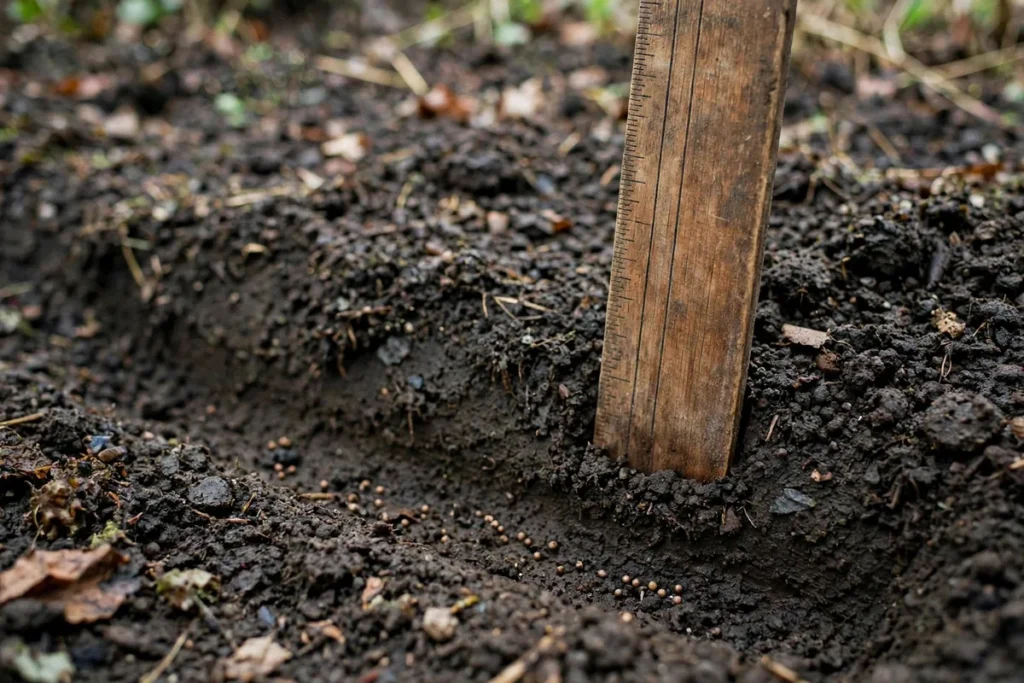
For tidy rows, make 1/4-inch furrows 6 to 8 inches apart and sprinkle seed about an inch apart along the row. For maximum baby-leaf yield in minimum space, broadcast: scatter seed evenly over a prepared band or block, then rake it in lightly. Both work — broadcasting just gives you more leaves per square foot.
Step 3: Cover lightly and water in
Pat or rake just enough soil over the seed to hide it — about 1/4 inch. Water with a gentle shower so the seed stays put. Keep the surface moist for 5 to 10 days; arugula usually sprouts in under a week in cool soil, which is part of what makes it so satisfying to grow.
Step 4: Thin to a hand’s width
Once seedlings have a couple of true leaves, thin to about 4 to 6 inches apart for full-size rosettes. For baby-leaf production you can leave them denser — 2 to 3 inches — since you’ll be cutting them young. Eat the thinnings; they’re the first taste of the season.
Step 5: Sow again in two weeks
A single arugula sowing gives you a few weeks of cutting. A second sowing two weeks later doubles that. Keep the rhythm going until about a month before hard frost, and you’ll have fresh leaves straight through the heart of fall.
Spacing: Crowded Is Fine (Up to a Point)
Arugula breaks the usual spacing rules. Where lettuce sulks when crowded, arugula grown for baby leaf genuinely prefers a crowd — dense stands push leaves upright and tender, and you’re harvesting before competition matters. A 2- to 3-inch spacing in bands is the sweet spot for cut-and-come-again production.
If you want full-size rosettes — the big, dramatic leaves for wilting into pasta — give plants 6 inches of room so each rosette can spread. Poor air circulation in very dense, mature stands can invite disease in wet fall weather, so thin ruthlessly once leaves start overlapping heavily.
Containers work beautifully: a 12-inch pot sown thickly gives you a personal salad bar, and you can slide it under cover when frost threatens. Shallow window boxes do the job too — arugula roots don’t go deep.
Water, Fertilizer, and Cool-Weather Care
Here’s the flavor secret most guides bury: water controls the heat. Well-watered arugula grows fast and tastes mild and nutty; drought-stressed arugula grows slowly and tastes fiercely peppery. Neither is wrong — but now you know which lever to pull. For mild salad leaves, keep the soil evenly moist, about an inch of water a week.
Arugula is a light feeder. Compost worked in at planting time is genuinely enough for a fall crop — the season is short and the plants are small. If leaves look pale and growth stalls, a light watering with diluted fish emulsion perks them up, but heavy feeding isn’t necessary and can push soft growth that’s more frost-tender.
Mulch lightly between rows with straw once plants are a few inches tall. It keeps soil moisture even, prevents muddy splash on the leaves during fall rains, and adds a few degrees of root insulation as nights get cold. Keep it pulled back slightly from the crowns so air circulates.
Cut-and-Come-Again: Harvest for Weeks, Not Days
This is the technique that turns a $3 seed packet into a month of salads. Instead of pulling whole plants, you harvest the outer leaves and let the center keep growing — each plant produces new leaves from its crown for weeks.
Start cutting when leaves reach 3 to 4 inches tall — usually about three weeks after sowing. Take the outer leaves first, cutting about an inch above the crown with scissors or a sharp knife, and always leave the central growing bud untouched. Never take more than about a third of a plant at once; it needs those remaining leaves to power regrowth.
Harvest in the morning when leaves are crisp and fully hydrated. Come back every few days and repeat — a healthy fall planting can give you three to four cuttings before cold slows it down. The leaves actually get better after a light frost: the cold mellows the bite and the texture stays tender.
When plants eventually send up flower stalks, the show isn’t over. Arugula flowers are edible — small, white, with a sweet-peppery kick — and make a pretty salad garnish. Let a few plants flower and you’ll likely find self-sown seedlings popping up next spring, a free second crop.
Related Post: How to Grow Lettuce in Fall — lettuce and arugula are the classic fall salad pairing; sow them side by side and harvest both all season.
The Best Arugula Varieties for Fall
Standard garden arugula (Eruca sativa) is already a great fall crop, but named varieties fine-tune the experience — milder flavor, slower bolting, or extra cold tolerance. All of these are standard, widely available varieties.
‘Astro’ — The go-to for many growers: milder than standard arugula, slower to bolt, and quick at 21 to 35 days for baby leaf. If you only grow one, make it this one.
‘Apollo’ — Bred for uniformity and bolt resistance, with smooth, rounded leaves that hold up well in the salad bag. A strong pick for early-fall sowings when warmth lingers.
‘Sylvetta’ (wild rocket) — A different species (Diplotaxis tenuifolia) with narrow, deeply lobed leaves and an intense, almost wasabi-like heat. Slower to establish but more cold-hardy and perennial in mild climates — it can come back the following spring.
‘Dragon’s Tongue’ — Green leaves with dramatic red veining; milder than standard arugula and gorgeous enough to earn a front-row spot in the bed.
‘Wasabi’ — For heat lovers: extra-spicy leaves with a horseradish-like punch. Grow a small patch separately so it doesn’t overwhelm the milder varieties in a mixed sowing.
‘Speedy’ — Selected for fast baby-leaf production; one of the quickest from seed to first cutting, handy for late sowings racing the frost.
‘Ice-Bred’ — Bred for cold tolerance; a good choice for the last sowing of the season in zones 5 and 6, especially under row cover.
Search arugula seeds and look for these names on the packet — fall performance varies more by variety than most gardeners expect.
Stretching the Season Past First Frost
Arugula handles light frosts — down to about 28°F — without blinking, and the cold improves the flavor. The goal of season extension isn’t keeping it alive through deep winter; it’s buying a few extra weeks of the mild, productive weather on either side of the first frosts.
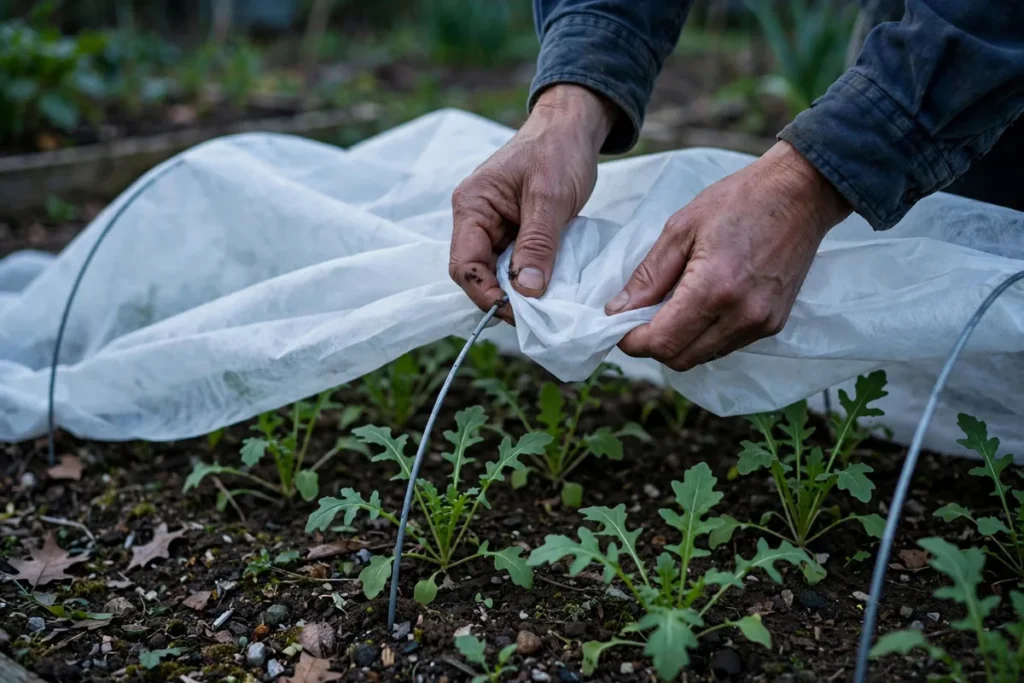
A floating row cover draped over the bed before the first hard freeze is the simplest upgrade. It adds roughly 4 to 6 degrees of protection, which in zones 6 and 7 often stretches harvests into December. Leave it on day and night — it’s light enough that plants grow fine underneath.
A sharp pair of garden harvest scissors earns its place here too: clean cuts above the crown heal faster than torn leaves, and faster-healing plants regrow faster in cold weather when every warm hour counts.
In zones 7 and warmer, fall-sown arugula under cover can produce all winter, growing slowly through the coldest weeks and surging in late winter. In zones 5 and 6, plan on the row-covered bed carrying you through November and possibly December, then let it go — the spring sowing will be here soon enough.
Troubleshooting: Common Fall Arugula Problems
Flea beetles are riddling the leaves
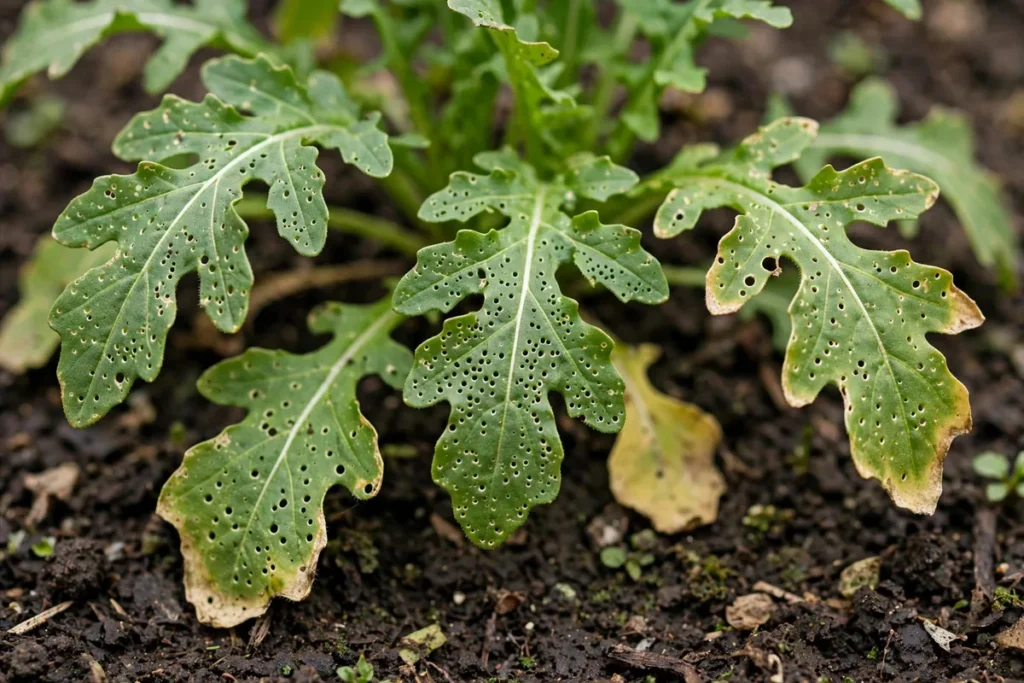
Less common in fall than summer, but early sowings can still get hit. Floating row cover is the fix — it physically excludes the beetles with no sprays needed. Damaged baby leaves are still edible; just harvest the worst-hit ones first.
The leaves are way too spicy
Usually drought stress, over-maturity, or heat. Water steadily, harvest younger (3 to 4 inches), and shift to a milder variety like ‘Astro’ or ‘Dragon’s Tongue’ for the next sowing. Remember: you control the heat dial with the hose.
Plants bolted and flowered
Heat or day-length triggered flowering, most likely in an August sowing. The flowers are edible and the bees love them — but for leaves, pull and resow. Later fall sowings rarely bolt.
Germination is slow or patchy
Cool soil below 40°F slows everything down. If nights are dropping into the 30s, sow a little thicker to compensate, or start the last sowing under row cover to hold warmth. Old seed (more than 2 to 3 years) also loses vigor — fresh seed matters for fall’s short window.
Seedlings are leggy and floppy
Too little light or sowing too deep. Arugula wants full sun and a shallow 1/4-inch covering. Leggy seedlings rarely recover into sturdy plants — it’s faster to resow correctly than to nurse them along.
FAQs About Growing Arugula in Fall
Is fall arugula really milder than spring arugula?
Generally, yes. Cool temperatures slow the production of the mustardy compounds that give arugula its bite, and light frosts mellow it further. Well-watered fall leaves taste bright and nutty; the same variety grown in summer heat can be aggressively peppery.
How long until I can harvest?
Baby leaves in as little as 21 days from sowing in good conditions; 30 to 40 days is more typical as days shorten. Full-size rosettes take 40 to 50 days. Start cutting at 3 to 4 inches tall and don’t wait — young leaves taste best.
Will arugula survive frost?
Light frosts down to about 28°F, easily. Under a floating row cover, most varieties handle dips into the low 20s °F. A hard freeze in the teens will finish the planting in most zones.
Why did my arugula bolt in September?
An early sowing caught a late-summer heat wave. Arugula bolts when stressed by heat — resow in cooler weather with a bolt-resistant variety like ‘Apollo’, and give August sowings afternoon shade.
Can I grow arugula in containers in fall?
Yes — it’s one of the easiest container greens. A 12-inch pot or a window box sown thickly gives you weeks of cut-and-come-again harvests, and you can move it under cover on frosty nights. Check soil temperature before sowing: a soil thermometer reading of 40 to 75°F means go.
Does arugula come back after cutting?
That’s the whole cut-and-come-again idea — leave the crown and central bud intact, and the plant pushes out new leaves for several more cuttings. ‘Sylvetta’ (wild rocket) can even overwinter in mild climates and return in spring.
Have a question I didn’t cover? Drop it in the comments — I’ll do my best to point you in the right direction.
More Fall Vegetable Growing Posts to Explore
- What to Plant in October: 15 Vegetables for a Fall Garden
- How to Grow Lettuce in Fall
- 10 Easiest Vegetables to Grow for Beginners
- Fall Garden Cleanup: 12 Things to Do Before Winter
Three Weeks to Your First Fall Salad
Few crops reward a fall sowing like arugula: seed in the ground today, peppery baby leaves on your plate in three weeks, and cut-and-come-again harvests rolling for a month or more after that. Sow a short row every two weeks, keep the water steady, and let the cool weather do the flavor work for you.
So — are you giving arugula a fall run this year? Tell me in the comments which variety you’re sowing first.
Sources & Further Reading
- Arugula, Kale, Mesclun, Mustard, and Swiss Chard — Clemson University Cooperative Extension. Sow 1/4–1/2 in deep, cut-and-come-again harvest of outer leaves, maturity ~45–60 days, warm temperatures cause bolting, soil pH 6.0–6.5, mulch to conserve water.
- Eruca vesicaria (Arugula) — Extension Gardener Plant Toolbox — North Carolina State University Extension. Full sun to partial shade, moist rich soil, tolerates light frosts, thin seedlings to 6 in apart, matures in 40–50 days, stagger plantings 1–2 weeks for continuous harvest, shade can deter bolting, wild arugula (Diplotaxis tenuifolia) is perennial and heat-tolerant.
- Arugula (Grow Your Own fact sheet) — University of Delaware Cooperative Extension. Tolerates light frost, 6-inch plant spacing, rich well-drained soil, full sun (light shade may slow bolting), flea beetles as pests.