
This post may contain affiliate links. If you buy through links on this page, we may earn a commission at no extra cost to you.
As an Amazon Associate I earn from qualifying purchases.
There’s a smart way to start a vegetable garden, and it’s this: pick crops that practically grow themselves. Early wins build confidence, confidence keeps you watering in July, and by fall you’ve accidentally become a gardener.
The ten vegetables below are forgiving, fast, or generous — usually all three. For each one you’ll find why it’s easy, how long it takes from seed to plate, the one tip that makes the biggest difference, and a specific variety worth buying by name. If you’re starting completely from scratch, our beginner’s vegetable garden guide covers site, soil, and timing first.
One word of advice before we start: don’t plant all ten in your first season. Pick three or four, grow them well, and add more next year. A small garden you actually tend beats a big one you abandon by July.
The 10 Easiest Vegetables at a Glance
| Crop | Days to harvest | Why it’s beginner-friendly |
|---|---|---|
| Radishes | 25–30 from seed | Fastest payoff of any vegetable |
| Lettuce & salad greens | 30–45 for baby leaves | Cut-and-come-again harvesting for weeks |
| Bush green beans | 50–60 from seed | Germinate fast, need no trellis |
| Zucchini & summer squash | 45–55 from seed | One plant feeds a household |
| Cherry tomatoes | 60–75 from transplant | Far more forgiving than big slicers |
| Cucumbers | 50–65 from seed | Fast vines, heavy yields on a trellis |
| Carrots | 65–80 from seed | Sow and mostly ignore |
| Spinach | 40–50 from seed | Thrives in the cool shoulder seasons |
| Basil | 30 from transplant for first picking | Fast, and pinch-to-harvest is simple |
| Peas | 60–70 from seed | Plantable earlier than almost anything |
1. Radishes
Why they’re easy: Radishes are the sprinters of the vegetable world. Sow seeds, water them, and you’re eating homegrown vegetables in under a month — nothing else pays off this fast.
Days to harvest: 25–30 days from seed.
Key tip: Sow a short row every two weeks in spring for a continuous harvest. Radishes get woody and hot if left too long — pull them as soon as the shoulders push up out of the soil.
Variety pick: ‘French Breakfast’ — mild, crisp, oblong roots with white tips. Classic sliced on buttered bread with flaky salt.
2. Lettuce and Salad Greens
Why they’re easy: Cut-and-come-again harvesting means one sowing feeds you for weeks. Snip the outer leaves and the plant keeps producing from the center — it’s the gift that keeps on giving.
Days to harvest: 30–45 days for baby leaves; 50–60 for full heads.
Key tip: Lettuce bolts — flowers and turns bitter — in heat, so plant it in early spring and again in late summer for fall. Where spring weather turns hot quickly, give lettuce afternoon shade or treat it as a spring-and-fall crop. A floating row cover draped over the bed extends both ends of the season by a few precious weeks.
Variety pick: ‘Salad Bowl’ — a loose-leaf type that regrows fast after cutting. Sow seeds ¼ inch deep, 6 inches apart, and start snipping when leaves are 4 inches tall.
3. Green Beans (Bush Type)
Why they’re easy: Beans germinate fast, grow fast, and produce heavily. As a bonus, they fix nitrogen from the air, so they actually leave your soil better than they found it.
Days to harvest: 50–60 days from seed.
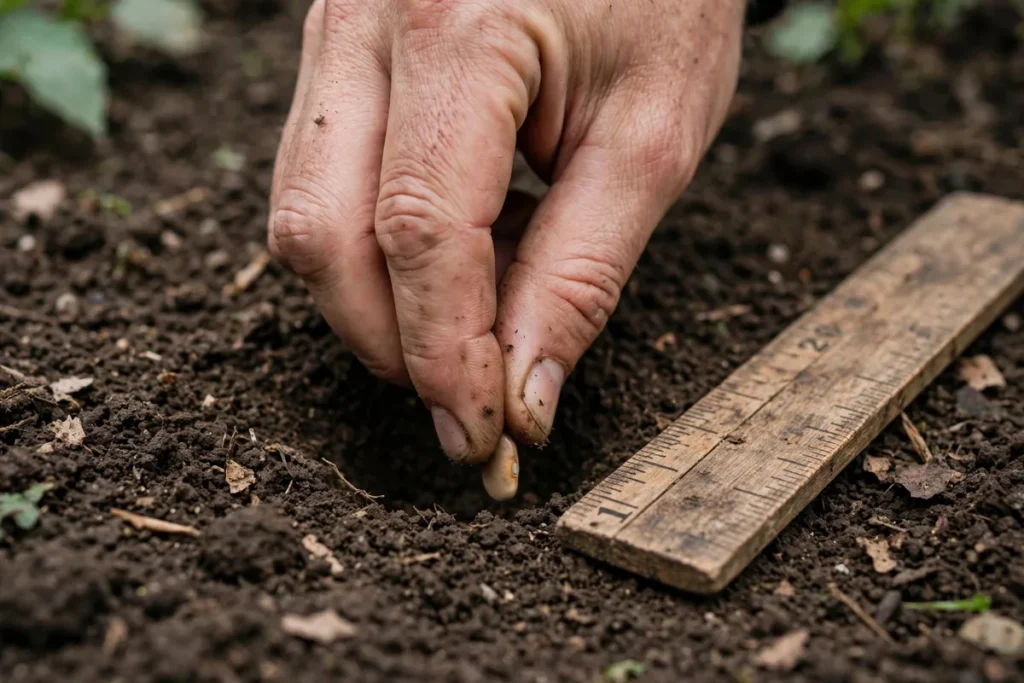
Key tip: Grow bush beans, not pole beans, your first year — no trellis to build. Sow seeds 1 inch deep after all frost danger has passed and the soil is at least 60°F. Cold, wet soil rots bean seeds, so wait for real warmth.
Variety pick: ‘Provider’ — dependable in cool soil, heavy yields, and stringless pods. Plant in blocks rather than single rows for better pollination and easier picking.
4. Zucchini and Summer Squash
Why they’re easy: A single healthy zucchini plant can feed a household all summer. They’re vigorous, fast, and keep producing for months once they start.

Days to harvest: 45–55 days from seed; 35–45 from transplants.
Key tip: Plant just one or two plants your first year — trust the warning. Space plants 3 feet apart, and watch for squash vine borers: if a plant suddenly wilts in midsummer, check the stem base for sawdust-like frass and a small hole. Wrapping the stem base with aluminum foil at planting time helps deter them.
Variety pick: ‘Black Beauty’ for the classic dark-green zucchini, or ‘Costata Romanesco’ — a ribbed Italian heirloom with beautiful blossoms for stuffing.
5. Cherry Tomatoes
Why they’re easy: Cherry tomatoes are far more forgiving than big slicers — they set fruit in heat, shrug off minor neglect, and hand you handfuls daily at peak season.
Days to harvest: 60–75 days from transplant.
Key tip: Cherry tomato plants still grow 5–6 feet tall, so give them real space: a 5-gallon container minimum (fabric grow bags work well and are cheap), or 2 feet of bed space with a sturdy cage. Water consistently — wildly uneven watering cracks the fruit.
Variety pick: ‘Sungold’ — intensely sweet, early, and productive, with orange fruits that practically glow on the vine. Related Post: How to Grow Tomatoes: From Seed to Harvest
6. Cucumbers
Why they’re easy: Cucumbers grow fast and reward you with armloads of fruit from just a couple of plants. Two vines is genuinely enough for most families.
Days to harvest: 50–65 days from seed.
Key tip: Grow them up a trellis. Vertical cucumbers get better air flow (less disease), straighter fruit, and take up a fraction of the space. Sow seeds ½ inch deep after the soil warms to at least 65°F, and keep them consistently watered — bitter cucumbers are almost always a watering problem.
Variety pick: ‘Marketmore 76’ — disease-resistant, crisp, and reliable. A longtime standard for good reason.
7. Carrots
Why they’re easy: Sow and mostly ignore — carrots need almost no attention once they’re up. There’s also no better vegetable for getting kids excited about the garden.
Days to harvest: 65–80 days from seed.
Key tip: Carrots need loose, stone-free soil to grow straight — this is the whole game. In heavy or rocky soil, grow short round types or build a deep raised bed filled with sandy mix. Keep the seedbed evenly moist until germination, which can take 2–3 weeks; a board laid over the row holds moisture and speeds things along.
Variety pick: ‘Nelson’ for sweet, uniform roots in good soil, or ‘Danvers’ — an old reliable that powers through heavier ground better than most.
8. Spinach
Why they’re easy: Spinach is a cool-weather workhorse — nutritious, fast, and happily growing in the shoulder seasons when little else is up.
Days to harvest: 40–50 days from seed.
Key tip: Spinach bolts in heat — it flowers and turns bitter quickly once days get long and warm. Plant it in early spring (4–6 weeks before your last frost) and again in late summer for a fall crop. In mild-winter climates, fall and winter may be the best spinach seasons; check local frost dates and planting guidance. Related Post: What to Plant in October
Variety pick: ‘Tyee’ — slow to bolt, with savoyed (crinkly) dark-green leaves and good disease resistance. Sow ½ inch deep, 2 inches apart.
9. Basil
Why they’re easy: Basil grows fast, asks for little, and turns into pesto. It loves the same warm weather tomatoes do, so the two pair perfectly in the garden and in the kitchen.

Days to harvest: 60–70 days from seed; about 30 days from transplants for first picking.
Key tip: Pinch off the flowers as soon as they appear. Once basil flowers, the leaves turn bitter and production stalls. Pinching the growing tips also makes the plant branch into a bushy shape with far more leaves. Basil is a natural for pots — see our container gardening guide for pot sizes that keep herbs happy.
Variety pick: ‘Genovese’ — the classic Italian basil with large, sweet leaves. It needs warm soil (at least 65°F) to germinate well, so start it after frost danger or just buy a transplant.
10. Peas
Why they’re easy: Peas are one of the first things you can plant each spring, they practically take care of themselves, and fresh peas eaten standing in the garden taste nothing like the frozen kind.
Days to harvest: 60–70 days from seed.
Key tip: Peas are a spring and fall crop — they hate heat. Sow seeds 1 inch deep, 2 inches apart, as soon as the soil can be worked in spring (they germinate in soil as cool as 40°F). Give them something to climb: even a simple string trellis keeps pods off the ground and roughly doubles your harvest.
Variety pick: ‘Sugar Snap’ — sweet, crunchy edible pods you eat whole. Plant thickly along a 4- to 5-foot trellis.
How to Choose Your First 3–4
Don’t try to grow everything at once. Here’s how to narrow the list to a first season you can actually enjoy:
- If you want the fastest win: radishes, lettuce, spinach.
- If you want summer abundance: cherry tomatoes, zucchini, cucumbers.
- If you have cool springs and falls: peas, carrots, spinach, lettuce.
- If you only have containers: cherry tomatoes (5-gallon pot), lettuce, basil, radishes.
Plant warm-season crops after local frost danger has passed and the soil has warmed. In mild-winter climates, cool-season crops may grow through winter, but exact planting dates should come from local frost dates and Cooperative Extension calendars.
Sow a few seeds, water them, and pay attention. Gardening skill isn’t talent — it’s just seasons of small observations stacking up. These ten crops are the gentlest possible teachers.
More Beginner Gardening Posts to Explore
- How to Start a Vegetable Garden for Beginners
- How to Grow Tomatoes: From Seed to Harvest
- Raised Bed Gardening for Beginners
- Container Gardening for Beginners
- What to Plant in October
- How to Make Compost at Home
Pick three or four from the list, and give yourself a season. Which ones are you starting with?
Sources & Further Reading
- Seed Germination Temperature and Timing — UC Agriculture and Natural Resources (UC Master Gardener Program). Supports germination-temperature tables.
- Root Vegetables — University of Illinois Extension. Supports carrot and radish basics.
- Planning a Garden — Clemson Cooperative Extension. Supports harvest figures, planting depths, and spacing.
- Vegetable Growing Guides — Cornell University. Supports crop-specific reference backstop.
Worked Example: A 4×8 Raised Bed for Your First Season (Our Math)
The variety picks above tell us what to grow. The math below turns them into a planting plan for one 4×8-foot raised bed, 32 square feet, split into four 2×4-foot quarters. We use the spacings from each crop’s section and state every assumption, so the plan can be checked rather than trusted.
Assumptions. Bed interior measures 4 by 8 feet. Spacings: lettuce 6 inches, radishes in rows 6 inches apart with seeds 2 inches apart in the row, bush beans on a 4-inch grid, basil 12 inches apart, one cherry tomato with a cage in a 2×4 corner. Succession sowings follow the timing notes in each section. Compost top-dress 1.5 inches deep.
Quarter 1, lettuce ‘Salad Bowl’: 6-inch spacing gives 4 plants per square foot, so 8 square feet holds 32 plants. We sow 2 seeds per spot and thin to 1, which is 64 seeds per planting. Three succession plantings across spring and fall use about 192 seeds, well within one seed packet.
Quarter 2, radishes ‘French Breakfast’: 4 rows across the 2-foot width, 24 seeds per 4-foot row at 2-inch spacing, which is 96 seeds per sowing. Sowing every two weeks through the cool season, 4 sowings, uses about 384 seeds, still one packet.
Quarter 3, bush beans ‘Provider’: a 4-inch grid gives 9 plants per square foot, so 8 square feet holds 72 plants. We sow 80 seeds to cover gaps, one sowing after the soil reaches 60°F.
Quarter 4, cherry tomato ‘Sungold’ plus basil ‘Genovese’: one caged tomato takes about half the quarter, and 4 basil plants at 12-inch spacing fill the rest. The basil pairing matches the companion note in the basil section. We buy the tomato as one transplant, or sow 6 seeds and keep the strongest.
Soil and water math. A 1.5-inch compost layer over 32 square feet is 4 cubic feet, about 30 gallons of compost. At 1 inch of water per week, the bed needs 32 divided by 12 cubic feet, about 2.7 cubic feet or 20 gallons per week. Our watering wand guide covers gentle watering that does not blast young seedlings, and how to grow basil has the pinching routine that keeps those 4 basil plants productive. For fall, the lettuce quarter can keep producing under cover; growing lettuce indoors in winter extends the same succession habit once the bed freezes.
Total seed bill for the season: one packet each of lettuce, radish, and bean seed, plus one tomato transplant. Four crops, one bed, and every number above can be rechecked against the spacings in this guide.