
This post may contain affiliate links. If you buy through links on this page, we may earn a commission at no extra cost to you.
As an Amazon Associate I earn from qualifying purchases.
A watering wand looks simple — a long tube, a shower head, a valve — and then a season of mud-splashed seedlings teaches us otherwise. Wand length decides how far we reach without stepping into the bed. The spray pattern decides whether water lands like rain or like a pressure washer. The shut-off valve decides whether we stop mid-row or sprint back to the faucet. This roundup compares the three main wand sizes on the specs that actually change how a garden gets watered, with a worked flow-rate example so the numbers mean something at your own faucet.
One honest note up front: this is a spec-based research roundup, not a hands-on test. We compared manufacturer specifications and extension guidance on gentle watering rather than inventing test results, and wherever we give numbers we show the assumptions so you can rerun the math with your own faucet.
Wands earn their keep anywhere water needs to land softly and precisely: seedbeds in a raised bed garden, thirsty planters in a container garden, and hanging baskets just out of comfortable reach. If your containers dry out again by noon, our guide to keeping container soil from drying out too fast pairs well with the flow math below.
Quick comparison: three wand lengths
| Wand length | Typical reach | Best for | Watch out for |
|---|---|---|---|
| Short, about 16 inches | Arm’s length plus roughly a foot | Pots on a bench, window boxes, watering at a sink or spigot, small hands and tight spaces | Constant bending for ground-level beds; shower head sits close, so spray can feel concentrated |
| Standard, 30 to 36 inches | Standing reach into the middle of a 4-foot bed from one side | Raised beds, in-ground rows, mixed containers — the all-purpose size for most gardens | A bit unwieldy in a crowded greenhouse or between closely spaced pots |
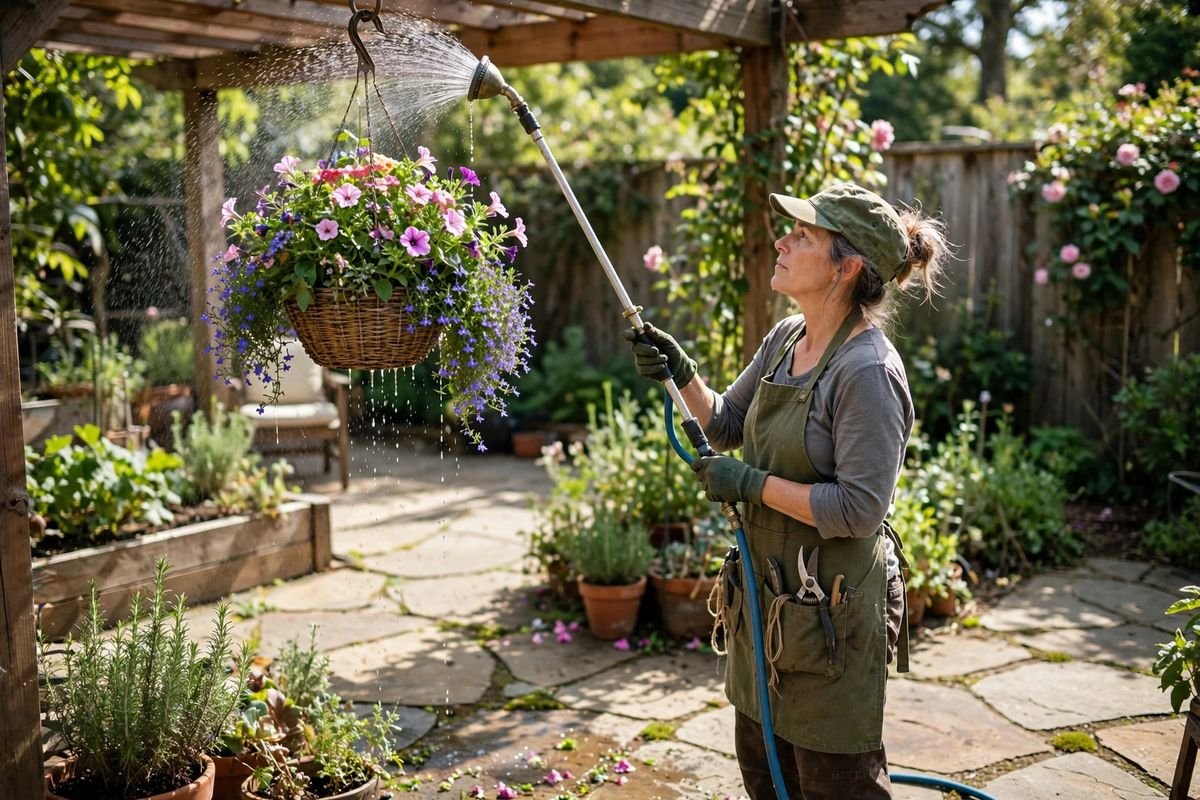
| Long or telescoping, 36 inches and up | Overhead and across-the-bed reach without leaning | Hanging baskets, deep beds, watering under wide shrubs, gardeners who cannot bend or kneel easily | Heavier at full extension; more leverage on the valve and hose connection, so cheap fittings flex and leak sooner |
The middle row is where most gardeners should start. A 30- to 36-inch wand covers raised beds and containers without the weight penalty of a long model, and it stores on a hook without dominating the shed wall. Move up in length when hanging baskets or deep beds are a daily job, and move down when most of your watering happens at bench height.
How wand length changes the watering job
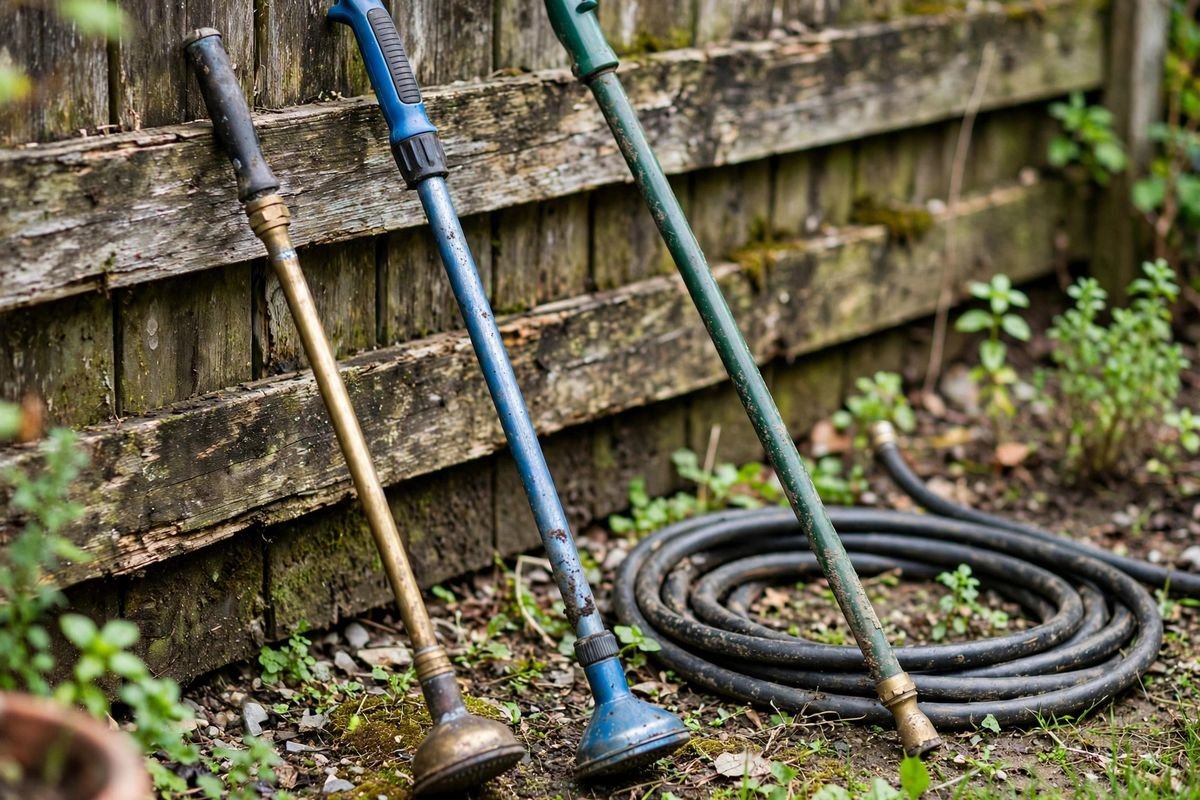
Length is really about posture and aim. A short wand keeps the shower head near your hand, which gives fine control around seedlings and small pots but asks your back to do the reaching. A standard wand puts the head about a yard away, so we can stand on the path and place water at the base of plants mid-bed — no stepping on cultivated soil, no compressing the root zone we just loosened. A long or telescoping wand trades a little precision for reach: the head rises above a hanging basket and tips down into it, and it crosses a wide bed without a lean that turns into a sore hip by August.
Reach also changes where the water lands. A wand held high showers a broad circle and wets foliage along the way; lowered to soil level, the same wand delivers a narrow, gentle column at the stem. Gardeners fighting fungal leaf spots learn to keep the head low and foliage dry, which is easier with enough length to stay outside the bed. For beds on automatic water, our comparison of the best drip irrigation kits for raised beds covers the hands-off option; a wand remains the better tool for pots, new transplants, and spot-watering between irrigation runs.
Spray patterns: gentle is the whole point
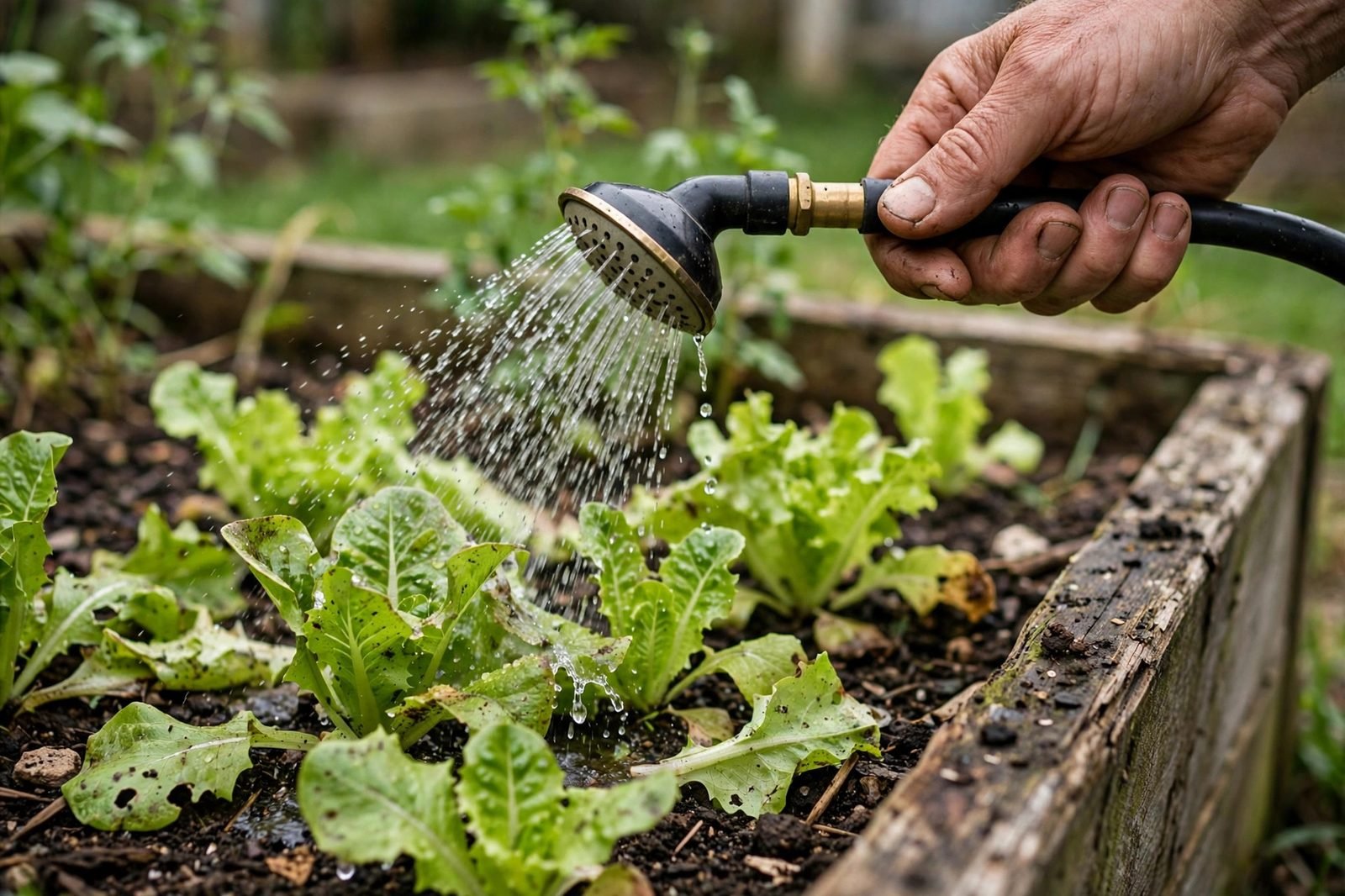
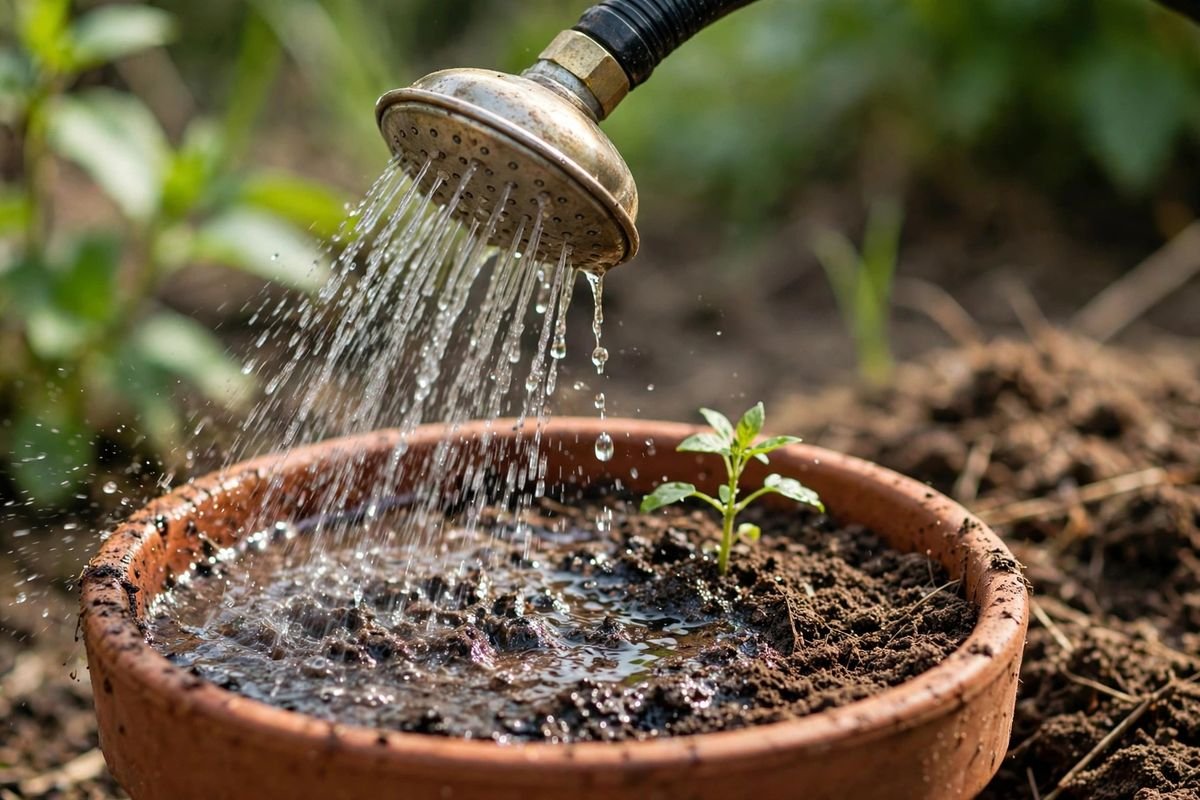
Most wands offer a rotating head with several patterns — shower, mist, flat, cone, jet, and a few in between. Two do nearly all the garden work. The shower pattern spreads water through many small holes, breaking the stream into droplets soft enough for seedbeds and young transplants. Mist suits seedlings and rinsing dust off leaves, though it drifts in any breeze. The jet has one honest use — cleaning a patio or flushing a clogged head — and it should never meet bare soil, because a concentrated stream blasts mulch aside and carves a crater that exposes roots.
What matters more than the pattern count is how the shower head is built. A head with many fine holes and a slight dome produces an even, rain-like spread. A head with a few large holes produces streaks — wet stripes and dry gaps — that show up later as uneven growth. When comparing models, favor the finer, denser face in product photos.
Shut-off valves and triggers
The valve is the part your thumb lives on, and it decides how a watering session feels. Three styles dominate. A thumb-controlled flow lever lets you start, stop, and throttle with the hand that holds the wand — the most convenient setup for moving pot to pot. A squeeze trigger is intuitive but tiring across a long bed, and triggers that lock open remove the safety of a flow that stops when you let go. A twist or ball valve at the base is simple and durable, but it takes your second hand, so the wand wanders while you adjust.
Flow control matters as much as on-off control. A valve that throttles to half flow lets one wand serve both a flat of seedlings and a row of established squash, and it protects the soil surface — full faucet pressure through a shower head is still a lot of water arriving fast, as the worked example below shows. Shoppers comparing valve styles can scan the current garden watering wands on Amazon and note which models put the control under the thumb.
A worked flow-rate example
Assumptions, stated plainly: a wand on the shower setting fed by a standard garden hose at typical household pressure, delivering about 2.5 gallons per minute at a gentle, rain-like flow with the valve fully open. Your faucet will differ — measure it once with a bucket and a phone timer, then reuse the same arithmetic.
At 2.5 gallons per minute, delivering 2 gallons to one large container takes 2 ÷ 2.5 = 0.8 minutes, or about 48 seconds. That feels long standing over one pot, which is exactly the point: most containers get a five-second splash, a fraction of what their root zone needs, and then dry out again by afternoon. Scale the math up and a 4-by-8 raised bed that needs roughly 1 gallon per square foot in a deep weekly watering — 32 gallons — takes 32 ÷ 2.5 = about 13 minutes of shower time. Our watering-schedule guide on how often to water a raised bed explains where that gallon-per-square-foot figure comes from and when to split it across two sessions.
Now compare reach at the same flow. With a 16-inch wand, watering the far side of a 4-foot bed means stepping in or walking around; with a 36-inch wand, your hand at roughly 24 inches from your body plus 36 inches of wand puts the shower head near the far edge while your feet stay on the path. Both wands deliver the same 2 gallons in the same 48 seconds, but the longer one keeps your weight off the soil and your shoes out of the mud. For a hanging basket at eye height, it tips the head over the rim from below, so the soaking lands in the pot instead of running down your sleeve.
What to look for when you buy
Length matched to the job. Measure your widest bed and highest basket, then pick the shortest wand that reaches both; extra length is extra weight on every pass.
A fine, dense shower face. Many small holes beat a few big ones for even, gentle coverage.
One-hand flow control. A thumb lever or easy trigger with real throttling between off and full makes the wand usable from seedlings to squash hills.
Metal where it counts. Head and hose connections take the most stress, especially on long wands; brass or metal fittings outlast plastic threads that cross-thread and weep. Rubber grips are a quiet bonus on cold mornings.
A standard hose thread and a screen washer. Every wand clogs eventually; a removable inlet screen catches grit before it plugs the shower face.
Browse the current field with that checklist in hand — a search for watering wands for the garden surfaces the short, standard, and telescoping options side by side — and let length, shower face, and valve style, in that order, make the decision.
Care that keeps a wand flowing like new
Most wand problems are grit problems. If the shower turns streaky, unscrew the head, rinse the face, and pick out clogged holes with a pin; if flow drops everywhere, pull the inlet screen and rinse the sediment out. Store the wand out of direct sun, since ultraviolet light embrittles plastic heads, and drain it before the first hard freeze — trapped water splits tubes and cracks valve bodies. A drip at the handle usually needs a fresh washer, a ten-cent fix gardeners put off for a season of wet cuffs.
Frequently asked questions
What length watering wand is best for raised beds?
For a standard 4-foot-wide bed, a 30- to 36-inch wand reaches the far edge from one path without stepping into the bed. Narrower beds and bench-height containers do fine with a 16-inch wand; beds wider than 4 feet or backed against a fence may justify a telescoping model.
Can a watering wand replace drip irrigation?
It replaces the watering can, not the irrigation system. A wand excels at containers, transplants, and spot-watering, but a full bed still takes many minutes of standing time at typical flow rates, as the worked example shows. Many gardeners run drip lines for beds and keep a wand for everything else.
Why does my wand spray unevenly?
Usually a partially clogged shower face or a gritty inlet screen. Remove the screen, rinse it, clean the head holes, and check flow again before assuming the wand has failed. Low household pressure produces the same symptom, so test the open hose into a bucket if cleaning changes nothing.