
This post may contain affiliate links. If you buy through links on this page, we may earn a commission at no extra cost to you.
As an Amazon Associate I earn from qualifying purchases.
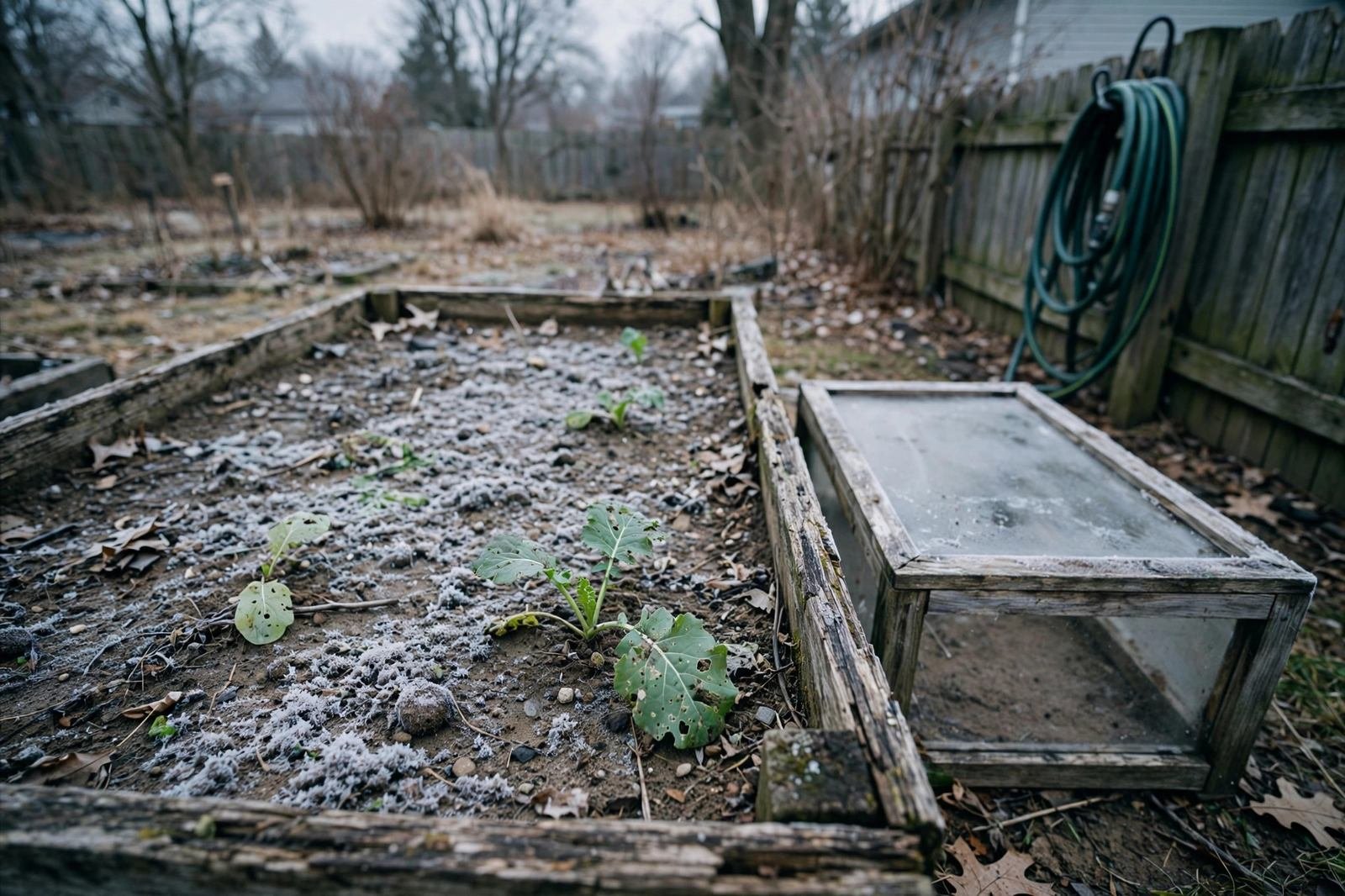
December looks like a closed month in the garden, and in cold zones it mostly is. The ground freezes, the days are short, and most seed packets stay in the box until spring. But December still has real planting in it: garlic and bare-root plants go in where the ground is open, and the kitchen counter takes over for sprouts, herbs, and microgreens in every zone.
This guide sorts December planting by zone, counts the outdoor sowing dates back from a stated first frost, and gives the indoor starts that pay off in days rather than months. The worked example below uses a December 1 first frost and the standard 14-day fall factor, so you can rerun the same math for your own frost date. For the month before this one, see our guide on what to plant in November.
What December planting looks like by zone
December planting is a zone question before it is a crop question. A gardener in zone 10 sows a full bed in December, while a gardener in zone 4 grows nothing outdoors at all. The table below gives the short version for each band, and the sections after it fill in the how-to for each group.
| Zones | Outdoors in December | Indoors in December |
|---|---|---|
| Zones 3 to 5 | Nothing, the ground is frozen or close to it | Sprouts, microgreens, herbs on a bright sill |
| Zones 6 to 7 | Garlic and bare-root trees and shrubs while the ground is open | Sprouts, microgreens, herbs, forced bulbs |
| Zones 8 to 9 | Lettuce, peas, fava beans, onions, garlic, broccoli transplants | Sprouts, microgreens, herbs, forced bulbs |
| Zone 10 | Carrots, beets, lettuce, peas, broccoli, herbs, warm-season crops from transplants in frost-free spots | Sprouts, microgreens, herbs, forced bulbs |
Use your local frost dates and regional planting guidance — not your USDA hardiness zone alone — to choose planting dates. A zone number tells you how cold the winter gets, not when your first frost arrives, and two gardens in the same zone can sit weeks apart on frost dates. Your local extension planting calendar is the better guide for the exact dates in your town.
Garlic still goes in where the ground is open
Garlic is the main December crop for zones 6 through 9, because it needs cold weeks in the ground to form bulbs. Plant cloves 4 to 6 weeks before the ground freezes, pointy end up, 2 inches deep in mild zones and 4 inches deep where winters run colder. Space cloves 6 inches apart in rows 12 inches apart, water them in once, and cover the bed with 4 to 6 inches of straw mulch.
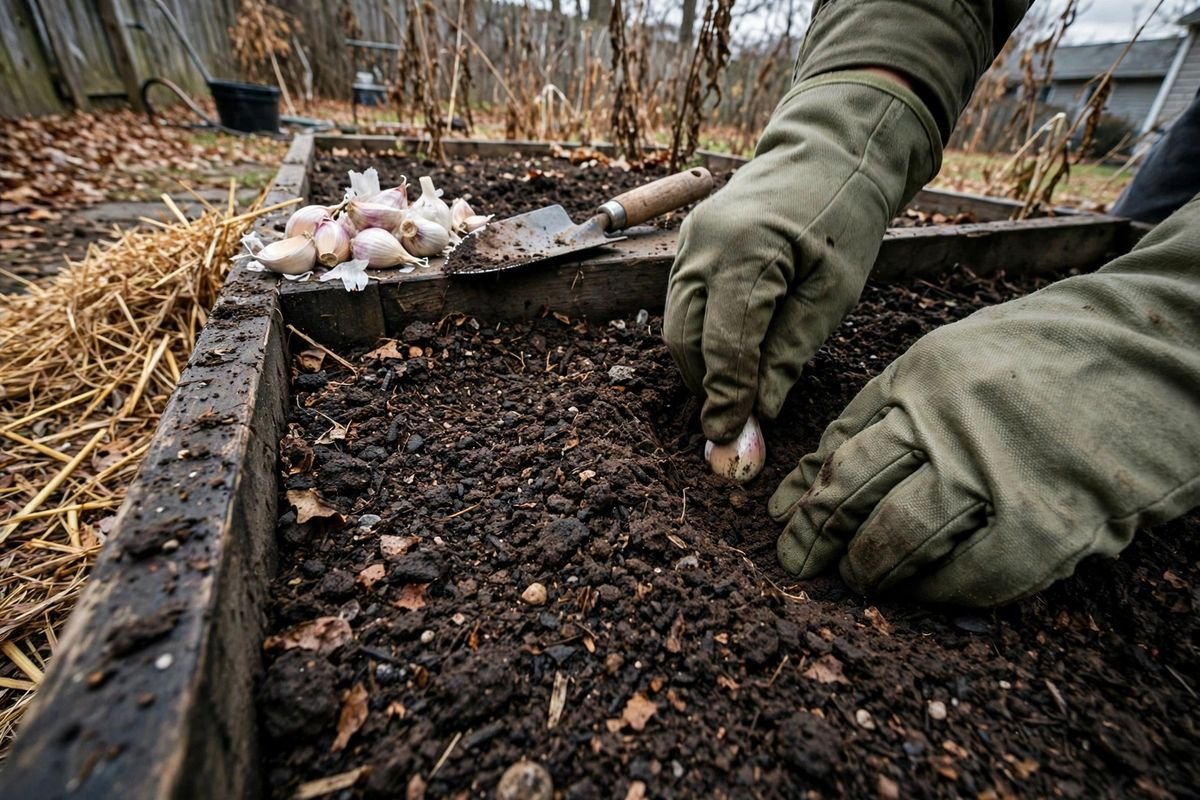
December garlic is late for cold zones, and the timing matters. A clove planted in early December in zone 7 still gets about four weeks of root growth before the ground freezes in January, and that is enough for a spring bulb. A clove planted after the ground has frozen solid will not root at all, and it will rot in the wet soil of spring. If your ground is already frozen, skip the outdoor planting and put garlic on the list for next fall.
Buy seed garlic from a garden supplier rather than planting cloves from the grocery store. Store garlic is often treated to stop sprouting, and it may carry disease into the bed. If you need seed garlic, you can browse seed garlic bulbs for planting on Amazon. We have not tested the products linked here, and we give no current store prices. Check each listing for current varieties, bulb counts, and pack sizes before you buy.
Bare-root trees, shrubs, and roses
December is a good month to plant bare-root trees, shrubs, and roses in zones 6 through 9, while the plants are dormant and the ground is still workable. Dormant plants lose less water through their leaves, and the roots settle in over winter so the plant starts growing on time in spring. Soak the roots in a bucket of water for a few hours before planting, and dig the hole twice as wide as the root spread but no deeper than the roots are long.
Set the plant at the same depth it grew at the nursery, which you can see from the soil line on the stem. Spread the roots out flat instead of bunching them in the hole, backfill with the soil you dug out, and water it in well so the soil settles around the roots. Mulch 3 inches deep around the plant, and keep the mulch a few inches away from the stem so it does not hold damp against the bark.
Skip bare-root planting when the ground is frozen or waterlogged. A hole dug in frozen soil will not drain, and the roots will sit in cold water all winter. In zones 3 to 5, wait for the spring thaw and plant bare-root stock as soon as the ground can be worked.
Indoor starts: sprouts, herbs, and microgreens
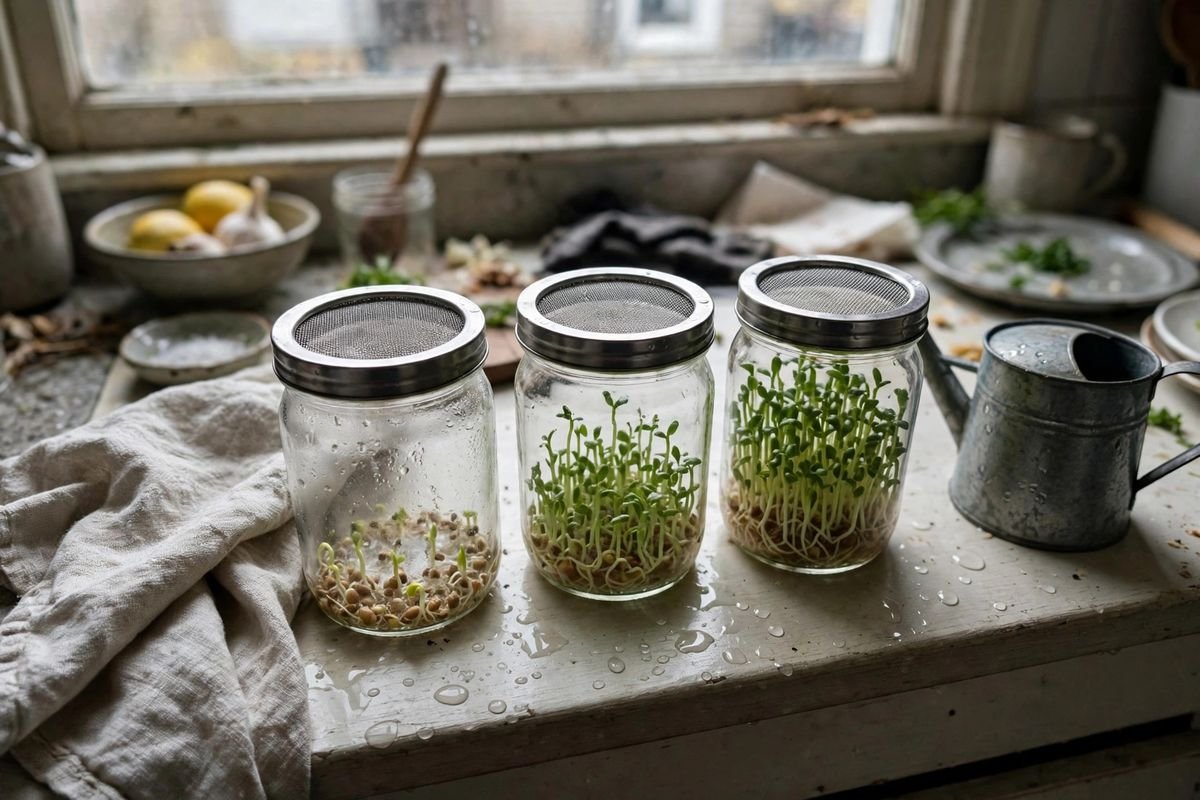
Sprouts are the fastest December crop in any zone. A jar of mung bean or alfalfa sprouts is ready in 3 to 5 days, and the whole setup is a wide-mouth jar, a mesh lid, and a spot on the counter. Rinse the seeds twice a day and drain the jar well after each rinse, because sprouts that sit in standing water turn sour fast. For the full jar routine, see our guide on how to grow sprouts indoors.
Herbs on a bright windowsill give fresh leaves all winter. Parsley, chives, and mint start well from seed in December, and a pot of basil moved indoors before the first frost keeps producing if it gets six hours of light a day. A south-facing sill is the best spot in most houses. Turn the pots every few days so the plants do not lean toward the glass, and water only when the top inch of soil feels dry.
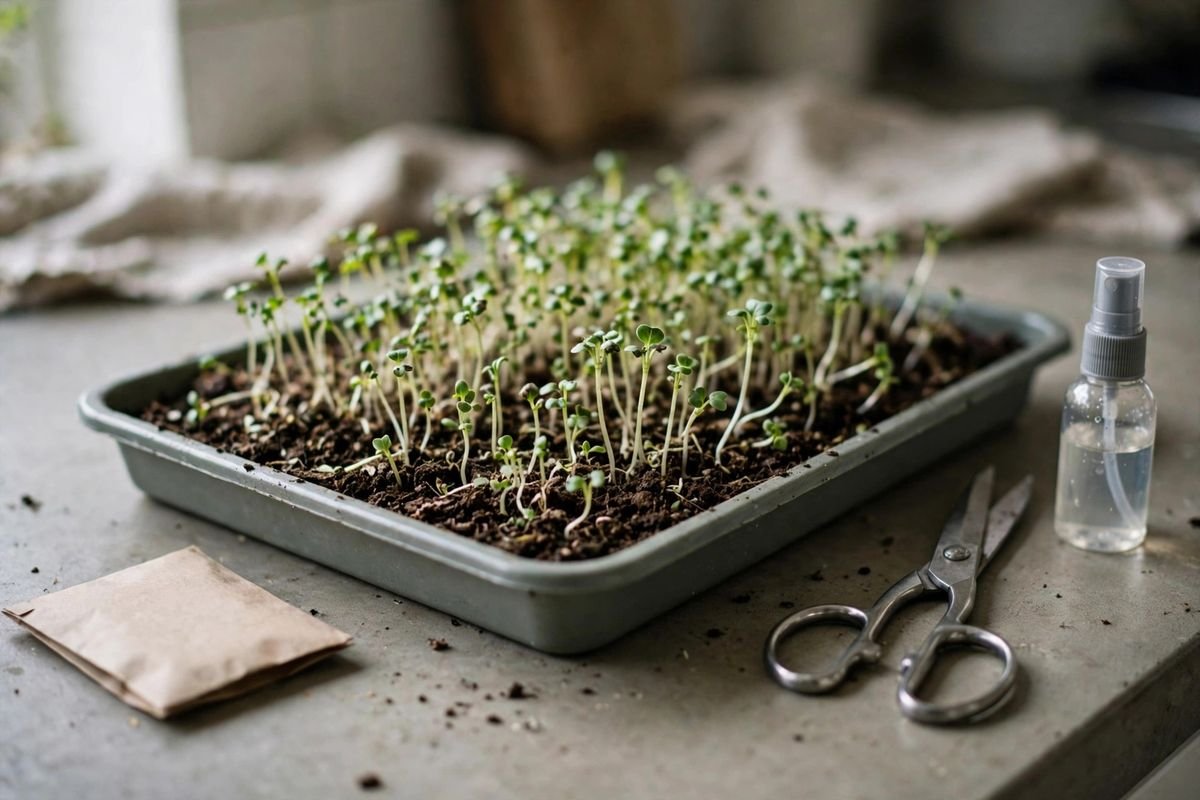
Microgreens sit between sprouts and herbs on speed and effort. Sow radish, broccoli, or pea shoots thickly in a shallow tray of potting mix, mist the surface, and keep the tray in a bright spot. Most types are ready to cut in 7 to 14 days, and a pair of kitchen scissors harvests the whole tray in a minute. If you need trays, you can browse microgreen growing trays on Amazon.
Our worked example: counting back from a December 1 first frost
Here is the timing math for a mild garden with a December 1 first frost, a common case in zone 7. The rule is simple: take the days to maturity from the seed packet, count back from the first frost date, and then add 14 days, because shorter fall days slow growth. That 14-day fall factor is standard guidance for fall sowing, and these are our own computed numbers with the assumptions stated in the table.
| Crop | Days to maturity | Count back from Dec 1 | Sow by, with fall factor |
|---|---|---|---|
| Radishes | 30 | November 1 | October 18 |
| Spinach | 40 | October 22 | October 8 |
| Leaf lettuce | 45 | October 17 | October 3 |
| Kale, from transplant | 55 | October 7 | September 23 |
The table shows why December outdoor sowing is mostly over in this garden. Radishes sown on December 1 would need 30 days plus the 14-day fall factor, which runs to mid-January, long after the frost has stopped growth. The December work in this garden is garlic before the ground freezes, bare-root planting while the soil is open, and the indoor starts that ignore frost dates entirely.
The indoor math runs the other way, with no frost limit at all. Sprouts sown on December 1 are ready between December 4 and December 6. Microgreens sown on December 1 are ready to cut between December 8 and December 15. A tray sown each week gives a steady supply through the month, and the only date that matters is the sowing date, not the weather outside.
Winter color indoors: amaryllis and paperwhites
December is the month to start forced bulbs for winter bloom. An amaryllis bulb planted in early December blooms in 6 to 8 weeks, which puts flowers on the table in late January or early February. Paperwhites move faster, blooming in 4 to 6 weeks from planting, and they need no chilling at all. Plant the bulb with its top third above the soil line, water it in once, and keep the pot in a bright spot.
Forced bulbs are the one December planting where the payoff is a flower, not food, and they suit a gardener who wants something growing while the beds rest. For the full routine, see our guide on how to force amaryllis bulbs indoors.
Use December to plan next year
December is also the month to plan the next garden while the beds rest. Write down what grew well this year and what did not, and note the varieties that earned a second season. Sketch the bed layout for spring, and rotate each crop to a bed it did not occupy this year. For the full planning routine, see our guide on how to plan next year’s vegetable garden.
Order seeds in December if you can. The best varieties sell out by February, and an order placed now arrives long before the sowing dates in the worked example above. Sort the seed box at the same time, and toss packets that are more than three years old or that lost their labels, because old seed germinates weakly and an unlabeled packet is a guess.
Troubleshooting
Garlic went in after the ground froze
Cloves planted in frozen ground will not root, and they often rot in spring. Leave them in place and watch for shoots in spring, but do not count on a full harvest. Mark the bed so you know where the cloves are, and plan to plant on time next fall, four to six weeks before the ground freezes.
Sprouts smell sour
A sour smell means the jar stayed too wet between rinses. Rinse twice a day, drain the jar upside down at an angle so water runs out, and keep the jar out of direct sun. If the smell stays after a fresh rinse, toss the batch and start a new one with clean jars.
Microgreens grow moldy
Mold on microgreens comes from damp air and seeds sown too thickly. Sow thinner next time, mist less, and give the tray airflow by lifting any cover once the seeds sprout. A tray with mold through the whole surface should go to the compost pile, not to the table.
Herbs stretch on the sill
Leggy herbs on a windowsill need more light, not more water. Move the pot to the brightest window in the house, turn it every few days, and cut the stems back by a third to push bushy growth. A small grow light helps in a dark room, but a south-facing sill is enough for parsley and chives in most houses.
Frequently asked questions
Is December too late to plant garlic?
It depends on the ground. If the soil is still open and workable in your area, early December garlic still gets weeks of root growth before the freeze, and it can form bulbs in spring. If the ground is already frozen solid, the planting window has closed for the year, and the cloves should wait for next fall.
Can I plant vegetables outside in December?
In zones 8 to 10, yes: lettuce, peas, carrots, beets, and broccoli all sow or transplant in December in those zones. In zones 6 to 7, garlic and bare-root plants are the outdoor options. In zones 3 to 5, outdoor planting is done for the year, and the garden moves indoors to sprouts and microgreens.
What grows fastest indoors in December?
Sprouts are the fastest, ready in 3 to 5 days from sowing. Microgreens follow at 7 to 14 days. Herbs take longer, a few weeks from seed to first leaves, but a potted herb moved indoors before frost gives leaves from the first day.
Do I need a grow light for winter herbs?
A bright south-facing window is often enough for parsley, chives, and mint. Basil and other light-hungry herbs do better with a light in a dark room or a north-facing window. Watch the plants: pale, stretched stems mean they need more light, wherever the light comes from.
Sources and further reading
- University of Minnesota Extension, Growing Garlic in Minnesota
- University of Maryland Extension, Growing Microgreens and Baby Greens Indoors
Related reading: What to Plant in November, What to Plant in October, How to Grow Sprouts Indoors, How to Force Amaryllis Bulbs Indoors, How to Plan Next Year’s Vegetable Garden
By the Pot and Plot Team