
This post may contain affiliate links. If you buy through links on this page, we may earn a commission at no extra cost to you.
As an Amazon Associate I earn from qualifying purchases.
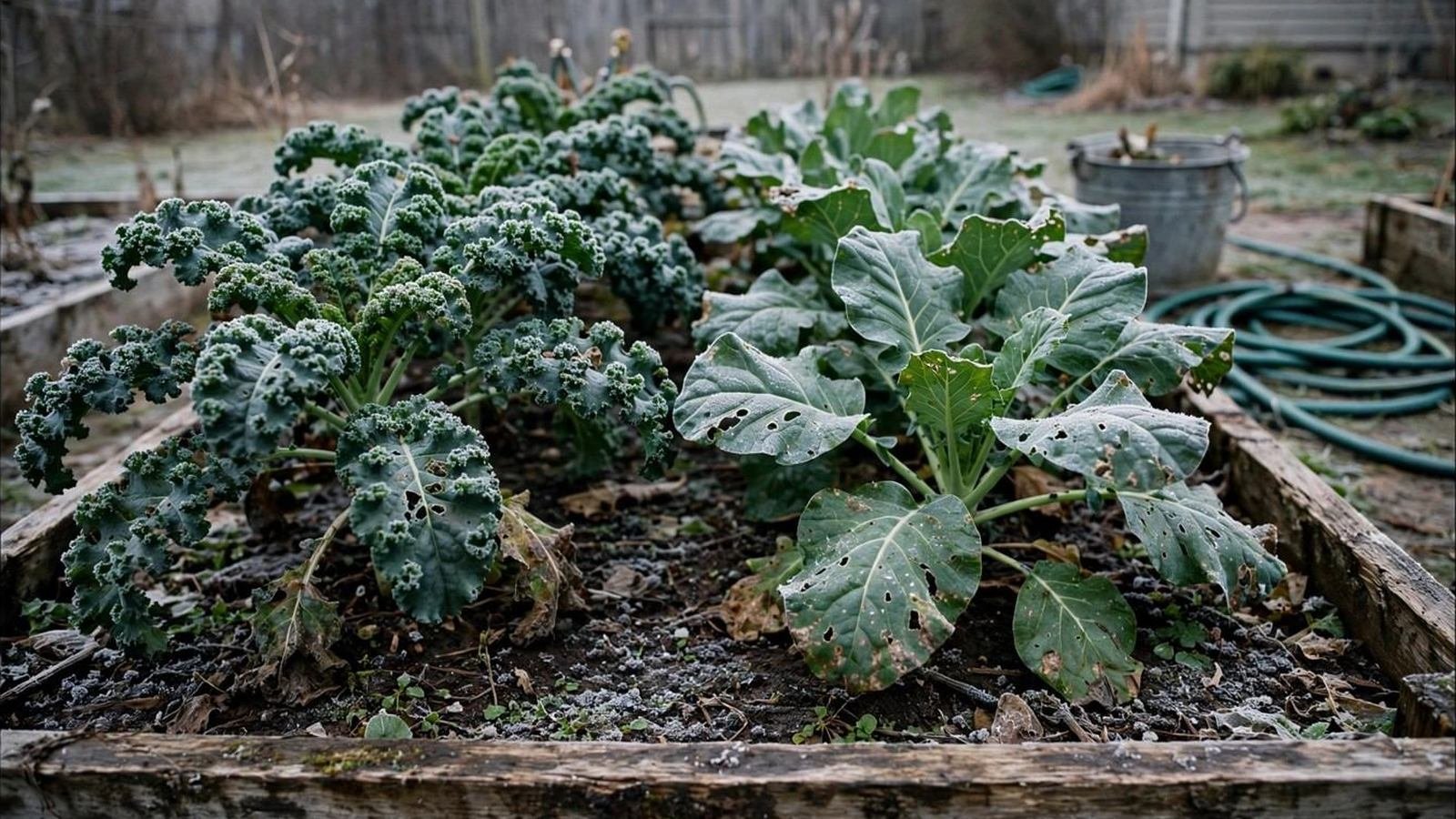
Kale and collard greens are close cousins, both leafy forms of Brassica oleracea, the same species that gives us cabbage, broccoli, and cauliflower, and neither one forms a head. Both are cool-season crops that grow best in spring and fall, both keep producing after the first frost, and both are picked leaf by leaf from the same plant for weeks on end.
It does, but the difference is not about which one is better in general. It is about leaf shape, kitchen use, cold tolerance, and how much room each plant takes in the bed. Kale gives curly or flat leaves that cook fast and work raw in salads when young. Collards give broad, smooth leaves that hold up to long cooking and keep producing through a mild winter. This guide compares the two side by side and runs the yield math for one 4 by 8 foot bed.
Kale vs collard greens at a glance
The table gives the short version. The sections after it fill in the growing detail, the harvest math, and the cold-hardiness numbers.
| Trait | Kale | Collard greens |
|---|---|---|
| Leaf shape | Curly, ruffled, or flat and narrow, depending on type | Broad, smooth, flat leaves on a tall stem |
| Plant size | About 12 to 24 inches tall and wide | About 24 to 36 inches tall, with a bare stem below the leaves |
| Days to first harvest | About 55 to 75 days from seed | About 75 to 85 days from seed |
| Spacing | 12 to 18 inches apart | 18 to 24 inches apart |
| Cold tolerance | Survives cold down to about 20 degrees Fahrenheit | Withstands frosts and light to medium freezes |
| Best kitchen use | Fast cooking, soups, salads when young | Long braising, stews, wraps |
Use your local frost dates and regional planting guidance — not your USDA hardiness zone alone — to choose planting dates. A zone number tells you how cold the winter gets, not when your last frost arrives, and two gardens in the same zone can sit weeks apart on frost dates. Your local extension planting calendar is the better guide for the exact dates in your town.
Kale: what it is and how it grows
Kale is the smaller, faster crop of the two. Curly kale types such as Winterbor grow tight ruffled leaves on a short stem. Lacinato, also sold as dinosaur kale or Tuscan kale, grows narrow, dark, blistered leaves on a taller stem. All of them grow the same way: a rosette of leaves around a central stem, picked from the outside in while the center keeps growing.
Sow kale seed about one-fourth to one-half inch deep, in soil with a pH of 6.0 to 7.5, and thin full-size plants to 12 to 18 inches apart. That spacing fits about ten plants in a 4 by 8 foot bed, as the worked example below shows. Kale needs steady water, about one inch per week, and fast growth without heat or moisture stress gives the best flavor. Plants that are overheated or short of water turn bitter. For the full fall routine, see our guide on how to grow kale in fall and winter.
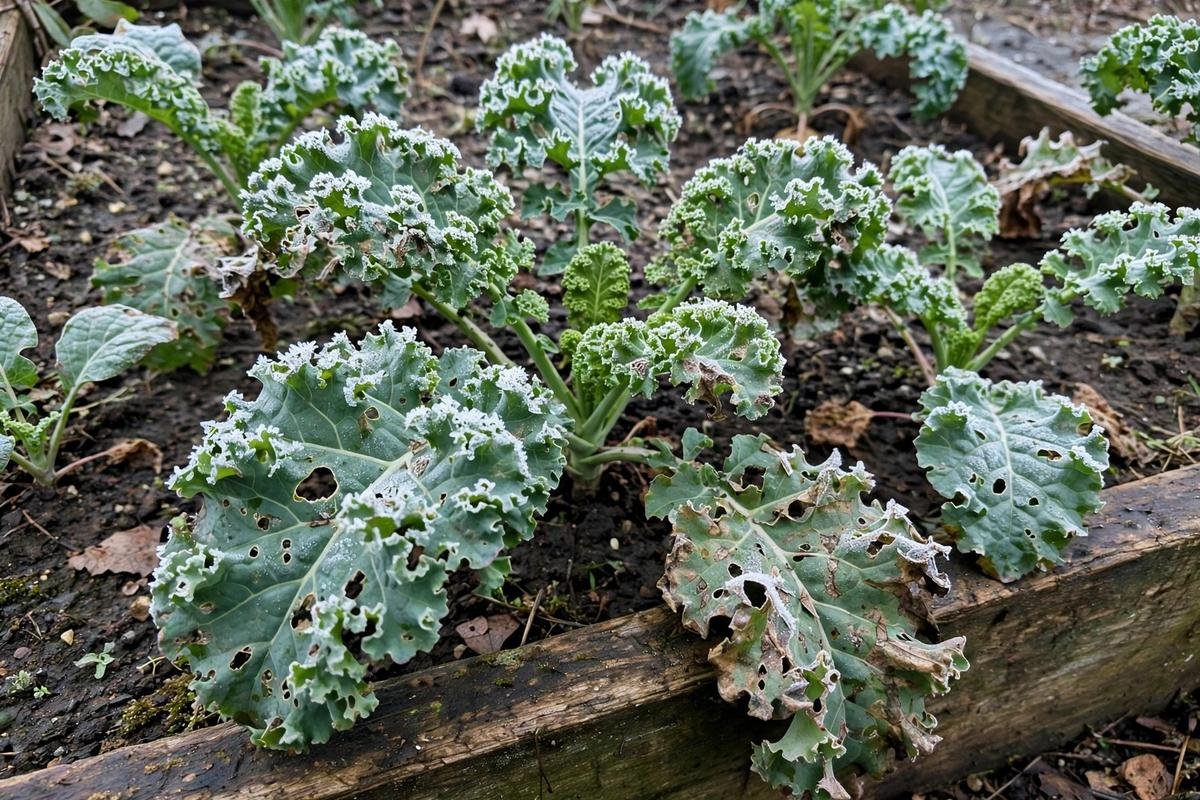
Start kale from seed indoors about four weeks before transplanting, or sow it straight into the bed. For a fall crop, start seed indoors in June and move the plants out in late summer. Harvest starts when the outer leaves reach the size of your hand: pick the outer leaves first, leave the central growing point alone, and the plant keeps making new leaves for weeks. A light frost sweetens the leaves, which is why fall kale often tastes better than spring kale.
If you need seed to start, you can browse kale seeds on Amazon. We have not tested the products linked here, and we give no current store prices. Check each listing for current details before you buy.
Pros of kale
- Faster to first harvest than collards, by about two to three weeks.
- Smaller plants, so more of them fit in one bed.
- Curly and flat types give a choice of leaf shapes for different dishes.
- Young leaves work raw in salads, which collard leaves do not.
- Very cold-hardy, surviving cold down to about 20 degrees Fahrenheit.
- Long harvest window when outer leaves are picked and the center is left to grow.
Cons of kale
- Leaves turn bitter in hot weather, so spring plants fade fast once summer heat arrives.
- Curly leaves trap aphids and soil in their folds, and they take longer to wash clean.
- Plants bolt in heat, ending the harvest sooner than collards in a warm fall.
- Older leaves get tough and need the stem stripped out before cooking.
Collard greens: what they are and how they grow
Collard greens grow as a loose bouquet of large, smooth leaves on a tall stem, with no head at all. The plants stand taller than kale, often 2 to 3 feet, and the wide, flat leaves are easy to wash and cut into strips. Common types include Georgia Southern, Vates, Morris Heading, and Blue Max. In mild climates, collards can be picked all winter long.
Plant collard seed one-half to three-fourths inch deep, never deeper than one inch, and keep the top of the soil moist while the seeds sprout. Space plants 18 to 24 inches apart, in beds two to four plants wide, in soil rich in organic matter with a pH of 6.0 to 6.5. Collards need ample nitrogen for deep green color and tender growth, so feed them according to a soil test. For the full routine, see our guide on how to grow collard greens.
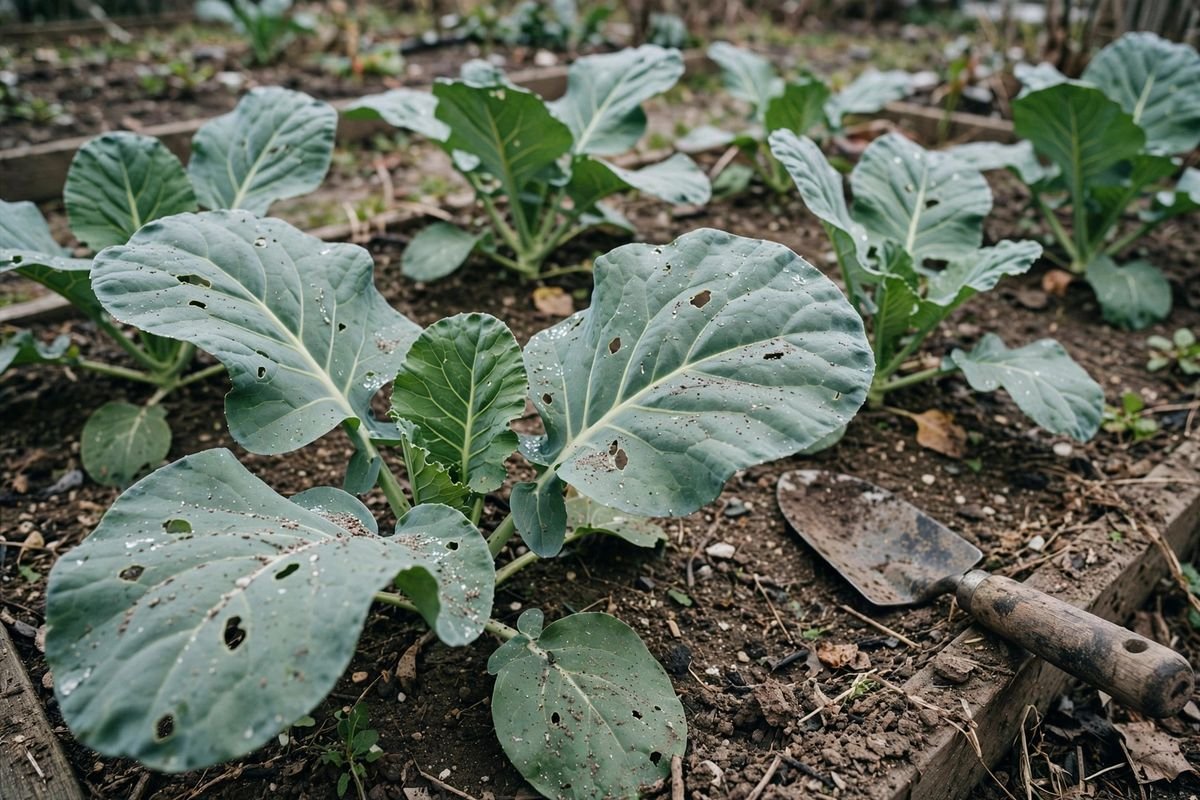
Collards are a cool-season crop that grows best in the cooler temperatures of spring and fall. Set transplants out in early spring or late summer, and sow seed in early spring or midsummer for a fall crop. The mature plant withstands frosts and light to medium freezes, though freezing weather may burn some outer leaves while the center keeps growing. Harvest by stripping mature leaves from the stalk, leaving the growing tip and the young leaves behind.
Pros of collard greens
- Large, smooth leaves are easy to wash, cut, and cook in big batches.
- Long harvest season, often running through winter in mild climates.
- Leaves hold up to long cooking without falling apart.
- Tolerates heat better than kale, so it keeps producing into a warm fall.
- Tall plants make picking easy, with leaves at waist height instead of near the soil.
- Fewer plants are needed to fill a pot, because each leaf is large.
Cons of collard greens
- Slower to first harvest than kale, by about two to three weeks.
- Larger plants need wider spacing, so fewer fit in one bed.
- Leaves are too tough to eat raw once they reach full size.
- Tall, bare stems can lean or flop in wind unless the plants are hilled up with soil.
- Needs steady nitrogen to stay green and tender, and pale leaves mean it is hungry.
Our worked example: yield from one 4 by 8 foot bed
Here is the yield math for a single 4 by 8 foot bed, 32 square feet, planted to one crop. These are our computed numbers, with the assumptions stated in the table so you can rerun the same math with your own spacing and harvest length. The count is leaves, not weight, because leaf size differs between the two crops.
| Crop | Spacing | Plants in the bed | Leaves picked per plant, per week | Harvest weeks | Total leaves |
|---|---|---|---|---|---|
| Kale | 18 inches apart, 2 rows | 10 | 6 | 10 | 600 |
| Collard greens | 24 inches apart, 2 rows | 8 | 8 | 12 | 768 |
The math runs like this. A 4 foot wide bed holds two rows at either spacing. An 8 foot row at 18 inch spacing holds five kale plants, so two rows give ten plants; the same row at 24 inch spacing holds four collard plants, so two rows give eight. Each kale plant gives about six outer leaves per picking, and each collard plant gives about eight. Pick once a week, and kale gives 10 times 6 times 10, which is 600 leaves, while collards give 8 times 8 times 12, which is 768 leaves.
Collards come out ahead on leaf count here for two reasons: the harvest runs two weeks longer, and each plant gives two more leaves per picking. But leaf count is only half the story. A collard leaf is much larger than a kale leaf, so 768 collard leaves fill far more pots than 600 kale leaves. If your goal is the most food from one bed, collards win on this math. If your goal is the fastest first meal, kale wins, because it starts producing two to three weeks sooner. Split the bed and you get about 300 kale leaves and 384 collard leaves, with the kale ready first and the collards carrying the harvest later into the cold season.
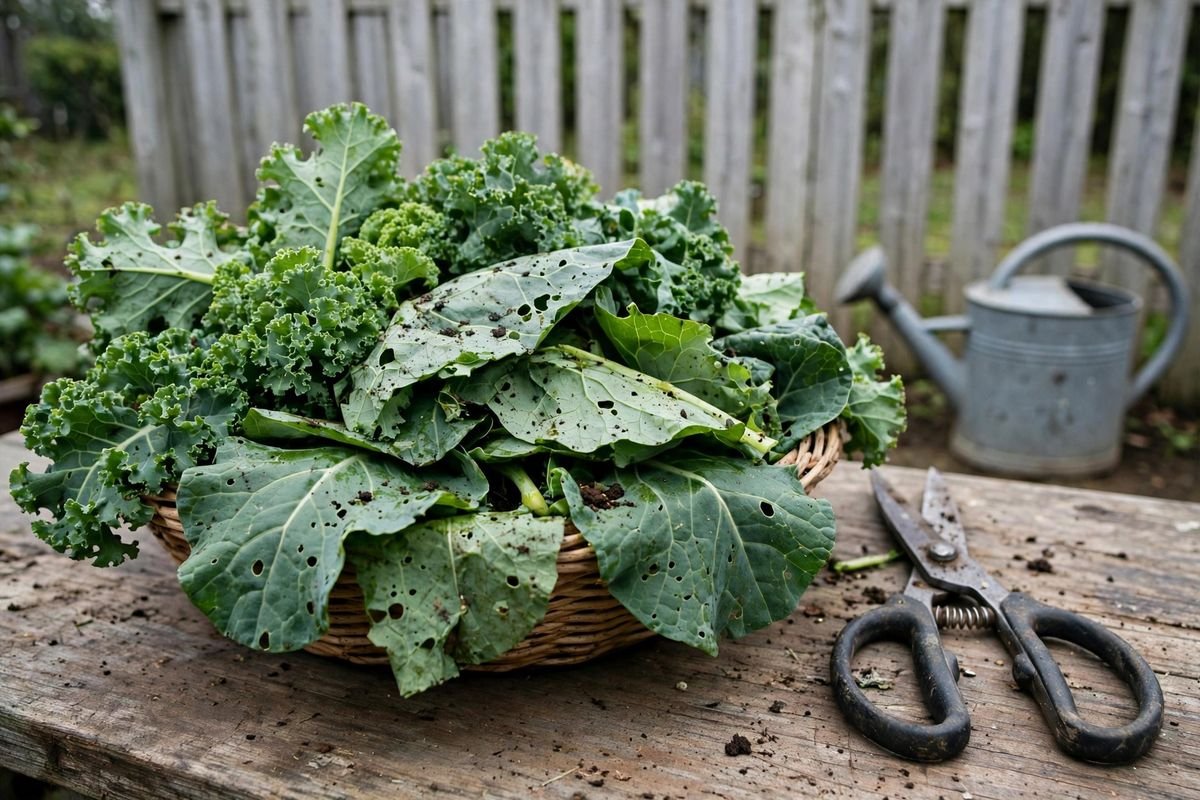
Three things change the numbers. Closer spacing raises the plant count but shrinks each plant, so the leaves per picking fall. A hard freeze ends the kale harvest sooner than the collard harvest in most gardens. And picking twice a week instead of once gives smaller leaves but about the same total count, because the plant replaces picked leaves at its own pace. Use the table as a planning number, not a promise, and count your own pickings for one season.
Cold hardiness compared
Cold is where the two crops separate most clearly. Kale is one of the hardiest leafy greens, surviving cold down to about 20 degrees Fahrenheit, and a light frost improves its flavor. Collards withstand frosts and light to medium freezes, and they survive the winter in mild climates, though freezing weather may burn some outer leaves. In a garden with a long, mild fall, collards keep producing after kale has slowed down, while in a garden with sharp early freezes, kale holds its leaves better through the first cold snaps.
Both crops do best when fall planting is timed from the first frost date, not from a zone number. Sow fall kale so the plants reach picking size before hard cold, and set fall collards out in late summer so they size up before growth slows. A row cover buys a few extra weeks for either crop when a cold night is coming. If you need one, you can browse frost blankets and row covers on Amazon.
For a fall bed that pairs well with either green, see our guide on how to grow cabbage in fall, and for a faster leafy crop to fill the gaps between rows, see our guide on how to grow mustard greens in fall. Both share the same rotation rules and the same pests, so keep kale and collards out of any bed where cabbage, broccoli, or another brassica grew in the past four years.
Which one should you plant?
Choose kale if you want the fastest first harvest, if you eat a lot of salads and soups, or if your bed is small and you want more plants in it. Kale fits a gardener who picks a few leaves at a time and cooks them the same day.
Choose collard greens if you cook big pots of greens, if you want a harvest that runs through winter in a mild climate, or if you have room for taller plants. Collards fit a gardener who harvests by the armful and cooks in batches.
Plant both if you have the room. A bed split down the middle gives kale first and collards last, and the two crops share the same soil, the same water, and the same pests, so nothing about the bed changes. The garden that grows both eats greens for the longest stretch of the year.
Troubleshooting
Leaves turn bitter in warm weather
Bitter leaves mean the plant is stressed by heat or dry soil. Water deeply so the soil stays evenly moist, mulch the bed, and pick in the morning when the leaves are cool. The fix for next season is timing: plant for fall harvest, when cool nights keep the leaves sweet.
Cabbage worms chew holes in the leaves
Small green caterpillars on kale and collards are usually imported cabbageworms. Pick them off by hand and check the undersides of the leaves, where the eggs sit. Floating row cover over the bed from planting day keeps the white butterflies from laying eggs. Badly chewed leaves are still safe to eat once washed, but pick the worms off before the damage spreads to the center of the plant.
Kale bolts and stops producing
A kale plant that sends up a tall flower stalk has bolted, usually after a hot spell. Once it bolts, the leaves turn bitter and the plant is done, so pull it and sow a fresh round for fall. To slow bolting, keep the soil moist and mulch well.
Frequently asked questions
Can I plant kale and collard greens in the same bed?
Yes. They need the same soil and water and share the same pests, so one bed works for both. Give kale 18 inches and collards 24 inches, and put the taller collards on the north side.
Which one is better for a first-time gardener?
Kale is the easier first crop, because it grows faster and fits in a smaller space. Collards reward a gardener who has room and patience, with a longer harvest once the plants size up.
How do I keep picking without killing the plant?
Pick the outer leaves first, a few at a time, and always leave the central growing point and the young leaves around it. Never strip a plant bare: a plant picked this way keeps making new leaves for weeks.
Sources and further reading
- University of Minnesota Extension, Growing collards and kale in home gardens
- North Carolina State University Extension, Collard Greens
- North Carolina State University Extension, Central North Carolina Planting Calendar for Annual Vegetables, Fruits, and Herbs
Related reading: How to Grow Kale in Fall and Winter, How to Grow Collard Greens, How to Grow Cabbage in Fall, How to Grow Mustard Greens in Fall
By the Pot and Plot Team