
This post may contain affiliate links. If you buy through links on this page, we may earn a commission at no extra cost to you.
As an Amazon Associate I earn from qualifying purchases.
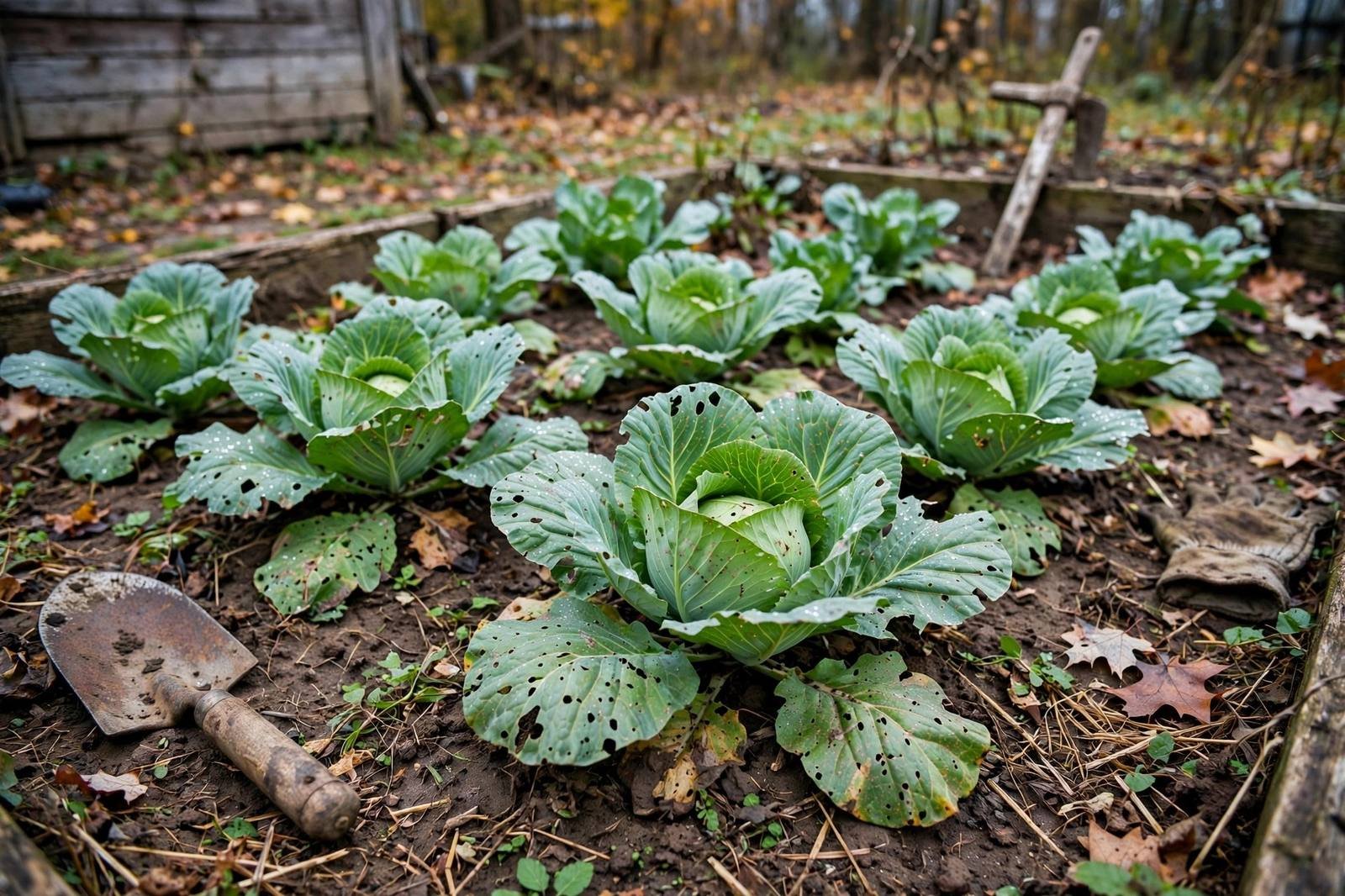
Fall cabbage has one big advantage over spring cabbage: the heads firm up as the nights cool, and cool weather makes the leaves taste sweeter instead of pushing the plant to bolt. The catch is timing. Cabbage needs enough warm weeks to size up, then cool weeks to finish. Start too late and you harvest loose, softball-size heads. Start at the right moment for your frost dates and fall cabbage becomes one of the easiest, most reliable crops of the second season.
This guide covers when to transplant fall cabbage, how to space and feed it, the pests that matter most in autumn, and how to know when a head is ready. If you are planning a full fall bed, pair this with our guides to fall broccoli and fall and winter kale — they share the same timing window and many of the same habits.
| Transplant timing | 6–8 weeks before first fall frost; protect young transplants from peak heat |
|---|---|
| Spacing | 12–18 inches apart in rows 24–30 inches apart |
| Sun | Full sun, 6+ hours |
| Water | About 1–1.5 inches per week, kept steady while heads form |
| Feeding | Compost at planting; side-dress nitrogen 3–4 weeks after transplant |
| Days to harvest | 50–80 days from transplant, depending on variety |
When to Plant Cabbage in Fall
Fall cabbage almost always does better from transplants than from direct seed. The seed germinates fine in warm soil, but young seedlings sitting in the hottest weeks of summer get hammered by pests and heat stress before they ever get going. Starting seed indoors or in a shaded nursery spot, then transplanting sturdy seedlings, gives you control over that vulnerable first month.
Count backward from your first expected fall frost. Most cabbage varieties need 50 to 80 days from transplant to a firm head, and growth slows as days shorten, so add a buffer of about ten days to the number on the seed packet. For many gardens that puts transplanting in mid to late summer — earlier in short-season northern gardens, later where fall stays mild.
Use your local frost dates and regional planting guidance — not your USDA hardiness zone alone — to choose planting dates.
That sentence is worth pausing on. Hardiness zones describe winter lows, which matter for perennials, not for timing an annual crop. Your state extension’s vegetable planting calendar, keyed to frost dates for your county, is the source to trust. Our October planting guide shows where cabbage fits in the late-season sequence once it is in the ground.
Starting Transplants
Sow seed about half an inch deep in cell trays four to six weeks before your transplant date. Cabbage seed germinates quickly in warm conditions — often inside a week. The goal by transplant day is a stocky seedling with four to five true leaves and a stem about as thick as a pencil.
The main risk in summer seed starting is legginess and heat. Give seedlings bright light immediately after they emerge, and move trays to morning sun with afternoon shade outdoors once they are up. A small fan or gentle brushing firms stems indoors. Seedlings started under lights follow the same logic as a basic indoor seed starting station, just shifted to midsummer.
Harden transplants off for five to seven days before planting: a few hours of outdoor shade, building to full sun. Skipping this step in August heat is the fastest way to lose a tray of otherwise healthy seedlings in one afternoon.
Soil Prep and Planting
Cabbage is a heavy feeder that likes rich, moisture-holding soil with a pH around 6.0 to 7.0. Work 2 to 3 inches of finished compost into the bed before planting — our compost guide covers making your own if your pile is ready. On poor or sandy soil, a balanced granular fertilizer at the label rate for cole crops gives seedlings a steadier start. Avoid fresh manure near harvest crops.
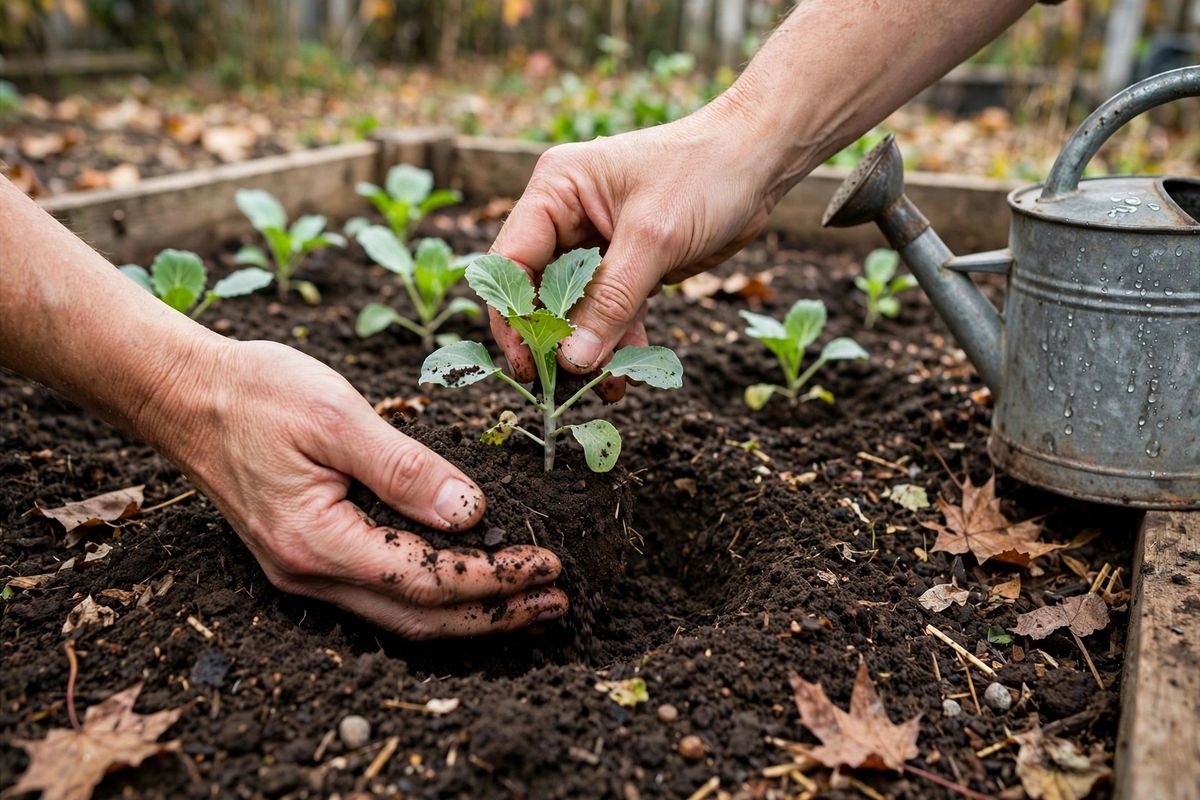
Set transplants at the same depth they grew in the tray, spacing them 12 to 18 inches apart. Smaller, early varieties sit happily at 12 inches; large storage types want the full 18. Rows 24 to 30 inches apart leave room to hoe and harvest. Water each plant in well at setting — a pint or two per hole — to settle soil around the roots and erase air pockets.
In hot weather, transplant in the late afternoon so seedlings get a cool night to settle before facing full sun. A temporary shade cloth or even an upturned crate over new transplants for the first two or three days makes a real difference when transplant day lands in a heat wave. A basic 40% shade cloth is cheap insurance for late-summer plantings.
Watering and Feeding Through Fall
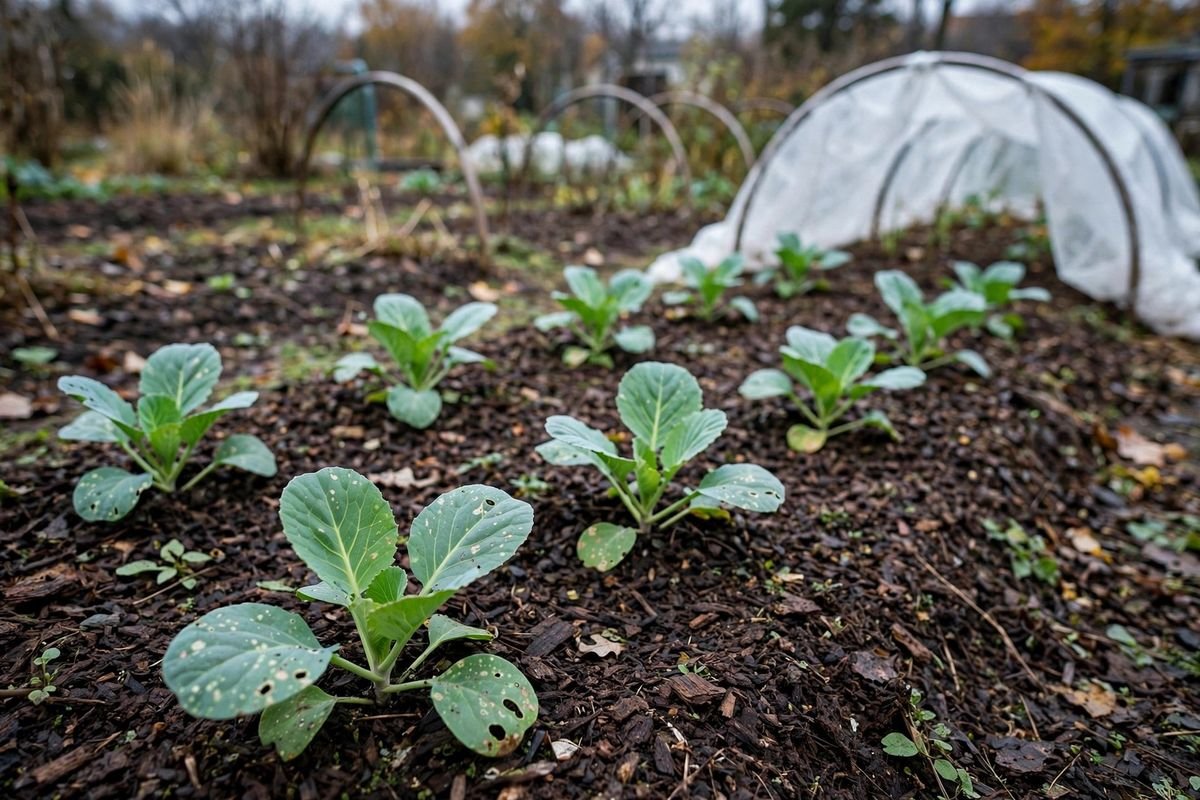
Steady moisture is the difference between a tight head and a loose one. Aim for about 1 to 1.5 inches of water per week, including rain, and keep the supply even while the head is forming — a dry week followed by a deluge is the classic recipe for split heads near harvest. Mulch with 2 to 3 inches of straw or shredded leaves once plants are established; it evens out soil moisture and keeps rain from splashing soil (and soil-borne disease) onto the lower leaves.
Feed once more about three to four weeks after transplanting: side-dress each plant with a small handful of compost or a nitrogen-leaning fertilizer scratched into the mulch and watered in. Cabbage that stalls with pale leaves in early fall is usually hungry, not diseased. Stop feeding once heads are half-formed; late nitrogen produces loose heads that store poorly.
Container growers can grow compact cabbage in large fabric pots — see our grow bag guide for sizes — but in-ground beds are more forgiving on watering through the final weeks.
Pests and Problems in the Fall Garden
Fall removes some spring pests and keeps others. The cast, honestly ranked:
Cabbage worms and loopers
The small green caterpillars from white butterflies stay active until frost. The simplest defense is a lightweight insect netting row cover draped over hoops from transplant day — it blocks the butterflies from laying eggs in the first place. On uncovered plants, handpick caterpillars or use a Bt spray (Bacillus thuringiensis), an organic option extension services commonly recommend for caterpillars on cole crops. Check leaf undersides twice a week; damage accelerates fast on young plants.
Aphids
Gray-green aphid colonies cluster in the heart of the plant, especially during dry spells. A firm blast of water knocks most off. Gray aphids tucked deep in a forming head are the main reason to rinse harvested heads well in the kitchen.
Flea beetles and slugs
Flea beetles pepper young transplants with tiny holes; row cover handles them too. Slugs favor cool, wet fall weather and chew outer leaves — cosmetic on cabbage, and a reason to strip wrapper leaves at harvest.
When and How to Harvest
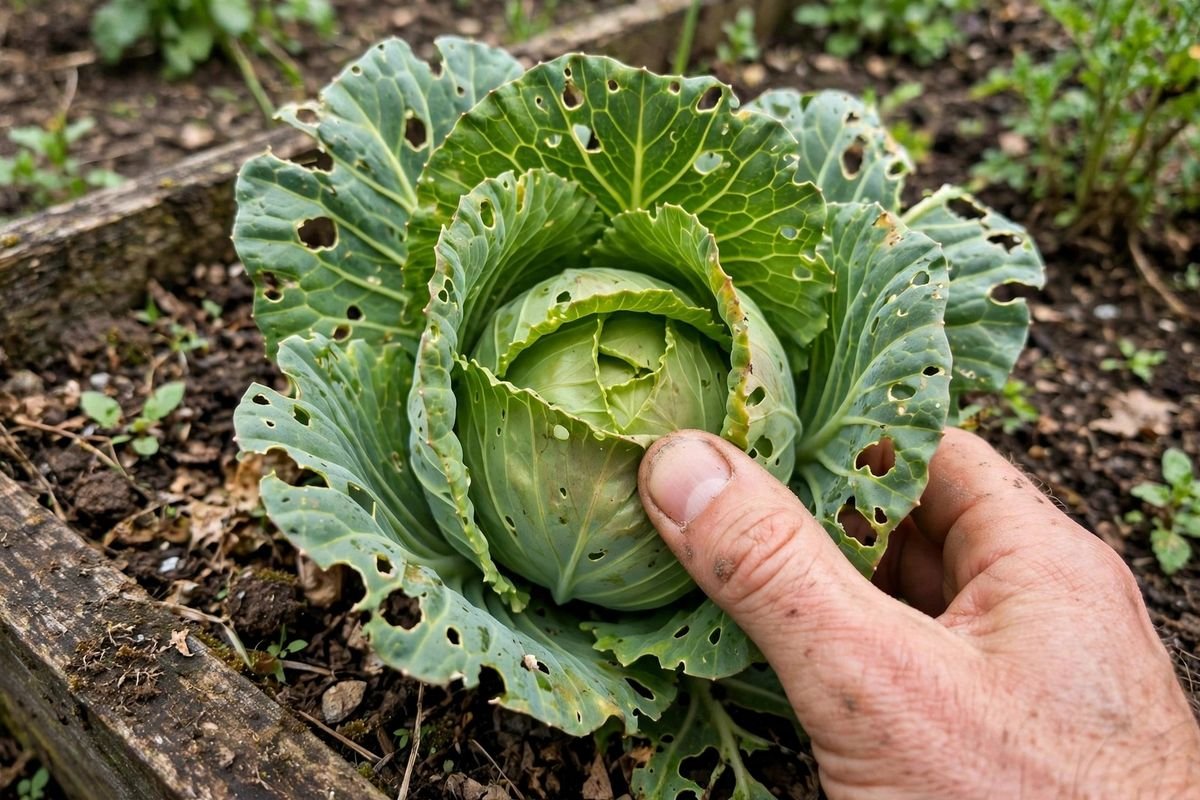
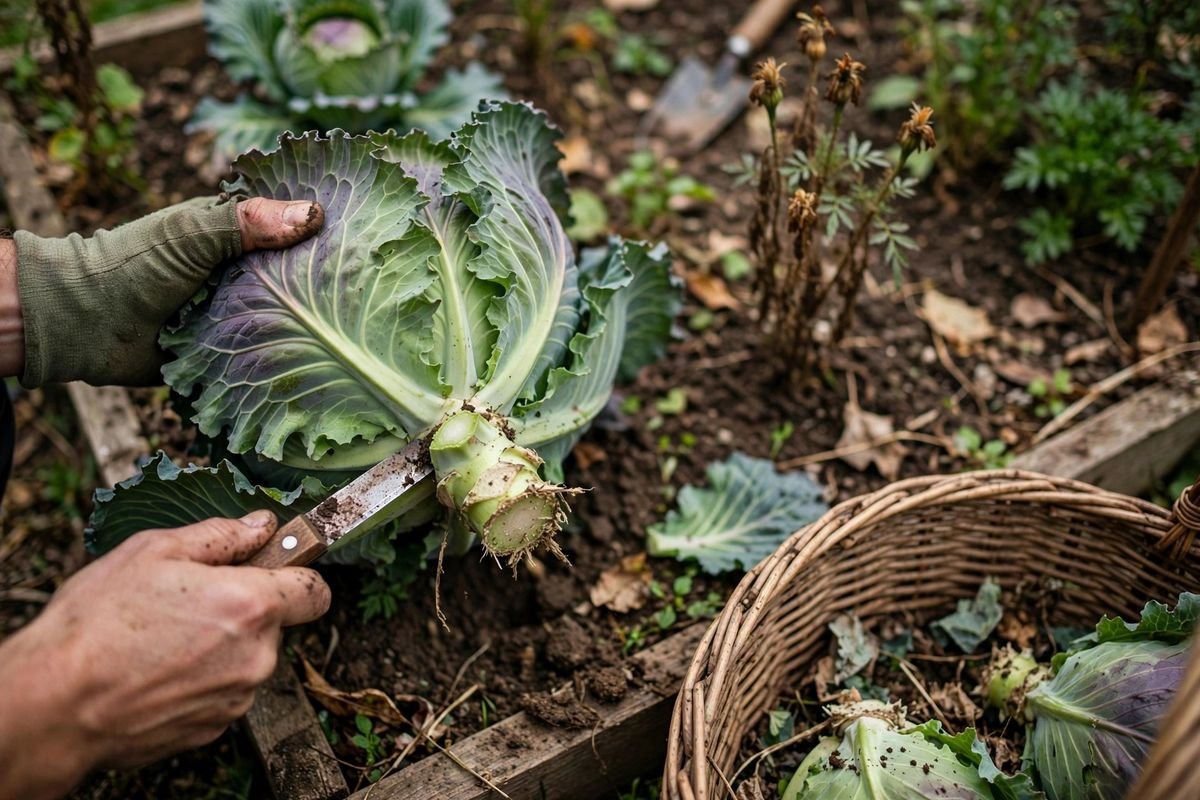
Harvest when the head feels firm and solid when squeezed — a finished cabbage head has very little give. Size varies by variety; a dense 6-inch head beats a puffy 9-inch one every time. Cut the stem just below the head with a sharp knife, leaving the loose outer wrapper leaves on the stump. On healthy plants, small side heads sometimes form from the stump later in the season.
Light frost improves fall cabbage. A few nights in the upper 20s concentrate sugars and sweeten the leaves, and mature heads tolerate those temperatures without protection. A hard freeze well below the mid-20s can damage heads, so harvest ahead of a severe cold snap or cover the bed with a double layer of row cover. If a head splits after heavy rain, harvest it the same day — split heads do not store, but they cook just fine.
For storage, keep unwashed heads in a perforated bag in the refrigerator crisper. Sound fall heads routinely keep three to four weeks that way, and longer in a cold root cellar. When the bed finally empties, a fall garden cleanup — pulling spent plants, composting healthy debris, and covering the soil — puts the bed to rest properly.
Good Companions and What to Plant Next
Cabbage shares its timing and pest defenses happily with the other fall brassicas. Many gardeners plant cabbage alongside fall cauliflower under one long row cover, since the same netting solves the same caterpillar problem for both. Onions, beets, and bush beans make fine neighbors. Avoid planting cabbage where cabbage, broccoli, or kale grew last year — rotating brassicas to a new bed each season reduces soil disease pressure, one of the simplest organic practices extension services recommend.
After harvest, a quick cover crop or a thick leaf mulch keeps the bed working through winter. And if the fall crop whets your appetite, collard greens and mustard greens extend the same cool-season planting window with even more frost tolerance.
Troubleshooting
Heads stay loose and never firm up
Usually planted too late for the day length, underfed, or watered unevenly. Next season, transplant ten days earlier and keep moisture steady. Loose heads still shred beautifully for salads and stir-fries.
Heads split open
A growth surge after dry weather causes splits. Prevent it with even watering; harvest split heads immediately.
Plants stall with purple-tinged leaves
Often phosphorus uptake slows in cold soil, or roots were damaged at transplant. Plants usually grow out of it as roots expand; a compost side-dressing helps.
Seedlings wilt the day after transplanting
Transplant shock from sun and wind. Water deeply, shade for two days, and most recover. Prevent it next time with full hardening-off and late-afternoon planting.
FAQ
Can cabbage survive frost?
Yes. Mature cabbage tolerates light frost into the upper 20s and tastes sweeter afterward. Protect heads only when temperatures drop well into the low 20s or below.
How long does fall cabbage take?
Most varieties need 50 to 80 days from transplant to harvest, plus roughly ten extra days to account for slowing fall growth.
Should I remove the outer leaves?
Leave healthy wrapper leaves on the plant — they feed the head. Strip only damaged, slimy, or pest-covered leaves, and remove the loose wrappers at harvest.
Sources & Further Reading
- University of Minnesota Extension — growing cabbage in home gardens (extension.umn.edu)
- North Carolina State Extension — cabbage production and frost tolerance guidance (content.ces.ncsu.edu)
- Clemson Cooperative Extension — cabbage and cole crop fact sheets (hgic.clemson.edu)
- University of Georgia Extension — fall vegetable planting calendars by frost date (extension.uga.edu)
More fall vegetable posts to explore:
- How to Grow Broccoli in Fall
- How to Grow Kale in Fall and Winter
- How to Grow Cauliflower in Fall
- What to Plant in October
Fall cabbage rewards the gardener who counts backward from frost instead of guessing. Set sturdy transplants on time, keep the water steady, cover against caterpillars, and let the cool nights do the sweetening for you.