
This post may contain affiliate links. If you buy through links on this page, we may earn a commission at no extra cost to you.
As an Amazon Associate I earn from qualifying purchases.
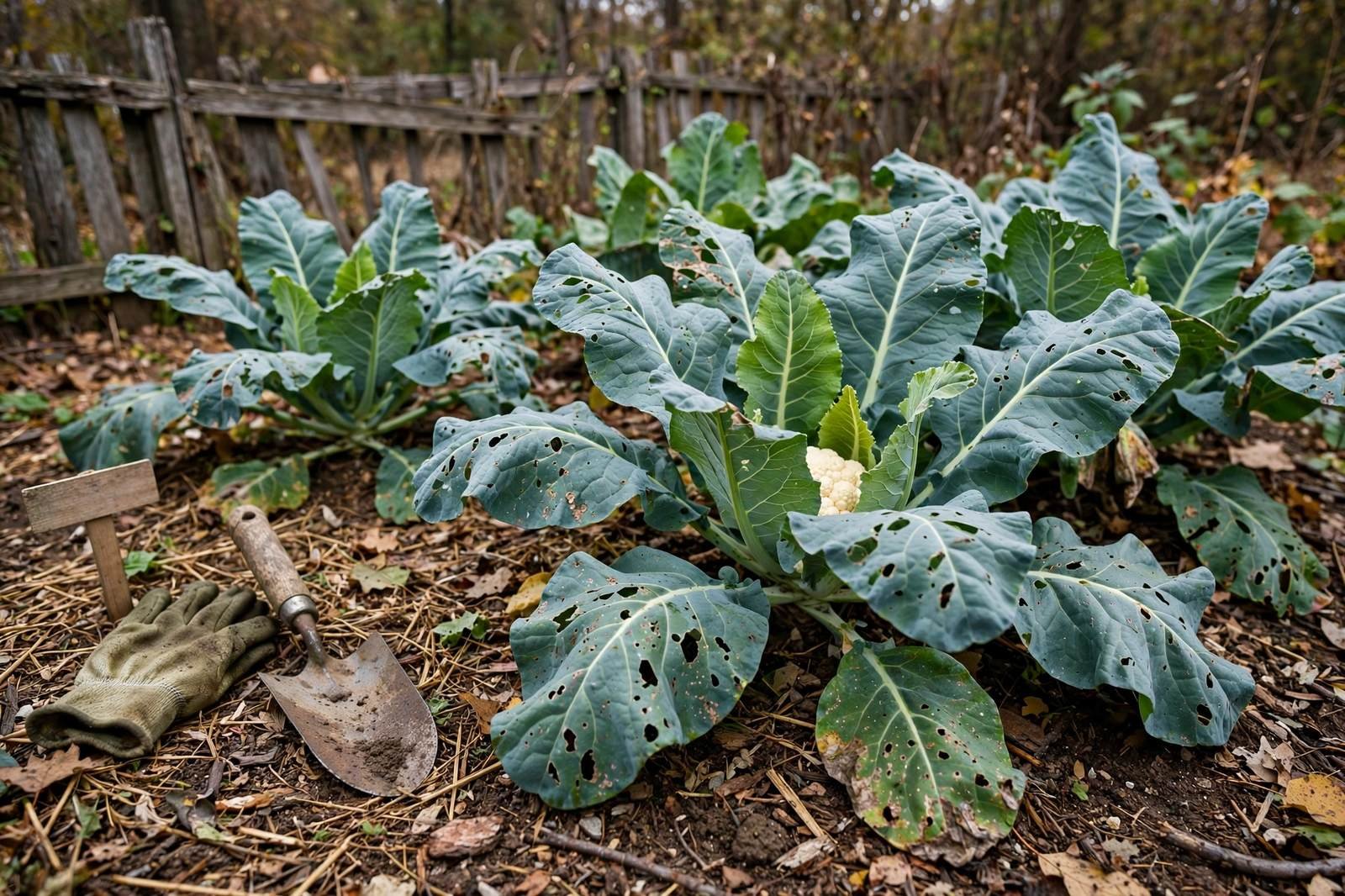
Cauliflower has a reputation for being fussy, and that reputation is partly earned. Plant it so the head forms in hot weather and you get loose, bitter, ricey curds. Plant it so the head forms as nights cool down and the same plant gives you a dense, sweet head that is hard to match from a store. Fall is the season that tilts the odds in your favor.
The trick is timing, steady moisture, and rich soil. Get those three right and fall cauliflower moves from gamble to reliable crop. This guide walks through when to set out transplants, how to feed and water, when to blanch white varieties, and how to tell the exact day a head is ready.
Cauliflower sits in the same family as fall broccoli and kale, so if you already grow those, you have most of the skills. The difference is patience: cauliflower needs a longer, steadier run of cool weather to finish well.
| Sun | Full sun, at least 6 hours a day |
|---|---|
| Soil | Rich, well-drained, pH 6.0 to 7.0, plenty of compost worked in |
| Transplant timing | 6 to 8 weeks before your first expected fall frost |
| Spacing | 18 to 24 inches between plants, 24 to 36 inches between rows |
| Water | About 1 to 1.5 inches per week, kept even |
| Days to harvest | About 55 to 85 days from transplant, variety dependent |
| Harvest size | 6 to 8 inch heads that feel tight and compact |
Why Fall Suits Cauliflower So Well
Cauliflower wants cool weather but cannot take a hard freeze while young. Spring planting often runs into heat just as heads form. Fall planting flips that problem: plants establish during warm soil, bulk up as days shorten, and form heads in the cool, steady weather they prefer. Cooler nights also mean fewer cabbage worms late in the season and better flavor in the finished curd.
There is a second benefit. Fall gardens tend to hold moisture more evenly. Cauliflower hates swings between dry and soaked soil, and those swings are easier to avoid in September and October than in July. Even moisture is one of the quiet secrets behind tight heads.
When to Plant Cauliflower for a Fall Harvest
Work backward from frost, not forward from a calendar date. Count back the days to maturity on your variety, add about a week for slow fall growth, and aim to set transplants out 6 to 8 weeks before your first expected fall frost. In many northern gardens that means transplanting in mid to late July. In milder areas, early to mid August works. Use your local frost dates and regional planting guidance — not your USDA hardiness zone alone — to choose planting dates.
Starting seed indoors gives you control. Sow 4 to 5 weeks before your transplant date, keep the seedlings under strong light so they stay stocky, and harden them off for a week before they go outside. Nursery transplants are a fine shortcut too. Look for compact plants with thick stems, not tall leggy ones.
If you are planning the whole fall bed at once, our guide to what to plant in October helps you slot cauliflower next to faster crops that finish before it needs the space.
Good Fall Varieties to Choose
Pick a variety whose days to maturity fit your frost window, with a little room to spare.
- Snowball Y Improved — a classic white type, roughly 60 to 70 days from transplant, reliable for a main fall crop.
- Amazing — bred for holding well in the field, about 65 to 75 days, a forgiving pick where fall weather swings.
- Cheddar types — orange curds with extra beta carotene, usually 65 to 75 days, and no blanching needed.
- Graffiti types — purple heads that keep good color cooked, about 70 to 80 days, also no blanching.
- Romanesco types — lime green, fractal heads, slower at 75 to 85 days, best where the fall is long and mild.
White varieties need blanching for that pale color, covered below. Colored types skip that step, which makes them a smart choice for a first fall attempt.
Prepare the Bed Before You Plant
Cauliflower is a heavy feeder with a shallow root system. Work 2 to 3 inches of finished compost into the top layer of the bed before planting. If your soil test shows low fertility, mix in a balanced organic fertilizer at label rates at planting time too. Our walk-through on how to make compost at home covers building the kind of finished compost that suits fall beds.
Drainage matters as much as fertility. Raised beds or a slight ridge help in heavy soil. In containers, choose a pot at least 5 gallons per plant with drainage holes, though in-ground and raised beds give steadier moisture for this crop. Aim for soil that holds water like a wrung-out sponge, never soggy and never dusty dry.
Planting, Step by Step
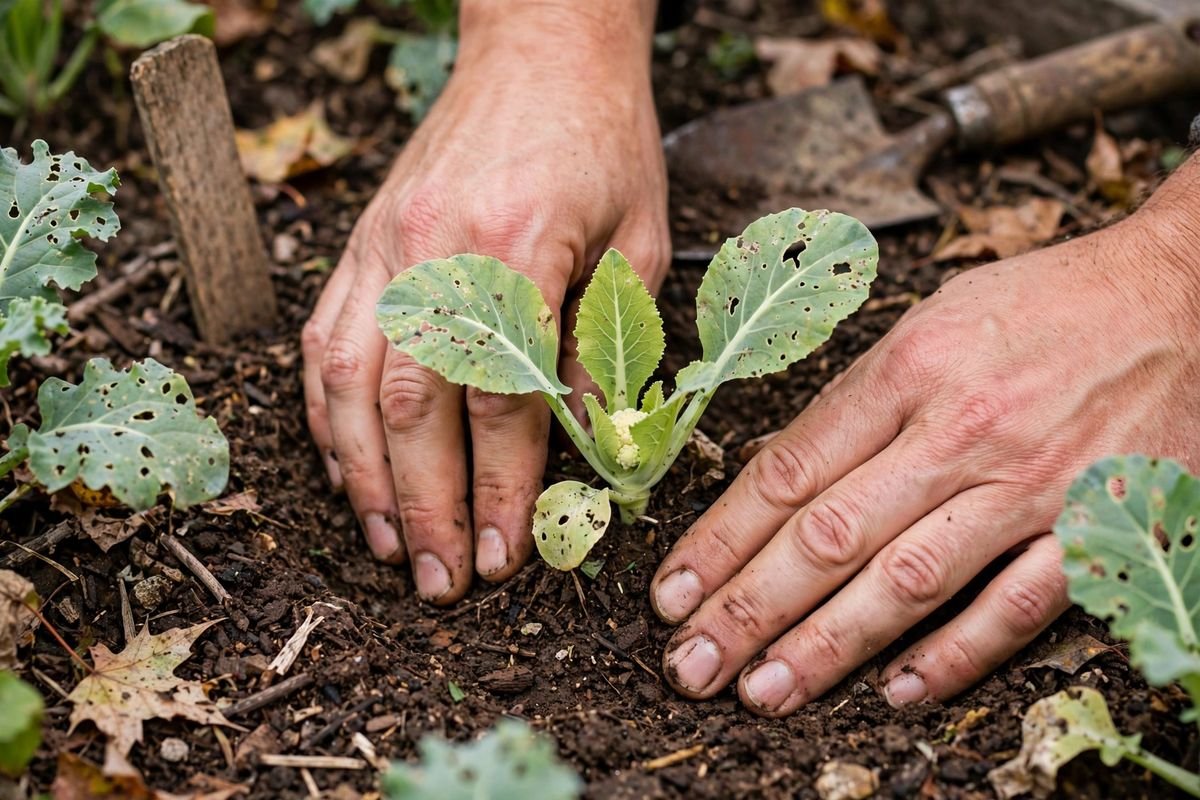
- Water the transplants first. A moist root ball slides out of the cell cleanly and settles faster.
- Dig a hole slightly deeper than the pot. Set the plant so the soil line sits level with, or a touch below, the garden soil.
- Space plants 18 to 24 inches apart. Crowded cauliflower makes small heads. Airflow also cuts disease pressure.
- Firm the soil and water deeply. The goal is good root contact with no air pockets.
- Mulch right away. Two to three inches of straw or shredded leaves locks in moisture and cools the soil.
- Add cover in hot spells. If a heat wave hits young transplants, shade cloth for a few afternoons helps them settle.
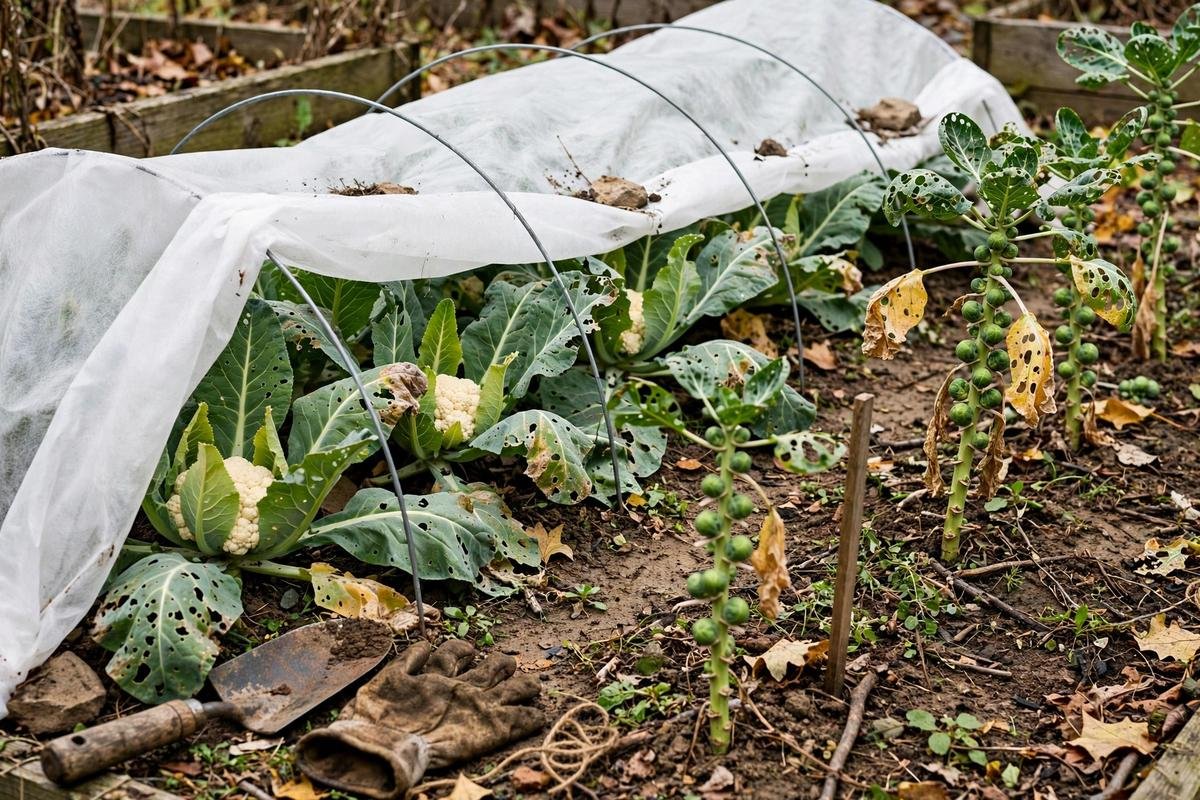
A floating row cover laid over hoops from day one is the single easiest pest defense we know. It blocks the white moths that lay cabbage worm eggs while still letting light and rain through.
Watering and Feeding Through Fall
Keep the soil evenly moist from transplant to harvest. About 1 to 1.5 inches of water per week, counting rain, is a solid target. A soaker hose under the mulch delivers water to the roots without wetting leaves, which helps limit disease. Check moisture with a finger: if the top inch is dry, water deeply that morning.
Feed once more about three weeks after transplanting with a side dressing of compost or a balanced fertilizer scratched lightly into the surface. Cauliflower that runs short on nitrogen makes small, loose heads. Cauliflower that runs short on water does the same. Steady inputs, not big doses, win here.
Blanching White Cauliflower
White varieties turn creamy yellow or greenish in direct sun and can pick up a stronger taste. Blanching is simply shading the curd. When the young head reaches about 2 to 3 inches across, loosely gather the outer leaves over it and secure them with soft twine or a clothespin. Leave a little airflow at the top.
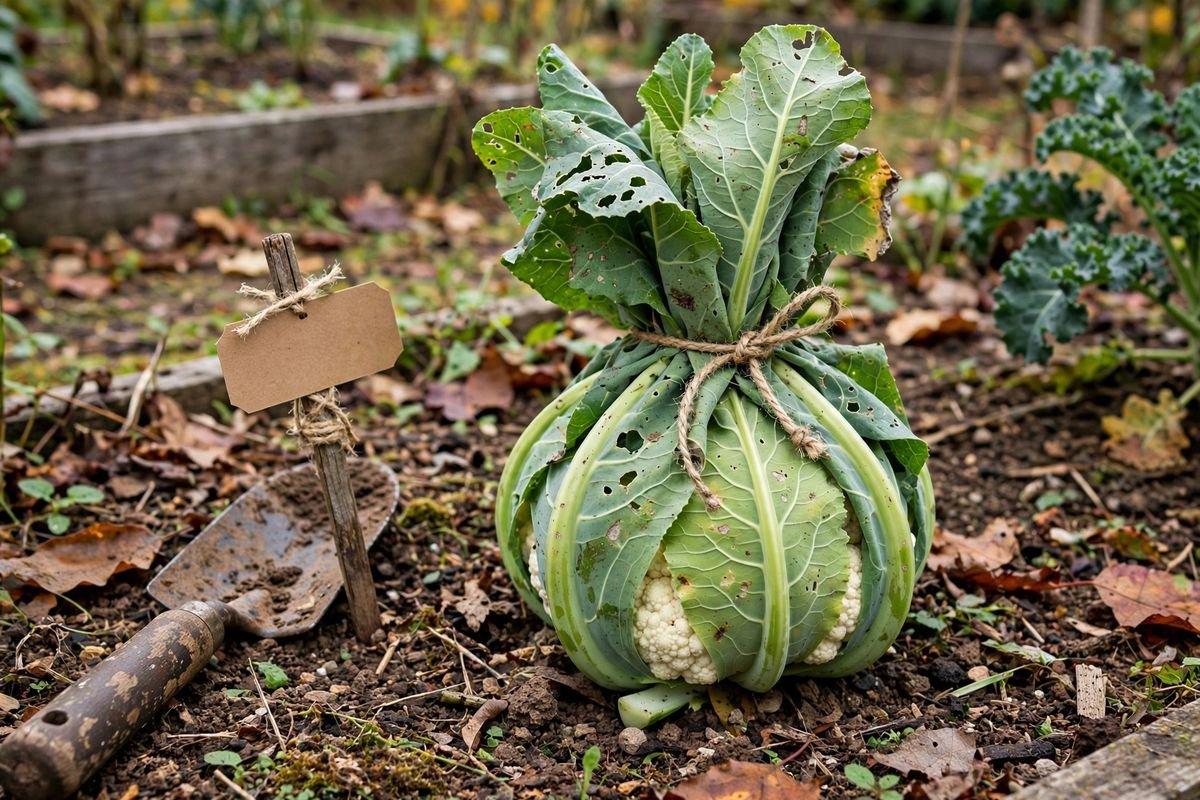
Check under the leaves every few days. In cool fall weather blanching takes about 7 to 12 days. Peek often in wet weather so you catch any rot early, and harvest as soon as the head is full and tight. Self-blanching varieties have leaves that curl over on their own, but a quick check still pays off.
Pests and Problems to Watch For
Cabbage worms and loopers are the main fall pests. Row cover prevents most of them. On uncovered plants, handpick green caterpillars or use a Bt spray labeled for caterpillars, following label directions.
Aphids cluster in leaf folds. A firm jet of water knocks most off, and cool fall weather slows them down.
Clubroot causes swollen roots and stunted plants in acid soil. Keeping pH near 6.5 to 7.0 and rotating brassicas to a new bed each year are the standard defenses. Do not plant cauliflower where cabbage family crops grew last year if you can avoid it.
Buttoning is the heartbreaker: tiny heads form on small plants and never size up. It usually traces back to stressed transplants, cold snaps on young seedlings, or a check in growth from dry soil. Stocky transplants, even moisture, and steady feeding prevent most cases.
When and How to Harvest
Start checking when heads reach 6 inches. A ready head feels tight and compact, with curds pressed close together. If the surface starts to look fuzzy or the curds begin to separate, you waited a bit long, so harvest that day and use it first.
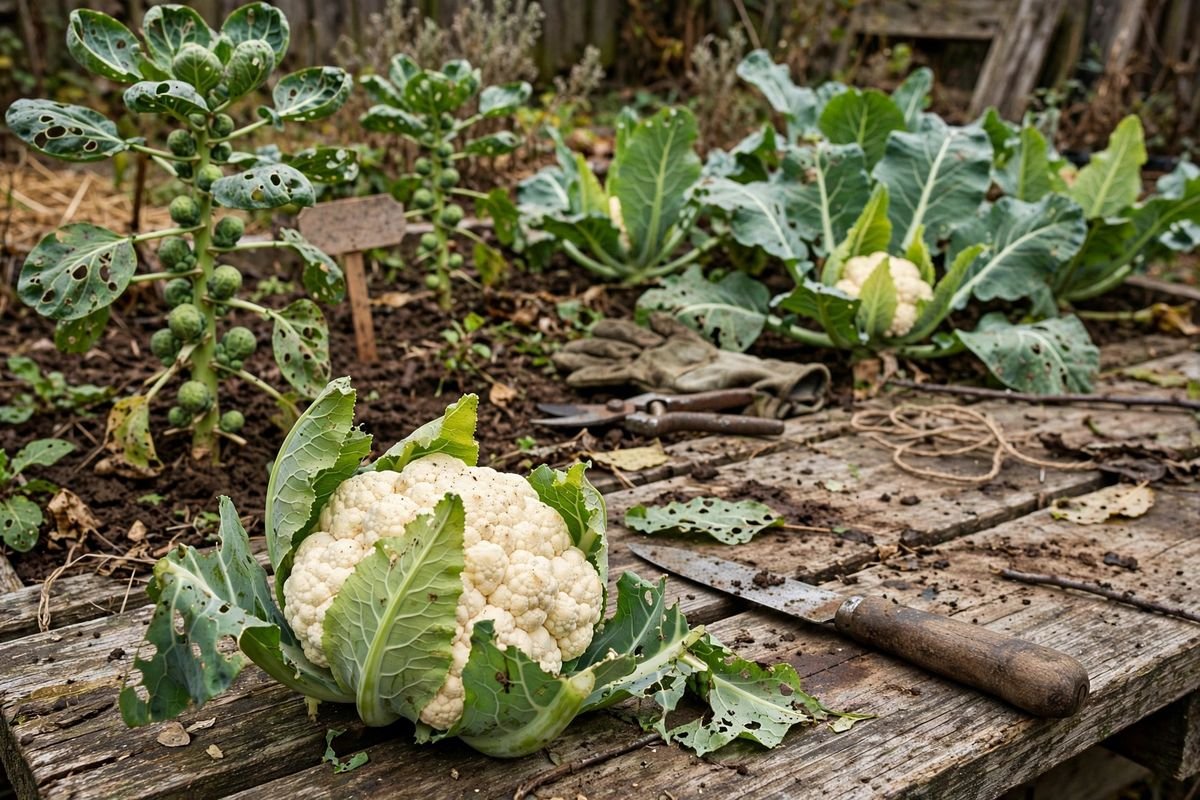
Cut the stem below the head with a sharp knife, keeping a few wrapper leaves to protect the curd. Harvest in the morning when the plant is crisp. One plant makes one main head, though some varieties push small side shoots after cutting. Fall heads hold better in cool soil than spring ones, which gives you a wider harvest window, but tight and early still beats loose and late.
Storing Your Harvest
Unwashed heads keep about a week in the refrigerator in a loose bag. For longer storage, cut florets, blanch them in boiling water for about 3 minutes, cool fast in ice water, drain well, and freeze on trays before bagging. Frozen fall cauliflower holds its quality for months and goes straight into soups and roasts.
Troubleshooting Quick Guide
- Small, button heads: transplant stress or dry spells early. Keep moisture even and avoid root-bound seedlings.
- Loose, ricey curds: heads formed in heat or harvest ran late. Shift timing later into fall and cut sooner.
- Purple tint on white curds: sun and cool stress on unblanched heads. Blanch earlier next round.
- No head at all: often too much heat early or a blind plant with a damaged growing point. Cover young plants during heat waves.
- Hollow stem: fast growth, wide spacing, or low boron. Steady feeding and even water reduce it.
FAQ
Can cauliflower take a frost?
Mature plants tolerate light frosts into the upper 20s for short periods, and flavor often improves. Heads are less hardy than leaves, so harvest before a hard freeze settles in, or cover heads with row cover plus a blanket on very cold nights.
Why did my cauliflower head turn purple?
Sun exposure and temperature swings trigger pigment in white varieties. It is safe to eat. Blanching once the curd is 2 to 3 inches across prevents most of it.
Can I grow fall cauliflower in a container?
Yes, one plant per pot of at least 5 gallons, with steady watering. Beds give more even moisture, but a big container on a sunny patio works, much like the setups in container gardening for beginners.
How long from transplant to harvest?
Most fall varieties run 55 to 85 days from transplant. Count back from your first frost and add a buffer week, since growth slows as days shorten.
Sources & Further Reading
- University of Minnesota Extension — growing cauliflower in home gardens (extension.umn.edu)
- Cornell University, New York State Integrated Pest Management — brassica pest and clubroot guidance (nysipm.cornell.edu)
- North Carolina State Extension — cole crop production and fertility notes (content.ces.ncsu.edu)
- Ohio State University Extension — fall vegetable planting and frost-date planning fact sheets (extension.osu.edu)
More fall growing posts to explore:
- How to Grow Broccoli in Fall
- How to Grow Kale in Fall and Winter
- How to Grow Cabbage in Fall
- What to Plant in October
Fall cauliflower rewards the gardener who counts backward from frost, keeps the water steady, and peeks under those tied leaves every few days. Set the timing right once, and this crop stops being a gamble and starts being a habit.