
This post may contain affiliate links. If you buy through links on this page, we may earn a commission at no extra cost to you.
As an Amazon Associate I earn from qualifying purchases.
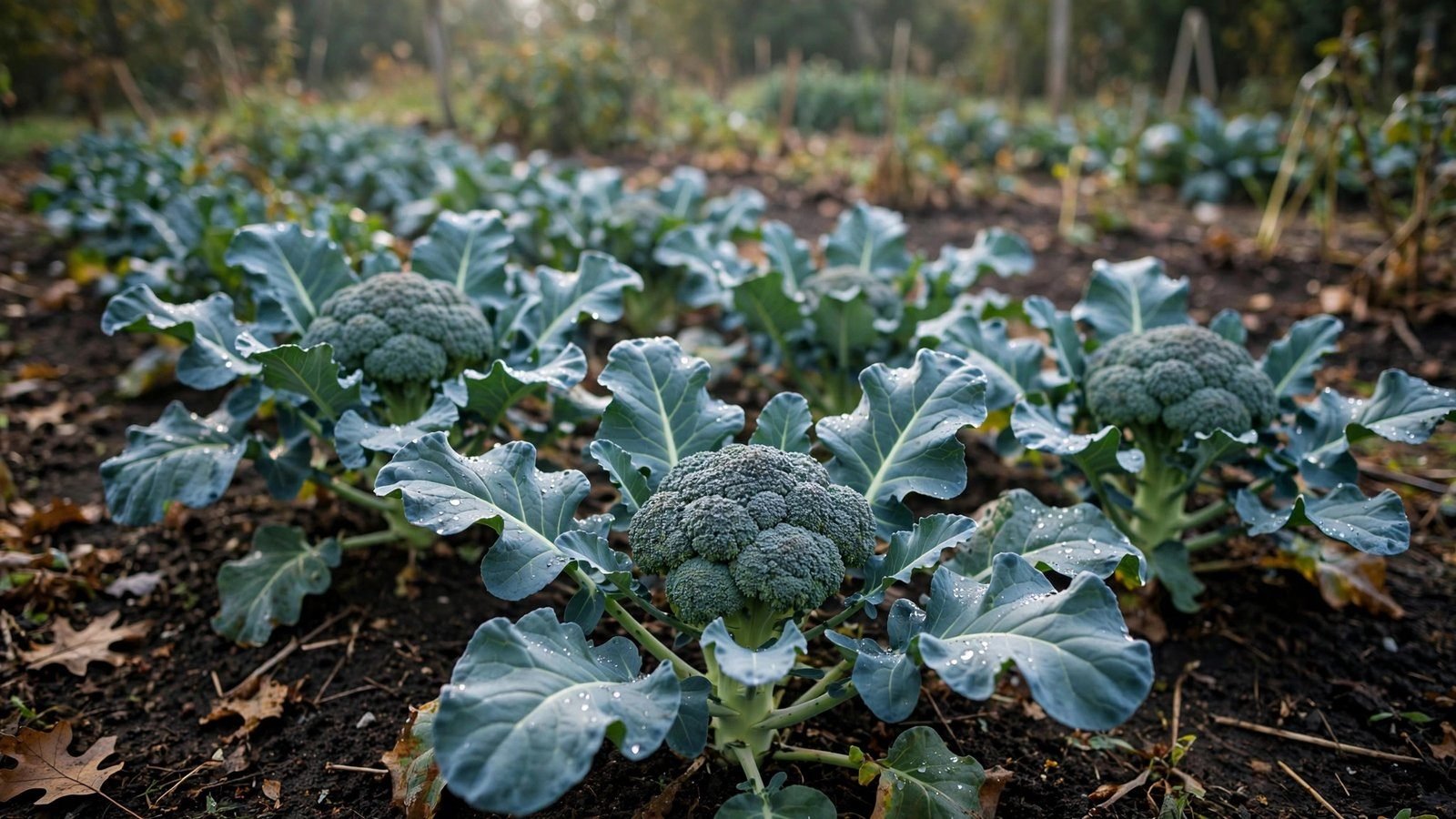
Fall broccoli has a reputation for being finicky, and honestly, most of the failures come down to one thing: timing. Set transplants out at the wrong moment and you get tiny button heads, or big leafy plants that never form heads at all. Get the timing right and fall broccoli is almost easy — cool weather does the hard part for you, producing tighter, sweeter heads than spring crops ever manage.
The trick is simple arithmetic. Broccoli heads form best when they mature in cool weather, so you work backward from your first frost date: subtract the variety’s days to maturity, add a little padding for fall’s shorter days, and that date is your transplant day. No guesswork, no crossed fingers.
Extension services across the country recommend exactly this count-back method for fall brassicas, and it works wherever your season is long enough to fit the math. Fall is arguably broccoli’s best season — pest pressure drops, the heads stay tight, and the flavor improves as nights cool.
In this guide you’ll learn how to calculate your fall transplant date, whether to start seeds indoors or buy transplants, the spacing and watering routine that prevents button heads, the best varieties for fall harvests, and how to harvest the main head plus weeks of side shoots afterward.
Quick Care Overview
| Scientific name | Brassica oleracea, Italica group |
| Planting method | Transplants (4–6 weeks old), set slightly deeper than the pot |
| Spacing | 12–18 inches apart; rows 18–36 inches apart |
| Days to maturity | 55–85 days from transplant (varies by variety) |
| Light | Full sun (6+ hours) |
| Soil | Fertile, well-drained; pH 6.0–7.0 |
| Water | 1–1.5 inches per week, steady and even |
| Head formation | Best when heads mature in 60s–70s°F days with cool nights |
Why Grow Broccoli in Fall?
Spring broccoli is a race against warming weather. Fall broccoli flips that script — the weather gets better for the plant as the season goes on.
- Tighter, sweeter heads. Cool nights slow floret development, so heads stay compact instead of loosening. Many gardeners find fall heads taste milder and sweeter than spring ones.
- Fewer pests. Cabbage worms and flea beetles are winding down by late summer. Fall plantings typically need less pest management than spring ones.
- Two harvests from one plant. Cut the main head and the plant responds with side shoots — small florets that keep coming for weeks. One planting can feed you well into late fall.
- Good frost tolerance. Established plants handle light frosts without damage, and heads can survive dips near freezing. With row cover, harvests stretch surprisingly late.
When to Plant: The Fall Broccoli Timing Equation
Here’s the math that makes fall broccoli work. Start with your area’s average first fall frost date, then:
Transplant date = first frost date − days to maturity − 14 days (fall factor)
The fall factor accounts for slower growth as days shorten. So for a 65-day variety and an October 15 first frost: October 15 minus 65 days minus 14 days lands you around the first week of August. If you’re starting from seed, begin indoors 4 to 6 weeks before that transplant date — late June in this example.
A few season-length sanity checks for your math: if your first frost usually arrives in early October (short-season northern gardens), choose fast varieties (60 days or less), transplant by late July, and keep row cover on hand for October. Where frost waits until mid-October or later, the classic window is late July through mid-August and most varieties have time to head up. In mild-winter areas with frost arriving in November or later, you can transplant from late August into September, and longer-maturing varieties like ‘Imperial’ get enough season to finish, with harvests running into December.
One timing trap to avoid: transplanting too early. Seedlings set out in real summer heat stall, and stressed young plants are the ones that “button” — forming useless marble-sized heads. If a heat wave hits your transplant week, it’s better to wait a few days than to plant into 95°F soil. Related Post: What to Plant in October lists more crops that pair well with a fall broccoli planting.
How to Plant Fall Broccoli
For fall, transplants beat direct sowing. Starting seeds indoors in summer gives you control over germination (broccoli seed struggles in hot soil), and a sturdy 4- to 6-week-old transplant hits the ground running while the season is short. You can start your own or buy seedlings — both work, as long as the plants are stocky, not leggy.
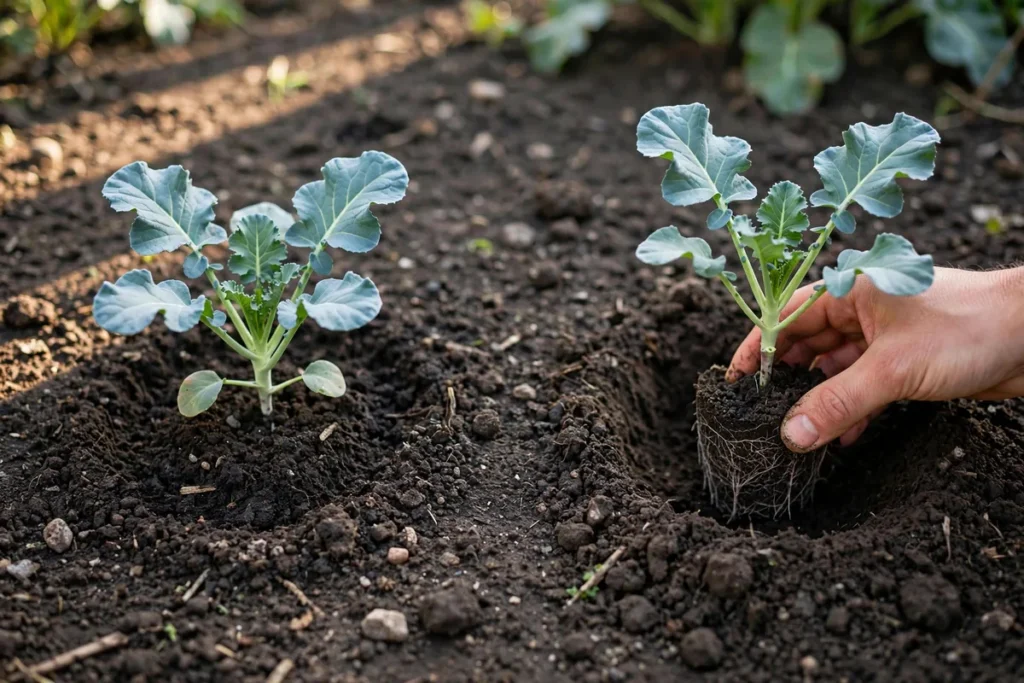
Step 1: Start seeds indoors (or buy transplants). Sow broccoli seeds 1/4 inch deep in seed-starting trays 4 to 6 weeks before your transplant date. Keep them at 65–75°F for germination, then grow them on in bright light — leggy seedlings come from dim windowsills, so a sunny spot or a basic grow light matters.
Step 2: Harden off. A week before transplanting, start setting seedlings outdoors for lengthening periods — an hour the first day, working up to a full day. Seedlings moved straight from indoors to a garden bed stall out from the shock.
Step 3: Transplant in the evening. Plant on a cloudy day or in the evening so roots settle in overnight. Set each transplant slightly deeper than it sat in its pot, firm the soil around it, and water deeply right away.
Step 4: Mulch immediately. A 2- to 3-inch layer of straw or shredded leaves around (not against) the stems keeps soil temperatures steadier and moisture even — both matter for head formation.
Spacing: Give Each Plant Room to Head Up
Broccoli needs elbow room. Space transplants 12 to 18 inches apart in rows 18 to 36 inches apart. The wider end of that range suits big-headed varieties; tighter spacing works for cut-and-come-again types grown partly for side shoots.
The number-one spacing mistake is treating broccoli like lettuce. Crowded plants stay small, their heads stay small, and airflow drops — which invites disease in fall’s damper weather. When in doubt, space wider. A 4×8 bed holds about 12 plants at 18-inch spacing, and 12 well-grown plants will out-yield 20 cramped ones.
Caring for Fall Broccoli
Broccoli’s care list is short but non-negotiable. Almost every fall broccoli failure traces back to one of these.
Water: steady wins
Give broccoli 1 to 1.5 inches of water a week, and keep it even. The classic fall failure — buttoning, where plants form tiny premature heads — is most often triggered by drought stress on young transplants. Mulch plus a weekly deep watering prevents it. As temperatures drop in October, you’ll water less; just don’t let the bed go bone-dry between rains.
Mulch
Straw or shredded leaves, 2 to 3 inches deep, pulled back an inch from each stem. Beyond moisture, mulch keeps soil from splashing onto lower leaves during fall rains, which helps keep foliage diseases in check.
Feed
Broccoli is hungrier than most fall vegetables. Work compost into the bed before planting, then side-dress with a balanced organic fertilizer about three weeks after transplanting — right as plants start sizing up. A second light feeding when heads begin to form supports the side-shoot flush that follows the main harvest.
Helping heads form tightly
Head quality comes down to two things: cool weather and steady water. You can’t control the first (though choosing the right transplant date gets you most of the way there), but you can control the second. Once a head starts forming, don’t let the plant wilt between waterings. Harvest the head the moment the florets are still tight and the buds are closed — waiting for a bigger head usually just gives you a looser one.
Best Broccoli Varieties for Fall
Fall favors varieties that mature on the faster side and tolerate cooling weather. Widely grown picks, grouped by their strengths:
Fast fall picks (about 60 days from transplant)
‘Calabrese’ — The classic open-pollinated Italian variety. Reliable heads plus generous side shoots, and it has been grown for fall harvests for generations. ‘Gypsy’ — A hybrid bred for steady performance: uniform blue-green heads, good side-shoot production, and solid disease tolerance. ‘Green Magic’ — Notably heat-tolerant for a broccoli, which helps when August transplant weather runs hot. Heads stay tight even in warmer-than-ideal falls.
Cold-tolerant workhorses
‘Arcadia’ — A fall favorite in many regions: handles cooling weather well, makes well-domed heads, and keeps pumping out side shoots late into the season. ‘Belstar’ — Uniform, medium-size heads on compact plants. Good choice for smaller beds where space is tight.
Big heads for long falls
‘Imperial’ — A later variety (70+ days) that produces large, dense heads. Best for zones 7 and warmer, where the season is long enough to let it finish — or anywhere with reliable row cover.
Harvesting Fall Broccoli
Harvest timing is a judgment call you make with your eyes, not the calendar. Cut the main head when it’s 4 to 7 inches across (depending on the variety), the florets are tight, and the color is a deep blue-green. If individual buds are swelling open or showing yellow, cut immediately — it’s still perfectly edible, but the texture is past its best.
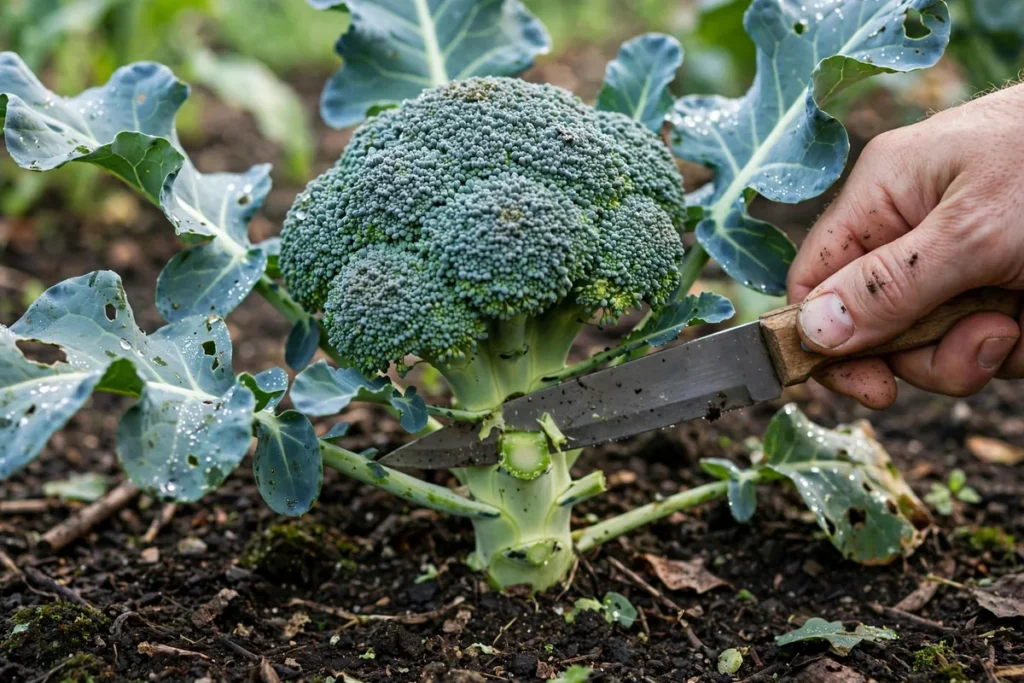
Use a sharp knife and cut the head with 5 to 6 inches of stem, making the cut at a slight slant so water runs off the stump. Morning harvests are best — heads cut in the cool of the morning stay crisper than afternoon-cut ones.
Here’s the part new growers miss: don’t pull the plant. Leave the stalk, leaves, and roots in place. Within a week or two, side shoots start forming at the leaf joints — smaller florets, but the same great eating. Keep watering and the plant will keep producing side shoots for weeks, often until hard frost shuts it down.
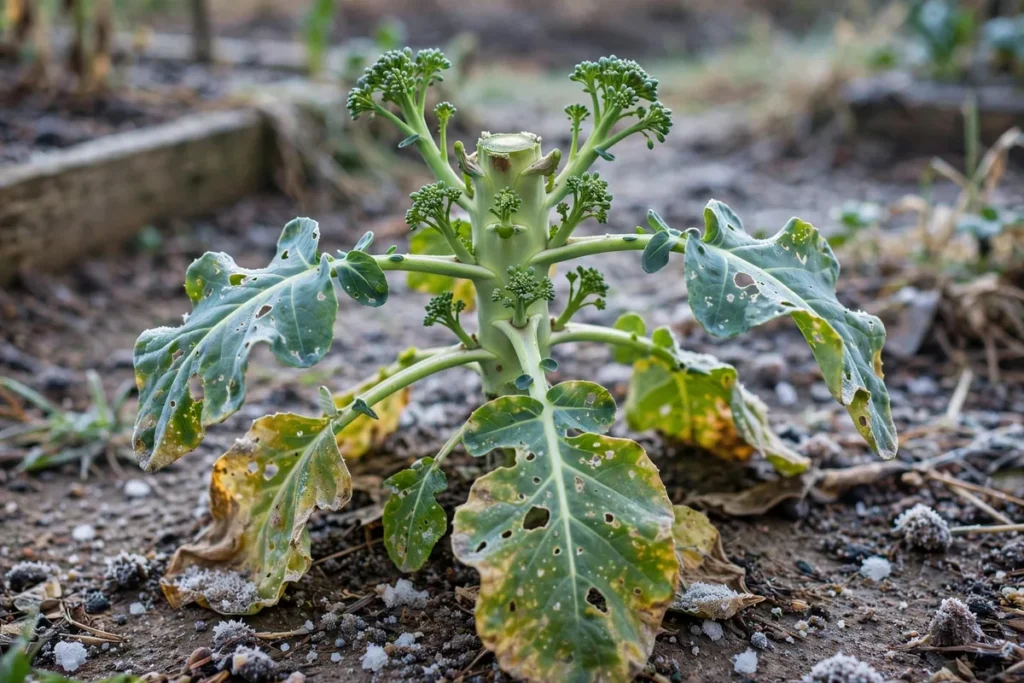
Pick side shoots when they’re 2 to 3 inches long and still tight. Regular picking encourages more shoots — the same cut-and-keep-coming logic that makes fall chard so productive. If you’d like a leafy green with that same rhythm, how to grow Swiss chard in fall covers another cut-and-come-again fall star.
Troubleshooting Common Fall Broccoli Problems
Buttoning (tiny premature heads)
Marble-sized heads on young plants mean the transplant was stressed — usually by heat, drought, or root-bound seedlings held too long in their pots. Buttoned plants won’t recover into normal producers; replace them with fresh transplants if the season allows, and prevent it next time with evening transplanting, steady water, and 4- to 6-week-old seedlings.
Big plants, no heads
Usually a timing problem: transplants went in too late, and short days stalled head formation. It can also happen when plants get excess nitrogen late in the season (lots of leaves, no head). Count back properly next fall, and ease off feeding once heads begin to form.
Cabbage worms
Small green caterpillars chew holes in leaves and hide in heads. Fall pressure is lighter than spring, but check leaf undersides weekly. Handpick what you find; a floating row cover over the bed from transplant day blocks the moths that lay the eggs.
Frost-damaged heads
Established plants and formed heads handle light frosts fine — cold even sweetens them slightly. A hard freeze (mid-20s°F and below) can damage exposed heads, turning florets brown and mushy. Watch the forecast and throw row cover over the bed on the coldest nights; it adds several degrees of protection.
FAQs About Growing Broccoli in Fall
Can I direct-sow broccoli for a fall harvest?
You can, but transplants are more reliable. Broccoli seed germinates poorly in hot soil, and direct-sown plants lose 4 to 6 weeks compared to transplants — weeks the fall calendar can’t spare in most zones. If you do sow directly, do it a month earlier than your transplant date and thin ruthlessly.
Why are my broccoli heads so small?
The usual suspects, in order: crowding (plants under 12 inches apart), uneven watering during head formation, transplanting late, or a variety that naturally makes modest heads. Fix spacing and water first — those two explain most small heads.
How cold can fall broccoli tolerate?
Established plants typically handle light frosts down to about 28°F without damage, and heads survive brief dips near freezing. For colder nights, a floating row cover buys several degrees. A hard freeze in the low 20s will damage exposed heads, so harvest ahead of those nights.
Should I pull the plant after cutting the main head?
No — leave it. Side shoots will form at the leaf joints and give you weeks of additional harvests. Keep watering and feeding lightly, and pick the shoots while they’re tight and 2 to 3 inches long.
Will side shoots keep coming until frost?
In most cases, yes. Production slows as days shorten and temperatures drop, but a healthy plant keeps pushing shoots until a hard freeze ends the season. In mild climates with row cover, some gardeners harvest shoots into early winter.
More fall vegetable growing posts to explore:
- How to Grow Swiss Chard in Fall — a cut-and-come-again green that’s even more frost-tolerant than broccoli.
- What to Plant in October — 15 vegetables you can still sow or transplant this fall.
- How to Plant Garlic in Fall — plant it once the broccoli bed is winding down; garlic goes in as other crops come out.
Fall broccoli rewards one thing above all: getting the transplant date right. Do the count-back math, set out sturdy seedlings, keep the water steady, and the cool weather handles the rest — tight heads, sweet flavor, and a bonus round of side shoots after the main event.
Are you growing fall broccoli this year? Tell us your variety and your first-frost date in the comments.
Sources & Further Reading
- Cole Crops for the Home Vegetable Garden — Penn State Extension. Supports spacing, transplant age, frost tolerance, and side-shoot information.
- Basics of Broccoli Production — NC State Extension Publications. Supports fall transplant window, head-development temperatures, and frost tolerance.
- Cole Crops or Brassicas (Publication 426-403) — Virginia Cooperative Extension. Supports cool-season needs, spacing, and buttoning causes.