
This post may contain affiliate links. If you buy through links on this page, we may earn a commission at no extra cost to you.
As an Amazon Associate I earn from qualifying purchases.
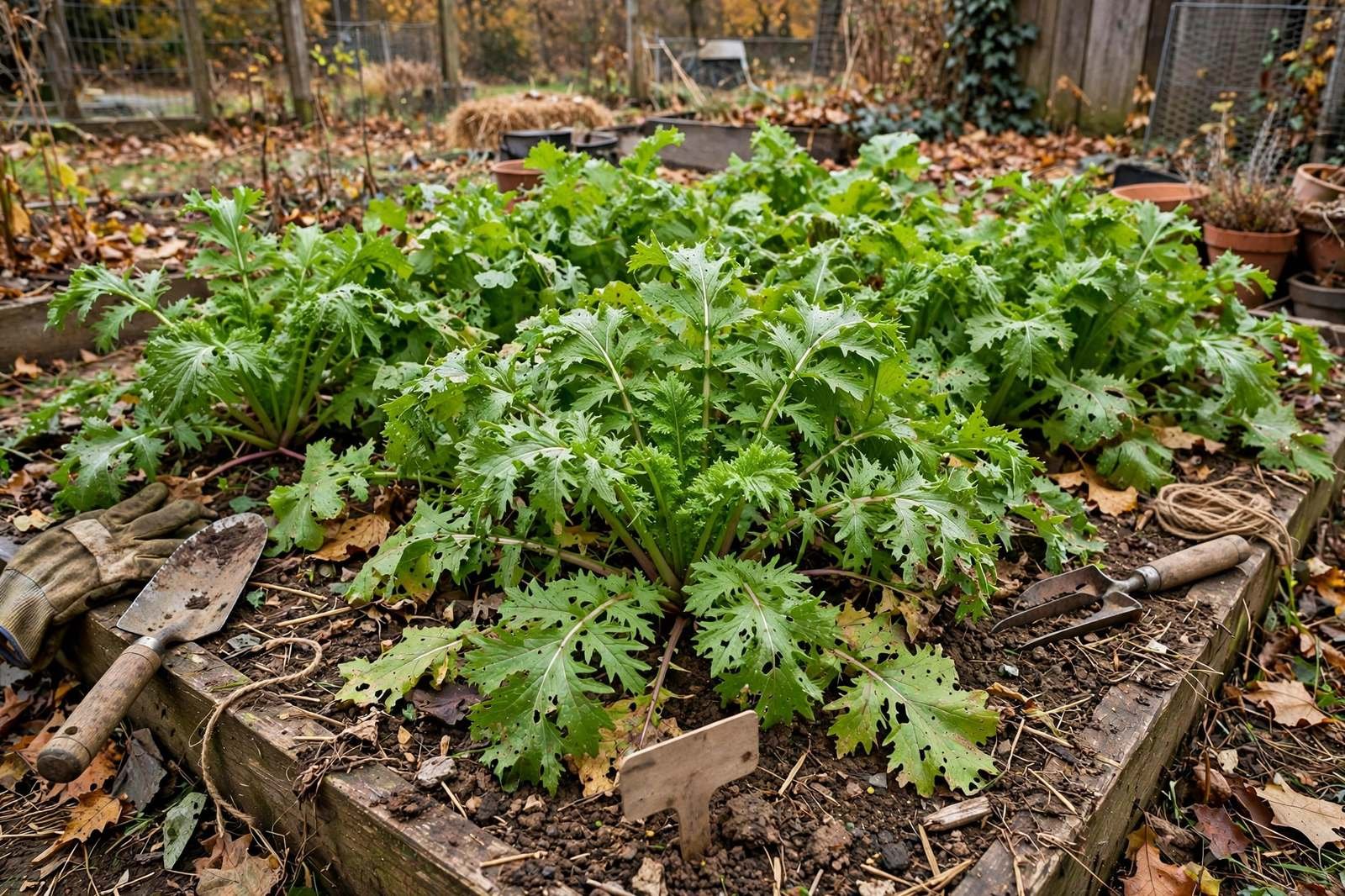
Mustard greens are one of the fastest and most satisfying fall crops we can sow. They sprout quickly, fill a bed in weeks, and bring a peppery bite that mellows into something warm and savory when cooked. Sown in late summer or early fall, they thrive in cool air, need little coddling, and give us repeated cuttings while slower brassicas are still sizing up.
This guide covers fall timing, varieties, soil prep, sowing, thinning, watering, flea beetle control, and harvest. Whether we want baby leaves for salads or large leaves for braising, mustard greens fit into small beds, raised beds, and even wide containers between other fall crops.
| Sun | Full sun, 6 or more hours; tolerates light shade |
|---|---|
| Soil | Moist, well-drained, pH 6.0 to 7.5, compost enriched |
| Sowing depth | 1/4 to 1/2 inch deep |
| Spacing | 6 to 8 inches for leaf harvest, 12 to 18 inches for large plants |
| Water | About 1 inch per week, keep soil evenly moist |
| Days to harvest | 30 to 45 days, baby leaves in about 20 to 25 days |
| Frost tolerance | Handles light frost, growth slows below 25 degrees F |
Why Fall Is the Best Season for Mustard Greens
Mustard greens dislike heat. Warm soil and hot days push them to bolt and turn sharply bitter, while cool fall weather produces tender, well-flavored leaves and slower bolting. Fall sowing also means fewer flea beetles than spring in many gardens, though we still watch for them on seedlings.
The crop is fast enough to fit between summer tomatoes coming out and garlic going in, or alongside other fall greens. Gardeners who grow spinach in fall or lettuce in fall will find mustard on a similar schedule, only hardier when nights dip. It also makes a fine companion sowing with arugula in fall for a mixed spicy greens bed.
Use your local frost dates and regional planting guidance — not your USDA hardiness zone alone — to choose planting dates. For fall mustard, we count back about 40 to 50 days from the first hard freeze for full-size leaves, or 25 to 30 days for baby leaf harvests. In mild climates, succession sowing into early autumn keeps tender leaves coming for months.
Choosing Mustard Green Varieties for Fall
Varieties differ in leaf shape, heat, and bolt speed. Southern Giant Curled is a classic with frilly leaves and a clear mustard bite. Florida Broadleaf produces large, smooth leaves suited to cooking. Tendergreen, also called mustard spinach, is milder and more heat tolerant than most. Red types such as Red Giant add color to salads and lose their sharpness when cooked.
For fall baby-leaf production, almost any variety works when cut young. For big cooking leaves, pick a broadleaf type and give it wider spacing. Seed catalogs aimed at our region often flag bolt-resistant choices, which helps when early fall is still warm.
A single packet of mustard green seeds holds hundreds of seeds, and mustard seed stays viable for several years stored cool and dry, so one packet can cover several succession sowings.
Preparing the Bed
Mustard greens grow fast, so they appreciate soil that holds moisture and offers ready nutrition. We rake 1 to 2 inches of finished compost into the top few inches of the bed and remove clods and stones so small seeds contact soil evenly. A fine, level seedbed makes shallow sowing much easier.
Soil pH between 6.0 and 7.5 suits mustard well. If a recent soil test shows very acidic soil, garden lime applied per test recommendations helps brassicas overall. Our guide to how to make compost at home shows how we keep beds supplied without buying amendment every season.
Mustard also works as a quick cover in empty beds: even if a late sowing only reaches baby size before hard cold, the roots hold soil and the tops can be chopped in as green matter. Gardeners short on space can tuck mustard into fabric grow bags or wide pots, since roots stay fairly shallow.
How to Sow Mustard Greens in Fall
Direct Sowing Step by Step
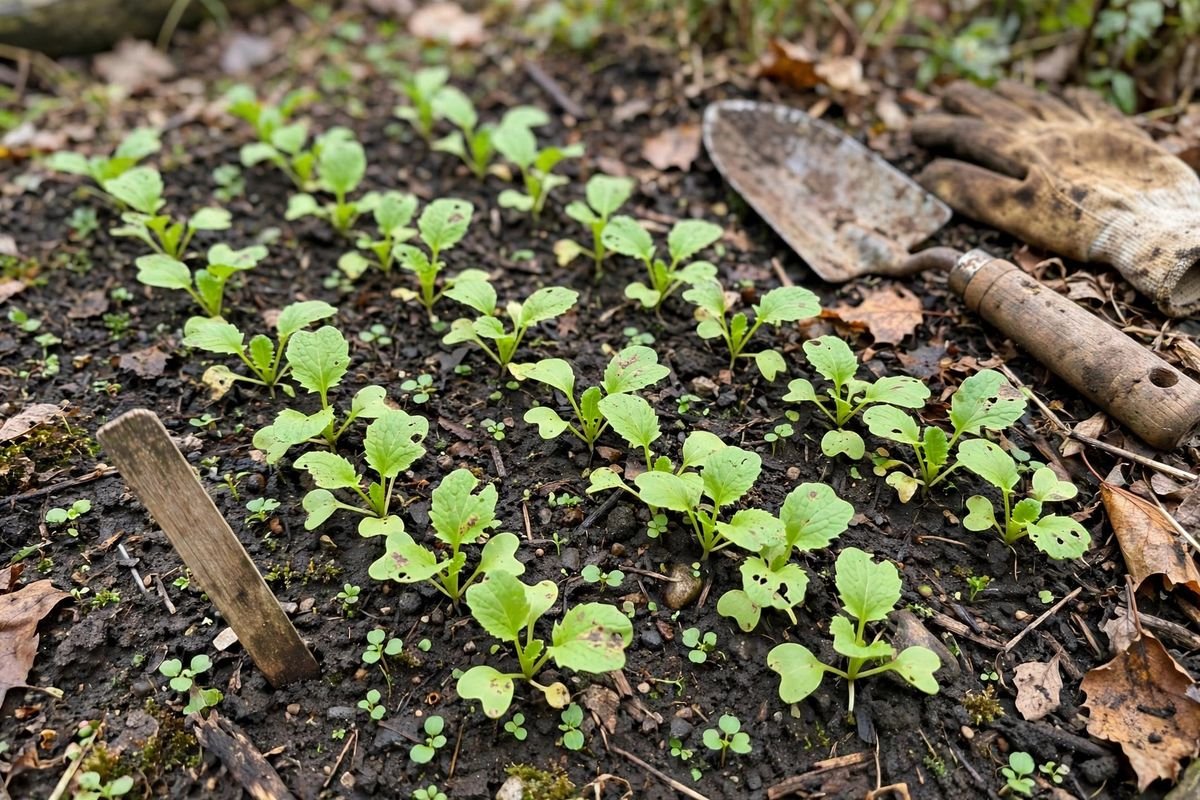
We sow mustard directly in the garden; transplanting rarely pays for such a fast crop. Rake the bed smooth, mark shallow rows 12 to 18 inches apart, and sow seeds 1/4 to 1/2 inch deep, roughly an inch apart. Firm the soil gently, water with a fine spray so seeds do not wash out, and keep the surface moist until sprouts appear, often in 3 to 7 days in mild soil.
A garden row cover for frost protection laid over the bed right after sowing holds moisture, keeps birds off, and blocks flea beetles. We lift it once plants are growing strongly or leave lightweight cover on until harvest if beetles are active.
Succession Sowing
One sowing gives a flush of leaves, then plants age and flavor sharpens. For steady supply, we sow a short row or a square foot patch every 10 to 14 days through the fall window. Each small sowing is easier to thin, water, and harvest than one huge bed maturing all at once.
Thinning Seedlings
Thinning is the step new growers skip, and it shows. Crowded mustard stays thin, pale, and bitter. When seedlings reach 2 to 3 inches tall, we thin them to 4 to 6 inches apart for cut-and-come-again leaf harvest, or 12 to 18 inches for large individual plants. The thinnings are tender and perfect for salads, so we thin with a bowl in hand.
Watering, Mulch, and Feeding
Even moisture is the difference between mild leaves and harsh ones. Mustard that dries out between waterings turns hot and tough, then bolts at the first warm spell. We keep soil consistently moist with about an inch of water per week, more in sandy soil or unseasonably warm falls. Watering at the base in the morning keeps leaves drier and cleaner.
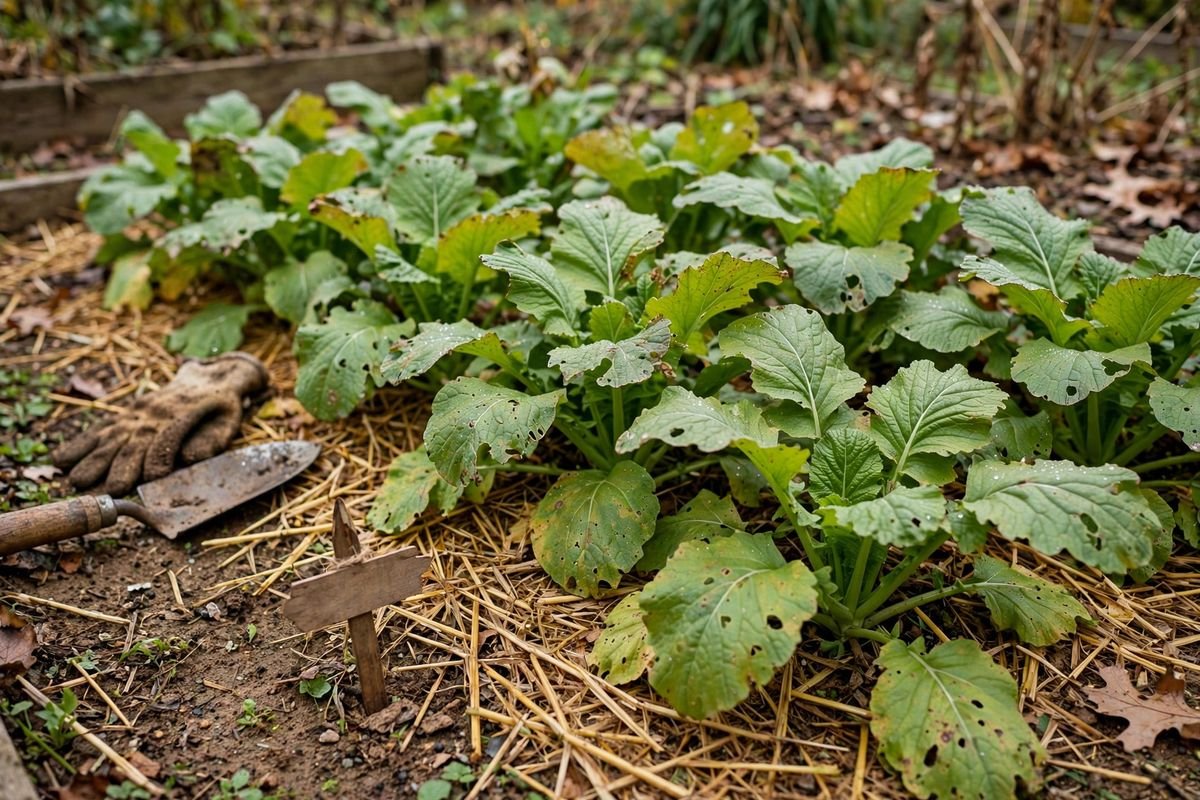
Once seedlings are a few inches tall, a light mulch of shredded leaves or clean straw between rows holds moisture and keeps mud off low leaves. In small beds, a soaker hose for a small garden gives slow, even watering without soaking foliage.
Mustard is a light to moderate feeder. Compost at planting usually carries a baby-leaf crop to harvest. For large cooking plants or repeated cuttings, we side-dress once with a balanced organic fertilizer or give container plants a diluted liquid feed every couple of weeks. Excess nitrogen is rarely needed and can push soft growth that pests find quickly.
Growing Mustard Greens in Containers
Wide, shallow containers suit mustard well. A pot or grow bag at least 10 to 12 inches across can hold several plants for leaf cutting. Use fresh potting mix blended with compost, sow on the surface of firmed mix, and keep it moist. Containers dry faster than beds, so we check them daily during warm fall spells.
Basic container gardening guidance covers drainage holes, pot size, and watering rhythm that apply here. When a hard freeze threatens, a container can shift against a warm wall or under cover for the night, which often saves the crop.
Keeping Flea Beetles and Other Pests Off
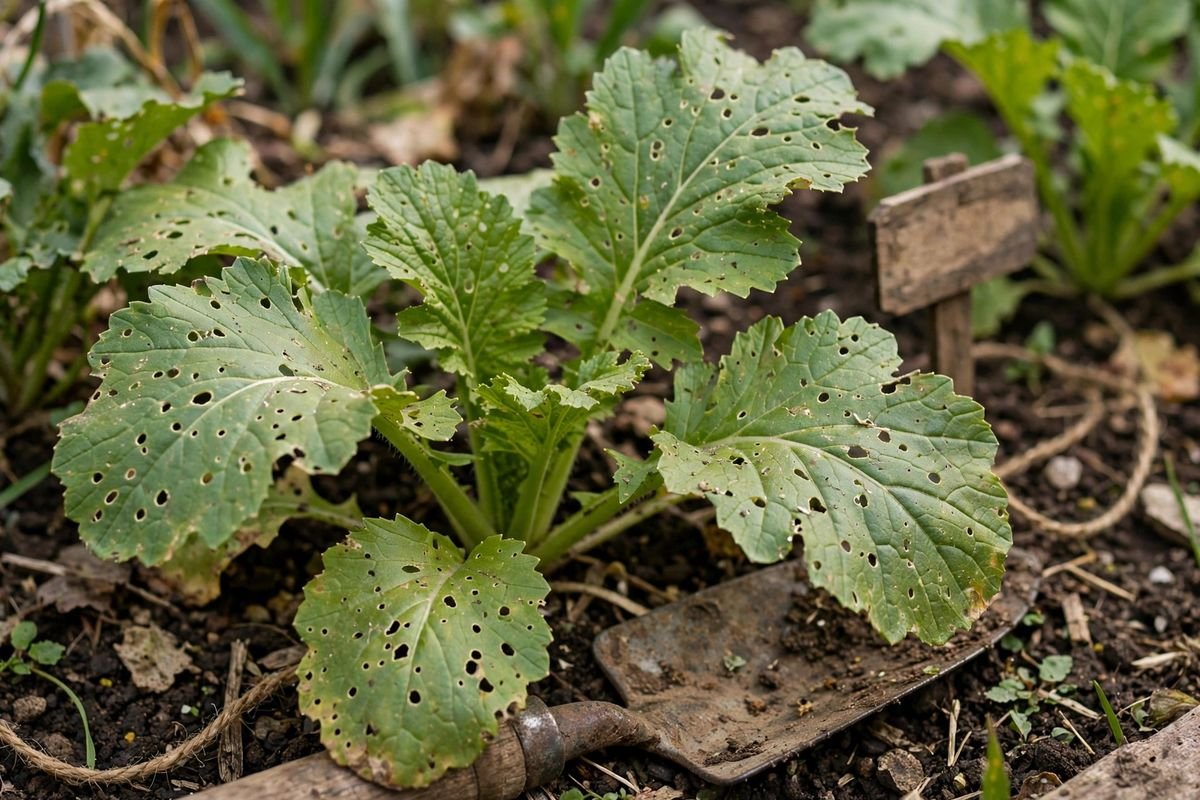
Flea beetles are the main mustard pest: tiny black beetles that riddle leaves with pinholes, worst on young plants in warm, dry weather. Row cover from sowing day is the simplest defense. Healthy, fast-growing plants outgrow light damage, and the cosmetic holes matter less on cooking greens than on salad leaves.
Cabbage worms occasionally chew mustard, though they prefer thicker brassica leaves. We handpick any we find and check leaf undersides. Aphids gather in dry spells on stressed plants; a firm water spray repeated over several days usually clears them.
Rotation helps too. We avoid sowing mustard where cabbage, kale, or collards just grew if disease appeared, and we pull bolted or diseased plants promptly. For a companion brassica bed, collard greens handle similar pests on a larger plant.
Harvesting Mustard Greens
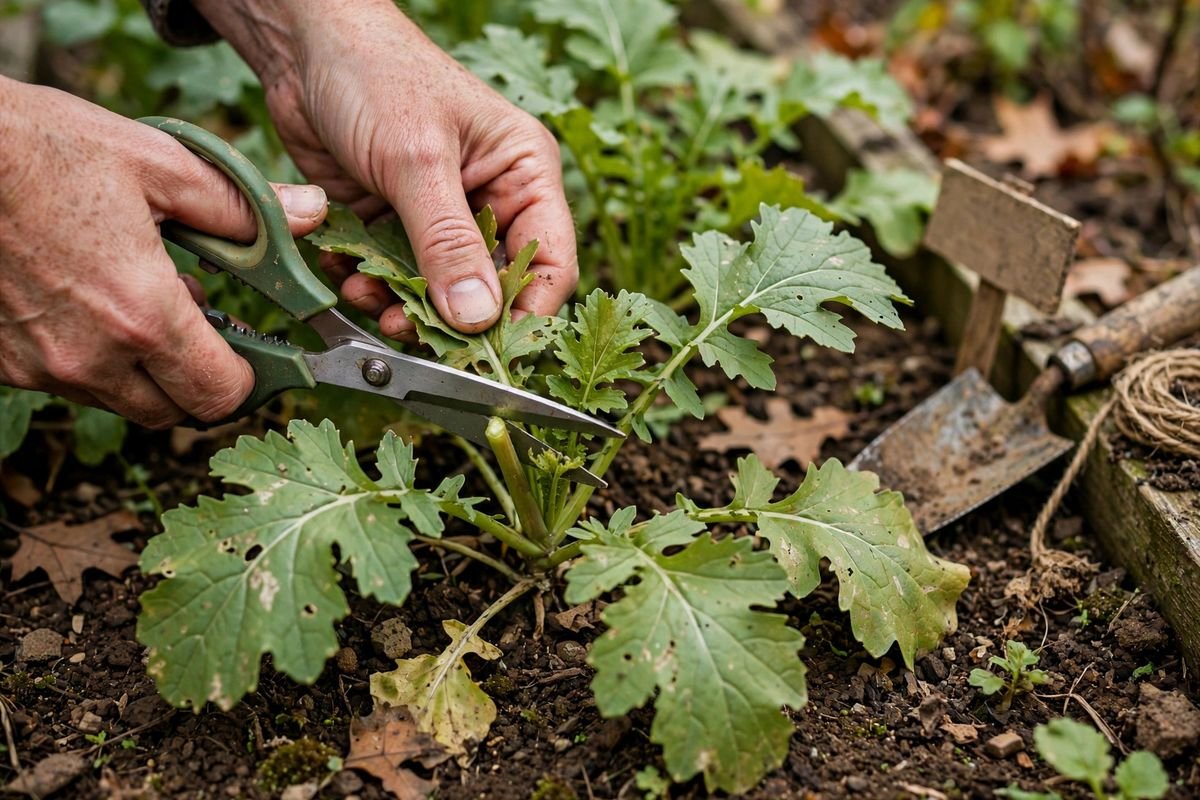
We harvest two ways. For baby leaves, we cut the whole patch an inch above the soil when leaves reach 3 to 4 inches, and many varieties regrow for a second cutting. For larger plants, we pick outer leaves individually and leave the center to keep producing, the same cut-and-come-again habit used for kale and collards.
Morning harvests taste best, when leaves are crisp and fully hydrated. Flavor builds as leaves age and as weather warms, so fall leaves picked after cool nights are usually the mildest large leaves of the year. If a plant starts to bolt, we harvest the whole plant promptly; the leaves are still fine cooked, and the bed can take a fresh sowing or another fall crop.
Rinse leaves in cool water, spin or pat dry, and refrigerate in a loose bag with a paper towel. Baby leaves keep several days; large leaves hold up to a week. Extra harvests blanch and freeze well for soups.
Troubleshooting Mustard Greens
Why are my mustard greens so spicy and bitter?
Heat, age, and dry soil intensify the bite. Harvest younger leaves, water steadily, and lean on fall’s cool nights. Cooking also tames the heat; a brief blanch followed by a saute gives a milder result than raw leaves.
Why did my mustard bolt already?
Bolting follows warm soil, long days, crowding, or a dry spell. Fall sowings bolt far less than spring ones. If plants shoot up flower stalks, harvest at once and re-sow a short row for baby leaves.
Why are the leaves full of tiny holes?
That pinhole pattern is flea beetle feeding. It looks worse than it is on cooking greens. Cover the next sowing with row cover from day one and keep seedlings moist so they grow past the vulnerable stage quickly.
Why are seedlings thin and pale?
Usually crowding, low light, or hungry soil. Thin earlier, make sure the bed gets full sun, and work compost in before the next sowing. Seedlings stretched toward light need a sunnier spot, not more fertilizer.
Why did my mustard greens stop growing?
Cold slows them. Growth nearly pauses when days stay in the 30s, but plants often hold in place and resume during warm spells. Row cover adds a few degrees and keeps harvests going longer into winter.
FAQ
How fast do mustard greens grow in fall?
Baby leaves are ready in about 20 to 25 days from sowing, and full-size leaves in 30 to 45 days depending on variety and temperature. Cool weather slows the clock a bit but improves flavor.
Can mustard greens survive frost?
Yes, light frost is fine and often improves tenderness. Hard freezes in the low 20s can damage unprotected leaves, so we cover plants or harvest ahead of severe cold snaps.
How many times can I cut mustard greens?
With cut-and-come-again picking, a healthy plant gives several harvests over 4 to 8 weeks. Baby-leaf patches usually give one strong cutting and one smaller regrowth before quality fades.
Do mustard greens need full sun in fall?
Full sun gives the fastest, sturdiest growth, but plants tolerate light shade, especially while early fall is still warm. In deep shade leaves stay small and plants grow slowly.
Sources & Further Reading
- University of California Agriculture and Natural Resources — leafy greens production and flea beetle management guidance (ucanr.edu)
- North Carolina State Extension — mustard greens for home gardens, fall planting dates and spacing (extensiongardener.ces.ncsu.edu)
- Texas A&M AgriLife Extension — mustard greens growing guide, soil and harvest recommendations (agrilifeextension.tamu.edu)
- University of Minnesota Extension — growing greens in Minnesota gardens, frost tolerance and succession sowing (extension.umn.edu)
- Clemson University Cooperative Extension — leafy greens fact sheets, fertility and pH guidance (hgic.clemson.edu)
More fall greens to explore:
Sow a short row now, thin without mercy, and keep the soil moist. Fall mustard greens repay that small effort with quick, flavorful harvests right when summer crops are winding down, and a second sowing a couple of weeks later keeps tender leaves on the table deep into the season.