
This post may contain affiliate links. If you buy through links on this page, we may earn a commission at no extra cost to you.
As an Amazon Associate I earn from qualifying purchases.
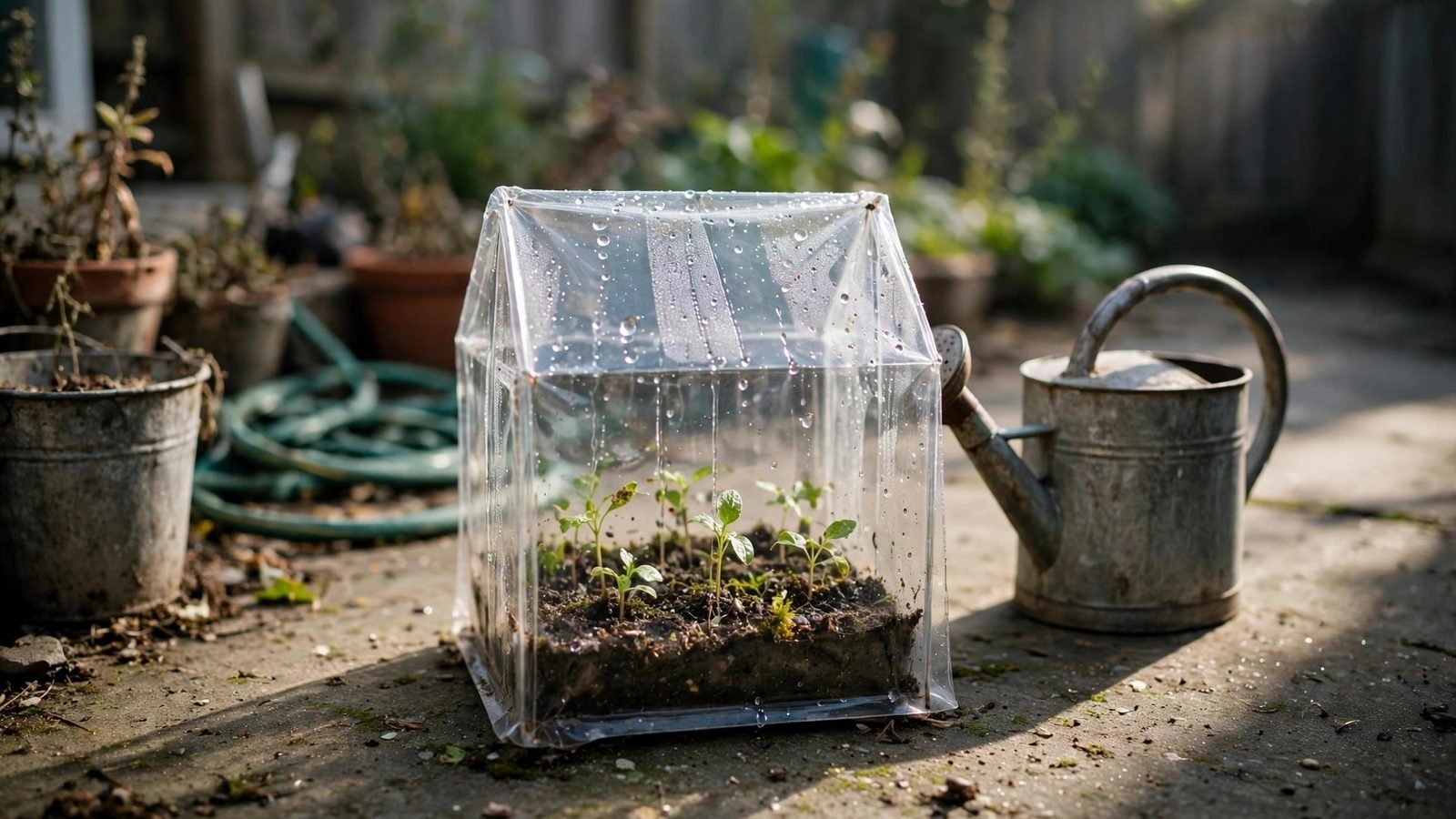
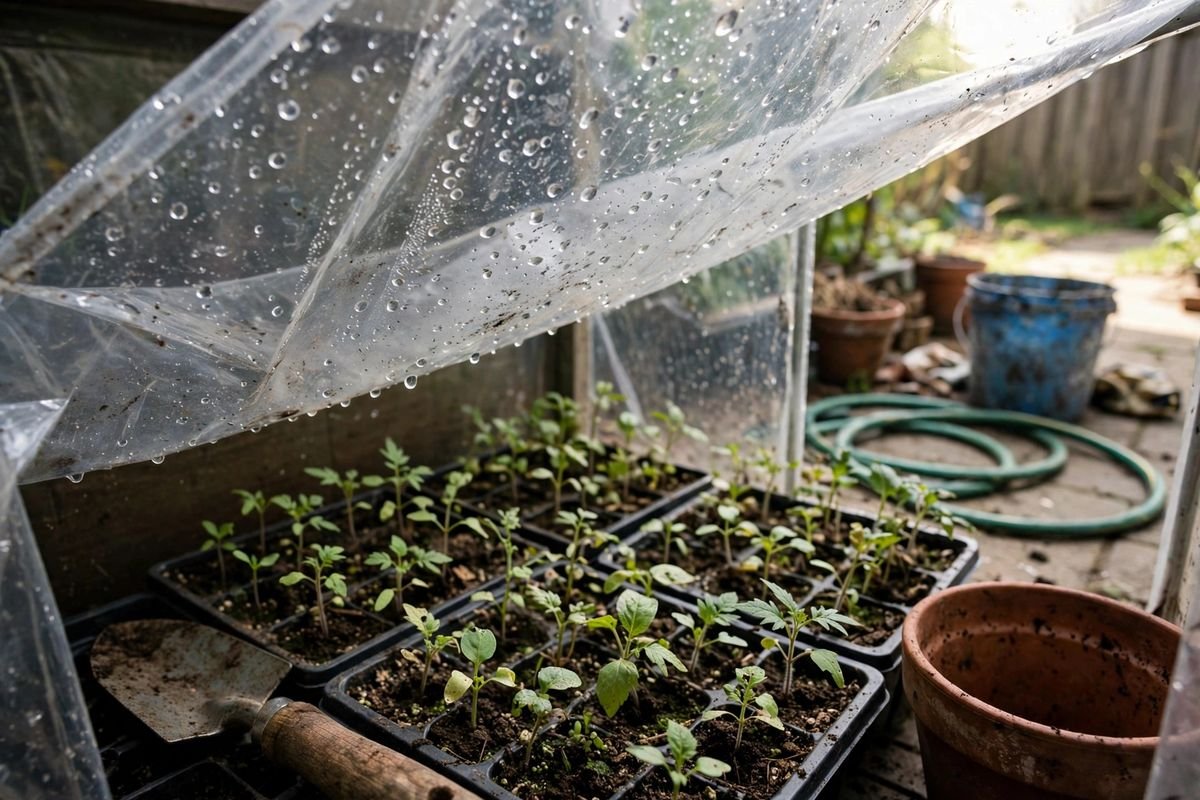
Water dripping from the roof of a mini greenhouse is not a leak. It is condensation: warm, damp air inside the greenhouse hits the cold plastic or glass and turns back into water. On a cool morning, the inside of the cover can be wet enough to drip on the seedlings below, and wet leaves in a closed, humid box are an open door for damping-off and gray mold.
Condensation is a sign that the air inside holds more moisture than the cold cover can carry. The fix is to move air, cut the moisture at its source, and give the water somewhere to go besides the leaves. This guide covers why a mini greenhouse fogs up, how to vent it without chilling the plants, and the daily habits that keep the inside dry.
A little condensation on the cover in the early morning is normal, and it is not a problem by itself. The problem starts when drops form all day, water pools on the leaves, and the soil surface stays wet. At that point, the greenhouse is holding too much moisture for the plants inside it.
Why a mini greenhouse fogs up
A mini greenhouse traps heat and moisture by design. The sun warms the air inside, the soil and plants give off water vapor, and the cover keeps that vapor from escaping. When night comes, the cover cools faster than the air inside, and the vapor condenses on the coldest surface it can find, which is usually the roof.
Three things feed the problem. Wet soil evaporates water all day. Crowded plants give off more vapor and block air movement between the pots. And a cover that stays shut around the clock never lets the damp air out, so each day adds more moisture than the last.
Small greenhouses fog up faster than large ones because the volume of air inside is small. A 2-by-3-foot mini greenhouse holds only a few cubic feet of air, so one tray of freshly watered seedlings can push the humidity up fast. A full-size greenhouse has more air to absorb the same amount of vapor, and more surface area to lose it through.
Our guide to mini greenhouses for patios covers which styles vent well and which ones trap moisture by design.
Vent a little, every day
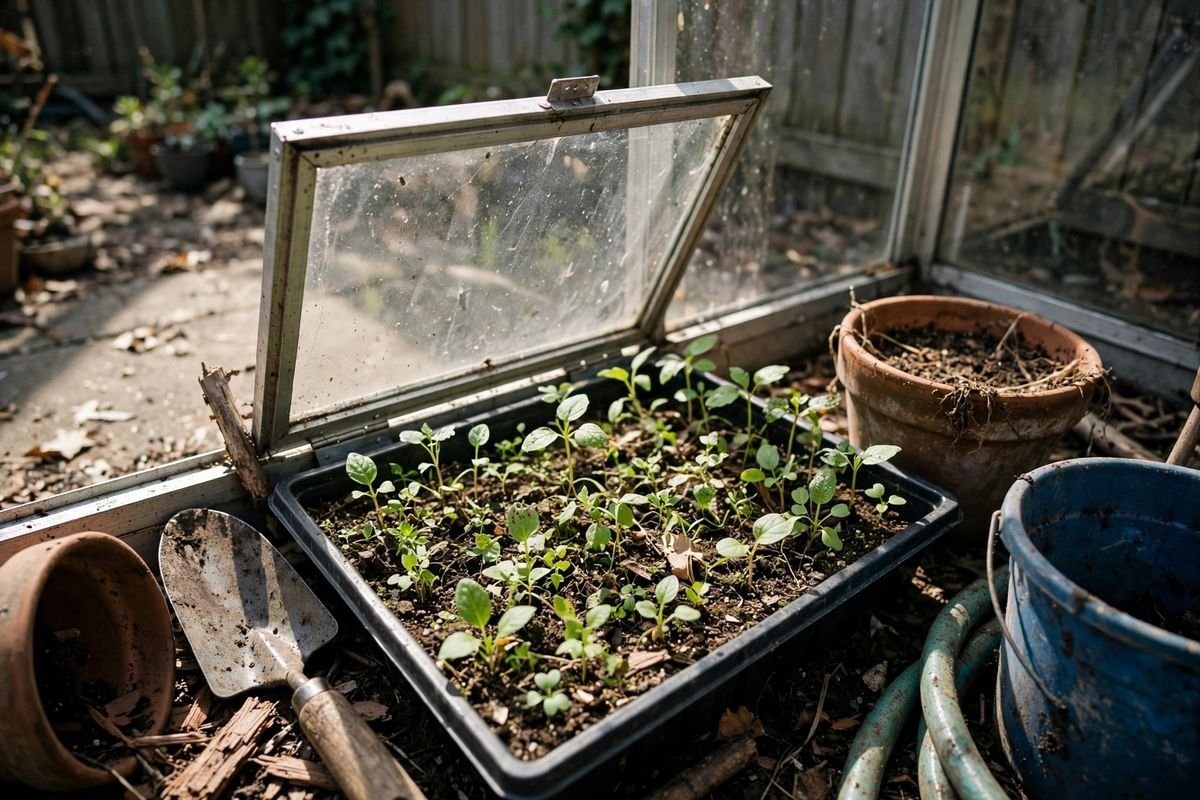
Venting is the main fix, and it works best as a daily habit rather than a rescue. Open the door, a vent panel, or a corner of the cover for part of each day, even in winter. A short airing on a mild, dry day clears damp air without losing much heat, and the plants dry off before night.
Open the vent on the side away from the wind, and prop it open just a few inches at first. A wide-open door on a cold, windy day can chill the seedlings faster than the venting helps them. A small gap that stays open for an hour does more good than a door thrown wide for five minutes, because steady air movement dries the leaves instead of just swapping one pocket of air for another.
Vent in the morning, when the sun starts to warm the greenhouse and the cover is wettest. Morning air is usually drier than evening air, and the plants have the whole day to dry before the cold night. Close the vent in the late afternoon, before the temperature drops, so the greenhouse holds its warmth overnight.
If the greenhouse has a vent opener, use it. A wax-cylinder opener lifts the vent when the inside warms up and closes it as the air cools, which handles the daily cycle without a trip outside. Look for a automatic greenhouse vent opener sized to the vent panel on your model, and check the lifting weight it is rated for before you buy.
Water in the morning, and water less
When you water matters as much as how much you water. Watering in the evening leaves the soil and the leaves wet all night, which is exactly when the cover is coldest and condensation is heaviest. Watering in the morning gives the plants the day to drink and the surface time to dry before the temperature drops.
Water the soil, not the leaves. A watering can with a narrow spout, or bottom watering from a tray, puts water where the roots are and keeps the foliage dry. Wet leaves in a closed greenhouse stay wet for hours, and gray mold starts on wet leaves that never dry.
Let the surface dry between waterings. Push a finger into the mix to the first knuckle: if it feels damp, wait. Seedlings in small cells dry out faster than plants in large pots, so check daily, but do not water on a schedule. A tray that stays wet for days is a tray that will fog the cover every morning.
Our guide to how often to water seedlings shows how to judge moisture by weight and touch instead of by the calendar.
Space the pots out
Crowded plants trap damp air between their leaves. When pots sit shoulder to shoulder, air cannot move through the canopy, and the leaves in the middle stay wet long after the ones at the edge have dried. Spacing the pots an inch or two apart opens channels for air, and the same number of plants dries faster.
Thin the seedlings as well. Two or three seedlings per cell compete for light and hold moisture between their stems. Snip the weaker ones at the soil line and leave the strongest, which gives the survivor air and light on all sides.
Take out anything that is not growing. A dead seedling, a rotting leaf, or a pot of mix with nothing in it still gives off moisture and feeds mold. Clear the dead material out of the greenhouse instead of leaving it in a corner, and wipe up spills on the floor or shelf.
Worked example: how much water one tray puts into the air
It helps to see the numbers behind the fog. This example works out how much water a single freshly watered tray can release into a small greenhouse, using stated inputs, so you can repeat the math for your own setup.
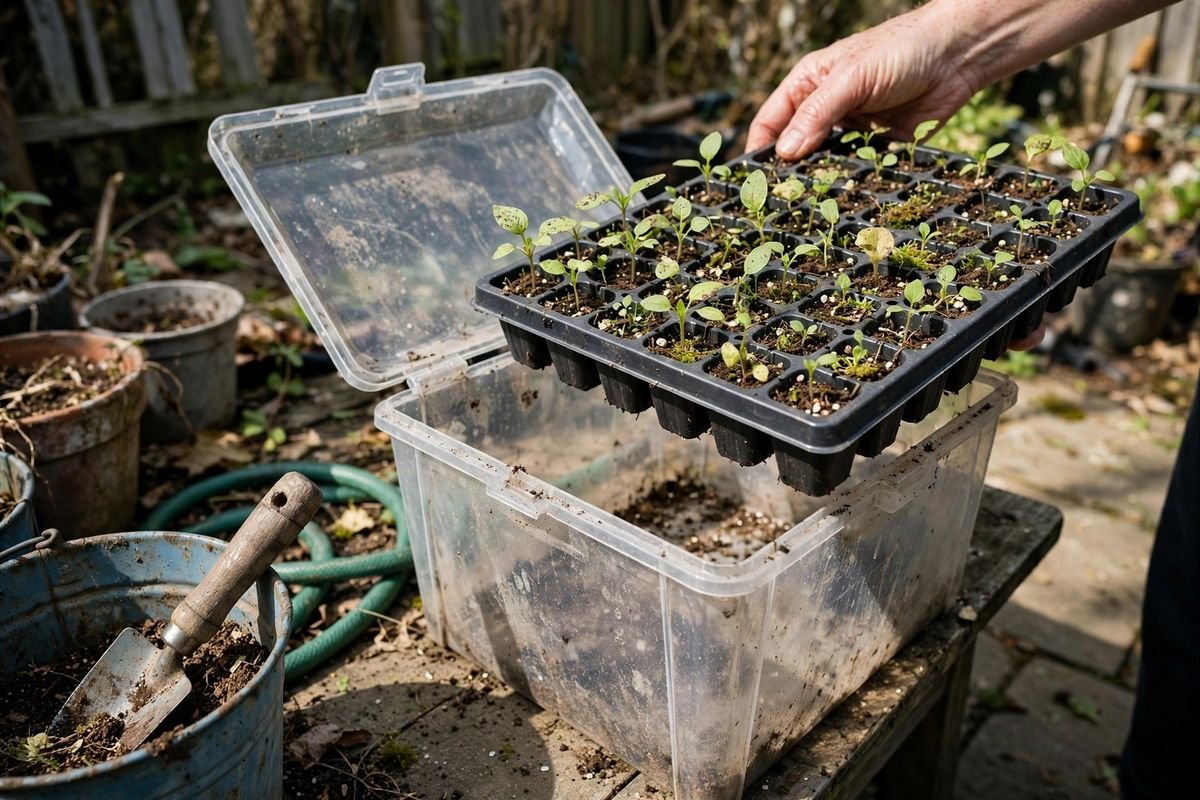
Take a standard 10-by-20-inch tray with 72 cells. Watering it from dry to damp takes about 1 liter of water, which is roughly 4 cups. That is the water the mix holds after the excess drains away. Over the next day, a good share of that water leaves the mix as vapor: some evaporates from the surface, and some passes through the seedlings as they drink and transpire.
Suppose half of that liter, about 500 milliliters, leaves the tray as vapor in a day. A mini greenhouse 2 feet wide, 3 feet long, and 5 feet tall holds about 30 cubic feet of air, which is about 850 liters. Warm air at 70 degrees can hold about 20 grams of water vapor per cubic meter before it is saturated, and 850 liters is 0.85 cubic meters, so the air in the greenhouse can hold only about 17 grams of vapor at saturation.
Five hundred grams of vapor is far more than 17 grams, which is why the cover fogs up: the air can only hold a small part of what the tray gives off, and the rest has to condense on the coldest surface. That is also why venting matters so much. Each air change swaps a pocket of damp air for drier air from outside, and a few air changes a day keep the total far below the level that soaks the cover.
The exact numbers will differ for your greenhouse, but the pattern holds: a small volume of air saturates fast, and only steady venting keeps up with a freshly watered tray.
Add a small fan
A fan moves air across the leaves, and moving air dries leaves faster than still air at the same humidity. A small clip-on or USB fan set on low, aimed across the trays rather than straight down at them, keeps the air moving without chilling the plants. Run it during the day, when the greenhouse is warmest, and turn it off at night.
A fan also strengthens seedling stems. The gentle movement mimics a breeze, and seedlings grown with air movement grow stockier than seedlings grown in still air. Our guide to small fans for seedlings covers sizes and placement for a shelf or a mini greenhouse.
Keep the fan and its cord dry. Mount it above the trays, not on the floor where water pools, and keep the cord away from the watering can. A fan that sits in a puddle is a hazard, not a help.
Keep the cover clean and the floor dry
A dirty cover makes condensation worse in two ways. Algae and dust on the plastic hold water in a film instead of letting it run off, and a dirty cover blocks light, which slows growth and keeps the inside cooler and damper. Wipe the inside of the cover with a damp cloth once a month, and wash the outside when the light starts to look dim.
Keep the floor dry as well. A puddle on the floor of a mini greenhouse evaporates all day and adds to the moisture load. Use a tray under the pots to catch drips, empty it after watering, and wipe up spills instead of leaving them to dry into the air.
A digital hygrometer for the greenhouse takes the guesswork out of the problem. Hang it at plant level, not near the roof, and read it in the morning. If the reading stays above 85 percent for days at a time, the greenhouse needs more venting or less water, even if the plants look fine.
When condensation means something else
Condensation that appears only on cold mornings and clears by midday is normal. Condensation that stays all day, pools on the leaves, and comes back within an hour of venting points to a different cause: the soil is too wet, the greenhouse is overcrowded, or the cover is sealed so tightly that no air moves at all.
Check the drainage first. A tray with no drainage holes, or a pot sitting in a saucer full of water, keeps the mix wet around the clock. Lift the tray and look underneath: if water drips out, the tray is holding too much. Let it drain fully, empty the saucer, and wait a day before you water again.
Damping-off is the disease to watch for when the inside stays wet. Seedlings fall over at the soil line, the stem pinches in and turns brown, and the plant is gone in a day. Our guide to preventing damping-off in seedlings covers the spacing, watering, and air movement that stop it.
Frequently asked questions
Should I wipe the condensation off the cover?
Wiping helps for a day, but it treats the symptom, not the cause. The water will be back the next morning unless the air gets drier. Vent the greenhouse and water less, and wipe the cover as part of a monthly cleaning routine rather than a daily chore.
Will a dehumidifier help a mini greenhouse?
A small dehumidifier can help in a closed indoor greenhouse, but it is usually the wrong tool outdoors. The greenhouse exchanges air with the outside every time the door opens, so the dehumidifier would be drying the whole yard. Venting and watering habits cost nothing and work better.
Is condensation worse in winter or summer?
Winter is usually worse, because the cover is cold and the temperature gap between inside and outside is large. Summer condensation happens on cool nights after hot days, but the warm days dry the greenhouse out fast. Winter fog can last for weeks if the cover stays shut.
Do I need to remove the cover entirely?
Not usually. A cover left partly open on mild days does the job, and the plants still get the warmth and wind protection the greenhouse is for. Remove the cover only if the plants have outgrown the space or the weather has turned warm enough that the greenhouse cooks them by noon.
Sources and further reading
- Penn State Extension: Things a Greenhouse Grower Can Do to Improve Energy Efficiency
- Royal Horticultural Society: Greenhouses, Heating Efficiently
- University of Minnesota Extension: Starting Seeds Indoors
Related reading: How to Insulate a Greenhouse with Bubble Wrap, Best Mini Greenhouses for Patios, Best Humidity Domes for Seedlings, How to Winterize a Greenhouse
By the Pot and Plot Team