
This post may contain affiliate links. If you buy through links on this page, we may earn a commission at no extra cost to you.
As an Amazon Associate I earn from qualifying purchases.
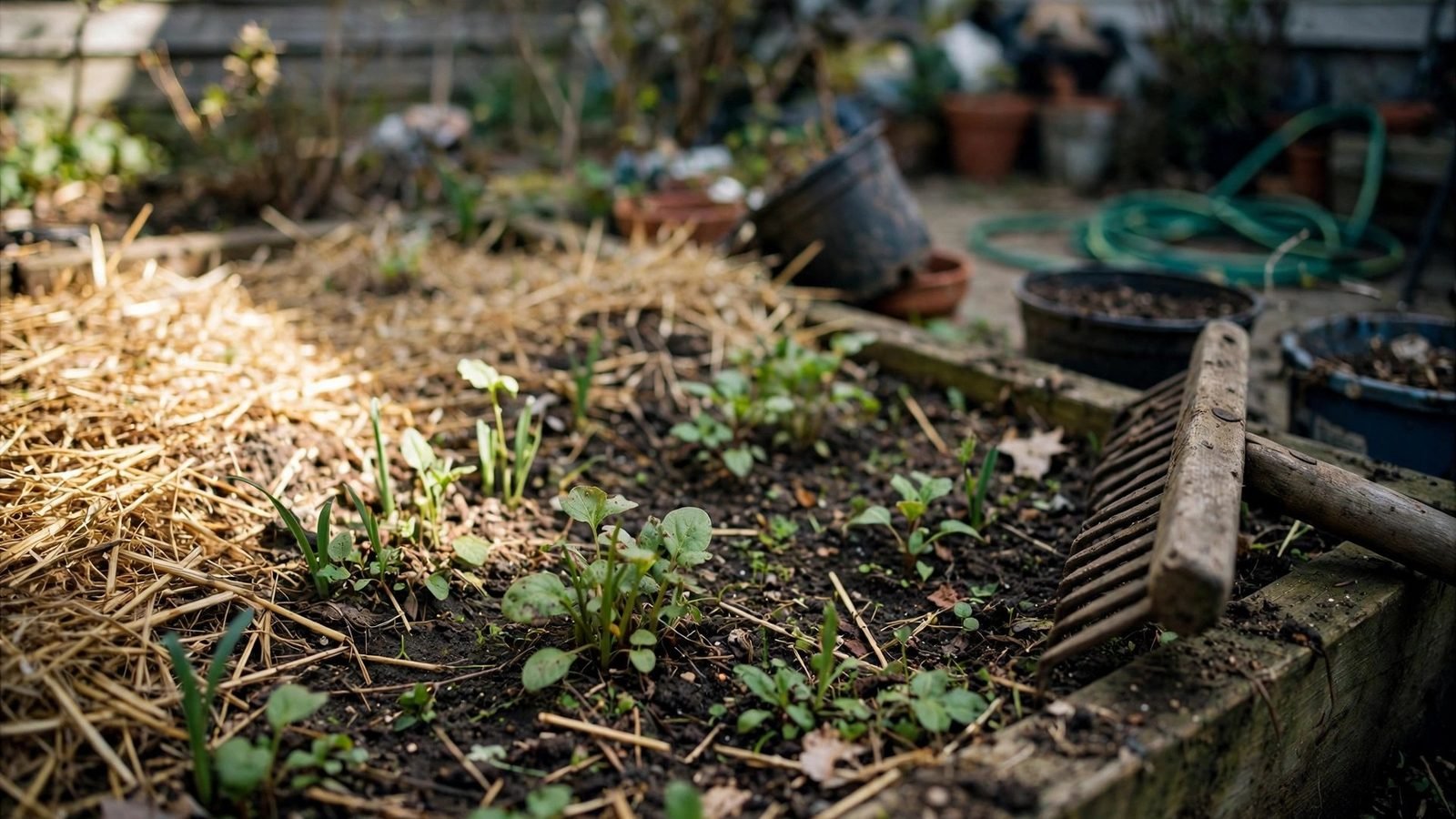
Winter mulch does its job by keeping the soil cold and steady through the freeze-thaw cycles of late winter. Come spring, that same blanket turns into a problem: it keeps the soil cold, blocks the sun, and holds moisture against crowns and stems that want to dry out and grow. Pull it off too early, and a late frost hits bare plants. Pull it off too late, and the plants under it grow pale and weak, or rot in the damp.
The right moment is not a date on the calendar. It is a soil temperature, a set of night forecasts, and what you see when you lift a corner of the mulch. This guide covers the signs that tell you the mulch has done its job, how to take it off in stages, and what to do with the old material.
Use your local frost dates and regional planting guidance — not your USDA hardiness zone alone — to choose planting dates. The same dates help you time the mulch removal: the average last frost date is the anchor, and the forecast for the next two weeks is the check before you act.
What winter mulch is for
Winter mulch is not a blanket that keeps plants warm. It is insulation that keeps the soil temperature steady, so the ground does not freeze, thaw, and freeze again. That freeze-thaw cycle heaves shallow roots out of the ground and cracks the crowns of perennials. A layer of straw, shredded leaves, or pine needles slows the swings, and the plants sleep through winter in cold but stable soil.
That is why the mulch goes on after the ground has cooled, not before. Mulch laid down while the soil is still warm can keep the ground warm enough for rodents to nest in it, and it can delay the dormancy the plants need. Most gardeners lay winter mulch after the first hard frosts, once the soil has cooled and the perennials have died back.
By spring, the job is done. The soil no longer needs protection from freeze-thaw cycles, and the mulch starts to work against the plants it protected. Our guide to mulching perennials for winter covers how the mulch goes on in the first place.
Signs the mulch should come off
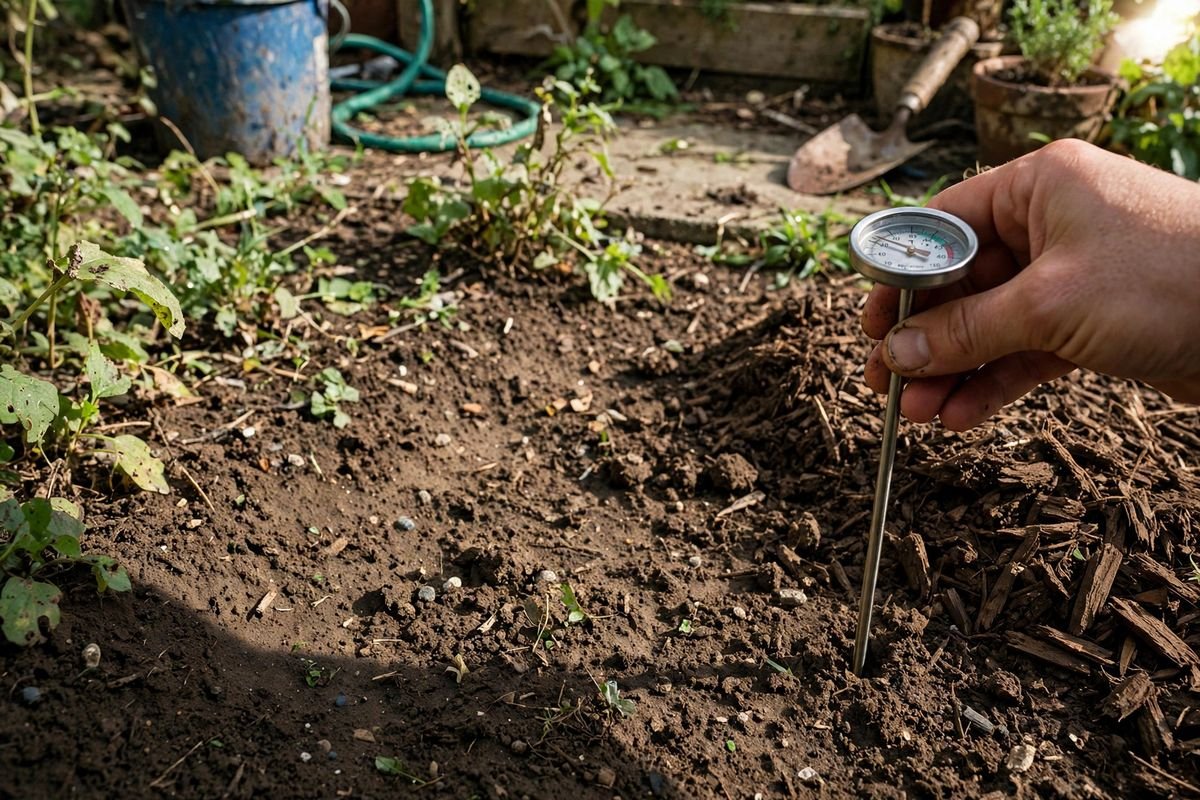
Start with the soil temperature. Push a soil thermometer 3 to 4 inches into bare soil at the edge of the bed, in the morning, and read it for a few days. When the soil holds near 50 degrees in the morning, most perennials and spring bulbs are ready to grow, and the mulch is holding them back. Cool-season crops such as peas and lettuce can go in when the soil reaches the mid-40s.
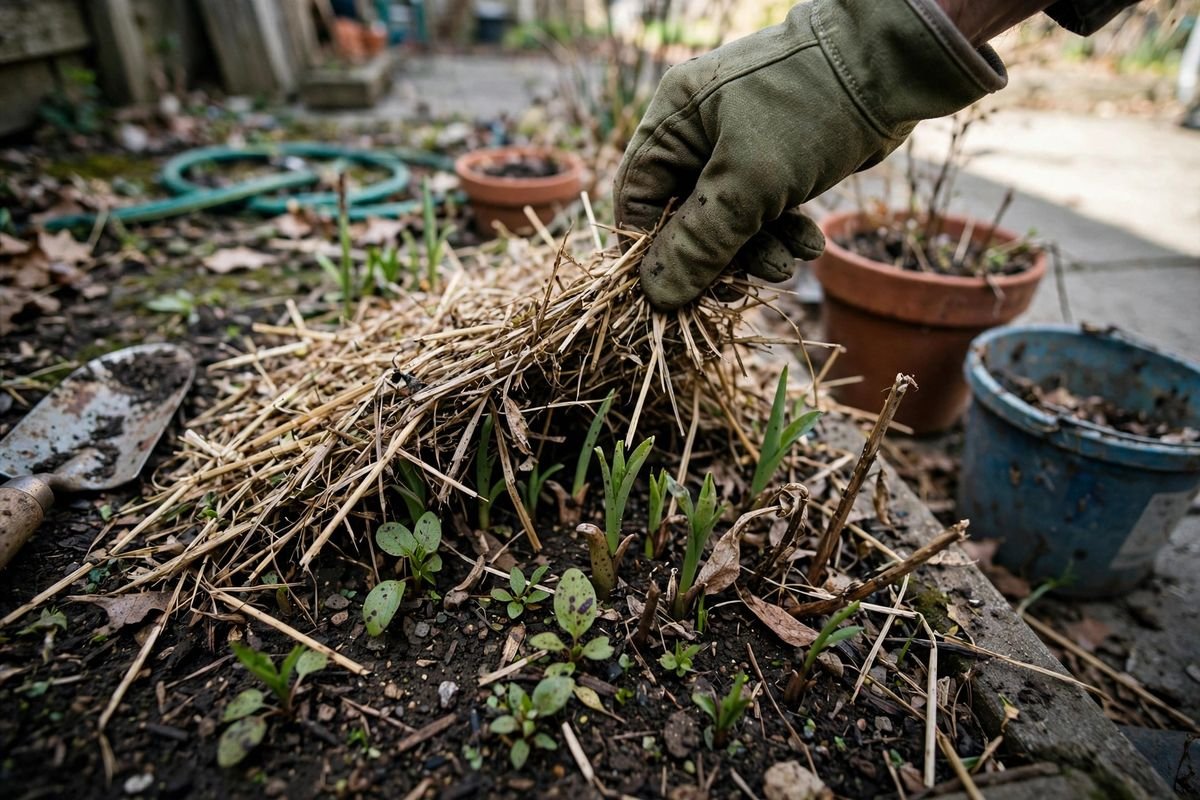
Look under the mulch as well. Lift a corner and check what is growing there. Pale, stretched shoots reaching sideways under the straw are a clear sign the plants need light. New growth that is white or yellow instead of green has spent too long in the dark, and it will take weeks to green up if the mulch stays on.
Check the forecast for the next two weeks. If the nights stay above freezing and no hard frost is forecast, the mulch can come off. If a cold snap is coming, wait. One night below 28 degrees can damage new growth that the mulch would have protected, and a single cold night can undo a month of spring growth.
Look for a soil thermometer for the garden with a probe long enough to reach 4 inches into the bed. A reading from the surface tells you about the sun, not the soil the roots sit in.
Remove it in stages, not all at once
Taking all the mulch off in one afternoon shocks the plants. The soil under the mulch is cold and damp, the crowns are soft from months in the dark, and a sudden blast of sun and wind can dry them out or freeze them on the next cold night. Pull the mulch back in stages over a week or two instead.
Start by pulling the mulch back from the crowns and the base of each plant, leaving a ring of mulch a few inches away from the stems. This lets light and air reach the new growth while the soil between the plants stays covered. The plants green up, the soil warms from the edges in, and the bed is still protected if a cold night comes.
A few days later, after the plants have greened up and the forecast still looks mild, pull the rest of the mulch off the bed. Rake it into the paths or into a wheelbarrow, and leave the soil bare for a day or two so the sun can warm it. Then put down a thinner layer of fresh mulch, about 2 inches, to hold moisture and keep weeds down for the season.
Work on a dry day if you can. Wet mulch is heavy, it clings to the plants, and it tears new shoots when you pull it. Dry straw lifts off cleanly, and you can see what is growing underneath before you decide how much to take.
Worked example: how much mulch a bed holds
It helps to know how much material you are moving, especially when the old mulch goes to the compost pile or back onto the paths. This example works out the volume for one common bed size, using stated inputs, so you can repeat the steps for your own beds.
Take a raised bed 4 feet wide and 8 feet long, covered with 4 inches of straw mulch for winter. The surface area is 4 times 8, which is 32 square feet. Four inches is one-third of a foot, so the volume is 32 times one-third, which is about 10.7 cubic feet of mulch.
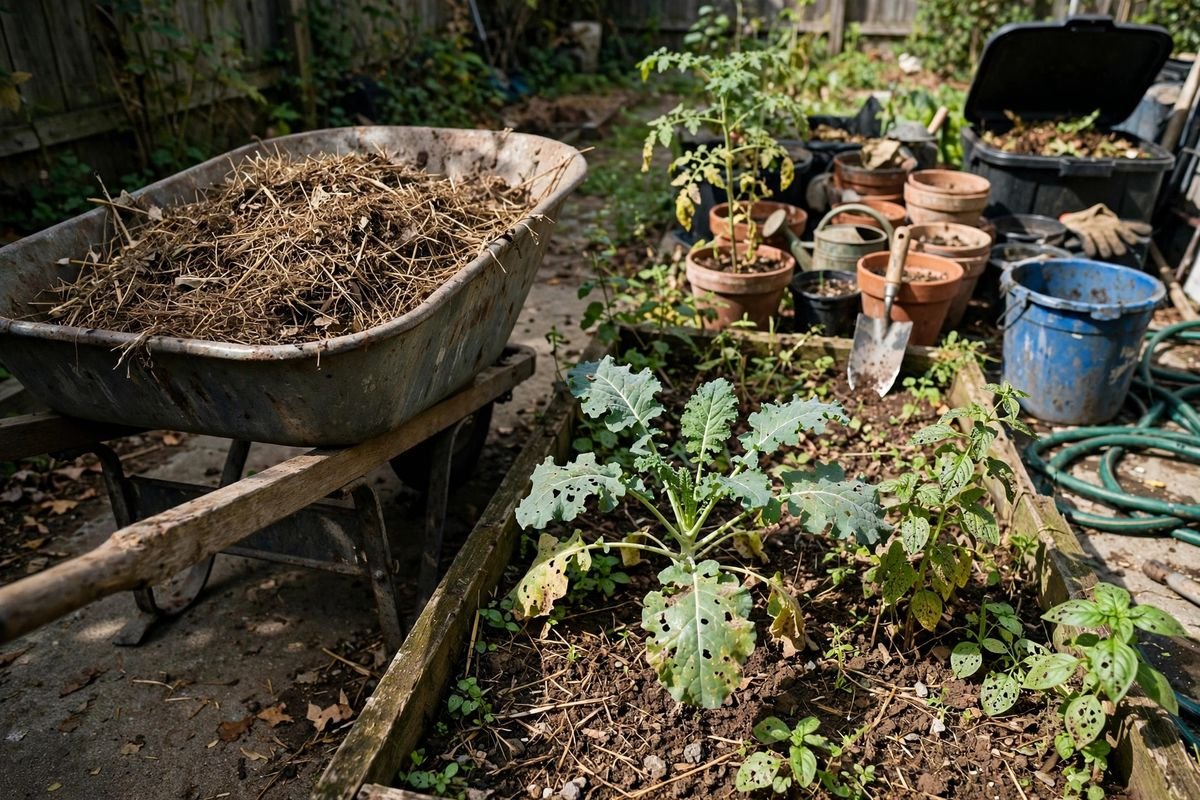
A standard wheelbarrow holds about 3 cubic feet when heaped, so that one bed fills about three and a half wheelbarrow loads. A garden cart with a 10-cubic-foot bed would hold the whole lot in a single trip, with room to spare.
The same math works in reverse when you buy fresh mulch for spring. A 2-cubic-foot bag of shredded bark covers about 12 square feet at a 2-inch depth, since 2 divided by one-sixth of a foot gives 12. For a 32-square-foot bed, you need 32 divided by 12, which is about 2.7 bags, so three bags cover the bed with a little left over.
Our guide to making compost at home covers what to do with the old material once it comes off the bed, and how to balance it with green material in the pile.
What to do with the old mulch
Old winter mulch is rarely waste. Straw that is still loose and dry can go back onto the paths between beds, where it keeps weeds down and mud off your shoes. Shredded leaves that have partly broken down can go into the compost pile as browns, mixed with green material to keep the pile balanced.
Do not put diseased material back on the beds. If the mulch smells sour, shows white or gray mold through the whole layer, or came from plants that had disease last season, compost it hot or throw it away. A cold compost pile will not kill most plant diseases, and spreading that mulch on a new bed can carry the problem forward.
Watch for slugs and snails under the old mulch. They shelter there over winter, and they will eat new shoots as soon as the mulch comes off. Pick them off by hand when you pull the mulch back, and check the bed again a few days later. A beer trap or a board laid on the soil overnight will show you how many are left.
What to do with plants that grew under the mulch
Plants that grew pale under the mulch need a few days of shade before full sun. The pale shoots have thin skin and little wax on the leaves, and a full day of spring sun can scorch them. Leave a light layer of straw over the crowns for the first few days after the main removal, and take it off once the leaves have greened up.
Cut back any growth that is mushy, black, or smells bad. That tissue is dead, and leaving it on the plant invites rot. Cut back to firm, healthy tissue, and throw the cuttings away rather than composting them.
Hold off on fertilizer until the plants are growing again. A perennial that has just woken up cannot use a heavy feeding, and fertilizer salts in cold soil can burn new roots. Wait until you see steady new growth, then feed at the rate the plant needs for the season.
Timing by plant type
Not every plant wants its mulch off on the same day. Spring bulbs such as daffodils and tulips push through the mulch on their own, and they can stay covered longer, since the shoots find the light. Pull the mulch back from the bulb shoots when they are a few inches tall, so they get full sun for the rest of the season.
Strawberries need their mulch off earlier than most perennials, because the crowns rot in damp straw once the weather warms. Pull the straw back from the crowns when the soil reaches the mid-40s, and keep a light layer between the rows to keep the berries off the soil later.
Roses and other woody plants can wait. Their buds are higher off the ground, and the mulch at the base does not block their light. Take the mulch off the rose bed when you do the spring pruning, and put fresh mulch down after the soil has warmed.
Our comparison of straw vs. leaves as winter mulch covers which material breaks down fastest in spring and which one is easiest to pull back.
Frequently asked questions
Can I leave the winter mulch on all summer?
A thick layer of winter mulch left in place keeps the soil cold into June, which slows warm-season crops, and it holds moisture against the crowns, which invites rot. Pull the winter layer off, then put down a fresh, thinner layer for summer. The summer layer holds moisture and keeps weeds down without smothering the plants.
What if a late frost is forecast after I removed the mulch?
Cover the plants for the night. A sheet of frost cloth, an old bedsheet, or a bucket over a single plant will carry most plants through one cold night. Put the cover on in the late afternoon, weight the edges down, and take it off in the morning so the plants get light and air.
Should I till the old mulch into the soil?
Straw and leaves that have partly broken down can be turned into the top few inches of soil, where they will finish breaking down. Fresh straw tilled in will pull nitrogen from the soil as it decays, so compost it first or use it on the paths instead.
How do I know the soil is warm enough?
Use a soil thermometer, not the air temperature. Morning soil temperature is the number that matters, and it lags behind the air by days. When the morning reading holds near 50 degrees for several days, the soil is ready for most spring planting.
Sources and further reading
- University of Minnesota Extension: Mulch Perennials and Bulbs After the Soil Freezes
- Royal Horticultural Society: Mulch
Related reading: How to Mulch Perennials for Winter, Straw vs. Leaves as Winter Mulch, How to Test Soil in Fall, How to Protect Raised Beds from Frost
By the Pot and Plot Team