
This post may contain affiliate links. If you buy through links on this page, we may earn a commission at no extra cost to you.
As an Amazon Associate I earn from qualifying purchases.
A late frost is the spring gardener’s oldest enemy. The seedlings have been hardening off for a week, the beds are ready, the forecast looked mild, and then the temperature drops below freezing for one night. Tender leaves turn black by morning, and a month of indoor work is gone.
The good news is that a single cold night is survivable with a little cover and a little water. Frost protection is not about heating the garden. It is about holding the warmth the soil gathered during the day, keeping cold air off the leaves, and giving the plants a few extra degrees through the coldest hours before dawn.
Use your local frost dates and regional planting guidance — not your USDA hardiness zone alone — to choose planting dates. The average last frost date tells you when the risk drops, but it is an average: in half of all years, the last frost comes later than that date, so watch the forecast every night until the tender plants are in the ground and growing.
Know which plants need cover
Not every seedling needs the same protection. Cool-season crops such as peas, lettuce, spinach, broccoli, and cabbage can handle a light frost, and some taste better after a cold night. They may look limp in the morning and perk up by noon, and a night down to 28 degrees rarely kills them once they are established.
Warm-season crops are the ones at risk. Tomatoes, peppers, eggplant, basil, cucumbers, squash, and beans are damaged below 40 degrees and killed by a freeze at 32 degrees or below. A tomato seedling that survives a night at 35 degrees may still be set back for weeks, with curled leaves and slow growth that never quite catches up.
Check the seedlings before you cover them. A seedling that has been hardened off, with stocky stems and leaves that have felt wind and sun, handles a cold night far better than a soft seedling moved straight from a windowsill. Our guide to hardening off seedlings before transplanting covers the week of gradual outdoor time that makes the difference.
Water the beds before the frost
Wet soil holds heat better than dry soil, and that is the cheapest frost protection there is. Water the beds in the late afternoon, before the cold night, so the soil is damp all the way through. As the temperature drops, the damp soil gives off its stored heat slowly, and the air just above the soil stays a few degrees warmer than the air over dry ground.
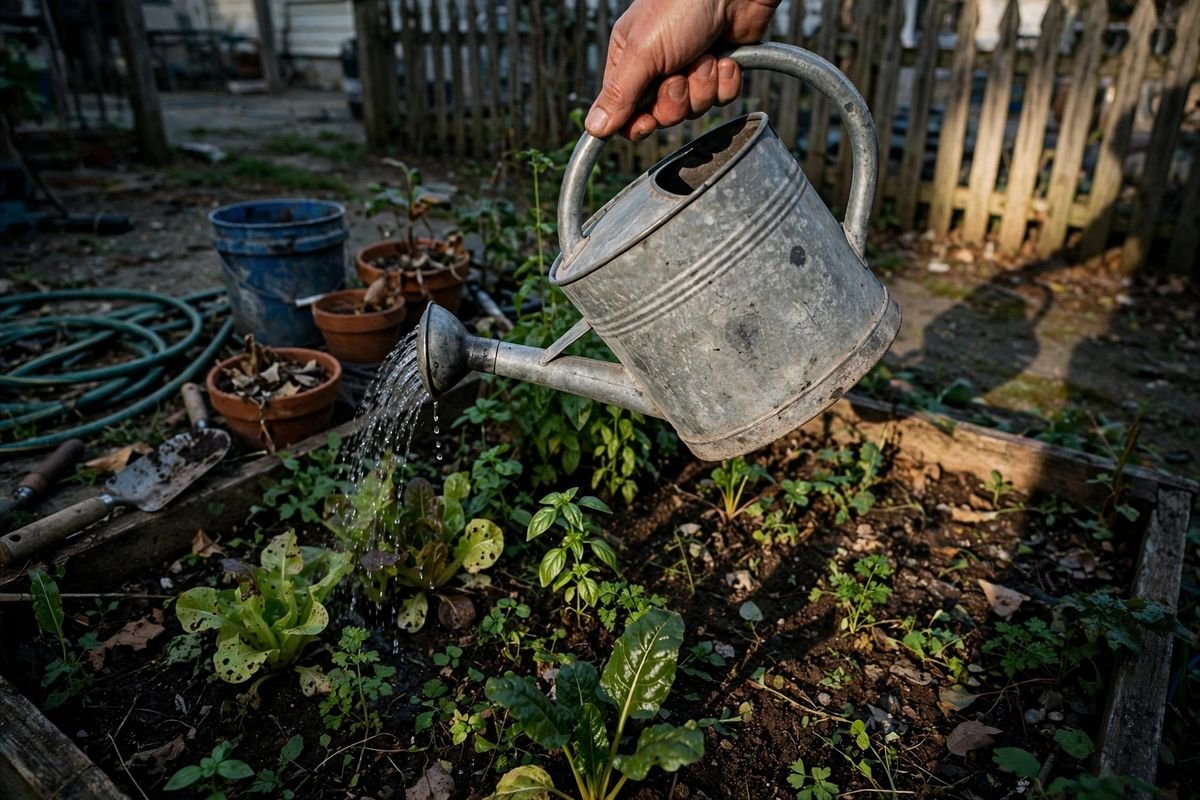
Water the soil, not the leaves. Wet leaves freeze faster than dry ones, and ice on the leaf surface damages the tissue underneath. Use a watering can or a soaker hose at the base of the plants, and let the water soak in before dark.
How much water is enough? For a worked example, take a raised bed 4 feet wide and 8 feet long. Watering the top 6 inches of soil from dry to damp takes about 25 gallons, since the bed holds 16 cubic feet of soil in that layer and a cubic foot of dry garden soil takes roughly a gallon and a half to dampen through. That is about five full watering cans, and it is worth the trips: damp soil can hold the air above it 2 to 4 degrees warmer through the night than dry soil, and those few degrees are often the gap between damage and survival.
Cover with cloth, not plastic
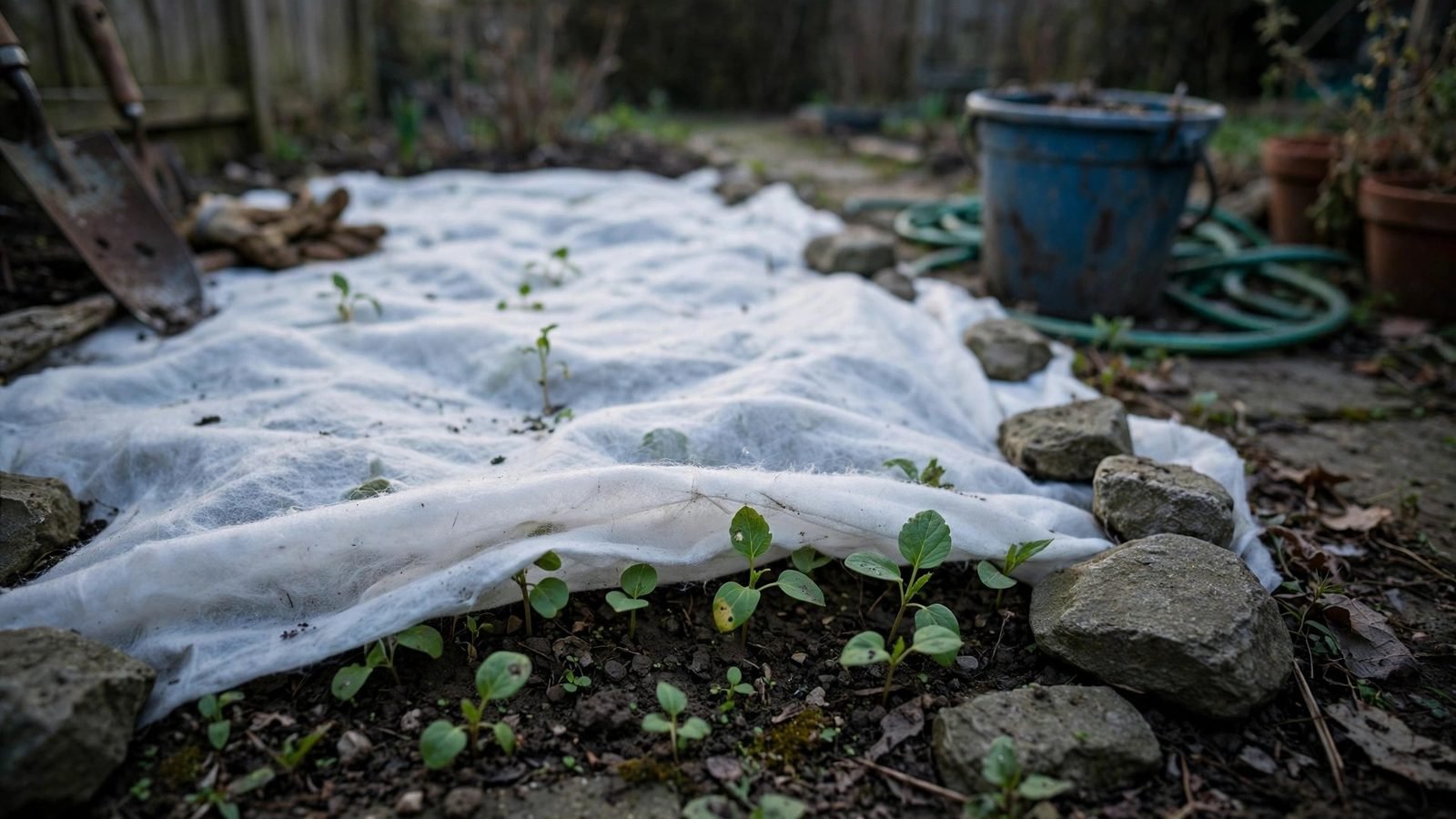
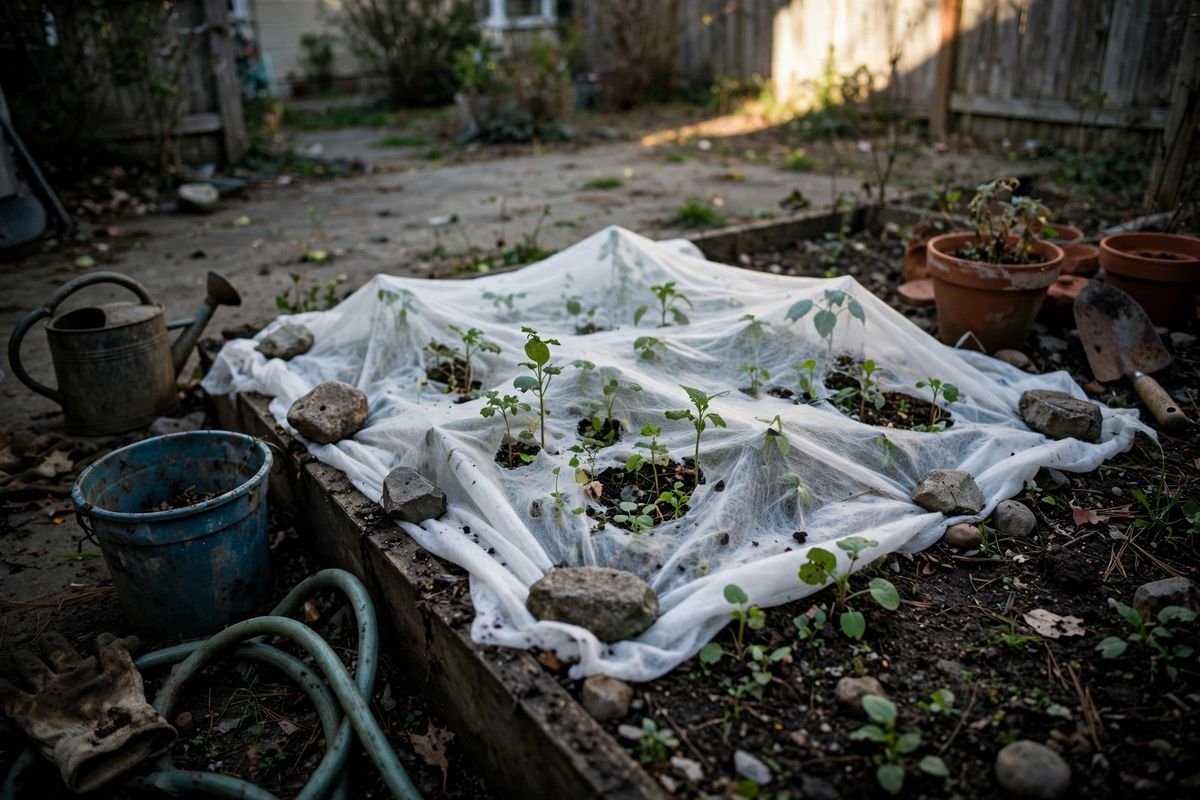
A frost cloth, an old bedsheet, or a piece of burlap is the best cover for a cold night. The fabric traps the warm air rising from the soil, and it breathes enough that condensation does not pool on the leaves. Drape it loosely over the plants so it touches as few leaves as possible, and weight the edges down with stones, bricks, or boards so cold air cannot slip underneath.
Plastic sheeting is a poor substitute. It traps moisture against the leaves, and where the plastic touches a leaf, the leaf freezes faster than an uncovered leaf would. If plastic is all you have, hold it up on hoops, sticks, or an overturned crate so it never touches the plants, and take it off first thing in the morning.
Put the cover on in the late afternoon, while the soil is still warm from the day. A cover put on after dark traps cold air, not warm air, and does little good. Take the cover off in the morning, once the temperature has risen above freezing and the sun is on the bed, so the plants get light and air and the cover dries before the next use.
Look for a frost cloth for plants in a size that covers the bed with slack at the edges. A 10-by-12-foot cloth covers a 4-by-8-foot bed with enough overhang to weight down all four sides.
Use cloches and buckets for single plants
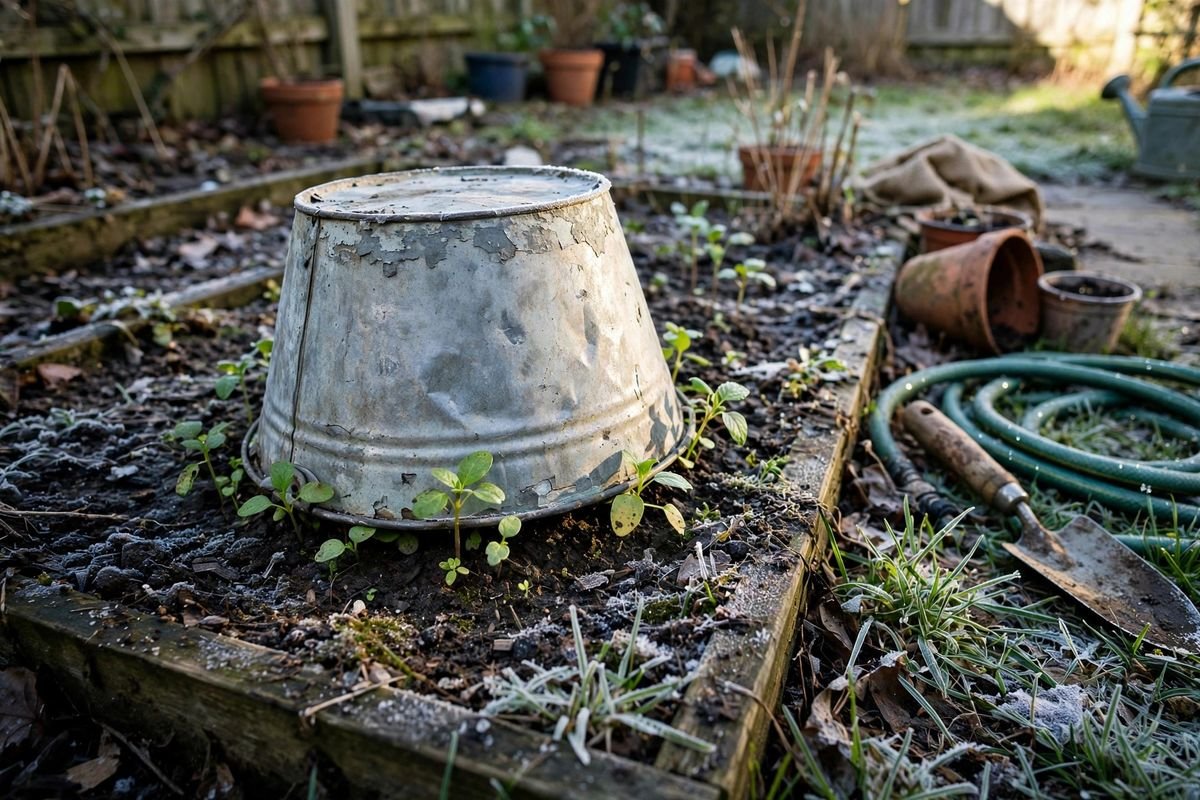
For one plant or a short row, a cloche or an overturned bucket works well. A plastic milk jug with the bottom cut off, a large nursery pot, or a 5-gallon bucket turned upside down traps a pocket of warm air around a single seedling, and the soil inside stays warmer than the air outside.
Put a stone on top of the bucket so the wind does not lift it, and take it off in the morning. A seedling left under a bucket on a sunny day can cook by noon, since the trapped air heats up fast once the sun hits it. The same caution applies to glass cloches: they hold heat at night and build it up fast by day.
Water jugs work the same way and add thermal mass. A gallon jug of water beside a seedling absorbs heat during the day and gives it back slowly at night, and the water inside the jug will not freeze before the air around it does. Two or three jugs around a tomato plant can hold the air near it a few degrees warmer through a cold night.
Look for a garden cloche for seedlings if you protect the same plants every spring. A rigid cloche lasts for years, stacks for storage, and vents on warm days without a trip to lift it off.
Worked example: how much cover a bed needs
Buying a cover that is too small is a common mistake, and it is easy to avoid with a tape measure. This example works out the size for one common bed, using stated inputs, so you can repeat the steps for your own beds.
Take a raised bed 4 feet wide and 8 feet long, with seedlings about 1 foot tall. The cover has to span the width, rise over the plants, and hang down far enough to weight at the edges. Allow 1 foot of slack on each side for the drop and the weights: the width needed is 4 feet plus 1 foot on each side, which is 6 feet. The length needs the same slack at each end: 8 feet plus 1 foot on each end, which is 10 feet.
Now allow for the height. The cover rises about 1 foot over the plants in the middle, which takes about 2 extra feet of fabric across the width: 6 feet plus 2 feet gives 8 feet of width. A cloth 8 feet wide and 10 feet long covers the bed with slack to weight down. If you buy a 6-by-8-foot cloth instead, it will just reach the edges with no slack, and the first gust of wind will lift it off the plants.
The same method works for a row cover over hoops. Measure the width across the hoops, add 2 feet for the drop on each side, and add the length plus 2 feet. Write the numbers on the cloth with a marker so you grab the right one on a cold evening.
What to do after a frost
Check the plants in the morning before the sun hits them. Leaves that look water-soaked and limp are damaged, and leaves that turn black by noon are dead. Do not pull the plants right away. A seedling that looks dead at the top may still have a living stem and roots, and it can regrow from a side shoot in a week.
Wait two or three days before you decide. Prune back the black, mushy growth to firm tissue, and leave anything that still looks green. Hold off on fertilizer until the plant is growing again, since fertilizer on damaged roots does nothing except build up salts in the soil.
Water the bed lightly in the morning after a frost. The water helps the soil warm up, and damp soil holds the next night’s warmth better than dry soil. Do not water the leaves, since the damaged tissue rots fast when it stays wet.
Our guide to protecting raised beds from frost covers row covers and cold frames for beds that need protection for more than one night.
When to leave the plants inside instead
Sometimes the best frost protection is not to plant yet. If the forecast shows several nights below freezing and the seedlings are still small, keep them indoors for a few more days. A seedling held inside for a week is a week behind, but a seedling planted out and frozen is a seedling you have to start again from seed.
The same choice comes up with plants already in the ground. A tray of backup seedlings kept indoors is cheap insurance: if the first planting freezes, the backups go in the next morning, and you lose days, not weeks. Sow a few extra cells for every warm-season crop, and keep them on the windowsill until the first planting is established.
Our comparison of frost cloth vs. plastic cover covers which material to reach for on a cold night, and our guide to cold frames vs. row covers covers longer-term protection for beds that need it for weeks.
Frequently asked questions
How cold is too cold for tomato seedlings?
Tomatoes are damaged below 40 degrees and killed by a freeze at 32 degrees or below. A night at 38 degrees may not kill the plant, but it can set growth back for weeks. Cover tomatoes any night the forecast drops below 40 degrees.
Can I use old bedsheets as frost covers?
Yes. A cotton bedsheet works about as well as a purpose-made frost cloth for one night, and it breathes, which keeps condensation off the leaves. Use two layers on a hard freeze night, and weight the edges down so the sheet does not blow off.
Should I cover plants that are already hardened off?
Hardening off helps, but it does not make a warm-season seedling frost-proof. A hardened tomato seedling handles a night at 40 degrees better than a soft one, but it still freezes at 32. Cover tender crops on any night the forecast calls for frost, hardened off or not.
What time of night is coldest?
The coldest hours are usually just before dawn, between 4 a.m. and 6 a.m., when the ground has been losing heat all night. That is why covers go on in the afternoon and stay on until the sun is up: the cover has to be in place for the coldest hours, and the evening alone is not enough.
Sources and further reading
- University of Minnesota Extension: Extending the Growing Season
- Royal Horticultural Society: Greenhouses, Heating Efficiently
Related reading: How to Protect Raised Beds from Frost, Best Frost Covers for Raised Beds and Containers, Frost Cloth vs. Plastic Cover, How to Harden Off Seedlings Before Transplanting
By the Pot and Plot Team