

This post may contain affiliate links. If you buy through links on this page, we may earn a commission at no extra cost to you.
As an Amazon Associate I earn from qualifying purchases.
A cold frame and a row cover both stretch the garden season, and both cost far less than a greenhouse. They do the job in different ways, though, and the wrong pick wastes money and leaves plants unprotected on the coldest night of the year. A cold frame is a rigid box with a clear lid that sits over a bed like a tiny greenhouse, while row cover is a light fabric draped over hoops or laid right on the plants. One gives real frost protection and a warm daytime space; the other gives a few degrees of cover at a fraction of the price.
This guide compares the two side by side, with a cost and coverage example worked out for a standard 4 by 8 foot bed, so you can see the numbers for your own garden before you buy or build. For the cold frame routine in full, see our guide on how to use a cold frame for winter vegetables.
Cold frame vs row cover at a glance
| Feature | Cold frame | Row cover |
|---|---|---|
| What it is | Rigid box with a clear hinged lid | Light fabric over hoops or on the plants |
| Frost protection | About 5 to 10 degrees F below the outside air | About 2 to 6 degrees F, by fabric weight |
| Typical cost for a 4 by 8 bed | About 120 to 250 dollars, bought or built | About 15 to 40 dollars for fabric and hoops |
| Wind resistance | Strong, holds its shape in a storm | Fair, needs clips and weights at the edges |
| Ventilation | Open the lid on warm days | Pull the fabric back or lift the hoops |
| Best for | Overwintering greens, hardening off seedlings | Quick frost cover, pest cover, whole rows |
| Life span | 5 to 10 years or more | 1 to 3 seasons per sheet |
Use your local frost dates and regional planting guidance — not your USDA hardiness zone alone — to choose planting dates. A zone number tells you how cold the winter gets, not when your first frost arrives, and the cover you pick has to match the coldest nights your town actually gets, not the zone average.
How a cold frame works
A cold frame is a low box, usually wood or brick, with a clear lid of glass or polycarbonate that hinges open. The sun warms the soil inside during the day, the box holds that warmth after dark, and the lid keeps rain and wind off the plants. On a sunny winter day the inside can run 10 to 20 degrees warmer than the air outside, which is why a cold frame can keep lettuce and spinach growing in months when an open bed has stopped.
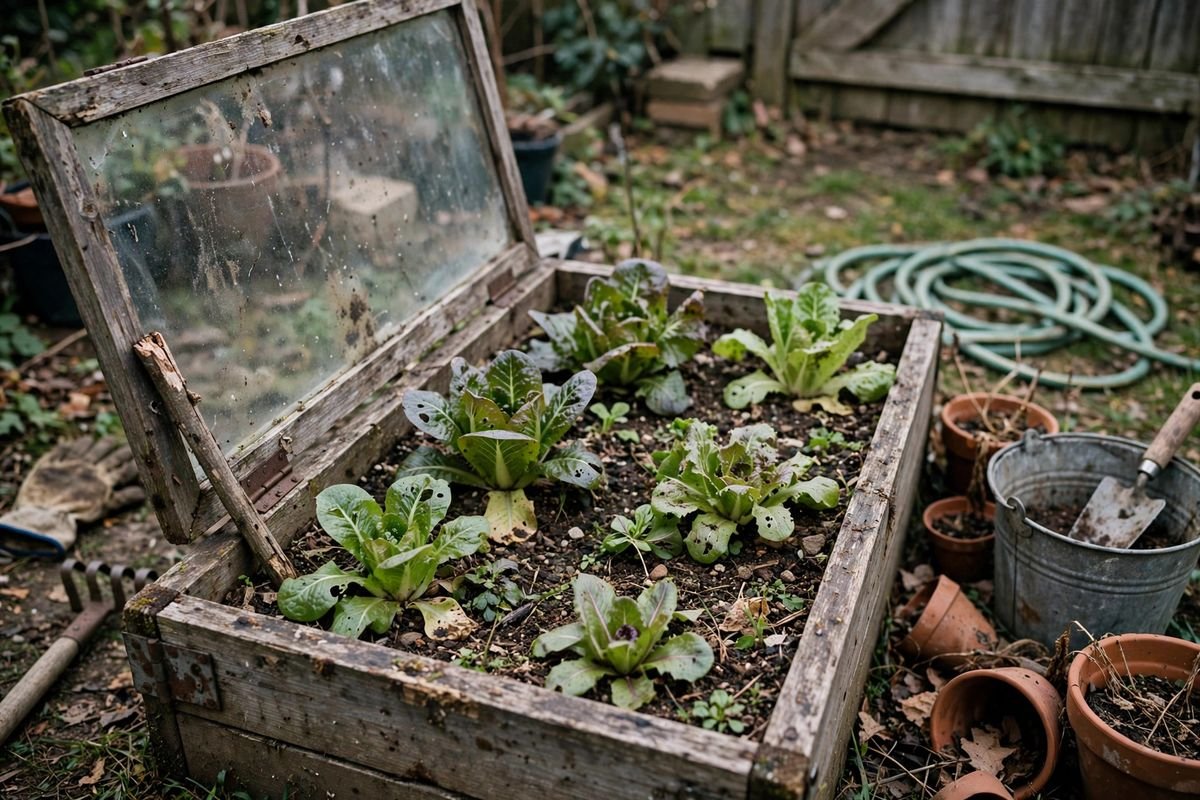
The lid is the part that needs daily care. On a sunny day, even in January, the inside of a closed cold frame can pass 80 degrees and cook the plants, so prop the lid open a few inches once the morning warms up and close it before dark. A simple prop stick works, and an automatic vent opener, a wax-filled cylinder that lifts the lid as it warms, takes the daily chore off your list.
Cold frames suit a fixed bed that you tend every day. They hold heat well, they stand up to wind and snow, and they give seedlings a sheltered spot to harden off in spring before they move out to the open beds. They do not suit a gardener who is away for days at a time in spring, because an unvented frame on a sunny day can kill a whole tray of seedlings in one afternoon.
If you need a ready-made frame, you can browse cold frames for raised beds on Amazon. We have not tested the products linked here, and we give no current store prices. Check each listing for current frame sizes, lid materials, and pack sizes before you buy.
How row cover works
Row cover is a light spun fabric, sold by weight, that lets light and water through while holding a few degrees of warmth around the plants. Light cover, about 0.5 ounces per square yard, gives about 2 degrees of frost protection and lets in most of the light, so it works as a pest cover all season. Heavy cover, about 1.5 ounces per square yard, gives about 4 to 6 degrees of protection and is the right pick for frost nights.
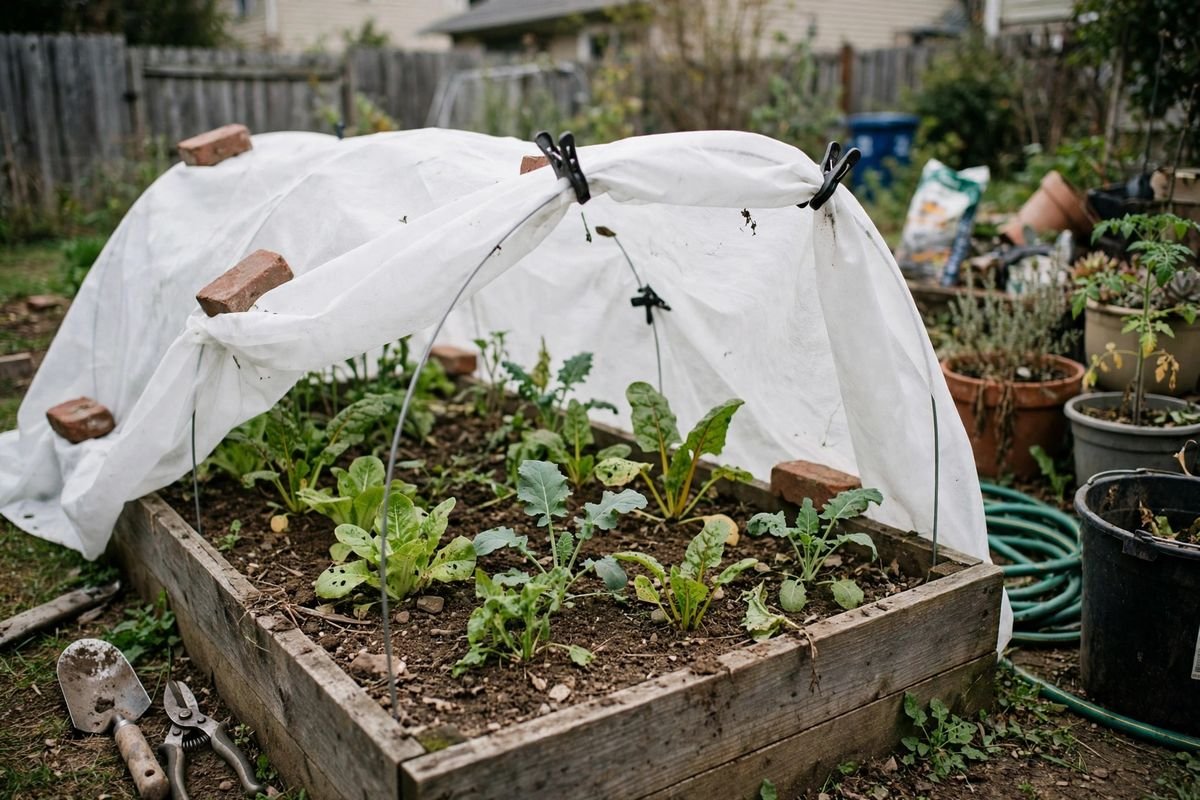
Support the fabric on hoops if you can. Wire or plastic hoops bent over the bed hold the cover off the leaves, which stops frost from forming where the fabric touches the plants and gives the crop room to grow. Lay the fabric right on low crops like lettuce if you must, but pull it off on warm days, because flat fabric traps heat and holds damp against the leaves.
Row cover suits whole rows and quick jobs. One sheet can cover a 4 by 8 bed in a minute, and it folds up small in the shed when the season ends. It does not suit a windy spot without good clips and weights, because a loose sheet flaps, tears, and ends up in the next garden. For the fabric side of frost cover in full, see our guides on frost cloth vs plastic cover and the best frost covers for raised beds and containers.
Our worked example: cost and coverage for a 4 by 8 foot bed
Here is the cost math for one standard 4 by 8 foot raised bed, 32 square feet, covered for a single winter season. The numbers below are our own computed figures, with the assumptions stated in the table, and the prices are planning figures, not store prices.

| Figure | Cold frame | Row cover, heavy weight |
|---|---|---|
| Upfront cost | 180 dollars, mid-range bought frame | 30 dollars, fabric plus hoops and clips |
| Covered area | 32 square feet | 32 square feet |
| Cost per square foot | 5.63 dollars | 0.94 dollars |
| Life span | 8 years | 2 seasons |
| Cost per year | 22.50 dollars | 15 dollars |
| Frost protection | About 8 degrees F | About 5 degrees F |
| Nights below 28 degrees it can handle | Down to about 20 degrees outside | Down to about 23 degrees outside |
The table shows the real trade. The cold frame costs six times as much up front, 180 dollars against 30 dollars, but spread over eight years it costs 22.50 dollars a year against 15 dollars a year for row cover that must be replaced every two seasons. The cold frame also buys three more degrees of frost protection, which is the gap between a bed that survives a 20-degree night and one that does not.
Scale the math to your own garden before you decide. Three beds under row cover cost about 90 dollars up front and 45 dollars a year to replace, while three cold frames cost about 540 dollars up front and 67.50 dollars a year over eight years. A gardener with one bed and a tight budget starts with row cover; a gardener with three beds who tends them daily gets more from one cold frame on the bed that holds the winter greens. For the small-frame options, see our guide on the best cold frames for small gardens.
Pros and cons
Cold frame pros
A cold frame gives the most frost protection of any low-cost cover, holds its shape in wind and snow, and lasts for years. It doubles as a hardening-off spot in spring, and the lid makes it easy to check the plants and pick a salad without unwrapping a whole bed.
Cold frame cons
A cold frame costs much more up front, covers only one fixed bed, and needs daily venting on sunny days or the plants cook. It is heavy to move, and a glass lid can break in a storm or under a snow load if it is not built to take the weight.
Row cover pros
Row cover is cheap, light, and fast to put on, and one sheet can cover any bed or row in the garden. It lets rain and light through, doubles as a pest cover in the growing season, and folds away small when the season ends.
Row cover cons
Row cover gives only a few degrees of frost protection, tears in wind, and needs replacing every one to three seasons. It sags onto the plants when it is wet, and a sheet laid flat on the leaves can freeze to them on a cold night.
Choose a cold frame if…
Choose a cold frame if you grow winter greens every year, tend the garden daily, and have one bed you can give over to the frame for the whole cold season. Choose it if your town gets nights below 25 degrees and you want lettuce and spinach alive through them, and if you start seedlings in spring and need a sheltered spot to harden them off before they move out.
Choose row cover if…
Choose row cover if you need quick frost cover for several beds, if your budget is tight, or if you garden in a mild zone where the coldest nights stay above 25 degrees. Choose it if you want a pest cover in the growing season too, or if you are away from the garden for days at a time and cannot vent a frame on sunny days. Many gardens end up with both: a cold frame on the winter salad bed, and row cover on the rest.
Troubleshooting
Plants cook inside a closed cold frame
Cooked plants mean the lid stayed shut on a sunny day. Prop the lid open a few inches once the morning warms up, and close it before dark. An automatic vent opener takes the chore off your list, and a thermometer inside the frame shows the temperature at a glance so you can vent before it passes 75 degrees.
Row cover blows off in the wind
A sheet that blows off was not clipped or weighted well enough. Use spring clips on the hoops every two feet, and lay bricks or sandbags along the edges. Bury the edge of the fabric under a few inches of soil on the windward side, and check the clips after every storm.
Frost forms where the fabric touches the leaves
Frost forms on leaves where the fabric rests on them, because the cover loses its insulating air gap at the touch point. Support the fabric on hoops so it clears the leaves by a few inches, and pull the cover off on warm days so the plants dry out. A leaf that has frozen will turn dark and limp; cut it off and let the plant regrow from the center.
Seedlings stretch under heavy row cover
Stretching under heavy cover means the fabric is cutting too much light. Swap to a lighter weight for seedlings, or pull the cover back on mild days and cover only at night. Heavy cover suits mature plants on frost nights, not young seedlings that need full light to grow sturdy stems.
Frequently asked questions
Can I use both a cold frame and row cover?
Yes, and many gardens do. Row cover inside a cold frame adds a few more degrees on the coldest nights, and row cover over the rest of the beds handles the crops that do not need the frame. The pair together can carry a salad bed through nights that would beat either cover on its own.
How much frost protection does row cover really give?
Light cover gives about 2 degrees, and heavy cover gives about 4 to 6 degrees, measured against the air outside the cover. The numbers shrink when the fabric touches the leaves or the wind blows hard, so support the cover on hoops and clip the edges down. A 28-degree night is a safe bet for heavy cover; a 20-degree night is not.
Do cold frames need a foundation?
Most small frames sit right on the soil or on the edge of a raised bed, with no foundation at all. Set the frame level, press the base into the soil so wind cannot get under it, and add a brick at each corner if your spot is windy. A frame on a slope will gap at the low end and lose heat, so level the ground first.
Can row cover stay on all winter?
Heavy cover can stay on a bed of mature greens for weeks, but lift it on mild days to let the plants dry out and get full light. Cover left flat on the plants for a whole winter holds damp against the leaves and invites rot, so hoop it up and check the bed every week or two.
Sources and further reading
- University of Florida IFAS Extension, Vegetables
- North Carolina State University Extension, Extension Gardener Handbook
Related reading: How to Use a Cold Frame for Winter Vegetables, Frost Cloth vs Plastic Cover, Best Cold Frames for Small Gardens, Best Frost Covers for Raised Beds and Containers, Mini Greenhouse vs Cold Frame
By the Pot and Plot Team