

This post may contain affiliate links. If you buy through links on this page, we may earn a commission at no extra cost to you.
As an Amazon Associate I earn from qualifying purchases.
A good fall harvest can feed a family all winter, but only if the roots stay cool, damp, and dark after they come out of the ground. Carrots, beets, parsnips, potatoes, and turnips all keep for months under the right conditions, and they all spoil fast when the storage spot is too warm, too dry, or too bright. The work is not hard: harvest at the right time, cure what needs curing, and put each crop in the spot that matches its needs.
This guide covers the four storage methods that work in a home garden: the root cellar or cool room, the sand box, the outdoor clamp, and the fridge. The worked example below sizes a sand box for 100 pounds of carrots with the assumptions stated, so you can rerun the same math for your own harvest. For the growing side of these crops, see our guides on how to grow carrots in fall and how to grow beets in fall.
What each root needs in storage
Every root crop wants cold and damp air, but the exact numbers differ by crop, and potatoes want dark above all else. The table below gives the short version, and the sections after it fill in the method that fits each crop best.
| Crop | Best temperature | Best humidity | Typical storage life |
|---|---|---|---|
| Carrots | 32 to 40 degrees F | 90 to 95 percent | 4 to 6 months |
| Beets | 32 to 40 degrees F | 90 to 95 percent | 3 to 5 months |
| Parsnips | 32 to 40 degrees F | 90 to 95 percent | 4 to 6 months |
| Turnips | 32 to 40 degrees F | 90 to 95 percent | 3 to 4 months |
| Potatoes | 40 to 45 degrees F | 85 to 90 percent | 4 to 8 months |
Two rules sit behind the whole table. First, cold slows the breathing of the roots, and warm storage burns through their sugars and makes them soft. Second, damp air stops the roots from going limp, while dry air pulls the water out of them in a matter of weeks. A basement corner that holds 35 to 40 degrees with damp air is the best storage spot in most houses.
Use your local frost dates and regional planting guidance — not your USDA hardiness zone alone — to choose planting dates.
Harvest and cure before you store
Harvest roots on a dry day, when the soil is damp enough to dig but not wet enough to cling in clumps. Loosen the row with a fork before you pull, so the roots come out whole instead of snapping in the ground. Cut the tops off about an inch above the crown, and leave the roots in the shade for an hour so the skins dry a little before they go into storage.
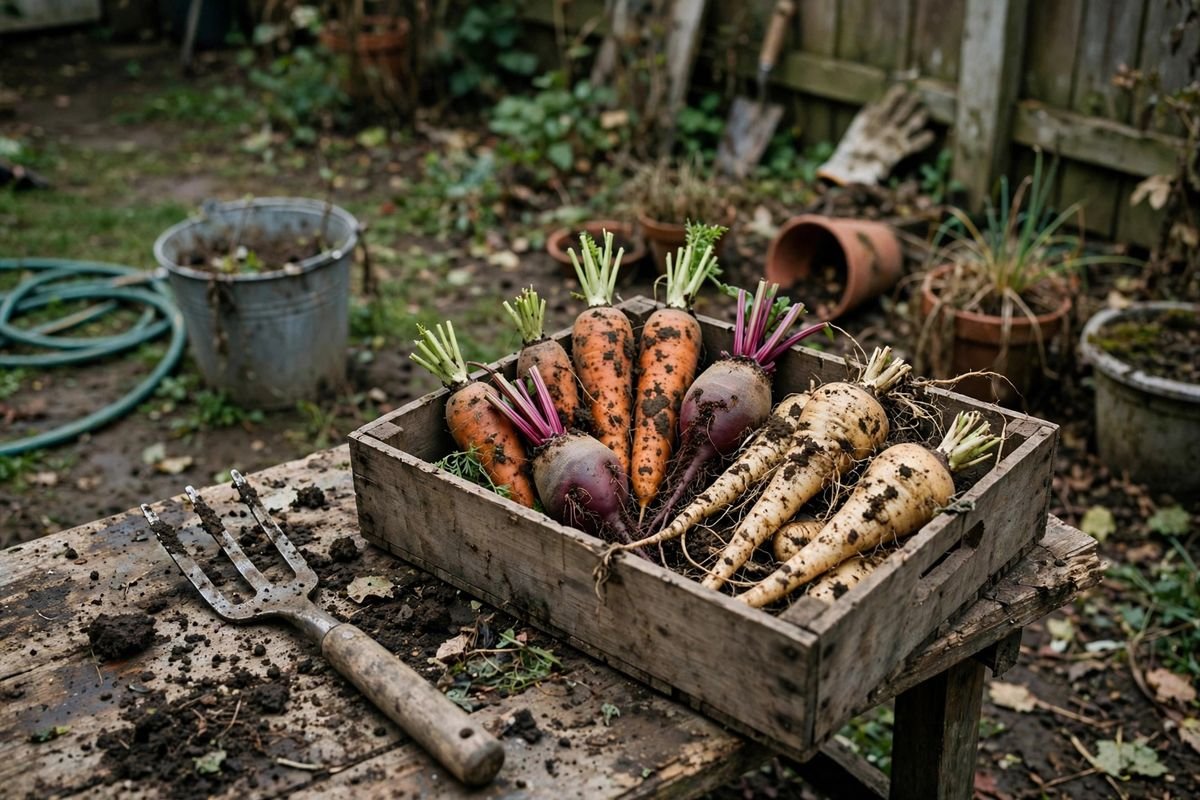
Sort the harvest before you store it. Roots with cuts, cracks, or soft spots go to the kitchen first, because a damaged root rots and spreads mold to its neighbors in storage. Only firm, whole roots with unbroken skins go into the cellar, the sand box, or the clamp. Wash nothing that goes into long storage: brush the loose soil off and let the roots stay dry, because wet skins invite rot.
Potatoes need one extra step. Cure them for one to two weeks in a dark spot at 50 to 60 degrees with good airflow, so the skins thicken and small cuts heal over. Spread them in a single layer on newspaper, keep them out of light, and move them to cold storage once the skins feel firm and set. For the growing side of potatoes, see our guide on how to grow potatoes.
The root cellar or cool room
A root cellar is a cool, damp, dark room, and a basement corner can act as one if it holds the right temperature. The best spot in most houses is the coolest corner of an unheated basement, away from the furnace and the water heater, with a thermometer on the wall so you can see the temperature at a glance. A concrete floor helps, because it holds damp air, and a bucket of water in the corner can lift the humidity on dry days.

Store roots in slatted crates, mesh bags, or open boxes lined with damp sawdust, peat, or sand. The packing keeps the roots from touching each other, and the damp material holds the humidity around them. Check the crates once a month, pull out any root that has gone soft or moldy, and eat the roots nearest the top of the pile first, because they dry out fastest.
Keep potatoes apart from onions and apart from other roots. Potatoes give off gases as they sit, and onions pick up damp and sprout early when they share a crate. Keep potatoes in the dark, too: light turns potato skins green, and the green parts taste bitter and should be cut away before cooking.
The sand box method
The sand box is the best method for a gardener who has no cellar, because a box of damp sand in a cool garage or shed holds carrots, beets, and parsnips for months. Use a wooden crate or a sturdy plastic tote, fill the bottom with two inches of damp sand, and lay the roots in a single layer so they do not touch. Cover them with two inches of sand, add another layer of roots, and repeat until the box is full, ending with sand on top.

The sand should feel damp like a wrung-out sponge, never wet enough to drip. If the sand dries out, mist it lightly with a spray bottle; if it stays soggy, leave the lid off for a day so the extra water can dry off. Keep the box in the coolest spot you have, ideally 32 to 40 degrees, and check the top layer once a month for soft roots.
Sand boxes suit carrots, beets, parsnips, and turnips. They do not suit potatoes, which want airflow and a slightly warmer spot than the sand box gives. A sand box also works for a small harvest: a single tote on a garage shelf can hold a month of carrots for a family, and it takes up less room than a full cellar shelf.
If you need storage crates or totes, you can browse wooden storage crates for vegetables on Amazon. We have not tested the products linked here, and we give no current store prices. Check each listing for current crate sizes, counts, and pack sizes before you buy.
The outdoor clamp
A clamp is a low mound of roots covered with straw and soil, and it is the oldest storage method in the book. Dig a shallow pit in a spot that drains well, pile the roots in a cone, and cover the pile with six inches of straw, then six inches of soil. Leave a small vent at the top, a bundle of straw poked through the soil, so damp air can escape and the pile does not sweat.
Clamps suit a big harvest in a mild winter, where the ground rarely freezes hard. They fail in a hard freeze, because the soil cover is thin and a deep cold snap can freeze the roots through. They also fail in a wet spot, because standing water rots the pile from the bottom. Build the clamp on high ground, near the house, where you can reach it in winter without wading through mud.
Open the clamp from one end and take what you need, then close the hole back up with straw and soil. Each opening lets cold air in, so open it on a mild day and take a week of roots at a time rather than a single meal. A clamp that has gone soft or smells sour has rotted inside, and the roots in it should go to the compost pile.
The fridge method
The fridge is the best method for a small harvest, or for the roots you plan to eat first. Put carrots, beets, and parsnips in perforated plastic bags in the crisper drawer, with a damp paper towel in the bag to hold the humidity. The bags stop the roots from drying out, and the holes let enough air in to stop mold. A pound of carrots in a bag keeps for three to four weeks this way, and often longer.
Potatoes do not belong in the fridge. Cold fridge air turns potato starch into sugar, and the potatoes come out sweet and darken when they fry. Keep potatoes in a dark cupboard or a cool pantry at 40 to 45 degrees instead, in a paper bag or a mesh sack that lets air move around them.
The fridge method is also the right place for the roots that did not make the storage sort: cut, cracked, or nicked roots go into a bag in the crisper and get eaten within two weeks. For the seed side of winter storage, see our guide on how to store seeds over winter.
Our worked example: sizing a sand box for 100 pounds of carrots
Here is the sizing math for a sand box that holds 100 pounds of carrots, a common harvest from a single 10-foot row. The numbers below are our own computed figures, with the assumptions stated in the table, and they change if your harvest is bigger or your box is a different shape.
| Figure | Assumption | Result |
|---|---|---|
| Carrot harvest | 100 pounds from one 10-foot row | 100 pounds |
| Packed carrots per cubic foot | 35 pounds per cubic foot, with sand between the roots | 35 pounds per cubic foot |
| Box volume needed | 100 divided by 35 | 2.9 cubic feet |
| Box size | 2 feet long, 1.5 feet wide, 1 foot deep | 3.0 cubic feet |
| Sand needed | About half the box volume, at 100 pounds per cubic foot of sand | About 150 pounds of sand |
| Total weight, full box | 100 pounds of carrots plus 150 pounds of sand | About 250 pounds |
The table shows why the box size matters more than the shape. A box 2 feet long, 1.5 feet wide, and 1 foot deep holds 3 cubic feet, just over the 2.9 cubic feet the carrots need, so it fits the harvest with a little room to spare. The same harvest in a box half that size would need two boxes, and the sand alone weighs 150 pounds, so build the box where it will sit for the winter and do not plan to carry it full.
The same math scales in both directions. A 50-pound harvest needs about 1.5 cubic feet of box space and about 75 pounds of sand, while a 200-pound harvest needs about 5.7 cubic feet and two boxes of the size above. Weigh one crate of your own harvest before you buy sand, because the 35-pounds-per-cubic-foot figure is an average and thick carrots pack tighter than thin ones.
Troubleshooting
Carrots go limp in storage
Limp carrots have lost water to dry air. The storage spot is too dry, or the sand has dried out. Mist the sand until it feels damp like a wrung-out sponge, put a bucket of water in the cellar corner, and check the roots once a month. Limp carrots are still safe to eat if they are firm enough to snap, and they cook fine in soup even when they have lost their crunch.
Potatoes sprout in the bag
Sprouting means the storage spot is too warm or too bright. Move the potatoes to a darker spot at 40 to 45 degrees, and pull the sprouts off before cooking. A potato with sprouts an inch long is still good to eat once the sprouts and any green skin are cut away, but a potato that has gone soft and shriveled should go to the compost pile.
Mold spreads through a crate
Mold starts on one damaged root and spreads to its neighbors when the roots touch. Pull out every soft or moldy root, spread the rest out so they do not touch, and add fresh dry packing between the layers. Next year, sort harder at harvest time, because only firm, whole roots with unbroken skins belong in long storage.
The clamp smells sour
A sour smell from a clamp means the pile has rotted inside, usually from standing water or a warm spell that started the roots sprouting. Open the clamp, pull out the rotten roots, and eat the sound ones right away. Next year, build the clamp on higher ground and add a thicker soil cover so rain runs off instead of soaking in.
Frequently asked questions
How long do carrots keep in a sand box?
Four to six months, if the box stays at 32 to 40 degrees and the sand stays damp. Check the top layer once a month and pull out any soft roots. Carrots in a dry garage at 55 degrees last a month or two at most, so the cool spot matters more than the box itself.
Do I need to wash root vegetables before storing them?
No. Brush the loose soil off and let the roots stay dry, because wet skins invite rot in storage. Wash them when you bring them into the kitchen to cook. The one exception is a root with soil packed into a cut: wash that one, let it dry, and eat it first rather than storing it.
Can I store potatoes and onions together?
No. Potatoes give off damp air and gases as they sit, and onions pick up that damp and sprout early. Store them in separate crates, in separate corners if you can, and keep both in the dark. Onions want a cooler, drier spot than potatoes, around 32 to 40 degrees with good airflow.
What is the best storage method if I have no cellar?
The sand box in a cool garage or shed, for carrots, beets, parsnips, and turnips, and a dark cupboard or unheated pantry for potatoes. A single tote of sand holds a month of carrots, and the fridge covers the small harvest. The method matters less than the temperature: a cool spot at 35 to 40 degrees beats a warm cellar every time.
Sources and further reading
- University of Minnesota Extension, Harvesting and Storing Home Garden Vegetables
- Michigan State University Extension, Storing Your Garden’s Bounty
- University of Florida IFAS Extension, Vegetables
Related reading: How to Grow Carrots in Fall, How to Grow Beets in Fall, How to Grow Parsnips, How to Grow Potatoes, How to Store Seeds Over Winter, Fall Garden Cleanup
By the Pot and Plot Team