
This post may contain affiliate links. If you buy through links on this page, we may earn a commission at no extra cost to you.
As an Amazon Associate I earn from qualifying purchases.
Most gardeners file beets under “spring crop” and never look back. There’s a reason for that — but it has nothing to do with fall. Beet seed sown in June runs straight into summer heat, and heat is the enemy: roots turn woody, flavor goes bitter, and plants bolt before they ever size up. Plenty of first-timers decide beets “just don’t grow for me” based on one miserable summer attempt.
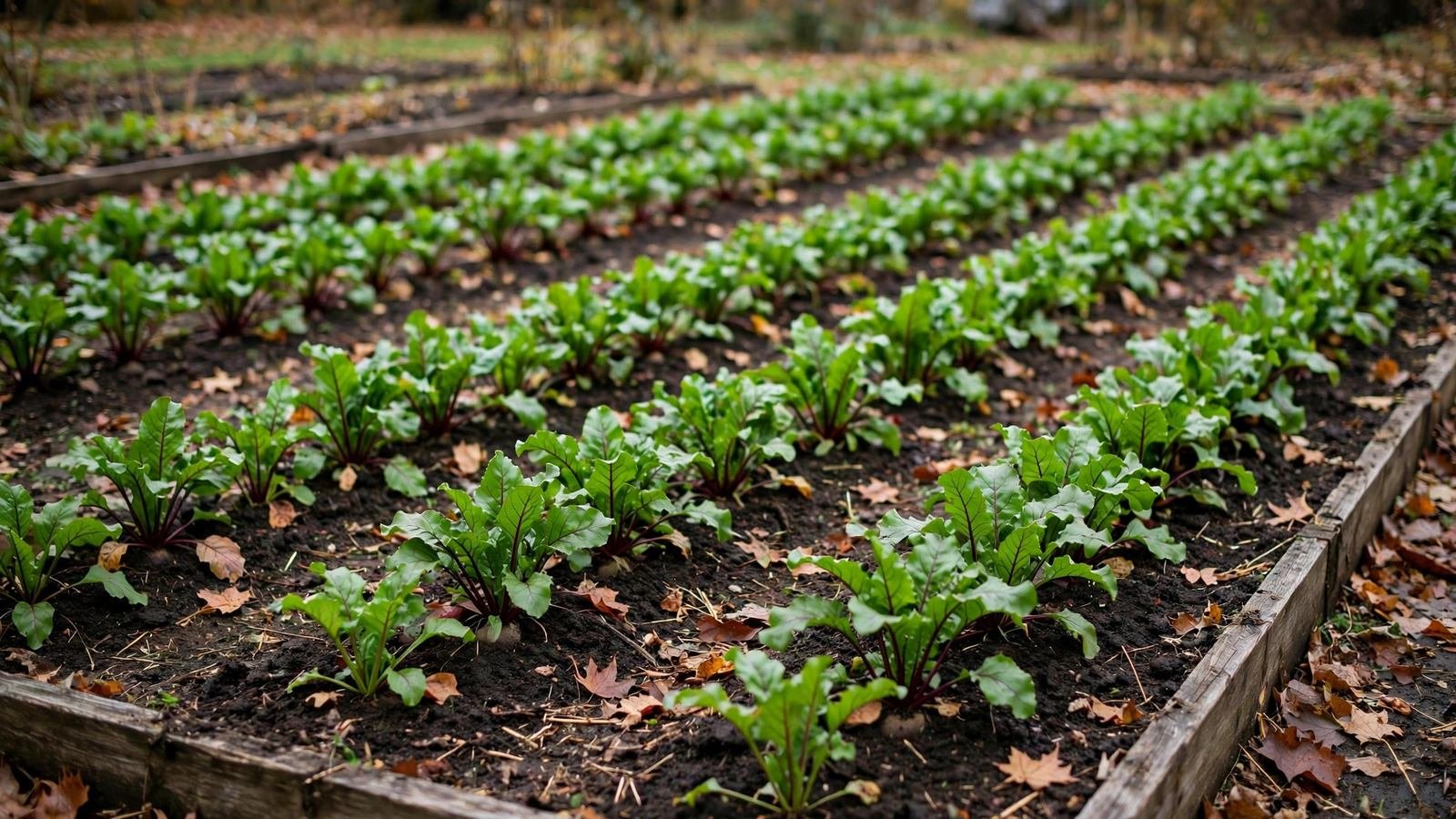
Fall flips the whole script. Cool soil, steady autumn moisture, and a light frost or two produce beets that are noticeably sweeter and more tender than anything grown in spring. You also get two harvests from a single planting — tender greens you can pick for weeks, followed by the sweet roots themselves. For a crop that asks so little, that’s a generous return.
This is standard cool-season guidance rather than a secret trick. University extension publications consistently list beets among the most reliable fall root crops, and the reasons are pure plant biology: beets germinate well in cooling soil, grow best between 60 and 65°F, and shrug off the light frosts that end most summer vegetables.
In this guide, you’ll learn when to sow beets based on your first frost date, the seed-cluster quirk that trips up nearly every beginner, how to thin for smooth globe-shaped roots, fall care basics, the best varieties for autumn planting, harvest cues for both greens and roots — plus troubleshooting and answers to the questions every beet grower asks.
Quick Care Overview
| Care item | Details |
|---|---|
| Botanical name | Beta vulgaris |
| Days to germination | 5–10 |
| Days to maturity | 50–70, depending on variety |
| Sow depth | ½ inch |
| Spacing | Thin to 3–4 inches apart; rows 12–18 inches apart |
| Soil temperature for germination | 50–85°F; best around 75°F |
| Light | Full sun (6+ hours); tolerates light afternoon shade |
| Soil | Loose, well-drained, pH 6.0–7.0 |
| Water | About 1 inch per week; keep soil evenly moist |
| Fertilizer | Light feeders; low-nitrogen balanced fertilizer if soil is poor |
| Harvest size | Roots 1½–2 inches across for best texture |
Why beets are a perfect fall crop
Some vegetables tolerate fall. Beets actively prefer it. Here’s why they belong on every autumn planting list:
- Sweeter roots after light frost. Cold nights push beets to convert starches into sugars. A frost-kissed fall beet genuinely tastes different — milder, sweeter, less earthy.
- Two harvests from one sowing. Few crops give you leafy greens for weeks and a root harvest at the end. Beets pull double duty in a way carrots and radishes can’t match.
- Fewer pest problems. The worst of the summer pest pressure is over by the time fall beets are growing. Leaf miners and flea beetles are far less active in cool weather.
- A forgiving harvest window. Beets can sit in the ground for weeks once mature, especially under mulch. There’s no panic if you get busy — unlike beans or summer squash, they wait for you.
- Simple storage. Fall roots store for months in a refrigerator or cold garage, which stretches a modest planting deep into winter.
Beets in brief
Beets (Beta vulgaris) are cool-season biennials grown as annuals — they’re related to Swiss chard and spinach, which explains why the greens are so good. Left in the ground over winter they’d flower and set seed the second year, but in the vegetable garden they’re harvested in year one.
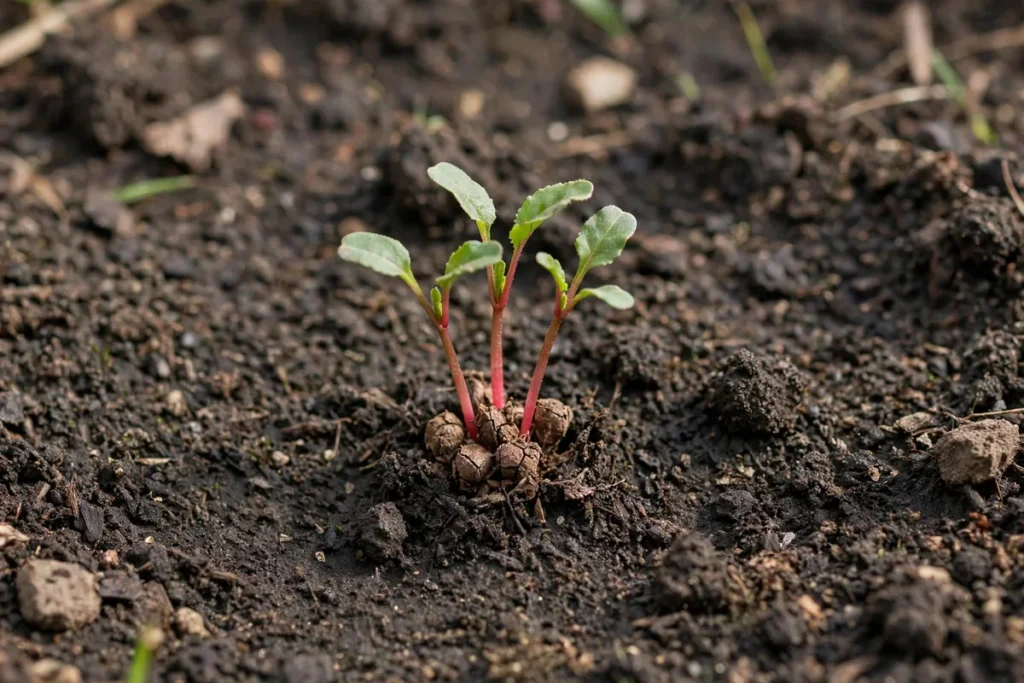
The single most useful thing to know about beet seed: what looks like one seed is actually a dried fruit, called a seed ball, containing two to four true seeds. Every “seed” you plant typically sprouts a small clump of seedlings. This is completely normal — and it’s exactly why thinning is non-negotiable with beets. It also explains why the spacing section below deserves your full attention.
When to plant beets in fall
Fall beet timing is simple arithmetic. Count back 8–10 weeks from your average first fall frost date, and sow sometime in that window. Beets need 50–70 days to mature depending on variety, and autumn’s shorter days and cooler soil slow growth a bit — so giving yourself that buffer matters. If your first frost arrives in October, that usually means sowing in late July through August; in mild-winter areas where frost waits until November or later, you can sow well into September.
Soil temperature matters more than the calendar. Beet seed germinates reliably in soil between 50 and 85°F, with the sweet spot around 75°F. If your August soil is still baking above 85°F, wait for it to cool or shade the bed — a quick check with a soil thermometer takes the guesswork out of it. Sow every two weeks until about six weeks before your first frost, and you’ll get a steady supply instead of one glut.
If frost arrives while your beets are still sizing up, a layer of floating row cover buys you several extra weeks of growth and protects against the hard freezes that do real damage. For a broader look at what else goes in the ground right now, see what to plant in October.
How to plant beets: step by step
Beets are direct-sown — they resent transplanting, and the seed germinates fast enough that indoor starts offer no advantage. Here’s the process:
Step 1: Loosen the bed. Work the top 8–10 inches of soil with a fork until it’s loose and crumbly, and pull out stones and clods. Beets push down into the soil as they swell, and compacted ground gives you stunted, forked roots.
Step 2: Mark your furrows. Draw furrows ½ inch deep and 12–18 inches apart. In a raised bed you can also sow in wide bands — just keep the same spacing between bands.
Step 3: Sow the seed clusters. Drop one seed cluster every inch along the furrow. Yes, each cluster will sprout several seedlings — that’s expected. Grab a packet of beet seeds suited to your fall window (see the variety picks below).
Step 4: Cover and firm. Cover with ½ inch of fine soil and press gently so the seed makes good contact with the soil. Skip the heavy tamping — beet seedlings are small and appreciate a loose surface.
Step 5: Water gently and keep moist. Water the row in with a soft spray, then keep the top inch of soil consistently moist until seedlings emerge in 5–10 days. In warm weather, a light mulch or a board laid over the row for a few days keeps the surface from crusting — just remember to remove it the moment seedlings appear.
Step 6: Label the row. Write the variety and date on a plant tag. Fall gardens get busy, and you’ll want to know which row is which when thinning and harvest time come.
Spacing and thinning: the step beginners skip
If there’s one rule that separates great beet growers from frustrated ones, it’s this: thin aggressively. Remember those seed clusters? Each one sprouts a clump, and a clump left alone produces a knot of tiny, misshapen roots instead of smooth globes.
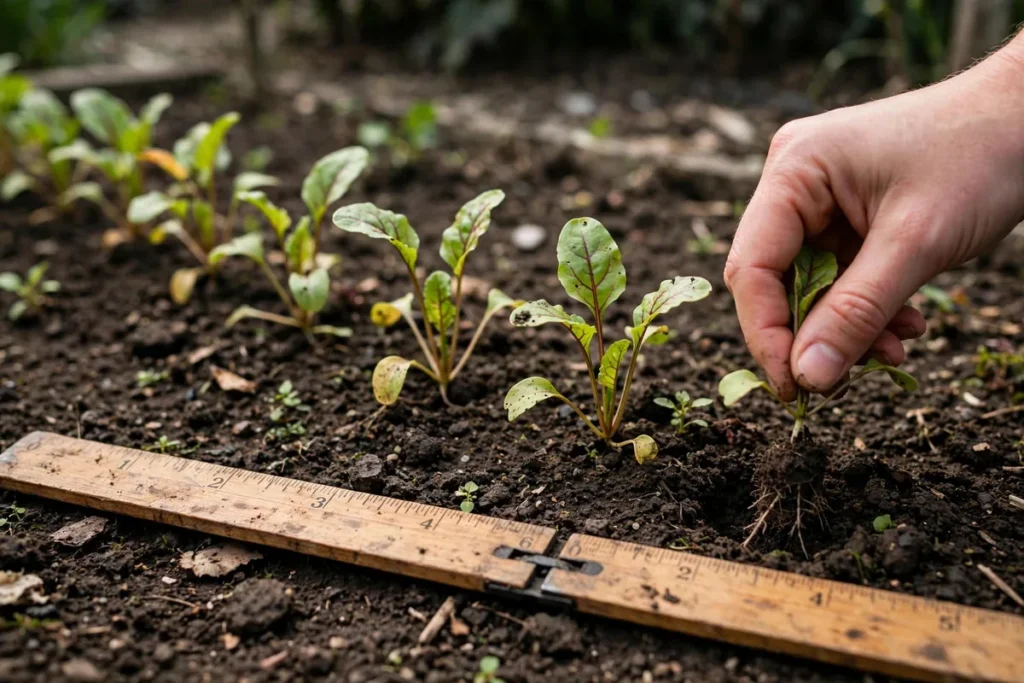
When seedlings are 2–3 inches tall, thin them to one plant every 3–4 inches. Thin in two passes if the clumps are dense — take the weakest first, then do a final pass a week later. The thinnings aren’t waste: the tiny seedlings make excellent microgreens, and the young greens you pull are already delicious in salads.
Resist the urge to leave extras “just in case.” Crowded beets compete for water and nutrients, and the result is a whole row of golf-ball roots that never size up. Three inches of personal space is the minimum price of a proper beet.
Fall beet care
Once thinned, beets are refreshingly low-maintenance. Three things keep them happy through autumn:
Water
Aim for about an inch of water per week, delivered evenly. Beets are sensitive to feast-or-famine watering — alternating dry spells and downpours causes cracking and tough texture. A soaker hose or steady rain is ideal; if you’re hand-watering, water deeply a couple of times a week rather than sprinkling daily.
Mulch
When plants are a few inches tall, spread 2–3 inches of straw or shredded leaves around (not over) them. Mulch holds the even moisture beets love, suppresses late weeds, and insulates the soil as nights get cold — which directly extends your harvest season. It’s also the single most useful thing you can do when clearing summer beds, and fall garden cleanup is the perfect time to prep beet ground for next year too.
Fertilizer
Beets are light feeders, and the most common fertilizing mistake is too much nitrogen — lush tops, tiny roots. If your soil is decent, they may need nothing at all. In poor soil, a balanced organic vegetable fertilizer worked in at planting is enough; skip side-dressing with high-nitrogen feeds. Avoid fresh manure in the beet bed, since it encourages forking and hairy roots.
The best beet varieties for fall
Any beet will grow in fall, but some handle the season better than others. These are widely grown, well-documented picks grouped by what they do best:
Classic reds
Detroit Dark Red — The standard for a reason. Uniform round roots with deep red flesh, ready in about 60 days, and reliable across a wide range of soils. If you’ve never grown beets, start here.
Red Ace — A hybrid bred for uniformity: smooth, globe-shaped roots that mature evenly in around 55 days, which makes harvest timing simpler. Good disease tolerance for a fuss-free fall planting.
Striped and colorful
Chioggia — The Italian heirloom with striking pink-and-white rings when sliced. Matures in about 55–60 days with a milder, less earthy flavor than standard reds — the rings fade with cooking, so serve it raw or lightly roasted to show them off.
Bull’s Blood — Grown as much for its dramatic dark-red foliage as its roots. The leaves are excellent in fall salads, and the roots mature in around 55 days. A two-for-one variety in the truest sense.
Specialty shapes and golds
Cylindra — A cylindrical Danish type that slices into perfect uniform rounds with zero waste. About 55–60 days to maturity, and its shape makes it easy to grow in shallower soil.
Touchstone Gold — Golden-fleshed beets with a sweet, mellow flavor and no red staining on hands or cutting boards. Ready in about 55 days; the gold color holds through cooking.
Lutz Green Leaf — A large, late variety (70–80 days) bred for winter storage. Sow it at the early end of your fall window and you’ll be pulling huge roots that keep for months in cold storage.
Harvest: greens first, roots second
Beet greens are ready long before the roots. Start picking outer leaves when they’re 4–6 inches tall, taking a few from each plant and leaving the center to keep growing. The thinnings from your spacing work count as a first harvest — toss them into salads or wilt them like spinach.
For roots, the magic size is 1½–2 inches in diameter — about the size of a golf ball to a small plum. You can feel the shoulders pushing up through the soil surface; that’s your cue to start checking. Roots left much larger get woody and lose sweetness, so pull the biggest ones first and let the rest keep sizing up.
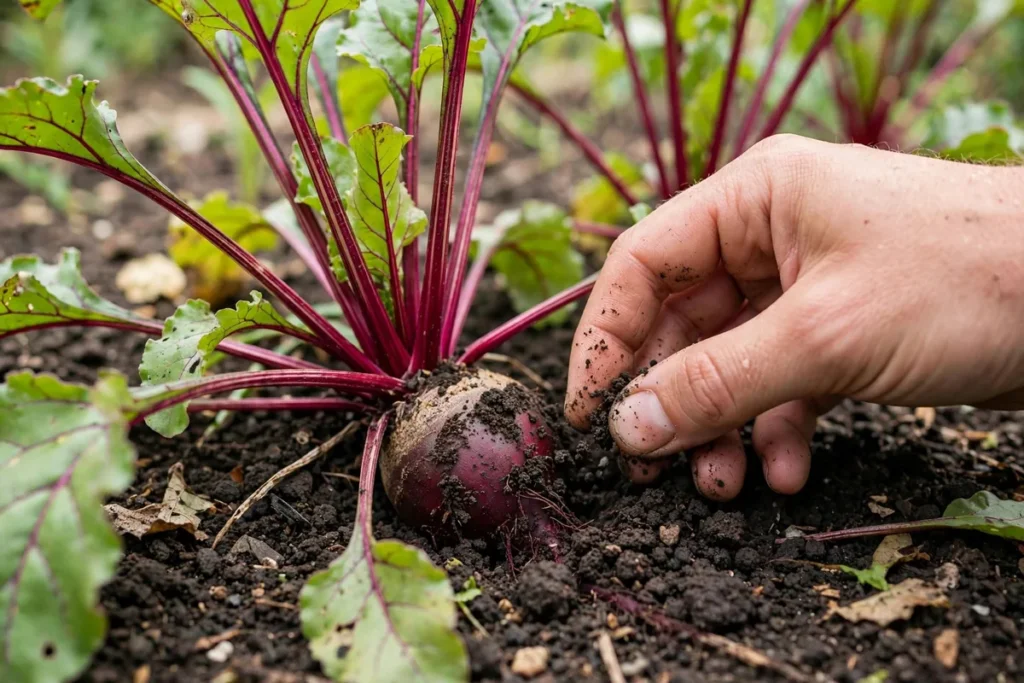
To harvest, loosen the soil with a garden fork and pull by the tops — yanking straight out of hard soil can snap the root. Twist the tops off rather than cutting them, leaving about an inch of stem; cutting into the crown makes the roots bleed color during cooking. Brush off loose soil (don’t wash) and store roots in the refrigerator crisper, where they keep for two to three months.
Troubleshooting common beet problems
My seedlings came up in clumps
That’s the seed-cluster habit doing exactly what it does — each “seed” holds multiple embryos. It’s not a germination failure. Thin the clumps to single plants 3–4 inches apart and the problem is solved.
My roots are forked or misshapen
Forking usually traces back to compacted or rocky soil, or fresh manure worked in before planting. Next planting, loosen the bed deeper, remove stones, and skip the fresh manure. Varieties like Cylindra tolerate less-than-perfect soil a bit better.
Germination was spotty
The usual culprits are soil that’s too hot (above 85°F), a crusted soil surface, or the seed drying out mid-germination. Sow when soil cools, keep the row consistently moist until emergence, and use a light mulch or row cover over the seeded row in warm spells.
Something is tunneling in the leaves
Leaf miners leave pale, winding trails inside beet and chard leaves. They’re unsightly but rarely ruin the root crop — pick off affected leaves and discard them (not in the compost). Floating row cover over young plants prevents most problems.
My roots stayed small
Almost always crowding. Unthinned clumps, rows sown too thick, or a bed that’s shaded more than you realized. Thin ruthlessly, give beets full sun, and make sure they’re getting that steady inch of water a week.
FAQs about growing beets in fall
Will frost kill my beets?
Light frosts — down to about 28°F — don’t kill beets; they sweeten them. A hard freeze in the low 20s or teens can damage roots, so mulch heavily and throw row cover over the bed when a deep freeze is forecast. In mild climates, beets can stay in the ground all winter under mulch.
Can I grow beets in containers in fall?
Yes. Use a container at least 8 inches deep with drainage holes, and choose round or cylindrical varieties like Detroit Dark Red or Cylindra. Container beets need more attentive watering than in-ground ones, since pots dry out faster.
Do I really need to thin beets?
Really. Because each seed cluster sprouts multiple seedlings, skipping thinning guarantees a tangled mass of tiny roots. It’s the single highest-impact five minutes you’ll spend on the crop.
Are beet greens actually worth eating?
Absolutely — they’re one of the best reasons to grow beets. Young leaves are tender enough for salads; larger ones cook like chard. Just don’t strip a plant bare: take outer leaves and leave the growing center so the root keeps developing.
Why did my beets bolt?
Bolting (sending up a flower stalk) is triggered by stress — usually heat at sowing time or a long cold snap on very young seedlings. Sowing in the true fall window, after the worst heat has passed, avoids most of it.
More fall vegetable growing posts to explore:
- What to Plant in October: 15 Vegetables for a Fall Garden
- How to Plant Garlic in the Fall: A Step-by-Step Guide
- Fall Garden Cleanup: 12 Things to Do Before Winter
- How to Grow Turnips in Fall
Fall beets reward a little patience with a lot of flavor — sweeter roots, tender greens, and a harvest that stretches from the first cool weeks of autumn deep into winter storage. Sow them in that late-summer window, thin them like you mean it, keep the water steady, and let a light frost do the final seasoning.
Are you growing beets this fall — and which variety are you trying first?
Sources & Further Reading
- How to Grow Beets in Your Garden — Utah State University Extension. Supports germination, spacing, seed-cluster thinning, and flavor after frost.
- Root Crops (Publication 426-422) — Virginia Cooperative Extension. Supports seed balls with 1-4 seeds, harvest size, and fall as best season.
- How to grow beets — Michigan State University Extension. Supports germination temps, watering, and harvest size.