

This post may contain affiliate links. If you buy through links on this page, we may earn a commission at no extra cost to you.
As an Amazon Associate I earn from qualifying purchases.
January is the quietest month in the garden, and in cold zones the beds sit under snow or frozen soil for weeks at a time. That does not mean the planting year starts in March. January holds real work: seed trays on a bright sill, bare-root trees and shrubs in mild zones, garlic and onions where the ground is still open, and the first indoor crops of the year. The month rewards a gardener who plans on paper and starts small indoors, while the outdoor beds rest.
This guide sorts January planting by zone, gives the indoor starts that pay off first, and counts the sowing dates back from a stated last frost so you can rerun the same math for your own town. The worked example below uses an April 15 last frost, a common case in zone 7, with the standard eight-week indoor start for tomatoes. For the month before this one, see our guide on what to plant in December.
What January planting looks like by zone
January planting is a zone question before it is a crop question. A gardener in zone 10 sows a full bed in January, while a gardener in zone 4 starts nothing outdoors at all and works indoors instead. The table below gives the short version for each band, and the sections after it fill in the how-to for each group.
| Zones | Outdoors in January | Indoors in January |
|---|---|---|
| Zones 3 to 5 | Nothing, the ground is frozen | Onions, leeks, celery, herbs, sprouts, microgreens |
| Zones 6 to 7 | Garlic where the ground is open, bare-root trees and shrubs | Onions, leeks, celery, peppers in late January, sprouts, microgreens |
| Zones 8 to 9 | Garlic, onions, peas, lettuce, carrots, bare-root fruit trees | Peppers, eggplant, tomatoes in late January, herbs, microgreens |
| Zone 10 | Tomatoes, peppers, squash, beans, carrots, lettuce, herbs | Warm-season transplants, herbs, microgreens |
Use your local frost dates and regional planting guidance — not your USDA hardiness zone alone — to choose planting dates. A zone number tells you how cold the winter gets, not when your last frost arrives, and two gardens in the same zone can sit weeks apart on frost dates. Your local extension planting calendar is the better guide for the exact dates in your town.
Seeds to start indoors in January
Onions, leeks, and celery are the classic January indoor starts, because they grow slowly and need a long season before they go out. Sow onion seed in a shallow tray of seed-starting mix, barely covering the seed, and keep the tray at 65 to 75 degrees until the seeds sprout. Leeks want the same treatment, sown about 10 to 12 weeks before the last frost. Celery is slower still, so start it 10 to 12 weeks ahead too, and keep the mix damp until the tiny seeds sprout in about two weeks.

Give indoor seedlings strong light from the start. A south-facing window can work for onions and leeks, but a simple shop light hung two inches above the leaves gives steadier growth and stops the seedlings from stretching toward the glass. Run the light 14 to 16 hours a day, and raise it as the plants grow so the tops stay close to the bulbs without touching them. Water from below when the mix surface dries, and run a small fan on low for a few hours a day once the seedlings are up, because moving air grows sturdier stems.
Peppers and eggplant can start in late January in zones 8 and 9, and in zones 6 and 7 they wait until February or March. Peppers need warm soil to sprout, about 75 to 85 degrees, so a heat mat under the tray helps a lot. Tomatoes started in January grow leggy before spring in most zones, so hold them until six to eight weeks before the last frost. Label every tray with the variety and the sowing date, because by March the trays all look alike and the labels are the only record you have.
If you need trays and a heat mat, you can browse seed starting trays with heat mats on Amazon. We have not tested the products linked here, and we give no current store prices. Check each listing for current tray counts, mat sizes, and pack sizes before you buy.
Bare-root trees, shrubs, and roses
January is a good month to plant bare-root trees, shrubs, and roses in zones 6 through 9, while the plants are dormant and the ground is still workable. Dormant plants lose little water through their stems, and the roots settle in over the rest of winter so the plant starts growing on time in spring. Soak the roots in a bucket of water for a few hours before planting, and dig the hole twice as wide as the root spread but no deeper than the roots are long.
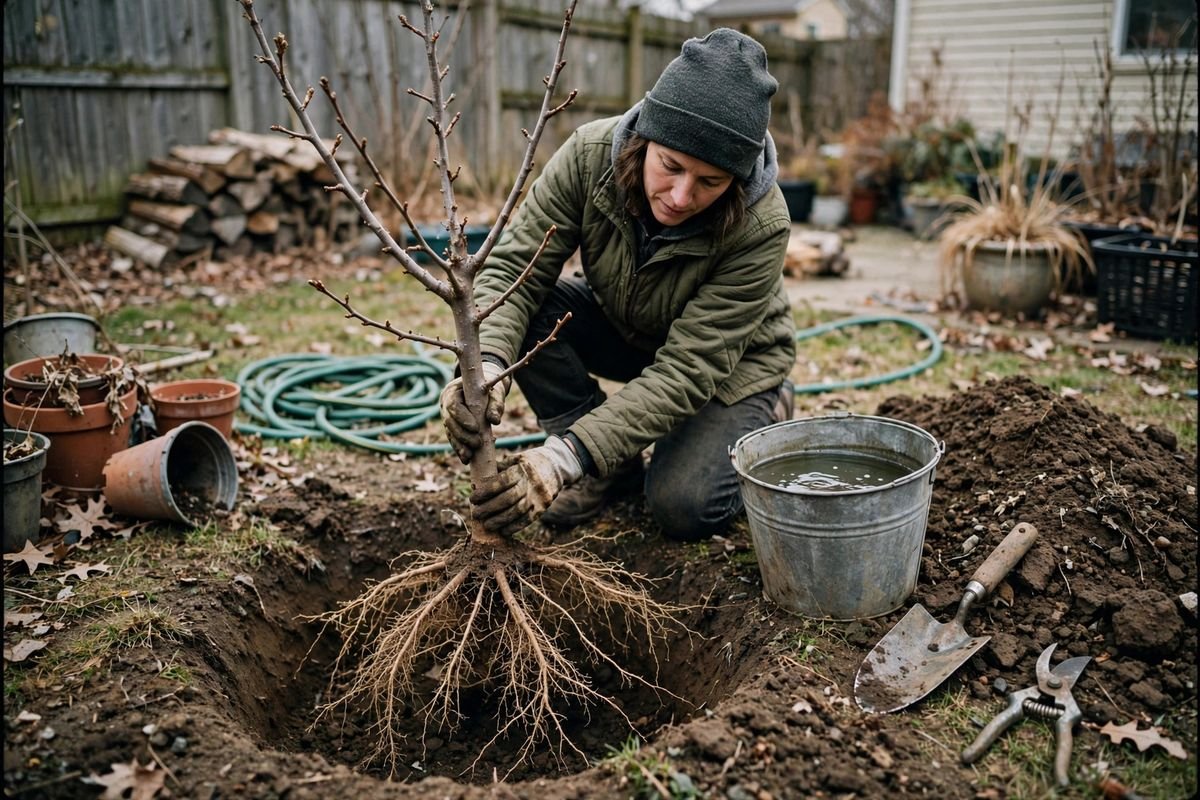
Set the plant at the same depth it grew at the nursery, which you can see from the soil line on the stem. Spread the roots out flat instead of bunching them in the hole, backfill with the soil you dug out, and water it in well so the soil settles around the roots. Mulch 3 inches deep around the plant, and keep the mulch a few inches away from the stem so it does not hold damp against the bark.
Skip bare-root planting when the ground is frozen or waterlogged. A hole dug in frozen soil will not drain, and the roots will sit in cold water all winter. In zones 3 to 5, wait for the spring thaw and plant bare-root stock as soon as the ground can be worked. For the fruit trees that suit a winter planting, see our guide on the best bare-root fruit trees to plant in winter.
Garlic and onions in mild zones
Garlic planted in January is late for most zones, but in zones 8 and 9 it can still work if the ground is open and the cloves get a few weeks of cool soil before spring growth starts. Plant cloves pointy end up, 2 inches deep, spaced 6 inches apart in rows 12 inches apart, and cover the bed with 4 inches of straw mulch. Expect smaller bulbs than a fall planting gives, because the cloves miss part of the cold stretch that drives bulb size.
Onion sets and onion transplants go out in January in zones 8 to 10, and in zones 6 and 7 they wait for late February or March. Short-day onion types suit the south, where the days lengthen slowly in spring, while long-day types suit the north. Check the type on the bag before you buy, because a long-day onion planted in the south forms small bulbs and a short-day onion planted in the north bolts before it sizes up.
Indoor crops: sprouts, herbs, and microgreens
Sprouts are the fastest January crop in any zone. A jar of mung bean or alfalfa sprouts is ready in 3 to 5 days, and the whole setup is a wide-mouth jar, a mesh lid, and a spot on the counter. Rinse the seeds twice a day and drain the jar well after each rinse, because sprouts that sit in standing water turn sour fast. For the full jar routine, see our guide on how to grow sprouts indoors.
Herbs on a bright windowsill give fresh leaves all winter. Parsley, chives, and mint start well from seed in January, and a pot of basil moved indoors before the first frost keeps producing if it gets six hours of light a day. Turn the pots every few days so the plants do not lean toward the glass, and water only when the top inch of soil feels dry. For more on the winter herb routine, see our guide on how to grow herbs indoors in winter.
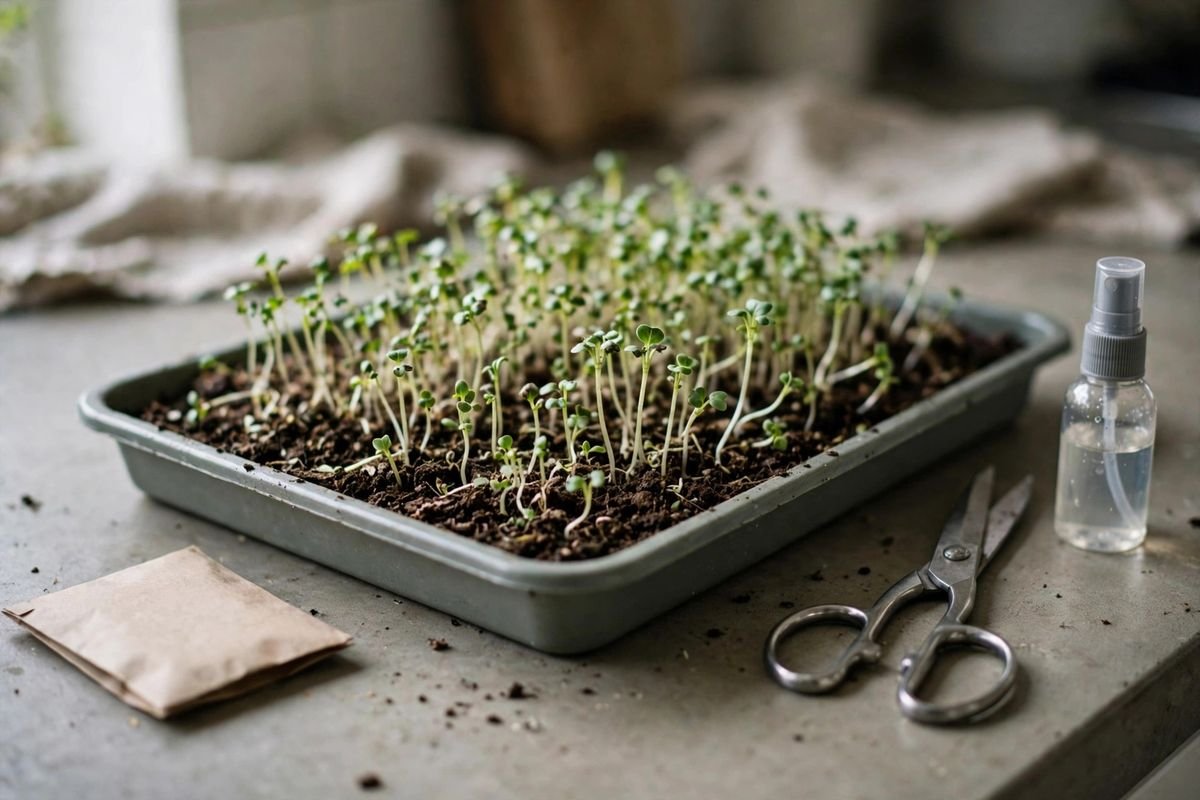
Microgreens sit between sprouts and herbs on speed and effort. Sow radish, broccoli, or pea shoots thickly in a shallow tray of potting mix, mist the surface, and keep the tray in a bright spot. Most types are ready to cut in 7 to 14 days, and a pair of kitchen scissors harvests the whole tray in a minute. For the full tray routine, see our guide on how to grow microgreens indoors.
Our worked example: counting back from an April 15 last frost
Here is the sowing math for a garden with an April 15 last frost, a common case in zone 7. The rule is simple: take the weeks before the last frost that each crop needs indoors, and count back from April 15. These are our own computed numbers with the assumptions stated in the table, and the dates shift with your own last frost date.
| Crop | Weeks indoors before last frost | Sow indoors | Move outdoors |
|---|---|---|---|
| Onions, from seed | 10 | February 4 | April 15 |
| Leeks | 10 | February 4 | April 15 |
| Celery | 11 | January 28 | April 15 |
| Peppers | 8 | February 18 | April 29, two weeks after last frost |
| Tomatoes | 7 | February 25 | April 29, two weeks after last frost |
| Herbs, parsley and chives | 8 | February 18 | April 15 |
The table shows why January sowing is a narrow list in this garden. Celery sown on January 28 is the only crop on the list that truly starts in January, while onions and leeks fall in early February and peppers and tomatoes wait until mid to late February. A tomato sown on January 15 would be 14 weeks old by April 29, leggy and root-bound long before it could go out, which is why the January seed work is slow crops and indoor food, not warm-season transplants.
The indoor food math runs the other way, with no frost limit at all. Sprouts sown on January 1 are ready between January 4 and January 6. Microgreens sown on January 1 are ready to cut between January 8 and January 15. A tray sown each week gives a steady supply through the month, and the only date that matters is the sowing date, not the weather outside. For the month before this one, see our guide on what to plant in November.
Troubleshooting
Seedlings stretch toward the window
Leggy seedlings need more light, not more water. Move the tray under a shop light hung two inches above the leaves, run it 14 to 16 hours a day, and turn the tray every day if it stays on a sill. Seedlings that have already stretched past three inches with thin stems rarely recover, so start a fresh tray and fix the light first.
Seeds rot before they sprout
Seed that rots in the tray was sown in mix that stayed too wet and too cold. Use fresh seed-starting mix, water from below, and keep the tray at 65 to 75 degrees until the seeds sprout. A heat mat helps peppers and other warm-season seed. Toss mix from a tray that went sour, and sow fresh seed in clean trays.
Bare-root trees fail to leaf out in spring
A bare-root tree that never leafs out was often planted too deep, dried out before planting, or set in frozen or waterlogged soil. Check the soil line on the stem at planting time, soak the roots for a few hours first, and skip planting when the ground is frozen. Scratch a small twig in spring: green under the bark means the tree is alive and late, while brown and dry means it did not survive.
January garlic comes up small
Small garlic from a January planting is normal, because the cloves miss part of the cold stretch that drives bulb size. The bulbs are still good to eat, and the fix is timing, not feeding: plant garlic in October or November next year, four to six weeks before the ground freezes, so the cloves get a full winter in the ground.
Frequently asked questions
What can I plant in January in zone 5?
Nothing outdoors, because the ground is frozen. January in zone 5 is for indoor starts: onions, leeks, and celery from seed, plus sprouts, microgreens, and herbs on a bright sill. Bare-root trees and garlic wait for spring, when the ground can be worked again.
Is January too early to start tomatoes indoors?
In most zones, yes. Tomatoes need six to eight weeks indoors before the last frost, which puts the sowing date in late February or March for an April 15 last frost. A tomato started in January grows leggy and root-bound long before it can move outdoors, so the January seed work is slow crops like celery, onions, and leeks.
Can I plant garlic in January?
In zones 8 and 9, yes, if the ground is open and workable, but expect smaller bulbs than a fall planting gives. In zones 6 and 7, January garlic is a gamble that depends on the ground staying open, and in zones 3 to 5 the ground is frozen and the planting window has closed until next fall.
What grows fastest indoors in January?
Sprouts are the fastest, ready in 3 to 5 days from sowing. Microgreens follow at 7 to 14 days. Herbs take longer, a few weeks from seed to first leaves, but a potted herb moved indoors before frost gives leaves from the first day.
Sources and further reading
- University of Minnesota Extension, Growing Garlic in Minnesota
- North Carolina State University Extension, Central North Carolina Planting Calendar for Annual Vegetables, Fruits, and Herbs
- University of Maryland Extension, Growing Microgreens and Baby Greens Indoors
Related reading: What to Plant in December, What to Plant in November, How to Grow Sprouts Indoors, How to Grow Microgreens Indoors, How to Grow Herbs Indoors in Winter
By the Pot and Plot Team