How to Store Potting Soil Between Seasons

Leftover potting soil can last until spring if you dry it, seal it, and label it. This guide shows the bin math and the spring refresh steps.

Everything above ground starts below it. Healthy soil is the least glamorous and most important part of gardening, so we gave it its own corner. Here you’ll learn how to build good soil from scratch, make compost at home without the smell or the hassle, and feed your garden the slow, steady way. Get this part right and the plants mostly take care of themselves.
Leftover potting soil can last until spring if you dry it, seal it, and label it. This guide shows the bin math and the spring refresh steps.

A fall soil test gives you months to fix pH and nutrients before spring. This guide covers sampling, home kits vs lab tests, and reading the report, with the math for a 4-by-8-foot bed.

Bare winter soil loses nutrients and structure fast. Compare the best cover crops for winter vegetable gardens, with sowing rates for a 4-by-8-foot bed.

Leaf mold turns fall leaves into dark, crumbly soil conditioner with only a wire bin, water, and patience. This guide covers shredding, filling, and waiting, with bag-count math for one bed.

A winter compost pile slows down but does not die. We cover insulation, feeding, turning, and a worked example for a 3-by-3-foot pile, so the pile stays alive until spring.

Compare the four kinds of home soil test kits, learn how to sample soil worth testing, and see what a season of testing costs for four beds and twelve pots.
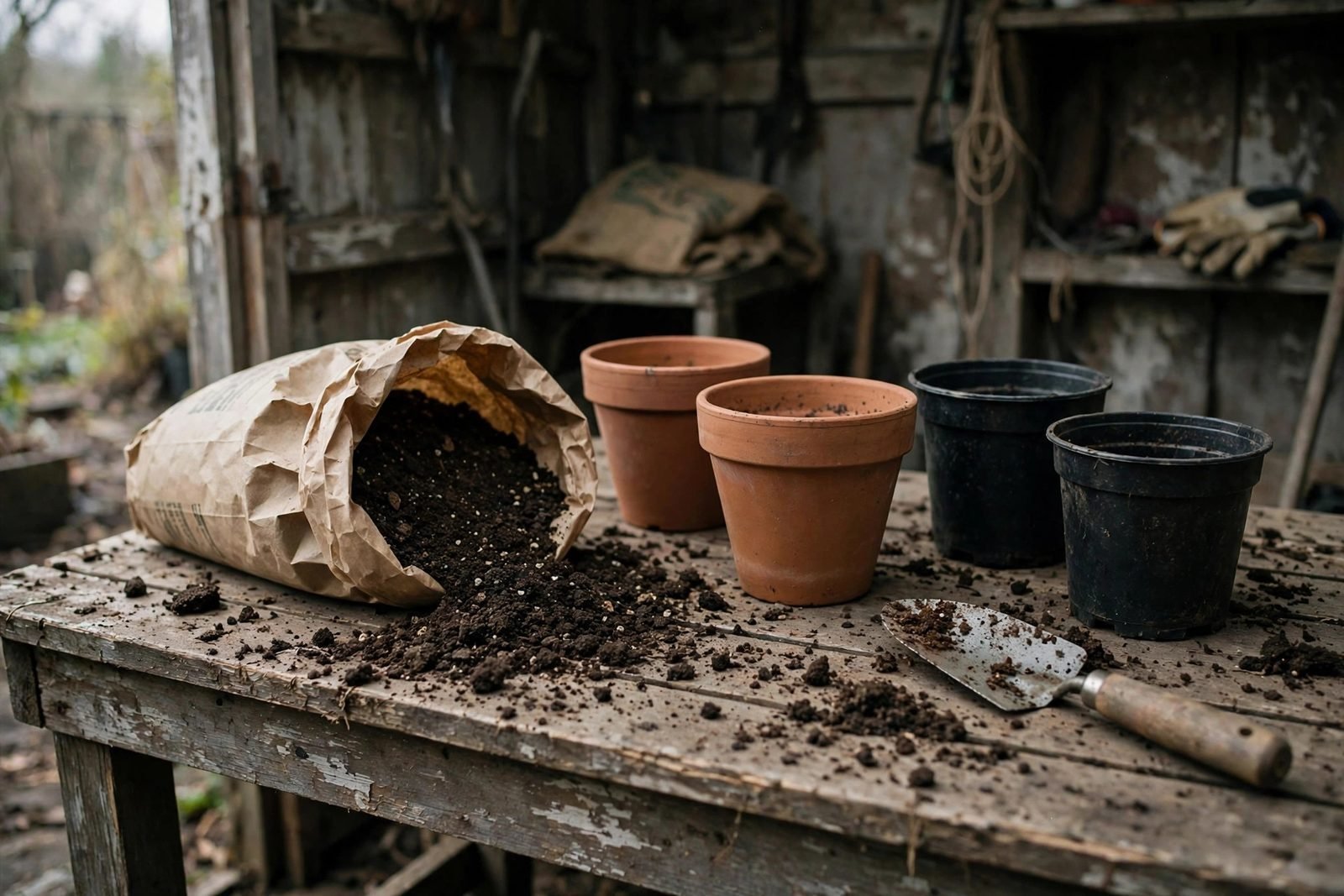
Five potting mixes compared against Fox Farm Ocean Forest by ingredients, texture, and volume, with a 10-pot refill plan to show what each swap costs in mix.

Organic granular, liquid, compost-based, and slow-release feeds each do a different job. A worked tomato-bed example shows liquid feed costs the most per season, while slow-release and organic granular cost the least.

Mulch is a blanket that protects the soil, while compost is food that feeds it. A 4 by 8 foot bed takes about $34 of material for the full fall treatment, compost first and mulch on top.

A timed drain test shows whether a pot drains well, slowly, or not at all, using a measured pour, a timer, and three numbers you can compare after any fix.