
This post may contain affiliate links. If you buy through links on this page, we may earn a commission at no extra cost to you.
As an Amazon Associate I earn from qualifying purchases.
Fox Farm Ocean Forest is the bag many container growers reach for first. It is a nutrient-heavy blend of composted forest humus, sphagnum peat, worm castings, fish meal, crab meal, shrimp meal, and bat guano, ready to plant straight from the bag, and it feeds heavy feeders well from day one. It is also pricey, it is not always in stock, and it is hot soil: the nutrient load can overwhelm young seedlings and tender plants. That is why the swap question comes up so often, and it is a different question from ranking mixes in general. Our guide to the best potting mixes for container vegetables ranks mixes for the whole container garden; this guide answers one narrower question, which is what to buy instead of Ocean Forest for a given pot and a given plant.
The five swaps below all appear in published potting-mix roundups next to Ocean Forest, and every bag size and ingredient note here comes from those roundups or the makers. Where a figure could not be checked, it is left out. No prices appear in this guide: bag prices shift by store and season, and the worked example at the end compares volume, not cost.
Five swaps at a glance
The table puts Ocean Forest first as the reference point, then the five alternatives, so you can see what changes with each swap: gentler feed, a different texture, or a smaller bag that fits a small project.
| Mix | Bag sizes seen | Texture and feed | Best swap case |
|---|---|---|---|
| Fox Farm Ocean Forest | 12 qt, 1.5 cu ft | Dense, nutrient-heavy, ready to plant | The mix being replaced |
| Fox Farm Happy Frog | 12 qt, 2 cu ft | Lighter, microbe-heavy, gentler feed | Seedlings and young plants |
| Espoma Organic Potting Mix | 8 qt, 16 qt, 1 cu ft | Peat, humus, and perlite, with bone, alfalfa, and feather meals | Herbs and vegetables in containers |
| Miracle-Gro Potting Mix | 16 qt | Peat-based mix with slow-release fertilizer added | A widely stocked, low-fuss swap |
| Black Gold All Organic Potting Soil | 16 qt | Compost, peat moss, and perlite | All-purpose containers and flowers |
| Coast of Maine Bar Harbor Blend | 1.5 cu ft (Stonington Blend) | Compost, peat moss, and perlite | Moisture management and heavy feeders |
One note on the Coast of Maine row: the Bar Harbor Blend is the container mix in the roundups, while the 1.5 cubic foot bag size listed comes from the Stonington Blend, the same brand’s grower mix. Both are compost, peat, and perlite blends, but check the bag label for the exact blend and size before you buy.
Happy Frog: the gentler Fox Farm swap
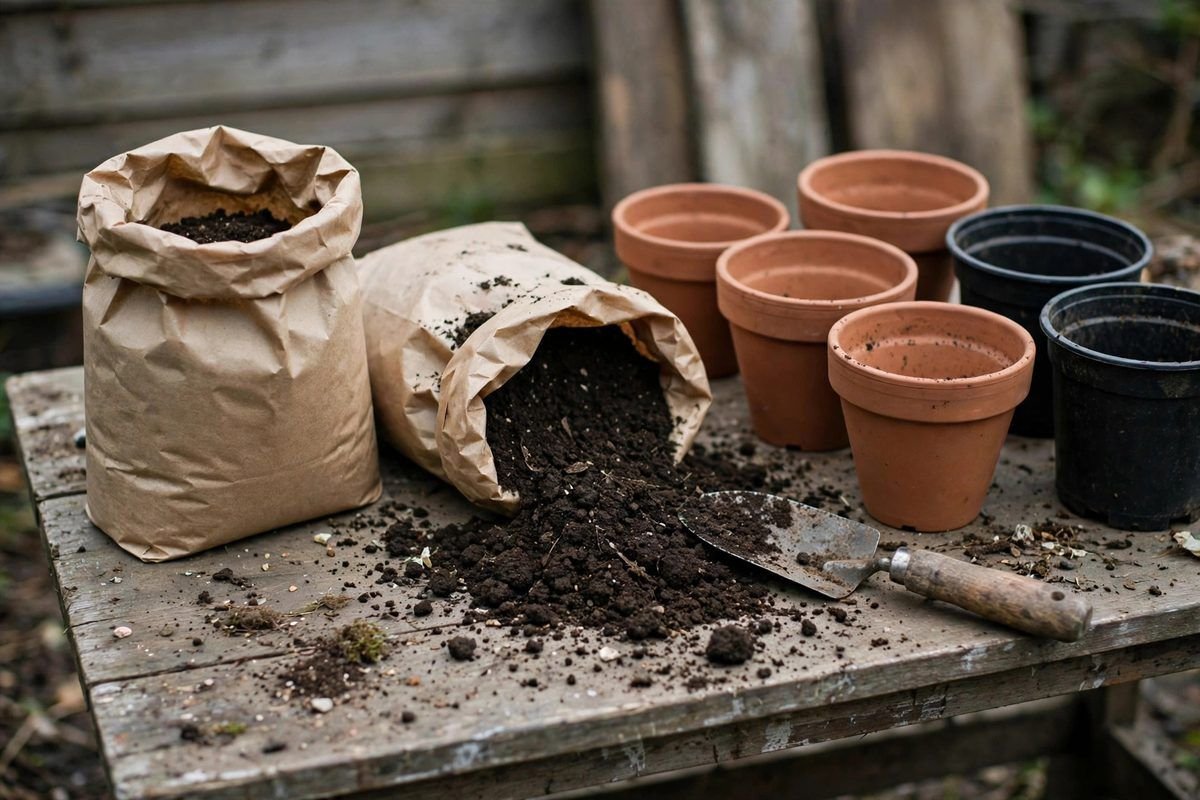
Happy Frog is the obvious first swap because it comes from the same maker and the same shelf. It is a lighter, microbe-heavy mix built for young plants, seedlings, and containers, with a pH of 6.3 to 6.8, the same range published for Ocean Forest. The feed is milder, so it will not burn tender roots the way a hot mix can, and it suits herbs and young vegetables that are still building roots.
Pros: gentler on seedlings, same pH range as Ocean Forest, and easy to find wherever Ocean Forest is sold. Cons: it runs out of feed sooner than Ocean Forest, so heavy feeders will need feeding earlier in the season, and it is still a Fox Farm bag, so it will not help if the whole brand is out of stock at your store. If your pots hold seedlings, start here; if they hold mature tomatoes, look at the heavier-feeding swaps below.
Espoma Organic: the steady organic swap
Espoma Organic Potting Mix is built on sphagnum peat moss, humus, and perlite, with earthworm castings, alfalfa meal, kelp meal, and feather meal in the blend, and the maker’s Myco-Tone blend of mycorrhizal fungi. It comes in 8 quart, 16 quart, and 1 cubic foot bags, so it scales from a few herb pots to a full container run. Roundups rate it well for herbs and vegetables, and it is a certified organic input for growers who keep their whole garden organic.
Pros: balanced organic feed, useful bag sizes for small and large jobs, and a mycorrhizal blend aimed at root growth. Cons: the 16 quart bag covers only a few medium pots, so a big refill takes several bags, and it is not as nutrient-heavy as Ocean Forest out of the bag, so heavy feeders may want a top feed sooner. Browse Espoma organic potting mix on Amazon to compare the 8 quart and 16 quart bags.
Miracle-Gro Potting Mix: the widely stocked swap
Miracle-Gro Potting Mix is the bag most stores carry when the premium brands are gone. It is a peat-based mix with slow-release fertilizer added, sold in a 16 quart bag, and it suits the grower who wants one bag, one fill, and no extra feeding for the first stretch of the season. It is not an organic mix, and it is not built for the grower who wants to control every input, but for a row of containers that need filling today, availability is a real feature.
Pros: easy to find, simple to use, and the added fertilizer carries plants through the first weeks. Cons: the feed is a fixed recipe rather than a soil food web, so it suits short-season containers better than a long-season bed, and growers who garden organic will want one of the other swaps. For the question of whether last season’s mix can go again, see our guide to can you reuse potting soil.
Black Gold: the all-purpose organic swap
Black Gold All Organic Potting Soil blends compost, peat moss, and perlite into a well-draining organic mix, sold in a 16 quart bag. Roundups place it as an all-purpose container mix, and it suits flowers and mixed containers where the plant list changes from pot to pot. Its texture drains well, which helps in pots that sit in full sun and get watered hard.
Pros: organic, free-draining, and a fair all-purpose fill for mixed containers. Cons: the 16 quart bag is small for a big refill, and the feed is lighter than Ocean Forest, so hungry vegetables will want feeding during the season. Before you fill any pot, check that it drains the way it should with our guide to how to test soil drainage in a pot.
Coast of Maine: the moisture-holding swap
Coast of Maine blends, Bar Harbor for containers and Stonington for growers, mix compost, peat moss, and perlite, and roundups rate them well for moisture management. That matters in containers, where a mix that dries out between waterings stresses plants fast. The Stonington Blend comes in a 1.5 cubic foot bag, which is a serious volume for a container grower, and it suits heavy feeders that want steady moisture and steady feed.
Pros: holds moisture well, compost-heavy, and the large bag covers a full container run. Cons: the large bag is heavy to carry and awkward to store in a small space, and it may not be stocked at every garden center, so check before you plan around it. For the wider question of feeding versus blanketing a bed, see our guide to mulch versus compost.
A worked example: a 10-pot refill plan
Bag sizes mean little until they meet real pots, so here is a refill plan with the numbers shown. Assume 10 pots, each holding 2 quarts of mix, filled to the same level with no mounding. Ten pots at 2 quarts each need 20 quarts of mix. Assume the mix settles a little after the first watering, and keep a small spare, but the bag math below uses the flat 20 quart figure so the comparison stays clean.
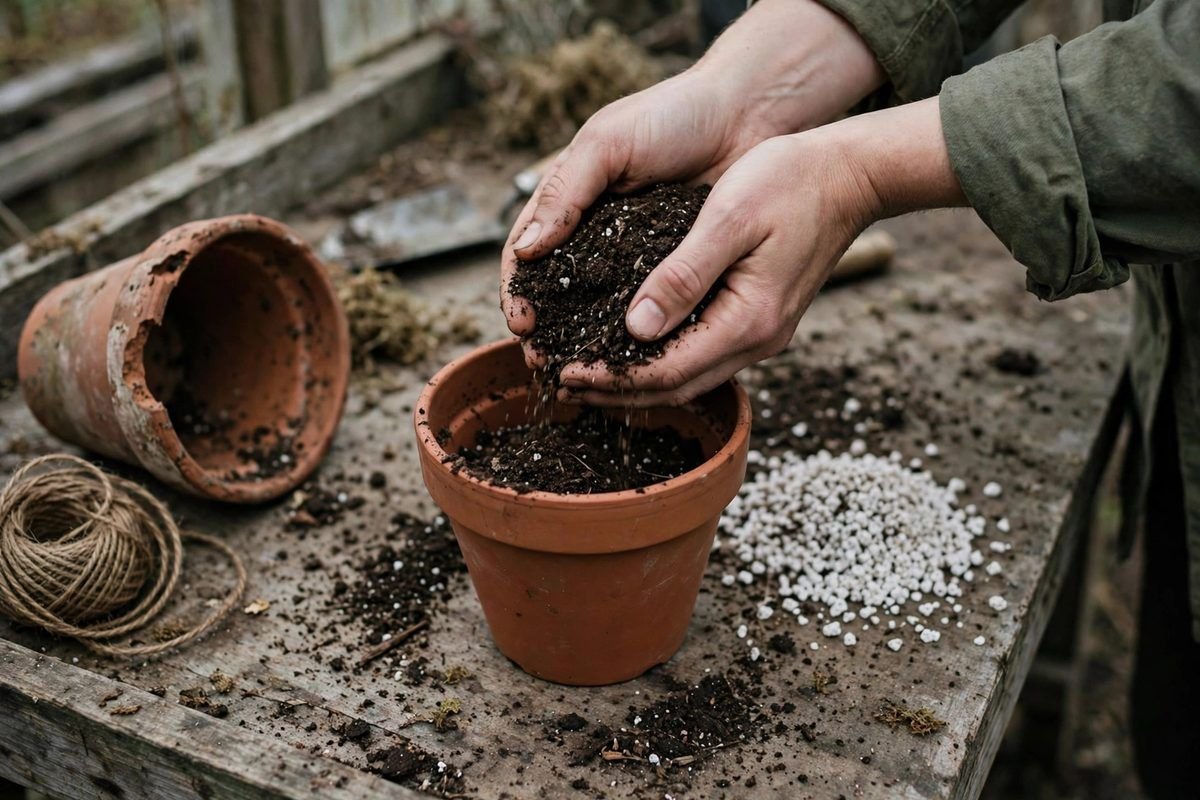
A 12 quart bag of Ocean Forest or Happy Frog fills 6 pots, so the plan needs 2 bags, which is 24 quarts, with 4 quarts left over. A 16 quart bag of Espoma, Miracle-Gro, or Black Gold fills 8 pots, so the plan still needs 2 bags, which is 32 quarts, with 12 quarts left over. A 1.5 cubic foot bag is about 45 quarts, since one cubic foot holds about 30 quarts, so one bag fills 22 pots of this size: it covers the whole 10-pot plan twice over, with about 25 quarts left over.
The lesson is plain: for a small refill, the 12 quart and 16 quart bags behave the same, since both need a second bag to finish 10 pots, and the difference shows only in the leftover. For a large refill, the 1.5 cubic foot bag is the only size that finishes the job with one bag. Check the label on the bag you buy, because sizes vary by store and by season, and a bag that looks the same can hold a different volume.
Which swap fits which pot
Choose Happy Frog if the pots hold seedlings or young plants and you want the gentlest feed of the five. Choose Espoma Organic if you want a certified organic mix with useful bag sizes and a mycorrhizal blend for root growth.
Choose Miracle-Gro Potting Mix if you want the swap you can buy today at almost any store, with no extra feeding for the first weeks. Choose Black Gold if the pots hold mixed flowers and containers and you want a free-draining organic fill. Choose Coast of Maine if the pots are large, the plants are hungry, and you want one big bag that holds moisture through hot days.
And keep Ocean Forest in mind for the pots where it earns its place: mature, heavy-feeding vegetables in large containers, where a nutrient-heavy mix from day one is what the plant wants. A swap is not a demotion; it is a match between a mix and a pot, and the right match changes with the plant, the pot size, and the season.
Sources & Further Reading
University of California Agriculture and Natural Resources
Cornell Cooperative Extension
North Carolina State University Extension