
This post may contain affiliate links. If you buy through links on this page, we may earn a commission at no extra cost to you.
As an Amazon Associate I earn from qualifying purchases.
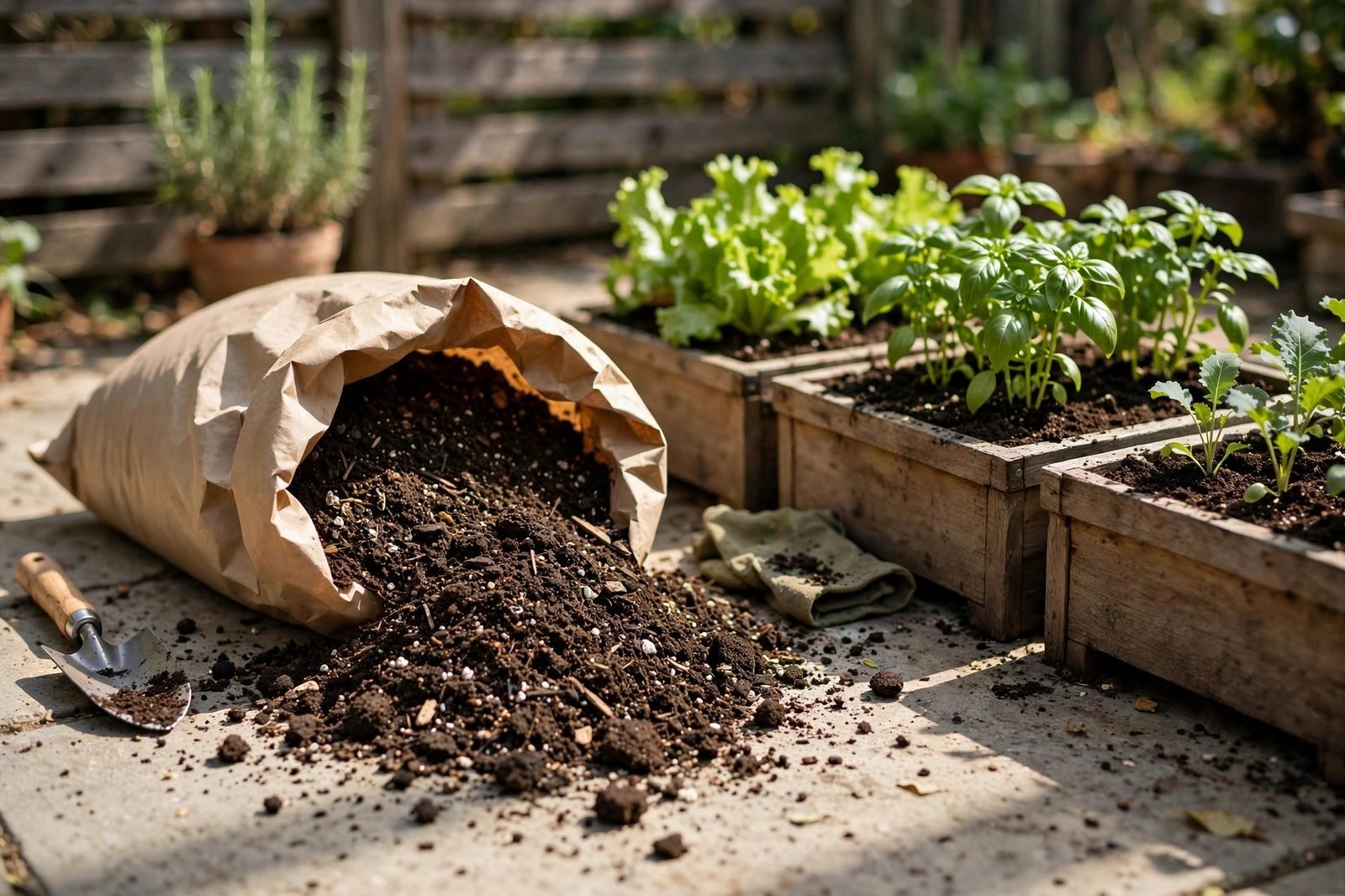
Bagged potting mix looks simple from the aisle. Every bag promises happy plants, strong roots, and a great harvest. The real differences hide in the base material, the drainage particles, and how much food comes mixed in at the start. For vegetables in pots, those three things decide how often we water, how often we feed, and whether roots stay healthy through a hot month.
One honesty note up front: this guide is a spec-based research roundup. Our team compared bag labels, ingredient lists, and extension guidance on container growing media. We have not run hands-on product trials on the mixes linked here, and we do not claim test results. What we can do is show how to read a bag with confidence, run the volume math before buying, and match a mix type to the vegetables on the patio. New container growers may want our primer on container gardening for beginners first, since pot size and drainage holes matter as much as the mix.
Quick Comparison: Three Mix Types at a Glance
Most bagged mixes for vegetables fall into three broad families. Brands cross these lines all the time, so treat the table as a reading tool rather than a ranking. The label on the specific bag always wins.
| Mix type | Base | Drainage | Best for | Watch out for |
|---|---|---|---|---|
| Peat-based all-purpose | Sphagnum peat moss with bark fines | Good once moist; perlite usually included | Most patio vegetables; forgiving for beginners | Dry peat resists rewetting; bags can be heavy when wet |
| Coir-based | Coconut coir fiber and chips | Steady; coir holds water yet keeps air pockets | Hot patios and thirsty crops like tomatoes and peppers | Quality varies; low-grade coir may carry excess salts |
| Compost-rich premium | Compost and aged bark blended with peat or coir | Variable; richer blends can stay wetter | Heavy feeders and long-season containers | Higher price per cubic foot; fertility still fades mid-season |
None of these families is garden soil in a bag. A true potting mix is soilless: no field soil, a lighter texture, and far fewer weed seeds. Our breakdown of potting soil vs garden soil covers when each one belongs in a pot.
Reading the Bag: Four Things That Matter
Ingredient lists read from largest share to smallest, just like food labels. The first two or three ingredients make up most of the bag. Four checks tell us nearly everything before a bag goes in the cart.
1. A Soilless Base That Fits the Crop
Peat moss holds water well and starts slightly acidic, which suits most vegetables once a mix adds lime to balance pH. Coir, made from coconut husks, rewets easily after drying out and resists compaction. Aged bark adds structure and slows the breakdown that makes old mix slump. Any of these bases can grow fine vegetables. The base matters less than what the maker blended into it, and far less than watering habits through the season.
2. Perlite or Vermiculite for Air
Roots need oxygen as much as water. Perlite, the white volcanic flecks in most mixes, keeps air pockets open and helps excess water escape. Vermiculite, a flaky mineral, holds more water and releases it slowly. A container mix should show one of them high enough on the ingredient list to matter. A bag listing only peat and bark may drain fine in spring, then pack down by midsummer.
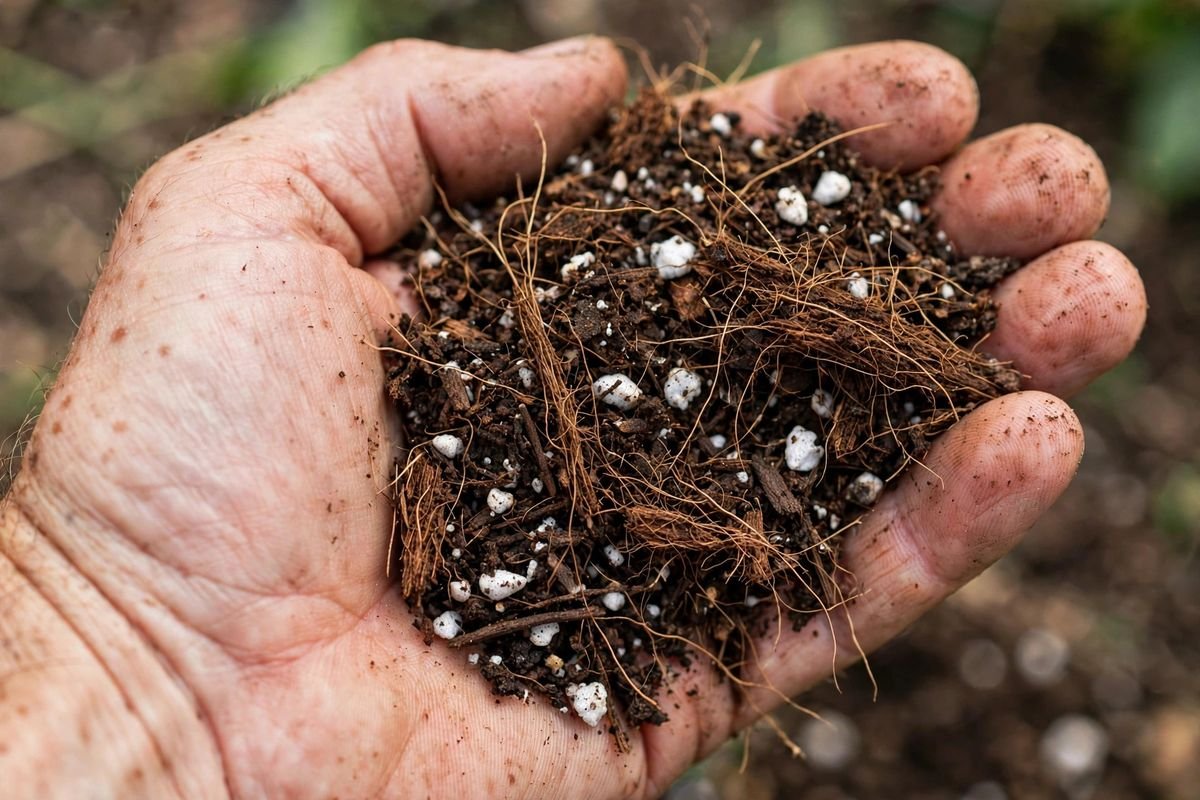
The handful in the photo tells the story. Visible perlite and fibrous strands mean the mix can hold water and air at the same time. A dense, powdery handful with no flecks usually drains slowly and benefits from extra perlite stirred in at filling time.
3. A Wetting Agent for Dry Starts
Dry peat and dry coir both shrug off the first watering. Water beads, runs down the inside of the pot, and exits the drainage holes while the center stays dusty. Many mixes solve this with a wetting agent, a food-safe surfactant that helps the base absorb water evenly. When a label lists one, rewetting after a dry weekend gets much easier. Without one, we water slowly, wait ten minutes, and water again until the pot feels heavy.
4. The Fertilizer Charge, and Its Limits
Many mixes include a starter fertilizer charge, often described as feeding for a set number of weeks or months. Treat that claim as a gentle head start, not a season-long plan. Container vegetables drink heavily, every watering flushes a little fertility out the bottom, and fruiting crops pull hard on nutrients. Our rhythm is simple: trust the charge for the first few weeks, then shift to a regular liquid or slow-release routine matched to the crop. A mix with no charge is fine too, as long as feeding starts at planting.
How Much Mix Do You Actually Need?
Bag sizes cause more second trips to the store than any other container mistake. Bags sell by cubic feet, pots sell by gallons, and the two numbers never line up in our heads. Here is the conversion worked out in full.
Assumptions. One US gallon equals 0.1337 cubic feet. Mix settles a little after watering, so we fill pots to about an inch below the rim and expect mild top-up needs later. Bag volumes on labels are loose-fill volumes, which vary slightly by brand and by how the bag was packed.
One 10-gallon pot. 10 gallons × 0.1337 cubic feet per gallon = 1.337 cubic feet, which we round to about 1.34 cubic feet of mix per pot.
One 2 cubic foot bag. 2 ÷ 1.34 = 1.49, so a single 2 cubic foot bag fills about one and a half 10-gallon pots. Two pots need more than one bag, every time.
A four-pot patio. Four 10-gallon pots × 1.34 cubic feet = 5.36 cubic feet, call it 5.4. Three 2 cubic foot bags give 6 cubic feet, which fills all four pots and leaves roughly 0.6 cubic feet for topping up after the first deep watering settles the surface. That leftover is a feature, not waste. Mix levels drop as organic matter breaks down, and a small reserve bag keeps crowns and mulch lines where they belong.
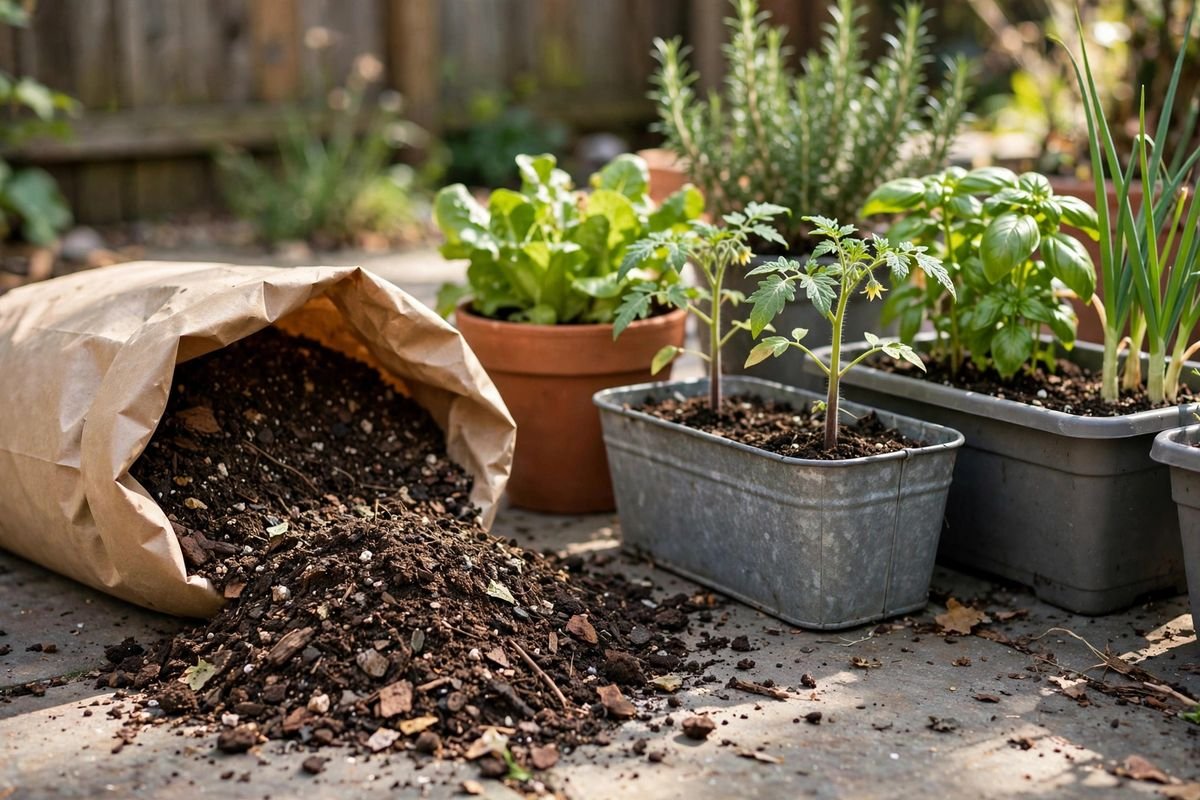
The same arithmetic scales down. A 5-gallon bucket needs about 0.67 cubic feet, so a 1.5 cubic foot bag fills two buckets with a little left over.
Price honesty follows from the same math: compare bags by cost per cubic foot, not cost per bag. A premium mix may suit a small herb pot, while a four-pot tomato setup usually favors a solid all-purpose mix with feeding handled separately. Browse current options for potting mix for container vegetables on Amazon and check the cubic foot volume on each listing before comparing prices.
Matching the Mix to Your Vegetables
Different crops lean on a mix in different ways, and small adjustments at filling time pay off all season.
Tomatoes and peppers. These are the thirsty heavy feeders of the patio. A coir-based or peat-based mix with strong perlite content holds moisture between waterings without staying soggy. Big pots matter more than fancy mix here; a 10-gallon container buffers heat and water swings far better than a small one.
Leafy greens, herbs, and root crops. Lettuce, kale, basil, and cilantro grow fast and shallow, so almost any all-purpose mix works, and rich compost blends shine in these short cycles. Carrots and beets in deep pots want a finer texture instead: sift out the largest bark pieces from a standard mix for straighter roots.
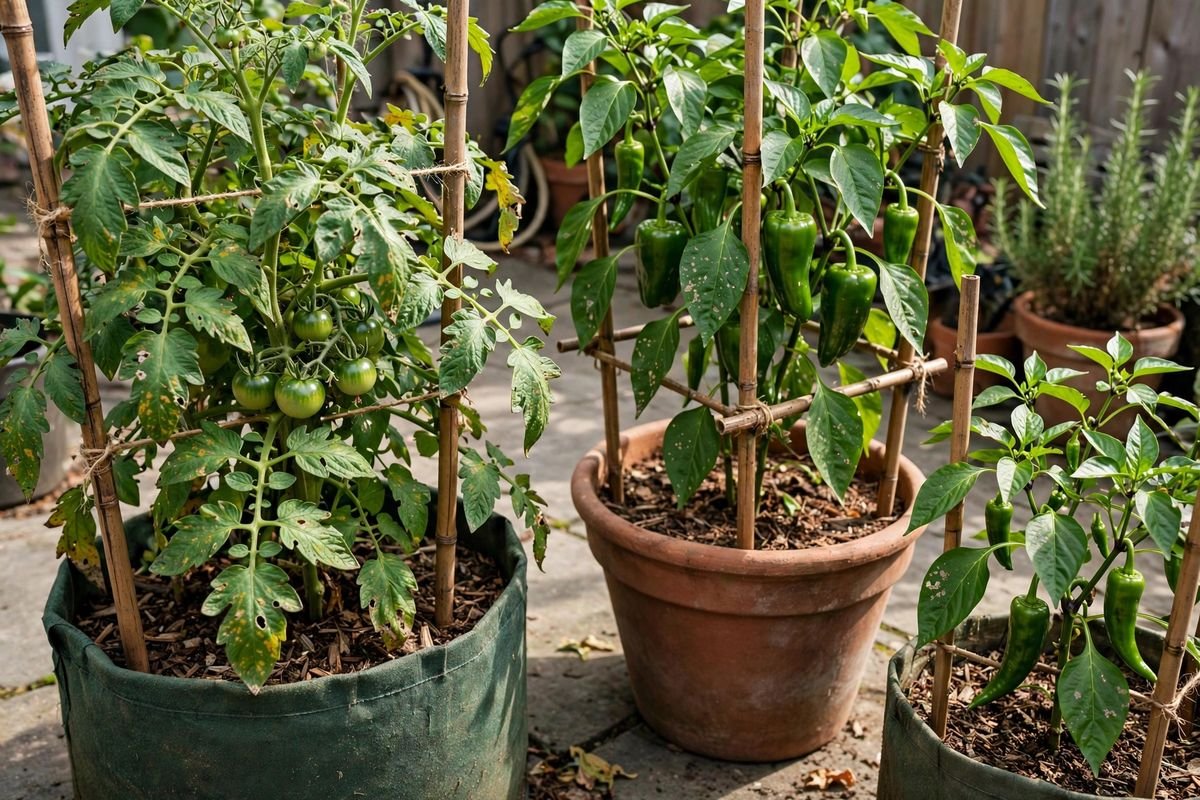
Healthy foliage like this comes from the whole system working together: enough volume, steady water, and feeding that continues after the starter charge fades. At season’s end, healthy spent mix rarely needs to leave the patio. Our guide on whether we can reuse potting soil walks through refreshing old mix with fresh compost and perlite instead of replacing every cubic foot.
When a DIY Blend Makes Sense
Mixing our own blend sounds thrifty, and sometimes it is. A common home recipe combines roughly equal parts peat or coir, compost, and perlite, with lime and fertilizer added per extension-style guidance.
DIY makes sense when the patio holds many large pots, so bagged prices per cubic foot add up fast. It also makes sense when a garden already produces finished compost that needs a job, or when a crop wants a custom texture, like extra perlite for drainage or a finer mix for carrots.
Bagged mix makes sense when only a few pots need filling, storage space is tight, or a consistent pH matters from day one. Home blends vary batch to batch, and skipping lime or fertilizer leaves plants hungry in ways that look like watering problems.
Our Verdict: Which Mix Should Fill the Cart?
There is no single best bag for every patio, yet the choice gets easy once the crop and pot count are clear.
Choose a peat-based all-purpose mix if this is a first container season and simple, forgiving results matter most.
Choose a coir-based mix if the patio runs hot, watering happens once a day at most, and dry-mix rewetting has been a past headache.
Choose a compost-rich premium mix if the pots hold greens, herbs, or one showcase tomato, and richer early growth is worth the higher cost per cubic foot.
Choose a DIY blend if the container count is high, finished compost is on hand, and careful measuring of lime and fertilizer sounds like a fine Saturday project.
Whichever route we take, the habits stay the same: fill generously, water deeply at planting, feed after the starter charge fades, and top up as the mix settles. Compare a few current bags of container vegetable potting mix on Amazon by cubic foot volume and ingredient order, and let the label make the call.
Frequently Asked Questions
How long does the fertilizer charge really last?
Labels often promise weeks or months, yet heavy watering and fast growth shorten that window. We treat the charge as an early boost and begin regular feeding within the first month for fruiting crops.
Why does water run straight through a freshly filled pot?
Dry peat and coir repel water at first. Water slowly, let the pot rest, then water again. A wetting agent eases the process, and a deep soak at planting prevents most repeat trouble.
Sources & Further Reading
- University of Maryland Extension — guidance on container vegetable gardening, soilless growing media, drainage, and fertilizing containers.
- Colorado State University Extension — fact sheets on growing vegetables in containers, covering mix ingredients such as peat, coir, perlite, and vermiculite.
- USDA and university extension publications on compost quality and safe use of compost in container growing media.