
This post may contain affiliate links. If you buy through links on this page, we may earn a commission at no extra cost to you.
As an Amazon Associate I earn from qualifying purchases.
The bags sit side by side at the store, and the names sound close enough to swap. They are not the same product. Potting soil, often labeled potting mix, is built for containers. It is light, loose, and drains freely, and many blends contain no field soil at all. Garden soil is built for the ground. It is denser, usually based on topsoil with compost blended in, and it expects contact with the soil below. Use each one in the wrong place and plants let us know: pots stay soggy and heavy, and beds turn thin and settle fast.
Our quick answer: choose potting soil for anything in a pot, and choose garden soil to enrich soil that is already in the ground. The longer answer is in the table and the math below.
Quick Answer and Side-by-Side Comparison
Potting soil is a soilless or soil-light blend of bark, coir or peat, and perlite or similar light material. Water moves through it, air reaches roots, and the mix stays light enough to carry. Garden soil is a soil-based product. It adds organic matter to native ground, improves sandy or clay beds, and works with the soil life already there. In a closed pot, that same density becomes a problem, because there is no ground below to share drainage and structure.
| Feature | Potting soil | Garden soil |
|---|---|---|
| Composition | Bark fines, coir or peat, perlite or pumice; often starter fertilizer; often soilless | Topsoil blended with compost or aged bark; soil-based |
| Drainage | Fast and even in containers; air pockets stay open | Slower; can compact in a pot and hold a wet zone at the bottom |
| Weight | Light when dry; a filled large pot stays movable | Heavy; fine in the ground, tough to lift in containers |
| Weed seeds and pathogens | Usually pasteurized or soilless, so fewer weed seeds at planting | Can carry weed seeds and soil organisms; varies by source |
| Cost per cubic foot | Higher; about $8.00 per cubic foot in our example below | Lower; about $4.67 per cubic foot in our example below |
| Best use | Pots, planters, hanging baskets, seed starting mixes | Raised beds and in-ground beds as an amendment worked into native soil |
That table is the short version. Gardeners usually feel the difference most in two places: drainage in a pot, and cost when filling a raised bed. Our guide to best potting mixes for container vegetables covers how container blends are built, and our container gardening for beginners guide covers pot size and watering basics.
What Each Product Actually Is
Inside a Bag of Potting Soil
Most potting mixes start with a light base. Bark fines, coco coir, and peat moss are common bases. Perlite or pumice keeps air gaps open. Many bags add a mild starter fertilizer, and some add wetting agents so the mix drinks evenly after it dries. Because the blend has little or no field soil, it tends to start cleaner, with fewer weed seeds. That cleanliness and that loose texture come at a price: nutrients wash through with regular watering, so container plants need feeding during the season.
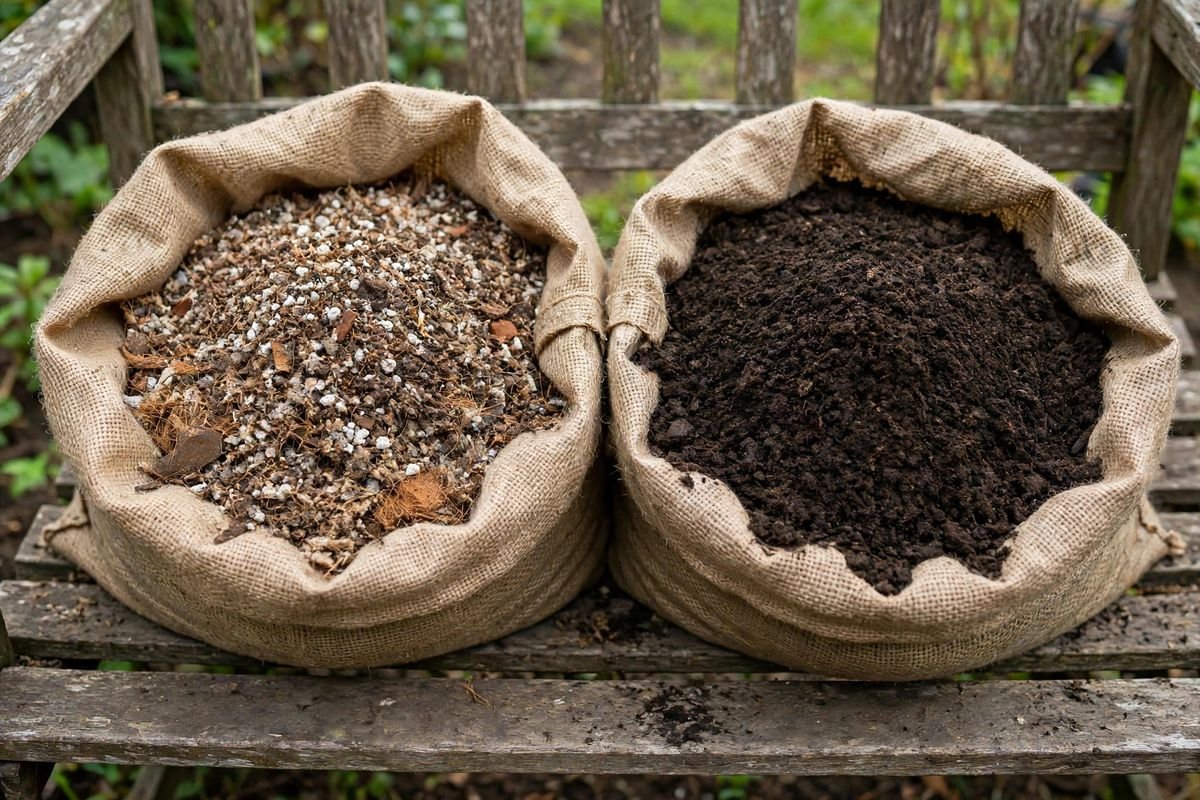
The two bags look different the moment we open them. The potting mix springs up and sheds dust and perlite flecks. The garden soil sits lower and darker, and it clumps when squeezed hard. Neither look is good or bad on its own. Each one matches a job.
Inside a Bag of Garden Soil
Garden soil is usually topsoil screened and blended with compost or aged organic matter. Spread over a bed and forked into the top few inches, it raises organic matter, feeds soil life, and helps sandy soil hold water or clay soil open up. Big bags and bulk loads make it the practical pick for beds. Our raised bed gardening for beginners guide covers bed depth and soil layers in full.
Kept in the ground, that density is a strength. The soil below shares water movement, worms mix layers over time, and roots can push past the amended zone. Sealed in a pot, the same bag has none of that help.
Drainage, Air, and What Roots Feel
Roots need water and air at the same time. Potting soil is blended to hold both. Coarse particles leave pores that drain after watering, so oxygen returns fast. A squeeze test tells the story: moist mix holds loosely, then crumbles, with perlite specks visible throughout.
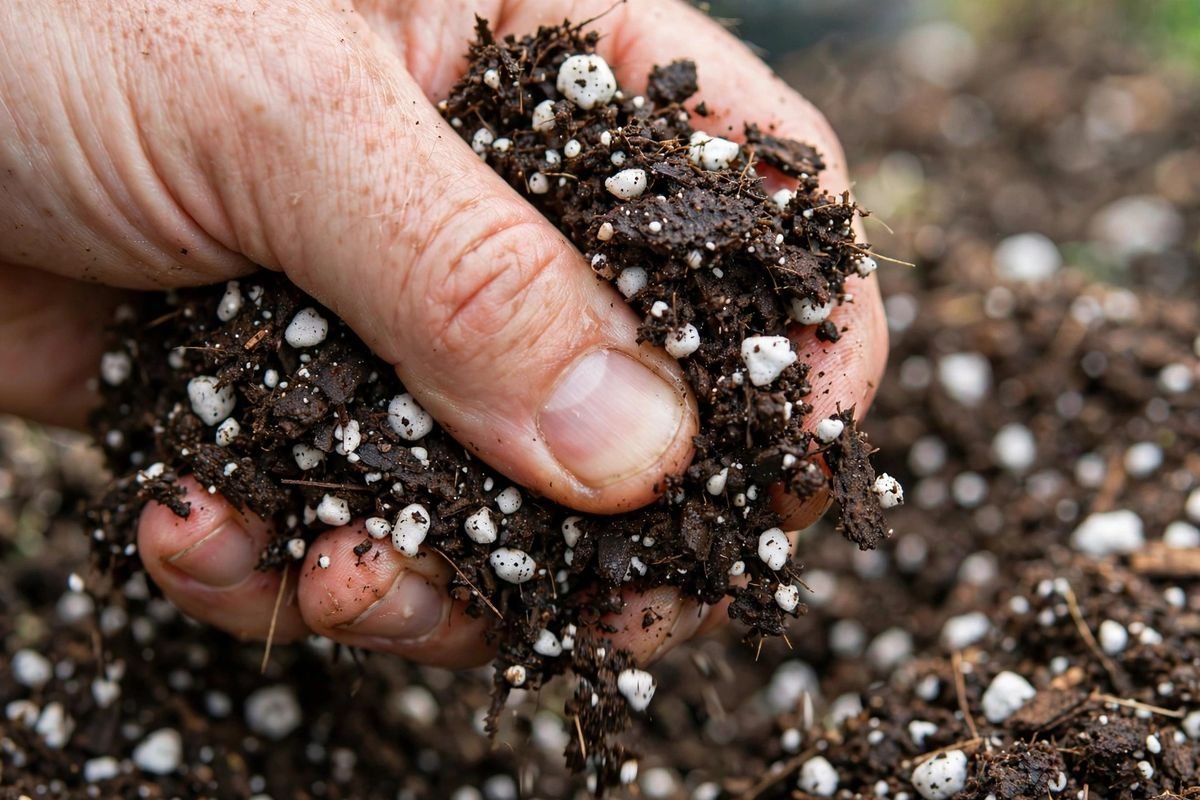
Garden soil holds water longer, which helps beds through a hot week. In a pot, the physics flip. Fine particles settle, pores shrink, and a saturated layer forms near the drainage hole. Roots in that layer stay wet, and peppers, herbs, and succulents often yellow from the bottom up. Gravel at the pot bottom does not fix the layer; it raises it. A loose mix through the whole pot is the real fix.
Weight follows the same split. A ten-gallon pot of moist potting mix is heavy but one person can slide it. The same pot filled with garden soil can be a two-person lift, and plastic pots can bow under the weight. On a balcony or deck, that weight is worth counting before planting day.
Pros and Cons for Each Side
Potting Soil
Pros:
- Drains freely in pots, so roots get air soon after watering.
- Light to carry, mix, and store.
- Reliable texture bag to bag for container recipes.
- Starts clean, with few weed seeds in most commercial blends.
Cons:
- Costs more per cubic foot, which adds up in large planters.
- Dries faster, so pots need closer watering in heat.
- Nutrients leach out, so feeding matters during the season.
- Too light and loose to improve native ground on its own.
Browse potting soil on Amazon and compare bag volume and the ingredient list before comparing prices.
Garden Soil
Pros:
- Costs less per cubic foot, so beds stay affordable.
- Adds organic matter and body to sandy or tired ground.
- Holds moisture in a large bed volume.
- Works into native soil and supports soil life over time.
Cons:
- Compacts in pots and drains slowly in a closed container.
- Heavy to lift once wet.
- Texture varies by source more than bagged container blends.
- Can bring weed seeds into a bed, depending on the source.
Compare potting soil listings with bag size shown first, since price alone hides the volume difference.
What It Costs to Fill a Pot: Worked Example
Price tags mislead until we divide by volume. Here is our worked example with stated assumptions. Prices are illustrative search-price examples, not live quotes, and local prices vary.
Assumptions. A 2 cubic foot bag of potting mix shows an example search price of $16. A 1.5 cubic foot bag of garden soil shows an example search price of $7. Bag volumes are the labeled volumes. One US gallon equals about 0.134 cubic feet, so a 10-gallon pot holds about 1.34 cubic feet of mix when filled near the rim.
Step 1: cost per cubic foot. Potting mix: $16.00 divided by 2 cubic feet equals $8.00 per cubic foot. Garden soil: $7.00 divided by 1.5 cubic feet equals $4.67 per cubic foot, rounded. The garden soil costs about 58 percent of the potting mix price per unit of volume at these example prices.
Step 2: one 10-gallon pot. Fill volume is 10 times 0.134, which equals 1.34 cubic feet. Potting mix cost: 1.34 times $8.00 equals $10.72. Garden soil cost: 1.34 times $4.67 equals $6.26, rounded. The saving on one pot is about $4.46.
What the math means. For a bed, that unit saving is the reason garden soil wins: filling a 4-by-8 bed a foot deep takes 32 cubic feet, and the price gap grows to well over $100 at these example rates. For one pot, the $4.46 saving buys a mix that drains too slowly for the job. Our count says the cheaper bag is the better buy only where drainage has somewhere to go, and that place is the ground.
Clean Starts, Weeds, and Reuse
A fresh bag of potting mix gives a clean start for seedlings and prized pots. There are fewer weed seeds waiting in the blend, so young plants get light and water to themselves. Garden soil spread on a bed can carry seeds too, but a bed has mulch, close planting, and easy hoeing on its side. Weeds in a twenty-inch pot leave a small plant very little room to compete.
Old potting mix can serve a second season with care. We dump used pots, break up roots, and discard any mix from pots where plants showed root rot. Sound spent mix works well at about half old and half fresh, with fresh fertilizer added. Garden soil needs no reuse planning; it becomes part of the bed.
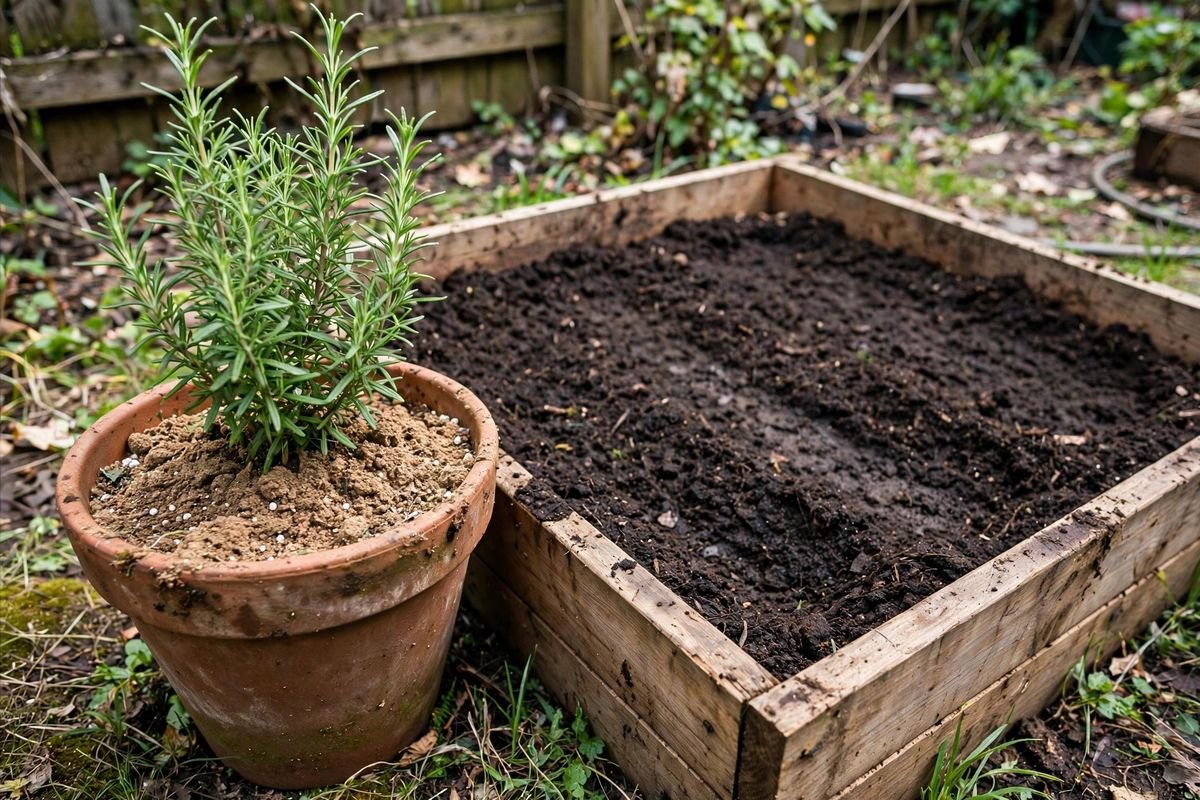
Side by side, the jobs read clearly: loose and light in the pot, dense and soil-based in the bed.
Our Verdict: Pick by Where the Roots Live
There is no single winner here. The container decides. Roots sealed in a pot need a mix built for pots, and roots in open ground need soil built for ground.
Choose potting soil if the plant lives in any pot, planter, grow bag, or hanging basket, at any size.
Choose potting soil if the plant hates wet feet, such as Mediterranean herbs, peppers, and most succulents.
Choose potting soil if seeds start indoors, where a clean, fine, even mix protects small roots.
Choose garden soil if a raised or in-ground bed needs organic matter worked into native soil.
Choose garden soil if a large bed needs volume on a budget, mixed into the ground rather than sealed in a pot.
Choose garden soil if sandy soil dries too fast or clay soil stays hard, and organic matter is the fix.
Our bottom line stays simple. Match the bag to the root zone, and both products do good work. Swap them, and each one fights the gardener.
Frequently Asked Questions
Can garden soil go in a pot if perlite is mixed in?
A heavy blend of garden soil with a large share of perlite drains better than garden soil alone. Still, the fine soil fraction can settle and compact over a season. For a single season of annuals it can be a budget path, but container blends start looser and stay looser.
Can potting soil go in a raised bed?
Potting soil works in a bed; it just costs far more per cubic foot and dries quickly in a thin layer. It suits small beds, top-ups for container-style crops in beds, and lightening a dense bed blend at modest volumes.
What about mixing the two?
Half potting mix and half garden soil is a common compromise for very large planters. For pots under about ten gallons, potting mix alone gives steadier results.
Sources & Further Reading
- University extension guidance on container growing media and drainage in closed pots.
- Regional extension soil and compost guides on adding organic matter to sandy and clay beds.
- USDA and university soil resources on soil texture, compaction, and root-zone aeration.