

This post may contain affiliate links. If you buy through links on this page, we may earn a commission at no extra cost to you.
As an Amazon Associate I earn from qualifying purchases.
Fall is the season when gardeners stand over an empty bed with a wheelbarrow and face the same choice: mulch or compost. Both go on top of the soil, both are brown, and both help the garden, but they do different jobs. Mulch sits on the surface and protects what is underneath. Compost feeds the soil and becomes part of it. Mixing them up wastes money and misses the benefit each one offers.
The confusion is easy to understand, since the two often arrive in the same truck and look alike in a pile. A bed covered in wood chips and a bed covered in finished compost both look dark and tidy. Under the surface, though, one is a blanket and the other is food. A blanket keeps the soil warm and moist through winter. Food feeds the soil life that will feed next spring’s plants.
This article compares the two side by side, works through the math for a standard 4 by 8 foot bed, and ends with a plain verdict for each fall job. Use your local frost dates and regional planting guidance, not your USDA hardiness zone alone, to choose planting dates.
Mulch vs compost at a glance
| Mulch | Compost | |
|---|---|---|
| What it is | Material spread on the soil surface | Finished, broken-down organic matter |
| Main job | Protects soil, holds moisture, blocks weeds | Feeds soil life and adds nutrients |
| Where it goes | On top, 2 to 4 inches deep | Mixed into the top few inches or spread thin on top |
| Breaks down | Slowly, over months to a year | Already broken down, works right away |
| Weed control | Strong, blocks light from weed seeds | Weak, a thin layer can shelter weed seeds |
| Moisture | Holds moisture in the soil well | Improves how soil holds water over time |
| Winter job | Insulates soil and roots from freeze and thaw | Feeds soil life through the cold months |
| Cost per bed | Lower per cubic foot in bulk | Higher per cubic foot, used in thinner layers |
The table shows the split in one line: mulch protects, compost feeds. A fall bed usually needs both, but in different places and at different depths. Mulch goes on thick over bare soil and around perennials. Compost goes on thin, mixed into the top of the bed where next spring’s roots will find it.
A worked example: one 4 by 8 foot bed
Take a standard raised bed, 4 feet wide by 8 feet long, which is 32 square feet. The math for covering it shows why the two materials are used so differently.
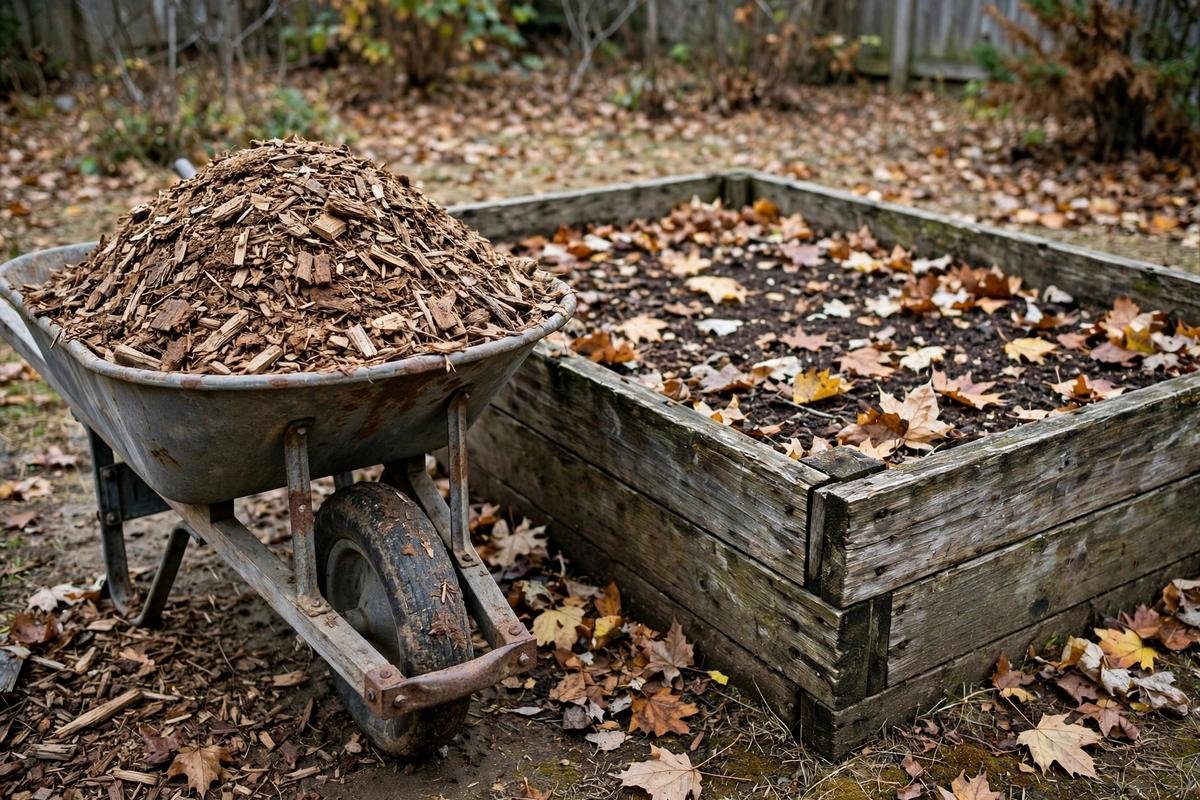
For mulch at 3 inches deep, the volume is 32 square feet times 0.25 feet, which equals 8 cubic feet. A bag of mulch holds about 2 cubic feet, so the bed needs 4 bags. Using a $4 bag as the example price, the mulch costs about $16 for the bed. A bulk cubic yard of mulch holds 27 cubic feet, so one yard covers about three beds at this depth.
For compost at 1 inch deep, the volume is 32 square feet times about 0.083 feet, which equals about 2.7 cubic feet. A bag of compost holds about 1 cubic foot, so the bed needs about 3 bags. Using a $6 bag as the example price, the compost costs about $18 for the bed. The compost costs a little more than the mulch, even though it uses about a third of the volume, because compost costs more per cubic foot and is sold in smaller bags.
Used together, the bed takes about $34 of material: compost first, spread thin and mixed into the top 2 or 3 inches, then mulch on top at 3 inches. That $34 covers the bed for the whole winter and into spring. A gardener with four beds spends about $136 for the same treatment across the garden, and a bulk order of mulch by the cubic yard cuts that figure down, since bulk mulch often costs less per cubic foot than bagged mulch.
The math also shows what not to do. Spreading compost 3 inches deep like mulch would take 8 cubic feet of compost, or about 8 bags at $6 each, which is $48 for one bed, and most of that compost would sit on the surface doing nothing through winter. Spreading mulch 1 inch deep like compost would take only 2.7 cubic feet, but a 1-inch mulch layer is too thin to block weeds or hold moisture, so the money would be spent without the benefit.
Pros and cons of mulch
Mulch is the better tool for protection. A 3-inch layer blocks light from weed seeds, so fewer weeds sprout in fall and spring. The same layer slows water loss from the soil, which matters in dry fall weather when beds can dry out between rains. In cold weather, mulch insulates the soil, which softens the freeze-and-thaw cycles that heave shallow roots out of the ground.
Mulch is also cheap in bulk and easy to spread. A wheelbarrow, a rake, and half an hour cover a bed. Wood chips, shredded bark, straw, and shredded leaves all work as mulch, and leaves are free in most gardens each fall. A leaf mulch made from the garden’s own fallen leaves costs nothing and breaks down into the soil by spring.

The downsides come from using the wrong mulch or too much of it. Fresh wood chips piled against a plant stem hold moisture against the bark and can cause rot, so mulch should stop a few inches short of stems and trunks. A mulch layer deeper than 4 inches can stay soggy and shut out air, which hurts the soil life underneath. Dyed mulch adds color that some gardeners dislike, and the dye can wash out in heavy rain. Straw mulch can carry weed seeds if it comes from a weedy field, so straw should be checked before it goes on a bed.
Mulch also ties up nitrogen while it breaks down, but only at the thin zone where the mulch meets the soil. That matters little for a fall mulch layer over an empty bed, since no plants are feeding there. It matters more in spring, when a thick wood-chip layer sits over a bed of hungry seedlings, so a fall mulch layer should be pulled back or topped with compost before spring planting.
Pros and cons of compost
Compost is the better tool for feeding soil. Finished compost adds nutrients in a slow, steady form, and it feeds the worms, fungi, and bacteria that make soil work. A bed with compost mixed into the top few inches holds water better, drains better, and gives roots an easier time than the same bed without it. Compost also buffers soil pH a little, pulling very acid or very alkaline soil toward the middle over time.
Compost works right away. Unlike raw wood chips, finished compost is already broken down, so it does not steal nitrogen from the soil while it rots. A thin layer spread in fall and mixed into the top of the bed is ready to feed spring plants as soon as they go in. Compost also improves the feel of the soil: a handful of compost-rich soil crumbles easily, while a handful of tired soil clumps or dusts.
The downsides are cost and misuse. Compost costs more per cubic foot than mulch, and a garden with many beds can spend a lot on bagged compost in one fall. Homemade compost is free but takes months to finish, and a pile that is not yet finished can carry weed seeds and a sour smell. Compost spread too thick on the surface can crust over and shed rain, so a thin layer mixed in beats a thick layer left sitting on top.
Compost also does a poor job as a weed barrier. A thin compost layer holds moisture at the surface, which helps weed seeds sprout, so a bed covered only in compost can grow more weeds in fall than a bare bed. That is why compost belongs under mulch, not in place of it. Our guide to how to make compost at home covers the full process, from building the pile to knowing when it is finished.
The fall routine: compost first, mulch on top
The fall routine for an empty vegetable bed takes about an hour per bed. Pull out the spent plants and add them to the compost pile, unless they show disease, in which case they go in the trash. Spread about an inch of finished compost over the bed and work it into the top 2 or 3 inches with a fork. Then spread 3 inches of mulch on top, keeping it a few inches clear of any perennial stems left in the bed.
For perennial beds, the routine is lighter. Spread compost thinly around the plants without burying their crowns, then mulch around them, leaving a gap at each stem. The mulch protects the roots through winter, and the compost feeds the soil life that will wake up in spring. A perennial bed mulched this way needs less work in spring, since the soil underneath stays moist and the weeds stay down.
For a bed that will hold a fall or winter crop, the order stays the same, but the mulch goes on after the crop is in the ground. A bed of garlic or winter greens gets compost worked in before planting, then mulch spread between the rows once the plants are up. Our guide to how to protect raised beds from frost covers covers and cloches for beds that hold crops through the cold months.
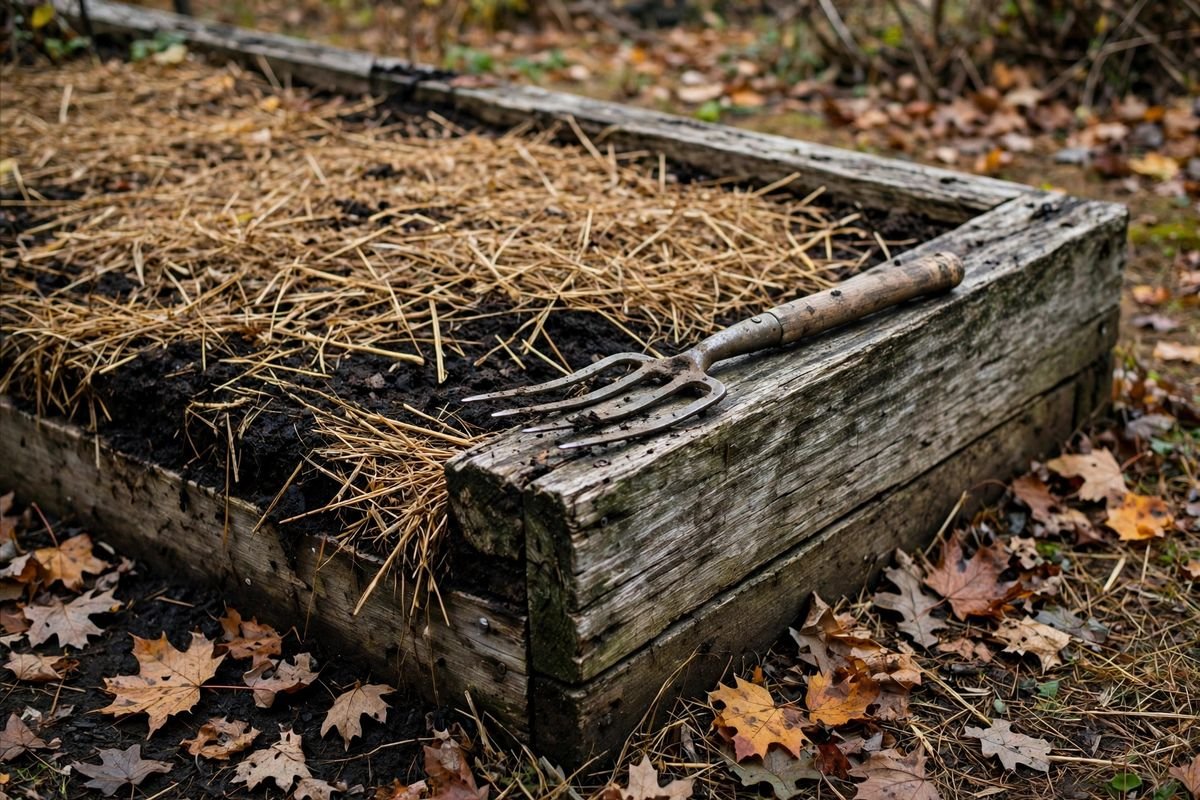
Leaves deserve a note of their own. A fall garden drops more leaves than it can use, and shredded leaves make a fine mulch that costs nothing. Run a mower over the leaves once to chop them, then spread them 3 inches deep. Whole leaves can mat together and shed rain, but shredded leaves stay loose and let water through. A leaf mulch breaks down faster than wood chips, so it feeds the soil sooner, and by spring much of it has become part of the bed.
Verdict: which one for which fall job
Choose mulch if the bed will sit empty through winter and the main job is protection. Choose mulch if weeds are the problem, since a 3-inch layer blocks light and keeps fall weeds down. Choose mulch if the soil dries out fast in fall wind, since mulch holds moisture in the bed. Choose mulch if perennials need insulation against freeze and thaw.
Choose compost if the soil is tired, pale, or hard to work, since compost is what rebuilds it. Choose compost if the bed will hold hungry spring crops such as tomatoes or squash, since those plants need the nutrients compost adds. Choose compost if the goal is better soil structure over years, since compost is the only one of the two that changes the soil itself.
Choose both, in that order, when the bed gets its full fall treatment: compost mixed into the top few inches first, then mulch on top at 3 inches. That pairing is the standard fall routine for a reason. The compost feeds the soil through winter, the mulch protects it, and the bed wakes up in spring moist, weed-free, and ready to plant. For more on keeping soil in good shape between seasons, see our guide to whether you can reuse potting soil and our guide to how to refresh old potting soil.
Sources & Further Reading
University of California Agriculture and Natural Resources
Cornell Cooperative Extension
University of Minnesota Extension
USDA Natural Resources Conservation Service