
This post may contain affiliate links. If you buy through links on this page, we may earn a commission at no extra cost to you.
As an Amazon Associate I earn from qualifying purchases.
Outdoor vegetables need more root room than flowers do. A tomato, a pepper, or a squash plant grows a root system that fills a small pot in weeks, and then growth stalls. A large planter fixes that problem, but only when the size matches the plant. Too small, and the plant dries out daily. Too large, and the soil stays wet and cold in spring. This guide gives size numbers per plant type, soil volumes, and wet weights, so you can pick a planter that fits both the plant and the patio.
We have not tested the products linked here, and we give no current store prices. The links below go to search pages for planter types, so you can compare current options, sizes, and prices at the time you shop.
Soil volume for one vegetable plant
Use pot volume as your first check. A 5-gallon pot holds about 0.67 cubic feet of mix. A 10-gallon pot holds about 1.34 cubic feet. A 15-gallon pot holds about 2 cubic feet. A 20-gallon pot holds about 2.67 cubic feet. Those numbers assume the pot is filled to within one inch of the rim, which leaves room for watering without spillover.
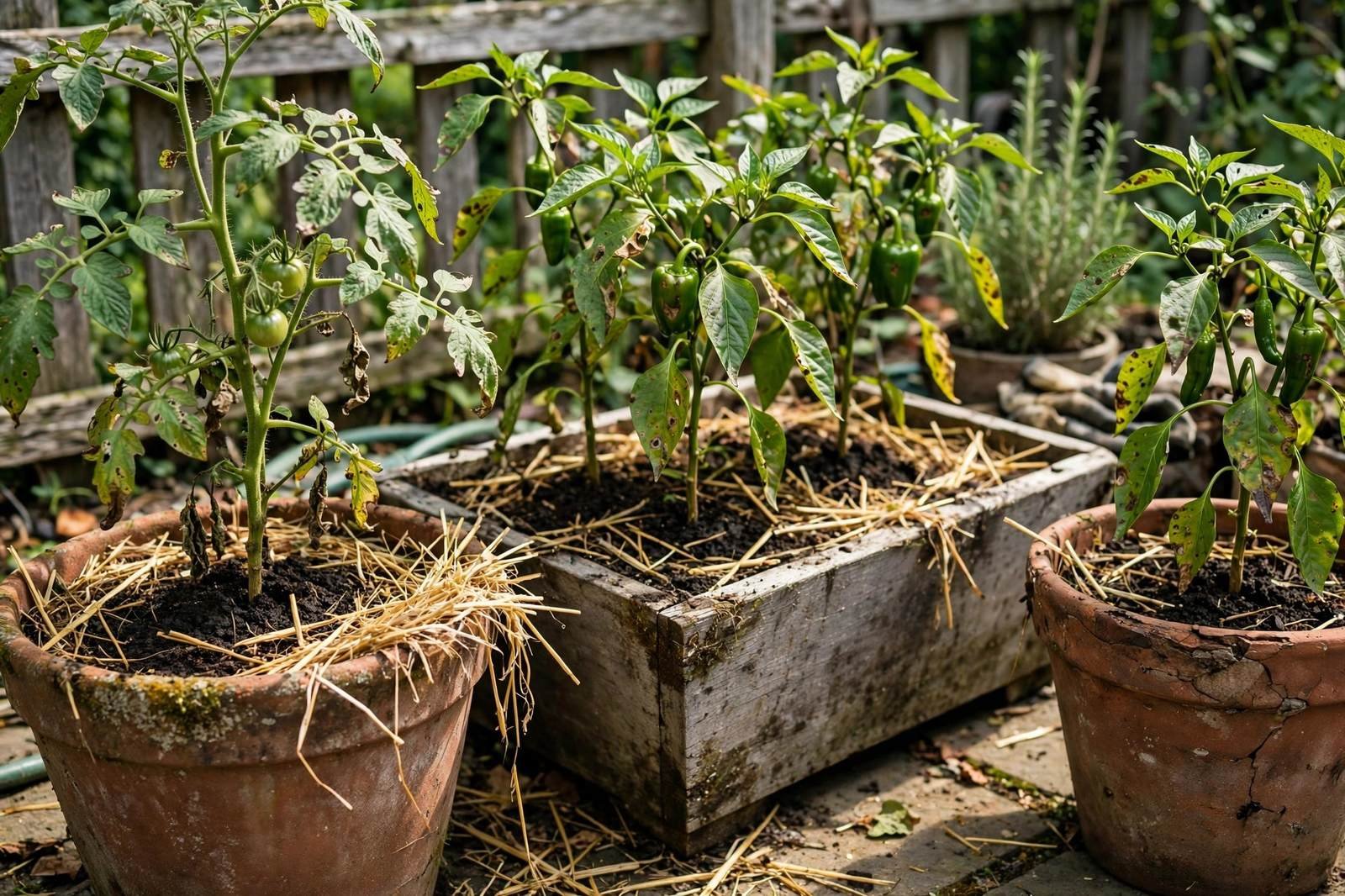
Match the volume to the plant. Peppers and eggplants do well in 5 to 7 gallons. Determinate tomatoes need 10 gallons at minimum, and indeterminate tomatoes need 15 to 20 gallons. Cucumbers and squash need 10 to 15 gallons per plant, and they also need a trellis or room to trail. Leafy greens need far less, at 2 to 3 gallons per plant, so a large planter can hold several greens at once.
Wet weight follows volume. Wet potting mix weighs roughly 40 pounds per cubic foot. A 10-gallon planter with 1.34 cubic feet of wet mix weighs about 54 pounds for soil alone, plus the pot and plant. A 20-gallon planter weighs about 107 pounds for soil alone. Put large planters on a wheeled caddy or in their final spot before you fill them, since moving a full 20-gallon planter is hard work.

One plant per pot, or more
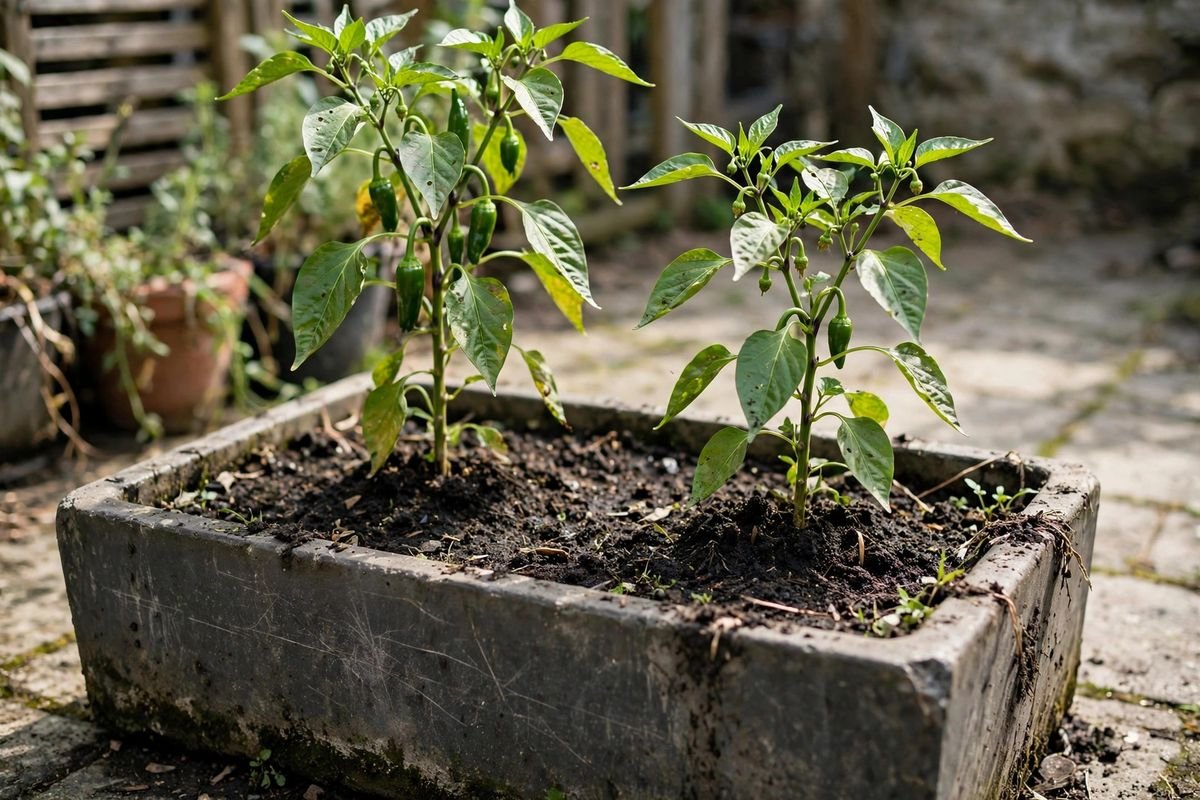
For fruiting vegetables, one plant per large planter is the safer rule. Two tomato plants in one 15-gallon planter share water and nutrients, and both plants produce less than either would alone. Two pepper plants in one 10-gallon planter work better, since peppers stay smaller, but each plant still needs its own watering check.
Leafy greens break the one-plant rule. A 15-gallon planter can hold four lettuce plants or six spinach plants, spaced 6 to 8 inches apart. Herbs also share well. A large planter with one tomato plant can host basil at the edge, since basil roots stay shallow and the tomato canopy shades the soil. That pairing uses space well, but it does not change the tomato water needs.
For a worked example, take a 20-gallon planter with one indeterminate tomato. Fill it with about 2.67 cubic feet of mix. Water it with about 2 gallons on a hot day, applied slowly so the mix absorbs it. Check the soil each morning. If the top 2 inches feel dry, water again. That routine keeps a large planter moist without waterlogging it.
Drainage and moving a heavy pot
Large planters need several drainage holes, not one. A 15-gallon planter should have at least four holes of one-half inch or larger across the bottom. Fewer holes trap water in the center of the pot, and the lower roots sit wet while the surface looks dry. Raise the planter on pot feet or a caddy so water can leave freely.
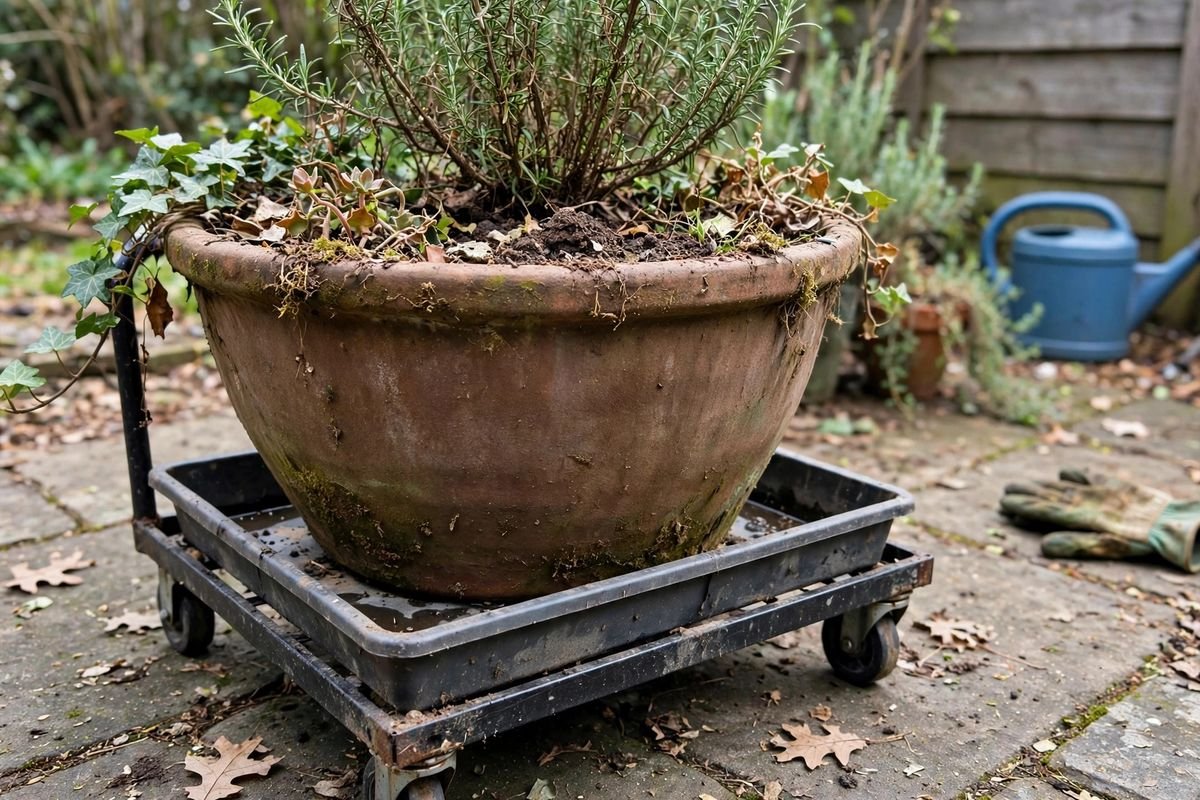
Plan the final spot before planting. A full large planter weighs 60 to 120 pounds, and dragging it across a patio damages the pot base and the patio surface. A wheeled caddy rated for the full wet weight solves the problem, but check the caddy rating against the soil weight numbers above, not against the empty pot weight.
In spring, a large planter warms slower than a small pot. Soil in a 20-gallon planter can stay cool for days after a cold night, which slows tomato and pepper growth. Set large planters in the sunniest spot you have, and hold off planting heat-loving vegetables until night temperatures stay above 50 degrees Fahrenheit.
Feeding and watering big pots
Large pots hold more water, but they also hold more roots that drink it. Water deeply and less often, rather than a little each day. A deep watering fills the whole root zone and pulls roots downward. A shallow daily sprinkle wets only the top inches, and roots stay near the surface where they dry out fast.
Feed on a schedule, since potting mix nutrients wash out with watering. A balanced liquid feed every two weeks during the growing season suits most vegetables in large planters. Follow the label rate for containers, not the garden-bed rate, since container soil holds less nutrient reserve. Flush the pot with plain water once a month to wash out salt buildup from feeds.
Mulch the surface with 2 inches of straw or shredded leaves. Mulch slows surface drying, keeps soil temperature steadier, and cuts down on weeds. Keep mulch 2 inches away from the plant stem so the stem stays dry and rot stays away.

Large planter types compared
| Planter type | Strengths | Limits | Best fit |
|---|---|---|---|
| Resin or plastic | Light when empty, holds moisture, many sizes | Can blow over when dry, heats in sun | Large tomato and pepper pots |
| Wood | Insulates roots, strong, large sizes | Heavy, weathers over time | Permanent patio corners |
| Ceramic | Steady in wind, holds moisture | Very heavy when full, breaks if dropped | Ground-floor patios, one show pot |
| Fabric grow bag | Light, drains well, stores flat | Dries fast, needs frequent water | Back patios, seasonal vegetables |
To compare current options, search for large planters for outdoor vegetables, 20-gallon planter pots, and heavy-duty wheeled plant caddies. Compare volume in gallons first, then drainage holes, then weight when full.
Questions
A large planter pays off when the size matches the plant and the spot is final before filling. For tomato-specific sizing, see what size pot a tomato plant needs and best pots for tomatoes. For growing methods in large pots, how to grow tomatoes and how to grow peppers cover planting, feeding, and harvest. For soil drying problems in big pots, how to keep container soil from drying out too fast gives practical fixes.