
This post may contain affiliate links. If you buy through links on this page, we may earn a commission at no extra cost to you.
As an Amazon Associate I earn from qualifying purchases.
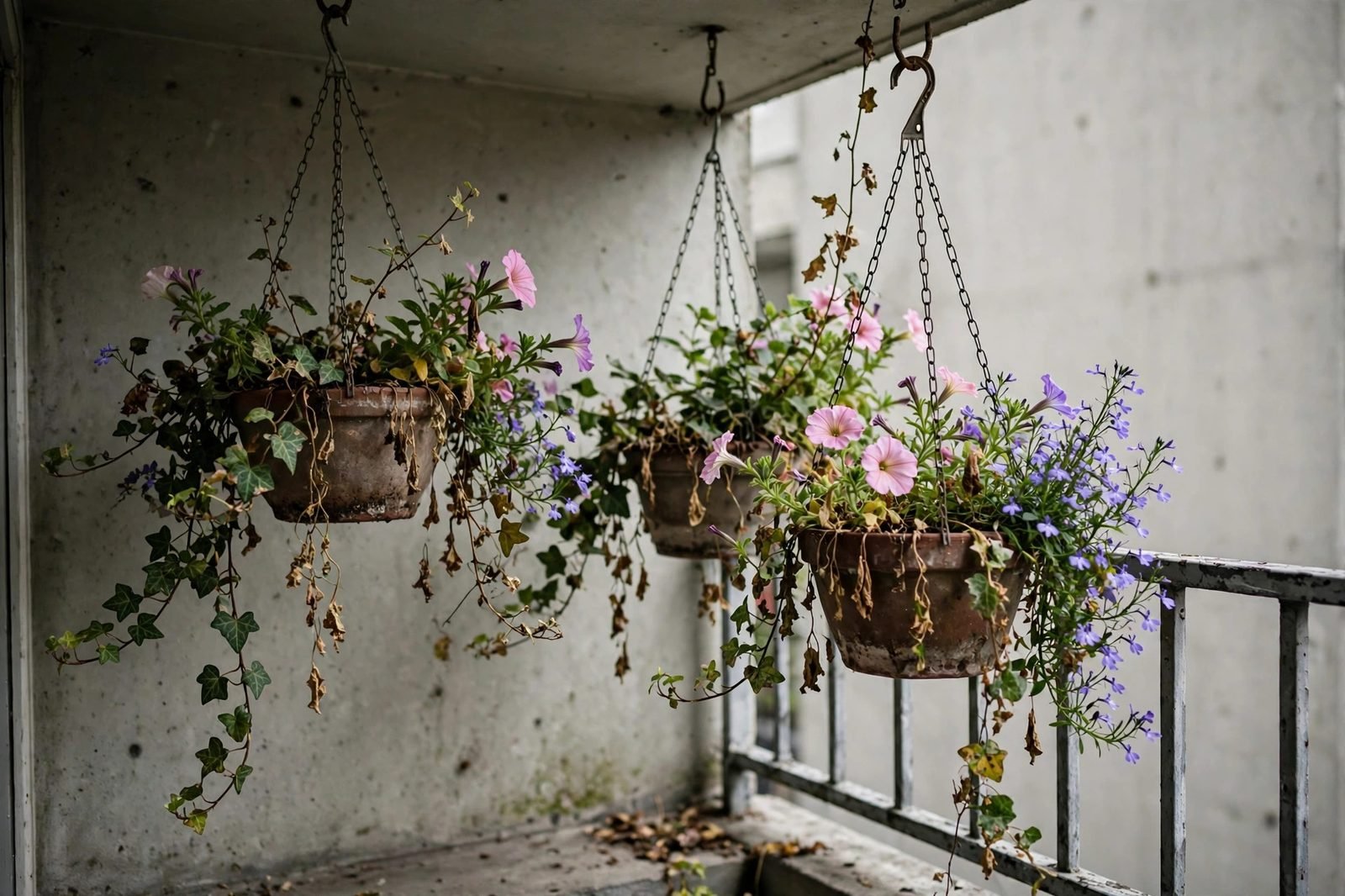
A hanging planter turns empty air into growing space. On a small balcony or a narrow patio, the floor fills fast with pots, chairs, and a grill. The space above the rail stays free, and a hanging planter uses it. The trade is weight, water, and wind. A hanging planter that drips on a neighbor below or swings hard in wind causes trouble fast, so the setup matters as much as the plant.
We have not tested the products linked here, and we give no current store prices. The links below go to search pages for planter types, so you can compare current options, sizes, and prices at the time you shop. This guide covers weight limits, plant picks, watering without drips, and wind safety for small spaces.
Weight limits first
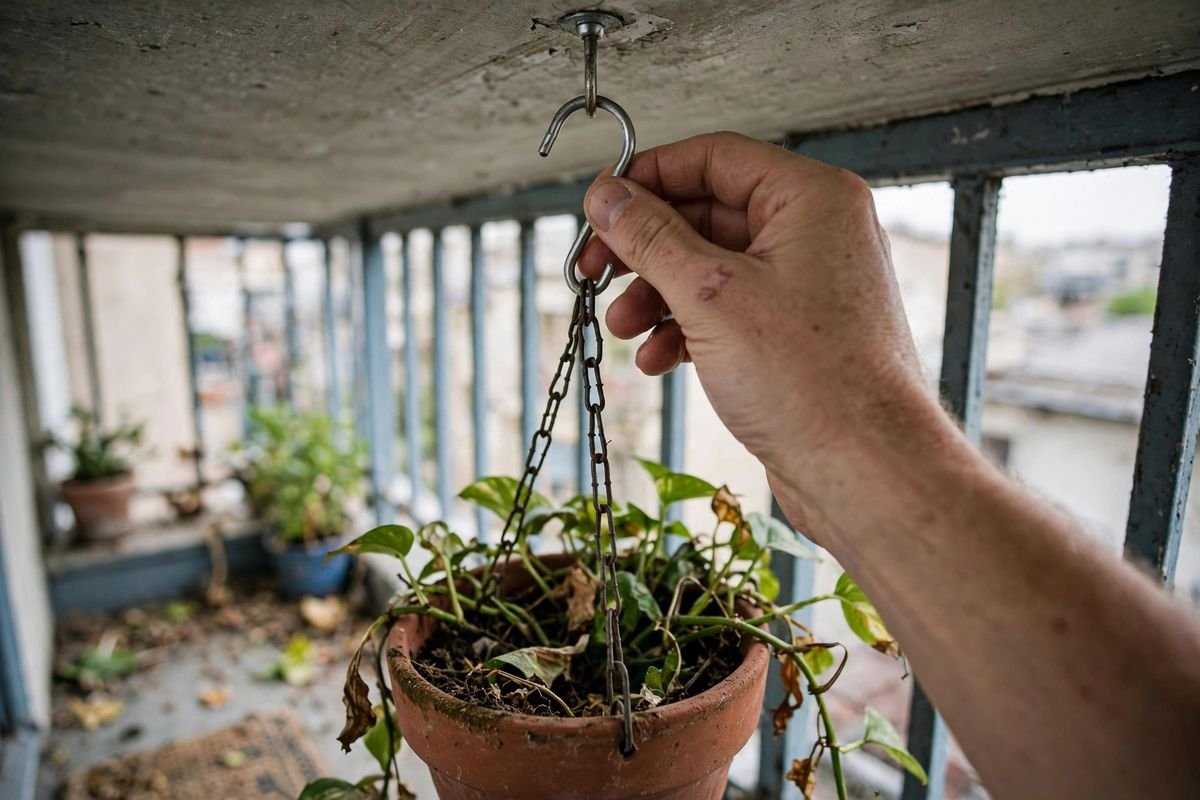
Start with the hook, not the plant. A typical 12-inch hanging planter holds about 0.5 cubic feet of potting mix. Wet potting mix weighs roughly 40 pounds per cubic foot, so the soil weighs about 20 pounds. Add the planter, the plant, and water held in the mix, and the full planter weighs 22 to 26 pounds. A 10-inch planter holds about 0.3 cubic feet and weighs 14 to 17 pounds when wet.
Check what your hook or bracket is rated to hold, and stay well under that number. A ceiling hook rated for 25 pounds suits a 10-inch planter but leaves little margin for a 12-inch planter after rain. A wall bracket rated for 50 pounds gives real margin for a 12-inch planter. If you cannot find a rating, use a smaller planter or a stronger bracket.
Hang the planter where a fall would cause the least harm. Over a walkway or a seating area, a falling planter can hurt someone and break the pot. Over a planting bed or an empty corner, the same fall is a mess rather than a hazard. Keep that distinction in mind when you pick a spot.
Plants that trail without tangling
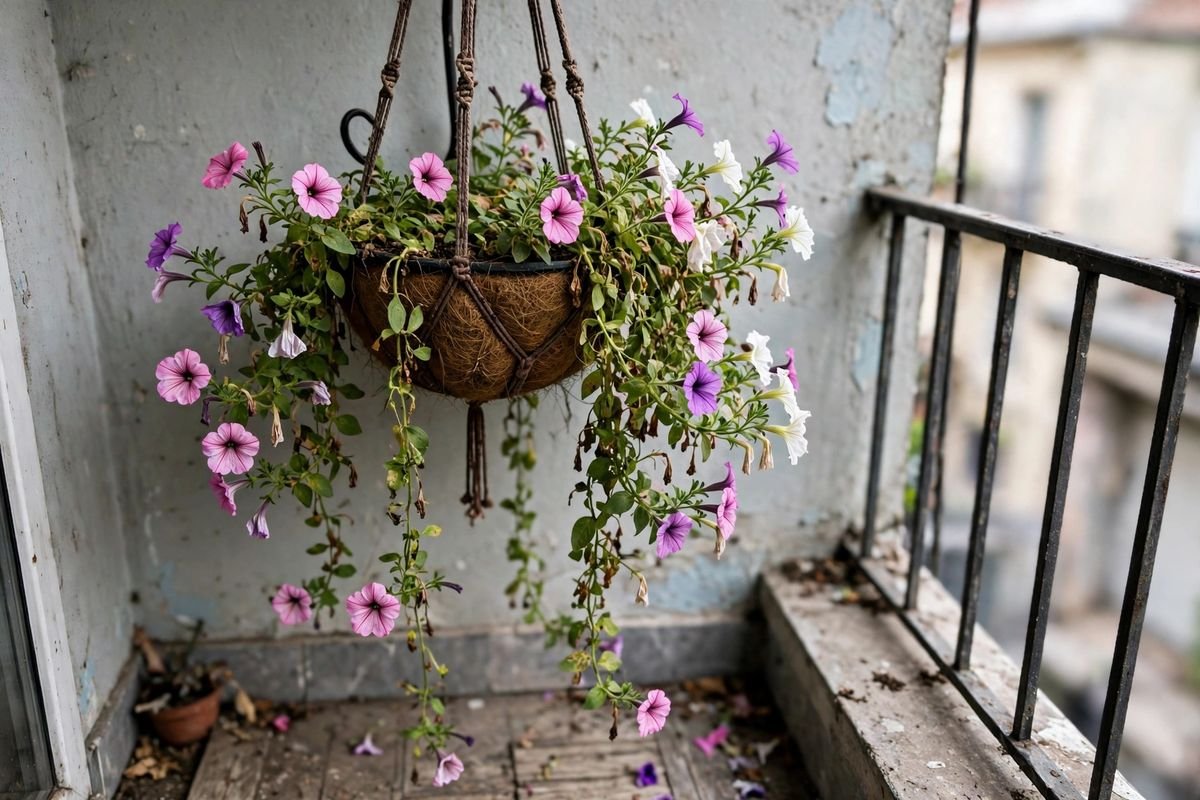
Trailing plants suit hanging planters because they grow down instead of out. Trailing petunias, trailing lobelia, and ivy geraniums all spill over the edge and hide the pot rim. For edible use, trailing cherry tomatoes and trailing herbs such as thyme work in a sunny spot, but they need more water than flowers in the same size pot.
Pick one trailing plant type per planter for a tidy look, or pair one trailing type with one upright type in the center. A planter with three different trailing types tangles by midsummer, and the tangle shades the inner leaves. One upright plant in the middle with one trailing type around it stays readable from below, which is the angle most people see.
For shade, trailing fuchsia and trailing begonias hold up where sun is limited to morning light. For full sun, trailing petunias and trailing verbena take heat better. Match the plant to the hours of sun at the hook, not to the sun on the balcony floor, since an overhang can shade a hanging planter while the floor stays sunny.
Watering without drips
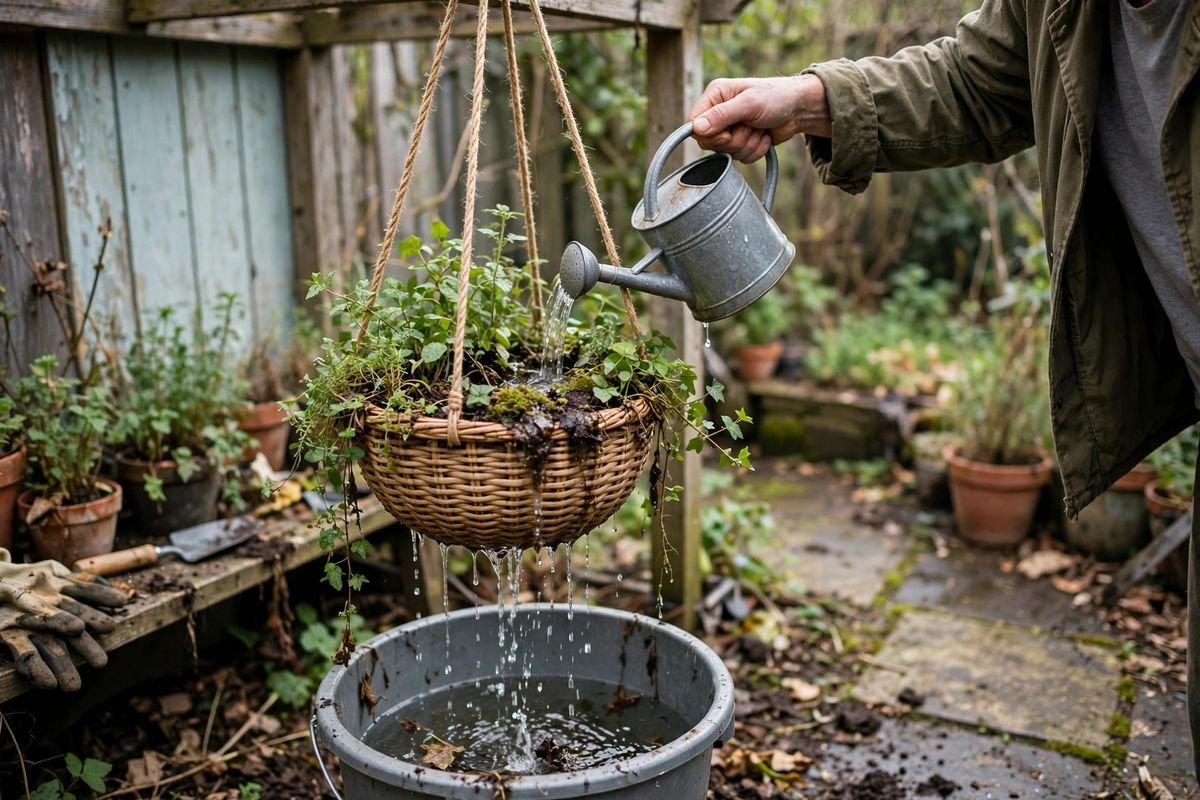
Drips cause most hanging planter complaints. Water slowly, in two passes, and stop when water first appears at the drain holes. A fast pour runs straight through dry mix and out the bottom, while a slow pour lets the mix absorb water. Wait five minutes, then water again until the mix feels moist one inch down.
Use a saucer or a drip tray clipped under the planter when the planter hangs over a walkway or a neighbor balcony. Empty the tray after watering. A tray that stays full keeps the roots wet and adds weight, so it helps only when you empty it. On a ground-floor patio with a planting bed below, you can skip the tray and let excess water fall on soil.
In summer heat, a 12-inch hanging planter in full sun often needs water daily. Check the mix each morning by lifting the planter slightly. A light planter needs water, and a heavy planter can wait. That lift test takes two seconds and beats any fixed schedule, since wind and heat change drying speed from day to day.
Hanging planters through wind
Wind moves a hanging planter like a pendulum. On a windy balcony, a planter on a long chain swings wide and can hit a wall, a rail, or another planter. Shorten the chain so the planter hangs close to its support, and keep at least 6 inches of clearance from walls and rails on all sides.
For exposed balconies, use a bracket that locks the chain or ring in place instead of an open hook. A second short tether from the planter to the rail stops wide swings in a gust. Bring hanging planters down during a storm warning. A planter that falls from a high balcony is dangerous, and no plant is worth that risk.
Weight also steadies a planter in wind. A planter that is half full of dry mix swings more than a full, moist planter. If wind is a regular problem at your spot, pick a heavier pot material such as ceramic for the windiest hook, and save light plastic planters for sheltered corners.

Planter types compared
| Planter type | Strengths | Limits | Best fit |
|---|---|---|---|
| Plastic hanging pot | Light, cheap, holds moisture | Swings in wind, fades in sun | Sheltered balconies |
| Ceramic hanging pot | Steady, neat, holds moisture | Heavy, breaks if dropped | Windy spots, ground floor |
| Coconut fiber basket | Breathes, classic look, light | Dries fast, liner wears out | Shaded porches, flowers |
| Metal hanging planter | Strong, slim, neat | Heats in sun, can rust | Sunny rails, trailing flowers |
To compare current options, search for hanging planters for small balconies, ceramic hanging planters, and coconut fiber hanging baskets. Compare the weight rating of the hook or bracket before you compare the pot, since the support decides what size you can hang safely.
Questions
A hanging planter suits a small space only when the support, the weight, and the drip path all check out. Get those three right and the planter adds plants without taking floor space. For more small-space ideas, see how to start a balcony garden and container gardening for beginners. For soil that dries fast in a hanging pot, how to keep container soil from drying out too fast covers watering methods that suit shallow pots.