
This post may contain affiliate links. If you buy through links on this page, we may earn a commission at no extra cost to you.
As an Amazon Associate I earn from qualifying purchases.
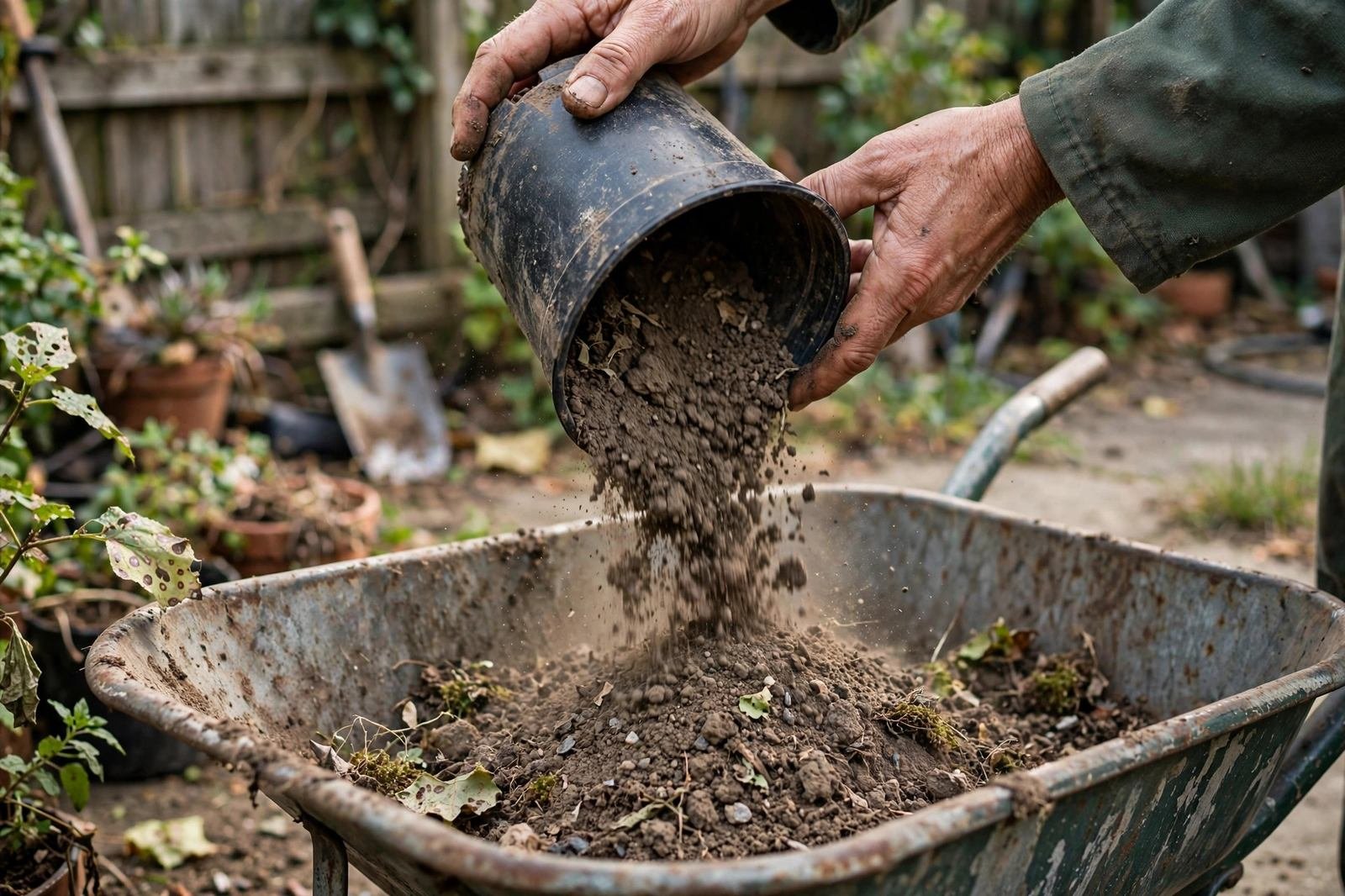
Every fall, container gardeners face the same question: what do you do with all that used potting soil? Hauling bag after bag to the trash feels wasteful — and expensive, when you add up what fresh mix costs each spring. The honest answer is yes, you can reuse potting soil. Most of it, most of the time. But “reuse” doesn’t mean dumping it straight back into pots and hoping for the best. Old mix needs a little triage and refreshing first.
In this guide, we cover when reused soil is perfectly safe, the warning signs that mean it should be discarded or composted instead, and the simple refresh routine that brings tired mix back to life.
| Can you reuse it? | Yes — most potting mix lasts 2–3 seasons with refreshing |
|---|---|
| Always safe? | Not after diseased plants or persistent pests |
| Key refresh steps | Remove roots, add compost, restore drainage |
| Don’t reuse for | Seed starting (use fresh sterile mix) |
Why Potting Soil Wears Out
Potting mix doesn’t “go bad” the way food does — it degrades structurally and nutritionally. Over a season or two, several things happen:
- Organic matter breaks down. The bark fines and peat that gave the mix its structure decompose into fine particles. The mix gets denser, holds too much water, and drains poorly.
- Nutrients wash out. Every watering leaches some fertilizer away. By season’s end, the mix is nutritionally spent.
- Salts accumulate. Fertilizer residues and hard-water minerals build up, showing as white crust on the surface.
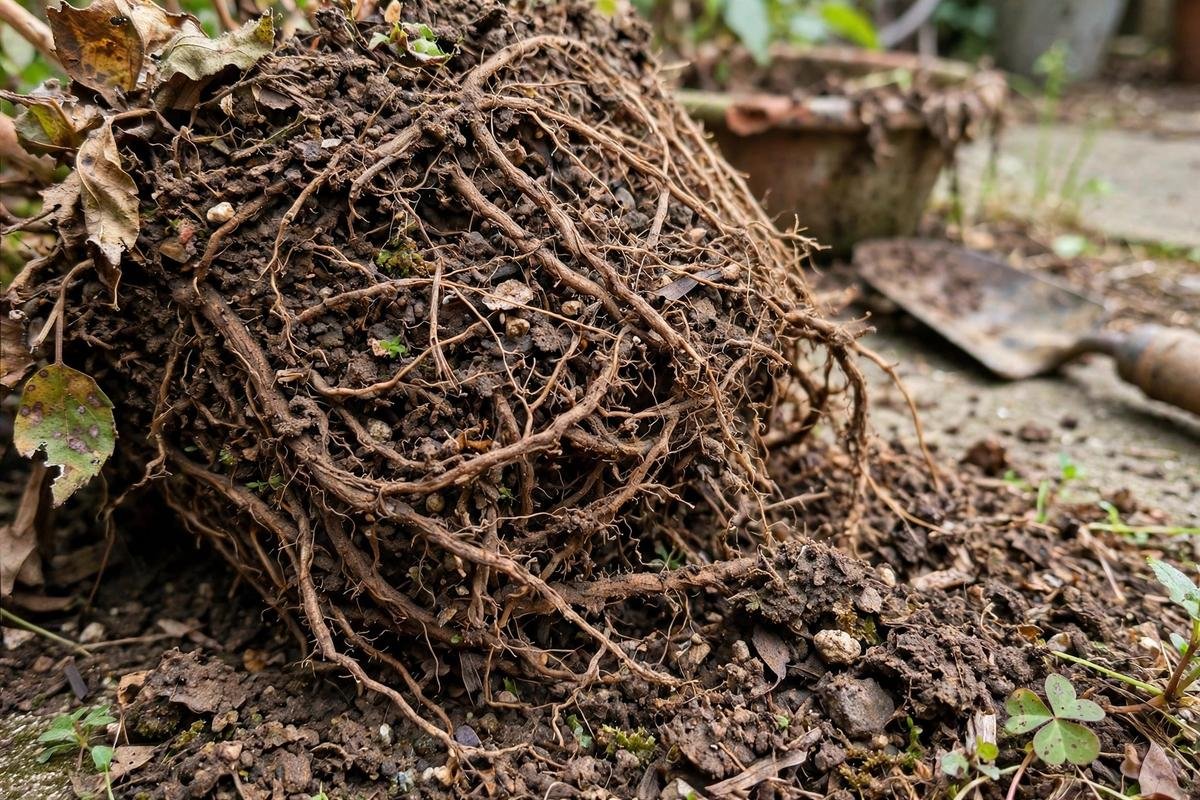
- Roots fill the space. A season’s root mass — especially from vigorous plants — leaves the mix compacted and depleted.
None of this makes the mix toxic. It just means it needs rebuilding before it can support another season of growth. For the full rebuild process, see how to refresh old potting soil.
When It’s Safe to Reuse Potting Soil
Reuse confidently when the previous plants were healthy all season. Soil that grew thriving tomatoes, peppers, herbs, or flowers is just tired — not dangerous. A quick refresh restores it fully.
Also fine: soil from pots where plants simply underperformed due to underwatering, too little light, or being pot-bound. Those are care issues, not soil contamination issues.
When NOT to Reuse Potting Soil
Some situations call for a fresh start:
- Diseased plants. If a plant died of wilt, blight, or any suspected soil-borne disease, don’t reuse that soil for the same plant family. Bag it for the trash (not the compost pile, unless your pile runs genuinely hot) — pathogens like fusarium and verticillium persist in soil for years.
- Root-knot nematodes. Knobby, swollen roots are the telltale sign. Discard the soil; nematodes are extremely hard to eliminate from a small volume of mix.
- Persistent pests. Fungus gnats usually clear up once the mix dries out, but a severe, long-running infestation may warrant starting fresh.
- Herbicide contamination. If you suspect the mix was exposed to persistent herbicides (rare in bagged mix, possible in donated soil), don’t risk it on food crops.
- Seed starting. Always use fresh, sterile seed-starting mix for seeds and young seedlings. They’re far more vulnerable to damping-off fungi than established plants.
How to Prep Old Soil for Reuse
The basic triage takes about ten minutes per large pot:
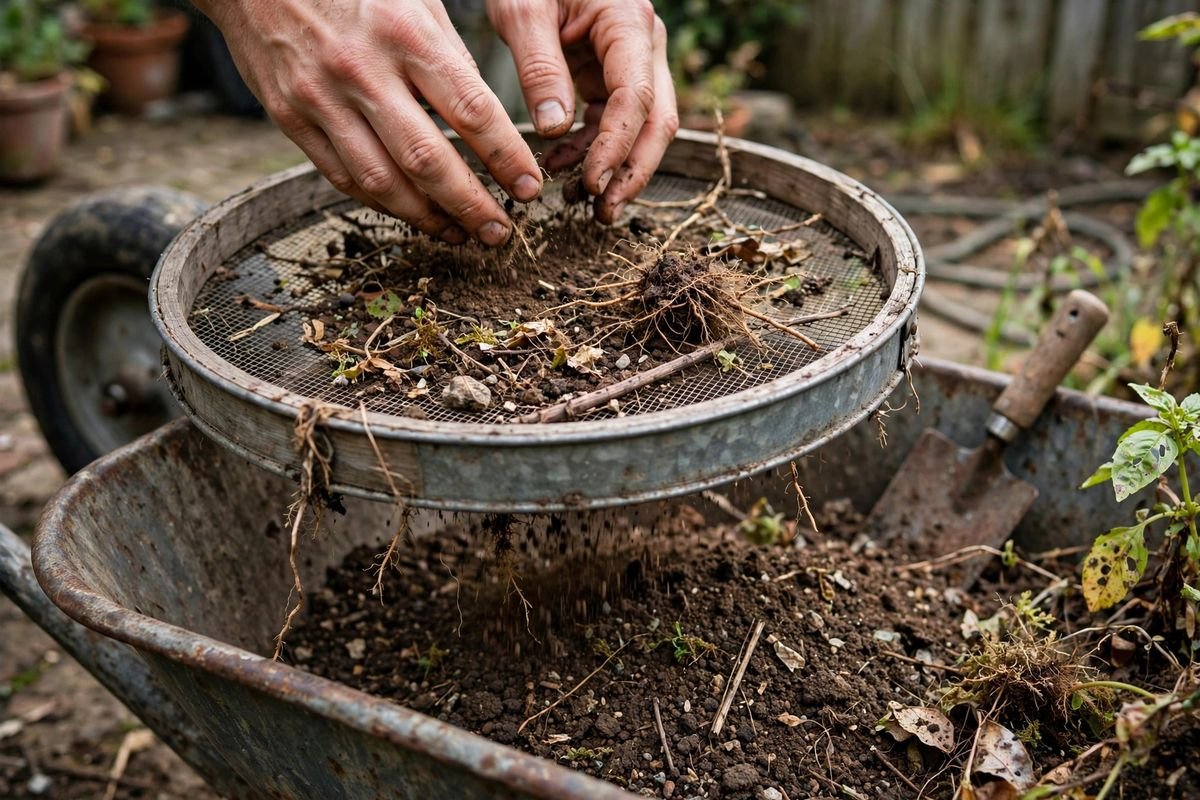
- Dump and inspect. Empty the pot onto a tarp. Pull out the old root ball and shake loose soil free. Discard thick root masses — or chop and compost them.
- Remove debris. Pick out dead leaves, old mulch, and any trash. A soil sifter screen over a wheelbarrow makes this fast for big batches.
- Break up clumps. Crush compacted chunks back to a crumbly texture.
- Check for problems. Sniff it — healthy-ish old mix smells earthy, not sour or rotten. Look for the disease and pest signs above.
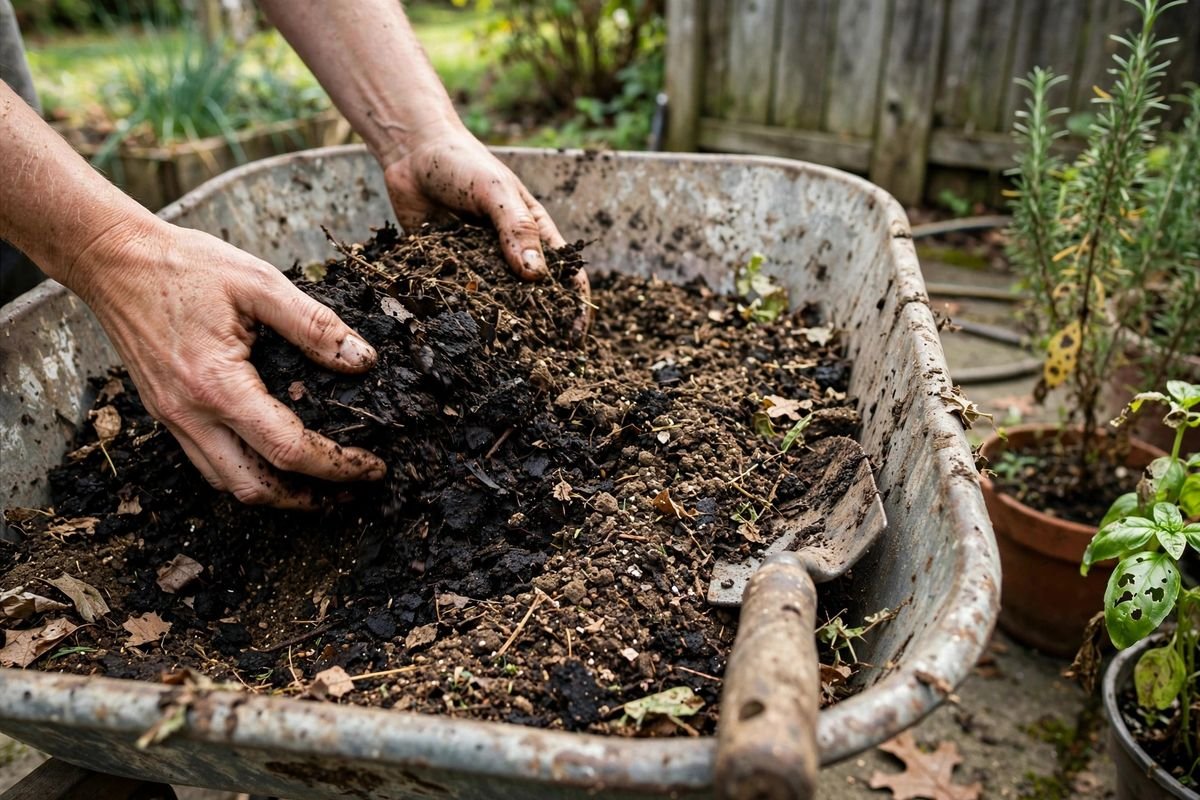
- Refresh it. Mix in about one-third fresh compost and a fresh dose of slow-release fertilizer, plus perlite or vermiculite if the old mix has gone dense. The step-by-step recipe is in our refresh guide.
Smart Ways to Use Rejuvenated Soil
You don’t have to put refreshed mix back into the same job. Match the soil to the task:
- Best refreshed mix → hungry, established plants: tomatoes, peppers, squash.
- Average refreshed mix → herbs, flowers, and greens, which are less demanding.
- Tired mix that’s not worth amending → use as mulch, top-dressing for ornamental beds, or filler in the bottom of very large planters (topped with good mix).
- Truly spent mix → add it to the compost pile as a brown ingredient, or spread it thinly on garden beds where soil life will rebuild it.
Almost nothing needs to go to a landfill. Even poor old mix improves a garden bed’s texture once soil organisms get to work on it.
How to Store Old Soil Over Winter
If you’re emptying pots in fall with no immediate replanting planned, store the old mix properly and it’ll be ready for a spring refresh. Dump it into a heavy-duty trash can or contractor bag, lid or tie it closed, and keep it somewhere it won’t freeze solid for months or turn into a mosquito nursery. A garage corner or under a deck overhang works well. Come spring, dump it out, run the refresh routine, and you’re planting weeks earlier than if you’d waited to buy bagged mix. Label the container with what grew in it last year — that one-line note makes crop rotation effortless when planting time comes.
Rotate Crops, Even in Pots
One more pro tip: don’t grow the same crop in the same refreshed soil two years running. Tomatoes followed by tomatoes in the same mix invites the soil-borne diseases tomatoes are prone to. Rotate families — follow tomatoes with herbs or greens, follow peppers with flowers. Container crop rotation is the easiest disease prevention there is, and it costs nothing.
FAQ
How many times can you reuse potting soil?
With proper refreshing, most mixes perform well for 2–3 seasons. After that, the organic structure has usually broken down enough that it’s better repurposed as a soil amendment than reused as potting mix.
Should you sterilize old potting soil?
For most home gardeners, no — solarizing or baking soil kills beneficial organisms along with the bad ones and is a lot of work. It’s only worth considering if you’re reusing soil that had disease issues, and even then, discarding is simpler and safer.
Can you mix old soil with new bagged mix?
Absolutely — a 50/50 blend of refreshed old mix and fresh bagged mix is a great compromise that stretches your budget while guaranteeing good structure.
Sources & Further Reading
- Cornell Cooperative Extension — potting media and c
Worked Example: Stretching Used Mix Across Four Big Pots (Our Math)
Reusing potting mix saves the most money when the pots are large, so here is the arithmetic we use, with every assumption stated. One 10-gallon pot holds about 1.34 cubic feet of mix. Four pots need about 5.4 cubic feet total. If last season’s mix is healthy — no disease, no sour smell, roots shaken out — a common refresh ratio is about two parts used mix to one part fresh mix, plus a modest fertilizer recharge because the original slow-release charge is spent.
At that 2-to-1 ratio, the four pots take roughly 3.6 cubic feet of screened used mix and about 1.8 cubic feet of fresh mix. That is one 2 cubic foot bag of fresh mix instead of three, with a small top-up left in the bag for mid-season settling. Our side-by-side of potting soil vs garden soil explains why the fresh portion should be potting mix rather than garden soil in containers, and our roundup of potting mixes for container vegetables compares the bag types worth spending on for that fresh third. Step-by-step screening and amendment details live in our guide to refreshing old potting soil.
Two honest limits keep the savings real. Skip the reuse plan for any pot that held a diseased plant, and expect very fine, broken-down mix to drain slowly even after amendment — when the texture turns to dust, retire it to the garden bed as a soil conditioner instead of stretching it through another container season.
ontainer culture guidance
- University of Minnesota Extension — container gardening publications
- Clemson Cooperative Extension — “Container Gardening” fact sheet (HGIC 1251)
- Penn State Extension — potting soil and soilless media articles
More soil posts to explore:
- How to Refresh Old Potting Soil: A Simple Method
- How to Make Compost at Home: A Beginner’s Guide
- Container Gardening for Beginners: What Grows Best in Pots
That pile of last season’s pots isn’t waste — it’s next season’s garden, one refresh away. Will you be reusing yours this fall?