
This post may contain affiliate links. If you buy through links on this page, we may earn a commission at no extra cost to you.
As an Amazon Associate I earn from qualifying purchases.
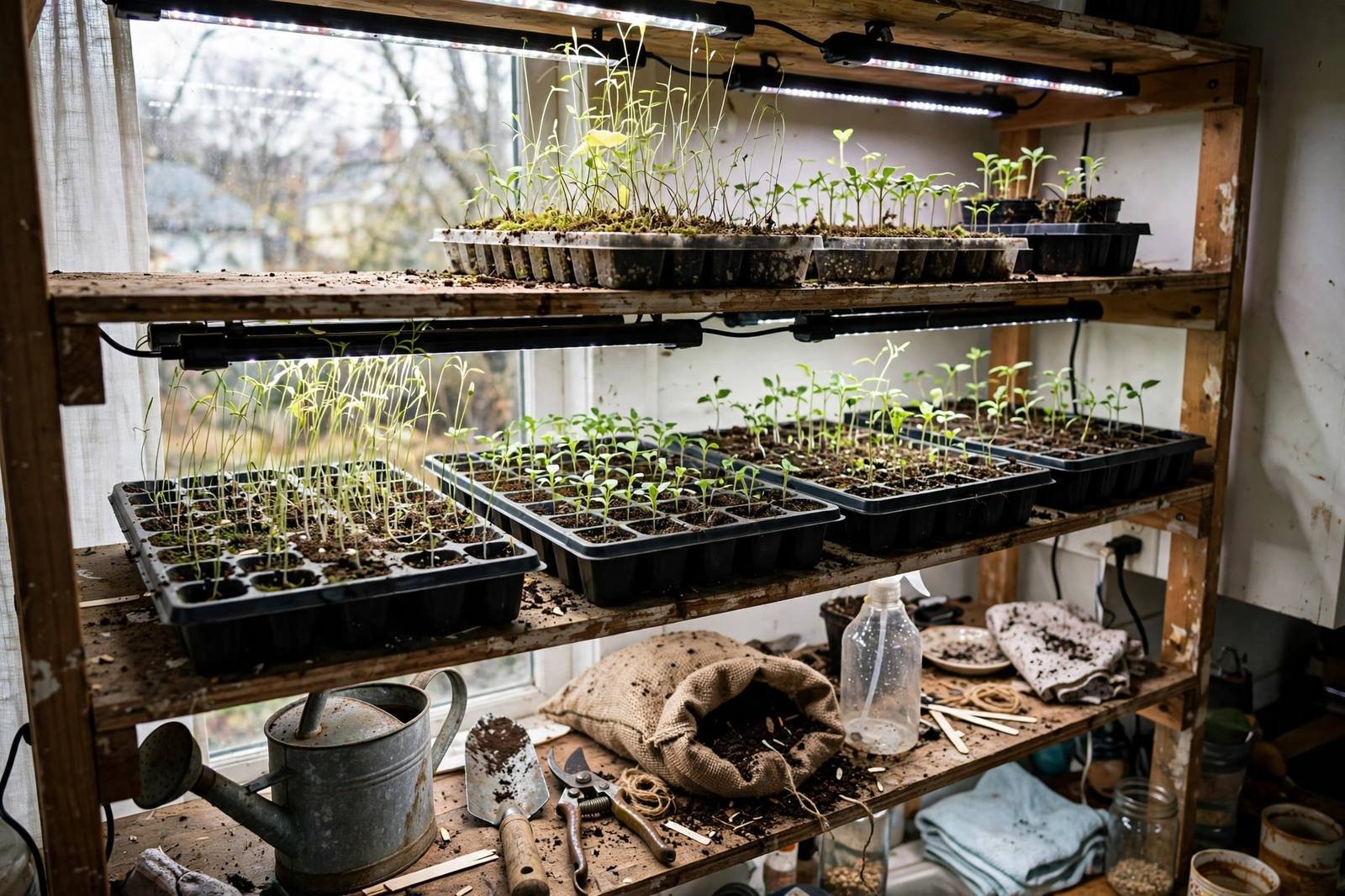
You did everything right. You bought the grow lights, set up the trays, kept the soil moist — and your seedlings still came up tall, pale, and floppy, leaning like tiny beanpoles toward a light that is already right there. If that sounds familiar, you are not alone. Legginess under grow lights is one of the most common indoor seed-starting frustrations, and the good news is that it is almost always fixable once you know which of five causes is at work in your setup.
In this guide we walk through how to recognize true legginess, the five reasons seedlings stretch even under artificial light, what you can salvage, and the simple setup changes that keep the next batch short, stocky, and strong.
| Light distance | 2–4 inches above the canopy for most fluorescent and LED bars; raise the light (or lower the tray) as plants grow |
|---|---|
| Light duration | 14–16 hours per day on a timer, with a true dark period at night |
| Room temperature | 60–70°F for most vegetables after germination; cooler beats warmer once sprouts are up |
| Spacing | Thin promptly to one seedling per cell so each plant gets direct light |
| Air movement | A gentle fan on low for a few hours a day strengthens stems |
What Leggy Seedlings Actually Look Like
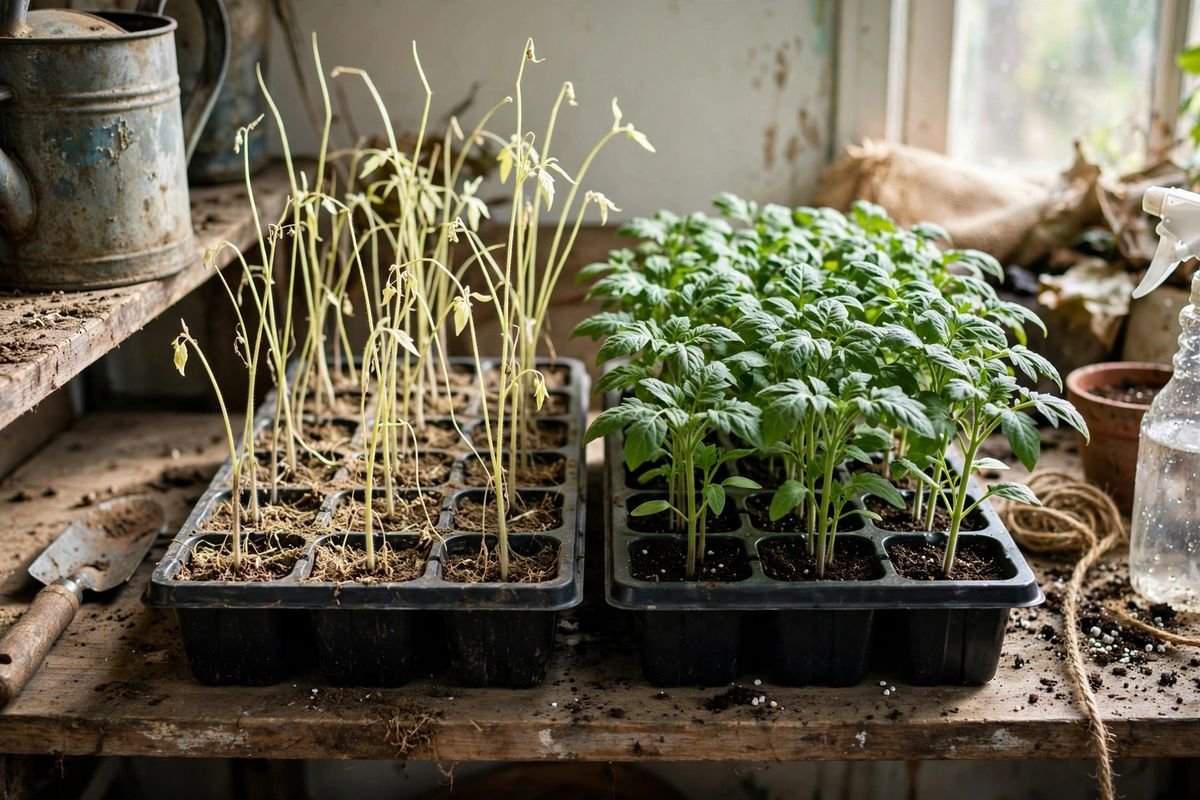
A leggy seedling has a long, thin stem between the soil line and its first true leaves, often with pale or yellow-green color and leaves that look small for the height of the plant. Healthy seedlings of the same age look compact: a short, sturdy stem, deep green leaves, and a plant that stands up on its own without leaning on its neighbors.
The comparison below is the fastest diagnostic. On one side, stretched seedlings with weak, spindly stems that flop over when you brush them. On the other, compact seedlings with thick stems and leaves held close together. Your eye learns this difference quickly — once you have seen a truly stocky tray, a leggy one is obvious at a glance.
One caution: a few crops naturally look a little lanky at first, and brand-new sprouts always start with a slender stem. Judge legginess a few days after germination, once true leaves appear. If stem length keeps racing ahead of leaf growth, you have a light or heat problem to solve.
Cause 1: The Light Is Too Far Away
This is the number one cause, and it surprises people because the setup looks correct. Light intensity drops fast with distance. A fixture hung a foot or two above the trays for convenience delivers only a fraction of its output to the leaves, so the seedlings do exactly what they evolved to do: grow taller, fast, hunting for brighter light.
For most home LED bars and shop lights, the working distance is just 2–4 inches from the tops of the plants. That feels almost too close if you are used to houseplants, but seedlings are light-hungry and the fixtures run cool. Keep the lights low and move them up in small steps as the canopy rises, or set trays on upturned pots and remove a layer at a time.
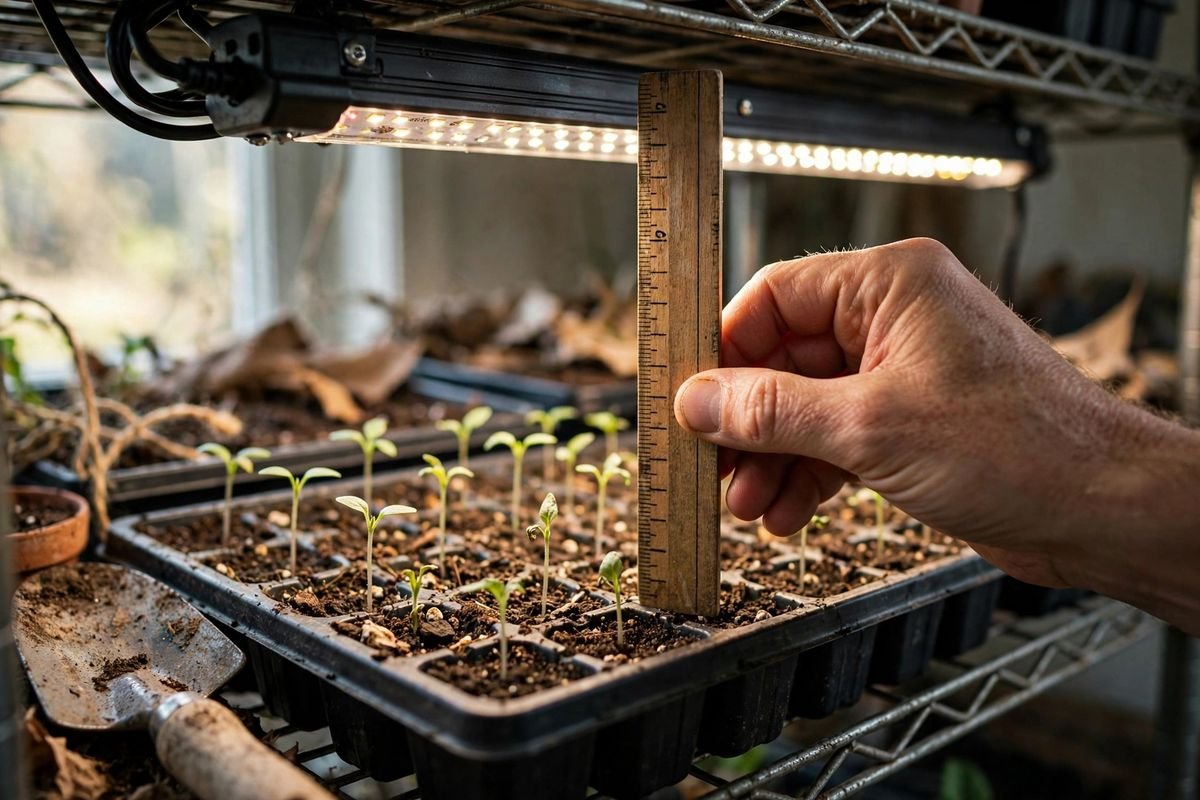
If your lights cannot be lowered, raise the plants instead. A sturdy box, a stack of books used with care around water, or extra shelving risers all work. Whatever method you choose, check the gap every couple of days during fast growth. Seedlings can add noticeable height in 48 hours, and a perfect gap on Monday can be a stretch zone by Friday.
Cause 2: Not Enough Hours of Light
Distance is only half the equation. Seedlings also need a long day. Indoors, we recommend 14–16 hours of light per day for most vegetables and flowers started under lights, followed by a real dark period so plants can rest and respire normally.
Short days cause the same stretch response as dim light. A tray that gets bright light for only eight or ten hours will still reach and lean. The simplest fix is a basic outlet timer so the schedule runs itself. Consistency matters more than squeezing in an extra hour here and there. If you are building your first station, our guide to how to set up a seed starting station walks through timer and shelf basics step by step.
Windowsill light, even on a sunny sill, rarely fixes the problem on its own because winter and early-spring days are short and glass cuts intensity. For a direct comparison, see our companion piece on LED grow light vs. sunny window results.
Cause 3: The Room Is Too Warm After Germination
Warmth helps seeds germinate. After sprouts are up, that same warmth pushes soft, fast, weak growth — especially when light is marginal. Many vegetables grow stockiest in a cool room, roughly 60–70°F, once they have emerged.
This is where heat mats cause confusion. A mat is a germination tool, not a grow-on tool. Leave seedlings sitting on bottom heat under lights and you get rapid top growth with thin stems. Our explainer on whether seedlings need a heat mat covers when to plug in and, just as usefully, when to unplug. As a rule, remove the mat as soon as most seeds in the tray have sprouted.
Cause 4: Crowding and Late Thinning
Sow three seeds per cell and forget to thin, and every seedling in that cell shades the others. Plants respond to neighbor shade by stretching — it is the same survival response as reaching for light, triggered by the quality of light bouncing off nearby leaves.
Thin early and be decisive: one seedling per cell, snipped at the soil line so roots are not disturbed. Cell size matters here too. Cramped, shallow cells crowd roots and tops faster; matching cell depth to the crop gives plants room to bulk up before transplant.
Crowding also raises humidity around the stems and invites damping off, the fungal problem that topples seedlings overnight. Space, airflow, and prompt thinning prevent both the stretch and the disease risk at once.
Cause 5: Still Air and Weak Stems
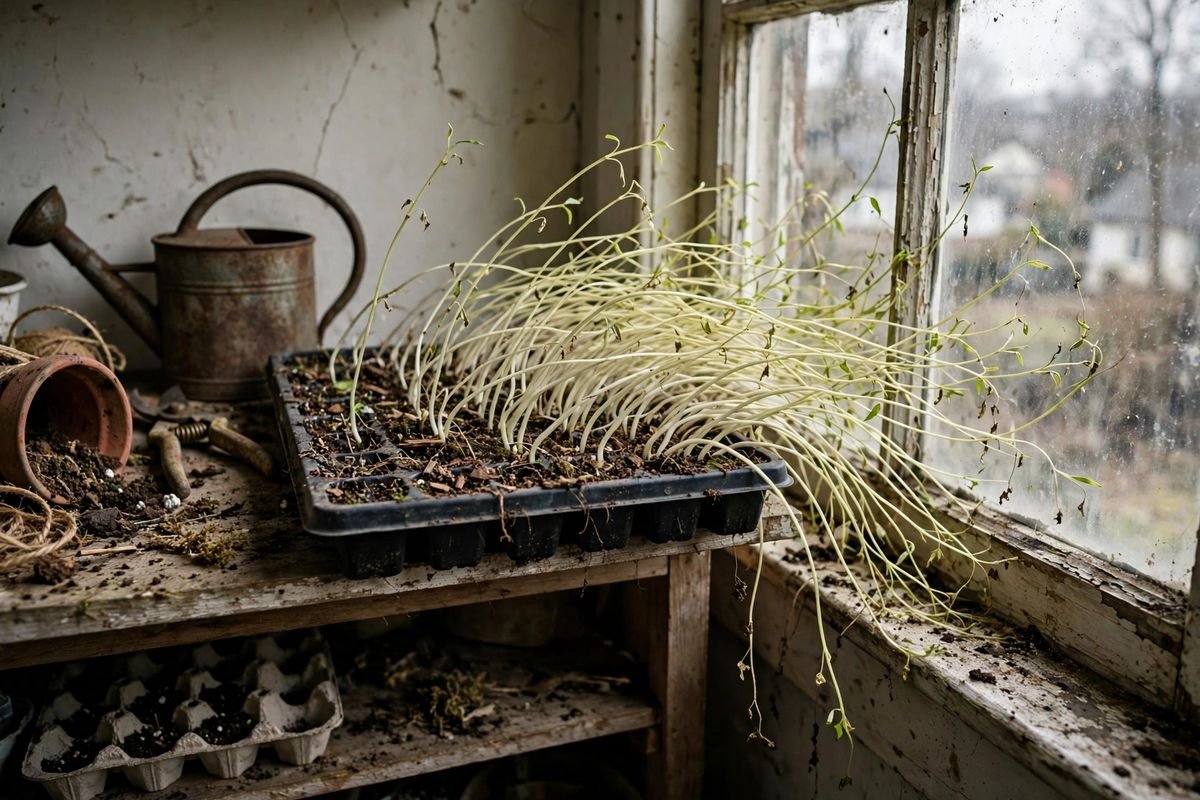
Outdoors, breeze flexes young stems all day, and plants respond by growing thicker and shorter — a response researchers call thigmomorphogenesis. Indoors, still air removes that signal, so stems stay thin even when light is adequate.
The fix is cheap: a small fan on its lowest setting, placed so it ruffles leaves gently rather than blasting them, run for a few hours a day or on the same timer as the lights. You can also brush your hand lightly over the tops of the seedlings once or twice a day. Both tricks encourage compact growth. A basic small clip fan sized for a shelf is plenty — no wind tunnel required.
Can Leggy Seedlings Be Saved?
Sometimes. It depends on the crop and how far the stretch has gone.
Tomatoes are the great exception. A leggy tomato can be transplanted deep — buried up to its first true leaves — because the stem readily forms new roots along the buried section. Handled gently, a stretched tomato often grows into a perfectly sturdy plant. Our full walkthrough of how to grow tomatoes covers deep planting in detail.
Most other vegetables are less forgiving. Peppers, brassicas, lettuce, and herbs do not root along the stem the same way. Mildly stretched plants often recover once you fix the light and add airflow — growth slows at the top and the stem thickens. Severely stretched, pale, flopped seedlings, though, rarely catch up to a fresh sowing. Seeds are cheap and time under your lights is valuable. If a tray looks truly weak, our honest advice is to resow with corrected light distance and watch the new batch thrive. Keep the old tray only if you have spare shelf space and curiosity.
Whatever you save, harden off gradually before transplanting outdoors. A leggy stem that survived indoors will snap in its first real wind if it goes straight from the shelf to the garden.
The Stocky-Seedling Setup We Recommend
Putting it together, the setup that reliably prevents legginess is simple: lights 2–4 inches above the canopy, 14–16 hours a day on a timer, a cool room once seeds sprout, one seedling per cell, and a whisper of moving air. Add a full-spectrum LED grow light bar sized to your shelf, sturdy seed starting trays with cells that match your crops, and you have covered the causes that produce nearly every leggy tray we see.
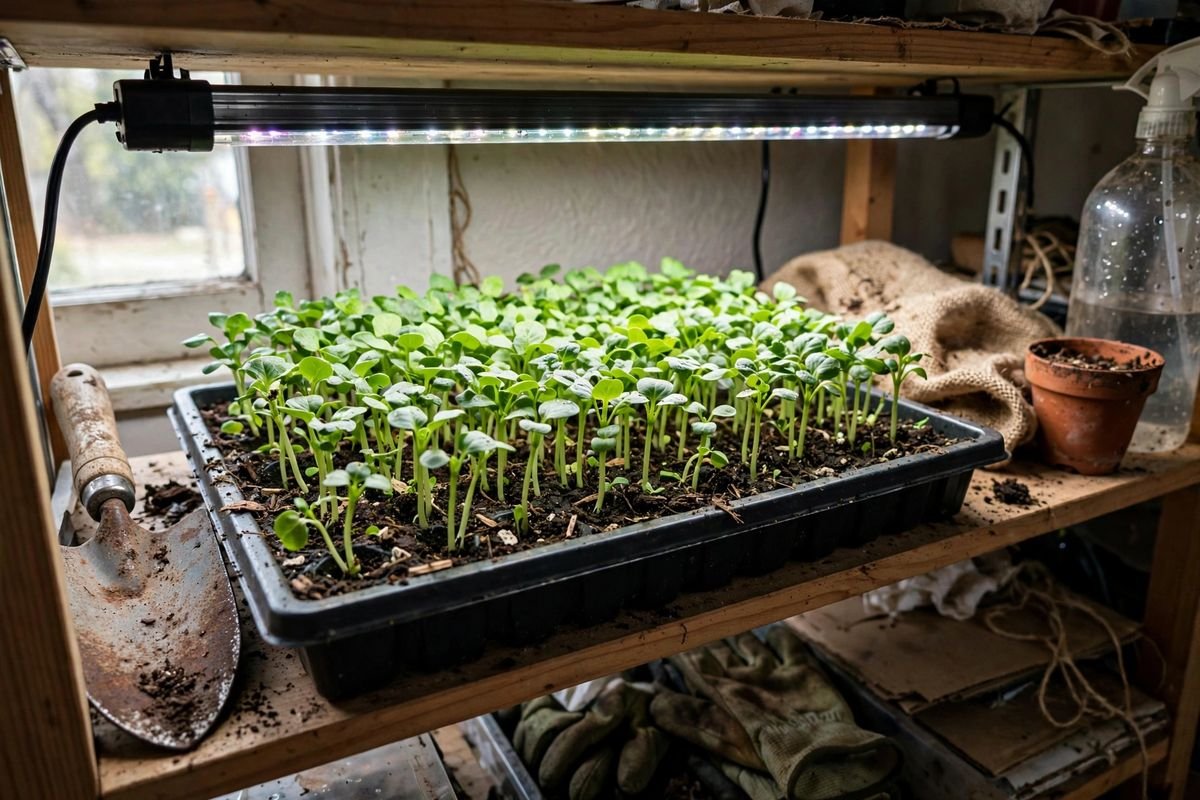
Check the light gap twice a week, thin on schedule, and pull the heat mat at sprouting. Those three habits do more for stem quality than any fertilizer or supplement sold for seedlings.
Troubleshooting Leggy Seedlings
| Tall, pale, leaning toward light | Light too far or day too short. Lower the fixture to 2–4 inches and set 14–16 hours on a timer. |
|---|---|
| Tall but green, after warm week indoors | Room too warm after germination. Move trays to a cooler spot and remove any heat mat. |
| Thin stems in crowded cells | Thinning skipped. Snip extras at the soil line today; keep one per cell. |
| Stems pinched and fallen at soil line | Likely damping off, not simple legginess. Improve airflow, water from below, and resow healthy trays. |
| Leggy only on tray edges | Light coverage fades at the edges. Rotate trays daily or center them under the fixture. |
If bottom watering is part of your routine, keep it — it pairs well with strong roots — and see our related notes when you set up your next station. The pattern is consistent: bright, close, long-day light plus cool air and space gives you the short, dark-green seedlings that transplant without drama.
FAQ
How close should grow lights really be to seedlings?
For most home LED bars and fluorescent shop lights, 2–4 inches above the tops of the plants is the working range. Follow the guidance for your specific fixture, keep lights low, and raise them gradually as plants grow so the gap stays small.
Can I fix leggy seedlings by just adding more light hours?
More hours help only up to a point. Beyond about 16 hours, extra light does not compensate for a fixture hung too high, and plants still need a dark period. Fix distance first, then set a steady 14–16 hour schedule.
Should I throw away leggy seedlings and start over?
Tomatoes: usually save them with deep transplanting. Most other crops: mildly stretched plants often recover under corrected light, but severely pale and flopped trays are usually better resown. A fresh tray under proper light overtakes a struggling one surprisingly fast.
Do seedlings need darkness at night?
Yes. Seedlings use the dark period for normal respiration and growth regulation. We recommend 14–16 hours of light and 8–10 hours of darkness for most indoor vegetable starts, run on a timer for consistency.
A Worked Fix: Distance, Hours, and a Sturdier Stem
Most leggy seedlings do not need a new product first. They need the light closer, for the right number of hours, with a small daily adjustment as they grow. Here is the math we use when we set up a tray, with the assumptions stated plainly.
Say a small LED bar sits 12 inches above the canopy. As a simple planning model, light intensity follows an inverse-square pattern: double the distance and the intensity drops to about one quarter (12 inches versus 6 inches: (6/12)² = 0.25). Real fixtures spread light differently, so treat this as a directional guide, not a lab measurement. The practical takeaway is steady: a few inches of extra distance can matter more than an extra hour on the timer.
A worked reset for one 10×20 tray: lower the bar to roughly 4 to 6 inches above the tallest leaves, run it about 15 to 16 hours, and raise it a little every few days so the gap stays consistent as the plants gain height. If leaves pale or edges curl, back the light off an inch or two and shorten; if stems stretch, close the gap before you extend the day. Our distance guide walks through stage-by-stage gaps in How High Should Grow Lights Be Above Seedlings?, and our timing guide covers the dark period seedlings still need in How Long Should Grow Lights Stay On for Seedlings?.
If you are choosing a fixture for a full shelf rather than rescuing an already leggy tray, compare coverage per tray first. Our Best Grow Lights for Seedlings guide shows the tray-coverage math we use before looking at any product features.
Sources & Further Reading
- University of Minnesota Extension — starting seeds indoors and lighting guidance for seedlings (extension.umn.edu)
- Purdue University Extension — indoor seed starting and light requirements for transplants
- USDA Agricultural Research Service — plant responses to light intensity, duration, and air movement
- Cornell University Cooperative Extension — seed starting and transplant production resources
Short stems are not luck. They are what seedlings do naturally when light is close, days are long, air moves, and roots and tops have room. Set those four conditions and your trays will tell you — within days — that you got it right.