
This post may contain affiliate links. If you buy through links on this page, we may earn a commission at no extra cost to you.
As an Amazon Associate I earn from qualifying purchases.
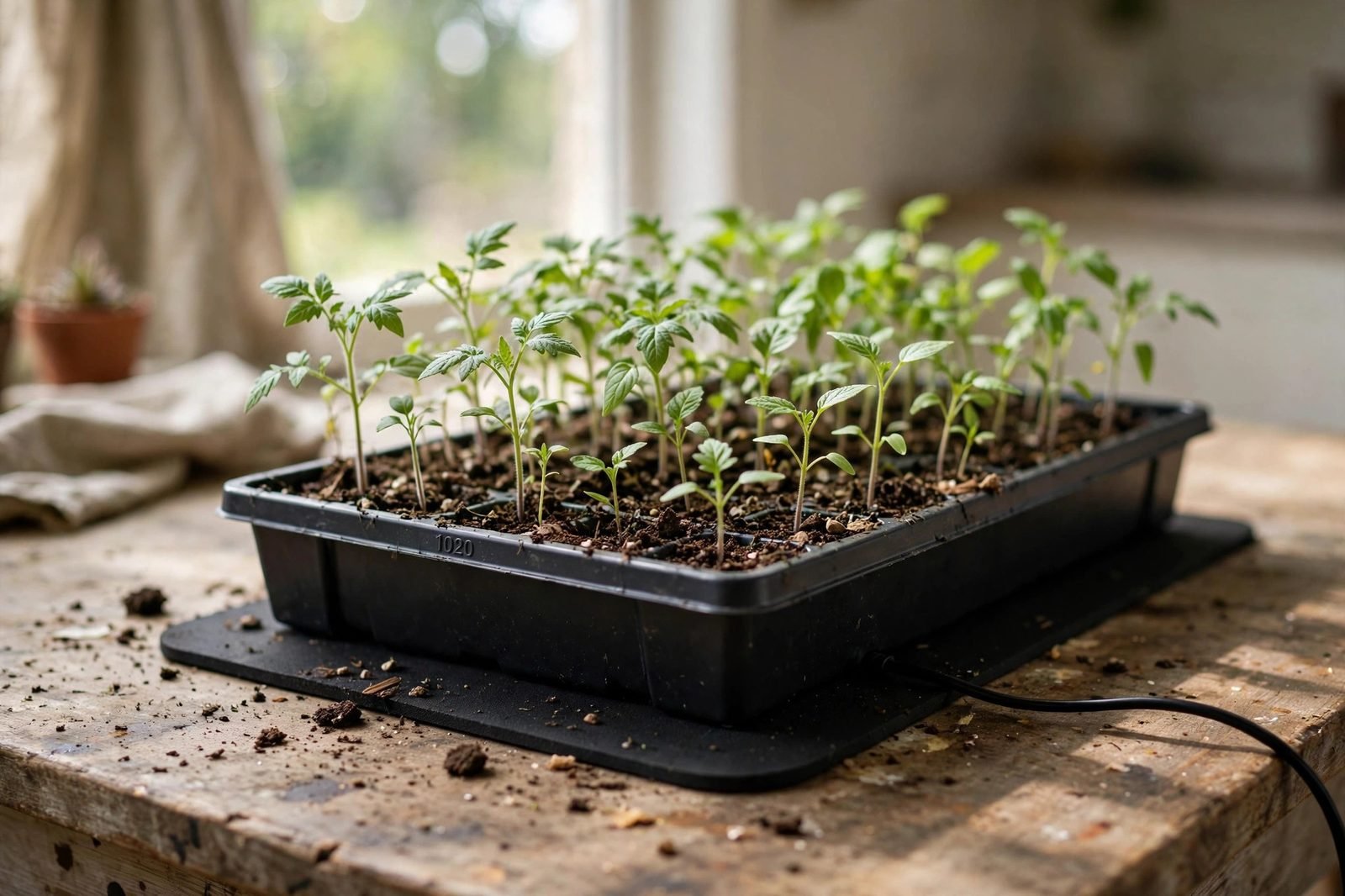
There’s a particular kind of impatience that comes with starting peppers indoors. You sow the seeds, set the tray on the kitchen counter, and check it every morning for two weeks while absolutely nothing happens. Then, almost overnight, the whole tray pops at once — and you wonder whether you did anything at all to make it happen.
You did — or rather, the warmth did. Seeds don’t respond to encouragement; they respond to soil temperature. Pepper seeds germinate fastest in soil near 85°F, and a February kitchen counter sits nowhere near that. A seedling heat mat exists to close exactly that gap.
But not every seed wants the extra warmth. Set lettuce on a heat mat and you can stall germination instead of speeding it up. In this guide, we’ll sort out which crops genuinely benefit from bottom heat, which ones you should keep off the mat, how to pair a mat with a thermostat so you don’t cook your seeds, and the warning signs of too much warmth. We’ve also included a quick-reference germination temperature table drawn from university extension data.
The Short Answer
Do seedlings need a heat mat? For warm-season crops — peppers, tomatoes, eggplant, basil, cucumbers, and melons — bottom heat turns slow, spotty germination into fast, even sprouting. For cool-season crops — lettuce, spinach, peas, brassicas, carrots, and onions — skip the mat entirely. Most of them germinate just fine at room temperature, and a few actively dislike extra warmth.
| Crop group | Optimum soil temp | Heat mat? |
|---|---|---|
| Peppers, tomatoes, eggplant, basil | 75–85°F | Yes — biggest payoff |
| Cucumbers, squash, melons | 85–95°F | Helpful, but they sprout fast anyway |
| Lettuce, spinach, peas, brassicas, carrots, onions | 60–75°F | No — skip it |
The rest of this guide explains the “why” behind that table, so you can make the call for any seed packet — including the flowers and herbs not listed here.
Why Soil Temperature Matters More Than Air Temperature
Here’s the part most seed packets gloss over: seeds respond to the temperature of the soil around them, not the air in your kitchen. A sunny windowsill can feel warm while the soil in the tray sits ten degrees cooler. That gap is why two gardeners can sow the same pepper seeds on the same day and get sprouts two weeks apart.
The numbers make the case better than any advice column. Research compiled by J. F. Harrington of the UC Davis Department of Vegetable Crops measured days to seedling emergence at different soil temperatures:
- Tomatoes: 43 days at 50°F soil, 14 days at 59°F, 6 days at 77°F.
- Peppers: 25 days at 59°F soil, 12 days at 68°F, 8 days at 77°F.
- Lettuce: 7 days at 50°F, 3 days at 68°F — but little or no germination at 95°F.
- Spinach: 12 days at 50°F, 6 days at 68°F — and none at 95°F.
Read that lettuce line again: at very warm soil temperatures, lettuce seed simply refuses to sprout. Warmth is a tool, not a universal good. It helps exactly the crops whose wild ancestors evolved in hot climates, and it hinders the cool-weather ones.
Crops That Love Bottom Heat
Peppers are the poster child for heat mats. Their optimum germination temperature sits around 85°F — warmer than almost any home in late winter — which is why unheated pepper seeds can sit for three weeks or more and then emerge unevenly. On a mat held near 80–85°F, most pepper varieties pop in 7 to 10 days.
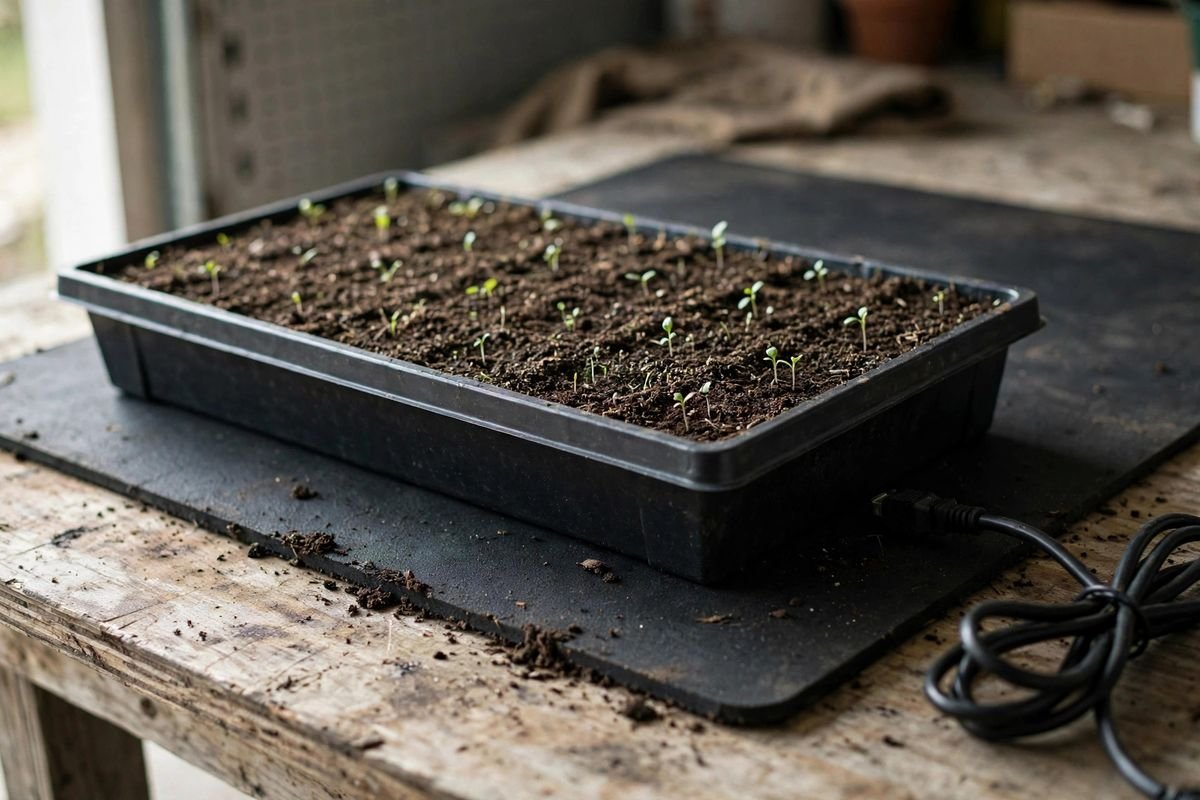
Tomatoes are nearly as enthusiastic. At 75–85°F soil, they typically emerge in under a week — and our full tomato growing guide picks up the story from sprouting to harvest. Eggplant wants similar warmth (80–90°F) and is famously sluggish without it. Basil germinates best around 70°F, which sounds close to room temperature until you realize a tray near a drafty window can sit in the low 60s all February.
Cucumbers, squash, and melons germinate fast with or without help — often in 3 to 4 days at warm room temperature — so a mat is a nice-to-have rather than a must. One caution with this group: they resent root disturbance, so sow them in larger cells or biodegradable pots you can plant whole, mat or no mat.
Timing still rules everything. Start these warm-season crops indoors 6 to 8 weeks before your last expected frost, counting backward from transplant day. Use your local frost dates and regional planting guidance — not your USDA hardiness zone alone — to choose planting dates.
Crops That Should Skip the Mat
Cool-season crops evolved to sprout in chilly spring soil, and they do it beautifully without any help. Lettuce germinates best around 75°F and stalls above 80°F — setting its tray on a heat mat is one of the easiest ways to get zero sprouts and blame the seed company. Spinach is similar, with an optimum near 70°F and no germination at all in very warm soil.
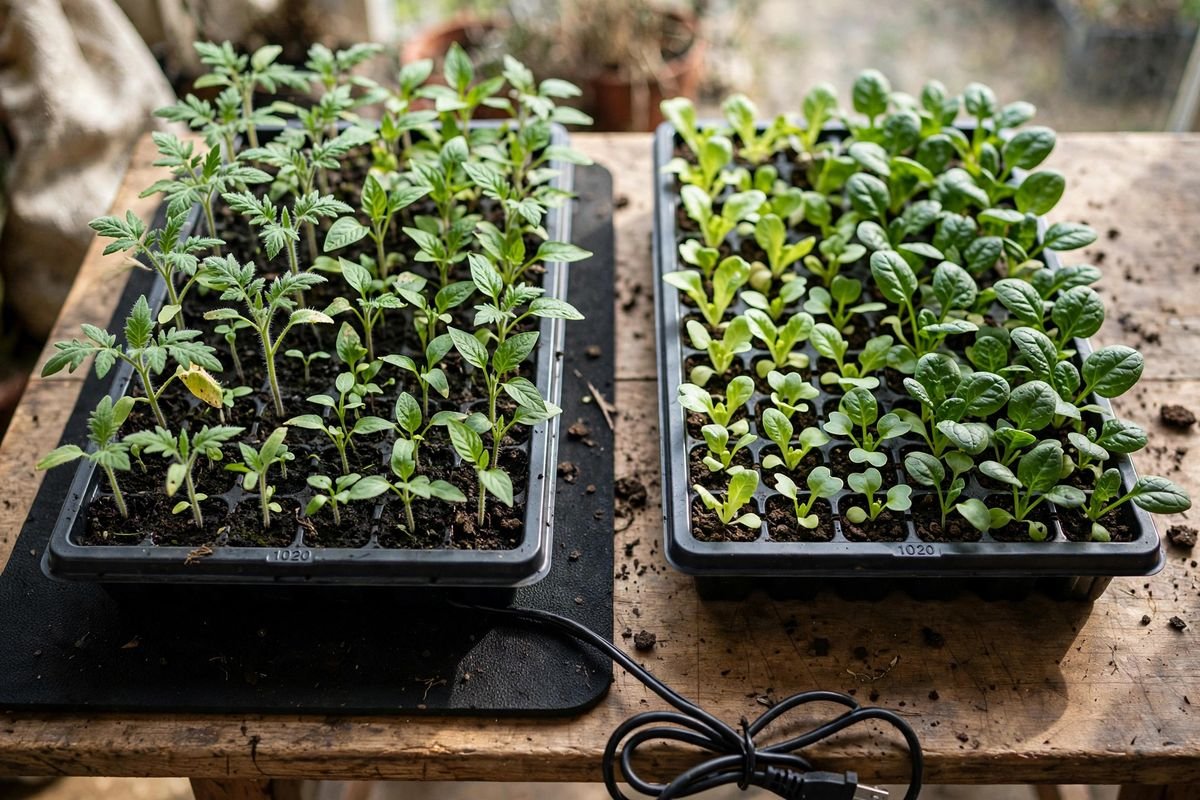
Peas, carrots, brassicas (cabbage, broccoli, kale), and onions all germinate reliably in the 60–75°F range — normal indoor room temperature. The simple rule: if a crop goes into the garden weeks before your last frost, it doesn’t need bottom heat. Save the mat — and the outlet — for the peppers.
Running both types at once? That’s the most common real-world setup, and it works fine. Put the warm-season tray on the mat and the cool-season tray beside it on the bare table. If fall lettuce is on your list, our fall lettuce guide covers its cool-weather preferences in detail.
Germination Temperature Quick-Reference Table
Optimum soil temperatures for common vegetables, adapted from the University of Wisconsin–Madison Extension’s germination chart. “Optimum” means fastest, most uniform sprouting — seeds still germinate across a wider range, just more slowly.
| Crop | Optimum soil temp (°F) | Heat mat? |
|---|---|---|
| Pepper | 85 | Yes |
| Eggplant | 85 | Yes |
| Tomato | 85 | Yes |
| Cucumber | 95 | Optional |
| Squash | 95 | Optional |
| Lettuce | 75 | No |
| Onion | 75 | No |
| Spinach | 70 | No |
| Basil | 70 | Yes |
| Carrot | 80 | No |
| Bean | 80 | No |
| Cabbage | 85 | No |
Source: University of Wisconsin–Madison Extension, “When Is the Right Time to Plant Vegetable Seeds? Check Soil Temperature” (hort.extension.wisc.edu). Optimum values vary slightly between references — basil’s 70°F comes from Ohio State Extension’s germination guide — so treat these as targets, not gospel.
How to Use a Heat Mat the Right Way
A heat mat is almost embarrassingly simple — which is exactly why the few mistakes people make with it are avoidable. Here’s the setup that works:
What you’ll want: a seedling heat mat sized to your tray (the standard 10×20-inch size fits a 1020 tray), a heat mat thermostat, and a soil thermometer for spot-checking. If you’re still choosing containers, our seed starting tray guide compares the common options.
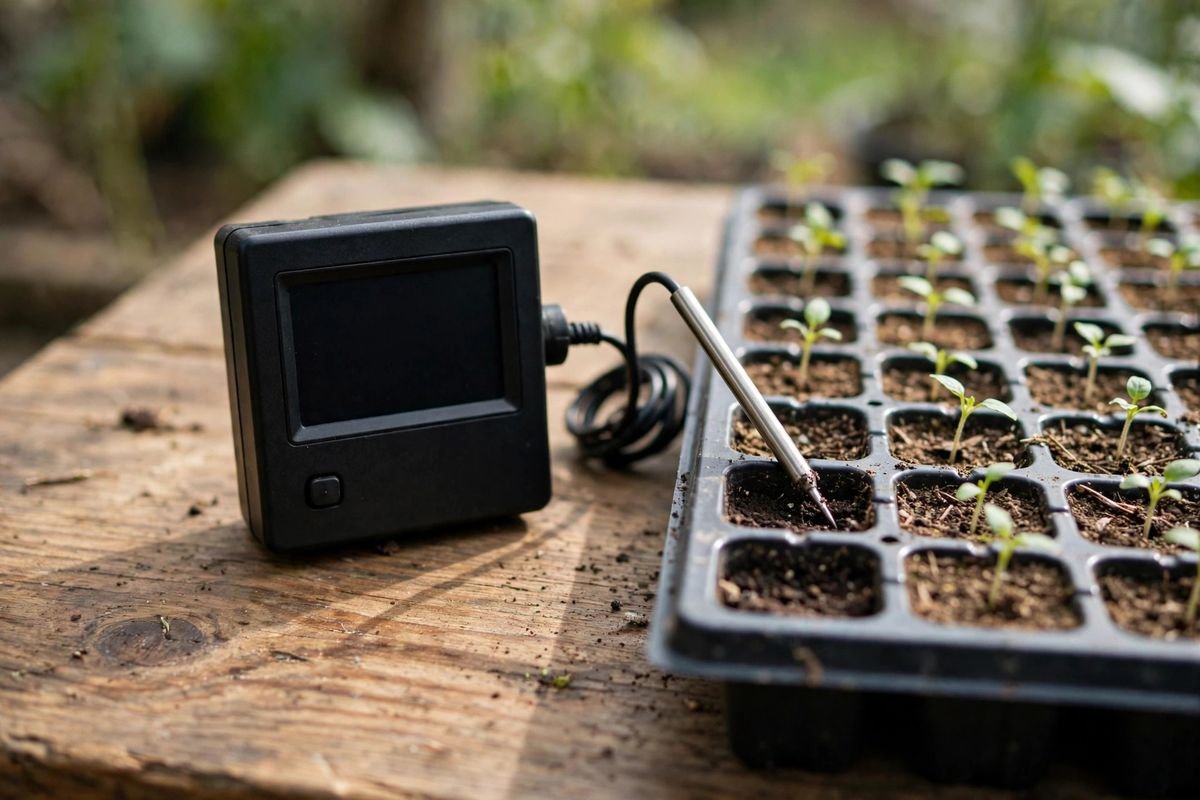
- Set the mat on a flat, dry surface — a table, bench, or shelf — and place the tray directly on top. The mat warms from below; never bury it in soil or sandwich it between two trays.
- Plug the mat into the thermostat, then push the thermostat’s probe into the soil in the middle of the tray, at seed depth. The probe must measure soil, not air — a probe dangling beside the tray reads the room, and the mat will overshoot.
- Dial in the target temperature for what you’re sowing: 80–85°F for peppers, tomatoes, and eggplant; around 70°F for basil.
- Sow, water gently, and cover with a humidity dome or plastic wrap if you like — warmth plus steady moisture is the combination that wakes seeds up.
- Check daily. Glance at the thermostat, feel the soil surface, and water before it dries out. Warm soil gives up moisture faster than you’d expect.
- Pull the mat once sprouting is underway. When roughly half the cells have emerged, move the tray off the mat and under your grow lights. Seedlings want light and cooler air after germination — continued bottom heat grows soft, leggy stems.
The thermostat is the piece beginners skip and veterans never do. An unregulated mat runs full-blast around the clock, and soil temperature drifts with the room — fine on a mild afternoon, too hot when the furnace kicks on. A thermostat costs less than two packets of seeds and removes the guesswork entirely.
Signs You’re Running Too Hot
More warmth isn’t always better, even for peppers. Watch for these warnings:
- The soil surface dries within hours. If you’re watering twice a day just to keep up, the mat is set too high or the room is too warm for it.
- Seeds turn to mush. Warm plus constantly soggy is a recipe for rot — seeds swell, soften, and never emerge.
- White fuzzy mold spreads across the mix. A little surface mold is common and mostly harmless, but explosive growth means too much heat plus too much moisture.
- Seedlings emerge pale and stretched. Heat speeds growth, but without strong light that growth goes leggy. This is the classic “mat left on too long” look.
- Your thermometer reads above 90°F. Most vegetable seeds suffer past this point — germination stalls or the seed simply cooks.
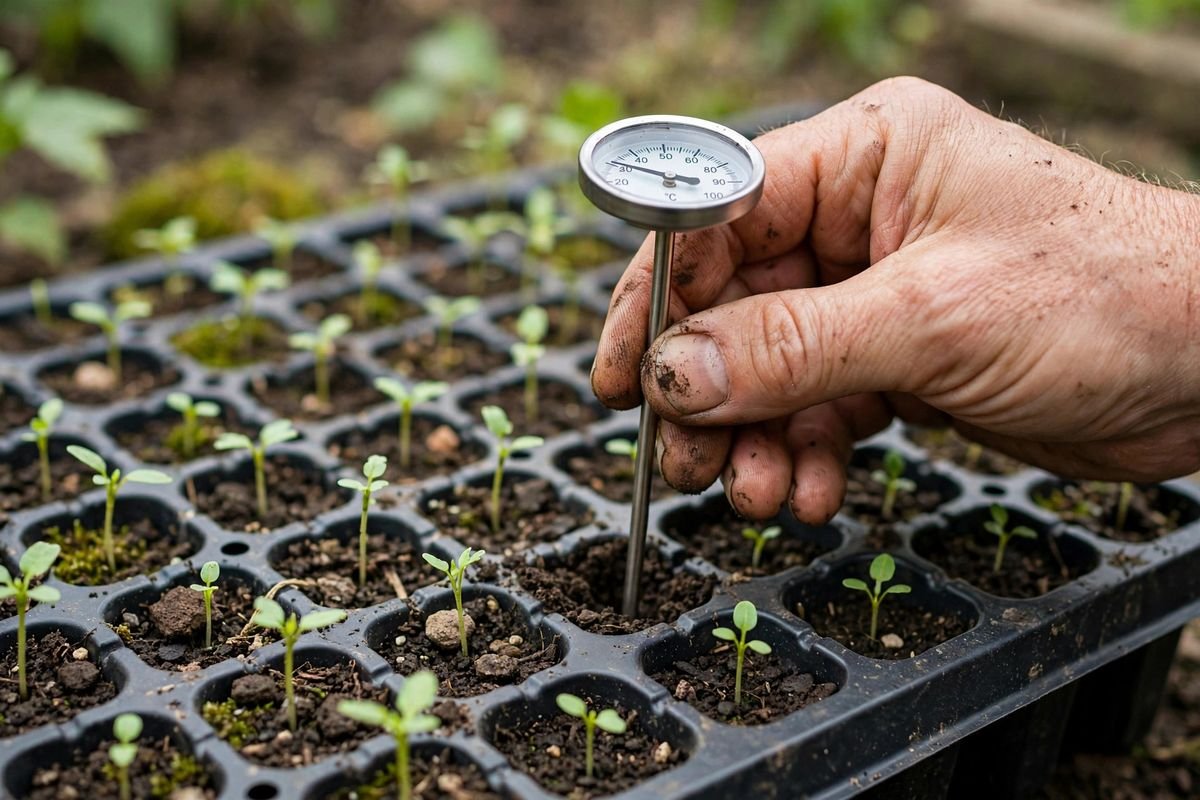
The fix is usually simple: turn the thermostat down a few degrees, crack or remove the humidity dome, and verify with the soil thermometer rather than your palm. And remember that most germination failures come from too little warmth or too little moisture — too much heat is the less common problem, but it’s the one a thermostat prevents.
Troubleshooting Heat Mat Problems
My peppers still haven’t sprouted after three weeks.
Check the soil temperature first — probe in the soil, not the air. Below 75°F is your answer most of the time. Also check seed age (pepper seed stays viable roughly 2–4 years in cool, dry storage) and moisture — the mix should feel like a wrung-out sponge, never soggy or dusty.
Only the cells at the edges sprouted.
The center of the tray may be running hotter or cooler than the edges, or the thermostat probe is sitting in a warm pocket. Move the probe to a different cell, rotate the tray 180 degrees every few days, and confirm readings with the thermometer.
There’s white mold on the soil surface.
Usually harmless mold feeding on the organic matter in the mix. Let the surface dry between waterings, remove the dome once seeds sprout, and add gentle airflow. If it keeps exploding, the tray is too wet, too warm, or both.
Seedlings sprouted, then keeled over at the soil line.
That’s damping-off, a fungal problem — not a heat-mat problem. It thrives in cool, wet, still air. Use fresh seed-starting mix, avoid overwatering, and get a small fan moving air once seeds emerge. Our bottom-watering guide shows the watering method that keeps stem bases drier.
The mat barely feels warm to the touch.
That’s normal. Mats are designed to raise soil temperature roughly 10–20°F above ambient, not to feel hot. Judge by the soil thermometer reading, not by your palm.
FAQs About Seedling Heat Mats
Can I use a heat mat without a thermostat?
You can, and many gardeners do for a season — but it’s the single biggest source of cooked seeds. Unregulated mats run constantly, so soil temperature swings with the room. A thermostat is inexpensive insurance and the first upgrade we’d recommend.
Should I leave the mat on after seeds sprout?
No. Once roughly half the tray has emerged, move it off the mat and under lights. Seedlings grow sturdier in cooler air (60–70°F), and continued bottom heat encourages soft, leggy growth.
Will a heat mat help flower seeds germinate?
Warm-season flowers like zinnias, marigolds, and cosmos appreciate the same 70–80°F soil as warm-season vegetables. Cool-season flowers — pansies, snapdragons, sweet peas — prefer it cool, just like lettuce.
Is a heat mat worth buying if I only grow tomatoes?
Honestly? Probably not on its own. Tomatoes germinate fine at normal room temperature. The mat earns its keep with peppers and eggplant — the crops that truly sulk in cool soil.
Can I put the mat under pots on a cold windowsill?
Yes — that’s one of its best uses. Keep the thermostat probe in a pot’s soil, keep the setup away from standing water, and plug into a GFCI outlet if there’s any chance of spills.
Keep Reading
- How to Grow Tomatoes: From Seed to Harvest
- How to Grow Lettuce in Fall
- 10 Easiest Vegetables to Grow for Beginners
Which crops are you starting indoors this season — and is your seed-starting spot warm or chilly? Tell us in the comments; we read every one.