
This post may contain affiliate links. If you buy through links on this page, we may earn a commission at no extra cost to you.
As an Amazon Associate I earn from qualifying purchases.
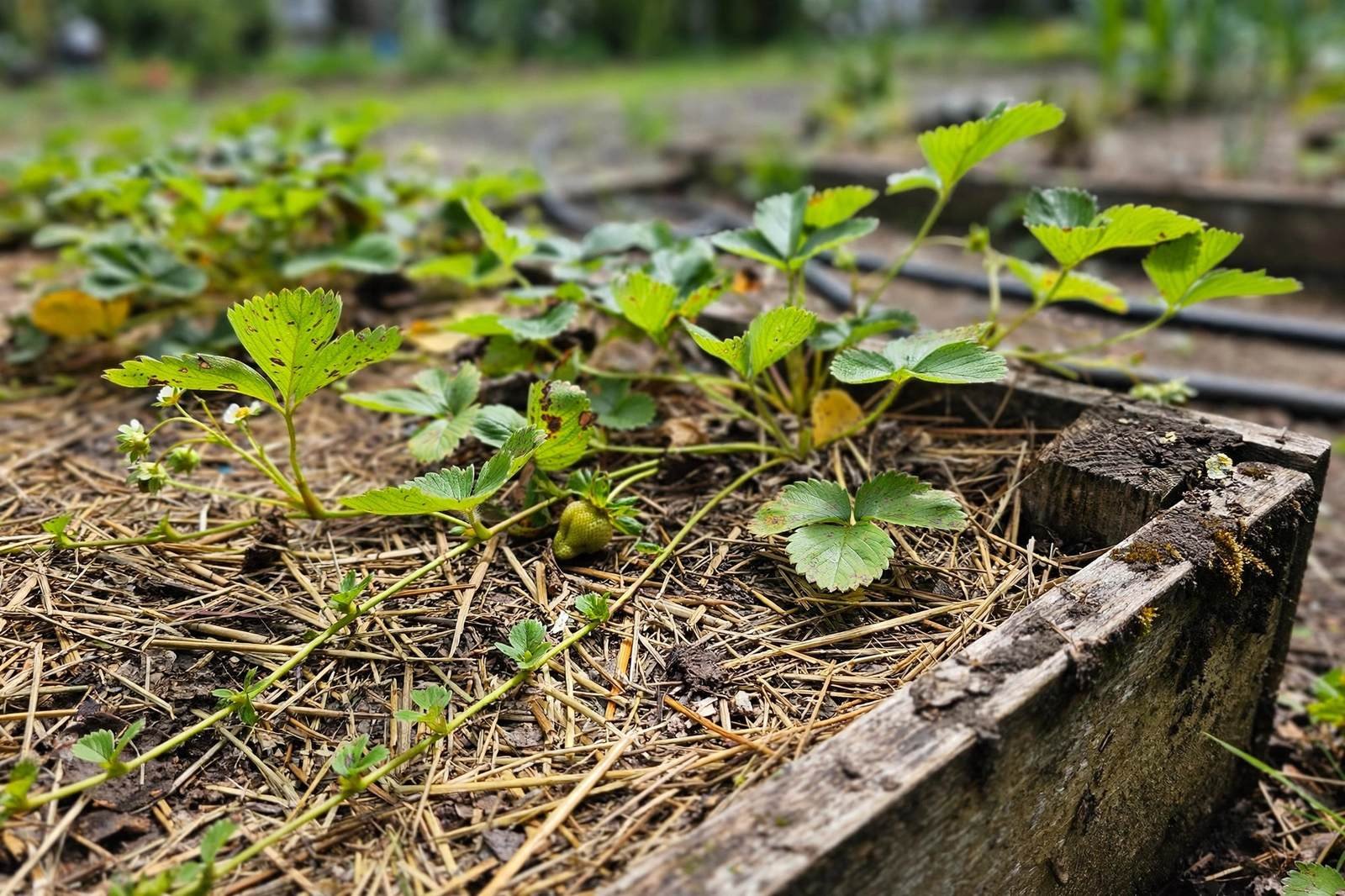
Strawberries are the rare fruit that pays for itself in the first season. A handful of bare-root crowns, planted at the right depth in a sunny bed, can fruit within months and then multiply into next year’s plants for free through runners. The two decisions that shape everything are which type to grow and how to handle those runners. This guide covers both, plus a worked planting plan for a 4-by-8 bed with our own spacing and runner math, so you know exactly how many crowns to order before you buy.
Quick care at a glance
| Need | What strawberries want |
|---|---|
| Light | Full sun, at least 6 to 8 hours |
| Soil | Well-drained, rich in organic matter |
| Planting depth | Crown level with the soil surface; buried crowns rot, high crowns dry out |
| Spacing | 12 to 24 inches apart depending on the system (see the plan below) |
| Water | About an inch a week; steady moisture during fruiting |
| Mulch | Straw mulch under the fruit keeps berries clean and dry |
June-bearing or everbearing: choose your harvest style
June-bearing varieties produce one heavy crop over two to three weeks in late spring or early summer, then spend the rest of the season making runners. Everbearing and day-neutral types spread smaller harvests across the whole season and put their energy into fruit instead of runners. Neither is better; they answer different questions.
| June-bearing | Everbearing / day-neutral | |
|---|---|---|
| Harvest | One big crop, 2 to 3 weeks | Smaller pickings across the season |
| Runners | Many; let them root into a matted row | Few; pinch them off to keep plants large |
| First year | Remove blossoms so plants build roots and runners | Let plants fruit lightly |
| Longevity | Yields decline after a few years; renew with rooted daughters | Replace plants every few years as vigor fades |
Choose June-bearing if you want a concentrated harvest for jam, freezing, or sharing, and you have room for a matted row to fill in. Choose everbearing or day-neutral if you want fresh berries for the table over months and prefer tidy, single-plant beds. Containers favor the everbearing habit; see our container gardening guide and potting mixes for container vegetables if the patch will live in pots.
When to plant: bare-root timing and fall planting
Strawberries usually arrive as bare-root crowns: dormant bundles of roots with a tight crown of folded leaves. Spring planting is the standard in cold climates, as soon as the soil can be worked. In mild-winter climates, fall planting in October and November works well: the crowns spend winter growing roots, then wake up ready to fruit in spring. Either way, buy from a reputable nursery; plants saved from an old patch often carry disease. Use your local frost dates and regional planting guidance — not your USDA hardiness zone alone — to choose planting dates.
Our worked example: a 4-by-8 bed, two ways
Assumptions. One raised bed, 4 by 8 feet (32 square feet). Everbearing and day-neutral plants go in a hill system: rows 1 foot apart, plants 1 foot apart in the row, every runner pinched. June-bearers go in a matted row: two rows, crowns 18 inches apart, runners allowed to root. Each June-bearing mother roots 4 healthy daughters in its first season (a planning assumption; real counts vary with variety and weather).
The math. Hill system: four rows fit the 4-foot width at 1-foot spacing, and each 8-foot row holds 8 plants at 1-foot spacing, for 32 crowns total, exactly one per square foot. Order a bundle of 25 plus a bundle of 10 and you have spares. Matted row: two rows with crowns 18 inches apart give 5 mothers per row, 10 mothers total. At 4 daughters each, the bed holds about 40 daughter plants by fall, which then get thinned to a mat 12 to 18 inches wide. Those daughters are next year’s fruiting row and free replacement stock when the mothers age out.
Runner planning beyond year one: a June-bearing bed renews itself if you let it. Each fall, pull the oldest, least productive mothers and let the strongest daughters take their place, and the bed stays young without buying new crowns.
Planting bare-root crowns step by step
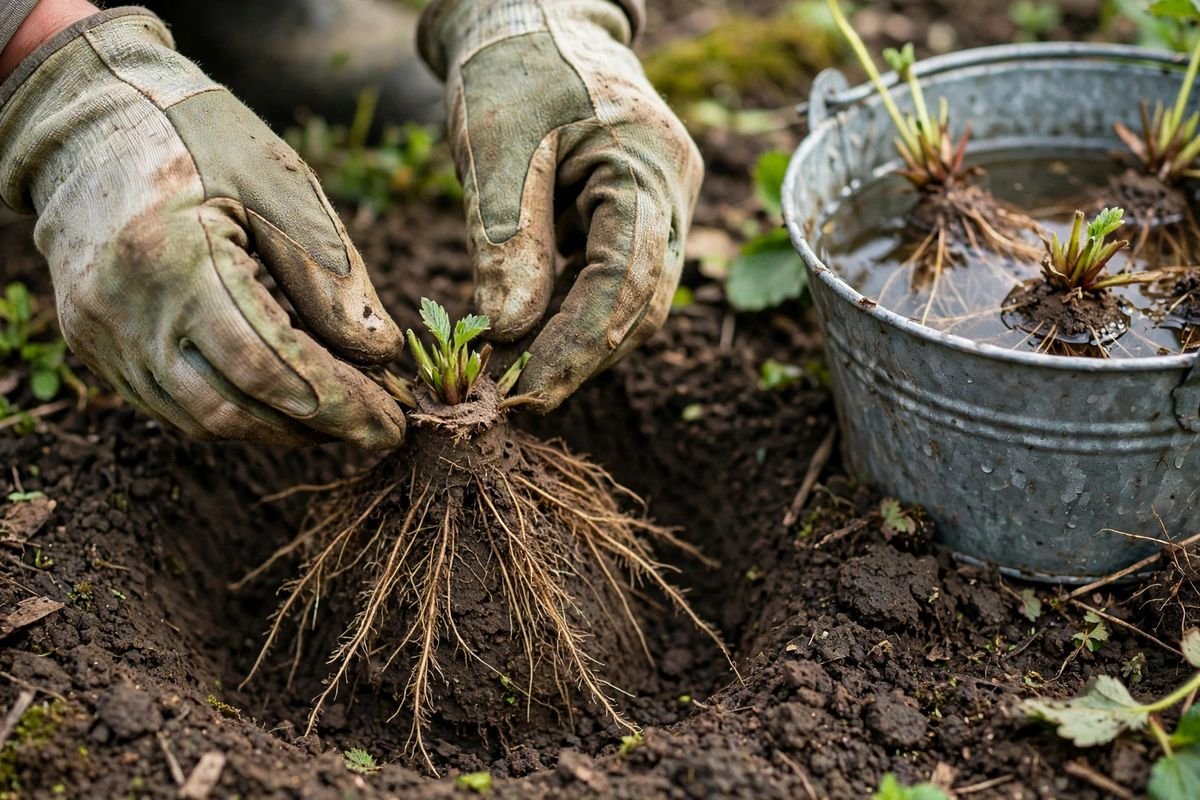
Soak the roots in water for about an hour before planting, and trim off any old or damaged leaves. Dig each hole wide enough to spread the roots, and build a small cone of soil in the center for them to drape over. Set the crown so its middle sits level with the soil surface: buried crowns rot, and crowns set too high dry out and die. Backfill, firm gently, and water deeply to settle the soil. A starter watering with diluted all-purpose fertilizer helps establishment; Iowa State suggests 2 or 3 tablespoons of a complete fertilizer per gallon of water, with 1 or 2 cups per plant.
Order crowns from a nursery you trust rather than saving plants from an old bed. If you want to browse current nursery stock, bare-root strawberry plants turn up plenty of options; check the variety name against the June-bearing or everbearing habit you chose above before ordering.
Runners: pinch them or let them run
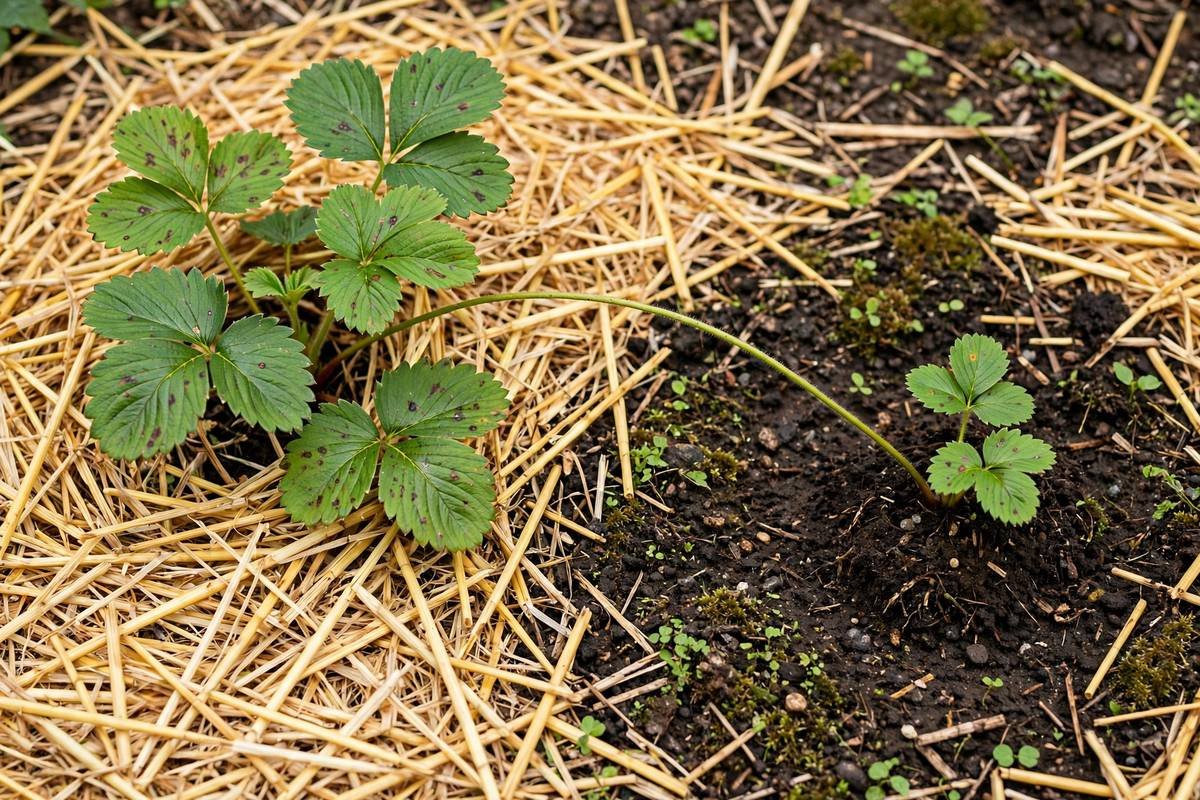
On June-bearing plants, let runners root. Keep the soil surface loose and moist inside the row so daughter plants root quickly, and narrow the mat to 12 to 18 inches wide by pulling or hoeing out plants that wander too far; an overcrowded mat makes small berries. On everbearing and day-neutral plants, pinch every runner so the mother plant stays large and keeps fruiting. The runners you pinch are not waste: root the strongest in small pots of compost-enriched mix, using our compost guide for the mix, and you have free plants for a second bed or for friends.
Water, mulch, and feeding
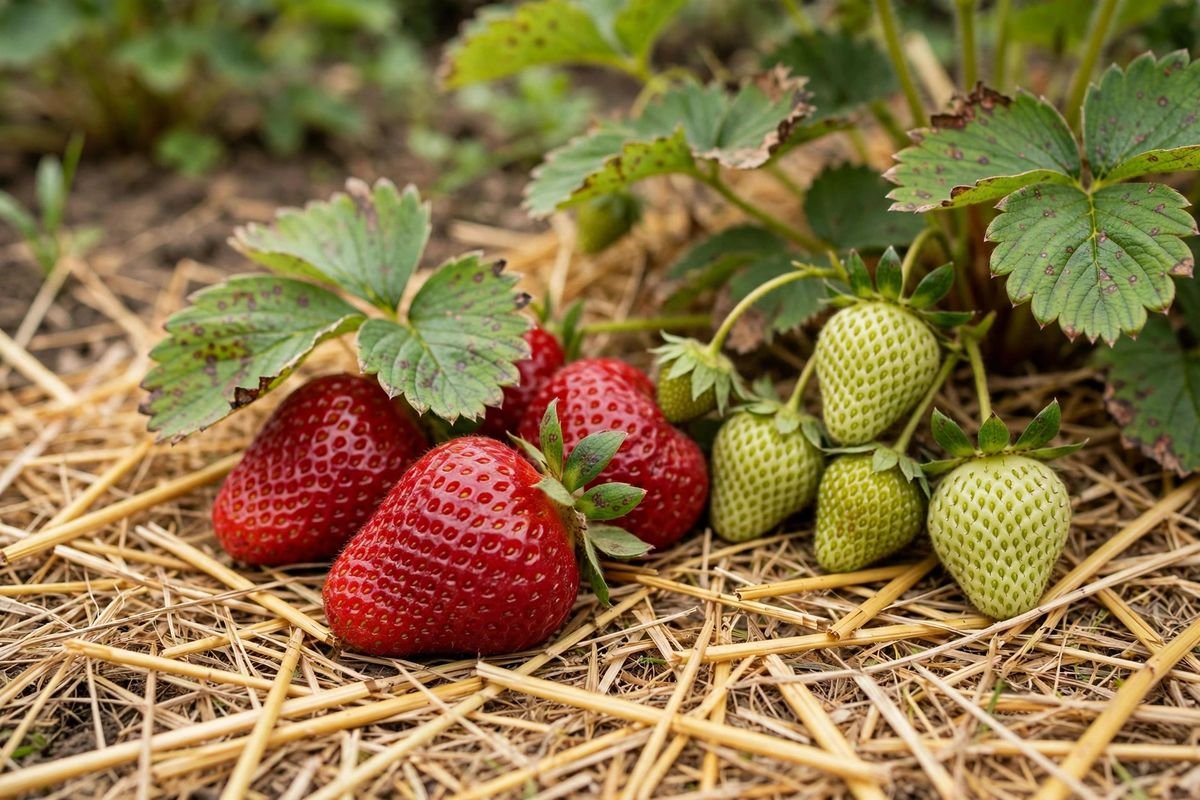
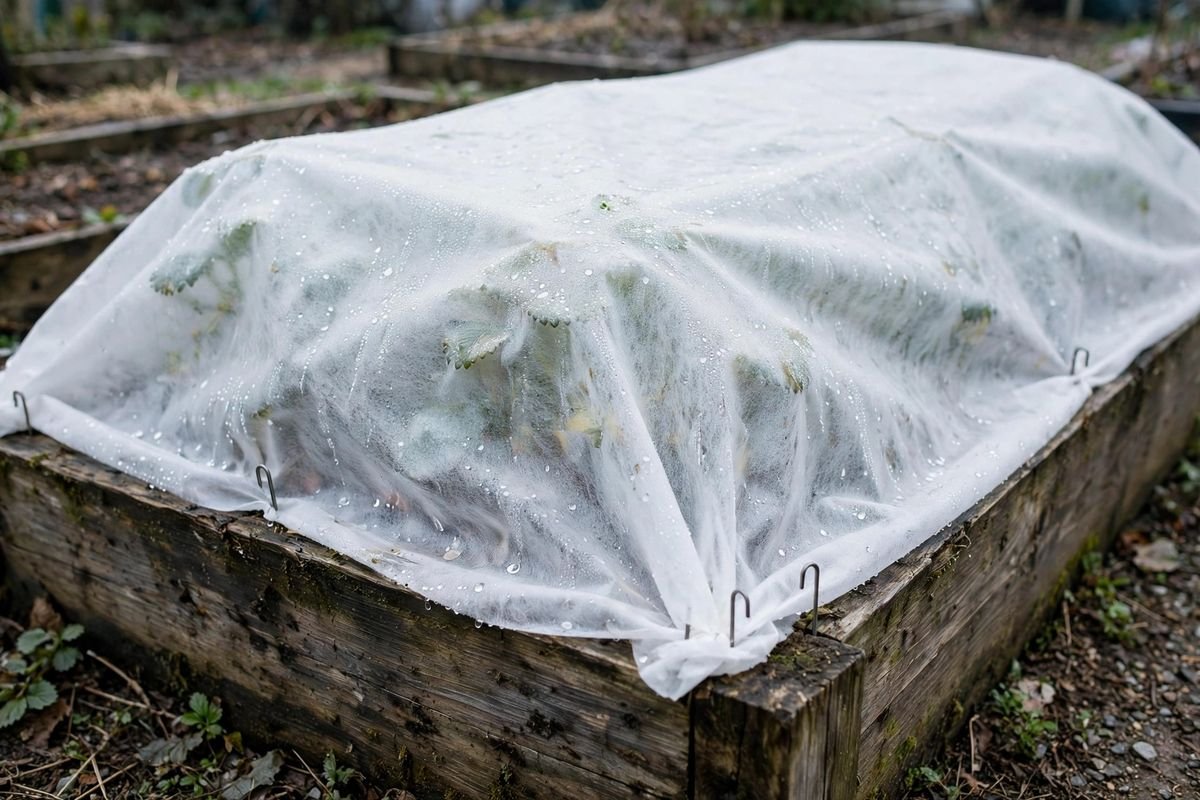
Give new plantings about an inch of water a week until they establish, then keep moisture steady through fruiting; berries swell on consistent water and split or stay small when it swings. Tuck straw mulch under the plants once fruit sets so berries rest on straw instead of soil: cleaner fruit, fewer rots, fewer slugs. In late fall, after several frosts, add a thicker straw layer over June-bearing beds for winter protection, and pull it back in spring as growth resumes. Where winters are harsh, a frost cover over the bed adds cheap insurance on cold nights.
Troubleshooting
Berries turn mushy and gray
Gray mold loves wet fruit touching soil. Keep the straw mulch fresh under the berries, water at the base instead of overhead, and pick ripe fruit promptly; remove moldy berries so spores do not spread.
Plants flower but set no fruit
A late frost likely killed the blossoms. Cover the bed on nights when frost threatens, and uncover in the morning so pollinators can reach the flowers.
Runners everywhere, few berries
The mat is overcrowded. Narrow June-bearing rows to 12 to 18 inches, and on everbearing types pinch every runner so energy goes to fruit.
Berries keep getting smaller each year
The bed is aging out. Renew June-bearing beds with rooted daughters every few years, and replant everbearing beds on fresh ground when vigor fades.