
This post may contain affiliate links. If you buy through links on this page, we may earn a commission at no extra cost to you.
As an Amazon Associate I earn from qualifying purchases.
Cilantro has a short temper. Sow it in spring and a single warm week can push the whole row into flower before you have cut more than a handful of leaves. Sow it in fall and the same plant grows slowly and steadily for months, because cool air and shortening days tell it to make leaves instead of flowers. October is our favorite sowing window, and this guide walks through a fall planting that keeps giving: a quick care table, slow-bolt varieties worth knowing, a worked succession plan with our own numbers, and fixes for the problems that give cilantro its fussy reputation. If you are still deciding what goes in the ground this month, our what to plant in October guide puts cilantro in context with the rest of the fall lineup.
Quick care at a glance
| Need | What cilantro wants |
|---|---|
| Light | Full sun; light afternoon shade helps during warm spells |
| Soil | Average, well-drained garden soil; it dislikes soggy ground |
| Sowing | Direct sow 1/4 to 1/2 inch deep; transplants usually fail |
| Spacing | Seeds 2 inches apart for leaves; thin to 6 inches; rows at least 15 inches apart |
| Germination | 7 to 10 days in cool fall soil |
| Harvest | Leaves at about 6 inches tall, roughly 45 to 80 days after sowing |
Why fall is cilantro season

Cilantro and coriander are the same plant, Coriandrum sativum: the leaves are cilantro, the dried seeds are coriander. It is a cool-season annual, which means heat and long summer days trigger bolting, the rush to flower that turns leaves small, lacy, and bitter. In warm weather a sowing can bolt within four to six weeks; in the cool, short days of fall the same variety spends weeks or months making leaves before it even thinks about flowers. That is the whole trick: fall sowing removes the trigger instead of fighting it.
Variety choice still matters. Slow-bolt types such as ‘Slo Bolt’, ‘Santo’, ‘Leisure’, ‘Marino’, ‘Calypso’, and ‘Cruiser’ hold their leaves longer than generic seed, though no variety holds up once real heat and long days arrive. For a fall sowing any of these works; we buy slow-bolt cilantro seed when we need new packets because the same packet also serves for spring. The ferny ‘Confetti’ type doubles as a microgreen, and our guide to growing microgreens indoors covers that use.
Sowing cilantro step by step
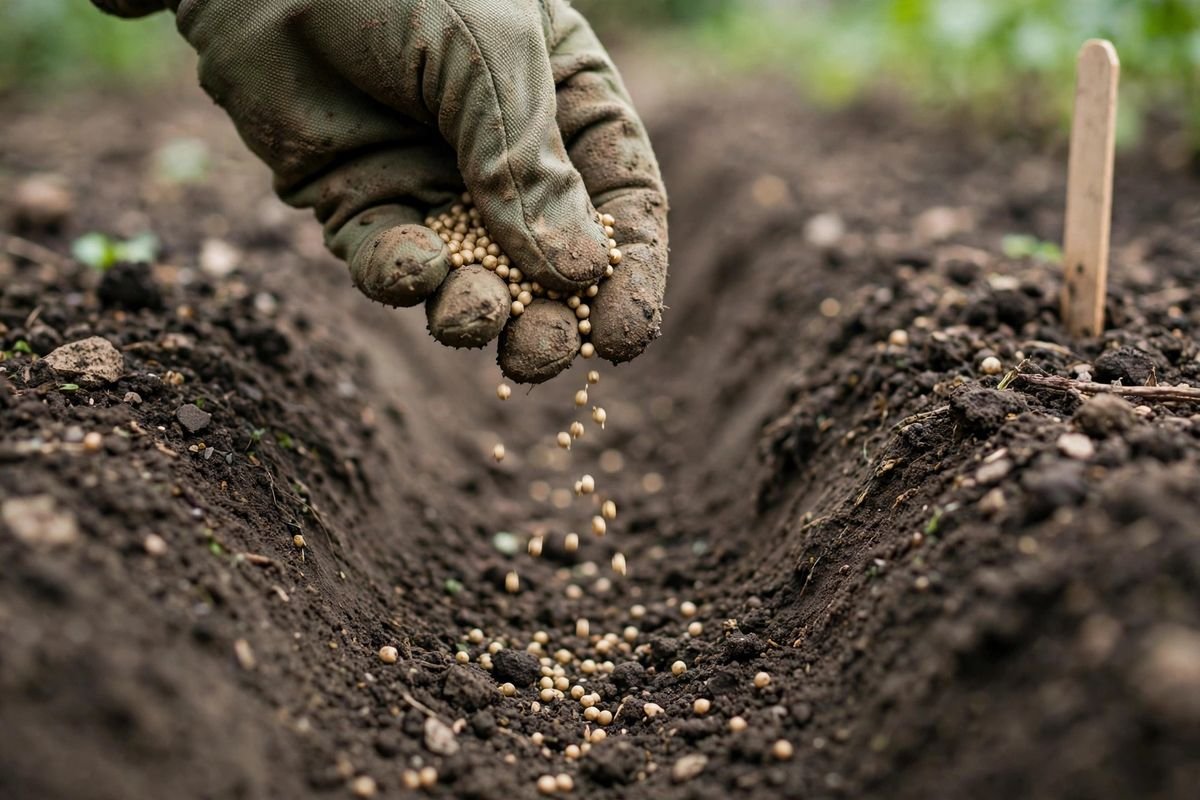
Direct sow cilantro where it will grow. The plant forms a taproot early, and moved seedlings sulk or die, so skip the seed trays. Rake the bed surface level, draw a furrow about half an inch deep, and drop seeds every two inches. Cover them lightly, firm the soil with the back of a rake, and water gently so the seeds stay put. Keep the top inch of soil moist until seedlings appear in seven to ten days; a dry crust is the most common reason fall sowings fail to emerge.
Feed the bed before sowing, not after. Fork a thin layer of finished compost into the top few inches; our guide to making compost at home covers the simple pile method we use. Cilantro needs little fertilizer beyond that: too much nitrogen weakens the flavor of the leaves.
Our worked example: a fall succession plan

Succession sowing, planting a fresh batch every couple of weeks, is how you turn one row of cilantro into a season of it. Here is the plan we run, with every input stated so you can adjust it for your own frost dates.
Assumptions. Sowing date: October 22. First expected fall frost: November 20 (a Zone 7 example; use your own date). Days from sowing to first leaf harvest in cool fall weather: 60, inside the 45-to-80-day range extension sources cite. Succession interval: 14 days. Bed: 4 by 8 feet with three 8-foot rows, which respects the 15-inch minimum row spacing. Sowing rate: one seed every 2 inches, thinned later to 6 inches. One home-garden seed packet: about 1 gram, roughly 100 seeds.
The math. Three rows at 8 feet give 24 row-feet. At 6 seeds per foot, each sowing needs 144 seeds, or about one and a half packets. Three sowings, on October 22, November 5, and November 19, need 432 seeds total: five 1-gram packets cover the whole program with seed to spare. Thinning to 6 inches leaves 2 plants per foot, or 48 mature plants per sowing at any one time.
Now the calendar. The October 22 sowing reaches cutting size around December 21; the November 5 sowing around January 4; the November 19 sowing around January 18. All three harvest after the November 20 frost, so plan on frost cloth from late November on. Use your local frost dates and regional planting guidance — not your USDA hardiness zone alone — to choose planting dates. In mild climates the whole program runs uncovered; where winters bite, a low tunnel turns the same math into a winter harvest.
Water, feeding, and a little shade
Water regularly while seedlings establish, then back off: cilantro does poorly in damp, humid conditions, and soggy soil invites rot. A deep watering once or twice a week beats daily sprinkles in most fall weather. Feed lightly or not at all; a side dressing of nitrogen once during the season is plenty, and heavy feeding dulls flavor. If an unseasonable warm spell hits, drape shade cloth over the row or move containers into afternoon shade. Cool roots and steady moisture do more against bolting than any variety name.
When hard freezes threaten and the outdoor season ends, cilantro moves indoors better than most fall herbs. Our guide to growing herbs indoors in winter shows the light and pot setup that keeps a small planting going on a windowsill.
Harvesting and storing the leaves
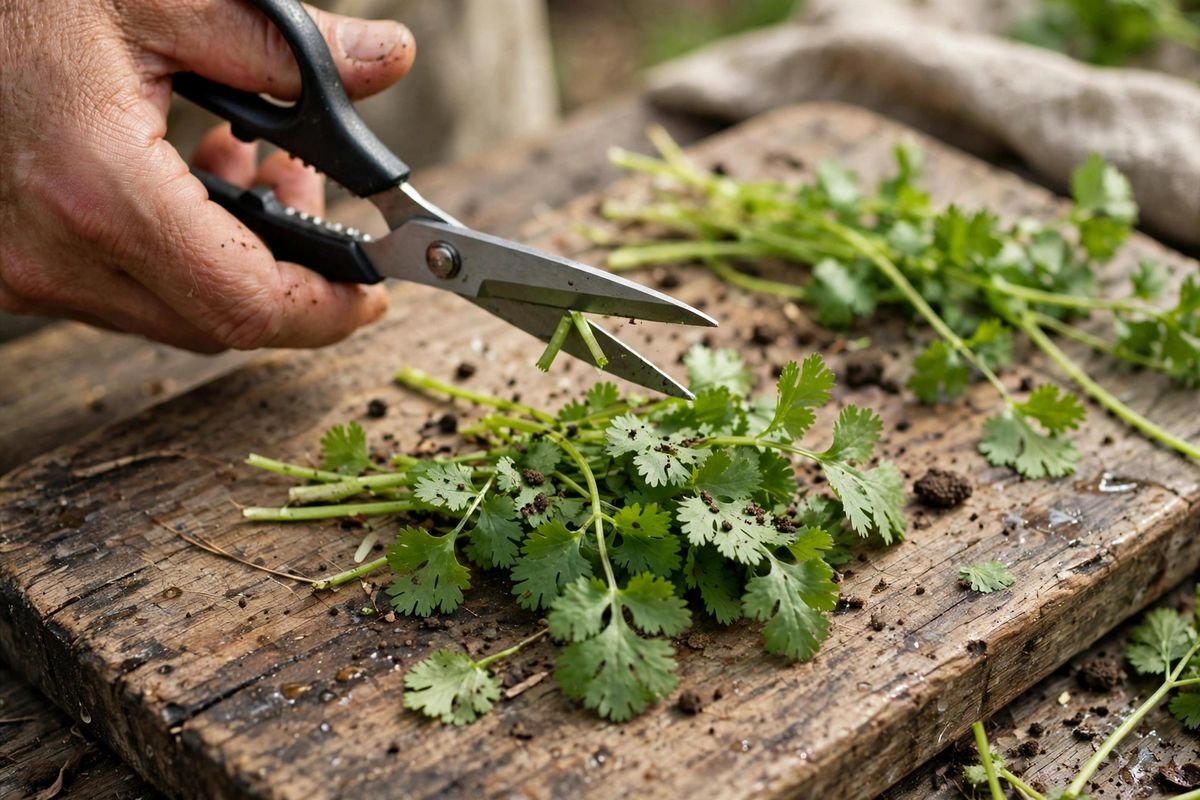
Start cutting when plants reach about 6 inches tall, taking outer stems first so the center keeps growing. Morning harvests give the best flavor, and regular cutting delays flowering a little. Use leaves fresh; wrapped loosely in plastic, they keep about a week in the refrigerator. Let one plant go to flower at the end of the season and you get a bonus: the tiny white umbels feed beneficial insects, and the seeds that follow are coriander for your spice jar.
Troubleshooting
Plants bolted within weeks of sowing
Heat or long days triggered flowering. Sow earlier in fall, pick a slow-bolt variety, and give the bed afternoon shade during warm spells. Bolted leaves turn bitter; pull those plants and sow a fresh round.
Seeds never came up
The seedbed dried out or crusted over. Keep the top inch moist until emergence, sow no deeper than half an inch, and press seeds into firm contact with the soil.
Seedlings flopped over after transplanting
Cilantro resents root disturbance. Direct sow every time; if you bought nursery starts, plant them at the same depth and water them in well, but expect some losses.
Leaves taste soapy
That is genetics, not your growing. A share of people perceive cilantro’s aroma compounds as soapy. If that is you, grow the plants for coriander seed instead; the dried seed tastes warm and citrusy with none of the soap.