
This post may contain affiliate links. If you buy through links on this page, we may earn a commission at no extra cost to you.
As an Amazon Associate I earn from qualifying purchases.
A first garden does not need a shed full of gear on day one. It needs a short list bought in the right order, so the money lands on the tools the plants will actually call for. Most new gardeners overspend in two ways: they buy one of everything before the first seed goes in, or they buy the cheapest kit on the shelf and replace half of it by midsummer. This checklist splits the kit into three tiers, matched to when the garden asks for each piece.
Our longer guide on what garden tools a beginner actually needs walks through each core tool in more depth. This page keeps the focus on sequence and budget, and our overview of how to start a vegetable garden covers the bed setup that these tools serve. One timing note before the lists: pick planting dates from your local frost dates and regional planting guidance, not from a zone number alone.
Our quick answer: plant with a trowel, a watering can or hose, gloves, and a way to mark rows. Add a fork, a hoe, and a small harvest basket in the first month. Let everything powered, specialized, or oversized wait.
The Buy-in-Order Checklist
The table below is the whole plan on one screen. Prices in this article are illustrative example figures drawn from typical search ranges, not live quotes, and the worked example later in the page states its assumptions line by line.
| Tier | When to buy | Core items | Why then |
|---|---|---|---|
| Tier 1 | Planting day | Hand trowel, watering can or hose with a soft nozzle, work gloves, plant labels and a marker, a bucket or trug | Nothing can be planted, watered, or kept track of without these five. |
| Tier 2 | First month | Garden fork or hand fork, stirrup hoe or draw hoe, harvest basket, twine and short stakes, a basic soil scoop | Weeds, loose soil work, and the first pickings show up within weeks, not on day one. |
| Tier 3 | Later, only if earned | Bypass pruners for woody stems, a wheelbarrow or cart, a soaker hose or drip lines, a second bed’s worth of pots | These pay off only when plant count, bed size, or crop type grows enough to call for them. |
Treat the tiers as gates, not as a shopping cart. A tier unlocks when the garden asks for it twice.
Tier 1: What Planting Day Actually Requires
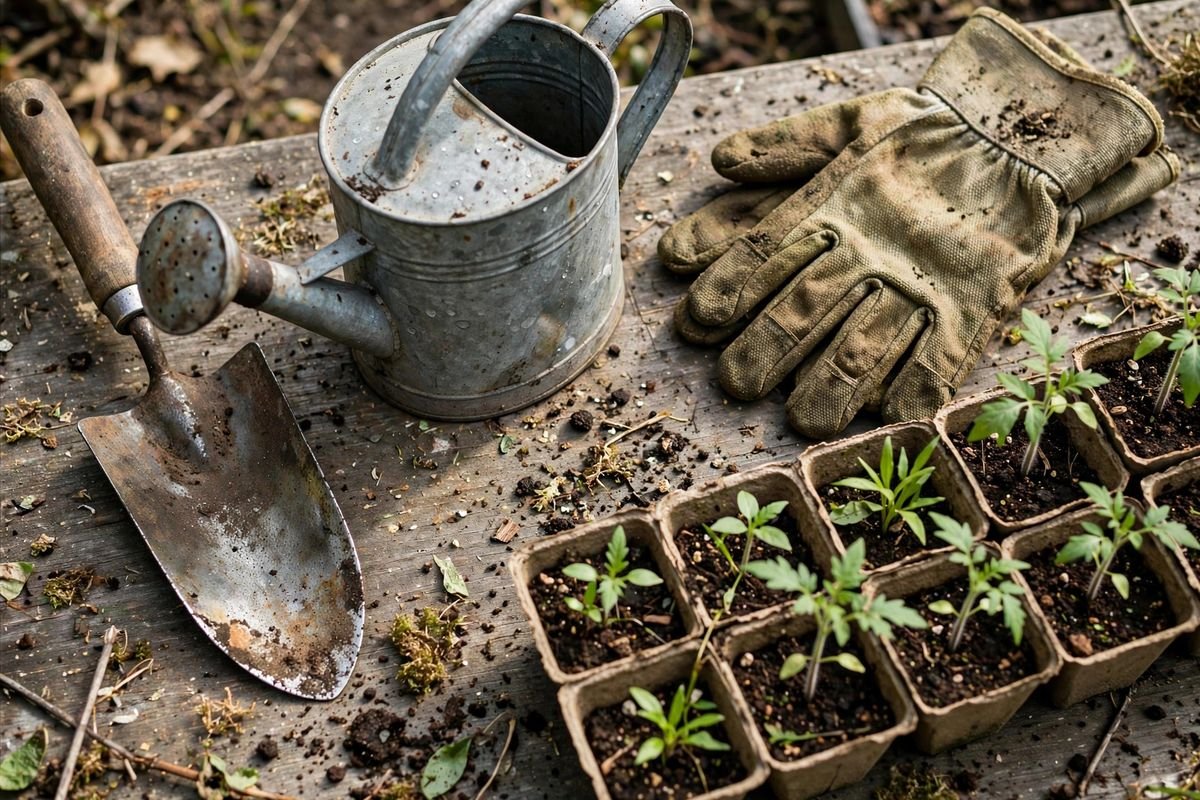
Planting day asks for five things. A hand trowel digs the holes and moves the soil. Water reaches the roots the same day, because transplants and fresh seed cannot wait for a delivery. Gloves keep thorns, rough bed edges, and blisters from cutting the session short. Labels and a marker keep the bed honest three weeks later, when every green row looks alike. A bucket or trug carries tools, weeds, and the odd rock in one trip.
The trowel carries the most weight in this tier, in both senses. A thin stamped blade bends in compacted soil; a one-piece or well-joined blade does not. Our comparison of hand trowels for gardening covers blade shape, steel, and handle fit in detail. The short version: buy one sound trowel rather than a matched set of five flimsy ones.
Watering on day one can be a can, a hose, or a bucket and a cup for a very small bed. What matters is reach and gentleness, since seedlings need a soft flow that does not blast soil off their roots. If the water source sits far from the bed, a longer hose beats a fancy nozzle.
Gloves deserve one plain rule: buy the pair that fits, in the material suited to the work. Thin nitrile-coated gloves keep feel for seed work. Heavier leather pairs suit bed building and thorny edges. Fit decides whether gloves stay on, and gloves that stay on are the only kind that protect anything. You can search for hand trowels on Amazon to see the usual blade shapes side by side before spending.
Tier 2: What the First Month Asks For
The first month changes the work. Weeds arrive on schedule. Soil that was loose at planting settles and crusts. The first greens and radishes come ready in handfuls rather than in armloads. Tier 2 answers those three jobs: weeding, surface soil work, and carrying small harvests without crushing them.
A stirrup hoe or a draw hoe earns its place here, sized to the bed. In a raised bed or a tight row, a short handle gives control. In open ground, a long handle saves the back. Either way, the job is shallow: skim the top half inch, sever small weeds, and leave the crop roots alone. Deep digging with a hoe is slow work dressed as progress.
A garden fork, full-size or hand fork depending on bed size, loosens soil ahead of a second sowing and lifts root crops without spearing them. Twine and short stakes keep peas, beans, and flopping greens off the soil. A harvest basket or shallow tray keeps picked greens from steaming in a deep bucket. Buy this tier in the order the garden asks: weeds first, harvest gear when the first crop nears picking size, stakes when stems start to lean.
Tier 3: Gear That Earns Its Place Later
Tier 3 holds the gear that catalogs push hardest and first gardens need least: powered tools, large carts, irrigation systems, and specialty items for crops not yet planted. None of it is bad gear. All of it answers questions a new bed has not asked yet.
Bypass pruners join the kit when woody stems, tomatoes that need sucker work, or fruit enter the picture. A wheelbarrow or garden cart joins when soil, compost, or harvests move far enough, often enough, that bucket trips cost real time. Soaker hoses and drip lines join when watering by hand starts eating mornings. A second set of pots joins when the first set stays full. One long carry is exercise; twenty long carries are a cart. Let the chore repeat before paying to ease it.
What to Skip Until the Garden Proves Itself
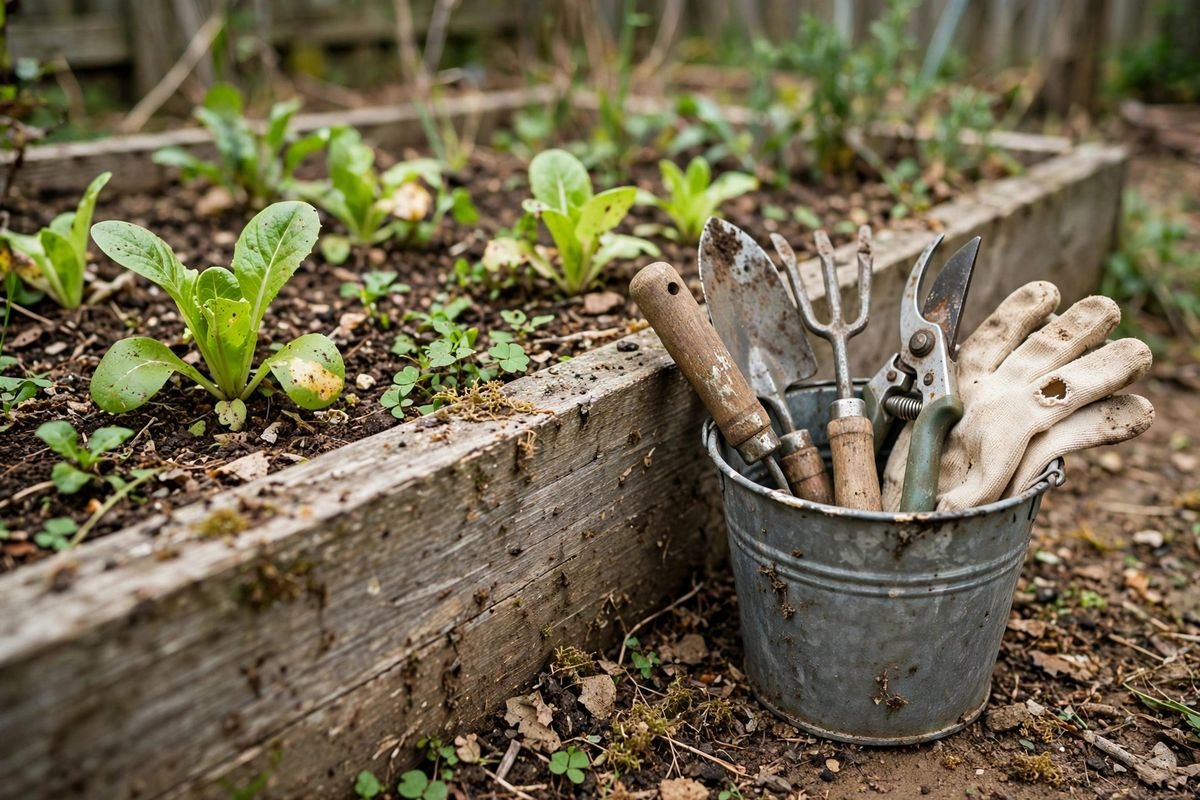
Some gear can wait a full season without costing the garden anything. Large matching tool sets duplicate the trowel and fork at lower quality. Decorative kneelers and novelty gloves wear out or go unused. Full-size spades and tillers answer ground-breaking problems that a new raised bed or a no-dig start never poses. Seed-starting rigs with lights and heat mats make sense ahead of a spring sowing plan, and little sense bought in a rush.
Skip the second version of anything already owned, too. A household bucket, an old kitchen tray, and a spare pair of scissors cover more first-season jobs than catalogs admit. Until a stand-in fails at a real task, it holds its place and the upgrade queue stays honest.
Also skip gear bought for a crop that is not on the planting list. A tomato cage bought for tomatoes that never got planted is storage with a memory. The planting list leads, gear follows.
A Worked Example: Three Budgets, One First Season
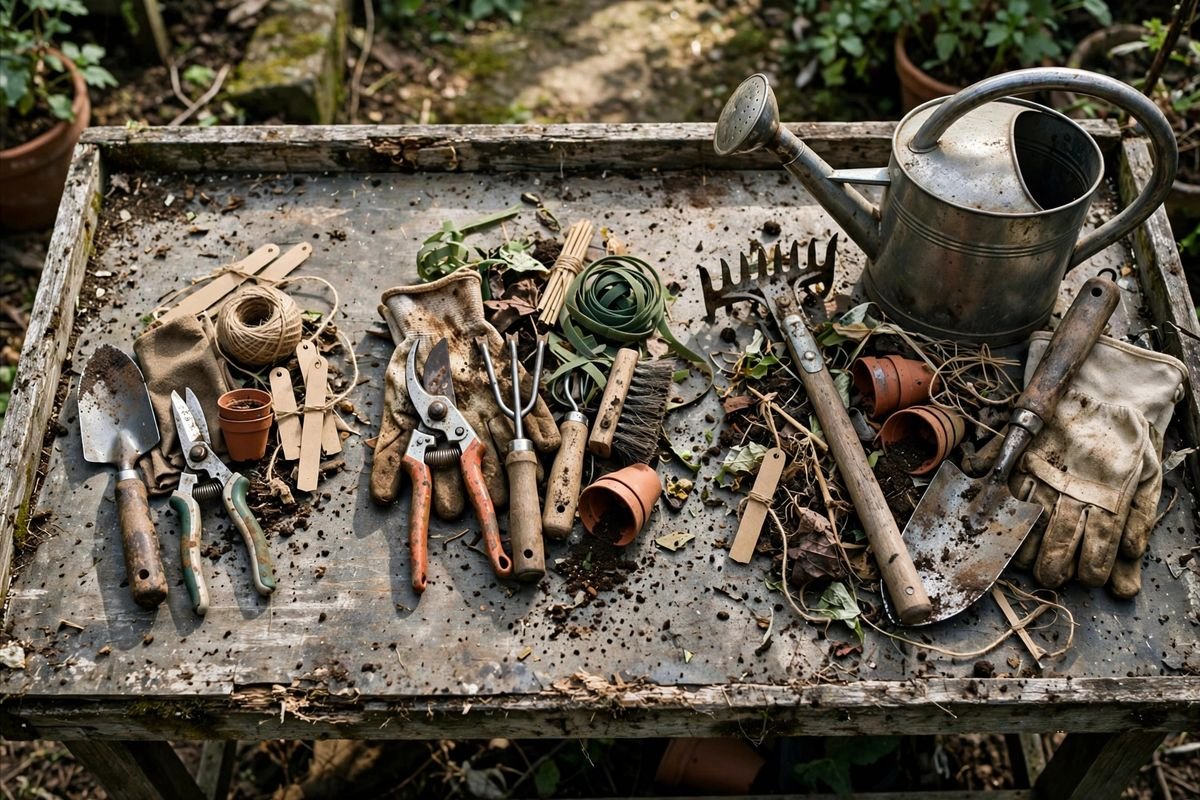
Here is our worked example, built to show how a buy-in-order plan changes the math. The prices are illustrative example figures based on typical search ranges. They are stated as assumptions so the arithmetic can be checked, not as live quotes or promises. Costs are spread over three seasons, because sound hand tools last well past one year of use.
Assumptions. One small first garden: a single raised bed or an equivalent in-ground plot. Tier 1 buys happen at planting. Tier 2 buys happen across the first month. Each budget covers gear only, not soil, seed, or lumber. Cost per season equals total gear spend divided by three seasons of use.
| Example budget | Illustrative item assumptions | Total (illustrative) | Cost per season over 3 seasons |
|---|---|---|---|
| Lean, about $60 | One solid hand trowel ($12), watering can ($10), gloves ($8), labels and marker ($5), twine and stakes ($7), one stirrup hoe ($18) | $60 | $60 divided by 3 equals $20 per season |
| Standard, about $120 | Lean list, plus a hand fork ($12), harvest basket ($14), better gloves as a second pair ($10), a short hose and soft nozzle ($24) | $120 | $120 divided by 3 equals $40 per season |
| Roomy, about $220 | Standard list, plus bypass pruners ($22), a soaker hose ($28), a garden cart share or wheelbarrow at an example $50 | $220 | $220 divided by 3 equals about $73 per season |
The step that matters is the division, not the totals. A $220 kit sounds steep as a spring purchase and reads as about $73 per season once the three-season life of steel and hose is counted. The lean kit at $20 per season shows the same math from the low end: a first garden can start soundly on a small spend. Read the three budgets as order, not as rank. The roomy list is the same garden after more chores repeated, and starting lean spreads that total across two springs. That spread is the entire point of buying in order.
Use your local frost dates and regional planting guidance — not your USDA hardiness zone alone — to choose planting dates, and let those dates set when Tier 1 money leaves the wallet.
You can compare beginner garden tool listings on Amazon against this tier order, checking each set for the five Tier 1 jobs before counting its total pieces.
Storing a Small Kit So It Lasts
A small kit lasts when storage stays simple. One bucket or a wall hook row near the bed beats a distant shed corner, because tools that live where the work happens come back after each session. Soil brushed off, blades dried, and edges oiled once or twice a season keep steel from pitting. A trowel that can be found is a trowel that does not get bought twice.
Frequently Asked Questions
What is the single most useful first purchase?
A sound hand trowel. It digs, transplants, weeds small patches, and mixes feed into a planting hole. Water runs a close second, so the can or hose belongs in the same first trip.
Are beginner tool sets good value?
Some are fair, many are padded. Judge a set by the five Tier 1 jobs: trowel, water, gloves, labels, carry. Pieces past those five should answer a named job in the first month.
When should a drip line or soaker hose join the kit?
When hand watering repeats daily for weeks, or when the bed count grows past what a morning round can serve. One dry weekend does not make that case; a dry month does.
How long should core hand tools last?
With soil brushed off, dry storage, and an occasional wipe of oil on the blade, a sound trowel or fork serves many seasons. That long life is why the worked example spreads cost across three seasons rather than one.
Sources & Further Reading
- State university extension guides on basic garden tool selection, care, and safe storage.
- Regional extension planting calendars based on local frost dates for first-season timing.
- University horticulture notes on hand tool materials, blade construction, and handle fit.