
This post may contain affiliate links. If you buy through links on this page, we may earn a commission at no extra cost to you.
As an Amazon Associate I earn from qualifying purchases.
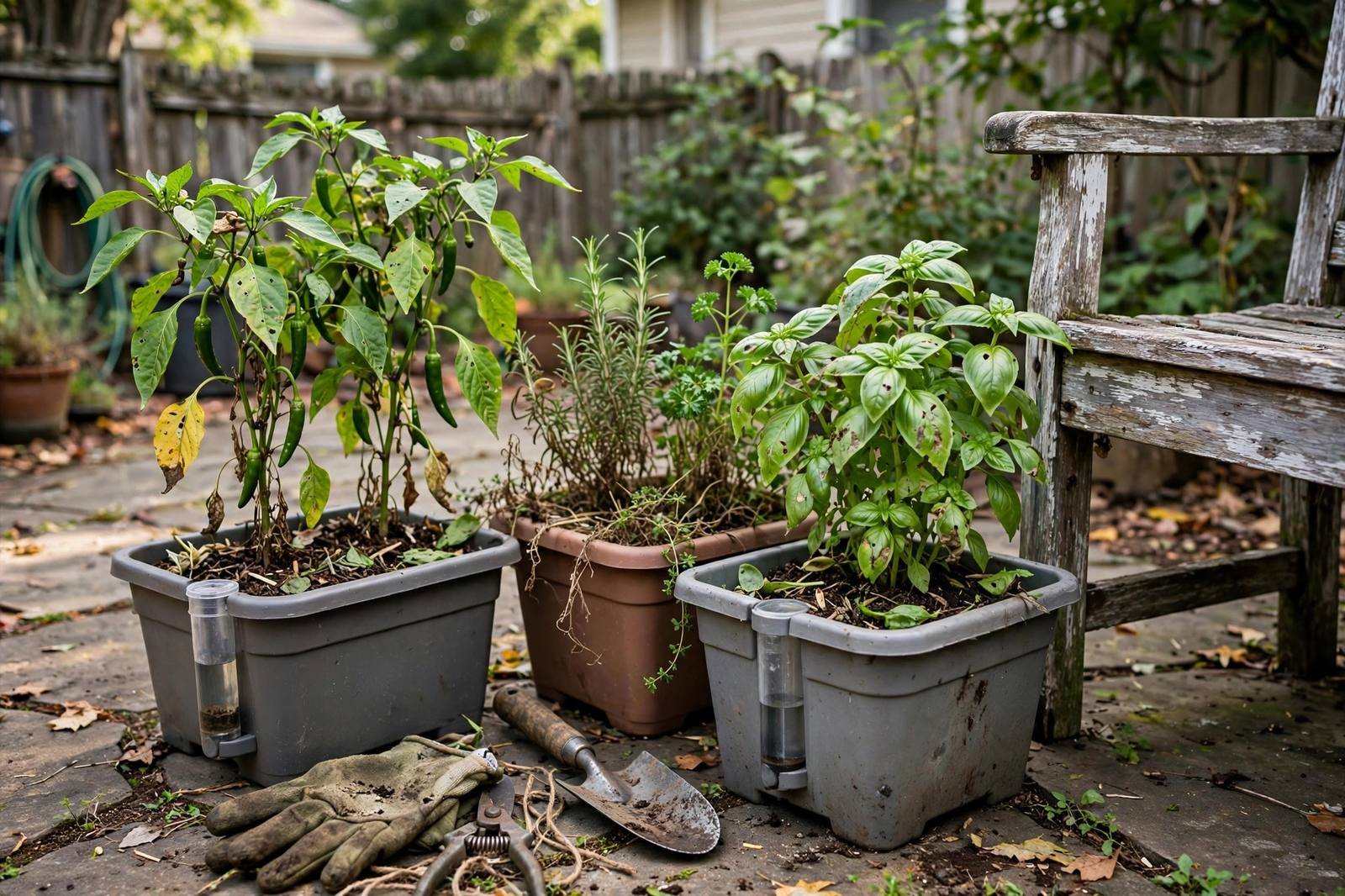
Patio pots dry out fast. A sunny corner, a little wind, and a thirsty pepper can empty a small container between morning coffee and evening dinner. Self-watering planters slow that cycle down. They hold a small reserve below the soil and feed it upward as the mix dries, so our plants get a steadier drink and we get a little breathing room on busy or away days.
This guide is research-based. We compare the main planter approaches by how they store and move water, what grows well in each, and where each fits on a real patio. We also work through the away-from-home math with stated assumptions, so we can judge how many days a reservoir may actually cover before we buy. We have not run hands-on trials on the products in this category, and this guide does not claim that kind of testing.
| Approach | Reservoir Size Pattern | Best Crops | Patio Fit | Main Drawback |
|---|---|---|---|---|
| Insert reservoir pot (inner pot with a lower chamber and fill tube) | Compact, often under 1 gallon; check the listing for the exact chamber size | Peppers, tomatoes in larger sizes, cucumbers, basil | Single pots on steps, corners, and small patios; easy to move | Small reserve empties fast in heat; fill tube can clog if soil falls in |
| Wicking bed planter (long trough or raised planter with a wick bed below) | Larger, often 1 to 3 gallons or more across the trough; varies widely by length | Leafy greens, herbs, peppers, strawberries, mixed plantings | Against a wall or railing where a long shape saves floor space | Heavier when full; soil stays damp if the mix holds too much water |
| Self-watering grow bag style (fabric bag over a tray or with a wick strip) | Varies; tray version depends on tray depth, wick version is slow and steady | Herbs, lettuce, peppers in larger bags, potatoes in deep bags | Lightweight for renters; folds for storage; good on balconies | Fabric dries at the edges; tray can overflow in rain without a cover |
| Window box with reservoir (railing or wall box with a lower reservoir) | Shallow and wide, often under 1 gallon spread across the length | Basil, parsley, thyme, lettuce, strawberries, flowers mixed with herbs | Railings and narrow ledges; keeps floor clear for chairs and tables | Shallow soil warms and cools quickly; needs level mounting to water evenly |
The table uses patterns, not fixed promises. Reservoir size, soil volume, and plant size change how long any planter lasts between fills. We use the table to pick a shape first, then check the listing for the chamber size, soil capacity, and overflow detail before we buy.
How Reservoirs and Wicks Move Water Upward
Most self-watering planters share the same three parts. At the bottom sits a reservoir, a sealed chamber that holds water out of direct sun. Above it sits the soil, held on a shelf, a perforated floor, or a layer of fabric. Between the two, a wick or a soil column touches the water and pulls it upward. That pull is capillary action: water climbs through tiny spaces in the wick or soil because the drier mix above draws it in. A fill tube on the side lets us top up the reservoir without pouring water over the leaves, and a small overflow hole near the top of the chamber lets extra water escape instead of flooding the roots.
Two designs move water a little differently. In an insert reservoir pot, the soil sits in an inner pot and one or two soil feet dip into the reservoir, so the mix itself acts as the wick. In a wicking bed, a fabric or rope wick runs from the water into the soil layer, and the soil above wicks across a wider area. Both aim for the same result: the lower mix stays evenly damp while the surface can dry a bit between fills, which helps keep fungus gnats down. Our guide to container gardening for beginners covers pot size and soil basics that make any of these systems work better.
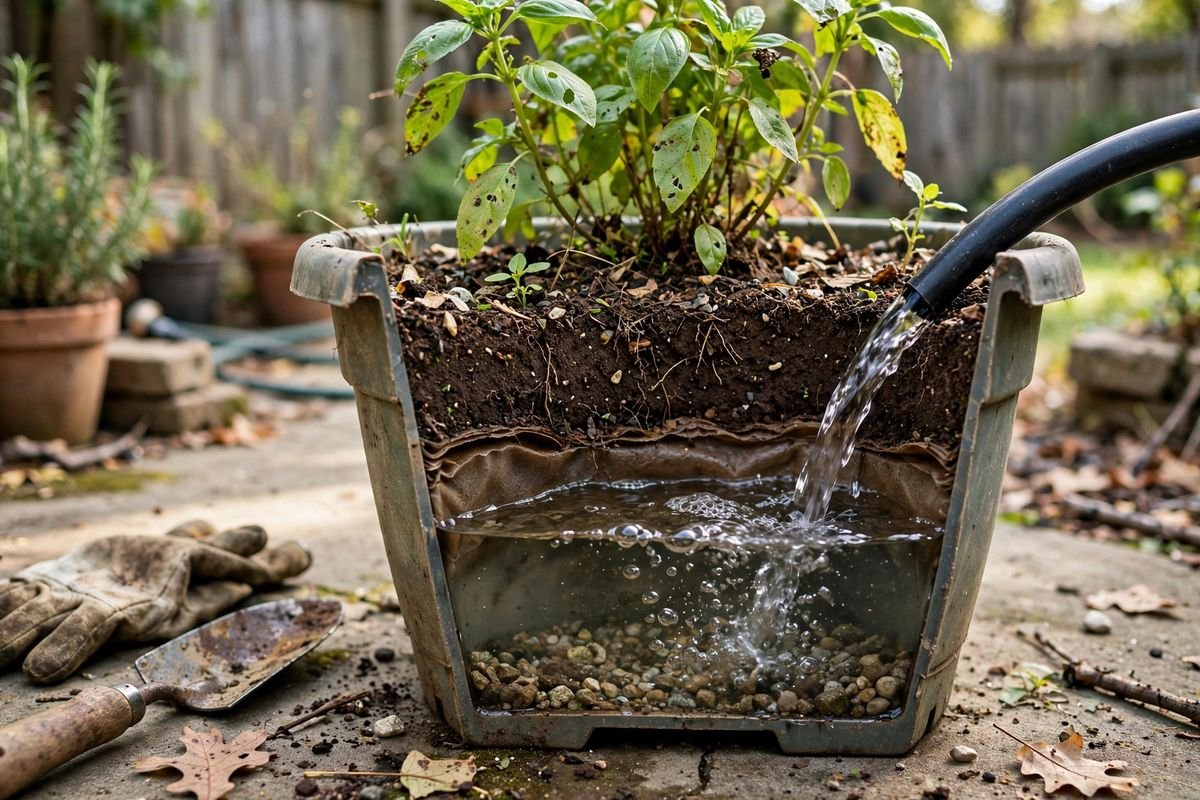
An air gap matters. Good designs keep most roots out of standing water and leave a thin air layer between the reservoir surface and the soil floor. Roots need oxygen as well as moisture, so a planter that keeps soil soaked to the top tends to grow soft, pale plants. The overflow hole protects that balance during rain: once the reservoir reaches the hole, extra water drains out the side instead of rising into the root zone.
How Long Will a Reservoir Last? Our Away-From-Home Math
Product pages often say a planter waters for days, but the honest answer depends on plant size, sun, wind, and soil volume. Here is our planning math with every assumption stated, so we can adjust it for our own patios.
Assumptions. The reservoir holds 1 gallon of usable water. The plant is one pepper in a medium patio pot in warm weather. As a planning estimate, we allow roughly 0.25 to 0.5 gallon per day for that plant. That range is a budgeting figure, not a measured trial result. Young plants, cloudy days, and larger soil volumes use less; a large plant in full sun and wind uses more. We also assume the reservoir starts full and no rain adds water.
The math. At 0.25 gallon per day, 1 gallon covers about 4 days. At 0.5 gallon per day, the same gallon covers about 2 days. So a 1-gallon reserve gives us a buffer of roughly 2 to 4 days for one warm-weather pepper under those assumptions. A small herb in the same planter may stretch to 5 or 6 days, while two peppers sharing one trough may pull the buffer below 2 days in a heat wave.
How we use the result. For a long weekend, a 1-gallon insert pot is a reasonable buffer for one pepper if we fill it the morning we leave, move the pot to light shade where possible, and mulch the surface. For a full week away, we plan on a larger wicking trough, a neighbor fill mid-week, or a second water source. The math also explains why shallow window boxes need more frequent checks: the reserve is spread thin, and the soil volume above it is small. Our notes on how to keep container soil from drying out too fast cover mulch, grouping, and shade moves that stretch any reservoir further.
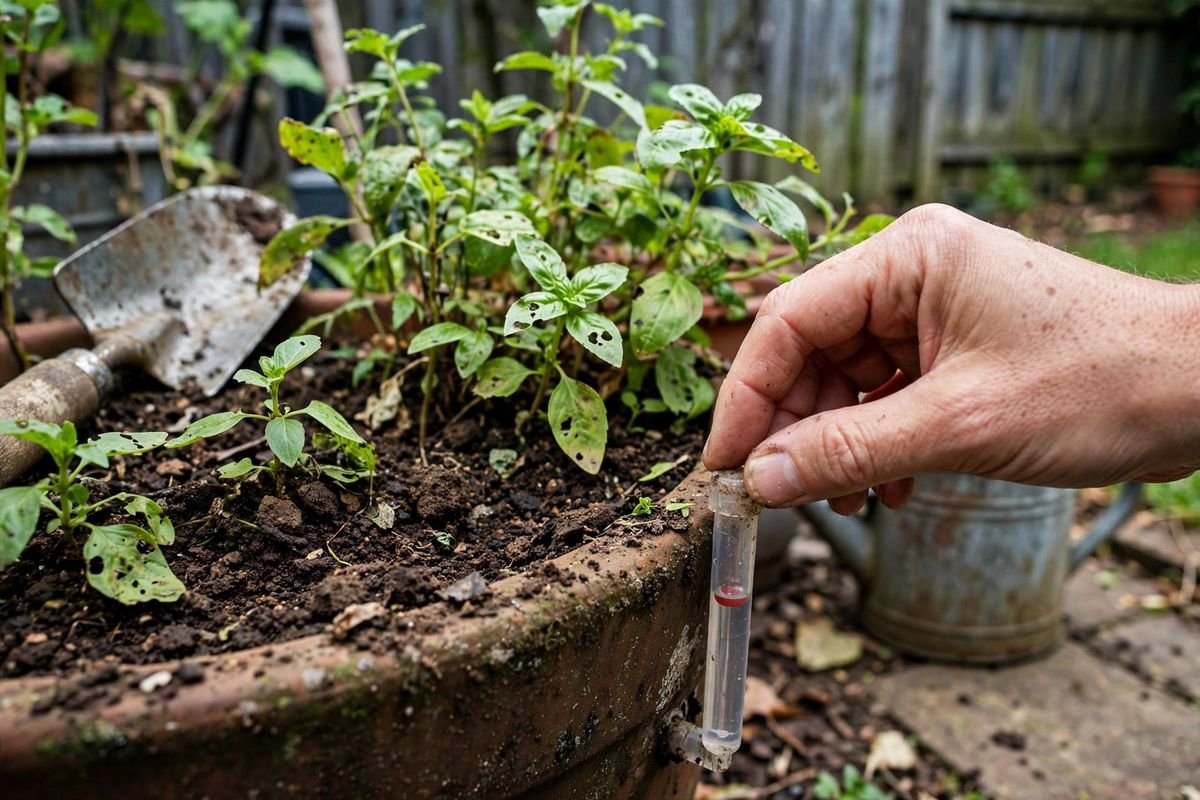
Overflow and rain caveat. Rain fills reservoirs from the top, and a hard storm can fill a chamber in one night. If the overflow hole is blocked or the planter sits where roof runoff pours in, water can rise into the soil and stay there. We set planters where rain reaches them evenly, keep the overflow hole clear, and empty a swollen reservoir after a storm by tipping gently or siphoning through the fill tube. In dry spells the opposite risk appears: a reservoir that looks full from the indicator may still feed slowly if the wick has dried out. We re-wet a dry wick by watering from the top once, then letting the reservoir take over.
Best Self-Watering Planters by Use Case
We organize picks by job rather than by brand, since shape and reservoir pattern matter more than a logo. Each category links to a search so we can compare current sizes, materials, and indicator styles.
Best for Peppers and Small Fruiting Plants: Insert Reservoir Pots
Pros: steady moisture suits peppers, which dislike wide swings between dry and soaked; the fill tube keeps water off the foliage; single pots move easily to chase sun or dodge a storm. Cons: the compact reserve runs short in heat; roots can grow into the chamber and slow the flow over a long season. We look for a clear or floating water-level indicator, a fill tube wide enough for a watering can spout, and an overflow hole we can see and clear. Browse self-watering planter inserts with reservoirs on Amazon and check the soil volume as well as the chamber size, since a thirsty pepper needs both.
Best for Greens and Mixed Herbs: Wicking Bed Planters
Pros: a long wick bed waters evenly across a trough, which suits lettuce, spinach, and mixed herbs that share similar moisture needs; the larger reserve covers more days; the shape fits along a wall without crowding a table. Cons: a full trough is heavy, so we place it before filling; the mix must drain freely or the bed stays soggy. We favor beds with a visible fill point, a wick that reaches across the full length, and feet or a stand that lets the overflow drain clear. Compare options at wicking bed planters on Amazon, and measure our wall run before choosing a length.
Best Lightweight Option for Renters: Self-Watering Grow Bag Styles
Pros: fabric bags are light, affordable to ship, and fold flat for winter storage; roots air-prune at the fabric edge, which can reduce circling; a tray or wick version adds a buffer without a rigid pot. Cons: exposed fabric loses moisture on a windy balcony, so the reserve helps but does not remove the need to check; trays can spill when we move a full bag. We use these where weight limits matter and where we can group bags to shade each other. See self-watering grow bag planters on Amazon for tray and wick versions, and place a shallow tray under any bag on a deck to catch overflow.
Best for Railings and Narrow Patios: Window Boxes With Reservoirs
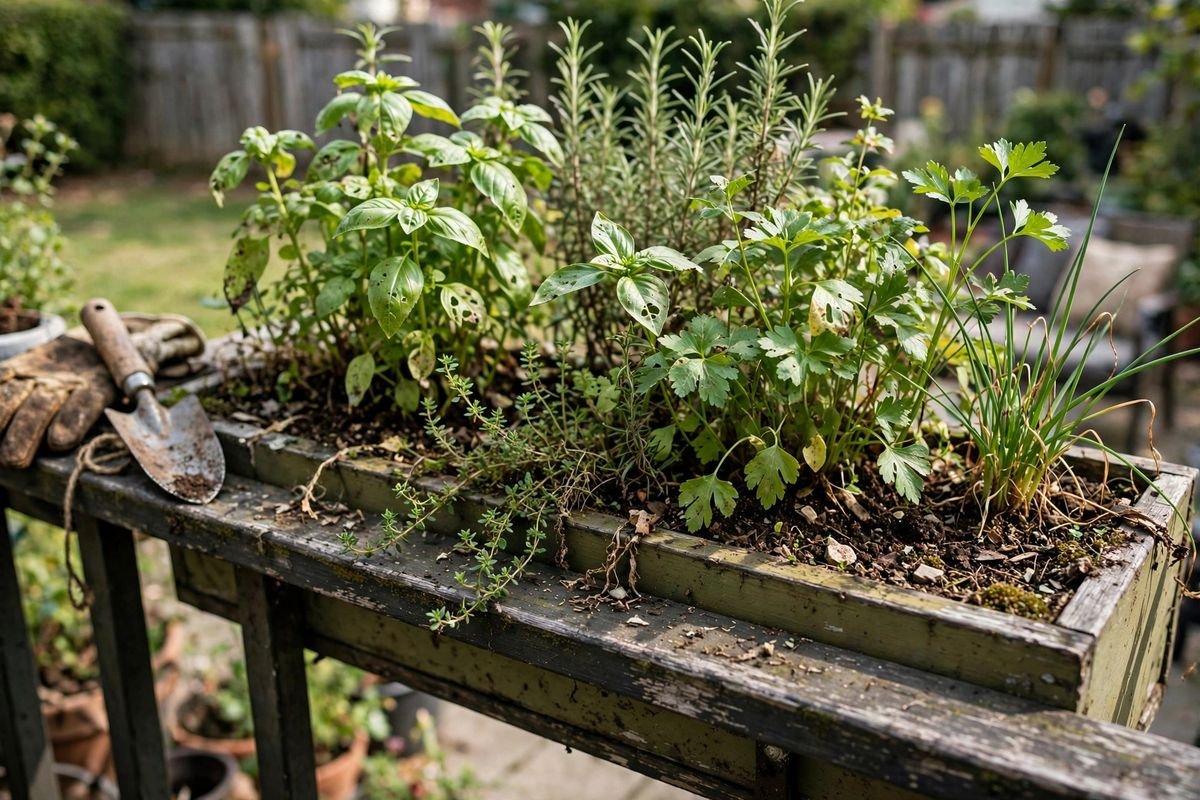
Pros: railing boxes keep herbs at hand height for cooking and keep floor space open; the wide, shallow shape suits shallow-rooted herbs and lettuce; many include brackets that level the box so water spreads evenly. Cons: shallow soil heats up fast on a south-facing rail; a tilted box waters one end and starves the other, so level mounting matters. We check bracket fit for our rail width and look for a reservoir indicator at the end we can reach. Browse window box planters with reservoirs on Amazon and confirm the bracket style matches our railing before ordering. Our walkthrough of how to start a balcony garden covers railing weight and sun checks that pair well with this choice.
Which Should We Choose? Clear Verdicts by Situation
Choose an insert reservoir pot if we grow one or two peppers, a single tomato in a large pot, or a cucumber that needs steady water in a small footprint. Choose a wicking bed planter if we want a row of greens and herbs along a wall and we value more days between fills over portability. Choose a grow bag style if weight, storage, or rental rules rule out rigid planters and we can check the bags every few days. Choose a window box with a reservoir if floor space is tight, the railing gets good light, and we mainly grow herbs, lettuce, and strawberries. When we are unsure, we start with one insert pot for a pepper and one railing box for herbs, then add a trough once we see how fast each reserve falls in our sun and wind.
Setting Up for Even Watering
Soil mix. A light, open potting mix wicks better than dense garden soil. We use a mix with perlite or pumice for air, plus compost or a slow-release organic fertilizer worked in at planting, since liquid feed poured into a reservoir can build up salts. The mix should feel evenly damp after the first top watering, which primes the wick. Heavy soil that stays slick usually needs more perlite before it goes into a self-watering pot.
First fill. We water from the top at planting to settle the mix and start capillary flow, then fill the reservoir through the tube until the indicator rises or water just reaches the overflow. After that, we refill through the tube and let the surface dry slightly between fills. A dry surface with damp soil an inch down is a good sign.
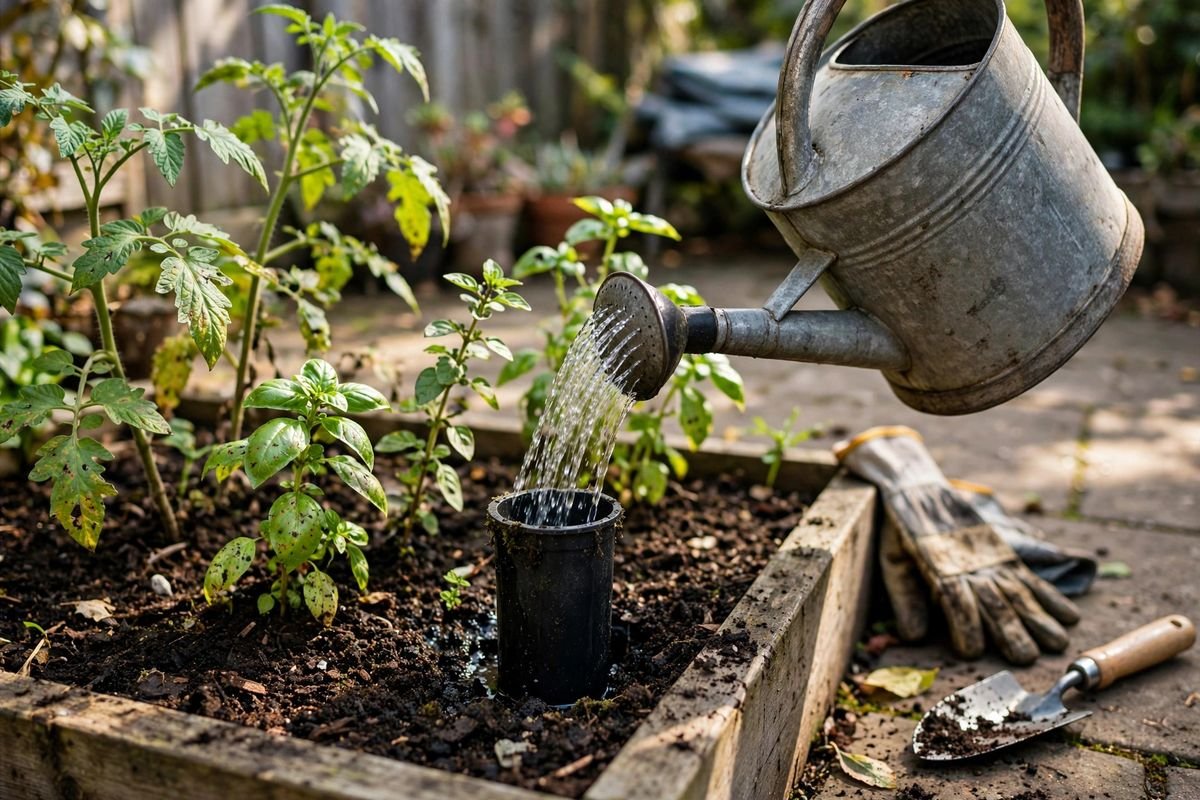
Placement. Full sun grows the most peppers but also empties reservoirs fastest. We place fruiting pots where they get morning sun and a little afternoon relief in hot climates, and we group pots so they shade each other’s sides. On a balcony, we check weight when the reservoir and wet soil are both full, and we keep heavy troughs over posts or beams where possible. Our list of small-space gardening mistakes to avoid covers the drainage and crowding errors that show up most in tight patio layouts.
Timing note for spring planting. Peppers and tomatoes sulk in cold soil, so we set them out after nights stay reliably mild in our area. Use your local frost dates and regional planting guidance — not your USDA hardiness zone alone — to choose planting dates. Herbs such as basil share that warmth preference, while lettuce and parsley can start cooler in the same railing box.
Care Through the Season
Refill rhythm. We check the indicator every 2 to 3 days in warm weather and daily during a heat wave, even with a reservoir. The indicator tells us about the chamber, not the upper soil, so we also push a finger an inch into the mix. If the top is dry and the reservoir is empty, we refill promptly; peppers that wilt hard and recover repeatedly often drop blossoms.
Feeding. Steady water moves nutrients steadily too. We feed lightly and regularly rather than in one heavy dose, and we flush from the top with plain water once a month to reduce salt buildup at the surface. White crust on the soil or pot edge is our cue to flush sooner.
Cleaning. Algae can grow in a sunlit fill tube or clear indicator. We shade exposed tubes where we can, rinse the reservoir between crops, and scrub mineral film with a bottle brush at season’s end. A planter stored dry and out of sun lasts longer and starts the next season without a clogged wick.
Common Problems and Plain Fixes
Soil stays soggy and plants look pale. The mix may hold too much water or the reservoir may sit too high. We let the chamber empty before refilling, improve the mix with perlite at the next planting, and confirm the overflow hole is open. Reservoir empties but the soil is still dry. The wick may have dried or roots may not yet reach the damp zone. We water from the top to restart capillary flow and check that the wick or soil foot actually touches the water. Mosquitoes gather at the fill tube. Standing water draws them. We keep the tube capped when the design allows, refresh the reservoir regularly, and avoid letting overflow puddle in a tray below. One end of a long box thrives while the other lags. The box is likely tilted. We level the brackets and confirm the wick runs the full length.
FAQ
Do self-watering planters prevent overwatering?
They reduce the swing between soaked and dry, but they do not remove all risk. A blocked overflow or a heavy, water-holding mix can still keep roots too wet. We rely on the overflow hole, an open mix, and a refill check that includes a finger test in the upper soil.
Can we leave self-watering planters out in rain?
Yes, with the overflow clear and the planter placed where runoff does not pour into it. After a storm we check the indicator and drain a swollen chamber if the soil feels saturated. A planter under an eave may need the opposite care, since it can miss rain and empty sooner than we expect.
How often do we need to refill in summer?
Our planning math gives 2 to 4 days for one pepper on a 1-gallon reserve in warm weather. Herbs and greens in a larger trough often go longer, while a shallow railing box in full sun may need water sooner. The indicator and a finger check give the real answer on our own patio.
What soil works best in a self-watering planter?
A light potting mix with perlite or pumice and some compost for nutrition wicks evenly and holds air. Dense garden soil compacts and wicks poorly. We prime the mix by watering from the top at planting so the wick starts damp.
Sources & Further Reading
- University of Florida IFAS Extension — container gardening, self-watering containers, and capillary watering basics (edis.ifas.ufl.edu).
- Clemson University Cooperative Extension — container watering, drainage, and soil mix guidance for vegetables and herbs (hgic.clemson.edu).
- University of Minnesota Extension — growing vegetables and herbs in containers, soil volume and watering needs (extension.umn.edu).
- Iowa State University Extension and Outreach — container garden watering and fertilizer management (extension.iastate.edu).
Keep Growing With These Guides
A steadier reservoir will not fix a pot that is too small or a mix that holds no air, but it smooths out the daily highs and lows that stress patio peppers and herbs. Which spot on our patio loses water fastest — the sunny corner, the windy rail, or the shallow box — and which planter shape will we test there first?