
This post may contain affiliate links. If you buy through links on this page, we may earn a commission at no extra cost to you.
As an Amazon Associate I earn from qualifying purchases.
Most container vegetables need a bigger pot once a season, and many need one sooner. The short answer: repot when roots fill the pot, water runs straight through, or growth stalls even though you feed and water on schedule. Do the move in mild weather, step up only one or two inches in diameter, and give the plant a deep drink after. Repotting too early wastes mix and space, while waiting too long leaves roots with nowhere to grow.
We have not tested the products linked here, and we give no current store prices. The links below go to search pages for pot types and potting mix, so you can compare current options, sizes, and prices at the time you shop. This guide covers the signs to watch for, a worked sizing example, the repotting steps, and the cases where leaving the plant alone is the better call.
Signs your plant has outgrown its pot
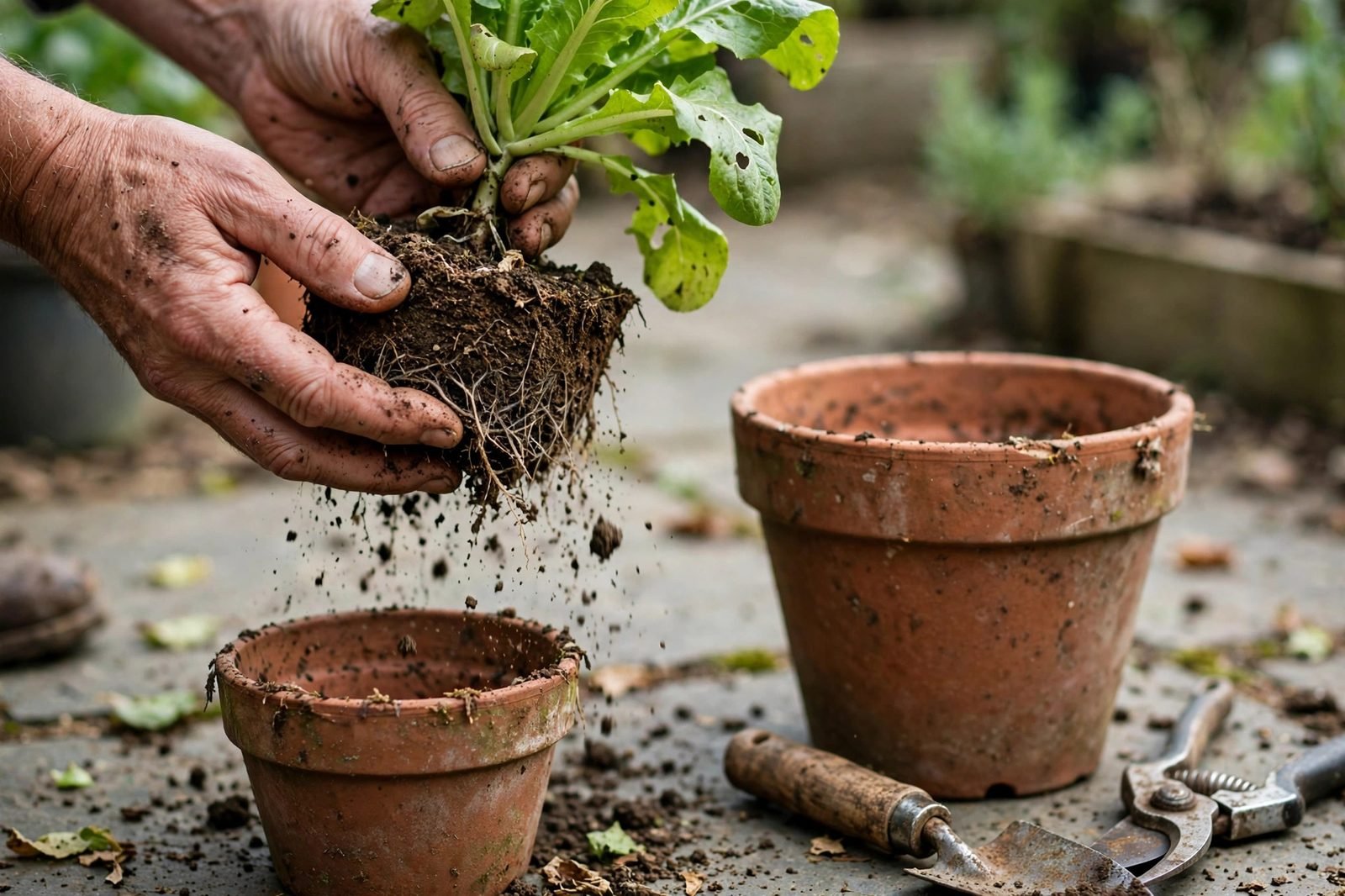
Roots circling the bottom of the root ball are the clearest sign. Tip the pot on its side on a calm day, slide the plant out gently, and look at the root ball. A few white roots at the edges are normal. A dense mat of roots wrapping around the outside, with little mix visible, means the plant has filled its home.
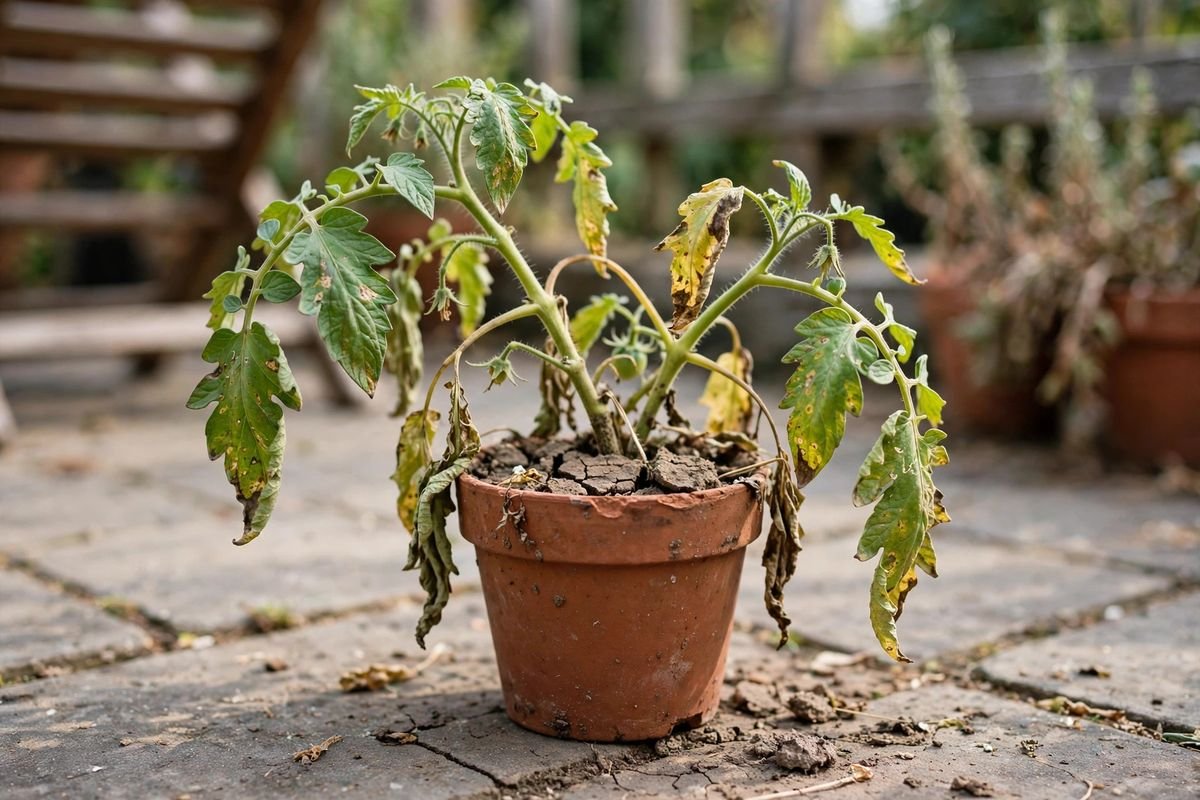
Water behavior tells the same story from above. When mix dries out within a day of watering in mild weather, or water pours out the drainage holes almost at once, roots may have taken over most of the pot volume. Slow growth adds a third clue. A pepper or tomato that stays small, drops flowers, or yellows at the lower leaves while neighbors thrive may be root-bound rather than hungry, though pests and disease can cause similar symptoms, so check the roots before you act.
Timing matters as much as the signs. Check container vegetables every few weeks once they start growing fast in spring and early summer. A quick root check takes a minute and causes little harm when you handle the plant gently and put it straight back. Our guide to container gardening for beginners covers soil mixes and drainage for pots of all sizes, and what size pot a pepper plant needs gives a starting size for one common container crop.

A worked example: sizing the next pot
Take a pepper plant growing in a 10-inch pot that is 10 inches deep. Treat the pot as a straight-sided cylinder for this estimate, even though real pots taper a little. The volume is pi times the radius squared times the depth: 3.14 times 25 times 10, which gives about 785 cubic inches. Divide by 1,728 cubic inches per cubic foot and the pot holds about 0.45 cubic feet of mix.
Step up to a 12-inch pot that is 12 inches deep. The same math gives 3.14 times 36 times 12, about 1,357 cubic inches, or about 0.79 cubic feet. The new pot holds roughly 0.34 cubic feet more mix than the old one, so plan on about one-third of a cubic foot of fresh mix to fill around the root ball, plus a little extra for settling. A jump from 10 inches to 14 or 16 inches sounds generous, but the extra mix stays wet longer than roots can use, and wet mix invites rot. One or two inches wider, with similar depth, is the safer step.
Use the same approach for other crops. Measure the old pot across the top, measure its depth, run the cylinder math, and pick a new pot one size up. For a tomato that will live in one pot all season, the final pot often ends up much larger than a pepper pot, so check our notes on best large planters for outdoor vegetables before you buy a pot you will only use once.
How to repot step by step
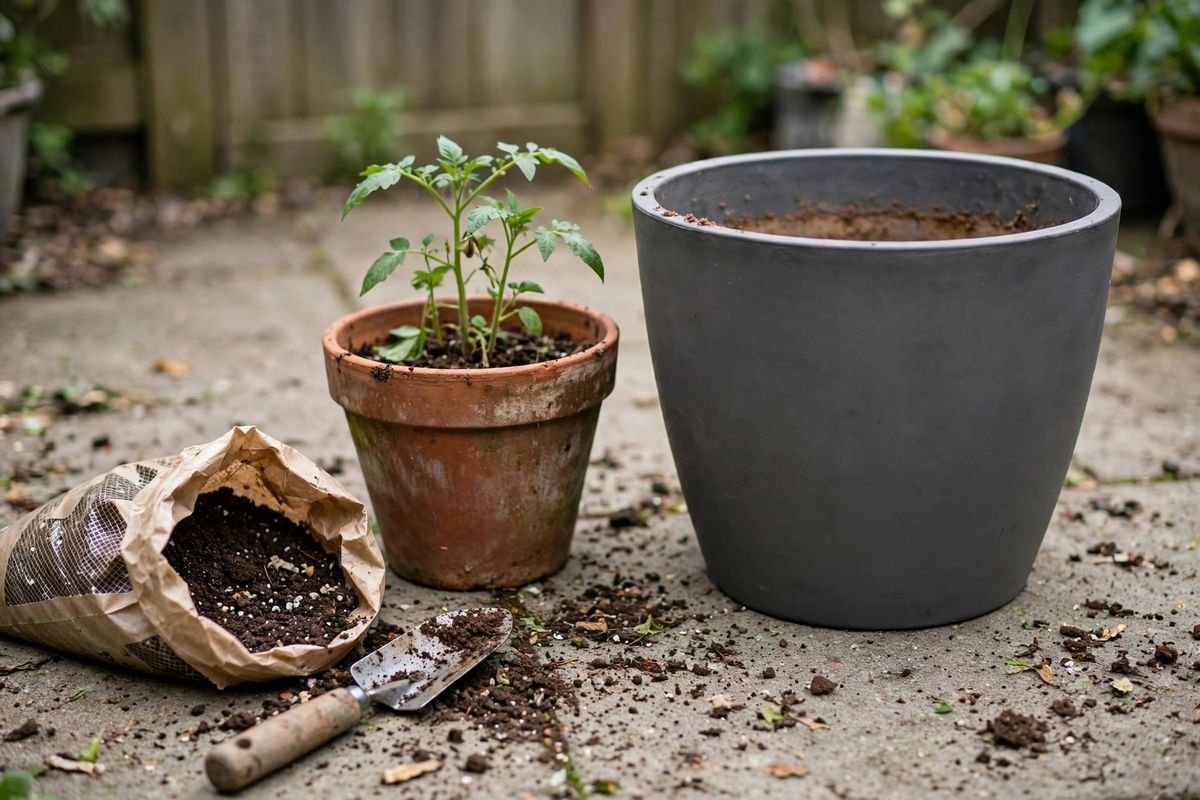
Water the plant the day before you repot. Damp mix holds together and slides out cleanly, while dry mix crumbles and tears roots. Set the new pot out with fresh mix ready, and cover the drainage hole with a piece of broken pot or mesh so mix stays in while water drains out.
Tip the old pot sideways and ease the plant out by the root ball, never by pulling the stem. If roots circle the bottom, tease the outer roots apart gently with your fingers and trim only the worst tangled ends. Set the plant in the new pot at the same depth it grew before, with the top of the root ball about one inch below the rim. Fill around the sides with fresh mix, press lightly to remove large air pockets, and leave that one-inch gap so water stays in the pot instead of running off the top.
Water slowly until water runs from the drainage holes, then wait and water again if the surface settles. Keep the plant out of harsh midday sun for two or three days while roots settle. Leaves may droop for a day after the move, and that is normal. Steady water and shade help the plant recover faster than extra fertilizer, so hold off feeding for a week or two after repotting.
Fresh mix matters here. Our guide to best potting mixes for container vegetables explains what to look for in a bag, and can you reuse potting soil covers when old mix is worth refreshing and when it belongs in the compost. To compare current options, search for 12-inch terracotta pots and potting mix for vegetables. Compare diameter and depth first, since a wide shallow pot holds less mix than a narrower deep one.

When not to repot
A plant in full fruit does not need the stress of a move unless roots are badly circling and water will not stay in the pot at all. In that case, repot with care and accept a short pause in growth. A plant that just moved into a new pot also needs time. Repotting twice in a few weeks disturbs roots for no gain, so let the plant settle and grow into the pot you gave it.
Some problems look like a pot problem but are not. Yellow leaves can mean overwatering, underwatering, or a nutrient shortage, and small fruit can mean too little sun. Check water, light, and feeding before you blame the pot. If the root check shows plenty of mix and only a few roots at the edges, the plant has room, and another cause sits behind the symptoms.
Pot material changes how fast mix dries, and that changes how often a plant seems to need a move. Terracotta dries faster than plastic, so a plant in terracotta may need water sooner without being root-bound. Our comparison of terracotta vs plastic pots explains the drying difference in more detail.
Questions
Repotting in fall works for plants you plan to keep growing through a mild winter indoors or under cover, but outdoor vegetables near the end of their season gain little from a move. Put effort into the plants with months of growth ahead of them, and let spent summer crops finish in the pots they have.
Note the pot size and the repot date on a plant label or in a garden notebook. That record makes next spring’s pot shopping much simpler.