
This post may contain affiliate links. If you buy through links on this page, we may earn a commission at no extra cost to you.
As an Amazon Associate I earn from qualifying purchases.
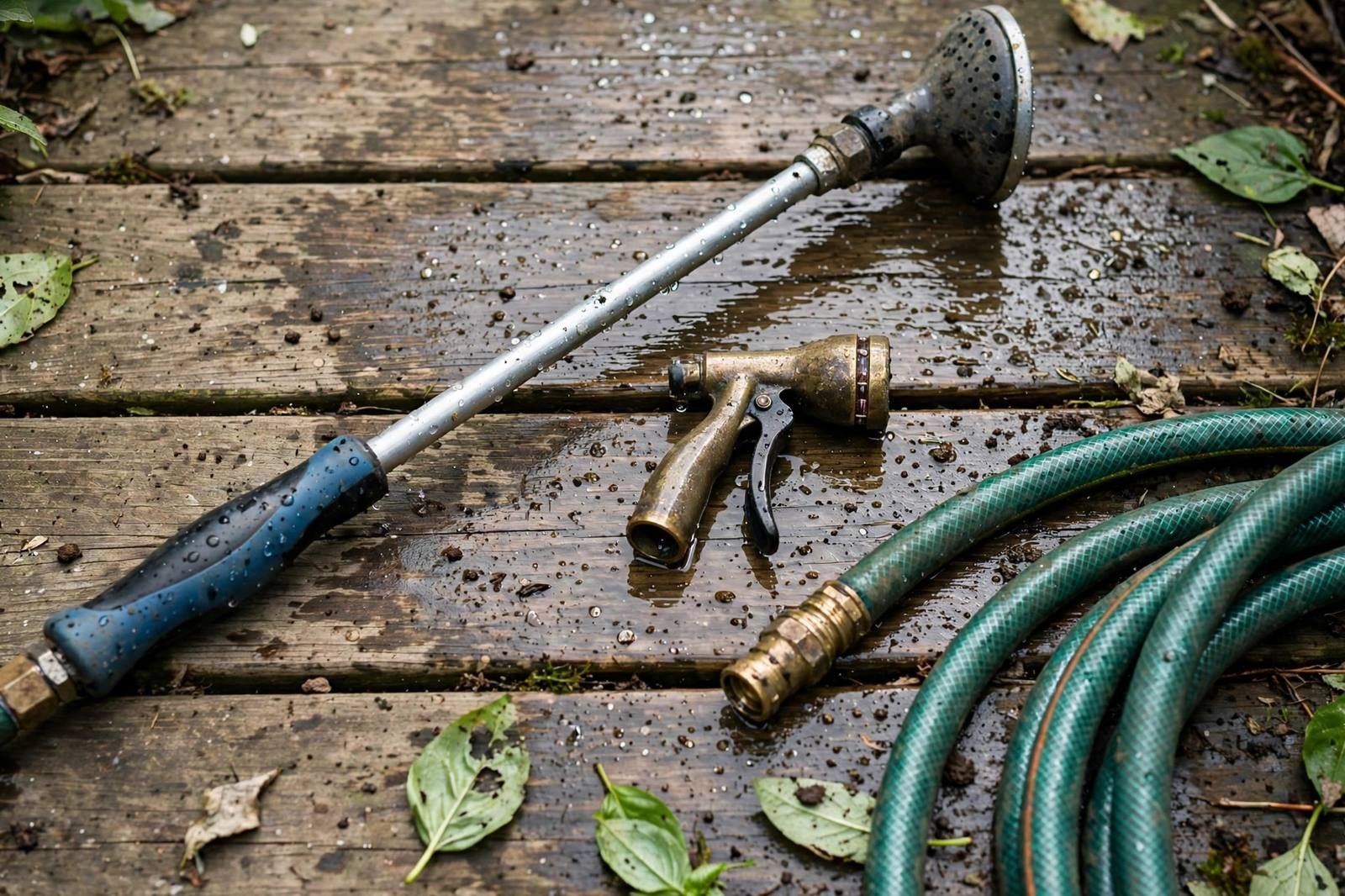
A watering wand and a hose nozzle both water a garden from the same hose, but they suit different jobs. A wand is a long tube with a gentle shower head at the end, made to reach into beds and baskets without bending. A nozzle is a short fitting at the end of the hose, made to switch between spray patterns for beds, pots, paths, and washing down. Most gardeners end up using one far more than the other, and the right pick depends on what you water most.
We have not tested the products linked here, and we give no current store prices. The links below go to search pages for wands and nozzles, so you can compare current options, sizes, and prices at the time you shop.
Wand vs nozzle at a glance
| Feature | Watering wand | Hose nozzle |
|---|---|---|
| Reach | Long, reaches into beds and hanging baskets | Short, limited by arm length |
| Water flow | Gentle shower, slower fill | Adjustable, from mist to jet |
| Control | One soft pattern, easy on seedlings | Several patterns, easy to switch |
| Best for | Baskets, tall plants, seed trays | Beds, pots, paths, washing down |
| Storage | Long and awkward on a hook | Small, fits a pocket or shelf |
The watering wand
A wand puts the shower head two or three feet past your hand, so you can water a hanging basket at eye level or the back of a deep bed without stepping into it. That reach also helps with tall plants: you can aim water at the soil under tomato leaves instead of spraying the leaves from above, which keeps foliage drier. For seedlings and fresh transplants, the soft shower disturbs soil far less than a direct hose stream.
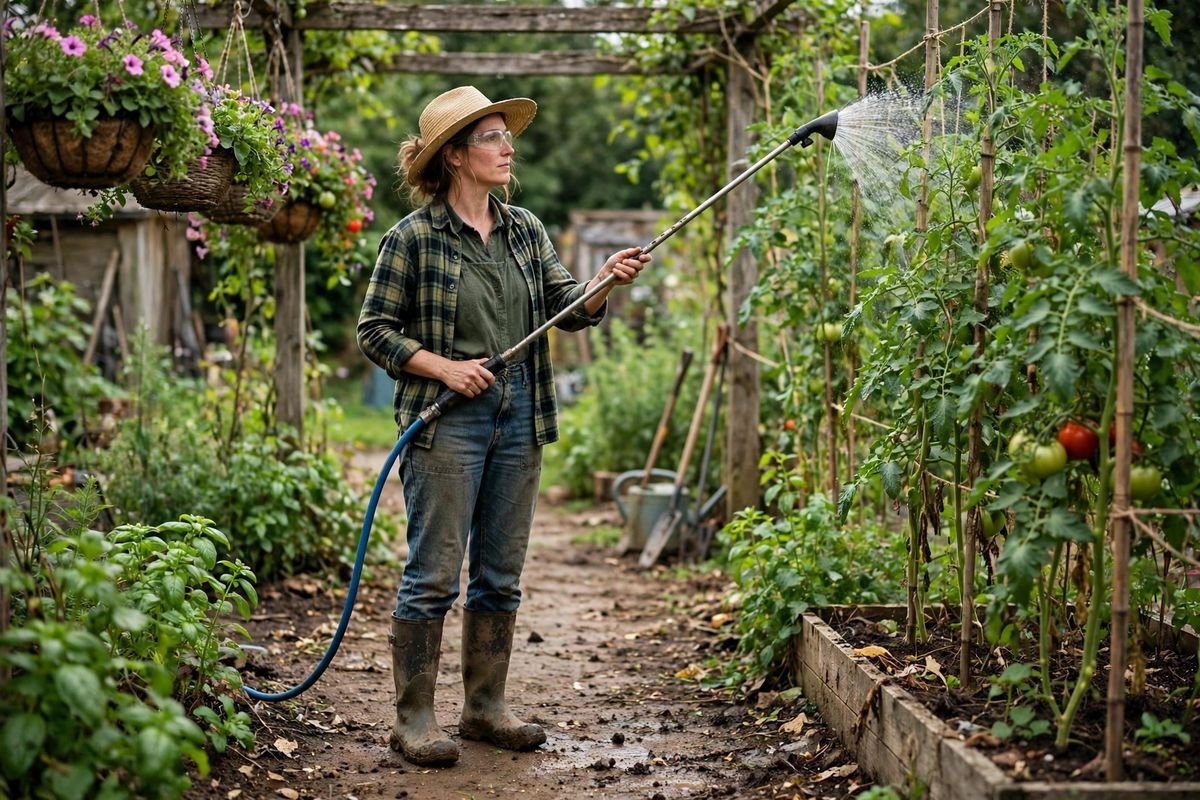
On the other side, a wand is a long tool to store and carry. It catches on gate latches and hangs awkwardly in a small shed. Most wands give one soft pattern, so washing mud off a path or rinsing a pot means swapping to another fitting. A wand also fills pots more slowly than a nozzle on a shower setting, which matters when you water dozens of pots in one round. For more wand options, see best watering wands for gardeners, and for a gentler way to water trays, see how to bottom water seedlings.
The hose nozzle
A nozzle earns its place by switching jobs fast. Turn the dial to a soft shower for pots, a fan spray for a bed, or a jet for rinsing a muddy path. That range makes it the better all-round tool for a mixed garden, where one watering round covers beds, pots, and a path. A nozzle also stores small: it stays on the hose end or sits on a shelf, with no long tube to hang.

The trade-off is reach and gentleness. A nozzle at arm’s length cannot reach the back of a deep bed without stepping in, and it cannot lift water to a hanging basket without a ladder or a stool. On stronger settings it can blast soil out of pots and flatten seedlings, so you must keep the dial on a soft pattern for tender plants. If you water mostly from a timer and a fixed hose layout, see best garden hose timers and how to keep container soil from drying out too fast.
A worked example: watering six pots
Assume six pots each need 2 gallons, or 12 gallons in total. Assume a wand runs at a gentle 1.5 gallons per minute and a nozzle on a shower setting runs at 2.5 gallons per minute. These are assumed rates for comparison, not measured flows from any product.
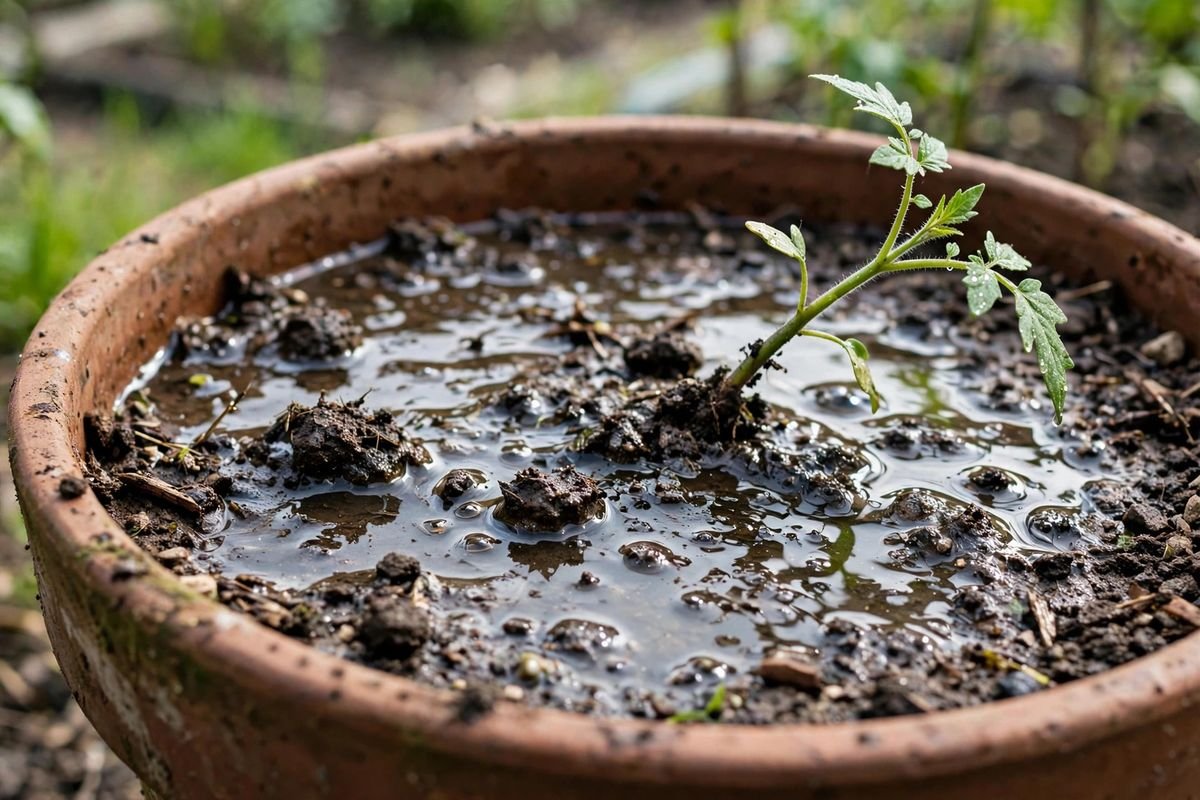
At 1.5 gallons per minute, the wand takes 12 divided by 1.5, or 8 minutes. At 2.5 gallons per minute, the nozzle takes 12 divided by 2.5, or 4.8 minutes, about 5 minutes. The nozzle saves about 3 minutes on this round, but the faster flow hits the soil harder, so a nozzle round needs a soft pattern and a steady hand to avoid washing soil out of the pots. The wand costs 3 minutes and gives a gentler soak with less soil disturbance. For a gardener with six pots, that trade is small either way. For thirty pots, the nozzle saves about 15 minutes, while the wand still wins on care for seedlings.
Verdict: which one fits your garden
Choose a watering wand if you water hanging baskets often, if your beds are deep and you want to reach the back without stepping in, or if you raise seedlings and fresh transplants that need a soft shower. Choose a watering wand if bending to ground level is hard for you, since the long handle keeps you upright while the water lands at soil level.
Choose a hose nozzle if you water a mix of beds, pots, and paths in one round, if you want one fitting that also rinses paths and pots, or if storage space is tight and a long tube would get in the way. Choose a hose nozzle if you water many pots at once and want the faster fill, as long as you keep it on a soft pattern for tender plants.
Many gardeners keep both: the nozzle stays on the hose for daily rounds, and the wand hangs nearby for baskets and seedlings. If you can buy only one, pick by the job you do most often. Baskets and seedlings point to the wand. Mixed beds and paths point to the nozzle. For the rest of the watering kit, see best watering cans for seedlings and best expandable garden hoses.
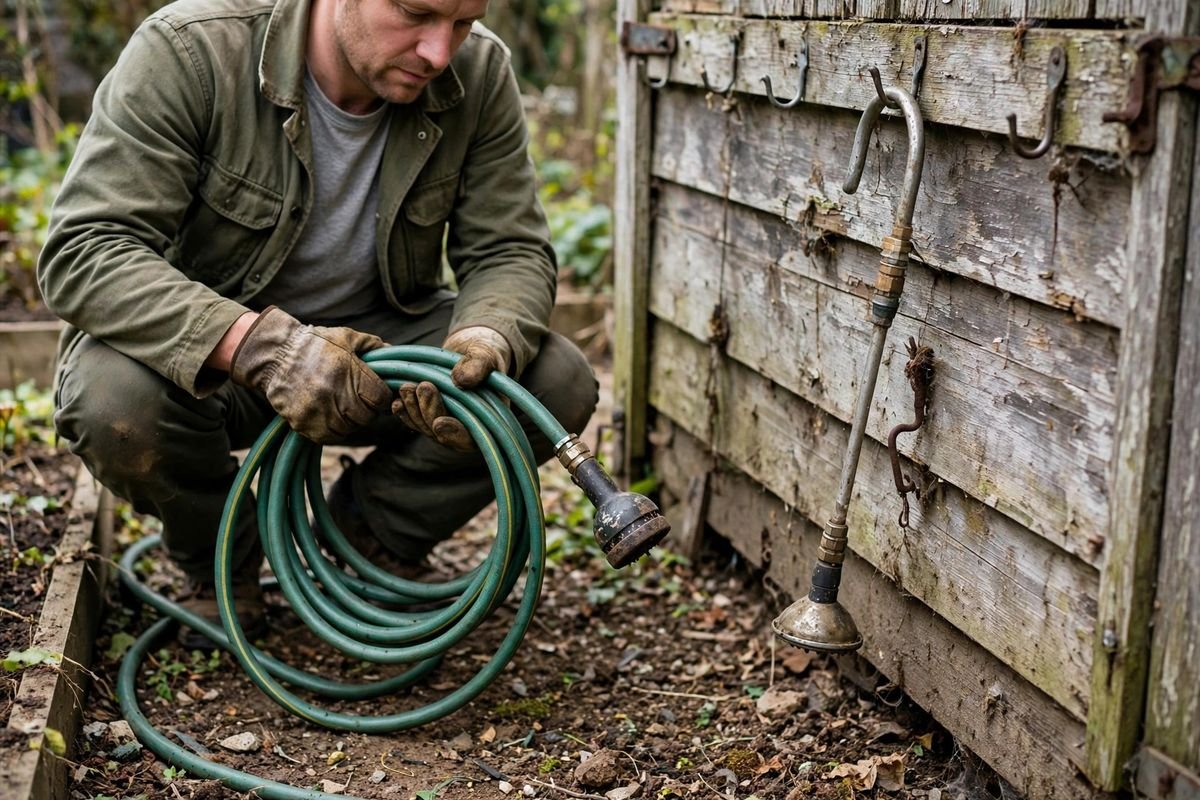
To compare current options, search for watering wands for gardens and garden hose nozzles. Compare length and shower softness on wands, and pattern range and grip comfort on nozzles, before you buy.
Questions
Can a wand replace a nozzle entirely? It can, if you never need a jet for paths or rinsing. Most gardeners still keep a nozzle for washing down, since a wand gives only a soft shower.
Does a nozzle harm seedlings? It can, on a strong setting. Use the shower or mist pattern, hold the nozzle back from the tray, and water in two light passes so the soil absorbs each pass.
Which one wastes less water? The wand tends to waste less on small jobs, because its soft flow soaks in instead of running off. A nozzle on a strong setting can run water off dry soil before it absorbs. Either tool wastes water if left running on a path.
Sources & Further Reading
- Watering the Vegetable Garden, Clemson Cooperative Extension
- Watering the Home Garden, University of Minnesota Extension
- Irrigating the Home Garden, Penn State Extension