
This post may contain affiliate links. If you buy through links on this page, we may earn a commission at no extra cost to you.
As an Amazon Associate I earn from qualifying purchases.
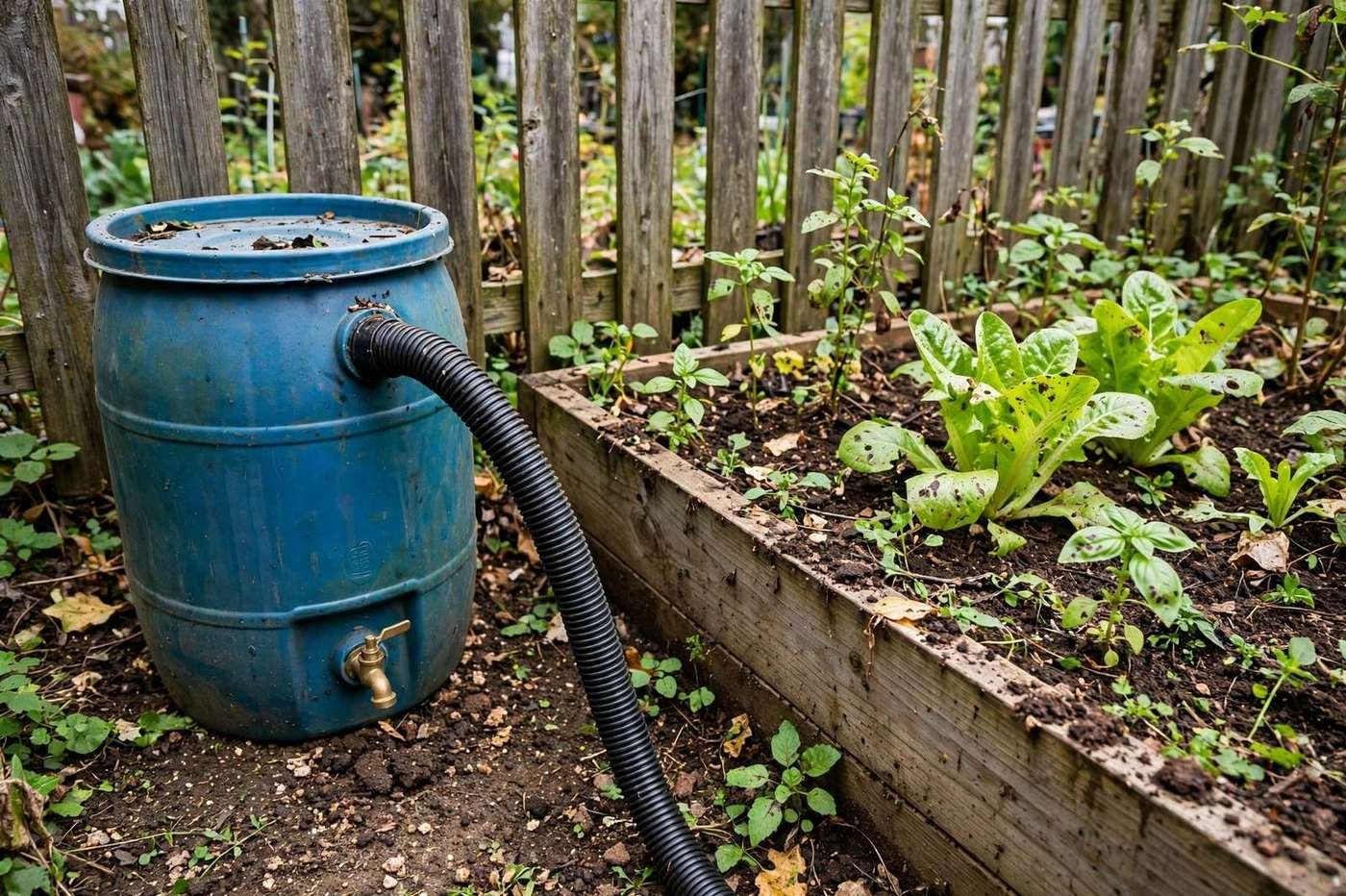
A rain barrel suits a small garden because it turns roof runoff into water you can use on beds and pots, without taking up much ground. One barrel beside a downspout holds enough for several waterings of a small bed, and it costs nothing to fill once it is set up. For a gardener with a few raised beds and a row of pots, that free supply covers a real share of summer watering.
We have not tested the products linked here, and we give no current store prices. The links below go to search pages for barrel types, so you can compare current options, sizes, and prices at the time you shop.
How much rain a small roof really collects
Roof runoff adds up faster than most people expect. One inch of rain on one square foot of roof gives about 0.623 gallons of water. That figure comes from the volume of a one-inch layer over one square foot, converted to gallons, and it assumes the gutter and downspout catch most of the rain rather than letting it spill over the edge.
Take a small roof section 10 feet by 12 feet, the size of a shed roof or one side of a small garage. The area is 120 square feet. Multiply 120 by 0.623 and you get about 75 gallons from a single inch of rain. A 50-gallon barrel therefore fills after roughly two-thirds of an inch of rain (50 divided by 75 is 0.67), assuming the downspout feeds the barrel and the barrel starts empty.
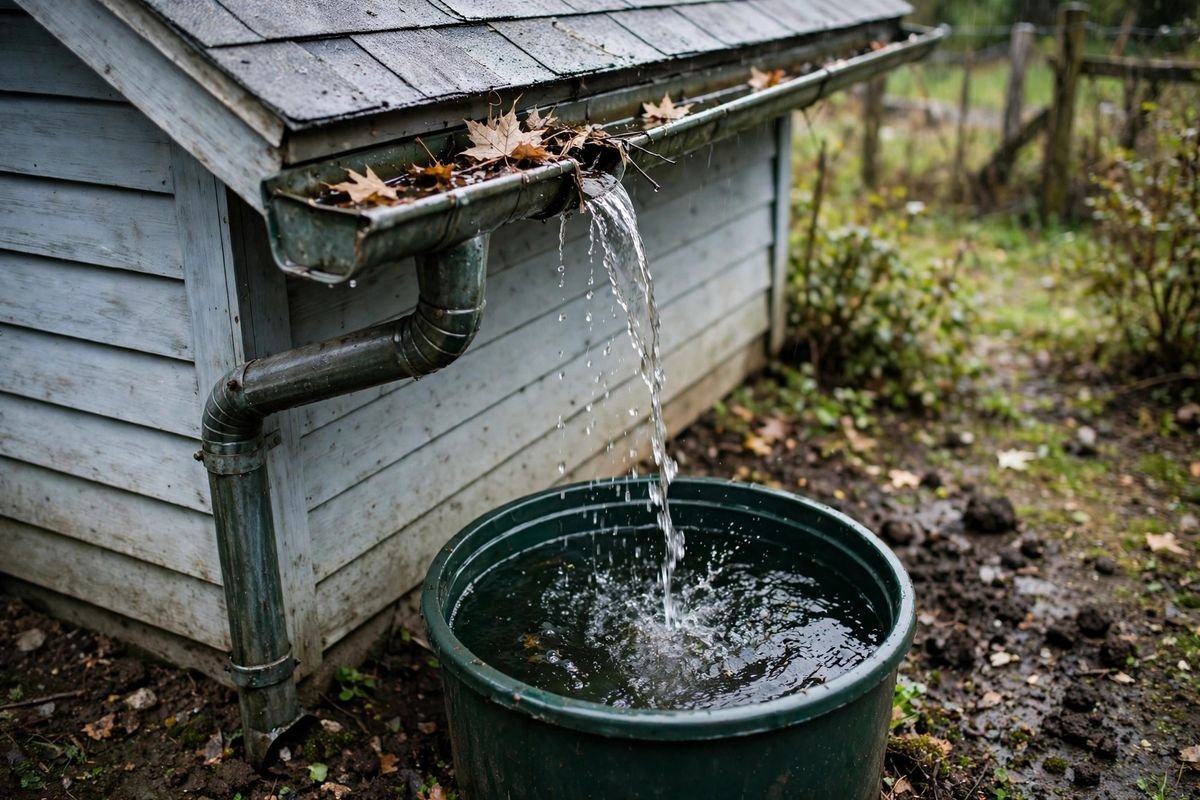
Now turn that 50 gallons into watering rounds. Assume a watering can holds 2 gallons, so a full barrel gives 25 canfuls. Assume a small raised bed 4 feet by 8 feet needs about half an inch of water per watering. That bed covers 32 square feet, and half an inch over 32 square feet is about 10 gallons (32 times 0.5 times 0.623). One full 50-gallon barrel then covers about five waterings of that bed. In a week with one good rain, a small garden can run mostly on stored rainwater, with tap water as backup in dry spells.
What size fits a small garden
For most small gardens, a barrel between 30 and 55 gallons is the right range. A 30-gallon barrel fits a tight side yard and still covers about three waterings of the 4 by 8 bed in the example above. A 50-gallon barrel covers about five waterings but needs a wider, level spot and a stronger base. Barrels larger than 55 gallons hold more water but take up ground a small garden may not spare, and they weigh more when full.
Weight deserves a check before you place a barrel. Water weighs about 8.34 pounds per gallon, so 50 gallons weighs about 417 pounds, plus the weight of the barrel itself. A level concrete pad, patio slabs, or a flat bed of compacted gravel carries that load without trouble. Soft, uneven soil lets a full barrel tilt, and a tilted barrel strains the spigot and can tip in a storm. Set the barrel on a firm, level base from the start.
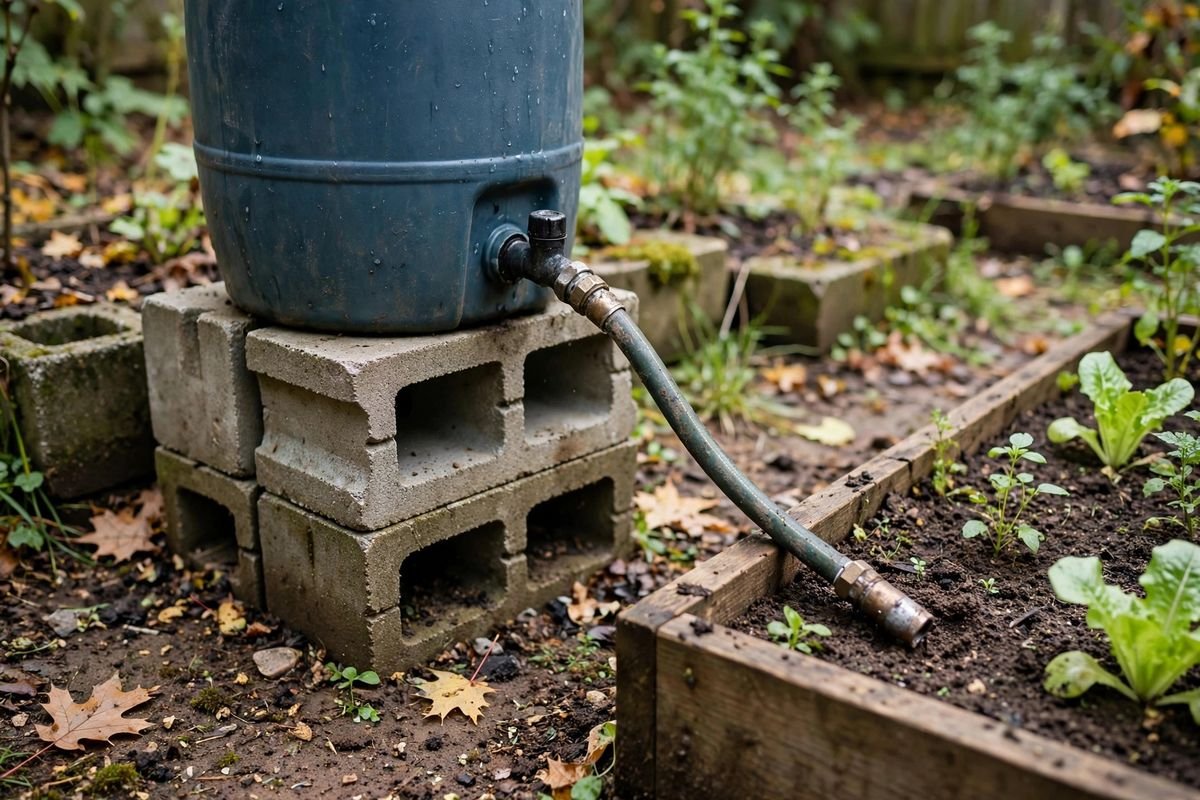
Height matters too. A barrel raised on blocks gives room to slide a watering can under the spigot, and gravity gives the spigot more pressure. Two or three courses of solid concrete blocks under a 50-gallon barrel is a common setup. Check that the blocks sit level and that the barrel does not rock before you connect the downspout.
Features that matter on a small barrel
A tight-fitting lid with a screen over the inlet keeps leaves, grit, and mosquitoes out of the water. Check the screen often in autumn, when leaves clog it fast. A clogged screen sends water over the side of the barrel instead of into it, which wastes the rain you meant to catch.
An overflow outlet near the top is just as important. When the barrel fills, extra water needs a safe path away from the house foundation. A short overflow hose that runs to a bed, a lawn strip, or a drain keeps water from pooling against the wall. Some kits use a diverter on the downspout that sends water to the barrel until it fills, then sends the rest back down the downspout. That design handles overflow on its own.
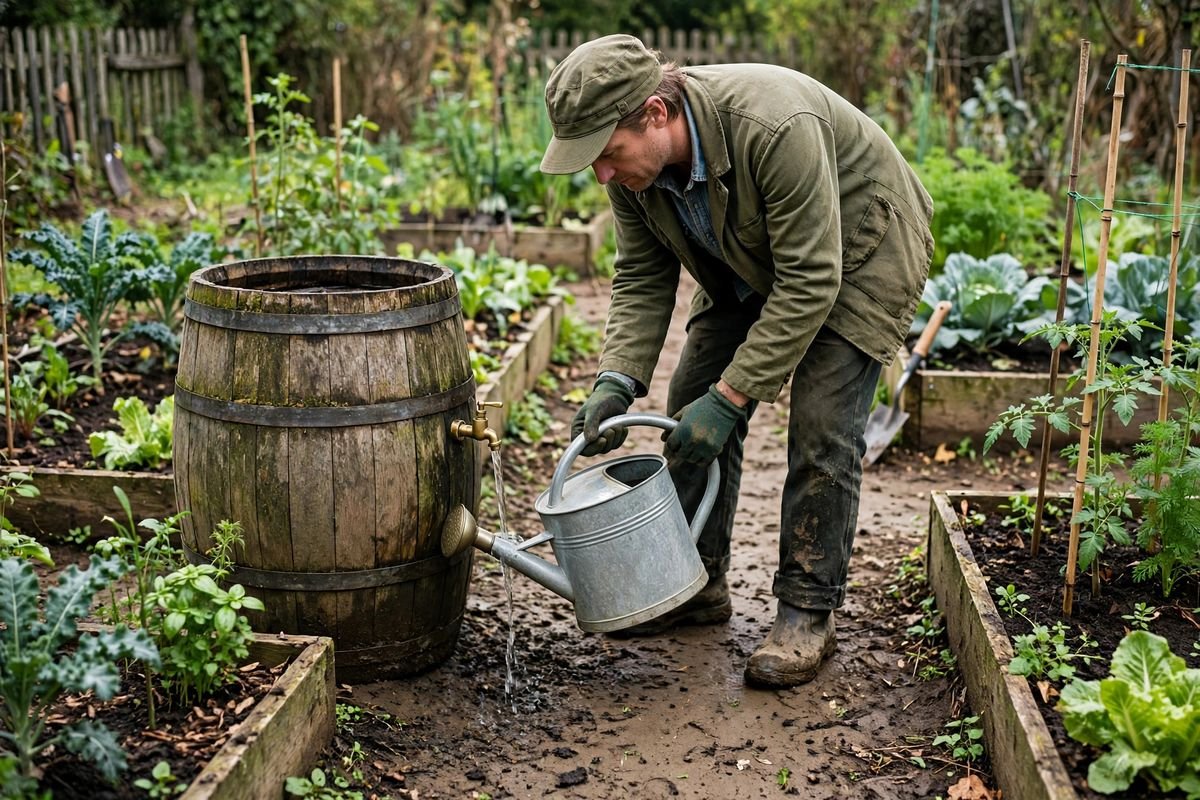
Look at the spigot before you buy. A spigot set a few inches above the bottom leaves sediment below it, so the water you draw runs clearer. A standard hose-thread spigot lets you attach a short hose for watering nearby beds. If you plan to water with a can, spigot height matters more than hose threads, since the can must fit under it.
For ideas on stretching stored water further, see how to keep raised bed soil from drying out and how often to water a raised bed. If you want stored water to feed beds on its own, read how to set up drip irrigation for a raised bed and our comparison of manual watering vs automatic irrigation.
Setting one up without trouble
Pick the downspout closest to the beds you water most. Short carries beat long hose runs, and a barrel beside the beds gets used more often than one tucked behind the garage. Cut the downspout to meet the barrel inlet or fit a diverter kit, following the kit directions for your downspout shape. Keep the barrel inlet screened from the first day, since one storm can wash grit and leaves into an open barrel.
Route the overflow before the first rain, not after. Run the overflow hose downhill and away from the foundation, to a spot that can absorb extra water. A barrel that overflows against a wall can dampen the wall base over a season, so this one step protects the house as well as the garden.
Old soil from last season still has a place in a small garden, and stored rainwater suits it well. For that topic, see can you reuse potting soil. Rainwater is soft and free of the chlorine in tap water, which suits seedlings and potted plants, though it does not replace good soil or steady watering habits.
Keeping the barrel in good shape
Clean the inlet screen a few times a year, and tip out sediment from the bottom once a year, in early spring before the rainy season. Scrub the inside with a stiff brush and plain water, then rinse. Skip harsh cleaners, since residue would go straight onto your beds with the next watering.
In freezing weather, drain the barrel and leave the spigot open, with the downspout disconnected or diverted away from the barrel. Water left in a barrel expands as it freezes and can crack the barrel or split a fitting. A drained barrel stored upside down or under cover lasts longer than one left full through winter.
To compare current options, search for rain barrels for small gardens and rain barrel diverter kits. Compare capacity first, then spigot height and overflow design, then whether the barrel fits the level spot you have. A barrel that fits your space and drains safely will serve a small garden for years.

Questions
Does a rain barrel need a pump? For watering cans and short hoses downhill from the barrel, gravity is enough, as long as the barrel sits raised on blocks. A pump helps only if you must push water uphill or run a long hose to distant beds.
Can you drink water from a rain barrel? No. Roof runoff picks up grit, bird droppings, and roof material, so barrel water suits garden beds and pots only, not drinking or cooking.
What if your roof is large and the barrel fills in every storm? Fit an overflow hose that runs to a bed or drain, or link a second barrel to the overflow outlet. Two barrels in a row double the storage without taking a second downspout.
Sources & Further Reading
- Rain Barrels, Clemson Cooperative Extension
- Rain Barrels, Penn State Extension
- Rainwater Harvesting for Home Gardens, University of Georgia Extension
- Stormwater: Rain Barrels, University of Minnesota Extension