
This post may contain affiliate links. If you buy through links on this page, we may earn a commission at no extra cost to you.
As an Amazon Associate I earn from qualifying purchases.
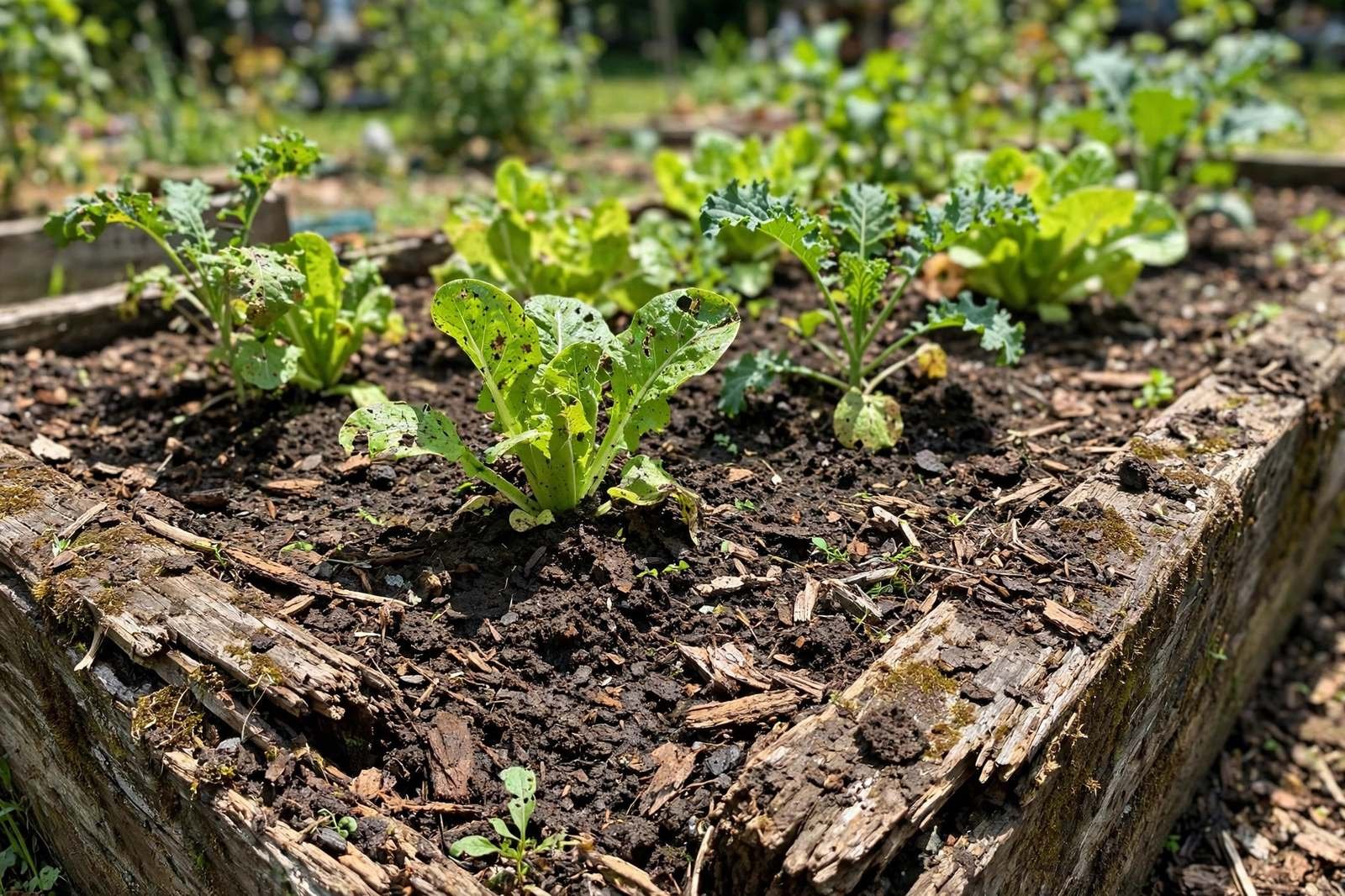
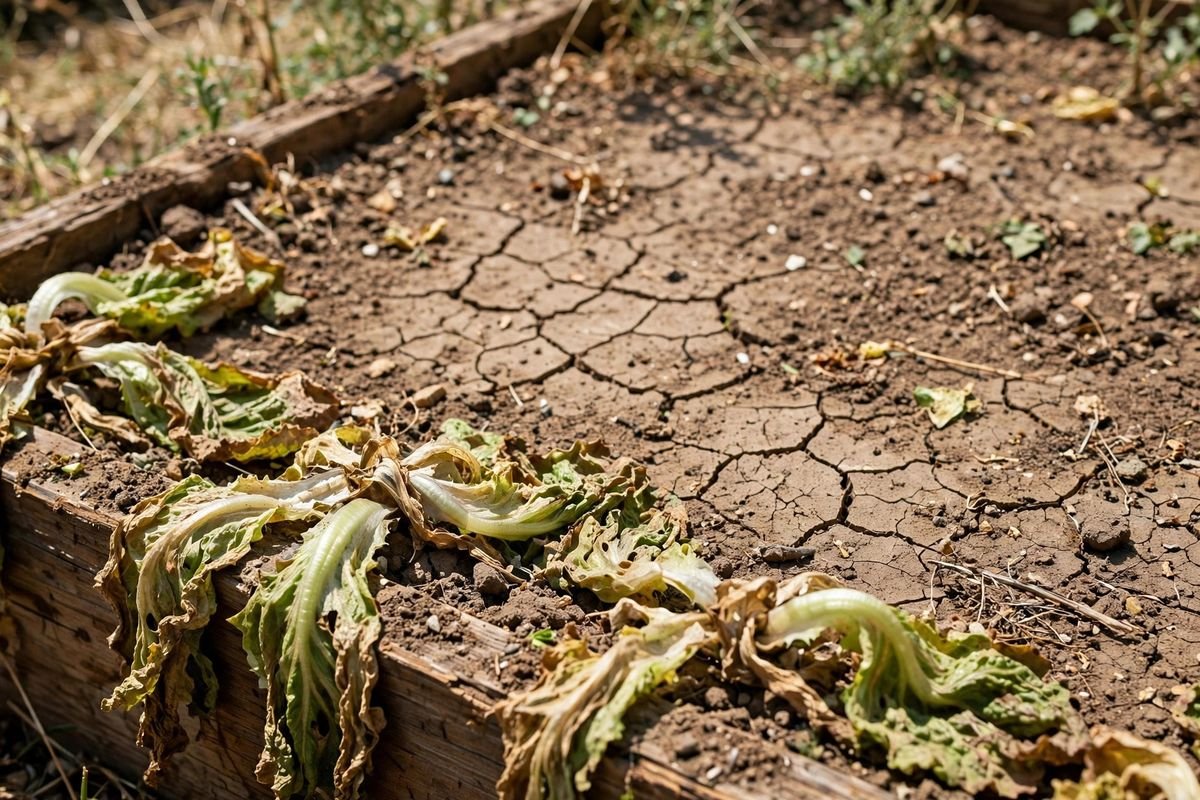
Raised bed soil dries faster than ground soil because it is exposed on four sides plus the top, and warm air moves around the frame. In summer, a bed can go from damp to dry at root depth in two or three days, even when the surface still looks dark. The fix is not watering more often for its own sake. It is holding water in the soil longer: deeper soil, a mulch cover, and watering that soaks down instead of wetting the surface.
We have not tested the products linked here, and we give no current store prices. The links below go to search pages for bed types, so you can compare current options, sizes, and prices at the time you shop.
Why raised beds dry out
Three things pull water from a raised bed. Sun heats the sides of the frame, and dark wood or metal sides pass that heat into the outer inches of soil. Wind strips moisture from the surface and from the sides of a bed that sits above the surrounding ground. And drainage, the feature that keeps raised beds from getting soggy, also lets water leave quickly when the soil is sandy or low in organic matter.
Soil mix is the hidden cause. A mix heavy in perlite and light in compost drains fast and holds little water. A mix with about one third compost by volume holds water in the spongy organic matter and releases it slowly to roots. If a bed dries within a day of watering, the mix is usually the first thing to check, before the watering schedule.
A worked example: how much water a 4 by 8 bed needs
Take a bed 4 feet wide and 8 feet long, or 32 square feet, in summer. One inch of water over that area is 32 square feet times 1/12 foot, or 2.7 cubic feet, which is about 20 gallons. Most vegetables need about 1 inch of water a week from rain plus watering, so this bed needs roughly 20 gallons a week in mild weather, and closer to 30 gallons in a hot, windy week when evaporation doubles the demand.
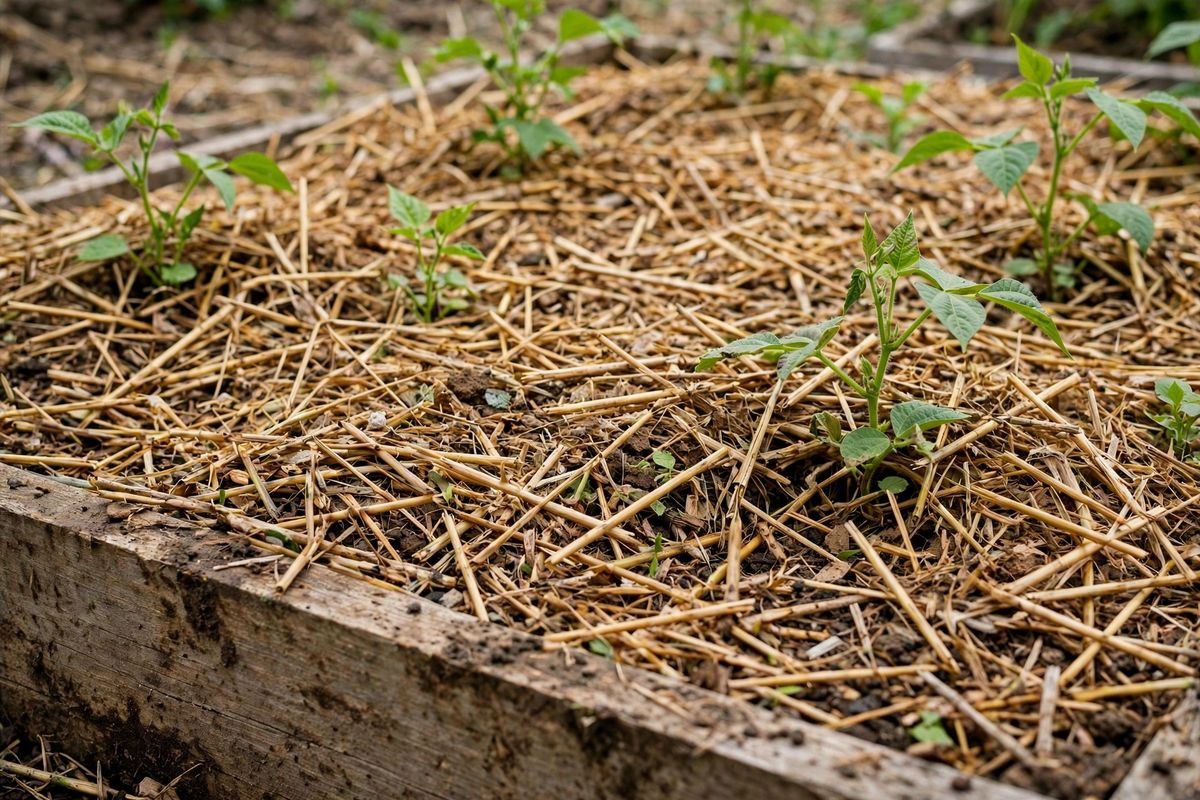
Now split that water well. Watering 20 gallons at once on dry soil runs much of it out the bottom, since dry soil resists absorbing water at first. Watering 10 gallons, waiting 30 minutes, then watering 10 more soaks the full depth with less runoff. A mulch layer 3 inches thick cuts surface evaporation enough that the same 20 gallons can last an extra day or two, which is often the difference between watering every other day and watering daily in July.
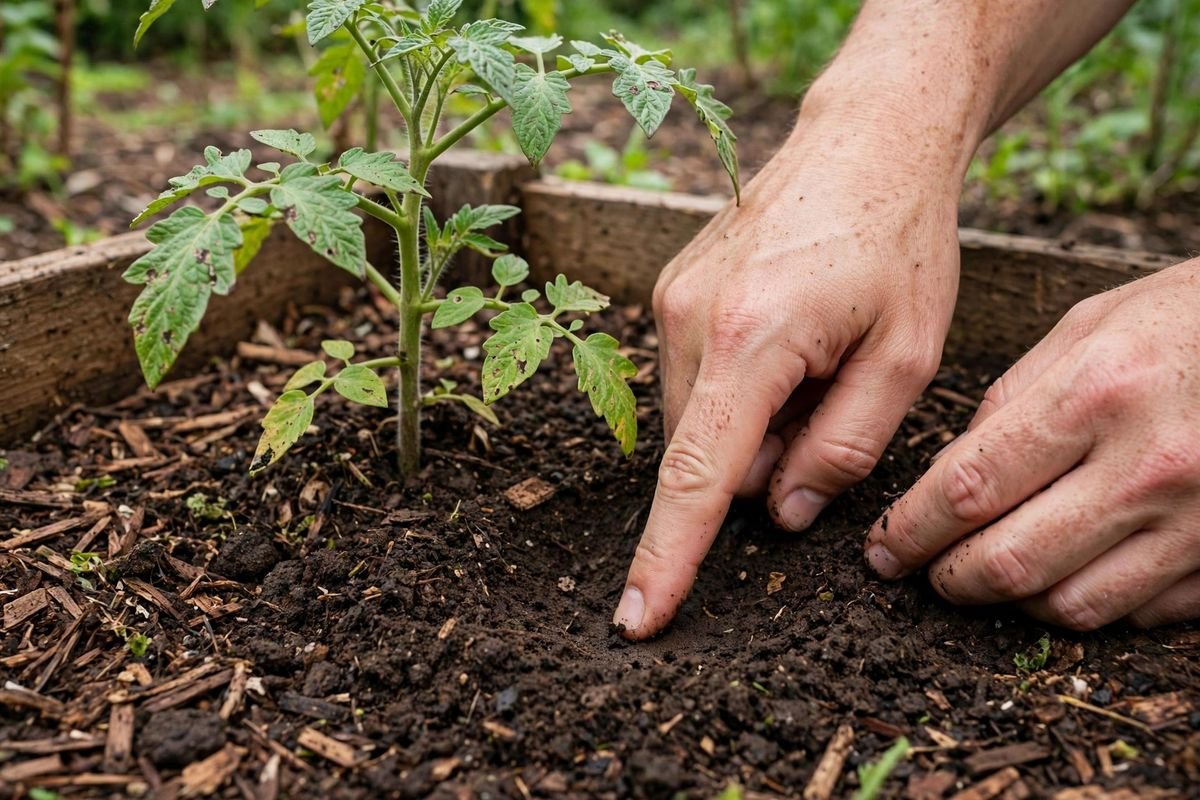
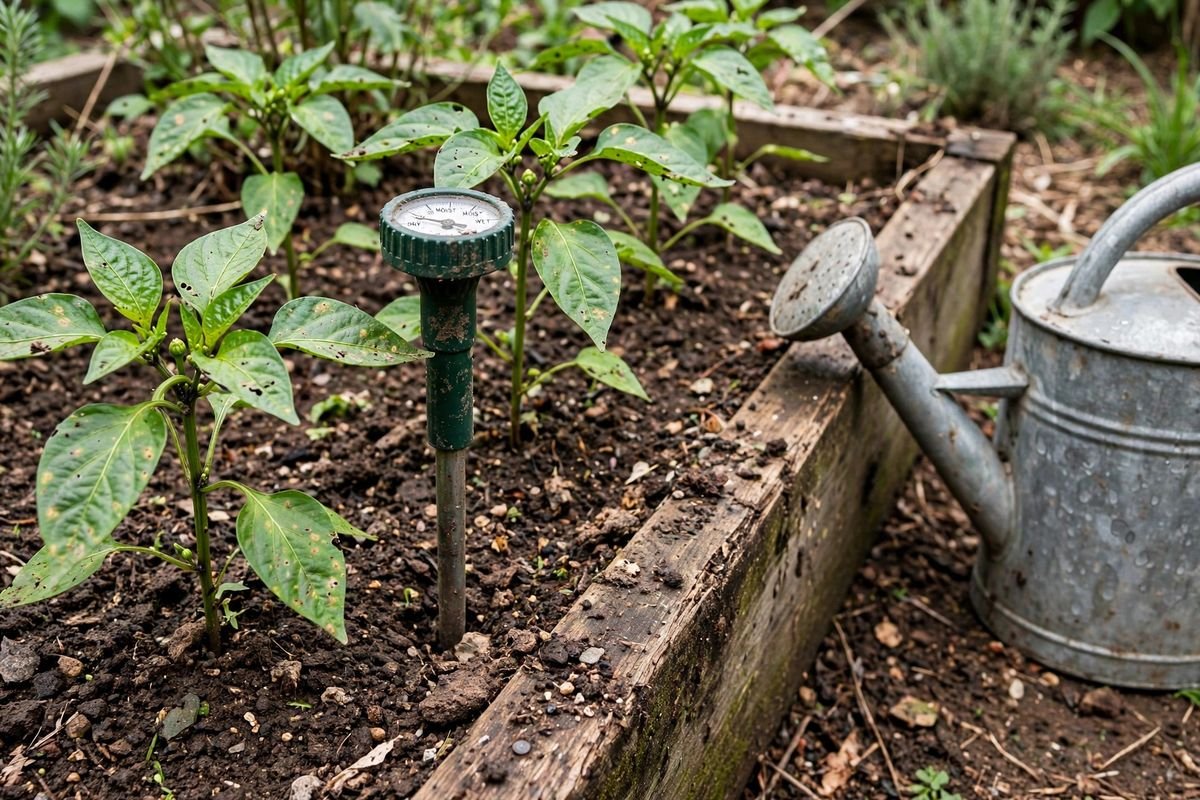
Check moisture at root depth, not at the surface. Push a finger 2 inches into the soil near a plant stem. If it feels dry there, water. If it feels damp, wait. For watering schedules by bed type, see how often should you water a raised bed and raised bed gardening for beginners.
Mulch, shade, and soil fixes
Mulch is the cheapest fix. Straw, shredded leaves, or wood chips 3 inches thick shade the soil surface, slow wind at ground level, and break the crust that forms on bare soil. Keep mulch a couple of inches from plant stems so stems stay dry and slugs lose a hiding place. In a bed that dries fast, mulch alone can cut watering frequency by a third.
Shade cloth helps beds that face afternoon sun. A 30 percent shade cloth over hoops, put up only for the hottest weeks, drops soil temperature and slows evaporation without starving plants of light. Remove it when the heat passes, since plants in shade grow softer stems that flop when the cloth comes off.
For a lasting fix, mix compost into the top 6 inches at the end of the season, about 2 inches of compost worked in, which is 5.3 cubic feet for a 4 by 8 bed. That compost holds water through the next season and feeds soil life that builds better soil structure over time. For mix recipes, see raised bed soil mix.
What to check before you change anything
Check the frame material first. Metal beds heat up more than wood in direct sun, and a metal bed in full sun can need a third more water than the same bed in wood. A board leaned against the sunny side, or a row of pots shading the frame, cuts that heat without rebuilding the bed.
To compare current options, search for straw mulch for vegetable gardens and soil moisture meters for raised beds. Compare mulch by coverage per bag first, since bag sizes vary widely, and treat a meter as a check on the finger test, not a replacement for it.
Questions
Is daily watering bad for a raised bed? Daily light watering keeps only the top inch wet and trains roots to stay shallow, where they dry out fastest. Deep watering every two or three days grows deeper roots that find water on their own.
Does a bed on the ground dry slower than a bed on legs? Yes. A bed sitting on soil pulls a little moisture from below and stays cooler underneath, while a bed on legs loses water from the base as well as the sides. Use your local frost dates and regional planting guidance, not your USDA hardiness zone alone, to choose planting dates for beds that will dry fast in late-season heat.