
This post may contain affiliate links. If you buy through links on this page, we may earn a commission at no extra cost to you.
As an Amazon Associate I earn from qualifying purchases.
A tall raised bed, 24 inches high or more, takes a surprising amount of soil, and filling the whole depth with bagged mix wastes money. Roots of most vegetables use the top 12 inches, and the bottom of a tall bed can be filled with coarse, cheap material that drains and breaks down slowly. The trick is choosing filler that does not settle into a hollow, does not block drainage, and leaves enough true soil on top for roots to grow well.
We have not tested the products linked here, and we give no current store prices. The links below go to search pages for bed types, so you can compare current options, sizes, and prices at the time you shop.
How much soil a tall bed really needs
Work from the top down. Plants need 12 inches of good soil mix. Everything below that is filler, drainage, and structure. A bed 4 feet wide, 8 feet long, and 24 inches tall holds 64 cubic feet in total. The top 12 inches take 32 cubic feet of mix, and the bottom 12 inches take 32 cubic feet of filler. Filling all 64 cubic feet with bagged mix doubles the cost for soil that most roots never reach.
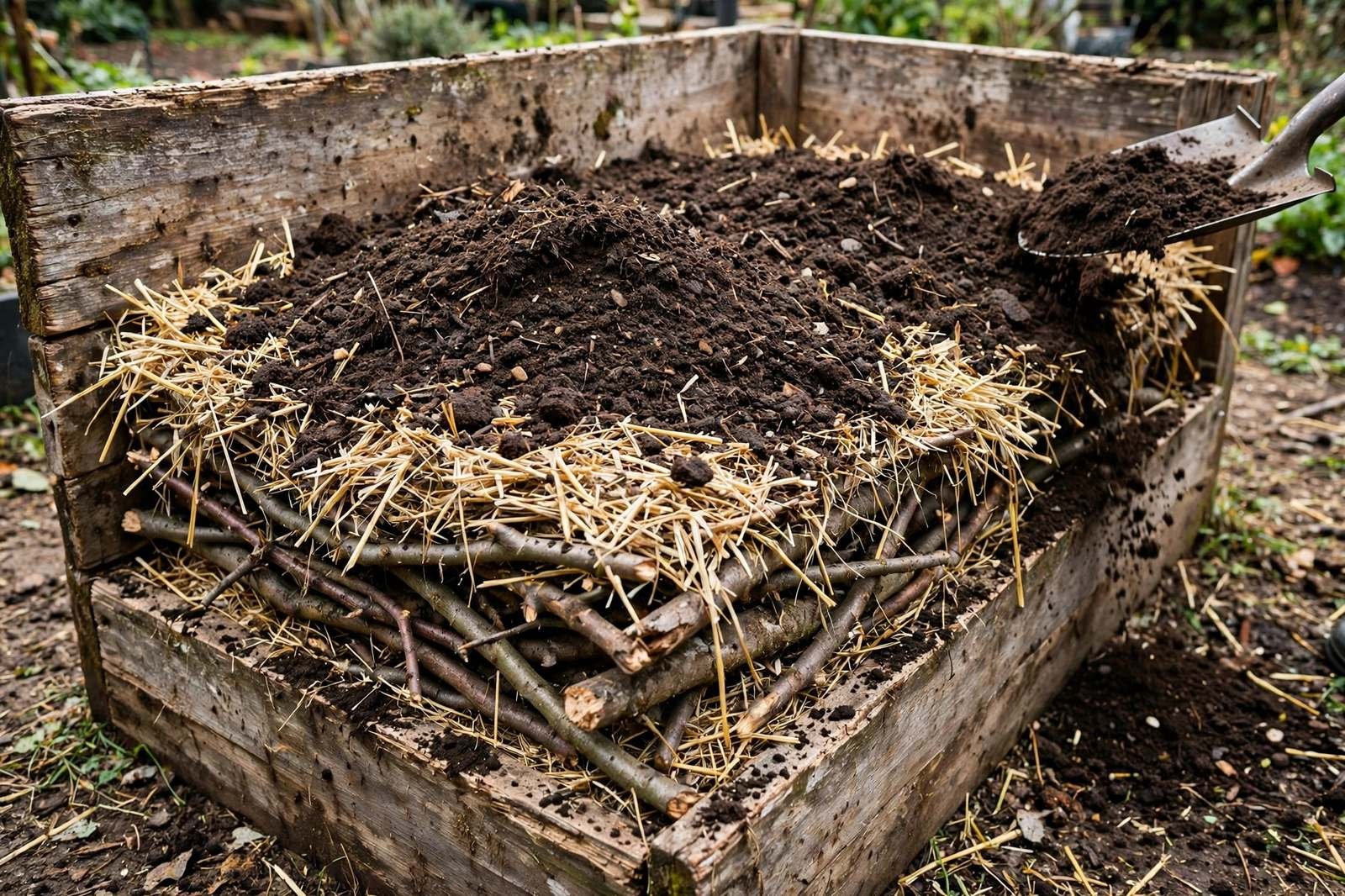
That filler still has to drain. Material that packs into a solid layer, such as fine sawdust or shredded paper alone, holds water and turns sour. Coarse material with air gaps, such as branches, straw bales, or coarse wood chips, drains and settles slowly. Layer filler loosely, water it well to settle it before adding soil, and top up the soil layer after two weeks, since the filler settles a few inches as it absorbs water.

A worked example: filling one 4 by 8 foot bed, 24 inches tall
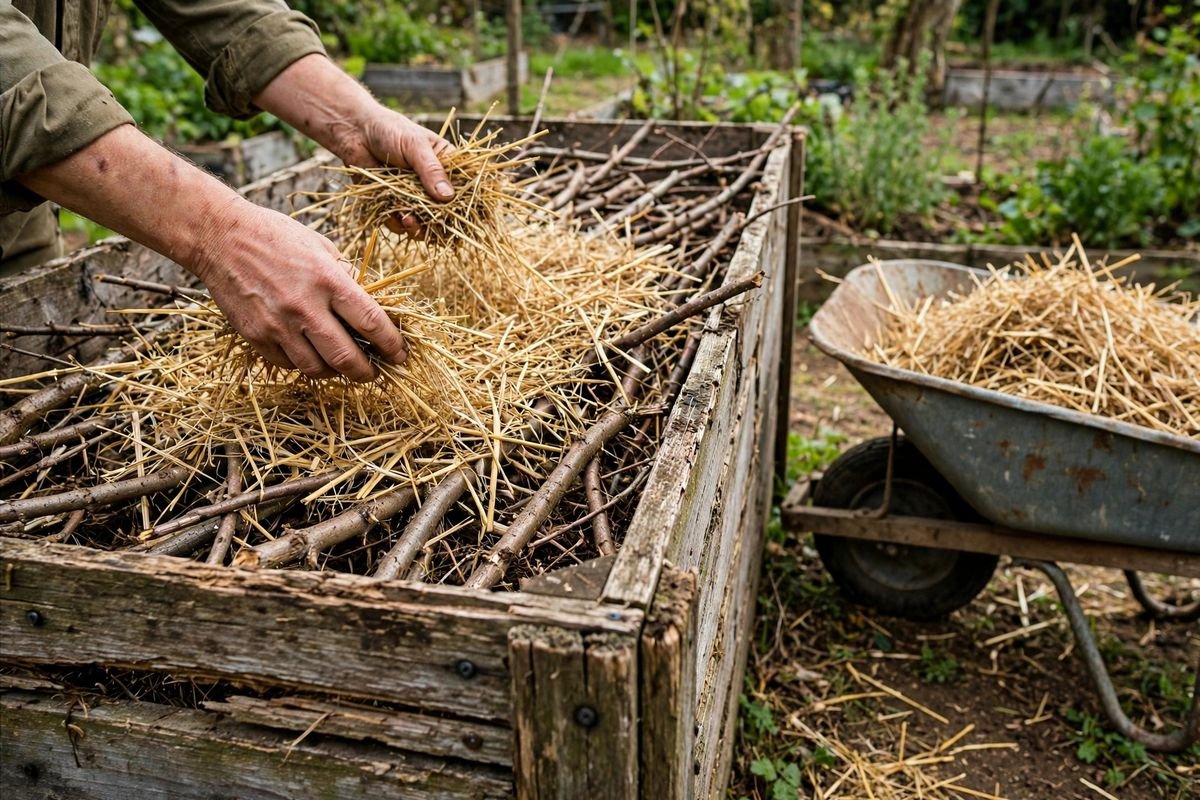
Start with the bottom 6 inches: branches and twigs laid crosswise, which is about 16 cubic feet of loose material that will compress to roughly 10 cubic feet once watered and walked on. Add 6 inches of straw or coarse leaves on top, about 16 cubic feet loose, which compresses to about 8 cubic feet. That gives a filler layer about 12 inches deep after settling, though you may need a second straw layer after the first watering.
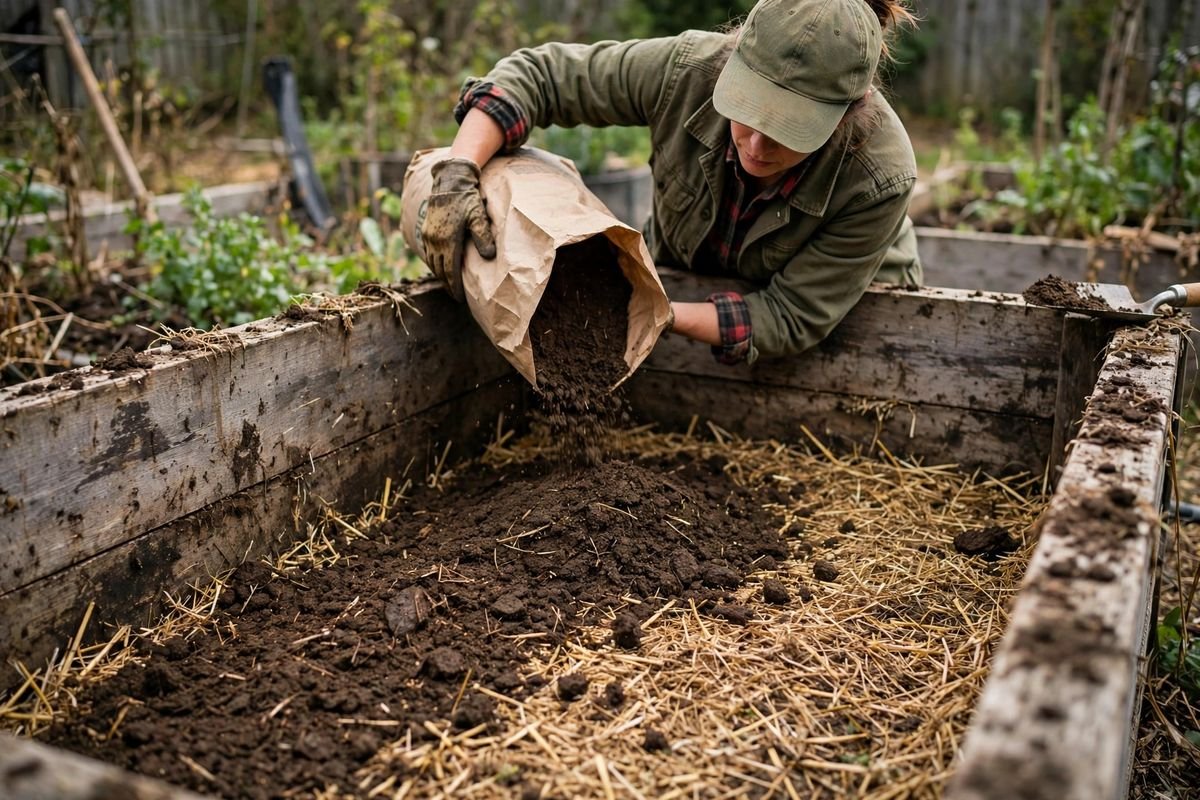
Now add soil. The top 12 inches need 32 cubic feet of mix, or about 43 bags at 0.75 cubic feet each, plus 5 extra bags for settling, which is 48 bags in total. Compare that with 86 bags for a full-depth fill, and the filler saves about 38 bags, which is real money on a bed this size. Water the soil layer in two passes, then check the depth after a week: if it has dropped more than 2 inches, top up before planting, since roots planted into a sinking bed end up buried too deep as the surface drops around them.
For what goes at the very bottom of any bed, see what to put in the bottom of a raised bed and tall raised bed vs standard raised bed. For mix recipes for the top layer, see raised bed soil mix.
Fillers to use, and fillers to skip
Good fillers: branches and twigs, straw bales broken apart, coarse wood chips, and unfinished compost that still has structure. These drain, break down over one to three seasons, and feed soil life as they decay. As they decay, the soil layer sinks, so plan to top up with 2 to 3 inches of compost each spring.
Skip these fillers: plastic bottles, foam packing, and whole logs packed tight with no gaps. Plastic never breaks down and can trap water in pockets. Foam crushes under wet soil and leaves voids that collapse later. Whole logs look tidy but take years to decay and can leave a hollow when they finally rot, dropping the soil layer suddenly. Also skip fresh manure in the filler layer: it heats as it breaks down and can burn roots that reach it.
One more caution: nitrogen. Wood and straw filler pulls nitrogen from the soil above as it decays, which can yellow young plants in the first season. A handful of blood meal or a balanced organic fertilizer mixed into the top soil layer at planting covers that draw, and by the second season the filler starts giving nutrients back instead of taking them.
What to check before you build
Check the bed walls before you fill. A tall bed holds twice the soil weight of a standard bed, and wet soil pushes outward hard. Mid-span bracing, a cross tie or a stake at the middle of each long side, keeps the walls from bowing. A bed that bows in its first season rarely straightens again.
To compare current options, search for tall raised garden beds 24 inches high and raised bed soil mix in bulk bags. Compare wall bracing first, then depth, then whether the kit suits a filler layer or expects a full soil fill.
Questions
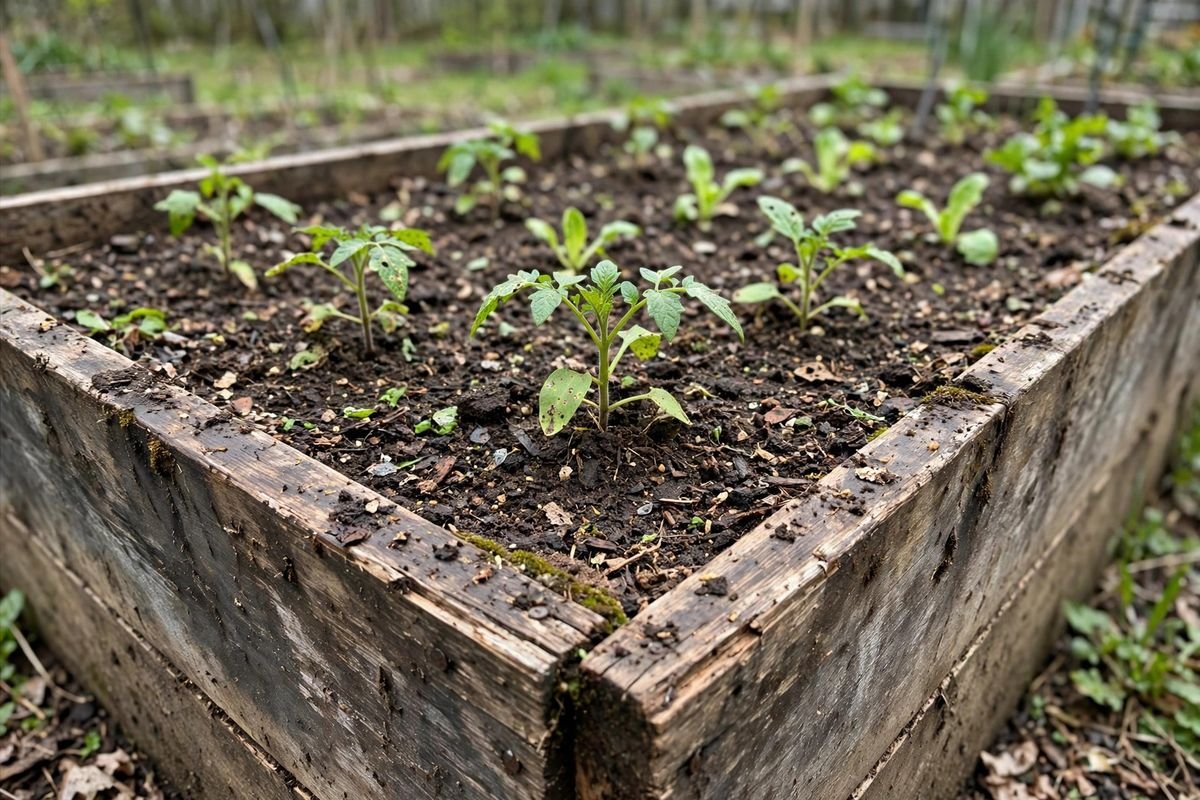
How long does filler last? Branches and straw break down in one to three seasons, depending on moisture. Top up with compost each spring, and after three seasons the filler layer becomes soil itself, which is the point: a tall bed slowly becomes a deep bed of real soil.
Can you use filler in a standard 12-inch bed? There is no room: the full depth is root zone, so fill it with mix. Filler only makes sense when the bed is 18 inches tall or more, where the bottom sits below most roots.