
This post may contain affiliate links. If you buy through links on this page, we may earn a commission at no extra cost to you.
As an Amazon Associate I earn from qualifying purchases.
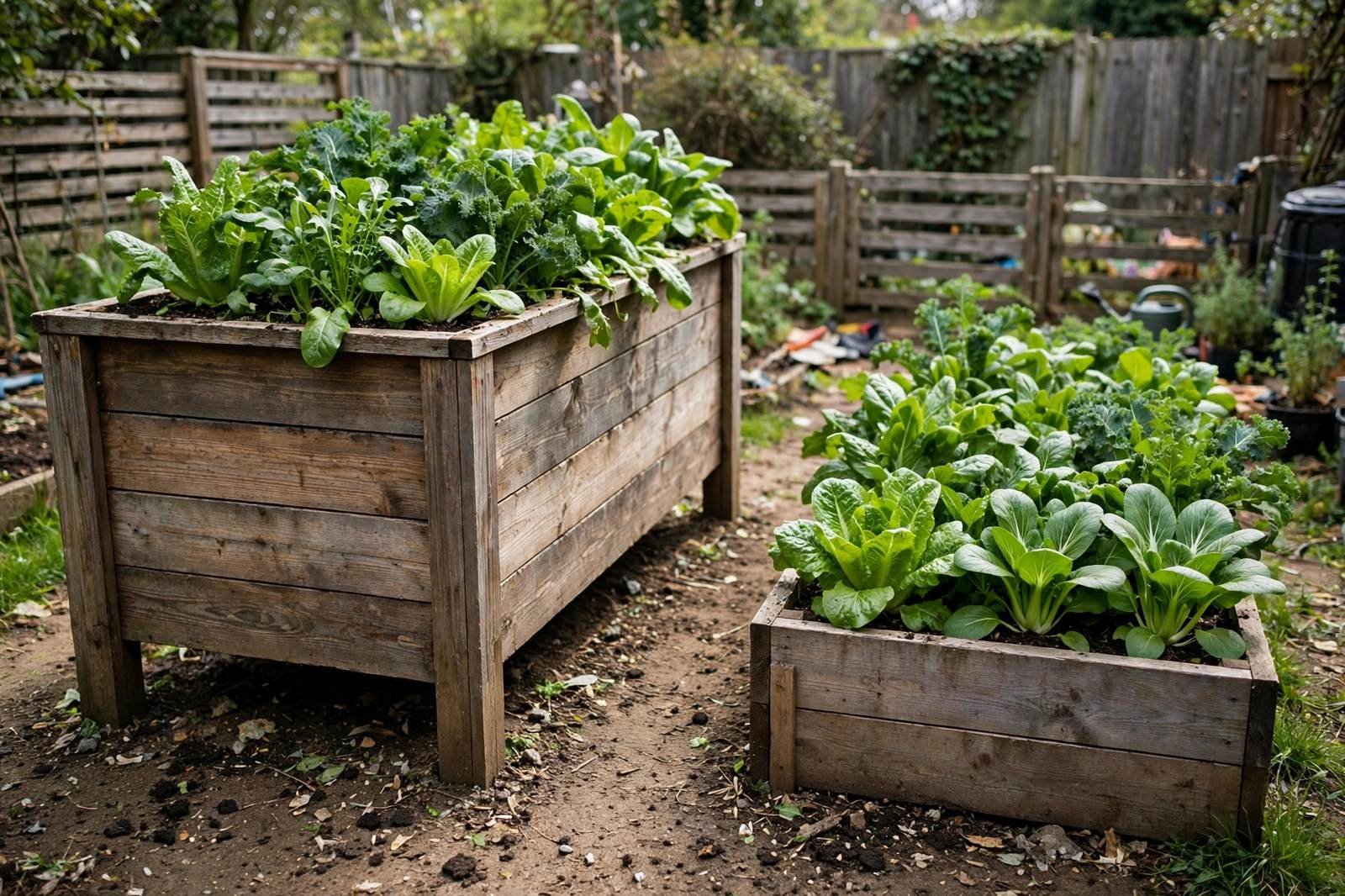
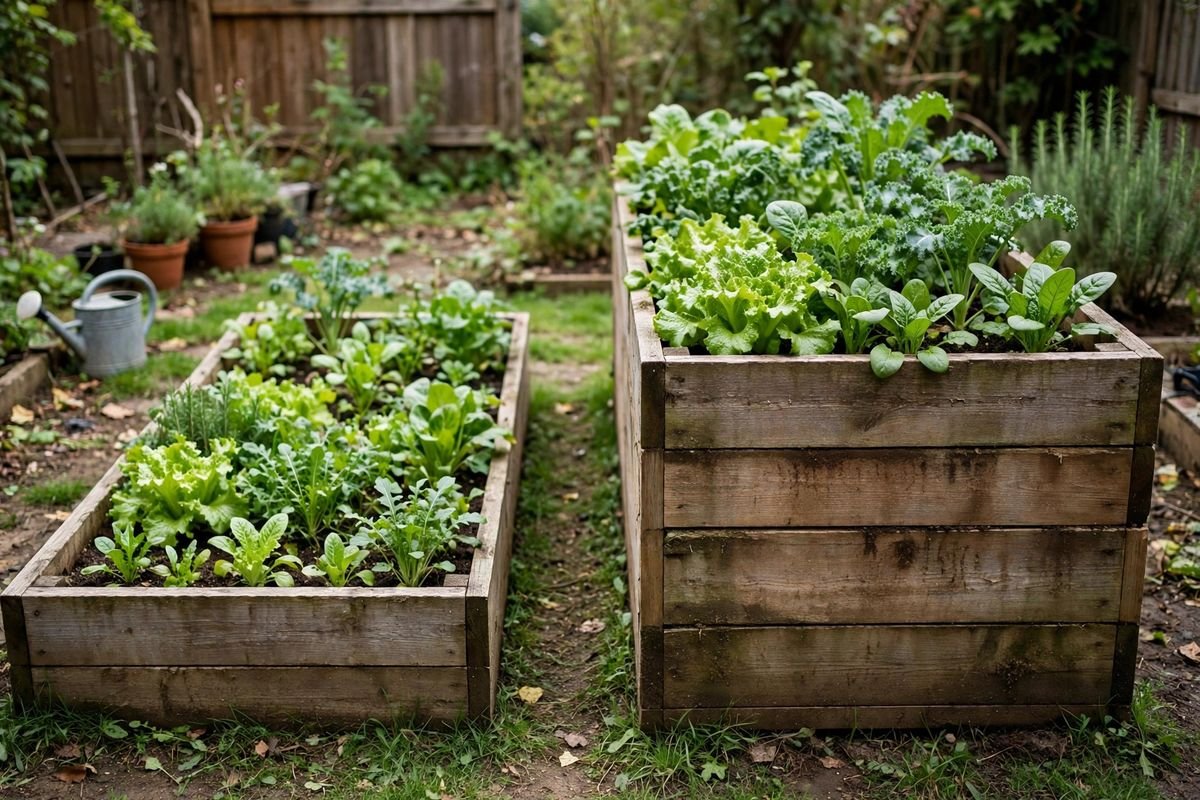
A standard raised bed is about 11 inches tall. A tall raised bed is 24 to 36 inches tall, close to waist height. The difference is more than comfort. Height changes how much soil you buy, how the bed drains, what grows well in it, and how much the whole thing weighs when wet. Pick the height that fits your back, your budget, and your plants, in that order.
We have not tested the products linked here, and we give no current store prices. The links below go to search pages for bed types, so you can compare current options, sizes, and prices at the time you shop.
Tall and standard beds at a glance
| Feature | Standard bed (about 11 inches) | Tall bed (24 to 36 inches) |
|---|---|---|
| Working height | Kneel or bend to reach plants | Work standing, little bending |
| Soil for a 4 by 8 foot bed | About 24 cubic feet | About 53 to 80 cubic feet |
| Drainage | Roots reach native soil below | Free-draining, dries faster |
| Best for | Deep-rooted crops, low cost | Bad backs, bad soil, patios |
| Main drawback | Hard on knees and backs | More soil, more water, more weight |
Tall raised beds: pros and cons
- Pros: you can weed, plant, and pick while standing, which suits gardeners with sore knees or backs.
- Pros: the bed works on a patio or over poor soil, since plants never need the ground below.
- Pros: the soil warms earlier in spring, since the bed sits above cold ground.
- Cons: soil volume more than doubles, so fill cost and watering both rise.
- Cons: tall beds dry faster in summer, since the whole soil mass sits above ground.
- Cons: a tall bed full of wet soil is very heavy, so the frame and the footing must be strong.
Standard raised beds: pros and cons
- Pros: soil cost stays low, and roots can reach into the ground below for water in dry spells.
- Pros: the bed stays cooler and moister in summer than a tall bed.
- Pros: a low frame is simple to build, move, and repair.
- Cons: every task means kneeling or bending, which wears on knees and backs over a season.
- Cons: a standard bed on poor native soil still depends on that soil for drainage and depth.
- Cons: a low bed is easier for rabbits and dogs to step into.
A worked example: soil, water, and weight for a 4 by 8 foot bed
Take a bed 4 feet wide and 8 feet long. A standard bed 11 inches deep holds 4 times 8 times 0.92 feet, which is about 29 cubic feet before settling, or roughly 24 cubic feet after the mix settles. A tall bed 30 inches deep holds 4 times 8 times 2.5 feet, which is 80 cubic feet, or about 3 cubic yards. That is more than three times the soil of the standard bed, and soil is usually the largest cost of a new bed.
Now add weight, with assumptions stated plainly. Wet potting mix weighs roughly 40 pounds per cubic foot. A standard bed at 24 cubic feet of wet mix weighs about 960 pounds of soil alone. A tall bed at 80 cubic feet weighs about 3,200 pounds. A tall bed therefore needs a level, firm base: a patio slab, compacted gravel, or firm ground, not soft lawn that will settle unevenly under load. It also needs a frame that will not bow outward under that weight, which is why tall beds use thicker boards or metal panels with bracing.
Water follows the same pattern. A tall bed drains freely and dries from all sides, so it may need watering a day earlier than a standard bed in hot weather. A standard bed with roots into the ground below holds moisture longer, but it also stays colder in spring. For depth and fill basics, see raised bed gardening for beginners and metal vs wood raised garden beds for frame strength.

How to choose for your garden
Choose a tall bed if bending or kneeling hurts, if your native soil is poor or contaminated, or if the bed must sit on a patio. In those cases the extra soil cost buys daily comfort and a garden that actually gets used. Choose a standard bed if your back and knees are fine, if you grow deep-rooted crops like parsnips and carrots, or if soil cost is the limiting factor. A standard bed with good mix grows just as well as a tall one for most vegetables.
A middle path works for many gardens: a standard bed with a wide, flat cap rail to sit on while weeding, or a tall bed only for salad crops that get picked every week, with standard beds for the rest. You do not need every bed at the same height, and mixing heights costs less than building everything tall.
Verdict
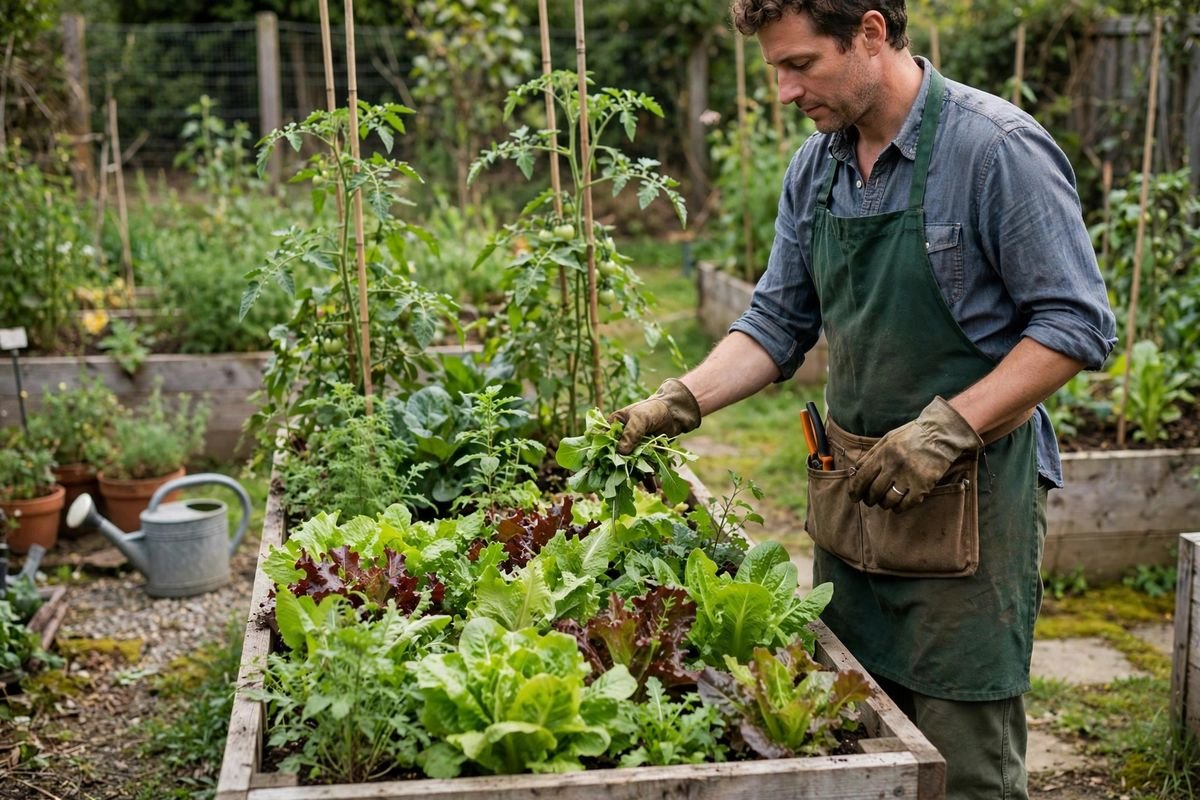
Choose a tall raised bed if you want to garden standing up, if the bed sits on concrete or poor soil, or if you pick salad leaves and herbs every few days.
Choose a standard raised bed if you want lower soil cost, better summer moisture, deep roots into the ground below, or a simple frame you can build and move with ease.
To compare current options, search for tall raised garden beds and standard raised garden bed kits. Compare height and board thickness first, then soil volume, then whether the frame includes bracing for a full load of wet soil. Our post on raised garden beds for small backyards covers footprint and path width for tight yards.

Questions
Can a tall bed sit on grass? Yes, but the grass under a heavy bed dies and the bed can settle unevenly as the turf breaks down. A gravel or slab base under a tall bed stays level longer.
Does a tall bed need a bottom? On a patio, yes, it needs a bottom or a liner that drains, or soil washes out onto the paving. On soil, an open bottom lets roots reach down and lets worms in, which is usually better.